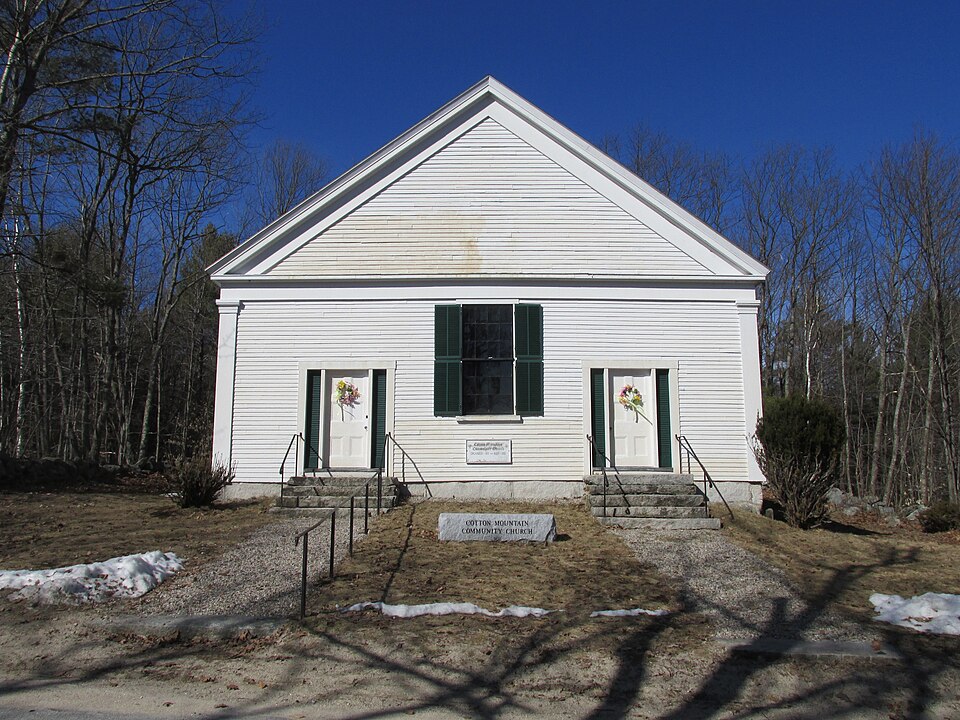
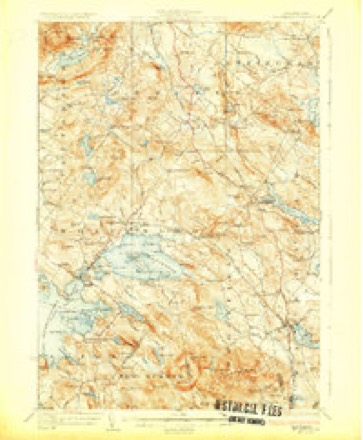
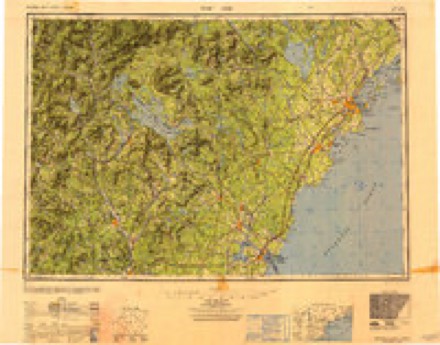
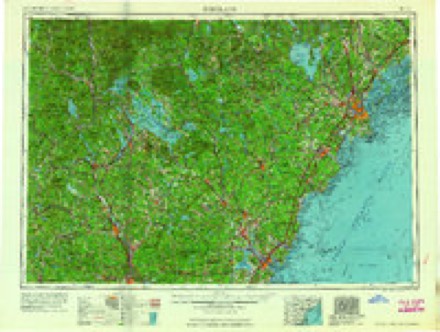
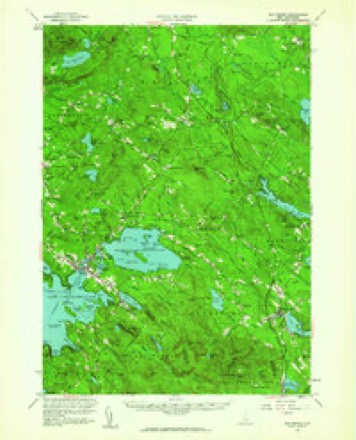
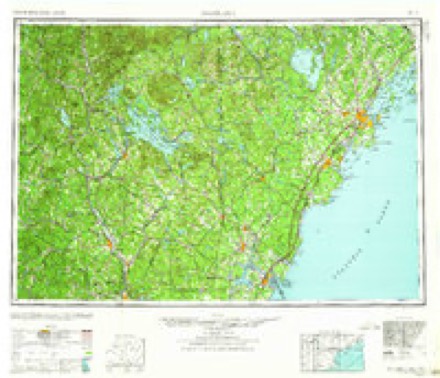
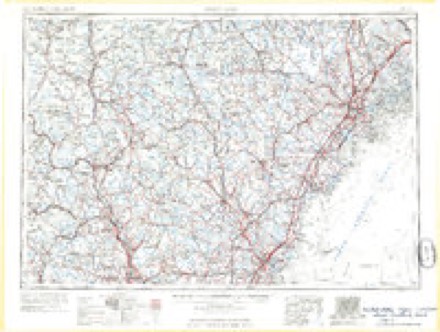
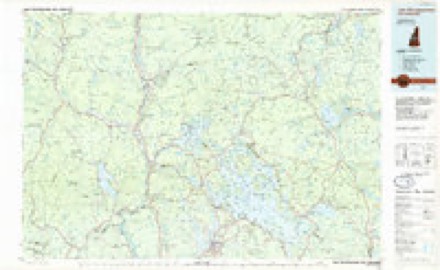
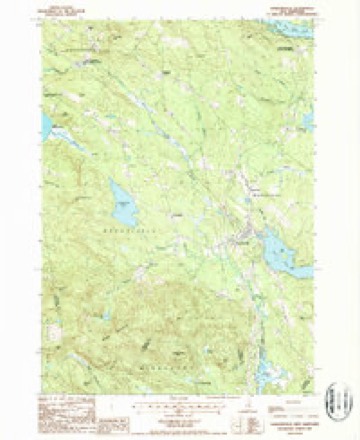
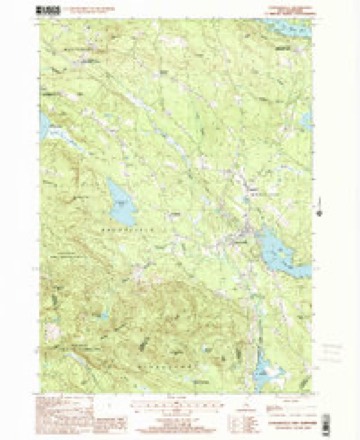
Listed on the National Register of Historic Places in 1985. 9 historic topographic surveys cover this location, the earliest from 1928.
From the record
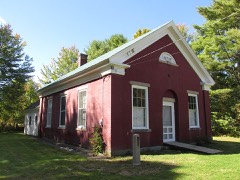
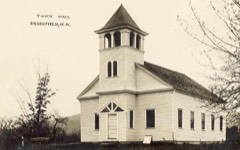
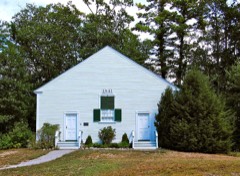
“The Cotton Mountain Community Church, also known as the Wolfeborough, Brookfield and Wakefield Meetinghouse, is a historic church on Stoneham Road in Wolfeboro, New Hampshire, near the town line with Brookfield. Built about 1852, it is a well-preserved example of a rural New England meeting house with vernacular Greek Revival style.”
Wikipedia article Cotton Mountain Community Church, CC BY-SA 4.0.
One of 53 National Register listings published here for Carroll County · listed in 1985 · category: Building.
National Register reference number.85000475- the number the National Park Service assigned this property when it was listed, and the key its nomination file is catalogued under at the National Archives.
Inventory taken June 24: Number of polls eighteen years old and upwards 44, slaves 1, horses and colts 21, oxen 3N, cows 54, young cattle L02, acres of tillage land 88, mowing land 150, pasture land 97. July 1, agreeably to a vote passed in the House of Representatives, the following list of men belonging to the "Train Band" in the town of Wolfeborough, under command of Captain John Sinclair, was made, namely, Andrew Lucas, first lieutenant: .Jonathan Lary, second lieutenant; Reuben Libbey, ensign; Andrew Wiggin, clerk; Jonathan Mersey, drummer: John Lucas, lifer; Aaron Frost, Joseph Leavit, Lemuel Clifford, and John Fullerton, sergeants ; Samuel Tibbetts, Jr, Samuel Hide, Enoch Thomas, and David Piper, corporals: Richard Lust. James Conner, James Lucas, Jr, William Lucas, and -lames Lucas, :5d. Samuel Tebbetts, Sr, Edmund Tebbetts, Joseph Lary, Ebenezer Meder, Benjamin Blake, James Fullerton, William Fullerton, John Piper, Jeremiah Could, James Wiggin, [chabod Ham, Henry Lust. Jr, Grafton Nutter. George Glynn, Matthew S. Parker, Joseph [venniston, Moses Wingate, William Rogers, John Wadley, soldiers. Of these, Edmund Tibbetts, John Piper, [chabod Ham, William Fullerton, and .lames Wiggin were under Eighteen .years of age. .lames Lucas. Sr, Thomas Lucas, and Ithiel Clifford, being more than sixty years old, were exempted from doing military service, as also was Thomas Piper, on account of being a miller.
In June, 1780, other soldiers were required for six months' service. The town hired .lames Wiggin and James Fullerton, paying as a bounty to Wiggin thirty bushels of corn, and to Fullerton fifteen bushels of com and twenty days' work in haying. Specie was now almost unobtainable, and paper money nearly valueless, and resort was had to various commodities for a currency. In this region Indian corn became a standard article, and the prices of labor aiul other articles were reckoned by it. Taxes were becoming so burdensome that the inhabitants could by no means pay them in full. On account of its financial difficulties, the general government supplied the army directly with such articles as the respective states produced. Beef was one assigned to New- Hampshire, and Wolfeborough was required to furnish in 1781 3,875 pounds. At a town-meeting held in September, Lieutenant Eben Horn, Captain John Sinclair, and Joseph Lary were appointed a committee to purchase beef. Cattle were purchased and driven to Dover, wdiere they were taken in charge by the receiver-general.
Regional context, not property-specific
evidence. The
federal wildfire occurrence database
lists 52 fires within 5 miles of Cotton Mountain Community Church
between 1993 and 2018, burning about 98 acres in total. 1 started naturally. 1 was recorded as arson.
Distance is straight-line from the map coordinates, so a fire counted
here may appear on a neighbouring settlement's page as well.
Reported cause
Fires
Debris and open burning
12
Missing data/not specified/undetermined
11
Recreation and ceremony
7
Railroad operations and maintenance
7
Smoking
6
Misuse of fire by a minor
4
Equipment and vehicle use
3
Natural
1
Arson/incendiarism
1
The most recent of
them, most recent first, with the day each was reported and the service
that recorded it.
Regional context, not property-specific
evidence. The federal mineral resources record lists
4 workings within 5 miles of Cotton Mountain Community Church: 2 past producers, 1 unknown, 1 producer.
1 still produces. What was taken out: Sand and Gravel, Construction, Mica, Niobium (Columbium), Tantalum, Feldspar, Beryllium, Beryllium. Distance is straight-line from the
map coordinates, so a quarry counted here may appear on a neighbouring
settlement's page as well.
United States Geological Survey topographic sheets whose coverage includes this point. Matched by taking the coordinate the National Park Service records for this property, then testing that coordinate against the published boundary of every sheet.
Other National Register properties close
enough to walk or drive between, ordered by distance from this one. Both
positions come from the same geocoding pass that matched these properties
to their map sheets.
Listing record. National Park Service National Register of Historic Places, listed-properties dataset, current to 2026-05-22.
Map join. Address geocoded through the United States Census geocoder, then tested against the published boundary of every sheet in the USGS Historical Topographic Map Collection.
How this page is made. Listing fields come from federal records; map-sheet coverage is a labelled coordinate-to-boundary calculation, not a source-field claim.
Wildfire. Short, Karen C. 2022. Spatial wildfire occurrence data for the United States, 1992-2020 [FPA_FOD_20221014]. 6th Edition. Fort Collins, CO: Forest Service Research Data Archive. https://doi.org/10.2737/RDS-2013-0009.6 Collected with United States Government funding and usable without additional permissions or fees.
Mines and quarries. USGS Mineral Resources Data System (MRDS) https://mrdata.usgs.gov/mrds/ A work of the United States government, no copyright under 17 U.S.C. 105.
 Block