 Block
Rutgers, New Jersey
37 topographic sheets cover this place, the earliest surveyed in 1888 and the latest in 1995. It stands in New Brunswick City. It lies in ZIP code area 08901. It stands on Lawrence Brook. The Survey maps it on the New Brunswick quadrangle.
On record in Rutgers
Buildings and businesses the archive holds for this place. Each opens its own page, with the source record it came from.
On the National Register within a mile 2 records
The National Register names another town for these. They stand within one mile of this settlement's coordinate.
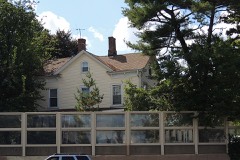 Edward S. Kearney Houselisted 1979 · 0.5 miles away
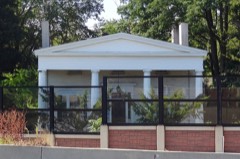 Thomas I. Agnew Houselisted 1982 · 0.6 miles away
Topographic sheets covering this place
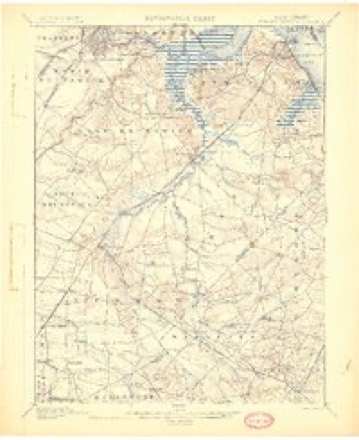
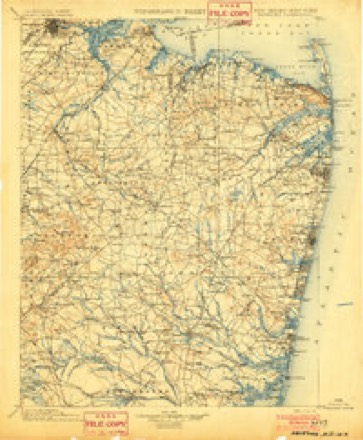
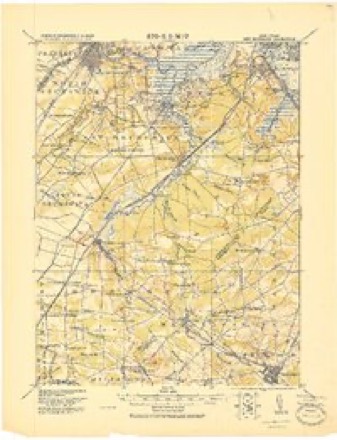
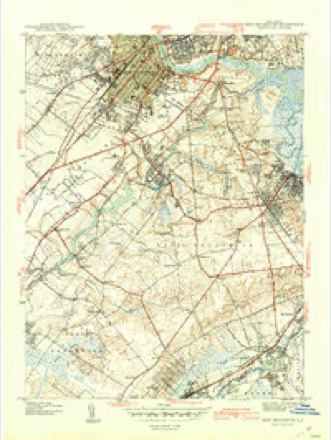
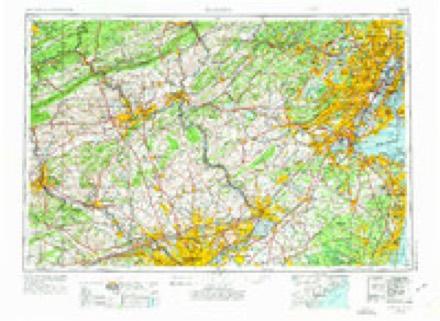
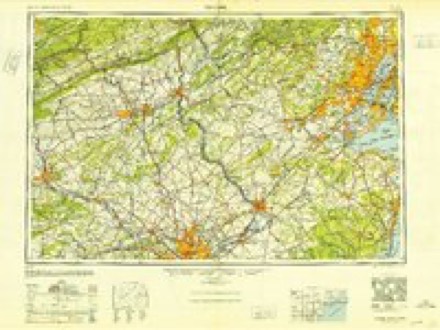
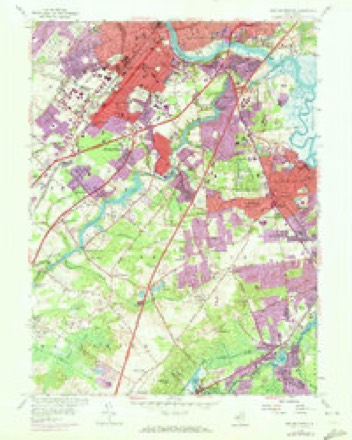
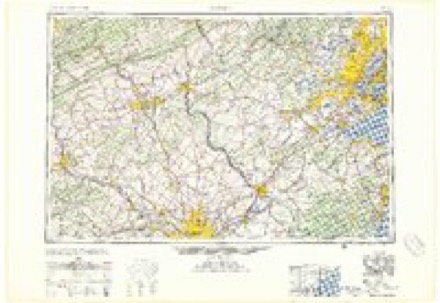
16 surveys from 37 printed sheetsMatched by testing this settlement's coordinate against the published boundary of every sheet in the United States Geological Survey's historical collection. Each opens the scanned sheet at the Survey.
- 1888 USGS New Brunswick quadrangle1:62500
- 1893 USGS New Brunswick quadrangle1:62500, 2 printings
- 1901 USGS New Brunswick quadrangle1:62500, 5 printings
- 1902 USGS Navesink quadrangle1:125000, 3 printings
- 1919 USGS New Brunswick quadrangle1:62500
- 1942 USGS New Brunswick quadrangle1:31680, 2 printings
- 1944 USGS Newark quadrangle1:250000, 5 printings
- 1949 USGS Newark quadrangle1:250000, 2 printings
- 1954 USGS New Brunswick quadrangle1:24000, 5 printings
- 1956 USGS Newark quadrangle1:250000, 2 printings
- 1957 USGS Newark quadrangle1:250000
- 1960 USGS Newark quadrangle1:250000, 3 printings
- 1964 USGS Newark quadrangle1:250000, 2 printings
- 1982 USGS Trenton quadrangle1:100000
- 1986 USGS Trenton quadrangle1:100000
- 1995 USGS New Brunswick quadrangle1:24000
What happened here
An account from the chapter on New Brunswick city. The inset identifies its exact source book and publication year.
City Of New Brunswick 331
the spire of the church was struck by lightning and wholly consumed ; the buiding itself was in imminent danger of being destroyed. This was a severe blow to the struggling parish. The spire had only recently been repaired and its restoration was a matter of over $3,000, a most formidable burden under the conditions.
In the county-history sources
38,437 words on this townshipHistory of Middlesex County, New Jersey, 1664-1920, published 1921 names this settlement in its chapter on New Brunswick City. These are the passages that mention it, exactly as the scans read.
A resident of New Brunswick for nearly thirty years was Theodore Sanford Doolittle. His boyhood days were spent in his native town of Ovid, Seneca county, New York, where he was born November 30, 1834. He became a student at Rutgers College in 1855, was one of the editors of the "Rutgers Quarterly," and in his senior year gained the
Passage source: History of Middlesex County, New Jersey, 1664-1920, published 1921.
Suydam prize for the best English composition. As a collegian, he familiarized himself with the works of essayists, historians, and poets, was a proficient student in the classics, and became especially versed in the German language. His mastery of this language enabled him to preach to German speaking congregations. Dr. Doolittle entered the Theological Seminary at New Brunswick in 1861, and after his graduation became pastor of a church at Flatlands, Long Island. His pastorate was of short duration, as in 1864 he accepted the chair of rhetoric, logic and metaphysics in Rutgers College. He remained a member of the faculty of the college during his life, was elected vice-president in 1891, and from August, i8go, to February, 1891, acted as president. He was a contributor to magazines, reviewer of important works, a keen critic, and a brilliant writer. An extensive traveler, he twice visited Europe, and also toured the Bahamas, Canada, and the Pacific coast. He died at New Brunswick, April 18, 1893.
Passage source: History of Middlesex County, New Jersey, 1664-1920, published 1921.
For nearly a score of years president of Rutgers College, the Rev. William Henry Campbell was a familiar figure to the citizens of New Brunswick. He was born in Baltimore, Maryland, September 14, 1808, a son of a merchant of that city. Young Campbell became a student at Dickinson College at the age of sixteen : after his graduation a year was spent at the Theological Seminary at Princeton. Mr. Campbell's first settlement was as assistant to the Rev. Dr. Andrew Yates, at Chittenango, New York. This pastorate included a large number of dependent churches, and in the performance of his duties Mr. Campbell contracted a throat malady that interrupted his career as a preacher, and from 1834 to 1839 he became principal of Erasmus Hall, Brooklyn, New York. During the next decade he established a church in East New York, and was pastor of the Third Reformed Church at Albany, New York. Returning to educational pursuits in 1848, he accepted the principalship of the Albany Academy, and three years later was called to the professorship of Oriental literature in the Theological Seminary at New Brunswick. Here he also occupied the chair of belles-lettres under the trustees of Rutgers College for twelve years. On the death of Dr. Frelinghuysen, in 1862, after much persuasion on the part of the trustees, Dr. Campbell consented to become his successor as president of the college, and entered with exceptional enthusiasm and ability into the work both of teaching and securing a large endowment fund for the institution. During his administration over $300,000 was raised, six new professorships were established, the number of students was doubled, a large geological hall was erected, also a beautiful chapel and library under one roof ; an astronomical observatory was erected and thoroughly equipped ; an addition made to the grammar school, doubling its accommodations ; and useful buildings were erected on the experimental farm. At the age of seventy-three years, Dr. Camp- bell resigned the presidency of the college, and a new professorship was created, "The Chair of Evidences of Christianity," his services being thus retained by the college until his death, September 7, 1890. Of his twenty years' service as president, the inscription on Sir Christophes Wren's tomb in St. Paul's Cathedral, London, may stand for the whole story : Sirequiris monnmcntum circmnspice.
Passage source: History of Middlesex County, New Jersey, 1664-1920, published 1921.
Machine-read from a century-old scan, so expect the errors a machine makes: misspelled names, dropped words, stray characters.
Read the whole chapter on New Brunswick City - it names this place 15 more 15 times.
Fires near this place
314 since 1992Regional context, not property-specific evidence. The federal wildfire occurrence database lists 314 fires within 5 miles of Rutgers between 1992 and 2020, burning about 1,404 acres in total. 2 started naturally. 76 were recorded as arson. Distance is straight-line from the map coordinates, so a fire counted here may appear on a neighbouring settlement's page as well.
| Reported cause | Fires |
|---|---|
| Arson/incendiarism | 76 |
| Missing data/not specified/undetermined | 67 |
| Misuse of fire by a minor | 45 |
| Railroad operations and maintenance | 26 |
| Smoking | 23 |
| Equipment and vehicle use | 23 |
| Other causes | 17 |
| Recreation and ceremony | 12 |
| Debris and open burning | 8 |
| Power generation/transmission/distribution | 7 |
| Fireworks | 7 |
| Natural | 2 |
| Firearms and explosives use | 1 |
The most recent of them, most recent first, with the day each was reported and the service that recorded it.
| Date | Cause | Size | Reported by | Name on the report |
|---|---|---|---|---|
| 8 September 2015 | Arson/incendiarism | under an acre | New Jersey Forest Fire Service | not named |
| 7 September 2015 | Arson/incendiarism | under an acre | New Jersey Forest Fire Service | not named |
| 3 September 2015 | Missing data/not specified/undetermined | under an acre | New Jersey Forest Fire Service | not named |
| 29 September 2017 | Arson/incendiarism | under an acre | New Jersey Forest Fire Service | not named |
| 27 September 2013 | Misuse of fire by a minor | under an acre | New Jersey Forest Fire Service | not named |
| 26 September 2015 | Smoking | under an acre | New Jersey Forest Fire Service | not named |
| 18 September 2019 | Equipment and vehicle use | under an acre | New Jersey Forest Fire Service | not named |
| 14 September 2005 | Equipment and vehicle use | under an acre | New Jersey Forest Fire Service | not named |
Settlements close enough to share some of these fires:
Mines and quarries near this place
10 of 13 shownRegional context, not property-specific evidence. The federal mineral resources record lists 13 workings within 5 miles of Rutgers: 9 past producers, 2 unknowns, 1 producer, 1 plant. 2 still produce. What was taken out: Copper, Iron, Sand and Gravel, Construction, Perlite. Distance is straight-line from the map coordinates, so a quarry counted here may appear on a neighbouring settlement's page as well.
| Where | Site | Commodity | Status | Recorded |
|---|---|---|---|---|
| Cyprus Indus Minerals/S. Plainfield | Talc-Soapstone | Plant | ||
| Fels Refractories/ Edison, N.J. | Silica, Aluminum, Magnesite | Unknown | ||
| Mj9-Abandoned | Stone, Crushed/Broken | Past Producer | 1960 | |
| Morrison Steel/ New Brunswick, N.J. | Iron, Aluminum | Past Producer | ||
| N L Industries/ Sayreville, N.J. | Titanium | Unknown | ||
| New Jersey Steel/Sayreville, N.J. | Iron | Past Producer | ||
| Rustic Materials Corp | Sand and Gravel, Construction | Past Producer | Sedimentary | |
| Rustic Materials Corp | Sand and Gravel, Construction | Past Producer | ||
| The Schundler Co. | Vermiculite, Perlite | Past Producer | ||
| The Schundler Company | Perlite, Vermiculite | Producer |
Nearest settlements
The eight closest, with where each one stands in the county. Distances are straight-line, computed from the Geographic Names Information System coordinates.
| Map | Place | Distance | Sheets |
|---|---|---|---|
| Westons Mills | 0.2 miles | 37 | |
| Raritan Gardens | 0.4 miles | 37 | |
| Edgebrook | 0.5 miles | 37 | |
| Martins Landing | 0.7 miles | 37 | |
| Highland Park | 0.9 miles | 37 | |
| Piscataway | 1.0 miles | 37 | |
| Lindenau | 1.1 miles | 43 | |
| Lawrence Brook Manor | 1.1 miles | 37 |
Provenance
This settlement is recorded in the Geographic Names Information System as feature 879867. The sheet list is computed by point-in-boundary test against the United States Geological Survey's historical topographic inventory. Both are works of the United States government and carry no copyright under 17 U.S.C. 105. Geographic Names Information System, Rutgers, Historical Topographic Map Collection.
Wildfire. Short, Karen C. 2022. Spatial wildfire occurrence data for the United States, 1992-2020 [FPA_FOD_20221014]. 6th Edition. Fort Collins, CO: Forest Service Research Data Archive. https://doi.org/10.2737/RDS-2013-0009.6 Collected with United States Government funding and usable without additional permissions or fees.
Mines and quarries. USGS Mineral Resources Data System (MRDS) https://mrdata.usgs.gov/mrds/ A work of the United States government, no copyright under 17 U.S.C. 105.