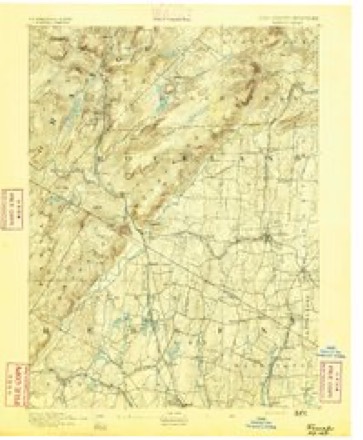
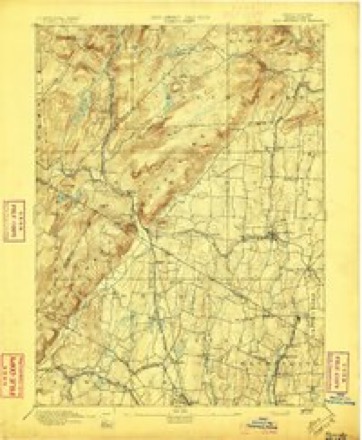
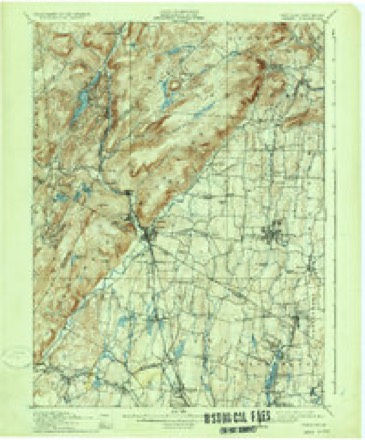
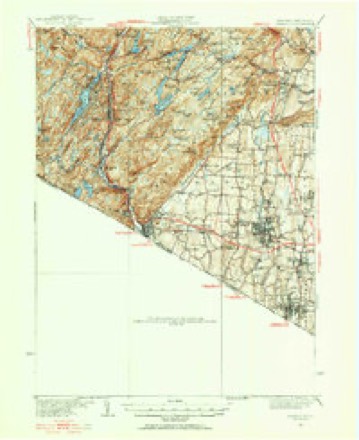
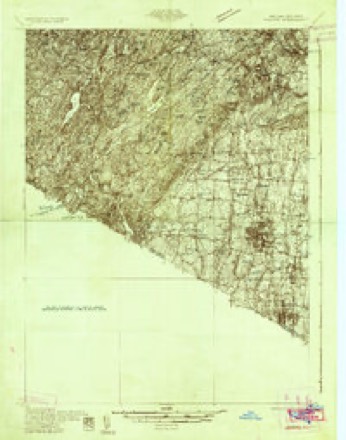
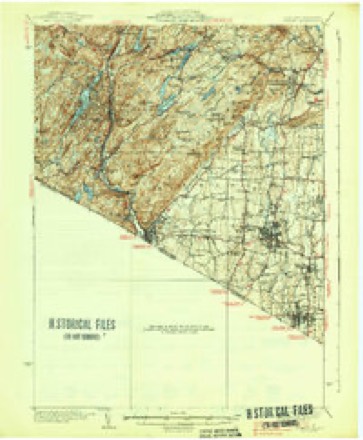
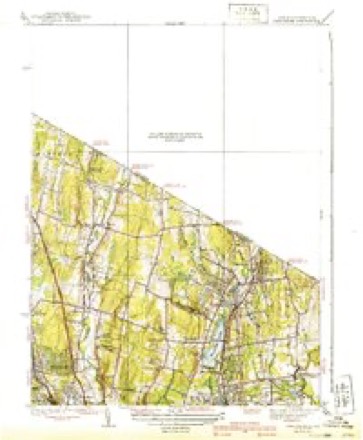
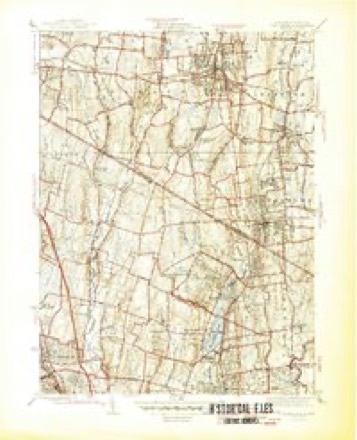
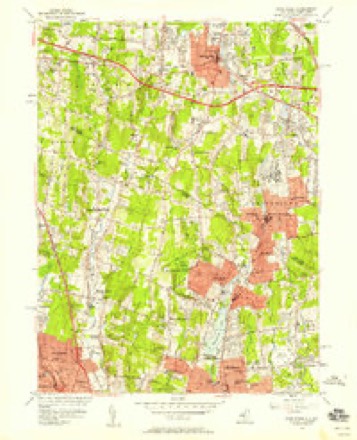
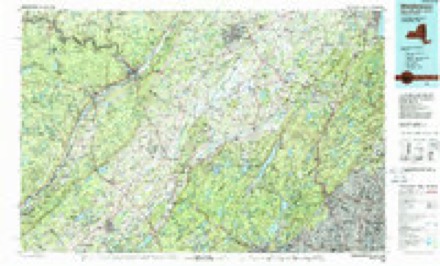
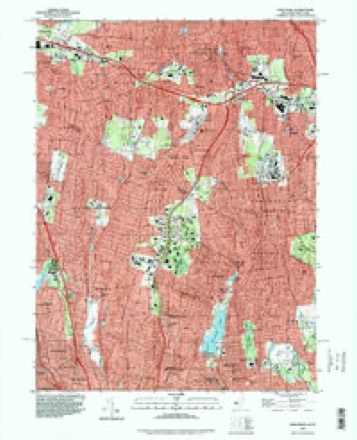
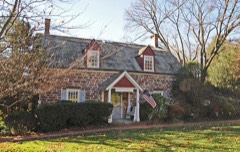
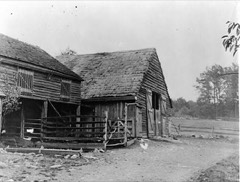
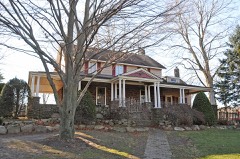
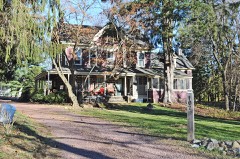
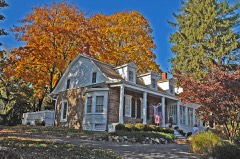
Listed on the National Register of Historic Places in 1984. 17 historic topographic surveys cover this location, the earliest from 1891.
From the record
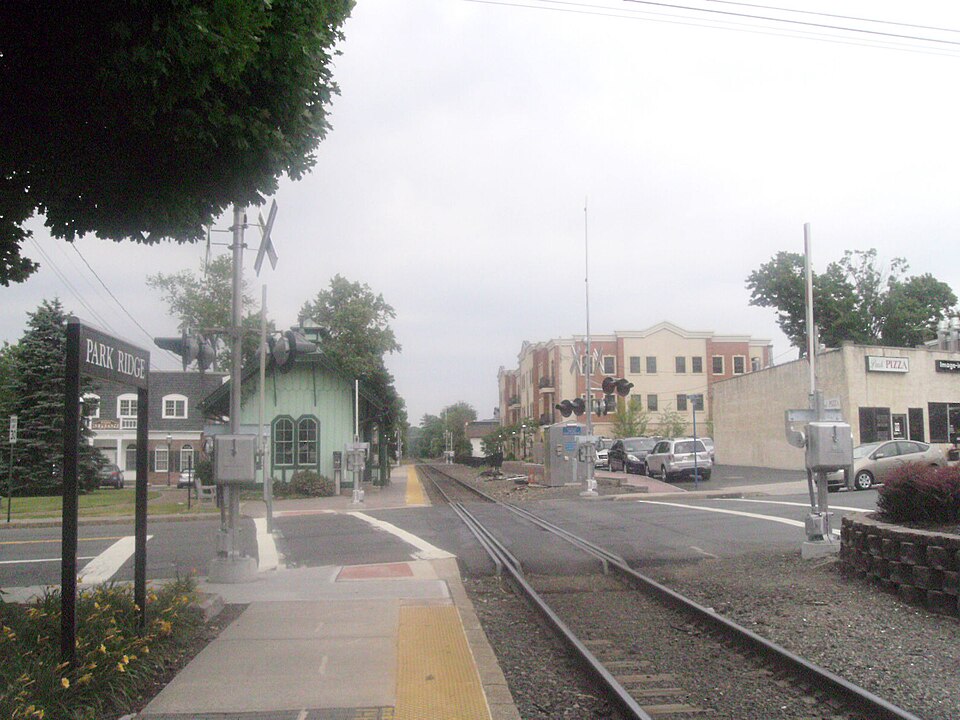
“Park Ridge is an active commuter railroad station in the borough of Park Ridge, Bergen County, New Jersey. Located at the intersection of Park and Hawthorne Avenues, the station services trains on the Pascack Valley Line, which runs from Hoboken Terminal to Spring Valley station in New York.”
Wikipedia article Park Ridge station (NJ Transit), CC BY-SA 4.0.
One of 280 National Register listings published here for Bergen County · listed in 1984 · category: Building.
Also known as. Operating Passenger Railroad Stations TR
Borough. Park Ridge
National Register reference number. 84002577 - assigned by the National Park Service when the property was listed.
Fires near this property
822 since 1995
Regional context, not property-specific
evidence. The
federal wildfire occurrence database
lists 822 fires within 5 miles of Park Ridge Station
between 1995 and 2020, burning about 589 acres in total. 54 started naturally. 47 were recorded as arson.
Distance is straight-line from the map coordinates, so a fire counted
here may appear on a neighbouring settlement's page as well.
Reported cause
Fires
Missing data/not specified/undetermined
478
Smoking
146
Natural
54
Arson/incendiarism
47
Recreation and ceremony
45
Equipment and vehicle use
22
Debris and open burning
17
Misuse of fire by a minor
6
Power generation/transmission/distribution
5
Other causes
1
Railroad operations and maintenance
1
The most recent of
them, most recent first, with the day each was reported and the service
that recorded it.
Regional context, not property-specific
evidence. The federal mineral resources record lists
3 workings within 5 miles of Park Ridge Station: 1 past producer, 1 prospect, 1 producer.
1 still produces. What was taken out: Stone, Crushed/Broken, Iron. Distance is straight-line from the
map coordinates, so a quarry counted here may appear on a neighbouring
settlement's page as well.
Regional context, not property-specific
evidence. The National Weather Service names
Park Ridge, the town this property stands in, in 10 storm reports between 2004 and 2024: 4 flash flood, 4 thunderstorm wind, 2 lightning.
No death or injury is recorded in these reports. Each account below is quoted exactly as the forecast office
filed it, from the NOAA Storm Events Database, and each date
opens the federal record of that event.
United States Geological Survey topographic sheets whose coverage includes this point. Matched by taking the coordinate the National Park Service records for this property, then testing that coordinate against the published boundary of every sheet.
Other National Register properties close
enough to walk or drive between, ordered by distance from this one. Both
positions come from the same geocoding pass that matched these properties
to their map sheets.
Listing record. National Park Service National Register of Historic Places, listed-properties dataset, current to 2026-05-22.
Map join. Address geocoded through the United States Census geocoder, then tested against the published boundary of every sheet in the USGS Historical Topographic Map Collection.
How this page is made. Listing fields come from federal records; map-sheet coverage is a labelled coordinate-to-boundary calculation, not a source-field claim.
Wildfire. Short, Karen C. 2022. Spatial wildfire occurrence data for the United States, 1992-2020 [FPA_FOD_20221014]. 6th Edition. Fort Collins, CO: Forest Service Research Data Archive. https://doi.org/10.2737/RDS-2013-0009.6 Collected with United States Government funding and usable without additional permissions or fees.
Mines and quarries. USGS Mineral Resources Data System (MRDS) https://mrdata.usgs.gov/mrds/ A work of the United States government, no copyright under 17 U.S.C. 105.
Storms. NOAA National Centers for Environmental Information, Storm Events Database https://www.ncei.noaa.gov/stormevents/ A work of the United States government, no copyright under 17 U.S.C. 105. Narratives are quoted verbatim from the National Weather Service report and are not edited or summarised.
 Block