MAJOR BIBLIOGRAPHICAL REFERENCES "Notes on the Samuel Wilson Family" Annual Reports of the Farmers College and the Ohio Female College. 10 GEOGRAPHICAL DATA UTM REFERENCES VERBAL BOUNDARY DESCRIPTION Beginning at a point 500' east of Hamilton Avenue and being the NE corner of said along the west side of said lot, thence proceed east 100' along the northern boundary until reaching the point of beginning. LIST ALL STATES AND COUNTIES FOR PROPERTIES OVERLAPPING STATE OR COUNTY BOUNDARIES 11 FORM PREPARED BY NAME / TITLE John 0'Neil and Steve Cordon STREET & NUMBER CITY OR TOWN Ohio 45214 2 STATE HISTORIC PRESERVATION OFFICER CERTIFICATION NATIONAL - As the designated State Historic Preservation Officer for the National Historic Preservation Act of 1966 (Public Law 89-665). I criteria and procedures set forth by the National Park Service.
STATE HISTORIC PRESERVATION OFFICER SIGNATURE FOR NPS USE ONLY I HEREBY CERTIFY THAT THIS PROPERTY IS INCLUDED IN THE NATIONAL REGISTER DIRECTOR, OFFICE OF ARCHEOLOGY AND HISTORIC PRESERVATION KEEPER OF THE NATIONAL REGISTER ORGANIZATION CODE STATE NORTHING TELEPHONE DATE COUNTY EASTING ATTEST: Hamilton County Courthouse Miami Purcnase Association Sally Nesmith Wilson's Journal Cincinnati 812 Dayton Street October,1980 GPO 892.453 LOCAL _X Siebert, Wm. Henry. The Mysteries of Ohio's Underground Railroad,1951.
lot proceed south 104.18' along the east boundary untii reaching Aster Flace, thence hereby nominate this property for inclusion in the National Register and certify that it has been evaluated according to the ACREAGE OF NOMINATED PROPERTY approximately 4 acre THE EVALUATED SIGNIFICANCE OF THIS PROPERTY WITHIN THE STATE IS: ZONE 513-721-4506 4.314.0175.01 CONTINUATION SHEET 4 ITEM NUMBER Cincinnati, Ohio HAMILTON AVE WILSON-O'NEIL HOUSE 1502 Aster Place CREST ASTER 8234- United States Department of the Interior Heritage Conservation and Recreation Service Census of Millcreek Township August 12, 1850 Sarah A. Wilson Joseph G. Wilson Theordore W. Wilson George W. Wilson Harriet N.
Wilson Professor Indiana farmer Ohio Inventory-Nomination Form Page Mary Pyle Wilson Occupation Margaret Morrison received Occupant National Register of Historic Places Illinois date entered New Hampshire Item number Samuel Wilson For HCRS use only William Meens (?) Place of Birth FHR-8-300 (11-78) Date Due: - REJECT Federal Agency: _ A. Name V 3. Classification Public Acquteition 4. Owner of Property V 5. Location of Legal Description V 6. Representation in Existing Surveys 1. Description - unaltered - dates _ unexposed summary paragraph /completeness - alterations/integrity resubmission Location Action: RETURN Xsubstantive reasons discussed below ruins Nomination returned for: owner objection Substantive Review: nomination by person or local government Wilson-O'Neil, House, NATIONAL REGISTER OF HISTORIC PLACES excellent Hamilton Fed. Reg.
Date: Yclarity EVALUATION / RETURN SHEET - deteriorated - original site Reviewer boundary selection moved appeal Xsee continuation sheet. technical corrections cited below Check one 7-26-82 Date_7.20.82 Ownership good Accessible L9. Major Bibliographical Referénces 1o. Geographical Data 11. Form Prepared By V12. State Historic Preservation Officer Certification - Date - 8. Significance completeness Photographs applicable criteria Maps Other Questions concerning this nomination may be directed to UMT Reterences Phone: 202 272 -3504 Acreage of nominated property - Comments for any item may be continued on an attached sheet netional -state Wilson Hs, Cincinatti, DH. Con fereuse / 7.21.82 occurned in 2.
21.82 United States Department of the Interior National Park Service See instructions in How to Complete National Register Forms and/or common street & number _ not for publication city, town - vicinity of Ohio code state Ohio Present Use .district - public _ unoccupied - agriculture X building(s) & private _ commercial -park - structure _ both - work in progress . educational -x private residence . site - entertainment - in process - yes: unrestricted - government John I. O'Neil courthouse, registry of deeds, etc. has this property been determined eligible? - yes -x no date August, 1978 depository for survey records Miami Purchase Association for Historic Preservation 2. Location 039 transportation museum Accessible Ownership object Status industrial 6. Representation in Existing Surveys Category 3. Classification federal religious 5.
Location of Legal Description historic other: scientific 1. Name Public Acquisition National Register of Historic Places Inventory-Nomination Form Cincinnati being considered 4. Owner of Property Hamilton County Courthouse title Cincinnati Historic Inventory Wilson House date entered 1502 Aster Place Court and Main Streets received JUN / S 1983 NPS Form 10-900 military For NPS use only (7-81) county X local Type all entries-complete applicable sections 7. Description - excellent - original site X good X altered _ moved ALTERATIONS: The horizontal asbestos wall siding was recently placed over Condition modeled. The Wilson House, located in the nineteenth century suburban community of but lack any distinctive architectural trim.
Sally Nesmith Wilson's journal contains the following interesting entry: wing are delineated by wide Doric pilasters while a deep frieze panel ac- Check one fair added to the south elevation circa 1880.The kitchen porch has been re- _ruins April J.P.(Jesse the first load of lumber Our family move into new house. Attached to the rear of the main house is a simple two story wing built unexposed deteriorated c.l827-l83l.It is quite possible this wing may be part of the original -unaltered Areas of Significance - Check and justify below - landscape architecturex religion - prehistoric - archeology-historic . science _ sculpture .
military -X social/ _ transportation - other (specify) Builder/Architect Samuel Wilson Statement of Significance (in one paragraph) Presbyterians, the Wilsons assisted many black runaways, with their house community of College Hill emerge as a center for higher education. A small In 1846, this academy became the Farmers College, which was named both for its agricultural science curriculum, one of the first in the country, and for operations at both nis home and at the school. 1700-1799 1849 economics engineering education theater politics/government humanitarian Period invention music Specific dates Railroad operations and was president of the Women's Home Missionary Society Ohio Female Academy faculty before beginning her professorship at the Farmers X_1800-1899 8.
Significance law exploration/settlement his parents and sisters, Mary Jane and Harriet, during his tenure at the the farmers in the surrounding region who were patrons and purchasers of the Joseph G. Wilson (l826-l873),a Farmers College graduate, was professor of literature _1400-1499 religion and public service. 1900- who was a widow with two children at this time, was a charter member of the Carey's Academy after its es- immediately preceding the Civil War because this route became too well known.
to these secret were many and -conservation - - communications - - commerce _ archeology-prehistoric _ community planning Samuel Wilson (1786-1855), builder of the house and patriarch of the family, be observed by the surrounding countryside, was not particularly conducive By midcentury, the intellectual climate in southwestern Ohio helped the small 1840-44, before the Wilsons moved into their home here. While at the Academy stock in the school.
Ancient Languages and Literature at his alma mater from 1849-1852, lived with College Hill was also the home of another school, the Ohio Female Academy, Wilson (1825-1920) who lived in the house until her death, was for over 60 The significance of the Wilson House as a historic resource is predicated architecture industry years, members of the Wilson family had distinguished careers in education, philosophy agriculture _1600-1699 _1500-1599 as one of the stops on an Underground Railroad that ran from Cincinnati on its long association with the Wilson family of College Hill.For sixty public schools.Theophilus Wilson (1815-1899) 1874 until 1891, tablished here in 1833.David Wilson this school from United States Department of the Interior Heritage Conservation and Recreation Service Continuation sheet Page received National Register of Historic Places Inventory-Nomination Form date entered For HCRS use only last quarter of the nineteenth century was called Belmont College and FHR8300 (11-78) Item number Theophilus died at the Wilson home- Form No.
10-300a UNITED STATES DEPARTMENT OF THE INTERIOR NATIONAL PARK SERVICE NATIONAL REGISTER OF HISTORIC PLACES INVENTOR Y -- NOMINATION FORM CONTINUATION SHEET ITEM NUMBER Modern Languages and Literature. Rer. ALPONSO WOOD, A. M., Botany and Veg. Physiology. JACOB TUCKERMAN. A. M Landscape Gardening. .E. I RICKER. . 184. Mathematics D. B PIERSON, Natural Science and Literature. Dr. JOHN A. WARDER, DANIEI MOLONY. A.M. JOHN STUART HENDERSON. Miss ELIZABETH CALDWEIL, FARMERS' COLLEGE PAGE WILSON-O'NEIL HOUSE DATE ENTERED PROFESSORS French. Agriculture. Deceased. 157 FOR NPS USE ONLY Natural Science. PRESIDENTS Ancient Languages Agricultural Chemistry. 1852 18.53 JOHN SHSBY. A.M.. 1. C. BRODFUEHRER. J. I. WHITWEML . CHARLES E HOLT, Ket. LORENZO CARY. A. M.. History and Political Economy. OFFICERS 175 Ancient Languages and literature. (Hev.10-74) 1552 Rev.C.D.CURTIS.A.M.
APPENDIN 1x4 1560 Form No. 10-300a UNITED STATES DEPARTMENT OF THE INTERIOR NATIONAL PARK SERVICE NATIONAL REGISTER OF HISTORIC PLACES INVENTORY -- NOMINATION FORM DATE ENTERED CONTINUATION SHEET ITEM NUMBER Taylor. Music, Piano and Vocal, Prof. George Georgi, Miss Em- PAGE WILSON-O'NEIL HOUSE Ina Paige,Miss Ella Paige,Miss Mary Anna Cox.Guitar, Henry Lecturer on the Science of Government and Constitutional Law, FOR NPS USE ONLY Mrs. C.M.Vail, Mrs. H. I. Taylor, Mrs. H. N. Day. (Hev. 10-74) OHIO FETTALE COLLEGE COLLEGE HILL,O President, Rev. IT. N. Day. Principal, Mrs. W. W. Robinson. S. F. Cary, A. M., A. B. Teachers of Languages, Science and Allison, Miss Julia P. Kiund, Miss M.Henderson, Miss Mary K. RECEIVED JUN 111982 Form No. 10-300a (Hev.
10-74) UNITED STATES DEPARTMENT OF THE INTERIOR NATIONAL PARK SERVICE NATIONAL REGISTER OF HISTORIC PLACES INVENTOR Y -- NOMINATION FORM DATE ENTERED CONTINUATION SHEET ITEM NUMBER Annual Report of the Ohio Female College, 1849. RET. JOIN COVERT, A. M., Mas. L. S. COVERT, REV. THOMAS SPENCER, A. M., D. MOLONY, A. M., NISS CAROLINE WOODBORT, MIss LUCRETIA S. HOOPER. PAGE FACULTY. WILSON-O'NEIL HOUSE FOR NPS USE ONLY Assistant Musie Teacher, MIss MARY FRANK FOSTER, Miss ELIZABETH E.ALLEN, MRS.SARAH B.BROOKS, MIsS MARTH1 M BUELL, and Ornamental Needle Work. Teacher in Preparatory Department.
RECEIVED JUN 1 11982 Acreage of nominated property approximately 1/4 acre UMT References Beginning at a point 500' east of Hamilton Avenue and being the NE corner of List all states and counties for properties overlapping state or county boundaries _ state street & number 812 Dayton Street city or town The evaluated significance of this property within the state is: . national _local As the designated State Historic Preservation Officer for the National Historic Preservation Act of 1966 (Public Law 89 State Historic Preservation Officer signature I hereby certify that this property is included in the National Register Keeper of the National Register Chief of Registration 9. Major Bibliographical References 10. Geographical Data 45214 county code organization Northing date Cincinnati 513-721-4506 11. Form Prepared By telephone Attest: "Notes on the Samuel Wilson Family" 12.
State Historic Preservation Officer Certification Verbal boundary description and justification Sally Nesmith Wilson's Journal Hamilton County Courthouse Miami Purchase Association Quadrangle name Cincinnati west Easting Annual Reports of the Farmers College and the Ohio Female College. John O'Neil/ Steve Gordon/Rita Walsh name/title For NPS use only Siebert 665), I hereby nominate this property for inclusion in the National Register and certify that it has been evaluated according to the criteria and procedures set forth by the National Park Service. Henry Ohio Zone Quadrangle scale 1:24000 United States Department of the Interior Heritage Conservation and Recreation Service Continuation sheet Item number 10 thence proceed north 107.22' along the west side of said lot, thence Page received of beginning.
date entered Inventory-Nomination Form National Register of Historic Places FHR8~300 (11-78) For HCRS use only United States Department of the Interior Heritage Conservation and Recreation Service For HCRS use only continuation sheet Item number lence proceed north 107.22' along the west side of said lot, thence : beginning. Page received Inventory-Nomination Form date entered National Register of Historic Places FHR-8-300 (11-78) :oceed east 100' along the northern boundary until reaching the point 1870 1>75 1>65 United States Department of the Interior Item number Theodore W. Pyle Mary J. Pyle Farmer Professor Page Servant Teacher National Register of Historic Places Insurance Agent Occupation Inventory-Nomination Form Christine Graham Occupant Margaret Morrison Continuation sheet Heritage Conservation and Recreation Service Christine Gormann Joseph G.
Wilson Mary Wilson Pyle Harriet N. Wilson Mary Pyle Sally Wilson Sarah A. Wilson George W. Pyle 1880 Census of College Hill - occupants of Wilson House 1850 Census of Millcreek Township-occupants of Wilson House received Ann S. Wilson For HCRs use only Wilson House - built 1849 by Samuel Wilson Samuel Wilson William Meens (?) date entered FHR-8-300 (11-78) WASO Form - 177 UNITED STATES DEPARTMENT OF THE INTERIOR ("R" June 1984) NATIONAL PARK SERVICE NATIONAL REGISTER OF HISTORIC PLACES EVALUATION/RETURN SHEET WIlSON -ONELL HOUSE HAMICTON COUNTY Fed. Reg. Date: Date Due: - nomination by person or local government owner objection Jappeal D sample J request L NR decision 1. Name 2. Location 3. Classification Public Acquisition 4. Owner of Property 5. Location of Legal Description 6. Representation in Existing Surveys Has this property been determined eligible? 7.
Description _ excellent JJ unaltered - original site I moved Describe the present and original (if known) physical appearance summary paragraph boundary selection ruins yes REJECT Condition resubmission Category Ownership alterations/integrity Status dates deteriorated completeness fair unexposed clarity RETURN Accessible Action: Substantive Review Present Use Federal Agency: Check one Reviewer's comments: substantive reasons discussed below Working No. Statement of Significance (in one paragraph) summary paragraph / completeness J applicable criteria justification of areas checked Srelating significance to the resource - Phone: 343-9536 Comments for any item maybe continued on an attached sheet 8. Significance Maps Photographs Specific dates The Areas of Significance-Check and justify below 9. Major Bibliographical References 10.
Geographical Data Acreage of nominated property - Quadrangle name_ UTM References Verbal boundary description and justification State Historic Preservation Officer signature Bill Busheng | Linda Meclelland Period Signed context local national justification of exception Questions concerning this nomination may be directed to clarity NPS Form 10-900 OMB No. 1024-0018 (Rev. 10-90) United States Department of the Interior RECEIVED National Park Service OCT - 2000 NATIONAL REGISTER OF HISTORIC PLACES REGISTRATION FORM requested. If any item does not apply to the property being documented, enter "N/A" for "not applicable." For functions, architectural classification, materials, and areas of significance, enter only categories and subcategories from the instructions. Place additional entries and narrative items on continuation sheets (NPS Form 10-900a).
Use a typewriter, word processor, or computer, to complete all items. 1. Name of Property historic name _ other names/site number HAM-1945-34 2. Location street & number 1502 Aster Place N/A - not for publication city or town N/A - vicinity _code _ county - _code 061 _ zip code_45224 3. State/Federal Agency Certification As the designated authority under the National Historic Preservation Act of1986, as amended, I hereby certify that this Xl nomination - request for determination of eligibility meets the documentation standards for registering properties in the National Register of Historic Places and meets the procedural and professional requirements set forth in 36 CFR Part 60. In my opinion, the property I meets - does not meet the National Register Criteria. I recommend that this property be considered significant nationally O statewide N locally.
(- See continuation sheet for additiona! comments Dopt. Head Sept. 21,2000 Signature of certifying official Ohio Hlistoric Preservation Office -- OH SHPO State or Federal agency and bureau In my opinion, the property - meets - does not meet the National Register criteria. ([ See continuation sheet for additional comments.) Signature of commenting or other official 4. National Park Service Certification 1, hereby certify that this property is: entered in the National Register Date of Action - See continuation sheet. determined not eligible for the removed from the National Register other (explain): Date state Ohio National Register Cincinnati Hamilton Wilson, Samuel and Sally. House NAT REGISTER OF HISTORIC PL This form is for use in nominating or requesting determinations for individual properties and districts.
See instructions in How to Complete the National Register of Historic Places Registration Form (National Register Bulletin 16A). Complete each item by marking "x" in the appropriate box or by entering the information HAMILTON COUNTY, OHIO Name of Property County and State 5. Classification Ownership of Property Number of Resources within Property (Check only one box) Do not include previously listed resources in the count. Xibuilding(s) -public-local - district Site _ structures public-Federal Name of related multiple property listing Number of contributing resources previously listed in the National Register 6. Function or Use Current Functions 7.
Description mid-nineteenth century/Greek Revival foundation _ (Describe the historic and current condition of the property on one or more continuation sheets.) composition stone Noncontributing objects frame walls Total other Materials roof domestic/single dwelling Architectural Classification Narrative Description Historic Functions Category of Property (Enter categories from instructions) (Check as many baxes as apply) Xprivate *ILSON, SAMUEL & SALLY, HOUSE 1 public-Stateo Bobject NPS Form 10-900-A OMB Approval No. 1024-0018 United States Department of the Interior National Park Service National Register of Historic Places Samuel and Sally Wilson House 1502 Aster Place Cincinnati, Ohio The Samuel and Sally Wilson House is located in College Hill, now a neighborhood of Cincinnati.
In 1820, the village was platted as Pleasant Hill along Hamilton Road, one of the colleges along Hamilton Road. From the 1840s to the 1870s, well-to-do merchants and businessmen moved to the area, Hill became an upper-income area characterized by large homes on spacious lots. In March, 1849, Samuel Wilson bought from Samuel Fenton Cary four acres on the east side of In the same year, the Wilsons built a frame Greek Revival house, set back about 450 feet from Feb. 7. Father buys a 4 acre lot at Col. Hill the one on which another now lives for 1200 dollars... Ap. 21 J. P. (Jesse Parsons) hauls first load of lumber for new house at College Hill. The new house raised June 29. Sept. Female Co. dedicated 20. Our family move (sic) into new house 22 The Wilson house still faces Hamilton Avenue, although the current address is Aster Place almost square, measuring 40 ft. in wdth and 36 ft.
in depth. A two-story earlier house, 16-foot square, is attached at the rear (Photograph #5). The ante-bellum house with three-bay main facade has retained most of its Greek Revival architectural elements, as defined by Virginia and Lee McAlester in A Field Guide to American cornice lines, doorways, porch-support columns, and windows. All distinguishing elements are apparent in the Wilson House except the surrounds of the original windows that are still double O' Neil, p. 10. 2 Mc Alester, Lee and Virginia. A Field Guide to American Architecture, 1984, p. 182. 1849 (8-86) appears to be attached to the main house forming an L-shaped footprint (Photograph #5). the road on a landscaped yard. In September, the family moved into the home.
Continuation Sheet known as College Hill by the 1840s, taking the name of the post office because of the two Hamilton County making College Hill a prestigious rural separate village like Avondale or Walnut Hills. College (Photograph #1). The main portion of the two-story frame house has a floor plan that is Houses? The book states that four principal areas of elaboration in Greek Revival houses are David Morrison Wilson manuscript, 1832-1851, summary of journal of Sally Wilson, in the possession of John T. oldest military trails in Ohio. Situated on a hilltop six miles north of Cincinnati, the village was NPS Form 10-900-A OMB Approval No. 1024-0018 National Park Service Samuel and Sally Wilson House 1502 Aster Place horizontal asbestos wall siding in 1945.
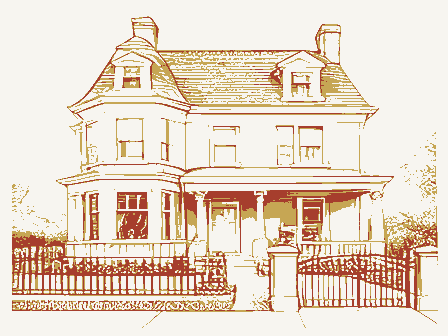
However, this change does not greatly diminish the integrity of the house since "the window surrounds were generally far less elaborate than doorways." According to the owner, the 8-inch wood siding and original window surrounds remain under The most prominent feature of the front facade of the two-story frame house is a centered one-bay portico supported by two square Doric columns (Photograph #2). Wilson House, Bird's eye View of College Hill, Two engaged square pilasters with similar Strobridge Lithograph Company, 1866.* Doric capitals stand on either side of the cornice shelters a recessed single-paneled door. It is surrounded by narrow bands of rectangular panes of glass held in a delicate, decorative frame.
On the four corners of the house are engaged pilasters with massive entablature and wide trim beneath the cornice Also shown at the eaves of the roof was a parapet with each side accentuated by a center parapet was rebuilt. During the repair, changes were also made to the south side of the house. The grape arbor was removed, and a one-story square bay window was built on the south facade to take advantage of the sun. About that time, an open one-story porch that has Through the years while the house was owned by the Wilsons, the chimneys were removed, and the hipped roof was covered with a composition material. By 1911, a street was cut through from Hamilton Avenue. It was first named Tacoma Street, and then Aster Place. Tucked into the southeast corner of the house is a shed-roofed addition used as a washroom and toilet.
After the O'Neils purchased the house, this room was (8-86) Company. Continuation Sheet the asbestos covering. 3 Strobridge Lithograph Company. Bird's Eve View of College Hill, 1866. National Register of Historic Places Cincinnati, Ohio United States Department of the Interior rectangular block. The cupola was destroyed in a tornado in 1870, and neither it nor the square posts with beveled trim, typical of the Italianate period, was added (Photograph #4). (Photograph #3). The hipped roof of the main portion of the house had a square cupola with Hamilton County Section number 7 Page 2 NPS Form 10-900-A OMB Approval No.
1024-0018 United States Department of the Interior National Park Service National Register of Historic Places Continuation Sheet Samuel and Sally Wilson House 1502 Aster Place Cincinnati, Ohio remodeled in 1930 for an enclosed porch, and is now used as the primary entrance on Aster The interior of the house has had little modification during its 151 years except for changes to the two original fireplaces in the downstairs. Simpler Greek Revival mantels were replaced about 1870 with Victorian round-arched marble fireplace surrounds that have an elaborate cartouche in each keystone (Photograph #6). The downstairs has the original full hall with curving stairway. The north parlor has a wood cupboard that serves as a pass-through to the kitchen. Pocket doors separate the two rooms to the Wilson House, southeast corner, Photograph, ca.
north of the center hall, while hinged to the woodwork that reveals some grained painting. Remaining are original chestnut floors, enters into the kitchen and the shed roof porch that has windows to the south and east. From this hallway, an open staircase rises straight up to a landing, turns, and then ascends four main house. The first floor of the earlier house is now used as the kitchen. The kitchen with an altered fireplace is reached from the north parlor and the glassed-in porch. The room has a corner stairway with a mud-run landing that leads to a single room on the second floor. The floor of this room is three steps lower than that of the main house, and the ceiling is only about 7 feet high. In the kitchen, a doorway to the cellar under the back stairway is the same one used by fugitive slaves when they hid in the Wilson house before the Civil War.
The cellar itself has been changed. The hand-hewn beams and uprights of black walnut can still be seen, but the dirt floor was covered with concrete and the foundation was rebuilt about 1940. 1930 (8-86) Place. more steps into the upper hall (Photograph #8). Four bedrooms are on the second floor of the Hamilton Co. doors separate two rooms on the south side (Photograph #7). Few changes have been made baseboard, stair balustrades, doors and hinges. The center hallway on the first floor now OMB Approval No. 1024-0018 United States Department of the Interior National Park Service National Register of Historic Places Samuel and Sally Wilson House 1502 Aster Place Cincinnati, Ohio Only two families have lived in the house for 151 years. After Harriet Wilson's death, the house and contents were sold to the parents of the present owner.
During the journals, maps, photographs, prints, china, silver, furniture, clothing, oil paintings, and a photo collage of the Wilson House, south facade, Sketch by Caroline Williams, Cincinnati Enquirer, 9/3/1950 One non-contributing structure is on the property. A shed-roofed two-car garage is located to the northeast of the house. It was built after the long lane from Hamilton Avenue was closed and the address was changed to Aster Place. including documents, ledgers, (8-86) Wilson family. Continuation Sheet Hamilton Co. intervening years, Mr. John T.
O'Neil has cared for the Wilson collection, NPS Form 10-900-A United States Department of the Interior National Park Service Samuel and Sally Wilson House 1502 Aster Place Cincinnati, Ohio & pass-through Ep = fireplace = doorway = windows =rall complete to wall Page PORCH Continuation Sheet National Register of Historic Places Section number Hamilton Co. Doorway under stair Next to this fire- DD = double doors place is a cupboard case to lst floor tear. a landing and then 4 steps 0000 = rail support upper hall KEY BATH- ROOM into upper hall. 3 fireplaces in house, all in use College Hiil National Park Service Samuel and Sally Wilson House 1502 Aster Place Cincinnati, Ohio Section number . HAMILTON COUNTY Mill Creek Tp Henry M. Ciat...Mayor. Bd. De Serisz...Post Master and Notary Public. A. C. McCherney, M. D...Physician and Surgeon.
Rogers & Co...Dealers in Dry Goods, Groceries, Notions and everything usually kept in a Country Store, excepting J. W. Hammitt...Horticulturist and Fruit Grower. William Cummings...House Builder, Carpenter and Join er. Capt. A. D. E. Twoed..:Resident. Page College Hill Business Directory. AVENUE National Register of Historic Places Continuation Sheet United States Department of the Interior Rev.R.T.Kerfoot...Pastor of Grace (Episcopal) Church. of Trustees of Farmer's College. Rov.Evan L.Davie...Pastor of Preabyterian Church. Titus ATLAs oF William Whiskey and Tobacco. Good Meals prepared, whea STREET 6.39 1.40 214 notified beforehand. Sadd J.C.C.Holenshade...Proprietor of Ohio Female College Miss Harrict N.Wilson...Professional School Teacher.
COLLEGE Car Jis 253 United States Department of the Interior National Park Service Samuel and Sally Wilson House 1502 Aster Place Cincinnati, Ohio Section number - Continuation Sheet 1934 Page National Register of Historic Places Hamilton Co. SANBORN NPS Form 10-900-A OMB Approval No. 1024-0018 United States Department of the Interior National Park Service National Register of Historic Places Continuation Sheet Samuel and Sally Wilson House 1502 Aster Place Cincinnati, Ohio for its historic association with the Underground Railroad in southwestern Ohio and their aunt, made important contributions to the history of the community Underground Railroad significance After Samuel (1786-1855) and Sally (1787-1873) Wilson moved to Ohio with their seven children and their aunt in 1828 from New Hampshire, the Wilsons farmed for three years at Columbia, now a part of Cincinnati.
In 1831, they northeast of Cincinnati. While Aunt Peggy Morrison was already a devout Presbyterian, Sally joined the Reading Presbyterian Church in 1835. After Samuel and other family members united with the Presbyterians in 1840, the Criticized in Reading for their abolitionist views, they began looking for another Morrison Wilson and John Gardner Wilson, had attended Cary Academy on Hamilton Road from 1840-1844. Later, from 1844-47 while attending Lane Theological Seminary in Walnut Hills of Cincinnati, the sons worked with Quakers who helped runaway slaves flee to Levi Coffin's home in Fountain City, Indiana. In 1848, when the Ohio Female College opened in College Hill Mary Jane Wilson Pyle, became a charter member of the faculty. The presence the Ohio Female College in College Hill. In September of 1849, the family moved into the Greek Revival house on Hamilton Avenue.
After Samuel and Sally Wilson built this house in 1849, it was a station on the the family lived in this house, according to the Census of 1850. In addition to the (8-86) events. from 1849-1852. In this house the Wilson family, including four adult children Railroad. who shared the Wilsons' anti-slavery beliefs. The next spring in 1849, Samuel documented in various sources. Mary Jane Wilson Pyle (1823-1887), married in through their leadership in American educational, religious, political, and civic Cincinnati. The family knew about College Hill because their sons, David of two colleges in College Hill attracted other abolitionist Presbyterian educators Underground Railroad until at least 1852. During these years, ten members of Hamilton Co.
the age of 9.The abolitionist efforts of three of the adult children are admitting women and employing female faculty members, the oldest daughter, Section number 8 Page 8 community and were attracted to College Hill, a hilltop village six miles north of and Sally Wilson sold their farm in Reading and bought 4 acres of land adjoining parents, there were four adult children, an aunt, and three grandchildren under bought a farm of 166 acres and built a large brick house in Reading, a village family spoke out against slavery and became active in the Underground Name of Property County and State 8. Statement of Significance Applicable National Register Criteria Areas of Significance Enter categories from instructions for National Register listing.) a significant contribution to the broad patterns of - B Property is associated with the lives of persons significant in our past.
C C Property embodies the distinctive characteristics of a type, period, or method of construction or represents the work of a master, or possesses high artistic values, or represents a significant and distinguishable entity whose components lack individual distinction. - D Property has yielded, or is likely to yield, Criteria Considerations (Mark "x in all the boxes that apply.) L A owned by a religious institution or used for Significant Person - B removed from its original location. (Complete if Criterion B is marked above) - C a birthplace or grave. Cultural Affiliation - D a cemetery. - E a reconstructed building, object, or structure. - F a commemorative property. within the past 50 years. Narrative Statement of Significance 9.
Major Bibliographical References (Cite the books, articles, and other sources used in preparing this form on one or more continuation sheets.) Primary location of additional data: - preliminary determination of individual listing (36 - State Historic Preservation Office CFR 67) has been requested - Other State agency - previously listed in the National Register - Federal agency - previously determined eligible by the National - Local government - University - designated a National Historic Landmark - Other J recorded by Historic American Buildings Survey - recorded by Historic American Engineering Record # 1849-1852 Bibilography Register Significant Dates religious purposes. Architect/Builder our history. information important in prehistory or history.
Social history Previous documentation on file (NPS): Name of repository: G less than 50 years of age or achieved significance Period of Significance Property is: XA Property is associated with events that have made WILSON, SAMUEL-&-SALLY, HOUSE _HAMILTON COUNTY,-OHIO-- (Mark "x" in one or more boxes for the criteria qualifying the property (Explain the significance of the property on one or more continuation sheets.) WILSON, SAMUEL & SALLY, HOUSE HAMILTON CO., OH 10. Geographical Data Acreage of Property_less than 1 acre UTM References (Place additional UTM references on a continuation sheet) 1 16 712080 4340750 - See continuation sheet. Verbal Boundary Description (Describe the boundaries of the property on a continuation sheet.) Boundary Justification (Explain why the boundaries were selected on a continuation sheet.) 11. Form Prepared By name/title John T.
O'Neil and Mary Ann Olding organization Old World Research Company date March 1.2000 street & number_1502 Aster Place _ telephone 513-541-0580 . state_OHzip code 45224 Additional Documentation Submit the following items with the completed form: Continuation Sheets A. Sketch map for historic districts and properties having large acreage or numerous resources. Additional items (Check with the SHPO or FPO for any additional items) Property Owner (Complete this item at the request of the SHPO or FPO.) name John T. O'Neil or determine eligibility for listing, to list properties, and to amend existing listings. Response to this request is required to obtain a benefit in accordance with the National Historic Preservation Act, as amended (16 U.S.C. 470 et seq.). gathering and maintaining data, and completing and reviewing the form.
Direct comments regarding this burden estimate or any aspect of this form to the Chief, Reductions Project (1024-0018), Washington, DC 20503. Rev. 10-90) Photographs Maps Cincinnati Zone Easting Northing city or town Paperwork Reduction Act Statement: This information is being collected for applications to the National Register of Historic Places to nominate properties for listir Estimated Burden Statement: Public reporting burden for this form is estimated to average 18.1 hours per response including the time for reviewing instructions, A USGS map (7.5 or 15 minute series) indicating the property's location. Representative black and white photographs of the property. OMB No. 1024-0018 NPS Form 10-900 OMB Approval No. 1024-0018 1502 Aster Place she moved into her parents' home with her two sons. After teaching next door at students ventured to ship fugitives in barrels and sacks.
Wilson, were anti-slavery Presbyterians who moved their family to College Hill so College Hill in 1854. Born of Presbyterian Scotch-Irish parents, Sally was Dolores Wilson to John T. O'Neil, March 30, 1980, pp. 2-3. supported the family with her work as a tailor, and the first to unite with the that their children could benefit from the educational opportunities of the parents' house until he left for Oregon in 1852. According to Wilbur H.
Siebert, Continuation Sheet Wilson, grandson of Samuel Wilson, wrote that a third sister, Sally Ann (1820- his mother was the nurse in the community, the industrious one who financially by name, they probably assisted fugitive slaves during the years that the house Nesmith Wilson (1825-1920), taught in the Cincinnati and College Hill public While the other four adults who lived in the house are not mentioned specifically Marietta College in Marietta, Ohio. After he returned to College Hill, he began a in religion." 3 Joseph Gardner Wilson (1826-1873), received his law degree in 1847 from schools for thirty years from 1841-1871. She lived in the house from its colleges. Samuel helped found and fund the Presbyterian Church built in little schooling herself.
According to a diary by her son, David Morrison Wilson, 1868) was "the domestic one of the family, always lived at home, helping in its the Farmers' College until her death in 1887. The youngest daughter, Harriet classes and cooperated in obtaining the disguises for his wayfarers. Some of his Joseph procured female apparel from Quaker families whose sons were in his professorship at Farmers' College in 1847, and after 1849, he lived at his National Register of Historic Places 1842, was widowed in 1848.
When the Wilson house was completed in 1849, United States Department of the Interior determined that her children would receive an education even though she had Cincinnati, Ohio National Park Service Samuel and Sally Wilson House construction in 1849until her death at age 95 in 1920.The youngest son, work."Of Aunt Margaret Nesmith Morrison who lived in her sister's house from the Ohio Female College until it sold, she continued her career as a professor at Hamilton Co. possession of John T. O'Neil, pp. 5-8. Presbyterian Church in Reading.? In a 1920 manuscript, Dr. Samuel Tyndle 1849 until 1851 when she died, he said, "her positive religious character was an 2 D. M. Wilson manuscript, 1832-1851, summarized from the journal of Sally Wilson, in the was used as an Underground Railroad station. The parents, Samuel and Sally I Wilbur H.
Siebert, Mysteries of Ohio's Underground Railroad Map (Columbus, 1951) pp. 42-47. 3 Dr. Samuel Tyndale Wilson, grandson of Samuel Wilson, notes, 1920, from a letter written by anchor to the family in the days before they themselves took a personal interest NPS Form 10-900-A OMB Approval No. 1024-0018 National Park Service Continuation Sheet Samuel and Sally Wilson House 1502 Aster Place Section number8 Page 10 Cincinnati, Ohio The Wilson family's participation in the Underground Railroad is documented in a letter that Harriet Wilson wrote on April 14, 1892, to Professor Wilbur Siebert at the Ohio State University. Excerpts from her letter were used by Siebert in his book, The Mysteries of Ohio's Underground Railroad" (ATTACHMENT D). More present owner of the house, was published in a local history® (ATTACHMENT E).
In her letter, she described her family's efforts helping slaves escape through attached to show how closely Siebert used her information for the chapter on Hamilton County: There has been criticism that Siebert's sources and interpretation were not always reliable, and that his research techniques minimized the role of blacks and women in fugitive slave rescue efforts. However, in this instance, his interpretation was factual except that he assumed that H. N. Wilson was a man.
This nomination provides an extensive historical context of Underground Railroad activity in Southwest Ohio, and especially Other written sources that indicate the Wilsons' involvement in the Underground grandson of Samuel Wilson'; 2) a Directory of Names of Underground Railroad publication, Old College Hill, by the Cincinnati Historical Society, 1982, that states, "All the Wilson children were active in the abolitionist movement and Letter from H. N. Wilson to Siebert, reference in Betty Ann Smiddy, My Eyes have seen the Glory, Dr. S. T. Wilson, notes, pp. 2-3. Wilbur H. Siebert, The Underground Railroad from Slavery to Freedom (New York, 1968) p. 422. (8-86) Documentation Railroad include: 1) a manuscript from 1920 by Dr.
Samuel Tyndale Wilson, hiding place." aided many Blacks to make their way north by supplying food, clothing, and a accounts of incidents that took place in College Hill. (College Hill, 1993) pp. 17-24. Operators for Hamilton County that includes Mrs. M. J. Pyle, Rev. D. M.Wilson, National Register of Historic Places United States Department of the Interior 4 Wilbur H. Siebert, Mysteries, pp. 42-47. Hamilton Co. College Hill. The excerpt from Siebert's book and H. N. Wilson's full letter are escapes that Harriet described in her letter are authenticated by other published S Letter written by H. N. Wilson to Professor Wilbur Siebert, April 14, 1892, Ohio Historical Society. importantly, the original signed letter is in the Siebert Papers in the Ohio written by Harriet Wilson forty years after the events occurred. The fugitive slave J.
G.Wilson, and Samuel Wilson from a later Siebert book°;and 3) a local NPS Form 10-900-A OMB Approval No. 1024-0018 United States Department of the Interior National Park Service National Register of Historic Places Samuel and Sally Wilson House 1502 Aster Place Cincinnati, Ohio Hamilton Cor A signed statement by the present owner, John T. O'Neil, and his sister, Rosemary O'Neil Mathis, is another important source of oral tradition house and asked to see the cellar where they had hidden when they were fleeing north. One group recognized the Wilson's housekeeper, Christine Gramm, who lived with the O'Neil family after Harriet, the last member of the Wilson family, died in 1920. Christine Gramm was listed in the Wilson household in the 1860 census as a 17-year old servant born in Bavaria.
According to the terms of the sale of the Wilson property, she had a home until Wilson cellar, The women being 'entertained' by our family were terribly frightened declaring that they would die rather than be taken through a small aperture into a dark cellar where they would be safe. 9 H. N. Wilson, letter to Siebert, pp. 21-22. (8-86) Continuation Sheet Section number 8_ Page her death, which occurred in 1933. In her letter to Siebert, Harriet mentioned the and carried back.. .. they were ready and willing to crawl NPS Form 10-900-A OMB Approval No. 1024-0018 United States Department of the Interior National Park Service National Register of Historic Places Samuel and Sally Wilson House 1502 Aster Place Hamilton Co. Ben Chase (stayed with family from 1831-1849), Rev. George Washington Pyle identified by John T.
O'Neil, March, 2000 Continuation Sheet Cincinnati, Ohio (8-86; Wilson Family Collage: Left to right: Seated, Margaret Nesmith Morrison (Aunt Peggy), Mary Jane Wilson Pyle, Sally Ann Theophilus Wilson. Standing, Christine Gramm (housekeeper from Bavaria), Harriet Nesmith Wilson, Capt. Jesse Parsons Wilson, Section number8 Page - United States Department of the Interior National Park Service National Register of Historic Places Continuation Sheet Samuel and Sally Wilson House 1502 Aster Place Section number8 Page - Cincinnati, Ohio Hamilton Co. Theme Study of the Underground Railroad Resources in the United States The Underground Railroad is defined in a 1998 publication, entitled the Theme Study of the Underground Railroad Resources in the United States.
The report study, ten property types were identified that are associated with some aspect of the Underground Railroad and the Civil War, with emphasis on the period in the Underground Railroad, 8) Maroon communities, 9) Archaeological sites, 10) Others. According to the NPS study, the Wilson house qualifies under three Property sources and secondary sources. Primary Sources are listed as: 1) Oral Township Records, 5) City Directories, Almanacs, and Gazetteers, 5) Calendars, 6) Images and Photographs, 7) Foreign Documents, 8) Records of Anti-Slavery Societies, Vigilance Committees, Benevolent Groups, and Churches, 9) Contemporary Newspapers and Periodicals, 10) Legal Documents and Court Records, 11) Manuscript collections, 12) Maps. Underground Railroad Resources in the United States Theme Study (Washington, DC) 1998, p. l.
The NPS theme study also divides sources of information into two lists, primary 2) Properties associated with prominent persons, 3) Slave Rebellion sites, In the National Register nomination for the Samuel and Sally Wilson House, all associated with documented slave escapes, 6) Properties associated with Tradition, 2) Autobiography and Memoir, 3) Local Histories, 4) County and 12 Ibid., p. 1. I1 Ibid., Pp. 35-37. assist in the identification of places associated with the Underground Railroad documented fugitive rescues, 7) Churches associated with congregations active 10 National Register, History and Education, National Park Service, U. S.
Department of the Interior, was written by the National Park Service (NPS) to provide historic context and to between the formal organization of the abolitionist movement in 1820 and the 4) Properties associated with legal challenges to slavery, 5) Properties and for listing in the National Register of Historic Places.1° In the NPS theme Types:1)"Stations"on the Underground Railroad,2) Properties associated with OMB Approval No. 1024-0018 Samuel and Sally Wilson House 1502 Aster Place Ohio, from c.1815-1865, played an integral role in the secretive network of had a boundary extending nearly 400 miles along the two slave states of Virginia and Kentucky (Blockson, 83-84). Ohio's black communities also attracted many of the Miami Purchase Association.
In October,1980, Steve Gordon prepared nominations.Therefore, now that twenty yearshas passed since this property 3/2000) Section #8, Significance, Continuation sheets 2-3 methodology. Continuation Sheet Railroad has been difficult, this effort includes local history, family stories, and escaped slave routes and trails known as the Underground Railroad. It is escaping runaways who found people of their own race would house them during Washington, D. C. because the historic association with the Underground Railroad was not shown.
Because documenting the history of the Underground According to Charles Blockson, "The Ohio-Kentucky Underground Railroad Both were returned by the review staff at the National Park Service at provide extensive documentation, comprehensive context, and sound (8-86) strategic location between the slave-holding South and British North America, Carolina and Pennsylvania" (Chaddock, 104). 33). Ohio's early involvement in the UGRR is largely attributed to "its the first application, and a revision was submitted by Rita Walsh in March, 1983. community legends.
In addition, genealogical and geographical sources were United States Department of the Interior the early settlers from New England and the Quaker settlements of North geographical location between the slave states and Canada and the character of Given its lengthy common border with slave states Kentucky and Virginia, and its Place in College Hill to the National Register of Historic Places by staff members number of total fugitives range as high as 100,000, of which Ohio is estimated to National Park Service Cincinnati, Ohio National Register of Historic Places was first proposed for National Register listing, this present effort was written to numbers of blacks escaping into Ohio(Blockson,206).National estimates of the passage (Gara,54). As early as 1817,leading Kentuckians protested the Hamilton Co.
eastern and western endsof Lake the UGRR," NºS Form 1U-900-A Section number 8 Page 14 Stephen Gordon, National Register nomination for the Reuben Benedict House, (Columbus, currently estimated some 20,000 African-Americans settled in Canada between probably served more tugitives than any other in the North." Significantly, Ohio have received no less than 40,000 (UGRR Handbook, 52; Gara, 191). Two previous efforts were made to nominate the Wilson House at 1502 Aster utilized. These sources have not typically been cited in National Register Historic Context and the Underground Railroad in Ohio13 NPS Form 10-900-A OMB Approval No. 1024-0018 United States Department of the Interior National Park Service 1502 Aster Place Cincinnati, Ohio From The Mysterles of Ohio's Underground Rallroads Copyright 1951 by Long's College Book Co.
- Columbus, Ohlo Reprinted 1993, with permission, by Arthur W. McGraw Wilbur H.Siebert Trails Underground Continuation Sheet Samuel and Sally Wilson House Hamilton Co. National Register of Historic Places (8-86) - Section number 8 NPS Form 10-900-A OMB Approval No. 1024-0018 United States Department of the Interior National Park Service Samuel and Sally Wilson House 1502 Aster Place Section number 8 Page College Hill-an Underground Railroad community Underground Railroad in Hamilton County, outside of Walnut Hills in Cincinnati, established in the 1790s that led Levi Coffin's home in Newport (Fountain City), Indiana. Levi Coffin (1798-1877) was known as the "President of the the presence of Presbyterians educators and reformers who opposed slavery.
Harriet mentioned the alliance with the Quakers when she wrote to feared when leaving here were the toll gates and covered bridges over the Great Miami River at Hamilton as the 'Southern sentiment ' was very strong there and all through Butler once reached the non- combatant settlements of the Indiana Friends they were comparatively Southwest Ohio from Siebert's Underground Railroad Map, 1951 " H. N. Wilson, p. 21 Siebert, (8-86) safe. Newport, Ind. Underground Railroad." Second, Cincinnati,Ohio Continuation Sheet to the Quaker community and The dangers most for two reasons. First, the village had a hilltop location on a military road National Register of Historic Places County. .. When they and the colleges attracted Hamilton Co. College Hill, founded in 1813,was the most important community on the Levi Coffin's Home PIQUA ONE NPS Form 10-900-A OMB Approval No.
1024-0018 United States Department of the Interior National Park Service National Register of Historic Places Samuel and Sally Wilson House 1502 Aster Place Cincinnati, Ohio College Hill-A safe hilltop location College Hill is located six miles north of Cincinnati on a hilltop between Cincinnati where the land is still flat, on the north side of the Mill Creek, and at the toot of the road to College Hill. Mt. Healthy (then Mount Pleasant) lying two After crossing the Ohio River, fugitives followed the Mill Creek into Cumminsville where a Methodist Episcopal Church and Wesleyan Cemetery were established in 1842. The first "integrated" cemetery in Cincinnati, it had one section for African American burials.
According to the present minister, Reverend Robert Merkle, an old black woman told him that her grandmother always said, "They would hide slaves in the 1842 stone public vault and the 1852 brick superintendent's At the top of the hill, Hamilton Road continued north while the fork to the left that went to Indianapolis was Colerain Pike. This early road is now Belmont Avenue since a connector, now a Historic Map of Hamilton County, Miami Purchase Association, 1987. south street with early buildings Freedom Center, 21 February, 1997. house. Continuation Sheet portion of Colerain Avenue, was are two ante-bellum structures, Road is College Hill's main north- lining both sides. (8-86) built later. (See map) Hamilton Hamilton Co. Cumminsville and Mt.Healthy.Cumminsville lies in the basin of the City of Section number 8 Page . IMT.
HEALTHY IS Reverend Robert Merkle, interview by Mary Ann Olding, National Underground Railroad miles north of College Hill, was founded in 1817, four years after College Hill. NPS Form 10-900-A OMB Approval No. 1024-0018 1502 Aster Place Hamilton Road-An URR route from Cincinnati to Indiana road and the ravines on both sides SLOGAN Mount Pleasant), and further on in 1795. Soon after, Quakers had like North Carolina for available land where slavery was forbidden. -ACT OF 1796- 1993, with permission, by Arthur W. McGraw. Continuation Sheet 1791 by General Arthur St. Clair as he marched troops from Ludlow's Station to defeat at the Wabash River, now Fort Recovery. Later in 1794, General Mad Newport (Fountain City). These Newport, Ind.
RIPLEY Richmond, a city on the border with Anthony Wayne constructed a string of forts along the road and marched north The road through College Hill, known then as the Anthony Wayne Trace, of Hamilton Road. It went through Cincinnati, Ohio connected the Ohio River and Lake Erie, via Fort Wayne, Indiana. (8-86) to recover that strategic location. Beginning at Fort Washington in Cincinnati, he tracts of land in Indiana had been Levi Coffin lived at Newport from National Register of Historic Places College Hill (then Pleasant Hill), ceded by the Indian nations after Elkton in Preble County, Ohio; through National Park Service CONGRESS LANDS to the city of Hamilton.
From that left their homes in slave states College Hill (then Pleasant Hill) was platted in 1813 on the military route used in 1827 until 1847 when he moved to The escape route used the Quaker communities, first at West moved northwest twenty-five miles to the first stop that became Fort Hamilton. in Indiana; to Coffin's settlement at the Greeneville Treaty was signed Samuel and Sally Wilson House Hamilton Co. United States Department of the Interior on to Mount Healthy (then Levi Coffin's Home point, the fugitive slaves went to MIAMI RIVER WEST OF THE Township Mumbers MERCER RANGE I Townships are Surveyed Township Unes FAYETTE Cincinnati. 16 Present County Seats. Present County Lines UNION NPS Form 10-900-A OMB Approval No.
1024-0018 United States Department of the Interior National Park Service Continuation Sheet Samuel and Sally Wilson House 1502 Aster Place Cincinnati, Ohio the Underground Railroad between the 1830s and 1860. Harriet Wilson wrote in her letter to Siebert, The position of College Hill only six miles from the city on a high eminence making it a point of observation from the surrounding country, the only direct road leading to it being a narrow, dusty The two educational institutions located on the hill drew students from far and near, while nearly all the families residing on the hill were connected in some way with the two colleges, all helping to make it a very suitable place for anything requiring secrecy and ...
fugitives had begun coming, through whom or by whose influence was never known, having come, they were cared for and sent on their way rejoicing, others followed and thus the work financial burden on the few who so long carried on the work... making them choose the least traveled ways and the deep shadowed ravines and valleys lying on each side of our beautiful hill, soon seemed to be the popular route chosen by the In one paragraph of the letter to Siebert, Harriet recalled the events that happened along Hamilton Road, There are names of true hearted, unselfish men and women on the unwritten records of that road, but their reward is sure from him that said 'Inasmuch as ye have done it unto one of the least of these.
Because she was reluctant to give full names, even forty years after the events, she supplied the first letter of the last name of three men who were Underground Railroad conductors and lived along the road. In order to add another level of geographic study to the nomination, the following research is included. (See 1 H. N. Wilson, p. 18. (8-86) wayfarers. National Register of Historic Places Hamilton Co. 18 Ibid., p. 19. turnpike up the steep hill, the only conveyance being an omnibus, which, with all other vehicles, could be seen for a long distance. continued to grow and increase until it became quite a heavy As more Presbyterians who sought educational opportunities and were anti- slavery were drawn to College Hill, Hamilton Road became a major route on Section number 8_ Page 19 NPS Form 10-900-A OMB Approval No.
1024-0018 National Park Service Samuel and Sally Wilson House 1502 Aster Place Section number8 Page Cincinnati, Ohio Hamilton County and the1869 Atlas of Hamilton County.) While the conclusions are not definite, further investigation and discovery of more family journals may authenticate the names of other Underground Railroad participants in College Hill. Harriet gave some information about the three men who lived along Stealthily creeping along to the well-known house of Mr. G., a tap on the window would arouse him. After a whispered consultation they would proceed to Mr. C's and Mr. W's, and and go out into the darkness and have all of the new comers provided with temporary quarters before the morning dawn.
HAMILTON COUNTY 1847 WALL MAP (8-86) Continuation Sheet Hamilton Road, Sections 25, 30, 31, 36, in the next two pages from the 1847 Wall Map of National Register of Historic Places Wm. Cary in Sections 25 and 30 Hamilton Co the sturdy.gray haired men who knew no such words as fear United States Department of the Interior 16 Ibid., pp. 18-19. Rt MILL CREEK TOWNSHIP 1847 itlrmnsy T. B. Witherby in Section 36 - 1 and Cary's Academy in Section 30 and were equal to every emergency would leave their beds United States Department of the Interior National Park Service National Register of Historic Places Samuel and Sally Wilson House 1502 Aster Place By using the atlas maps of Millcreek Township from 1850 and 1869, two of the men may be identified. Mr. C. could be William Cary. Mr. W. could be T. B. Witherby in 1847, or the same man shown as Thos. B.
Witherby in1869, because their properties are located in a line from south to north along Hamilton Road. In the 1850s, William Cary (1783-1862) and T. B. Witherby (1802-1890) were the right age to have gray hair, while the Cary sons, Freeman Grant (1810- 1872) and Samuel Fenton (1814-1903), were probably too young. While the identity of Mr. G. is unclear, Cary and Witherby were well known for their Underground Railroad efforts. Millcreek Township, Titus Map of Hamilton County, 1869 MILL CREEK TOWNSHIP 1869 Thos. B. Witherby in Section 36 S. F. Cary, Farmers' College, and Ohio Female College in Section 30 W. Cary Estate (died 1862) in Section 30 (8-86) Continuation Sheet Hamilton Co. Section number 8 Page .Cary Cincinnati, Ohio NPS Form 10-900-A OMB Approval No.
1024-0018 United States Department of the Interior National Park Service National Register of Historic Places Samuel and Sally Wilson House 1502 Aster Place Cincinnati, Ohio Cincinnati.22 Thomas Branch Witherby was related to the Carys and to John Van Zandt, a of William Cary. She was the daughter of John Van Zandt who lived on Hamilton Road north of College Hill in Glendale. He was arrested and imprisoned for conducting eight fugitive slaves from Walnut Hills. Even though he was and William H. Seward, Van Zandt lost both court cases. Excommunicated from the Methodist church, he died almost penniless in 1847. According to tradition, his house sheltered Eliza Harris, the Eliza of Uncle Tom's Cabin, on her flight to Beecher Stowe's book.? Other accounts and legends about Underground Railroad stations have been passed down through the families in College Hill.
In Smiddy's A Little Piece of Paradise, 1999, local historian and teacher Mrs. Ruth J. Wells, recalled the family of Zebulon Strong whose house is still at 5434 Hamilton Avenue, two houses south of the Wilson property on the same side of the road. (See 1847 and 1869 Maps of Hamilton County on Continuation sheets 20-21.) Mrs. Anna Benison, a descendant of the Strong family, told me how slaves used to come up the ravine on the east side of the hill, where the old railroad line was located, and come up to the Freeland Strong home on Hamilton near where Hillcrest Avenue is today... After dark the wagon would reference in Smiddy, A little piece of Paradise, p. 165. 2 This is Our City Past & Present, The Story of North College Hill (North College Hill, 1966) reference in Smiddy, ed. A little piece of Paradise. p. 171. 1872 (Columbia and London, 1993) p. 105.
2 Smiddy, My Eyes Have Seen the Glory, pp. 26-28. (8-86) Continuation Sheet 22 Joseph D. Keltner.The Emergence of the African-American Artist: Robert S. Duncanson, 1821- defended by prominent Cincinnati attorneys, Salmon P. Chase, Thomas Morris, Hamilton Co. Mrs.Catherine Neuzel wrote"that her grandparents(William and Rebecca Cary) Canada.Van Zandt served as the model for John Van Trompe in Harriet founder of College Hill, was an intense abolitionist. His house on Hamilton A recent book on the African-American artist, Robert B. Duncanson, who lived in Mt. Healthy, stated that, "Robert Bishop, William Cary and his son, Freeman Cary, were important educators who fostered the abolition movement in nationally known abolitionist. Witherby was married to Mercy Van Zandt, a niece 20 Letter from Mrs.
Katherine Neuzel, granddaughter of William and Rebecca Cary, 1988, Avenue near North Bend Road was a station on the Underground Railroad.21 took part in the Underground Railroad.2 Another source stated, "William Cary, Section number 8 Page 2 OMB Approval No. 1024-0018 United States Department of the Interior National Park Service Continuation Sheet Samuel and Sally Wilson House 1502 Aster Place Cincinnati, Ohio be hitched up with a goodly supply of straw in its bed for the slaves to hide under. Mr. Strong would then drive out the old Colerain Road to the next station on the Underground Railroad, which was the old brick house at the northeast corner of Colerain and Springdale Roads.
We never did discover who the conductor at that location was24 Role of Women in the Underground Railroad Harriet's letter gave examples of the role that women played in the activities of the Underground Railroad. In many accounts, "stations" are listed by the names of the white men because they owned the property. Harriet's comments are the chapter on Hamilton County in his first book and listed Harriet's sister, Mary the aunt and the mother. Samuel Wilson was the last in the family to join the Presbyterian Church. "He made no profession of religion till he was in his fifty- Sally's widowed sister, who lived with the family from 1821 until her death in 1851, became a Presbyterian in New Hampshire, at age 19, before the family moved to Ohio in 1828. The mother, Sally Nesmith Wilson, was the second in Third was the oldest son, Theophilus, who showed great promise as a teacher.
In 1836, his father retused to allow him to study to become a minister so in March of the next year, he left home and bought Congress Land in Mercer County where Lane Seminarian Augustus Wattles had established a black community at Carthagena. Theophilus, the oldest son, joined the Presbyterian Church in 1838. Only in 1840 did the father and four older children become members. Her son, D. M. Wilson, summarized from his mother's journal, "March 1. Several of our family unite with the Presb. Church 2A Smiddy, A little piece of Paradise, pp. 370-371. 2 Siebert, Mysteries, pp. 42-47. 2 Dr. S. T. Wilson, pp. 2-3. 1840 (8-86) Jane Pyle, as one of the conductors in his second book.25 In the Wilson family, the strong Presbyterian religious influence originated with National Register of Historic Places Hamilton Co. NPS Form 10-900-A women in her family and in the neighborhood.
Siebert included her accounts in important because she wrote to Siebert about the strength and courage of the the family to be converted in1831 after a camp meeting while living in Reading. 1502 Aster Place Cincinnati, Ohio church... At the same time, a family temperance pledge was signed on March 727 leading merchant-tailor in Cin. which contained about 25,000 souls... (and) About his grandfather, Dr. Samuel Tyndale Wilson wrote, and this is the more remarkable as he was ever in debt. The poor had reason to lament him...In 1840 my to do with liquor except to fight it... Good for Grandfather Samuel, for he liked the stuff only too well!? though weary with the toils and cares of the previous Continuation Sheet 28 Ibid.
grandfather, my father, and three others of the Excerpts from Harriet's letter to Siebert describe the role of women and families same week all the Wilson family signed a total abstinence In all business matters he was strictly honest and punctual, pledge. Since that time none of the Wilsons have had anything Hamilton Co. Samuel Tyndale Wilson, son of D. M. Wilson, wrote in 1920 about his woman of immense industry and an excellent manager." in fugitive slave escapes in College Hill, (8-86) recalled that the mother was the industrious one. D. M. Wilson, wrote that National Register of Historic Places al! unite with the church. A protracted meeting of some two or Even though Samuel was listed as a farmer in the 1850 Census, the family after the Wilson family arrived in 1829, "Mother sewed for Old Platt Evans the family united with the Presbyterian Church at Reading.
The Many times did the tired but kind hearted women, at Reading self among the number. Within two weeks Father, National Park Service He was subject to seasons of great mental depression.. United States Department of the Interior 27 D. M. Wilson, Pp. 5-8. the four older children at home and Margaret Nesmith (cousin) Samuel and Sally Wilson House three weeks was held and some 40 or 50 were added to the day, leave their couches to help arrange safe hiding grandmother,"she began work as a tailor when fifteen years old. She was a 29 S. T. Wilson, Ppp. 1-3. Section number8 Page24 NPS rorm 10-900-A OMB Approval No. 1024-0018 United States Department of the Interior National Park Service National Register of Historic Places Continuation Sheet Samuel and Sally Wilson House 1502 Aster Place Cincinnati, Ohio places, prepare food for the hungry and clothes for the almost naked...
Some of these kind-hearted women did it without the hearty co-operation of their husbands. Two such bearing names well known have long since gone to their reward. 30 One hot Sunday evening word came to College Hill that 'officers properly armed and equipped were coming to search for a number of runaways supposed to be in hiding here.' They were scattered among several families and the unknown news was soon known to all. There were hurried consultations and planning ... The women being 'entertained' by our family were terribly frightened declaring 'that they would die rather than be taken and carried back.' Though quite large in size they were ready and willing to crawl through a small aperture into a dark cellar where they would be safe.
Children belonging to the protecting families were early taught to be reticent, and to be know nothings' regarding such matters, never byy word or look to hint of such arrival of 'runaway fugitives'. Role of Black Families in the Underground Railroad More intensive research, which does not rely on land ownership or city directories, shows that other stations in College Hill were kept by African- Americans, such as Mrs. Amy Clark, a mulatto fugitive, who came to Cincinnati by steamboat in 1832, and was employed in College Hill. There she married of assistance of black families in her letter to Siebert, A few colored families, living in small cabins in the sequestered places, were stopping places until the benevolent people of the hill could be secretly notified, Hamilton Co. (8-86) 31 Ibid. p. 21. 'that more people had come, and that help was needed33 30 H. N. Wilson, p. 19.
Joseph Barber, an Underground Railroad conductor on the Hill. They forwarded fugitives until 1837 when they drove to Canada West. Harriet gave examples 32 Siebert. Mysteries, Talk with Mrs. Jos. Barber, Windsor, Ont., Aug. 3, 1895, pp. 42-47. OMB Approval No. 1024-0018 National Register of Historic Places 1502 Aster Place Cincinnati, Ohio We had one such case on College Hill, that of quite an intelligent colored man, with a kind hearted wife. He was for some years the janitor at the College and...commanded the esteem, not only of the students, but the residents of the Hill. They were well posted in the workings of the road, which brought so many of the race from the land of bondage and were very ready and willing to lend a helping hand to all such and frequently there would be several concealed in his humble house...
they did everything so wisely and so well that no 'outsiders' suspected them of being engaged in such a work... Originally from South Carolina... after the enactment of the fugitive slave law... they lived in a John Hatfield, an African-American who was a Deacon in the Zion Baptist North Bend Road, adjacent to College Hill. 3 This excerpt was taken from Levi I suggested that someone should go immediately to a certain German livery stable in the city and hire two coaches and that several colored men should go out in buggies and take the coaches and buggies should form a procession as if going to a funeral. In the western part of Cumminsville was the Methodist Episcopal burying ground (Weslayan [sic] Cemetery) where a certain lot of ground had been set apart for the use of the colored people.
They should pass this and continue on the Colerain Pike until they reached a right-hand road leading to College Hill. At the latter place they would find a few colored families living in Cable, Wm. Carey, Salmon P. Chase, Levi and Addison Coffin, John Fairfield, John Hatfield +, Professor Calvin E. Stowe, Harriet Beecher Stowe, John Van Zandt. According to Siebert's key: The names of colored operators are marked with an t.) Smiddy, A little piece of Paradise, p. 34. (8-86) the Names of Underground Railroad Operators for Hamilton County are, among others, Rev. Jonathan Samuel and Sally Wilson House Coffin's book as he described slave escapes through College Hill, Continuation Sheet National Park Service Hamilton Co.
women and children from their hiding places, then, that the United States Department of the Interior NPS Form 10-900-A constant state of fear...so to the regret of all on the Hill, they reluctantly went to Canada. Church, was a local conductor. A home owned by John Hatfield is at 2320 OMB Approval No. 1024-0018 United States Department of the Interior National Park Service National Register of Historic Places Samuel and Sally Wilson House 1502 Aster Place Cincinnati, Ohio Hamilton co. the outskirts of the village and they could take refuge among them. Jonathan Cable, a Presbyterian minister, on the west side of the village, was a prominent abolitionist, and 1 knew that he would give prompt assistance to the fugitives.
While the carriages and buggies were being procured, John Hatfield's wife and daughter and other colored women of the neighborhood busied themselves All the arrangements were carried out, and the party reached College Hill in safety and were kindly received and cared for. But, sad to relate, it was a funeral procession not only in appearance, but in reality, for when they arrived at College Hill and the mother unwrapped her sick child, she found to her surprise and grief that its stillness, which she supposed to be that of sleep, was that of death. All necessary preparations were made by the kind people of the village, and the child was decently and quietly interred the next day in the burying ground on the Hill.
Cable kept the fugitives as secluded as possible Presbyterian Influence in Southwestern Ohio In addition to College Hill's ideal location, the village drew Presbyterians who opposed slavery. Presbyterians crossed the Ohio River in 1792 at Cincinnati where Rev. James Kemper was ordained a minister. The strong early proportion of Scotch Irish among the earliest Ohio inhabitants. Presbyterian congregations formed rapidly. This was despite the fact that the denomination had little appeal for the masses of backwoodsmen, drawing its constituency largely from emigrants of the Atlantic Coast and Western Pennsylvania regions. The early ministers who traveled the young state were unanimous in their beliefs There was strong anti-slavery sentiment in Ohio during the early years, but 3 H. N. Wilson, p. 21. (Columbus, 1952) pp. 56-57.
(8-86) 38 Levi Coffin.Reminiscences of the Underground Railroad (Cincinnati,1876) pp.305-306. Continuation Sheet way to Canada. 39 Churches in the Buckeye Country."Presbyterian," essay by Dr. James Holdane Brown, in preparing provisions tobe sent to the fugitives.7 Presbyterian influence in the Ohio region has been attributed to the large until a way was provided for safely forwarding them on their that the area was immoral and that sin of intoxication was abundant.39 OMB Approval No. 1024-C018 United States Department of the Interior National Park Service National Register of Historic Places 1502 Aster Place Cincinnati, Ohio most were content to see slavery confined to its present borders.
However, Quakers and Presbyterians were in the forefront of immediate abolition of Reverend John Rankin had published anti-slavery letters in the Ripley The Presbyterian influence in founding and directing early colleges in Ohio was profound. There was scarcely an institution, even those of distinctly nondenominational origin, that did not feel the power and influence of the Presbyterians, for of the denominational colleges founded in the Ohio Valley before 1840, nine of them had their origin in those who subscribed to the Presbyterian faith. Ohio University and Miami University were chartered as state institutions, but were under the influence and control of the Presbyterians.
From In ante-bellum southwest Ohio, three educational institutions were founded by (1825) in Ripley along the Ohio River; Lane Theological Seminary (1829) in institution, the College of Ripley, was founded with Reverend John Rankin as the was Lane Seminary where Reverend Lyman Beecher was president in 1832 during the Lane Seminary Debates over slavery. The third college founded by Presbyterians in Southwest Ohio was Cary's College Hill on the west side of Hamilton Road. (Freeman Grant Cary home, their sons, Freeman Grant Cary and Samuel Fenton Cary, had arrived early in Cincinnati in 1803, the year Ohio became a state. The Carys bought land in * Eugene H. Rosenboom and Francis P. Weisenburger. A History of Ohio. The Ohio Historical Society. (Columbus, 1969) pp. 151-159. (8-86) Continuation Sheet 5651 Hamilton Ave.
National Register, 1999.) William and Rebecca Cary, and presidents were Presbyterians. Another source states that of the fourteen newspaper, The Castigator. In 1826, the Presbyterian Synod of Ohio declared Samuel and Sally Wilson House Hamilton Co. Walnut Hills of Cincinnati;and Cary Academy(1832) in College Hill. The first Section number 8 _ Page 28 NFS rorm 10-900-A the state were under Presbyterian influence. Presbyterians who held anti-slavery views. They were the College of Ripley slavery. By 1824-26, at Ripley in southwestern Ohio, Presbyterian minister slavery to be "manstealing. its opening in 1818, and for more than 60 years thereafter, Miami University's founded by Presbyterians, and of the remaining seven, all four established by president of a school that admitted men and women of all races.
The second Academy for Boys, established in 1832 in Freeman Grant Cary's home in 4 Ibid. colleges and universities founded west of the Alleghenies by 1829, seven were OMB Approval No. 1024-0018 United States Department of the Interior National Park Service National Register of Historic Places Continuation Sheet Samuel and Sally Wilson House 1502 Aster Place Cincinnati, Ohio Millcreek Township on both sides of Hamilton Road. Freeman Grant Cary wrote The first preaching I can remember on College Hill was in my father's barn. The preacher was the Rev. Thos. Thomas, a Welchman... Thomas E. Thomas, D. D., a distinguished Presbyterian clergyman, the late President of Lane Seminary, was his eldest son. The first church edifice in which the people of the hill were interested was at Mt.
the Presbyterians and Universalists, and the house was occupied by them on alternate Sabbaths for several years. Some years later the Presbyterians built a house of their own. William Cary, (and three others) were its temporal and spiritual pillars. When Cary's Academy was built the services were divided between the church at Mt. Pleasant and the chapel of the academy. About the year 1850, a church was organized at College Hill. From that time the church at Mt. Pleasant began to decline... The church at the hill continued tor some years to occupy the chapel of the academy, and then the chapel of the Farmers' College, until the completion of the present church edifice. When this was built the number of members was small, and but few were financially able to contribute. The house cost $12,000, one- half of which was given by William and S. F. Cary. Other liberal contributors were F. G.
Cary, D. B. Thomas, John Covert, and Samuel Wilson. The Cary family attracted other Presbyterians to College Hill. Their two sons attended Miami University where they became friends with the President, Professor Scott moved from Miami University to teach in Cary's college at College Hill. Bishop resigned his position of 15 years after he was criticized for his anti-slavery views and for starting a Sunday School for African Americans in Wells, College Hill, from Smiddy, ed. A little piece of Paradise, pp. 138-141. (8-86) Oxford.Professor Scott followed to teach in Cary's Academy.(His house still W. Scott, Professor of Chemistry and Natural Sciences. In 1844, Dr. Bishop and 42 Freeman Grant Cary, Early Annals-Autobiography. c. 1880, from the library of Mrs.Ruth J. Reverend Robert Hamilton Bishop, who was a Presbyterian minister, and John Hamilton Co.
about the early Presbyterian influence in College Hill in his autobiography, Pleasant... The principal contributors to its erection were OMB Approval No. 1024-0018 United States Department of the Interior National Park Service Samuel and Sally Wilson House 1502 Aster Place Section number 8 Page _ Cincinnati, Ohio The venerable Doctor Bishop, the Scotch Divine and scholar, so long president of Miami University, but in his last years connected with Farmers' College, was in the crowded room, his towering patriarchal figure reminding one of the prophet Elizah (sic), in his own peculiar impressive manner he read an appropriate psalm and... implored the protection and the blessing of the God of Abraham, Issac and Jacob, who led the children of Israel out of Egyptian The Cary sons helped establish both colleges on the Hill.
In 1848, the Ohio Female College opened on the west side of Hamilton Avenue. The fifth in the John Covert.Samuel Fenton Cary transferred the land and served as secretary abolitionist Beecher family at Lane Theological Seminary, but also with the Carys Lane Theological Seminary in 1847, he was married in a ceremony officiated by Presbyterian minister Rev. Lyman Beecher. While David Morrison Wilson and his wife were active in the Underground Railroad in Cincinnati, they did not live at The close relationship between the Wilsons and the Carys was shown when lived in Cary's home while their own house was being built. D. M. Wilson wrote in his manuscript, *s * H. N. Wilson, p. 20. A Portrait of Two Hundred Years (Cincinnati, 1988) p. 487. 4 D. M. Wilson, p. 10. 1860.
(8-86) nation to admit women, it was organized by Presbyterian minister Reverend Continuation Sheet National Register of Historic Places Samuel Wilson bought land from Samuel Fenton Cary in the spring of 1849, and Before the Wilsons moved to College Hill, they were not only acquainted with the of the Board of Trustees. By this time, the colleges were attracting students 4Geoffrey Giglierano and Deborah A. Overmyer, The Bicentennial Guide to Greater Cincinnati: the College Hill homestead because they were missionaries in Syria from 1847- NPS Form 10-900-A bondage.. . We will get through all right.43 Bishop's participation in fugitive slave escapes in College Hill, in College Hill and Mt. Pleasant. On the same day that David graduated from stands at 7601 Hamilton Avenue in Mt. Healthy.) Harriet wrote to Siebert about from Ohio, Indiana, Kentucky, lowa, and Louisiana. Hami1ton Co.
OMB Approval No. 1024-0018 United States Department of the Interior National Park Service Samuel and Sally Wilson House 1502 Aster Place Cincinnati, Ohio Hamilton Cor Feb. 7 Father buys a 4 acre lot at Col. Hill the one in which another now lives for 1200 dollars. Ap. 7 Father and mother move to Squire Cary's house near College Hill. Apr. 21, J.P. hauls first load of lumber for new house at College Hill. The new house raised June 29. Sept. Female Col. dedicated 20. Our family move (sic) into new house 22. Nov. 7 Have day boarders 1.50 per week. H. N. begins a six weeks term of teaching in Cin. for a sick teacher. summarized by Harriet in her letter to Siebert A younger brother, J. G.
Wilson, after his graduation at Marietta College, spent several years as a professor at Farmers' College, and were he living could tell of many exciting episodes, from the singular devices and disguises used to get the fugitives secretly housed while here. the Ohio Female College, and were living could give you vivid pictures of the workings of the Underground R. R., for but a tew who traveled by it to College Hill, but who were hand, but she died in 1887, being almost the last one who actively participated in those stirring scenes. In the published Reminiscences of Levi Coffin, pp. 304 to 309, he speaks of 'John Fairfield the Virginian,' who did efficient work as conductor of numerous trains over the Underground R. R. He was on the Hill several times, making this a sort of function' but was very careful not to be seen or known to any outsiders, so, of course, his calls were very brief.
To despoil the slave horlers (sic) seemed to be his impelling motive, but it was * Ibid., pp. 17-21. 1849 My sister, Mrs. M. J. Pyle, was for many years a teacher in 46 Ibid., p. 18. Continuation Sheet The anti-slavery efforts of the youngest brother, Joseph Gardner Wilson, was Railroad, National Register of Historic Places Harriet wrote to Siebert about her sister's participation in the Underground encouraged by her words of cheer and aided by her helping Section number 8_ Page 31 NPS Form 10-900-A OMB Approval No.
1024-0018 United States Department of the Interior National Park Service National Register of Historic Places Samuel and Sally Wilson House 1502 Aster Place Section number 8 Page Cincinnati, Ohio said that he never lost a single passenger of the many that he brought from all parts of the South, but engineered all the trains, 'safe across the line into Canada.' My sister, trembling, into the janitor's house, waiting for wagons into the safer Quaker settlements in Indiana. together, Mrs. Pyle saw John Fairfield for the first time. He came into the room and held up a small lancet of a peculiar make and asked if any one present had ever seen it before.
A woman sprang to her teet claiming That was my Canada and meeting John Fairfield and knowing of his work of 'running the slaves' gave him the lancet, asking him to show it to every party of refugees being sure that his wife in time would make her way north and would thus learn where he was. Many such incidents could be given. Another example of Mary Jane's benevolence was included in an eulogy by Mrs. One case there was of a poor but respectable colored family who before the war had escaped from slavery with shattered health, one young girl soon dying with quick consumption. Mrs. Pyle carried clothes and dressed her for the grave.
When the plain coffin was to be carried there were not men to assist the driver, so she lent a hand and under a burning August sun Harriet Nesmith Wilson lived in the house for 71 years, and taught in the Degan teaching in her Uncle David's school on Findlay Street in Cincinnati.* 9 D. M. Wilson, pp. 1-12. (8-86) Cincinnati and College Hill public schools for 30 years. As early as 1841, Harriet Continuation Sheet pages when they were hurriedly gathered, scared and Access to the Hill community was available for a modest cost from Cincinnati via to come to take them across the Ohio boundary Mrs. Pyle, saw the large (28) company mentioned in these On another occasion when a similar company was gathered husband's, where is he?' The man had found his way to Hamilton Co. walked some distance with the heavy burden. Arthur H.
Pounsford at Mary Jane's memorial service on January 3, 1888, 48 Ibid., p. 94. OMB Approval No. 1024-0018 United States Department of the Interior National Register of Historic Places Samuel and Sally Wilson House 1502 Aster Place Cincinnati, Ohio Hamilton Cor Harriet was given the number of slaves enroute to College Hill so the 'stations' The subject of your inquiry is one in which our family in the antebellum days were deeply interested and some of them took an active part in the work, but their life work is ended and they have received their reward. Were they here to tell would be far more satisfactory and interesting that ought/ can write as / was in the city school, coming home only at the close of each week. A young and bright mulatto... ran off while the boat was at the wharf and found his way to College Hill, reaching the house where we lived in the wee small hours of the night.
An old colored woman while working in our kitchen saw the nephew of her Kentucky master at our table in the dining room, but he did not see her Frequently, when at home on Saturday and asking for some article of clothing, I would receive the reply, 'Gone to Canada.' The ruling principle which seemed to actuate the majority of the fugitives causing them to run away was the fear of being sold south. An incident that came under my personal notice was that of a bright colored girl, belonging formerly to a member of Congress from Missouri and who had spent several seasons in Washington with her master and mistress... and she was sent to Canada to swell the colored population in the Underground Railroad activity in College Hill lasted until at least 1852, the year 50 Smiddy, ed. A little piece of Paradise, p. 96. S H. N. Wilson, pp. 17, 22-24.
(8-86) Continuation Sheet omnibus lines on Hamilton Road. Prior to her trips home on Friday evening, Queen's dominion. National Park Service Section number 8 Page 33 what they saw and participated in during these years, it after the Dayton and Michigan Railroad was completed between Cincinnati and in the 1892 letter to Siebert,51 United States Department of the Interior National Park Service National Register of Historic Places 1502 Aster Place Cincinnati, Ohio One of the residents of the hill was made an anti-slavery man by seeing a strong black man roughly dragged from the cars at Cumminsville by a U. S. Marshall and carried back to slavery. One of the last fugitives who came to College Hill, was a smart door he confronted his master.
Springing back he tightly held the closed door until the train was under full headway, then and endeavored to have the train stopped, but the train men refused and they were carried on to the next station several way over the Hill. slaves would be imprisoned and fined. This law slowed Underground Railroad the work had become too well known and the peculiarly difficult circumstances attending it on College Hill, it was deemed wiser to have it carried on by other less exposed routes soin the years immediately preceding the civil war, there were comparatively none coming to the Hill yet those interested in the cause of human rights did their part financially to help in the work... Wilson Family in College Hill to 1920 with the Underground Railroad, six of the seven children went on to have S S. T. Wilson, p. 2.
(8-86) Dayton, because Harriet mentioned that railroad line in a story of an escape. activity along Hamilton Avenue in College Hill. Harriet wrote, noteworthy careers in religious, political, humanitarian, and educational pursuits. Continuation Sheet Wilson wrote, "In that house, the Wilson's mecca, the grandparents and several The Wilson House was the center for the family for 71 years. Samuel Tyndale miles distant. Meanwhile the fugitive was making his unknown jumped and ran for liberty.The pursuers dared not follow him, 53 H. N. Wilson, p. 24. Hamilton Co. Samuel and Sally Wilson House stations on the Hamilton and Dayton R.R.Opening the car young fellow who had made his way to one of the small Section number 8 Page The federal Fugitive Slave Act of 1850 prescribed that citizens helping fugitive She wrote to Siebert, S2 5 Ibid., p. 23. OMB Approval No.
102+-0018 United States Department of the Interior National Park Service National Register of Historic Places 1502 Aster Place Section number8 Page _ Cincinnati, Ohio Two years after the Wilsons moved to College Hill, the first family member, Aunt Howe of Lane Seminary and held at the Presbyterian Church of College Hill. Sally Ann Wilson, the daughter who did not teach and had always lived at home, died in 1868. The mother of the family, Sally Nesmith Wilson, outlived three of her children, dying in 1873. Joseph Gardner Wilson, judge of the Supreme Court of Oregon, and later Oregon's representative to the U.S. Congress, died the same year as his mother in 1873, while lecturing at his alma mater, Marietta College. After.Rev. G. W. Pyle died, Mary Jane Wilson Pyle raised her two sons in the Wilson house while she taught at the local colleges.
One son, George Washington Pyle, who graduated from West Point Academy in 1868, died the Harriet's death. Having served as President of the Women's Home Missionary Society of Cincinnati Presbytery, Mary Jane lived in the house until her death in of his last ministry at Grandview, Tennessee. After Theophilus Wilson retired as Indiana state senator, he lived at the Wilson House with his sister, Harriet, until he died in 1899 on his 84th birthday. The last member of the immediate family, Harriet Nesmith Wilson lived in the house with the German housekeeper, Christine Gramm for the next 21 years. Harriet's role in College Hill's educational development is evident in the 1869 College Hill Business Directory where she is listed as Miss Harriet N. Wilson ... Professional School Teacher (See Section #7, page 6).
On her 92nd birthday, Harriet Wilson was honored at a local celebration when more than 200 former age 95, and the house was sold by her nephew to the O'Neil family in 1926. Aster Place, Cincinnati, April, 2000. students either attended or sent letters of congratulations.5 She died in 1920 at Peggy Morrison died in the house. Samuel Wilson died next in 1855, soon after Continuation Sheet Samuel and Sally Wilson House Hamilton Co. same year. The other son, Theodore W., inherited the Wilson house after he helped found the Presbyterian Church in College Hill. In 1862, Captain Jesse Parsons Wilson, Captain in the Fourth Ohio Volunteer Cavalry, was killed in 1887. That same year David Morrison Wilson died and was buried at the place S5 Scrapbook of letters from students to Harriet Wilson, in the possession of John T. O'Neil, 1502 battle in Nashville, Tennessee.
His funeral was officiated by Professor Allen NPS Form 10-900-A OMB Approval No. 1024-0018 United States Department of the Interior National Park Service Continuation Sheet Samuel and Sally Wilson House 1502 Aster Place Cincinnati, Ohio Hamilton Co. - Hamilton Road (8-86) National Register of Historic Places Wilson House Strobridge Lithograph, 1866 Section number8 Page OMB Approval No. 1024-0L United States Department of the Interior National Park Service National Register of Historic Places Continuation Sheet Samuel and Sally Wilson Hous 1502 Aster Placi Cincinnati, Ohic College Hill after the Civil War The history of College Hill is well documented because from an early period, the village was a haven for educators, writers, publishers, and artists. Alice and Phoebe Cary, nieces of William Cary, were poets who won fame in New York City (Clovernook, 6900-7000 Hamilton Avenue, NR, 1973).
Charles C. Cist, a Ohio Female College. Gilbert LaBoiteaux, a patron of artist Robert B. Duncanson, lived at7345 Hamilton Avenue in Mt. Healthy, and wrote for Cincinnati's most important black artist. His work progressed from portraiture to landscapes, as he became a part of the Ohio River Valley Landscape Tradition. After he moved to Mt. Healthy in 1841 to 7358 Hamilton Avenue, he was commissioned and financially supported by abolitionists, William and Freeman Grant Cary, founders of the colleges in College Hill, and Dr. Robert H. Bishop, former President of Miami University and Professor at Cary's Academy and locations are unknown. D. M. Wilson recorded in his journal that John C.
Wolf painted portraits of the Wilson family in 1844, and portraits of himself and his The presence of the educational institutions caused College Hill to grow so that by 1866, it was incorporated as a village. College Hill attracted families who homes on spacious lots. Even into the 20th century, the history and architecture of College Hill was well artist who sketched historic buildings for fifty years for the Cincinnati Enquirer, lived in College Hill from 1913 until the late 1950s. She sketched many homes and buildings in College Hill for the Sunday edition, including the Samuel Wilson 58 Jane Sikes Hageman, Ohio Pioneer Artists (Cincinnati,1993) p. 124. 59 D. M. Wilson, p. 10. landscape artist. 59 Hamilton Co. Enquirer, had a home in College Hill from 1909-1962.Caroline Williams, an Portraits of abolitionists in College Hill were painted by Robert B. Duncanson, wife were"taken"by J.
C.in 1847.John C.Wolfe was a portrait painter in Farmers' College.S? Portraits were also made of the Wilsons, but their present sought educational opportunities and wealthy industrialists who wanted large documented. Paul Briol, photographer and journalist with the Cincinnati 57 Smiddy, A little piece of Paradise, pp. 151-152. noted author, newspaper publisher, and editor, sent his two daughters to the Cincinnati newspapers under the name of "homo" for more than fifty years."6 56 Once Upon a Hilltop. Mt. Healthy Area Sesquicentennial. (Mt. Healthy, 1967) p. 22. Section number 8_ Page 37 OMB Approval No. 1024-0018 NPS Form 10-900-A National Park Service Samuel and Sally Wilson House 1502 Aster Place Cincinnati, Ohio Hamilton Co. home, the John Hatfield house, the Hall of Free Discussion, both Presbyterian Town Hall.
Without the continued dedication and thorough study of local historians during the last century, understanding the history of College Hill would have been difficult. The College Hill Historical Society has continued to and Mrs. Betty Ann Smiddy. Integrity of the Wilson House The integrity of the setting for the Samuel and Sally Wilson House has been compromised by circumstances after annexation to the City of Cincinnati in 1911. When the Greek Revival house with one-bay classical portico was built in 1849, it was set back off Hamilton Avenue on a four-acre parcel with a spacious became increasingly middle-income in character, many of the large, older houses were torn down, and smaller, inexpensive houses were built.
In the 1960s, most of the growth included new apartment buildings, senior citizen colleges, although none of the buildings remain and the names and curricula site of the Ohio Female College is owned by Phoenix International, an experimental medical center. They both are reminders of the early educational The exterior appearance of the 1849 house has changed. First, while the main facade still faces Hamilton Avenue with its classical one-bay Greek Revival portico, the entry to the house is now from Aster Place. Other Greek Revival elements that remain are prominent wide pilasters at the corners of the house, and the handsome frieze under a hipped roof. The cupola was destroyed in the 1870 tornado, and a south bay window and open porch were added soon after around the windows was covered, and stone cellar walls were replaced with concrete.
These changes do not alter the basic shape of the house. The floor plan and roof shape remain the same, and the interior has changed little from the time when the Wilson family lived in the house. 60 Giglierano and Overmyer, op. cit., pp. 483-85. (8-86) Continuation Sheet United States Department of the Interior by the Wilson family. After 1945, asbestos siding was applied when the trim National Register of Historic Places lawn and landscaped grounds (See 1866 Strobridge lithograph).As the village history of College Hill higher education still exist in College Hill today at the same locations of the early have changed. The site of Farmers' College is now Aiken High School, and the been provided by long-term residents, Mrs. Ruth J. Wells, Mr. John T. O'Neil, research, document, and publish the history of the community.Leadership has Section number 8 Page 38 OMB Approval No.
1024-0018 United States Department of the Interior National Register of Historic Places Continuation Sheet Samuel and Sally Wilson House 1502 Aster Place Cincinnati, Ohio Blockson, Charles. The Underground Railroad. New York: Prentice Hall, 1987. Burke, Thomas Aquinas. Ohio Lands: A Short History, Ohio Auditor of State, April, 1987. Cary's Academy Sketch, from Huston, A. B. Historical Sketch of Farmers' College, The Students' Association of Farmers' College, c. 1900. Committee, 1886. Census Records of Millcreek Township, Hamilton County, 1850-1860. Public Library of - The Cincinnati Metropolitan Master Plan and the Official City Plan of the City of Cincinnati, Wells. Company, 1851. Bibliography T. O'Neil. Annual Report of the Ohio Female College, 1858, in the possession of John T. O'Neil. Cary, Freeman Grant. Early Annals-Autobiography. c. 1880, from the library of Mrs. Ruth J.
National Park Service Cary, Samuel F. History of College Hill& Vicinity. College Hill, Ohio. College Hill Historical Hamilton Bishop of Oxford, Ohio; Ebenezer Bishop of McDonough County, ll,1951. and Robert H. Montgomery. Family History of John Bishop of Whitburn, Scotland; Robert Cincinnati and Hamilton County. Cist,Charles.Sketches and Statistics of Cincinnati in 1851.Cincinnati:William H.Moore& Hamilton Co. Bell, S. Winslow."Old College Hill Well Still Serving Thirsty," The Daily, Sept. 5, 1927. adopted November 22, 1948. Cincinnati: City Planning Commission, 1948. Cincinnati, The Queen City. Rev. ed. Cincinnati: The Cincinnati Historical Society, 1988. Birdseye View of College Hill, Strobridge Lithograph Company, 1866, in the possession of John Bishop, Rev. Robert Hamilton. Bust, (sculpture) by Hiram Powers, 1829, from Scott, Stanley R. (8-86) NPS Form 10-900-A OMB Approval No.
1024-0018 National Park Service Samuel and Sally Wilson House 1502 Aster Place Sesquicentennial Commission, 1953. Coffin, Levi. Reminiscences of Levi Coffin. Cincinnati: Western Tract Society, c. 1876. Dabney, Wendell P. Cincinnati's Colored Citizens. 1906. Reprint. Cincinnati: The Cincinnati Historical Society and Friends of the Public Library, 1976. Emerson, Wm. D. Wall Map of Hamilton County, Ohio. 1847. College Hill, Ohio, 1999. Cincinnati Post, 1938. Ferguson, Thomas E. Ohio Lands. Ohio Auditor of State, 1987. Ohio, 1999. (8-86) Sketch of Farmers' College, c. 1900; and Smiddy, Betty Ann. A Little Piece of Paradise, Farmers' College, sketch from Subscription Certificate, 1859. from Huston, A. B. Historical Farmers' College, c.
1900; and Smiddy, Betty Ann, A Little Piece of Paradise, College Hill, National Register of Historic Places Cincinnati, Ohio County, Ohio., Klaupfech, Menzels, Lithograph, Cincinnati, Oct, 1853. Continuation Sheet United States Department of the Interior New York: Hurd & Houghton, Cambridge: Riverside Press, 1876. Federal Writers' Project. They Built A City: 150 Years of Industrial Cincinnati. Cincinnati: The Farmers' College, Pyrotechnic Hall sketch,1855-56, from Huston, A. B. Historical Sketch of College Hill, Bird's Eye View, Lithograph, Strowbridge, 1865. Hamilton Co. Clemmer, Mary. The Poetical Works of Alice and Phoebe Cary, With a Memorial of their Lives. Davies, Rich. Map for an Experimental Farm and Gardens for the Farmers' College, Hamilton Handbook. Washington, DC: U. S. Government Printing Office, 1998. Section number 9_Page OMB Approval No.
1024-0018 United States Department of the Interior National Park Service National Register of Historic Places Samuel and Sally Wilson House 1502 Aster Place Freedom Light. Gaines, Edith M. Cleveland: New Day Press, 1991. Gilbert. Wall Map of Hamilton County, Ohio, 1848. Greve, Charles T. Centennial History of Cincinnati and Representative Citizens. Chicago: Biographical Publishing Company, 1904. Hamilton County Wall Map, 1847. Harrison, R. H. Titus' Atlas of Hamilton County, Ohio. Philadelphia: C. O. Titus, 1869. Haviland, Laura S. A Woman's Life Work. Cincinnati: Walden & Stowe, 1881. Historic American Buildings Survey. Farmers' College, 5554 Belmont Avenue, Hamilton Co., U.S. Department of the Interior, 2-14-1934. Lexington: University Press of Kentucky, 1996; original edition, Lexington, 1961. (8-86) Ohio.
Office of National Parks Buildings and Administration, Branch of Plans and Designs, . Wall Map of Hamilton County, Ohio, 1850. Continuation Sheet Ford, Henry A. and Mrs. Kate B. Ford. History of Hamilton County, Ohio. 1881. History of Cincinnati and Hamilton County:Their Past and Present.Cincinnati:S. B. Nelson & Company, 1894. Hamilton Co. Giglierano, Geoffrey J.and Deborah A.Overmyer.The Bicentennial Guide to Greater Cincinnati, Ohio Ohio 1988. Gara, Larry. The Liberty Line: The Legend of the Underground Railroad. reprint edition Heidler, Robert. "Wonderful Place to Live, College Hill." Cincinnati Times-Star, March 17, 1951. Hageman, Jane Sikes. Ohio Pioneer Artists. Cincinnati: Ohio Furniture Makers, 1993. NPS Form 10-900-A OMB Approval No.
1024-0018 United States Department of the Interior National Park Service Samuel and Sally Wilson House 1502 Aster Place Cincinnati, Ohio Holenshade, James C. G. Educational Compendium: Ohio Female College. Cincinnati: Elm Street Printing Co., 1873. Howe, Henry. Historical Collections of Ohio. Cincinnati: Derby, Bradley & Co., 1847. of Paradise, College Hill, Ohio, 1999. Public Library of Cincinnati and Hamilton County 1821-1872. Columbia and London: University of Missouri Press, 1993. Map of Historic Hamilton County, Ohio. Cincinnati: The Miami Purchase Association for Historic Preservation, 1987. Putnam's Sons, New York and London: 1916. Center, Cincinnati, Ohio, March 11, 1997. Photo-Litho. Co., 1884. (8-86) National Register of Historic Places Reprint, New York: Arno Press, 1974. Ketner, Joseph D. The Emergence of the African-American Artist: Robert S. Duncanson, Hamilton Co.
Continuation Sheet The Inland Architect and Builders.Hannaford, Samuel.ed.Vol.Vlll.No.5, October, 1886. Maxwell, Sidney. The Suburbs of Cincinnati.:Sketches Historical and Descriptive, 1870. May, Max. B. Isaac Mayer Wise, the founder of American Judaism:a biography. G. P. History of Cumminsville, 1792-1914. Cincinnati: Cumminsville Historical Committee, Raisbeck & Co., Cincinnati, Ohio, 1914. Students' Association of Farmers' College, c. 1900, from Smiddy, Betty Ann. A Little Piece Merkle, Rev. Robert. Minister, Wesleyan Cemetery, First integrated cemetery in Cincinnati. Interview conducted by Mary Ann Olding for the National Underground Railroad Freedom Howe, Henry. Historical Collections of Ohio, 3 vols. Columbus: Henry Howe & Son, 1891. OMB Approval No.
1024-0018 United States Department of the Interior National Park Service National Register of Historic Places Samuel and Sally Wilson House 1502 Aster Place Morrison, Samuel. Hamilton County, Ohio: From Actual Survey by Samuel Morrison. Cincinnati: Doolittle & Munson, 1835. Mueller, Reverend Ulrich F., C. PP. S. Red, Black and White. Carthagena: St. Charles Seminary Press, c. 1927. Rescues in the United States: Theme Study. U.S. Government Printing Office, September, - 1998. Researching and Interpreting the Underground Railroad, Washington, DC: U.S. Government Printing Office, 1998. National Register of Historic Places, National Park Service. National Register Bulletin: How to Apply the National Register Criteria for Evaluation. Washington, DC: U.S. Government Complete the National Register Registration Form. Washington, DC: U.S. Government from Smiddy, Betty Ann.
A little piece of Paradise, College Hill, Ohio, 1999. Cincinnati, Elm Street Printing Co., 1873, and from Smiddy, Betty Ann. A Little Piece of Paradise, College Hill, Ohio, 1999. (8-86) Continuation Sheet Ohio Female College, two sketches Jas. C. C. Holenshade, the Educational Compendium, Hamilton Co. Ohio Female College at College Hill, Ohio, Annual Catalogues, Cincinnati, Ben Franklin Book, Printing Office, revised 1997. 72; v. 23, 1872-73. Cincinnati, Ohio NPS Form 10-900-A v.3, 1852;v.6,1854-55; v.8, 1856-57;v. 16, 1865; v.20, 1869; v.21, 1869/70; v. 22,1871- National Register, History and Education, National Park Service. Exploring a Common Past: Ohio Female College, 1869, sketch from Ohio Female College, Student's Guide, 1869-70, and Ohio Female College at College Hill, Ohio. New York: Edward O. Jenkins, 1862.
"Nearly Century Spanned by Life of Miss Wilson," Cincinnati Enquirer, 10:3, 8/12, 1920. National Register, History and Education, National Park Service. Underground Railroad NPS Form 10-900-A OMB Approval No. 1024-0018 United States Department of the Interior - National Park Service National Register of Historic Places Continuation Sheet Samuel and Sally Wilson House 1502 Aster Place Cincinnati, Ohio Institute, printed by Ohio Military Institute, 1955. One Square Mile: Mt. Healthy 1817-1992. Mt. Healthy Historical Society, 1992. O'Neil, John T.Interview by Mary Ann Olding, for the National Underground Railroad Freedom Rosemary O'Neil Mathis March, 2000. O'Neil, John T.List of Wilson Family Archives and possessions left in the Wilson House in - Robinson. Atlas of Hamilton County, Ohio. 1884. Queen City Heritage. "(Paul Briol)," Vol. 47, No. 3, Fall, 1989.
Scotland; Robert Hamilton Bishop of Oxford, Ohio; Ebenezer Bishop of McDonough _ (clarified by McGraw, A. W.) The Underground Railroad in Ohio, v. 4 Ohio Archaeological and Historical Publication, Ohio Historical Society, 1895. 1951. (8-86) Pounsford. Mrs. Arthur H. Eulogy for Mrs. Mary Jane Pyle, College Hill, January 3, 1888. Scott, Stanley R. and Robert H. Montgomery. Family History of John Bishop of Whitburn, Pioneer Life in College Hill," The Cincinnati Enquirer, July 4, 1920. Center, March 11, 1997. Old College Hill. Cincinnati:The Cincinnati Historical Society, 1982. Once Upon a Hilltop, Mt. Healthy. Sesquicentennial Year. Mt.Healthy Historical Society,1967. Hamilton Co. O'Neil, John T. Childhood reminiscences of Wilson house owner, John T. O' Neil and his sister, 1926. Compiled by Wilson house owner, John T. O'Neil.March, 2000. Ohio Military Institute.
A Distinguished School for Boys since 1832. Cincinnati: Ohio Military County, Ill, 1951. Siebert, Wilbur H. The Mysteries of Ohio's Underground Railroad, Long's College Book Co., Section number 9 Page NPS Form 10-900-A OMB Approval No. 1024-0018 United States Department of the Interior National Park Service National Register of Historic Places Samuel and Sally Wilson House 1502 Aster Place . The Underground Railroad Slavery to Freedom. New York: Russell and Russell, 1967. Historical Society, 1999. Stewart, J. A. Atlas of Hamilton County, Ohio. Cincinnati: Stewart Map Co., 1914. Stowe, Harriet Beecher. Uncle Tom's Cabin, Illustrated. Houghton, Mifflin & Co., 1881. The Witherby Place, Ella L. Ferry, from the Collection of Ruth J. Wells. The Underground Railroad. Wilberforce. National Afro-American Museum and Cultural Center, c. 1990. Underground Railroad. Handbook 156.
Division of Publications, National Park Service. U.S. Department of the Interior, Washington, DC, c. 1990. Wells, Ruth J.Interview by Mary Ann Olding, for the National Underground Railroad Freedom Center, March 11, 1997. Cincinnati Historical Society's Library and Priva (8-86) Long's College Book Co., Columbus, Ohio, Reprinted 1993, with permission, by Arthur W. McGraw. Sprague, Stuart, ed. His Promised Land, New York: W. W. Norton & Co.1996. This is Our City Past & Present. The Story of North College Hill. Clovernook P. T. A., 1966. Continuation Sheet Cincinnati, Ohio Whedon, Nellie, Thelma M. Murphy and Ruth Wright. John Pouder. Partial manuscript, Hamilton Co. - Ohio's Underground Trails, taken from The Mysteries of Ohio's Underground Railroads. Smiddy, Betty Ann, ed. A Little Piece of Paradise, College Hill, Ohio.
manuscript, College Hill The Taft Museum:A Cincinnati Legacy.Cincinnati:The Cincinnati Historical Society,1988. NPS Form 10-900-A OMB Approval No. 1024-0018 United States Department of the Interior National Park Service Samuel and Sally Wilson House 1502 Aster Place The Oakwood, 1938 Ohio Military Institute, 1938 Samuel Wilson House, 5-12-1935 Asahel Augustin Upson Summer Retreat, 12-18-1949 Wurzelbacher House (John Hatfield) 4-10-1949 - Mirrored Landmarks of Cincinnati, The Cincinnati Enquirer, 1939. Williams' Cincinnati Directory. Cincinnati: Williams & Company, 1911-1999. College Hill, February, 2000. Aster Place, College Hill, 1919, in the possession of John T. O'Neil, February, 2000. (8-86) Continuation Sheet Wilson House, south facade, Photograph, 1980's, in the possession of John T.
O'Neil, Wilson, Harriet Nesmith, Photograph, taken March 19, 1919, in south bay window at 1502 Wilson House. Photograph, c. 1950. in the possession of John T. O'Neil, February, 2000. Free Meeting House (1825) Museum at Mt. Healthy Winder, J. W. Photograph of Ruins of the Ohio Female College at College Hill, near Cincinnati, Wilson, David Morrison, excerpts from the journal of Sally Wilson, 1821-1851, in the Cincinnati, Ohio Historical Society Library, The City on Seven Hills. The Cincinnati Enquirer, 1938. February, 2000. Wilson. Samuel Tyndale, M. D. Notes, 1920. contained in letter from Dolores Wilson to John possession of John T. O'Neil, February, 2000. Hamilton Co. National Register of Historic Places Hill, Ohio, 1999. Section number _Page Wilson, Dolores. Letter to John T. O'Neil, March 30, 1980, in the possession of John T. O'Neil, Wilson. H. N. Letter to Wilbur H.
Siebert, April 14, 1892, in the Siebert Papers at the Ohio NPS Form 10-900-A OMB Approval No. 1024-0018 United States Department of the Interior National Park Service Samuel and Sally Wilson House 1502 Aster Place Cincinnati, Ohio Hamilton Cor The Writers Program of the Works Projects Administration in the State of Ohio. Cincinnati: A Ann, A Little Piece of Paradise, College Hill, Ohio, 1999. (8-86) Continuation Sheet Guide to the Queen City and Its Neighbors.Cincinnati: The Wiesen-Hart Press, 1943. National Register of Historic Places Wilansky, Dena.Sinai to Cincinnati. Renaissance Book Company, 1937. from Smiddy, Betty Wise, Issac Mayer. Reminiscences. Cincinnati: L. Wise & Company, 1901. NPS Form 10-900-A OMB Approval No.
1024-0018 United States Department of the Interior National Park Service National Register of Historic Places Continuation Sheet Samuel and Sally Wilson House 1502 Aster Place Section number 10 Page Cincinnati, Ohio 10. GEOGRAPHICAL DATA Verbal Boundary description and justification Beginning at a point 400feet east of Hamilton Avenue and being the NS of Aster Place at reaching Aster Place, thence proceed west 100 feet along the north side of Aster Place, thence proceed north 107.22 feet along the west side of said lot, thence proceed east 100 associated with the Wilson family. (8-86) The nominated property includes the remaining parcels of the four-acre lot historically feet along the northern boundary until reaching the point of beginning. Hamilton Co. the NE corner of parcels 46 and 68,proceed south 108.43 feet along the east boundary until NPS Form 10-900-A OMB Approval No.
1024-0018 United States Department of the Interior National Park Service Samuel and Sally Wilson House 1502 Aster Place Cincinnati, Ohio Wilson, Samuel and Sally, House Photographer Mary Ann Olding 1. West and south facades of house 2. Front portico with Doric columns and recessed entry 5. Rear two-story early house, now addition Interior-first floor 6. South parlor fireplace mantel and surround 7. Living Room looking from south parlor 8. Center hall to four bedrooms showing portion of staircase Exterior (8-86) Continuation Sheet Hamilton Co.
1502 Aster Place, Cincinnati, Ohio 3/2000 For all photographs: List of Photographs 3.Northwest comer of house showing pilasters and wide frieze National Register of Historic Places pf America : 712080 4340750 Spring Meadows Estates Hollywood ORTH COLLEGE HILL Wilson Samuel y Sally,Hs Cincinnati Teakwood Acres GALBRAITH Woods La Boiteaux Finneytown 12'30" BEND Reconstructing the Stories of the Underground Railroad Movement Despite the difficulty in uncovering the facts concerning the clandestine activities of the Underground Railroad Movement, researchers must resist the temptation to compromise the verification process.
The following outline summarizes various ways, including the use of oral accounts, through which much of the story of the Underground Railroad can be substantiated Additionally, the outline provides guidelines for synthesizing evidence from oral sources that are often ignored and written sources that are often accepted without question. Written Sources Strong Evidence - Diaries, journals and autobiographies. Factors impacting the reliability of primary evidence. Credibility of informant (reputation for honesty, probable bias or ulterior motives, - Time elapsed before the data was recorded Secondary Evidence Reminiscences that are written at a point in the informant's life when their ability to remember details may be impaired Uncertified copies of official records and transcripts of testimony.
Accounts derived from interviews with eyewitnesses to the event (such as a newspaper - Documented biographies and local histories. Factors impacting the reliability of secondary evidence. - The credibility of informant - The conditions under which copied documents were reproduced - The proportion of direct quotes contained in data gathered through interviews. Direct/Indirect Evidence (complete and presented in a clear unambiguous manner). Indirect evidence is inconclusive For example, the following two statements provide no specific direct evidence that John Doe was an UR conductor until they are used in combination. An Underground Railroad conductor operated a station out of his home at 645 Main Circumstantial Evidence Evidence that establishes a connection between the people, places and events that are being Examples Primary Evidence mental capacity). article). Street.
.John Doe's home at 645 Main Street was used as an Underground Railroad site. Authenticated narrative accounts by eyewitnesses to the event (oral histories) Original official records and sworn affidavits based on eyewitness accounts. due to the manner in which the evidence is presented or the absence of an important detail. Evidence derived from a primary or secondary source will carry more weight when it is direct researched and people, places and events known to be connected to the Underground Weak Evidence Evidence that would be considered strong evidence were it not for the informant's lack of Evidence that would be considered strong evidence were it not for the fact that it was recorded long after the time of the referenced event. Evidence from accounts that cannot be attributed to a particular informant (hearsay).
Contradictory Evidence If only a single piece of reliable evidence contradicts established presumptions, a researcher must be prepared to question all supportive evidence no matter how reliable it may otherwise Underground Railroad research requires careful evaluation and analysis of the family and community stories that have been passed down by word of mouth. Oral traditions are often sources of indirect rather than direct evidence. Strong Evidence Primary Oral Traditions Oral histories that were first told by credible informants near the time of the referenced event. Secondary Oral Traditions memory for details. Second-hand accounts that were first repeated by an investigator or associates of an eyewitness soon after the referenced event. circumstantial evidence. Underground Railroad lore that does not meet the oral tradition criteria listed below.
What constitutes sufficient Underground Railroad verification? A written source of direct primary evidence that is not contradicted by other strong evidence. At least two written sources of indirect primary evidence that corroborate each other and are not contradicted by other strong evidence. Oral Traditions are those local oral accounts that meet the following criteria: The oral account has survived the death of its originator by at least one generation. The surviving oral account is widely known in at least one group closely associated with the originator. than horizontal transmission among contemporaries. retention of the originator's values. The details of the surviving oral account are believed by its contemporary carriers to be accurate. Railroad story. seem.
Oral traditions that are not supported by any documentation nor a preponderance of The surviving oral account has preserved its integrity as evidenced by its accuracy, completeness, and Sufficient The oral account survives primarily through vertical transmission from one generation to the next, rather credibility. Reminiscences that were first told by an eyewitness who may no longer possess a clear Local Oral Traditions - A local oral tradition supported by a written source of direct primary evidence that is not - At least two written sources of secondary evidence that corroborate each other and are not Underground Railroad lore. Uncorroborated weak evidence. Uncorroborated circumstantial evidence. - Uncorroborated oral traitions Evidence contradicted by equally strong evidence. Why Are Interpretive Guidelines For The Underground Railroad Just As Important As Verification Guidelines?
presenting the findings, the following conditions are not met: Verified UR accounts are placed in their proper historical, geographical and social A clear disclaimer is provided when artistic license or unsubstantiated claims impact the presentation of a verifiable story of the Underground Railroad Note the following examples: While talking about punishments for a UGRR conductor operating during the first half of the 19th Century, an interpreter should be careful to make a distinction with the well known, harsher penalties imposed by the 1850 Fugitive Slave Law. While it is true that most fugitives fled to the North, interpreters should not generalize by suggesting that all whites encountered by fugitives in the South were hostile while all those encountered in the North were friendly.
While the fact that a site was used as a UGRR safe house is verifiable, the interpreter should avoid embellishing the story by making unsubstantiated claims about features of the house such as trap doors, cellars, or crawl spaces. While the fact that an individual was a UGRR agent is verifiable, interpreters should not make an unsubstantiated claim that his or her home was used as a safe house. evidence. Insufficient A preponderance of circumstantial or weak evidence that is not contradicted by other strong that corroborate each other and are not contradicted by other strong evidence. contradicted by other strong evidence. The current effort to verify Underground Railroad accounts will have little value if, when A local oral tradition supported by at least two written sources of indirect primary evidence context. NATIONAL PARK SERVICE 1849 C Street, N.W Washington. D.C.
2024( SUPPLEMENTARY LISTING RECORD NRIS Reference Number: 00001295 Multiple Name This property is listed in the National Register of Historic Places in accordance with the attached nomination documentation subject to the following exceptions, exclusions, or amendments, notwithstanding the National Park Service certification included in the nomination for| Signature of the Keeper Amended Items in Nomination: This building is significant for its association with the Underground Railroad. This SLR makes a technical correction to the form by adding Ethnic Heritage - Black as an Area of Significance. The form is officially amended to add this additional Area of Significance.
National Register property file Nominating Authority (without nomination attachment) DISTRIBUTION: County: Hamilton United States Department of the Interior Date Listed: 11/15/00 IN REPLY REFER TO: Property Name: Samuel and Sally Wilson House documentation.
Date of Action State: OH NATIONAL REGISTER OF HISTORIC PLACES NAME : REASONS FOR REVIEW: N LESS THAN 50 YEARS: OTHER : SLR DRAFT: N | NATIONAL: COMMENT WAIVER: N ABSTRACT/ SUMMARY COMMENTS : Historian REJECT RETURN DATE TELEPHONE MULTIPLE DISCIPLINE 11/01/00 PROPERTY 10/03/00 REVIEWER 11/17/00 PERIOD: EVALUATION/RETURN SHEET APPEAL: PDIL: NATIONAL PARK SERVICE DATE RECEIVED: PROGRAM UNAPPROVED: DATE OF WEEKLY LIST: DATE OF 45TH DAY: DATE OF 16TH DAY: UNITED STATES DEPARTMENT OF THE INTERIOR STATE & COUNTY: REFERENCE NUMBER: N DATA PROBLEM: N DOCUMENTATION see attached comments Y/I see attached SuR )e/* REQUESTED ACTION: NOMINATION 00001295 ACCEPT LANDSCAPE:N 534 Wilson, Samuel and Sally, House Hamilton SALLY, HOUSE HAMILTON CINCINNATI,OH WILSON, SAmuEL ! HAMILTON CO. SALLY HOuSE CINCINNATI ON SALLY, HOUSE HAMILTON CO.
WILSON, SAmUEL CINCINNATI ,DN SALLY HOUSE CINCINNATI, OH 1SO2 ASTER PL HAMILTON CO. SALLY, HOUSE 1502 ASTER DL. HAMILTON CO. WI.SON, SAMUEL+ + SALLY, HOUSE HAMILTON SALLY HOUSE HAMILTON 1502 ASTER PL. CINCINNATI DH WILSON, SAmMEL WILSON, SAMUEL+ SALLY HOUSE CINCINNATI, OM HAMILTON CO. MRS. RUTH J. WELLS October 28, 1980 Ohio Historical Society Center Columbus, Dhio 43211 Dear Mr. Simmon: 1am writing to you in regard to the nomination of the Wilson-0'Neil home at Many of the Wilsons were prominent educators, several teaching in Farmer's - and has many of the original Wilson furnishings. Ruth J.
Nells, Trustee College Hill Historical Society Sincerely, David Simmon This house is well worthy of the nomination as it has been carefully preserved 1982 Velma Avenue Ohio Preservation Officer 1442 CEDAR AVENUE homes of old College Hill.It is a beautiful example of Greek Revival architec- takenly refers to her as Mr.Wilson in his book about the Underground Railroad.
its part in the movement in the Seibert Collection in the Ohio State Historical College and the Ohio Female College,both schools located here(giving College CINCINNATI,OHIO 45224 Hill its name).In addition to this the Wilsons were staunch Abolitionists and this home was a station on the Underground Railroad.You will find letters about Cincinnati, Ohio November 24, 1980 Columbus, Ohio 43211 I am the owner of the Wilsone0'Neil House being nominated who brought his family to see th old house he had read and hearå about fron childhood. personel belongings, books of the Wilson's are still here. from this area and it has sparked several other persons of housed ihat are supposed to have been a part of the Respectfully, Dear Sir: Columbus and Cincinnati. Chio Historicel Center State Commission andthe City ofConcinnati Commission.
He recoginized the house as soon as he saw it, was most 1982 Velma Ave is verified in print end in several libraries both in concerned in this matter and I really hope for a successful cered for and history preserved. caused by the l976 visit of David Wilson of California, pleased to know that much of the originel furniture was still in the house.A large collection of artifects, system.I feel that acceptance will further interest end Mr.David Simmon I wish to speak for it's acceptence as a action on my part living in this eree to stert researching the beckground John I. O'Neil perheps result in more of the older housée being better ending. Chio Historical Preservation Cffice I trust this letter will be forvarded to the persons L. MONTY ERB - CHAIRMAN HERBERT W. STEVENS ESTELLE B. BERMAN - VICE CHAIRMAN DIRECTOR OF CITY PLANNING SAMUEL T. BRITTON ROOM 222. CITY HALL STEVEN F.
BLOOMFIELD ROBERT J. BRODBECK CINCINNATI. OHIO 45202 THOMAS B. BRUSH ERWIN E. HOFFMAN ELLSWORTH LOVE ADMINISTRATOR SYLVESTER MURRAY November 25, 1980 Ohio Historic Preservation Office I-71 & 17th Avenue Columbus, Ohio 43211 Dear Mr. Harder: Adele Cramer AC: rmc Equal Opportunity Employer ASSISTANT DIRECTOR PHONE 352-3471 CITY PLANNING COMMISSION Ohio Historical Center This is to inform you that the Cincinnati Historic Conservation Board voted City Planner LAND USE AND ZONING at its November 3,1980 meeting to support the nomination of the Wilson-0'Neil Mr. Dellas Harder, Acting SHPO House (1502 Astor Place, Cincinnati) Sincerely, May 25, 1982 Ms. Carol Shull JUN 1 1 1982 National Register of Historic Places Department of the Interior 440 G street, N.W.
Enclosed is one new nomination, the Wilson House, Hamilton County, which has been There is no question that the Wilson family who lived in this house was significant in the educational and social history of Cincinnati and Ohio. Likewise, their close however, whether the change in siding altered the structure enough that it no longer the siding was unfortunate, that it did not mask the basic elements of the house and tion Board, an official board of the City of Cincinnati. We are therefore forwarding the nomination and trust that you will agree with us that State Historic Preservation Officer Sincerely, Enclosure NATIONAL RECEIVED WRL/DS:vb Ohio Historic Preservation Office the nomination has been recommended for listing by the Cincinnati Historic Conserva- Acting Keeper Dear Carol: - clearly conveyed the associations with the family.
The board concluded that while was a "reversible" alteration. They also noted that the interior was still intact the building has retained sufficient integrity to meet the National Register criteria. W. Ray Luce review. EXTENDED TO DATE RETURNED TO SHPO OR FED DATE RETURNED TO NR STREET & DATE SENT TO CONGRESS CITY TOWN DATE LISTED IN N.R TCONGRESSIONAL DISTRICT National Park Service-National Register Nominations Control WASO -176 LOCATION NUMBER HAER STATE NAME REMARKS NHL Substantive Review DATE RECEIVED 1502 Aster Pl. FED REG PENDING HABS NPS Count Wilson-O'Neil, House, Hamilton County, Cineinnati, 6-15-83 2-1673 May 31, 1983 1100 L Street, N.W. Enclosed are eight new National Register nominations and one resubmission. All the appropriate notification procedures have been followed for the new submissions.
Hackenberg, Harvey, House Old Tippecanoe Main Street Historic District Please let me know if you have any questions. Cuyahoga Miami Washington Resubmission Enclosures Darke Sincerely, County Lillybanks Hamilton Chief Mississippi III New Submissions WRL/BAP:vb Brown Township Building Wilson House Ohio Historic Preservation Office Department of Registration Historic Places National Register of Dear Carol: Ms.Carol Shul1 Harshman, Charles, Residence State Historic Preservation Officer W.Ray Luce Trumbul1 12 Elm Street - Cincinnati, OH 45202 - www.undergroundrailroad.co 13) 768-8155 - (513) 564-6386 (fax) - 1-888-684-773 May 3, 2000 Mr. Stephen Gordon Ohio State Preservation Office 567 East Hudson Street Columbus, OH 43211-1030 This is a letter in support of the nomination of the Samuel and Sally Wilson house in College Hill, Cincinnati, to the National Register for Historic Places.
The National Underground Railroad Freedom Center supports the nomination of the Wilson House because it meets the traditional criteria for such a nomination, and in our opinion Ms. Mary Ann Olding's research has verified the home as an active Underground Railroad site. Ms. Olding has done the diligence and research required to verify the oral tradition that identified the Wilson House as an Underground Railroad site. Her use of Wilbur Siebert's research and publications, local, state, and regional historic public records and the historic records of the Presbyterian Church support the nomination. Our office has reviewed material from Levi Coffin's Reminisces, Wendel P. Dabney's Wilsons as abolitionists and their home as an Underground Railroad site. Ms.
Olding has done an important task of linking the activities of the White abolitionists such as the Wilsons, John Van Zandt, Levi Coffin and others along with the African Americans who were involved in sheltering people in flight from the basin of the city of Cincinnati to the outlying hillside communities such as College Hill. The maps she has included showing the locations of the homes of the African Americans who lived along the routes to freedom (Amy Clark, Joseph Barber and John Hatfield) were representative of the thousand of anonymous African Americans who provided shelter, drove wagons, provided clothing, food, and directions to relative We hope your committee will look favorably on this nomination. Deborah Mack, Ph.D. Manager Exhibits & Education National UNDERGROUND Dear Mr.
Gordon: Cincinnati's Colored People, and church records of the Union Baptist Church which firmly identify the Executive Director/Co JohnFleming.Ph.D. REC'D BY OHPO MAY O 9 2000 P.O. Box 24088 Mr. Stephen C. Gordon Ohio Historic Preservation Office 567 East Hudson Street Columbus, OH 43211-1030 May 5, 2000 Dear Mr. Gordon; On behalf of the College Hill Historical Society, I offer their support for the nomination of the Samuel and Sally Wilson house (1502 Aster Place, Cincinnati, OH 45224) to the National house of prime importance because of its role as a station on the Underground Railroad and for its state of excellent preservation. During the last several decades, Mir. John T. O'Neil has graciously opened his home to those who would like to see the interior of the Wilson family house, the scrapbook of Harriet N. Wilson and other historical College Hill materials.
This nomination for the National Register of Historic Places is accurate and documents the importance of the Wilson family as leaders in education, religion and reformers for racial supplement the background information for this nomination. levels to bring the attention it deserves to this historic house and the contributions of the Wilson College Hill Historical Society family. Sincerely, COLLEGE President freedom. Ms. Olding has used the archives and publications of the College Hill Historical Register of Historic Places. For many years the College Hill community has considered this Our historical society hopes that the current nomination is supported on local, state and national Society and local oral history resources, in addition to materials provided by Mr.
O'Neil, to Cincinnati, Ohio 45224 Betty Ann Smiddy MAY 2 2 2000 City Planning Department Two Centennial Plaza 805 Central Avenue Suite 720 Cincinnati, Ohio 45202 (513) 352-4880 Mr. Stephen C. Gordon Elizabeth A. Blume, AICP Director of City Planning Survey and National Register Manager Ohio Historic Preservation Office 567 East Hudson Street Columbus, OH 43211-2037 L PARK S Dear Steve: The Cincinnati Historic Conservation Board unanimously supports the nomination of the Samuel and Sally Wilson House, 1502 Aster Place, Cincinnati, Ohio, to the National Register of Historic Places. The Board reviewed the nomination at its meeting on May 8, 2000, and found that the residence's significance as a "Station" on the Underground Railroad during the period of 1849-1852 qualifies it for listing in the National Register under Criterion A.
While the members of the Board were very supportive of the nomination based on the building's association with the Underground Railroad, they were unconvinced that the nomination adequately documented the home's significance under the themes of education or religion.Itis unclear what significant effect the home or its residents had on the educational institutions in College Hill or on the Presbyterian Church. The nomination clearly documents that the Wilson family was involved with the schools and church, but it does not demonstrate the family's significance to either one. about the Historic Conservation Board's review, place call me at (513) 352-4843. William L. Forwood, Jr.
Urban Conservator Historic Conservation Office Equal Opportunity Employer City of Cincinnati Sincerely, OHIO Thank you for the opportunity to review this nomination.If you have any questions (513) 352-4853 Fax NOV 2 2 2000 REC'D BY OHPO EGISTL DUCATIO
 Block
Block