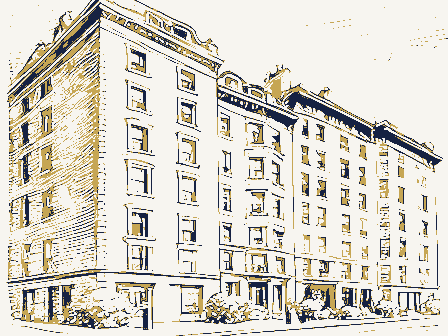
Major Bibliographical References (Cite the books, articles, and other sources used in preparing this form on one or more continuation sheets.) Previous documentation on file (NPS) Primary location of additional data - preliminary determination of individual listing (36 CFR X State Historic Preservation Office 67) has been requested LJ Other State agency - previously listed in the National Register - Federal agency - previously determined eligible by the National - Local government - University - designated a National Historic Landmark recorded by Historic American Buildings Survey Name of repository: Ohio Historic Inventory recorded by Historic American Engineering Record 1900-1913 Register Bibliography COMMERCE ARCHITECTURE Criteria Considerations Architect/Builder religious purposes. Significant Dates Cultural Affiliation Applicable National Register Criteria significant in our past.
Period of Significance and distinguishable entity whose components Significant Person our history. (Enter categories from instructions) for National Register listing) Other G less than 50years of age or achieved significance (Complete if Criterion Bis marked above) NPS Form 10-900 OMB No. 1024-0018 (Rev. 10-90) United States Department of the Interior National Park Service NATIONAL REGISTER OF HISTORIC PLACES CONTINUATION SHEET Franklinton Rowhouse Apts. At State and May Section number 8 Page 1 Columbus, Franklin County Ohio The Franklinton Rowhouse Apartments at State and May are being nominated to the National Register under Criteria A and C.The Franklinton Rowhouse Apartments meet Criterion A for broad patterns of events.
It represents the residential boom that was a response to increased industrial development, improved transportation systems, and civic infrastructure improvements on the west side of Columbus at the turn of the 20th century. Under Criterion C, the Franklinton Rowhouse Apartments are a good shaped, rowhouse-type apartment building at a corner location. The building is one of four remaining examples of this property type located within this near west side neighborhood of Columbus. Franklinton Background The Franklinton Rowhouse Apartments lie in Franklinton, the original settlement of the Columbus area the original settlement was shortly moved to the west further away from the river. Columbus was established in 1812 when four Franklinton men donated land for a new state capital to be built just east of the Scioto River.
Franklinton and Columbus developed separately, but Columbus greatly surpassed Franklinton in growth within a short time of its founding. Columbus grew steadily as the seat of state with expansion. Finally in 1870 Franklinton was annexed to Columbus, although the area continued to be known as Franklinton even to the present day. "By joint action of the City Council and the County Commissioners in 1870, an area of 4,052 acres, including Franklinton, the original settlement, and Middletown just east and a hamlet called Birmingham, west of Goodale park, was taken into the city of Columbus. The population of Franklinton, while not great, was so considerable as to make better protection necessary.
The annexation gave new life to the section and it soon became the progressive West Side, with many new (Hooper, p.53) Today the boundaries of Franklinton are still roughly what they were circa 1900: the Scioto River on the north and east, Mound Street on the south, and Central Avenue on the west (see attachment A). Although the western boundary of Columbus ultimately pushed passed the Franklinton neighborhood, Franklinton was what people commonly referred to as the west side in the late 1800s and early 1900s. The area was also often referred to as the Bottoms due to the low-lying nature of the land west of the In 1880 the population of Columbus was almost 52,000. There was 70% growth in the 1890s with the population reaching 125,000 in 1900. "By the 1890s, the city was growing spatially at a very rapid rate.
The boundaries of the city were stretching out to well beyond the 2-mile ring one might draw on a river. government and a center of commerce and industry.In the post-Civil War years the city was booming homes as well as manufacturing establishments. Twenty years later the population was about 12,000." that was founded in 1797 by Lucas Sullivant on the west bank of the Scioto River.Plagued by flooding, representative of an identified building type in Columbus and in the Franklinton area: the large-scale, L- NPS Form 10-900 OMB No. 1024-0018 (Rev.
10-90) United States Department of the Interior National Park Service NATIONAL REGISTER OF HISTORIC PLACES CONTINUATION SHEET Section number 8 Page 2 Franklinton Rowhouse Apartments at State and May Franklin County, Ohio map.....To the west, the city had absorbed the frontier village of Franklinton and was marching toward the Hilltop where state institutions had fled in the 1870s." (Lentz-p.97) Streetcar and Industrial History By the mid 1800s Columbus was a bustling city that was continually expanding out from its center at Broad and High. Public transportation was limited to horse drawn omnibuses that were slow and uncomfortable. Horse drawn streetcars were first established in 1863 on High Street. The horse drawn streetcars were more efficient as the cars were now on tracks laid in the center of the street.
Other streetcar lines were developed on the other main streets into the 1880s, including one out West Broad Street that was constructed in 1875 for a cost of $40,000. Car barns are also noted as being located on West Broad Street at that time. Sidney Howe Short, an inventor from Columbus, experimented with early mechanized streetcar the spring of 1888. A mile in length, the line was served by two motorized cars. Though only passengers." (Semsel-p. 64-65) To entice patrons to try the new transportation, rides were free. A Columbus "among the first cities in the country to have electric streetcars." (Ionne, p. 9) "Then in the early 1890s, the world changed again. The streetcars were electrified. Now the streetcars could move significantly faster and cool the cars as they moved in the summer.
The heating in the Columbus was typical in its electrification, expansion, and enthusiasm for streetcar lines. Across the represented progress and technological achievement; no community that thought well of its future could afford to be thought backward and unpromising. The electric street car was a source of pride; the 12,000 miles of track had been electrified. By the end of 1903 America's 30,000 miles of street railway was 98 percent electrified." (Jackson, p.111) Histories of Columbus offer differing opinions on which street had the first electrified streetcar; some cite High Street while others cite West Broad Street. All of the histories that cite High Street as the first provide a date of 1891 for electrification, however there is evidence that the West Broad Street line was operating in 1890.
A 1906 letter from the City Solicitor to the City Council outlines the history of streetcar lines on West Broad. The1875line built by the Glenwood and Greenlawn Street Railway Columbus Dispatch history on public transportation in Columbus cites the demonstrator line as placing country both large and mid-size communities were establishing electric streetcar lines."The trolley seasonal, the line was an unqualified success. Daily ridership reached as high as six to seven thousand one3,4,or5miles from the heart of the city.Whole new"streetcar suburbs"developed.(Lentz-p.98) designs. "Short built a demonstrator line in Columbus near the state fairgrounds, which opened during winter was more efficient as well. Most importantly, the 30-minute journey to work could now carry very symbol of a city." (Jackson, p.
111) Between 1890 and 1893 "more than 60 percent of the nation's NPS Form 10-900 OMB No. 1024-0018 (Rev. 10-90) United States Department of the Interior National Park Service NATIONAL REGISTER OF HISTORIC PLACES CONTINUATION SHEET Section number 8 Page 3 Franklinton Rowhouse Apartments at State and May Franklin County, Ohio April 28,1890, the Council passed an ordinance No. 5558, granting the consent of the City Council to the use of electricity, cable traction or gas engines, by The Glenwood and Greenlawn Street Railway Company in operating its railways." And a few months later, "On December 1, 1890, the Council passed an ordinance No.5928, granting the consent of the City Council to The Glenwood and Greenlawn Street Railway Company to construct, maintain and operate a street railroad in Broad Street, from the present terminus to the west corporation line.
The west corporation line at this time was the east driveway to the State Hospital, or what is known as Shady Lane." (Marshall) Additionally The Story of Columbus, Ohio published in 1898 contained a photo of the first electric streetcar with the notation that it traveled West Broad Street beginning in 1891 (see attachment D). Regardless of which street came first, the move to electrification was rapid and all existing lines were using electric by February, 1892. The West Broad Street line was extended from its western terminus at the State Hospital to Hague Avenue in 1895. Throughout the 1890s electric streetcar lines were added on the principal streets of the Franklinton neighborhood, including West Town Street, West Mound Street, Central Avenue, Sullivant Avenue, McDowell Street, and West Rich Street. Car barns continued to be located on West Broad (see attachment F).
A December 1910 map shows the streetcar lines for the city of Columbus, which included all of the Franklinton lines established in the last decade of the 19t century and the car barns at West Broad Street and Glenwood Avenue (see attachment G). Small industries had existed in Franklinton since its founding. Parallel industrial development took place in Columbus, with early industrial enterprises located close to the central downtown at Broad and High. Although Columbus was never the manufacturing center that other Ohio cities, such as Cleveland, were, it still had a sizeable and thriving industrial base, particularly after the Civil War. Downtown remained the location for industrial development into the late 1870s; however by the 1880s factories began to relocate away from downtown. "During this time, the location and nature of working places underwent a drastic shift.
Downtown real estate in the area around Broad and High streets had become too expensive for factories. Industrialists followed the river north and the lines of the railroad tracks in all directions for building sites....By 1900, little heavy industry was left in the downtown area. Even light industries, such as the breweries, were moving." (Garrett-p.87) Franklinton saw a steady increase in development and population beginning around 1885. Land was inexpensive on the west side of the Scioto River, largely due to periodic problems with flooding, but the availability of land in the bottoms was still attractive to industrialists who needed to move away centuries due to the arrival of the railroad.Historic survey maps such as Sanborn and Baist Property lines.
The atlases also showed that commercial development expanded at Broad Street, and Atlases indicate that during this time period industrial development invaded the area near the new rail from downtown."Building in Franklinton did increase dramatically in the late 19th and early 20th NPS Form 10-900 OMB No. 1024-0018 (Rev. 10-90) United States Department of the Interior National Park Service NATIONAL REGISTER OF HISTORIC PLACES CONTINUATION SHEET Section number 8 Page 4 Franklinton Rowhouse Apartments at State and May Franklin County, Ohio interspersed pockets of residential development resulted from the increased commercial and industrial growth in the area." (Franklinton Area Commission, p.1) A similar industrial boom was happening near the State Penitentiary.
Although this industrial area was on the other side of the river, it was to the west of downtown and directly north of Franklinton. With improved transit available, the factories around the Penitentiary were now another source of employment for west side residents. The largest of these factories was "the Columbus Buggy Company, which employed 1,100 men, produced a buggy every eight minutes and sold more than $2 million in goods in 1890 alone." (Garrett-p. 101) A study of the 1899 Baist Property Map shows that the industrial development in Franklinton was predominately concentrated in the eastern part of the neighborhood, where the railroad lines were located. Plan 4 of the Baist maps illustrates the area bounded by Davies (one block north of Broad), the river, Main Street on the south and Grubb Street on the west (the area to the east of today's Route 315).
In addition to the West Side Side Market House, nine industries are indicated, including Crystal Ice Manufacturing, W.C. Goodman & Company Shoe Factory, Columbus Machine Company, and J.W. Brown Manufacturing Company. Further to the west. Plan 9 shows the area between the river on the north, Grubb Street on the east, State Street on the south and Central Avenue on the west. A few industries are shown here including a sausage factory and the Hallwood Cash Register Company. Both areas had commercial development along West Broad Street. Commerce and industry were promoted in all areas of the city. Columbus had a Board of Trade at the turn of the century, plus nine other boards of trade specific to a given neighborhood, including a West Side Board of Trade that served the Franklinton area.
1898 and 1913 Floods The area west of the Scioto River had been subjected to numerous floods since the earliest pioneers settled there. Levees were constructed and improved throughout the 1800s in the Franklinton area to reduce the damage done by flooding. After a significant flood in 1865, a 15-foot levee was built around most of the west side of the city, from the forks of the river south to what is now the Main Street bridge. Improvements were made over the next 30 years, but the levee was severely tested by the major flood of 1898.
In a report on the March 23° 1898 flood to the Director of Public Improvements of Columbus, the Franklinton area was specifically mentioned: "A considerable portion of the populated part of the West Side of the city, probably not less than 800 acres, was completely flooded, and the inflowing waters finding a short cut through the lowest portion, swept across this section with a rapid current, the wake of the (1898) flood, a whole new round of prevention work was undertaken." (Lentz, "As It NPS Form 10-900 OMB No. 1024-0018 (Rev. 10-90) United States Department of the Interior National Park Service NATIONAL REGISTER OF HISTORIC PLACES CONTINUATION SHEET Franklinton Rowhouse Apartments at State and May Section number 8 Page 5 Columbus, Franklin County, Ohio Were," p.
154) This included elevating the levees and railroad tracks of all five railroads crossing the west side in a comprehensive plan to protect Franklinton from further flood damage. The tracks and levees were raised 6 feet above the high water mark of the flood. The Great Flood of March, 1913, wreaked new havoc upon Franklinton when the levee broke north of downtown and put the entire west side of the city under as much as 26 feet of water. According to Lentz, 94 people were killed; the entire city was shut down for six days and the west side for six weeks. Franklinton was cut off from the city, as the Broad and Town Street bridges were destroyed and streetcar service was suspended for one month.
The improvements that came out of this flood were significant, however, including replacement of the bridges, widening of the river to twice its width downtown, and construction of a new levee, 300 feet wide and 60 feet high. With these changes, the west side continued to expand as the population moved beyond the Franklinton area: "In 1919 with millions spent in grade crossing elimination and other millions being spent in flood protection, the population has increased and spread to the hilltop and beyond where a handsome residential section has been created." (Hooper, p. 53) History and Significance of the Franklinton Rowhouse Apartments The Franklinton Rowhouse Apartments meet Criterion A for broad patterns of events.
It represents the residential investment boom that was a response to increased industrial development, improved that were constructed at corner locations in Franklinton in the year 1900. A fifth similar L-shaped apartment building was added to the neighborhood by 1910. The Franklinton Rowhouse Apartments at State and May were constructed in 1900: It does not appear on the 1899 Baist Property map of Columbus, but is depicted on the 1901 Sanborn map. Undeveloped the Sessions Western Addition) was purchased by Lawrence W. Mead for $3000 on March 17, 1899, and sold for $35,000on April 15,1901. Mead is listed in the Columbus City Directory as an attorney from 1895-1904. He lived at 201 North 17* on the city's east side and had an office at 43½ North High Street until 1898, when he worked at 63 Wheeler Building.
A search of Columbus City Directories shows that his apartment building was occupied primarily by working class/blue collar tenants such as bartenders, tailors, salesmen, and drivers in the early 1900s. Rowhouse Apartments illustrate a boom in residential development and real estate investment in Franklinton at the turn of the 20" century. This followed the increase in industrial development on the west side during the mid 1880s, which in turn was caused by the location of railroads through the area, transportation systems, and civic infrastructure improvements on the west side during the late 19th century. It is also significant for its representation of an important property type in Columbus, and specifically Franklinton, under Criterion C. It is one of four large-scale, L-shaped apartment buildings lots were at State and May until the present building was constructed.
The property (lots 58, 59, 60 of In combination with the other large-scale apartment complexes built at the same time, the Franklinton NPS Form 10-900 OMB No. 1024-0018 (Rev. 10-90) United States Department of the Interior National Park Service NATIONAL REGISTER OF HISTORIC PLACES CONTINUATION SHEET Franklinton Rowhouse Apartments at State and May Section number 8 Page 6 Columbus, Franklin County, Ohio the migration of factories away from downtown, and available, inexpensive land in the bottoms. Investment in residential construction was also facilitated by the availability of streetcar transportation in the neighborhood West Broad Street by 1875 and the lines were electrified by 1891. Throughout the 1890s additional electric streetcar lines were added on all the principal streets in Franklinton.
As elsewhere in Columbus, the electric streetcar facilitated the movement of people throughout the city, giving residents more flexibility in deciding where to live without their work locations being the primary deciding factor. As noted above, great measures were taken to improve the levee system in Franklinton, thereby protecting people, homes, and businesses. As the railroads and levees were raised above the 1898 flood levels, there was a sense of confidence that the west side was now protected from further flood damage. This was reflected in the real estate speculation that was happening circa 1900. In addition, there were other city infrastructure improvements at the turn of the century that made Franklinton more desirable for real estate development, including sanitation.
"Until 1897, the sewers on the West Side had been constructed without system and with the same general idea of emptying everything into the river. In that year a system of separate storm and sanitary sewers was devised, all being later extended to the main sewage pumping station, ..." (Hooper, p. 121) The Baist Property Maps of 1899 and 1910 provide evidence of the residential boom in Franklinton during this period. The 1899 map shows a scattering of mostly frame single-family houses and duplexes, with a few brick rowhouses or small-scale apartment buildings located mostly on the streets off of West Broad Street. By 1910, the area is a far more developed neighborhood with streetscapes of frame houses and both large-scale apartment buildings and smaller rowhouse structures.
The year 1900 Real estate development in the neighborhood was cut short by the deadly and devastating flood of 1913, which slowed development. The Hilltop area further to the west became the favored location for construction after that time. A visual survey of Franklinton places its existing architecture from the from later decades of the 1900s. This is particularly true after the flood of 1959, which ultimately led to development restrictions in the neighborhood. Given subsequent flood related development problems, boom that Franklinton experienced circa 1900. Architectural Context The Franklinton Rowhouse Apartments meet Criterion C as a good representative of a defined property type in the Franklinton area of Columbus.
While numerous apartment buildings and rowhouses are found in the historic neighborhoods of Columbus, the large-scale, L-shaped, corner apartment buildings are relatively unique to Franklinton. One other known example exists at the corner of Kerr and Russell Streets in Italian Village, a late 1800s neighborhood north of downtown that is comprised of similar housing stock (Old North End Historic District, NR, 1996.) the significant remaining large-scale apartment construction is especially illustrative of the residential period around the turn of the 2oth century.There is little residential or commercial development present and the civic infrastructure improvements that followed the city's19" century floods.The streetcars reached NPS Form 10-900 OMB No. 1024-0018 (Rev.
10-90) United States Department of the Interior National Park Service NATIONAL REGISTER OF HISTORIC PLACES CONTINUATION SHEET Franklinton Rowhouse Apartments at State and May Section number 8 Page ] Columbus, Franklin County, Ohio The locations and appearance of the five Franklinton examples of this property type (only four are remaining) are shown in attachments A, B and C. In addition to the Franklinton Rowhouse Apartments, the remaining buildings include the apartments at West Broad Street and Hawkes Avenue (#1 on the rowhouse-type structure with two primary facades at its corner location, with each apartment given a separate street entrance. Three of the buildings contain 11 residential units, while the building at McDowell and Chapel contains eight units.
One of the four properties is actually two separate buildings connected by a freestanding wall (Broad and Hawkes), while the other three are comprised of a single L- shaped structure. The fifth example of this construction type is the Monticello Apartments, an impressive three-story corner apartment building containing nine flats on each floor that was located at the corner of West Broad and Jones Street (#4 on the map). It was destroyed by fire in 1992. Two of the four remaining buildings retain sufficient integrity for National Register listing as a reflection of the pattern of events that contributed to their construction and as examples of this property type. These are therowhouse-type apartments at State and May and the rowhouse-type apartment building at Broad and Hawkes (see related National Register nomination).
The other two remaining buildings, located at the corner of Chapel and McDowell and the corner of Town and Hawkes, do not retain sufficient integrity for National Register listing. In particular, the Chapel and McDowell building has been altered at the roofline and at the center gable, and the Town and Hawkes building has had its nominated properties. The more traditional rectilinear apartments or rowhouses are also present in Franklinton. Most of them contain four to 10 units and are simple with modest architectural features. A few display craftsmanship and 12-30 Glenwood Avenue. In comparison to these rowhouses, the L-shaped, corner apartment buildings are more substantial in scale, have a higher level of architectural detail, and visually dominate the neighborhood. The majority of houses in the Franklinton area are wood frame single family or duplexes.
The three-story Franklinton Rowhouse Apartments with its corner towers also stands out in its immediate neighborhood, which is sparsely developed. It visually dominates the streetscape, including a smaller and earlier rowhouse grouping located on the south side of State Street across from In summary, the Franklinton Rowhouse Apartments at State and May are a significant representation of large-scale residential investment in Franklinton at the turn of the 20# century, illustrating important advancements in industrial development, transportation systems, and civic infrastructure improvements type from the same period that are located in the immediate context of the Franklinton neighborhood. porches removed.In addition, the architectural character of these buildings is not as strong as the two their streetscapes.
This is especially true when comparing these buildings to the overall housing stock of this building. apartments at West Town Street and Hawkes Avenue (#5 on the map).Each of these four buildings is a Franklinton map),the apartments at McDowell Street and West Chapel (#3 on the map),and the on the west side of Columbus at the end of the 19t century. It is also an important and architecturally significant example of a recognized Columbus property type and one of four remaining examples of that NPS Form 10-900 OMB No. 1024-0018 (Rev. 10-90) United States Department of the Interior NATIONAL REGISTER OF HISTORIC PLACES Section number g Page 1 Franklinton Rowhouse Apartments at State and May Franklin County, Ohio MAJOR BIBLIOGRAPHIC SOURCES Alvord, John W.& Charles B.Burdick.
A Report to the Mayor and City Council on Flood Protection for the City of Columbus, Ohio, The Pfeifer Press, Columbus, Ohio, 1913. Columbus City Clerk files, Street Railway Files 1888-1939, Ohio Historical Society. Columbus City Directory, various years. The Columbus Railway, Power & Light Company, Questions and Answers: A booklet of facts about electric light and street car service in Columbus, 1933. Franklinton Area Commission. East Franklinton Structure Inventory, 1994. Garrett, Betty. Columbus: America's Crossroads, Continental Heritage Press, Inc., Tulsa, Oklahoma, Harden, Mike. Columbus Celebrates The Millennium, Community Communications, Inc., Montgomery, Alabama, 2000. Hooper, Osman Castle. History of the City of Columbus: From the Founding of Franklinton in 1797, through the World War period, to the Year 1920, Memorial Publishing Company, Columbus and Hunker, Henry L.
Industrial Evolution of Columbus, Ohio, The Ohio State University, Columbus, Ohio, Ionne, Joe. "Public Transportation..its ups and downs in Columbus" The Columbus Dispatch Sunday Magazine, March 11, 1973, pages 9-14. Jennings, D.A. Ohio's Capital, Columbus: Industrial and Biographical Souvenier, 1907, Allied Printing, Columbus, Ohio, 1907. Lentz, Ed. As It Were: Stories of Old Columbus. Red Mountain Press: 1998 Lentz, Ed. Columbus: The Story of a City. Arcadia Publishing, Charleston, SC, 2003. Marshall, George S., City Solicitor, Letter to Columbus City Council, May 4, 1906. 1958. 1980. Cleveland, 1920. CONTINUATION SHEET National Park Service NPS Form 10-900 OMB No. 1024-0018 (Rev.
10-90) United States Department of the Interior NATIONAL REGISTER OF HISTORIC PLACES CONTINUATION SHEET Section number g Page 2 Franklinton Rowhouse Apartments at State and May Franklin County, Ohio Semsel, Craig Robert. Built to Move Millions: Transit Vehicle Manufacture in Ohio, 1880-1938, UMI Dissertation Services, Ann Arbor, 2001. Studer, Jacob. Columbus, Ohio: Its History, Resources, and Progress, 1873. The Story of Columbus Ohio: Past, Present and Future of the Metropolis of Central Ohio, Johnston Publishing Company, Columbus, Ohio, 1898. National Park Service Franklinton Rowhouse Apts. At State St. and May Ave. Columbus, Franklin County, Ohio 10.
Geographical Data (Place additional UTM references on a continuation sheet) 1 17 327982 4424912 Verbal Boundary Description (Describe the boundaries of the property on a continuation sheet.) Boundary Justification (Explain why the boundaries were selected on a continuation sheet.) 11. Form Prepared By name/title organization Nathalie Wright and Judy Williams date 6/01/04 street & number 2237 Cambridge Boulevard telephone 614-481-7999 state Ohio zip code 43221 Submit the following items with the completed form: A USGS map (7.5 or 15 minute series) indicating the property's location. A Sketch map for historic districts and properties having large acreage or numerous resources. Representative black and white photographs of the property.
(Check with the SHPO or FPO for any additional items) (Complete this item at the request of the SHPO or FPO.) street & number city or town Paperwork Reduction Act Statement: This information is being collected for applications to the National Register of Historic Places to nominate benefit in accordance with the National Historic Preservation Act, as amended (16 U.S.C. 470 et seq.). Estimated Burden Statement: Public reporting burden for this form is estimated to average 18.1 hours per response including the time for reviewing instructions, gathering and maintaining data, and completing and reviewing the form. Direct comments regarding this burden estimate or any aspect of name telephone Photographs Maps state Continuation Sheets Additional Documentation Property Owner zip code Zone Easting Northing UTM References Additional items city or town Columbus See continuation sheet.
this form to the Chief, Administrative Services Division, National Park Service, P.0. Box 37127, Washington, DC 20013-7127; and the Office of properties for listing or determine eligibility for listing, to list properties, and to amend existing listings. Response to this request is required to obtain a NPS Form 10-900 OMB No. 1024-0018 (Rev. 10-90) United States Department of the Interior NATIONAL REGISTER OF HISTORIC PLACES CONTINUATION SHEET Section number 10 Page 1 Franklin County, Ohio Verbal Boundary Description Located in the City of Columbus, County of Franklin, State of Ohio, and comprising the entirety of lots 58, 59 and 60 of the Sessions Western Addition. and 74-82 S. May Avenue during the period of significance.
Boundary Justification Franklinton Rowhouse Apartments at State and May National Park Service The proposed boundary contains all of the property associated with the building at 494-504 West State Street NPS Form 10-900 OMB No. 1024-0018 (Rev. 10-90) NATIONAL REGISTER OF HISTORIC PLACES Section number Photos Page 1 Franklinton Rowhouse Apartments at State and May Franklin County, Ohio The following information is the same for all photographs: 494-504 W. State Street/74-82 S. May Avenue Columbus, Franklin County, Ohio Photo by Judy Williams, May, 2004 Negatives at 2237 Cambridge Blvd., Columbus, Ohio 1. South (State Street) and west (May Avenue) elevations 2. South (State Street) and east elevations 3. Southwest corner turret 4. State Street façade detail, looking northeast 5. May Avenue elevation 6. North (rear) elevation 7. East (rear) elevation detail 8. Rear elevation detail 10.
Typical apartment, first floor kitchen 11. Typical apartment, first floor living room 12. Corner apartment, first floor living room 13. Corner apartment, first floor kitchen 14. Neighborhood view of immediate area, looking west on State Street 15. Neighborhood view of immediate area, looking east on State Street toward downtown CONTINUATION SHEET National Park Service United States Department of the Interior Photo views: ATTACHMENT A EAST FRANKLINTON SURVET AREA BROAD STREET 949-957 W.BROAD ST. AND 13-23 HAWKES © 74-82 s. MAy AVE, ANA : 494-504 W. STATE ST. 5. 931- 937 w. TOWN AND THE CASTLE Franklinton 1200 48l- 490 W, CHAPEL 934 -942 W. BROAD AND 180-196 HAWKES Franklinton Apt3.at state may W. CHAPEL THE CASTLE W: STATE FRANKLIN CO., OH 496 W. BROAD FRANKLIN CO., OH W. -TOWN Calendar Franklinton, Ohio 2003 THE CASTLE FRANKLIN CO., OH FEARN & CO.- L. HIRSCH, Editor and Manager.
Stoves and House Furnishing Goods THE OLDEST GERMAN DAILY NEWSPAPER IN DID ADVERTISING MEDIUM, AS IT GOES TO Defend yourself against the Hot Weather NEARLY EVERY GERMAN FAMILY. 106 North High Street. COLUMBUS, OHIO. 299 S. High St. was introduced in 189l, when the West Broad Street line was equipped with the new motive power. For the first few days interested crowds stood about the High Street terminus or flocked to the Broad street bridge to street line at that time ran from High street to the gate of the State Hospital for Insane, being operated separately from the other lines belonging to the den avenue, from High street to the State Fair grounds, a distance of about a quarter of a mile, but cars were not run on it regularly. Hardware Bicycles General SCHOEDINGER TELEPHONE1119. Some time previous an experimental The Daily Columbus Express, JACOB RAPP & CO.
car in Columbus created consid- FIRST ELECTIC STREET CAR IN COLUNIBUS. line had been constructed on Chitten- system of which it is now a part. watch the"thing"goby.The Broad ATACHMENT THE STORY OF COLUMBUS, OH P. 78 by using the "B" WATER FAN.... THE adventof the first electrie sureet erable excitement. This innovation "You are not After drinking Our DELICIOUS Before nightfall it was found that num- bers could not be rescued, owing to lack of having passed their maximum, the rain ened to give way, leuting in the main volume proved unfounded and before midnight the extent of the disaster in the absence of actual district could only be surmised, but it was felt that the worst was over. who had been removed from their homes work of rescue. A relief committee of citi- money, provisions and clothing generously ATTACHMENT E Franklinten Apt3.
at State and May had been falling throughout the day and houses could not be reached on account would run with the darkness and the there were reports or heavy rain- boats and to the fact that many of the on fall cmbankments that hourly threat- Were indulged in as to the chances they Although the watars showed evidence of intelligence from all portions of the flooded zens had been formed and donations of The problem of taking care of the yeuple THE CASTE falls to the northward. Crowds of specta- tors, in spite of warnings, risked their lives dated streets on the lookout for any case of teenth Regiment, O.
N.G., was also on hand Fortunately the fears of a further rise was scarcely less important than the actuel Cemetery was entirely shut off, the avenue leading to the latter being completely the city ambulance and the patrol wagons the Fourteenth Regiment armory and at patrolmen splashed up and down the inun- RESCUE WORK. of the current. Gloomy apprehensions One of the peculiar and distressing ned their homes. REPUBLICAN WIOWAN. distress which lt would be in their power to with its ambulance. o sufferers were temporarlly quarteredat class of working people,many ur whom food. Great loss of life was feared. ATTACHMENT WEST BROAD STREET CAR BARN - FRANKLIN Co, OH CIRCA 1901 THE CASTLE AMTACHMENT G FRANKLIN CO., OH THE CASTLE NAME : N PDIL: ABSTRACT/ SUMMARY COMMENTS : atlached Return Sheet. RECOM.
/CRITERIA TELEPHONE DATE 1/29/05 REJECT MULTIPLE ACCEPT REVIEWER 12/28/04 2/10/05 PERIOD: OTHER: EVALUATION/RETURN SHEET REASONS FOR REVIEW: DATE RECEIVED: PROGRAM UNAPPROVED: If a nomination is returned to the nominating authority, the COMMENT WAIVER: NATIONAL PARK SERVICE NATIONAL REGISTER OF HISTORIC PLACES UNITED STATES DEPARTMENT OF THE INTERIOR DATE OF 45TH DAY: DOCUMENTATION see attached comments Y/N see attached SLR Y/N DATE OF WEEKLY LIST: DATE OF 16TH DAY: N SLR DRAFT: Y REQUESTED ACTION: NOMINATION STATE & COUNTY: OHIO, Franklin DISCIPLINE RETURN 1/14/05 NATIONAL: LESS THAN 5O YEARS: DATE OF PENDING LIST: Patuih Andus NATIONAL PARK SERVICE NATIONAL REGISTER OF HISTORIC PLACES EVALUATION/RETURN SHEET NAME : Accept Aéc ABSTRACT/SUMMARY COMMENTS: RECOM.
/CRITERIA_ DOCUMENTATION see attached comments J/N see attached SLR Y/N TELEPHONE REJECT RETURN DATE MULTIPLE 5/04/05 3/21/05 DETAILED EVALUATION: DATE RECEIVED: UNITED STATES DEPARTMENT OF THE INTERIOR DATE OF PENDING LIST: DATE OF WEEKLY LIST: DATE OF 45TH DAY: 4/2a/2005DATE being nominated. Historian REVIEWER - REQUESTED ACTION: RESUBMISSION STATE & COUNTY: OHIO, Franklin PROPERTY DISCIPLINE Franklinton Apartments of State and May Franklin Co Colunbus Ohio Columbus, Ohio Franklin Co Franklin Co 74-82 5. may Ave. Frankehin Co. Frantelin Co. Columbes, Ohio Frandin Co. Franklin Go Franklinten Apts. at 74-825. May Ave.
Columbs, Ohio Columbus, Ohio Frankelin lo Frankhnlo Ohio Franklin lo Franklin Co Columbus Olis SOUTHWEST COLUMBUS, OH UNITED STATES GEOLOGICAL SURVEY SOUTHWEST COLUMBUS QUADRANGLE Franklin County (7 327982 4424412 Franklinton Apts DEPARTMENT OF THE INTERIOR 7.5 MINUTE SERIES (TOPOGRAPHIC) REC'D BY OHPO NOV 22 2004 both residential and business; cooperate with other organizations interested in Franklinton; nurture a sense of pride in the Franklinton Area.
October 18, 2004 Carol d stewart Jim Kay Ohio Historic Preservation Office 567 East Hudson Street Columbus, Ohio 43211 To Whom it may concern, Walter Johanni The Franklinton Historical Society voted, at the November 17, 2004 meeting, to support the nominations of two properties in Franklinton to the National Sandy Andromeda Leslie Blankenship The properties are at West Broad Street and Hawkes Avenue and the "Castle" at West State Street and May Avenue. The Franklinton community has always been fascinated by the castle building. We know it has been poorly renovated in past years, but understand it will be some what restored to its former glory. James Kay Bea Murphy Mike Peppe Carol J. Stewart, President Tim Taynor Bruce Warner FRANKLINTON Treasurer BICENTENNIAL Officers: Vice-President Register.
Secretary Slattery Franklinton Historical Society Michele Finneran Historical Society Brenda Dutton Nancy Weil Steve Gordon Board of Trustees: Mike Frush Dave Hartigan Kathleen Finneran Surveyed 1797 Williams 183 Htawkes Avenue Chair: Helen Evans - 227-1619 Vice-Chair: Carol J. Stewart - 279-9382 Secretary: Donna Woods - 227-1623 November 22, 2004 State Historic Preservation Officer 567 E. Hudson Street Columbus, OH 43211 The Franklinton Area Commission supports the Community Housing Network in its plan to 957 W. Broad St and 13-23 Hawkes Ave.). These buildings have historic value to this neighborhood and we are pleased that they will be protected for future generations. Cc: Samantha A. Shuler, Community Housing Network Inc. SINCE Chairperson Columbus, Ohio, 43223 Helen Evans properties are the Franklinton Row House Apartments at State and May (494-504 W. State St.
Franklinton Area Commission Rachel Tooker Dear Ms Tooker: make application to put two Franklinton area properties on the National Historic Register.These and 74-82 S. May Ave.) and the Franklinton Row House Apartments at Broad and Hawkes (949- REC'D BY OHPO NOV 2 6 2004 Mayor Michael B. Coleman City Hall / 90 West Broad Street Columbus, Ohio 43215-9014 FAX 614/645-8955 TDD 614/645-6200 December 2, 2004 Dr. Mark Seeman, Chairman Ohio Historic Site Preservation Advisory Board Ohio Historic Preservation Office Columbus, OH 43211-1030 Franklinton Rowhouse Apartments at State and May The City of Columbusis pleased and honored by the recent nomination of the listing of this building in the National Register of Historic Places. Michael B. Coleman Mark Barbash, Director, Department of Development Roxyanne Burrus, Neighborhood Services Administrator Randy F.
Black, Historic Preservation Officer Stephen C. Gordon, National Register Coordinator The City of Columbus Is an Equal Opportunity Employer Mayor 614/645-7671 MBC:heh National Register Nomination Recognition of this property by the National Register of Historic Places will help preserve the environment and character of Columbus.The City looks forward to the Franklinton Rowhouse Apartments at State and May to the National Register of Office of the Mayor Dear Chairman Seeman: 567 Hudson Street building type in the history of the city's development. City Of Columbus Sincerely Historic Places.The Franklinton Rowhouse Apartments represent an important NATIONAL PARK SERVICE 1849 C Street, N.W. Washington, D.C.
20240 IN REPLY REFER TO: NATIONAL REGISTER OF HISTORIC PLACES EVALUATION/RETURN SHEET Franklin County, OH Reference Number: 05000027 labeled with the property name, county, and state as required by National Register documentation the property name, county, and state. There is some confusion under which name this building is being nominated. In Section 1 of the form name is not being used. If it is nominated under the historic name, then please correct Section 8 of the form to refer to the building by its historic name. Patrick Andrus 2/9/2005 Historian United States Department of the Interior Property Name: standards. The four cover pages of the form (containing sections 1 through 11) are labeled with the This nomination is being returned for technical deficiencies.
None of the continuation sheets are Franklinton Apartments at State and May Reason for Return: the historic name of the building is noted as Franklinton Apartments at State and May.In Section 8of property's address rather than the property's name. Please label all pages of the nomination form with the form(Statement of Significance) the building is referred to as the Castle(which is listed in Section nominated under. If it is nominated as the Castle, please provide a justification for why the historic 1 of the form as the property's"Other Name").Please clarify which name the property is being
 Block
Block