Major Bibliographical References (Cite the books, articles, and other sources used in preparing this form on one or more continuation sheets.) Previous documentation on file (NPS): N/A - preliminary determination of individual listing (36 E State Historic Preservation Office - Other State agency - Federal agency - Local government - University - Other - recorded by Historic American Buildings Survey - recorded by Historic American Engineering Record # Politics/Government Bibilography Register Architect/Builder Commerce individual distinction. religious purposes. Significant Dates Property is: James Delos Hill Oscar Finnegan Significant Person Criteria Considerations Applicable National Register Criteria Narrative Statement of Significance B Property is associated with the lives of persons (Enter categories from instructions) information important in prehistory or history.
previously determined eligible by the National distinguishable entity whose components lack for National Register listing.) designated a National Historic Landmark Cultural Affiliation previously listed in the National Register Name of repository: Name of Property CFR 67) has been requested (Complete if Criterion B is marked above) A Property is associated with events that have made our history. Primary location of additional data: A owned by a religious institution or used for County and State (Mark "x" in one or more boxes for the criteria qualifying the property Hill, James Delos, House Williams County, OH 10. Geographical Data (Place additional UTM references on a continuation sheet.) - See continuation sheet 11. Form Prepared By 2 February 1997 street & number 2201 Campbell St./BGSU .zip code 44870/43403 A USGS map (7.5 or 15 minute series) indicating the property's location.
Complete this item at the request of SHPO or FPO.) - telephone Paperwork Reduction Act Statement: This information is being collected for applications to the National Register of Historic Places to nominate a benefit in accordance with the National Historic Preservation Act, as amended (16 U.S.C. 470 et seg.). instructions,gathering and maintaining data, and completing and reviewing the form. Direct comments regarding this burden estimate or any aspect Northing Easting Zone state Maps Photographs UTM References County and State Continuation Sheets Boundary Justification Additional Documentation Property Owner Additional items city or town Sandusky/Bowling Green Laura and Carlton Gray Acreage of Property Less than one acre Name of Property Submit the following items with the completed form: Representative black and white photographs of the property.
(Check with the SHPO or FPO for any additional items) A Sketch map for historic districts and properties having large acreage or numerous resources.
street & number201 East Main Street Estimated Burden Statement: Public reporting burden for this form is estimated to average 18.1 hours per response including time for reviewing (Explain why the boundaries were selected on a continuation sheet.) Management and Budget, Paperwork Reductions Projects (1024-0018), Washington, DC 20503 Montpelier name organization Midwest Research Consultants/OHPO Verbal Boundary Description telephone 419-621-1888/372-6935 city or town name/title Shari Bowers/Maura Johnson (Describe the boundaries of the property on a continuation sheet.) Hill, James Delos, House industrial/agricultural shipping center, and was "more closely identified with the growth and prosperity Located at the furthest northwest corner of the state, Williams County was created by the state by Robert McDaniels, and then George Wisman in 1836.
The townsite itself was surveyed by Thomas of town the following year. An ashery just west of town was also moved to Montpelier around that time, where it became a thriving and long-standing operation. The first general merchandise store in 200." (Cooley, p. 68) Continuation Sheet National Park Service thriving little village with three stores, two groceries, one tavern, one fine gristmill, a (wool) carding Williams County, OH centuries, Hill was a guiding force in the town's transition from crossroads trading settlement to National Register of Historic Places Statement of significance Historical background and significance: Hill House is nominated under National Register Criterion B for its association with this accomplished of the village than any other one individual in the town's history" (Leader Enterprise, 11 May 1939). listings in Montpelier.
Bryner and Jesse Tucker built a water-powered grist mill on the banks of the St. Joseph at the north end death in 1939 --is the property most closely associated with him during his productive life.The J.D. United States Department of the Interior saw mill owned by Dan Tucker and Mr.Hueston was providing lumber to early settlers in 1844. John machine and various mechanics.
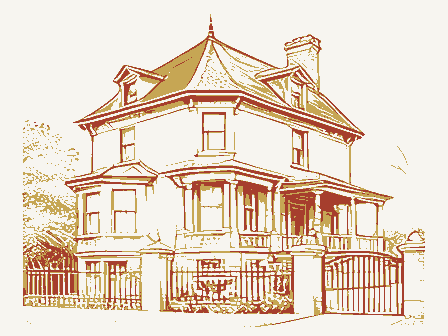
We have but little idea of the population, but suppose it to be about Montpelier's most accomplished civic and business leaders.During the late 19th and early 20th the village was established in 1845 by C.W.Mallory.By 1853,Montpelier was described as "a The J.D Hill house is historically significant for its long association with James Delos Hill, one of Hill's influence is still evident in Montpelier, but his house -- occupied by him from 1893 until his In the Montpelier area, George Bible is believed to have been the first white settler in 1834,followed Ogle in 1845 and platted by Jesse Tucker and 1.K.Brimmer on contract. In 1849, this land was of the last areas of the state to be permanently settled.4 Section number - legislature in 1820.
It originally included much of present-day Fulton County and all of Defiance transferred to John Miller who, four years later, began selling lots and slowly establishing a town. County. Organized in 1824 and partitioned to its current boundaries in 1850, Williams County was one community leader, prominent in local politics and business. There are currently no National Register Page -1 NPS Form 10-900-e OMB Approval No. 1024-0018 United States Department of the Interior Hill, James Delos, House Williams County, OH Williams County nearly doubled its population during the decade of the 1840s but, despite an auspicious the coming of the railroads, Montpelier remained a small crossroads trading point. Situated on routes that directly linked the Atlantic seaboard and eastern Great Lakes cities with Chicago, St.
Louis, and the Mississippi Valley, Williams County would see significant growth as a largest town in the county, overtaking West Unity, Williams Center and Pulaski. A general boom in Williams County resulted, increasing land values and boosting population. In the early 1870s, a survey through Montpelier for the Chicago & Southern Railroad also caused a takers had the town been considered that, since it was named, its population had always been merged in that of the township until 1880, when, for the first time in its history, it has an independent place in the time, Montpelier was the seventh-largest village in Williams County, and was only just beginning to The coming of the Detroit, Butler & St.
Louis Railroad (later known as the Wabash and, today, as the with manufacturing, food processing became an industry of some local significance.S National Register of Historic Places great deal of excitement and, though the project failed to materialize, it did spark rapid growth in that paucity of population." (Shinn, p. 245) Agriculture was the principal industry in the area and, until Continuation Sheet agricultural productions by establishing a new market, it has conferred as substantial benefits upon the always been important as a solid base for the economy of the area, but the station in Montpelier agricultural region of which Montpelier is the center, and by the increased value it has given to all National Park Service compete as an important transportation and manufacturing center. small community.
The transition was described thus:"So unimportant by the United States census county. The railroad at once opened a market for the surplus farm and garden productions of the rich thirty years and was not incorporated until 1875, the delay being caused by its slow growth and the Norfolk Southern) in August of 1881 greatly enhanced Montpelier's fortunes.Agriculture had with Toledo and parts beyond. The railroad opened markets for farm produce and manufactured goods, result of the railroad booms of the1850s and 80s.In 1855,the Michigan Southern& Northern Indiana Section number 8 Page - < beginning, growth in Montpelier did not keep pace. "[Montpelier] remained only nominally a town for United States Census figures, and an official return of 405 inhabitants." (Goodspeed, p. 375) At that farmer as it has upon the manufacturer and merchant." (Goodspeed, p.
376) Combining agriculture provided a convenient shipping point for agricultural products and livestock from all parts of the and allowed local merchants to buy goods at lower transportation costs. Bryan quickly become the Railroad was the first to open Williams County to interstate trade by connecting Bryan (the county seat) (8-86) NPS Form 10-000-a OMB Approval No. 1024-0018 United States Department of the Interior Hill, James Delos, House Williams County, OH and an oar factory were soon established to take advantage of cheap and plentiful timber resources, which could be floated down the St. Joseph River. Small factories for the manufacture of toys, auto accessories, store fixtures, cement products, building materials and street surfacing products were also Initially, the Wabash line connected Montpelier with Detroit and Butler, Indiana.
As the Wabash accelerated the forward movement until in rapid growth Montpelier has had few equals east of the Mississippi River." (Shinn, p. 245) Still, the village saw its greatest influx of people in 1908, when the railroad moved its shops from Ashley, Indiana, to Montpelier. Later, in 1917, the division offices Enterprise, 11 May 1939) With the establishment of a roundhouse and car-repair shop in town, and the relocation of the division were 400 local employees. (Cooley, p. 70) The railroad remained a dominant force in the community Montpelier had become a prosperous community center, and its population reflected those The coming of a modern highway system, beginning around 1910, provided local access to the rail line, February 1981." (Cooley, p. 70) With the passing of the railroad era, the town has since shifted its constructed.
These industries not only strengthened the local economy, but provided the raw material Continuation Sheet goes, so goes Montpelier" was coined. (Cooley, p. 70) but ultimately contributed to the general decline in the railroad's use and importance in Montpelier, as for subsequent municipal improvements, establishing Montpelier as a progressive community. National Register of Historic Places had become the second-largest town in Williams County, which it remains today. (8-86) Other industries were also attracted by the transportation facilities in Montpelier.A barrel stave factory for many years, and was so closely identified with the town's prosperity that the phrase As the Wabash in 1900, 2,829 residents in 1908, and 3,677 residents in 1938.
By the turn of the century, Montpelier National Park Service improvements.Census figures reported 405residents in1880,1,293residents in 1890,1,869residents In 1920,about 800 Wabash employees were living in Montpelier;by a 1936 newspaper account, there division offices were moved to Fort Wayne and the historic depot[built in 1895] ...was demolished in Section number . Railway Company, is credited with bringing both the shops and offices to Montpelier. (Leader- were brought to town, another small boon for the locals. J.D. Hill, the local attorney for the Wabash offices, Montpelier became the most important railroad center between Toledo and Elkhart, Indiana, Page to Toledo.These last two additions --combined with the enterprising spirit of the citizens -- system grew, lines were extended to St.
Louis and Chicago and, in 1901, a fourth line was completed with an immense volume of through rail traffic.It was also one of the largest employers in the region. elsewhere in the county."Passenger service through Montpelier was discontinued in 1971. The OMB Approval No. 1024-0018 Section number Page - Hill, James Delos, House Williams County, OH focus to a more diversified economy, although discrete reminders of its earlier boomtown days can still his influence there was far-reaching. Hill was born in Osceola, Pennsylvania on 23 September 1860. The son of Edwin R. and Henrietta L. (Tharp) Hill, he was raised on a farm in Noble County, Indiana. Hill attended Michigan Agricultural College' near Lansing, graduating in 1884. He moved to Montpelier shortly thereafter. In June of 1888, Hill was admitted to the Ohio bar.
He opened his law practice in Montpelier and, in the local attorney for the Wabash Railway Company, and was elected for one term as Prosecuting In addition to practicing law, Hill was also deeply involved with the banking business. At one time, he was cashier at the Montpelier National Bank, advancing to president until the bank crisis of 1897 closed Montpelier, which was incorporated in March of 1892. From 1907 until at least 1930, Hill served as (Leader Enterprise, 11 May 1939) Active in Republican politics, Hill served three terms as mayor of Montpelier, from1891-92, 1908-09 and 1910-11.Hill worked for the advancement of Republicans at the county-wide level, as well.
His daughter, for instance, recalls the Tri-State Republican Conference In his obituary, it was noted that "practically every civic improvement [in Montpelier] has had the efforts ..." (Leader Enterprise, 11 May 1939) While Mayor, Hill supervised the construction of Montpelier's Municipal Light and Water plant, becoming its first secretary and, later, chairman of the Montpelier's Masonic Temple, and he served as chairman of that organization every year from 1912 until his death in 1939. conditions for everyone. Nearly every local improvement has been due to a very great extent to his board. The town's sewage system, paved streets, and telephone company are credited to his efforts, as Continuation Sheet secretary of that company. National Register of Historic Places 1889,purchased an office building with C.S. Hill, which they moved from Jonesville Street.
Hill was well as location of the Wabash offices and shops there.Hill did all of the structural planning for Attorney for Williams County. United States Department of the Interior National Park Service luncheon being held in their home. In 1904,he was a delegate to the Republican National Convention. be found.Such is the case with the J.D.Hill House. Hill was considerably more than just a private citizen, being more or less a public institution." untiring support of J.D. Hill] ..He gave liberally of his time and efforts for the betterment of J.D.Hill was active in all aspects of public life in Montpelier during its decades of greatest growth, and NPS Form 10-000-e (8-86) the bank.Hill was also a founder of the Fidelity Building and Loan Association Company NPS Form 10-900-e OMB Approvel No.
1024-0018 United States Department of the Interior Hill, James Delos, House Williams County, OH Hill was a strong advocate for local business growth, as well. Through his banking connections, he associated with him during his adult years, and stands as testament to the enterprise and dedication of local leaders like J.D. Hill. Continuation Sheet important center of trade and commerce. His house on East Main Street is the property most closely National Register of Historic Places National Park Service Contracting and Supply Company (see endnotes), and the Montpelier Manufacturing Company. Hill had a direct hand in shaping the community, transforming it from a small country crossroads to an helped attract and locate the Heller factory, the Gause and Wenzler industries, the Municipal Riding the crest of Montpelier's phenomenal growth -- from the 1880s to the early 20th century -- J.D.
Section number _ Page _ 5 NPS Form 10-900d OMB Approvel No. 1024-0018 United States Department of the Interior Continuation Sheet Hill, James Delos, House Williams County, OH earlier Hopewell Indian activity in Williams County. Until their removal in the 1830's, the area was subsequently occupied by Ottawa, Miamis, Wyandot and Pottawatomie tribes; one large Indian camp, in fact, was once located on the outskirts of present-day Montpelier, on the banks of the St. Joseph River. 5. The Montpelier Creamery Company, for instance, provided a local market for milk; Rose the St. Joseph River produced a popular brand of flour called The Pride of Montpelier. The 6.
The Gause Manufacturing Company of Montpelier, for instance, produced a line called manufacturing and distributing hardware store shelving, showcases and other fixtures worldwide, was Montpelier's largest commercial industry around 1910. A cement products 7. Now Michigan State University. ENDNOTES elements. National Register of Historic Places National Park Service factory was also located there.As a consequence of ready access to road-building products, from Ft. Wayne, employed 1,0o0 local workers. The Trumbull Wagon Works, once famous for its horse-drawn carriages, later turned to auto and truck body manufacture.The Wenzler the first asphalt street in Williams County was laid in Montpelier. "Kant-Break-em Toys." The William A. Waggoner Talking Machine Company, relocating 1.The new shingles are Certain Teed's Carriage House Shingle in Sherwood Forest.
4.Five low burial mounds near Nettle Lake (on the Michigan border) are evidence of constructed ca. 1910) approaches the Hill House in the quality of Neo-Classical Revival 3.According to OHI form WIL-117-6,prepared by J. McMaster in 1978. brand butter was more widely distributed.Under the Storrer Brothers, the old grist mill on 2.Only one other residence in Montpelier George Kollar House at 315 Empire Street, Section number _ 8 Walding Canning company seasonally employed 23 people for canning corn and tomatoes. Stamping Company manufactured toys and auto accessories.The H.C.Heller Company, (8-86) Page - NPS Form 10-000e Hill, James Delos, House Williams County, OH in 1892 by the village and Superior Township. It still serves as the headquarters for village 9. With the assistance of Hill and J.G.
Stahl, Harry Schwartz started the Montpelier type of truck, now called a step van and commonly used by companies like United Parcel Service. and township government. Continuation Sheet National Park Service Manufacturing Company.This business became noted for originating the forward control 8.It was during Hill's first term as mayor that Montpelier's town hall was constructed. With passage of a bond issue, Montpelier's handsome brick town hall was jointly constructed United States Department of the Interior National Register of Historic Places Section number - 8 Page NPS Form 10-900-a Hill, James Delos, House Williams County, OH MAJOR BIBLIOGRAPHICAL REFERENCES Election Certificate, 8 April 1891. Plat Book of 1904. Evansville, IN: Reproduction by Unigraphic, Inc., 1976. Cooley, Richard L. and Kevin M. Maynard. A Guide to Williams County's History.
Montpelier, OH: Williams County Historical Society, 1995. Interview with Alan Benjamin, 24 October 1996. Leader Enterprise. 11 May 1939. Montpelier Enterprise. 25 August 1882, 22 August 1907, 8 October 1908. Shinn, William Henry. The County of Williams: A History of Williams County, Ohio from the Earliest Days. Madison, WI: Northwestern Historical Association, 1905. & Co., 1882. Ohio Historic Inventory, No. WIL-117-6. Continuation Sheet Goodspeed, Weston A. and Charles Blanchard, eds. County of Williams. Ohio. Chicago: F.A. Battey Gorny-Winzeler Printing, 1995. National Register of Historic Places Lewis Publishing Co., 1920. Bowersox, Charles A., ed. A Standard History of Williams County. Ohio. Chicago and New York: Unigraphic, Inc., 1976. Whetro, Jacquelyn and Alan Benjamin. Montpelier Through the Years, 1845-1995.
Bryan, OH: Combined Atlases of Williams County.Ohio.1874 and 1894.Evansville,IN:Reproduction by Interviews with Laura Gray and Henrietta Hill,21 November 1995. United States Department of the Interior National Park Service CMB Approval No. 1024-0018 Section number - Page _ 1 NPS Form 10-900- OMB Approvel No. 1024-0018 Continuation Sheet Hill, James Delos, House Williams County, OH United States Department of the Interior. State of Ohio, Division of Geological Survey. United States Topographic Map, Montpelier, OH. 41st Annual Report of the Superintendent of Building and Loan Associations of the State of Ohio. Cleveland, OH: Consolidated Press and Printing Company, 1931. 17th Annual Report of the Superintendentof Building and Loan Associations of the State of Hio. Springfield, OH: Springfield Publishing Company, 1908. Workers of the Writers' Program. Bryan and Williams County. Bryan, OH.
1941. Montpelier Village Ordinance Book, 13 August 1896 and 8 March 1898. Record of Notaries Commissions: 14 September 1888, 3 September 1891, September 1894, 9 September 1897, 26 September 1900, 26 September 1903, 13 October 1906, 27 September 1909. Record of Official Bonds: 1899, 1900, and 1901. National Register of Historic Places May 1916. Sanborn Map Company. Montpelier, Williams County. Ohio. New York: Sanborn Map Company, Montpelier 2 A p. 114 cert. 204 p. 409, Abstract Index Montpelier 2 A p. 116 vol. 295 p. 126. Bureau of the Census.U.S.Department of the Interior.Eleventh Census of the United States.1890. United States Department of the Interior National Park Service Williams County legal records: Deed Record Vol 47 p. 453, Deed Record Vol. 48 p.
543, Deed Record Vol70 p.463,Abstract index No.2 Montpelier Part 2p.116,Abstract Index Section number Page Page (8-86) NPS Form 10-900-e CMB Approval No. 1024-0018 Hill, James Delos, House GEOGRAPHICAL DATA Williams County, OH Continuation Sheet National Park Service National Register of Historic Places Boundary justification:The boundary includes the legal description Lot 8 in Louden's First Addition Montpelier, Ohio.The addition was originally platted by Harris Louden around 1880,according to Williams County courthouse records (Deeds 47 page 453,and Deeds 48page 543).The building is situated on a corner lot. Verbal boundary description:The nominated property includes Lot 8 in Louden's First Addition in property historically associated with the building at 201 East Main Street.
United States Department of the Interior Page _ 1 which is on the northeast corner of Pleasant and East Main streets in Montpelier, Ohio.
It includes all (8-86) Section number 10 Page UNITED STATES DEPARTMENT OF THE INTERIOR NATIONAL PARK SERVICE NATIONAL REGISTER OF HISTORIC PLACES NAME : DATE OF 16TH DAY: NOMINATOR: STATE OTHER : N PDIL: N PERIOD: N PROGRAM UNAPPROVED: COMMENT WAIVER: N V ACCEPT ABSTRACT/SUMMARY COMMENTS: DOCUMENTATION see attached comments Y/N see attached SLR Y/N TELEPHONE DATE MULTIPLE 6/16/97 RETURN DISCIPLINE REJECT REVIEWER 5/02/97 5/29/97 RECOM./CRITERIA EVALUATION/RETURN SHEET DATE RECEIVED: DATE OF WEEKLY LIST: DATE OF 45TH DAY: APPEAL: N REASONS FOR REVIEW: FPS 95 10515 NNN1A James Oelos Hill House Will rams County, Ohrc James Delos Hill House Pate of Photo-Nov 20,1995 Photo 3 Photographer -Shari Bouers FPS 95 10515 NNN1A Date of photo- Nou, 20,1115 Williams County Ohic James Delos lil House FPS 95 10515 NNNBA Camera facing Yorth Photoyl Date of photo -Nou.
2,1995 Willrams County, Ohic photographer-Shart Dowers FPS 95 10515 NNN1A Jamas Delos Hill House Williams County Ohio FPS 95 10515 NNNAA Date Of Photo -Nou. ao, 1995 Photo FPS 95 10515 NNNAR James belos I+ill, House Photo 8 Willrams County Ohio FPS 95 10515 NNNAA James Belas Hill, House FPS 95 10515 NNNAR Date of Photo-Nou, 20,1995 FPS 95 10515 NNNAA Willtams county Ohio 15 MINUTE SERIES (TOPOGRAPHIC) MONTPELIER QUADRANGLE GEOLOGICAL SURVEY DEPARTMENT OF THE INTERIOR STATE OF OHIO UTm: REC'DBY CHPO FEB2 O1997 February 12, 1997 Ohio Historic Preservation Office Attn: Steve Gordon 567 East Hudson St. Columbus, OH 43211-1039 for consideration by the Ohio Historical Site Preservation Agency for nomination to the National Register of Historic Places. It is my pleasure to support this nomination because it reflects my deep pride in the Northwest area of the State of Ohio.
The James Delos Hill house, has been associated with the development of this area since it was first built around 1882, and the property became part of the thriving little village around 1845 when first surveyed. This property stayed in the Hill family from 1893 until it was sold to Carlton and Laura Gray in 1993. The unusual features of this Pleasant Street and East Main Street in Montpelier. It is an imposing reminder of our early and recent history, and pleasing to see today. an example of our heritage as I do. State Representative 77 South High Street Columbus, OH 43266-0603 RH:jdt house remain remarkable after the many years it has stood on the northeast corner of Sincere Dear Mr. Gordon: 82nd District I hope that the Ohio Historical Site Preservation Agency finds it to be as wonderful This is a letter in support of the property at 201 E.
Main Street, Montpelier, Ohio MAILING ADDRESS: Agriculture, Vice Chairman Energy, Natural Resources Columbus, Ohio 43215 Highways & Transportation Reference, Chairman REC'D BY OHPO FEB 1 8 1997 M. Ben Gaeth 1st District 340 Sunset Drive Defiance, Ohio 43512 February 12, 1997 Ohio Historical Preservation Office 567 East Hudson Street Columbus, Ohio 43211-1030 I would like to add my support for the nomination to the National Registration of Historic Places for the property located at 201 East Main Street, Montpelier, Ohio. initial homes built to establish the community of Montpelier in the mid 1800's. me and by the citizens of northwest Ohio. Your State Senator 614/466-8150 Committees: Sincerely, Secretary Rules Ohio Senate Thank you in advance. I feel this piece of property is very important to northwest Ohio, because it is one of the Constituent Aide Mr.
Steve Gordon Patty Washburn Senate Building and Environment Legislative Aide Your help in seeing that this home is placed in nomination would be greatly appreciated by Brian Rolf MBG:ma Dear Mr. Gordon: Mary Anne Akre
 Block
Block