 Block
Block
Northwest, Ohio
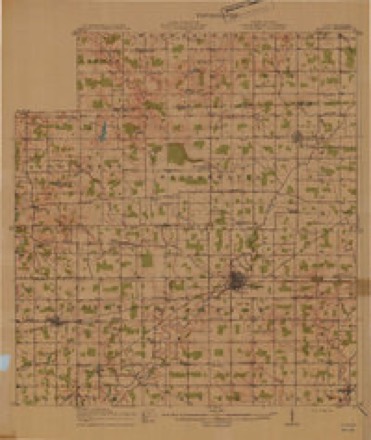
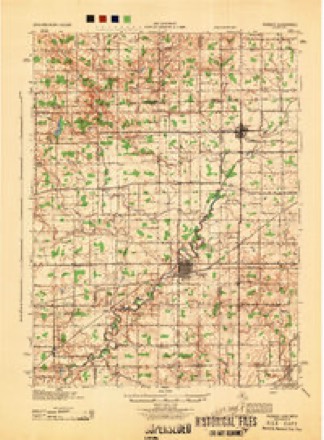
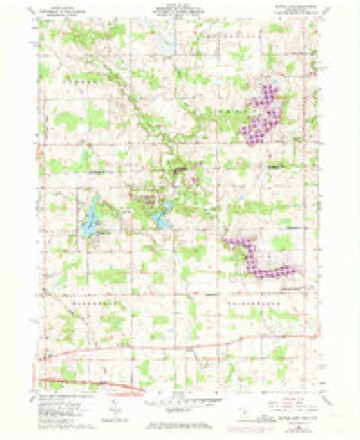
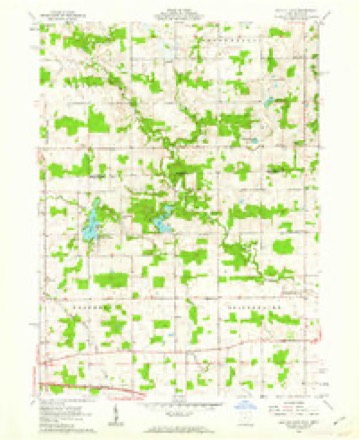
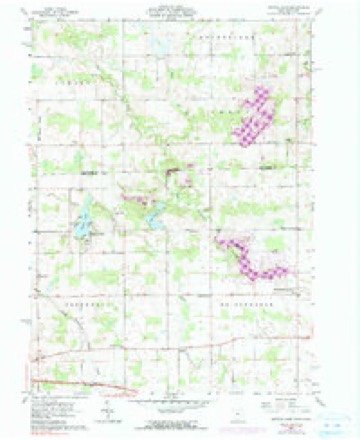
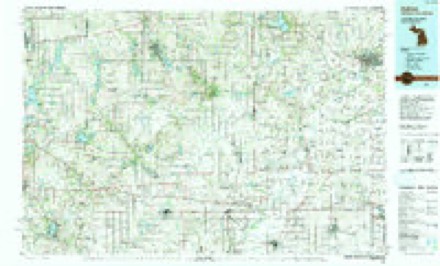
14 topographic sheets cover this place, the earliest surveyed in 1914 and the latest in 1990. It stands in Northwest Township. It lies in ZIP code area 43518. The Survey maps it on the Nettle Lake quadrangle.
Then and now
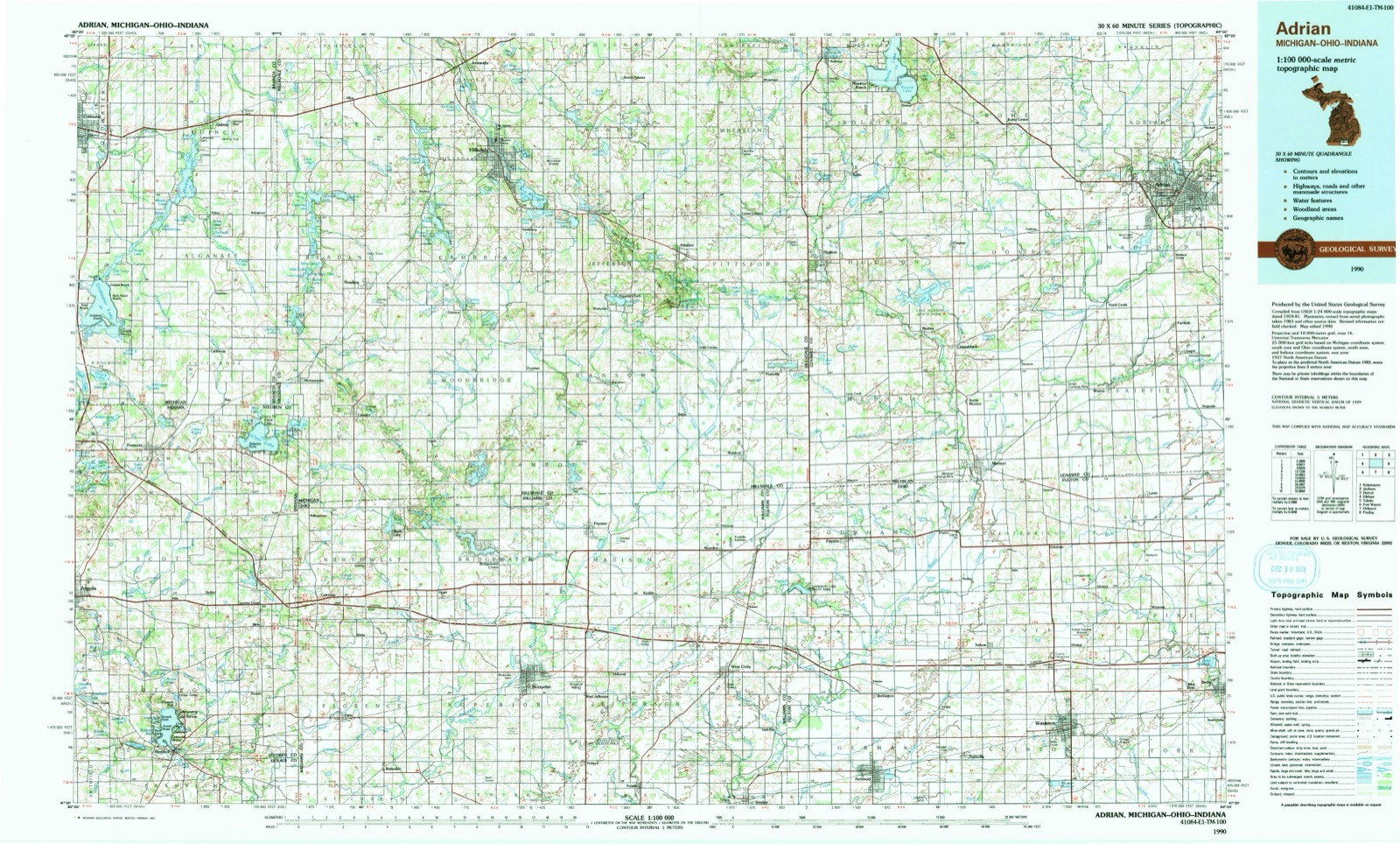
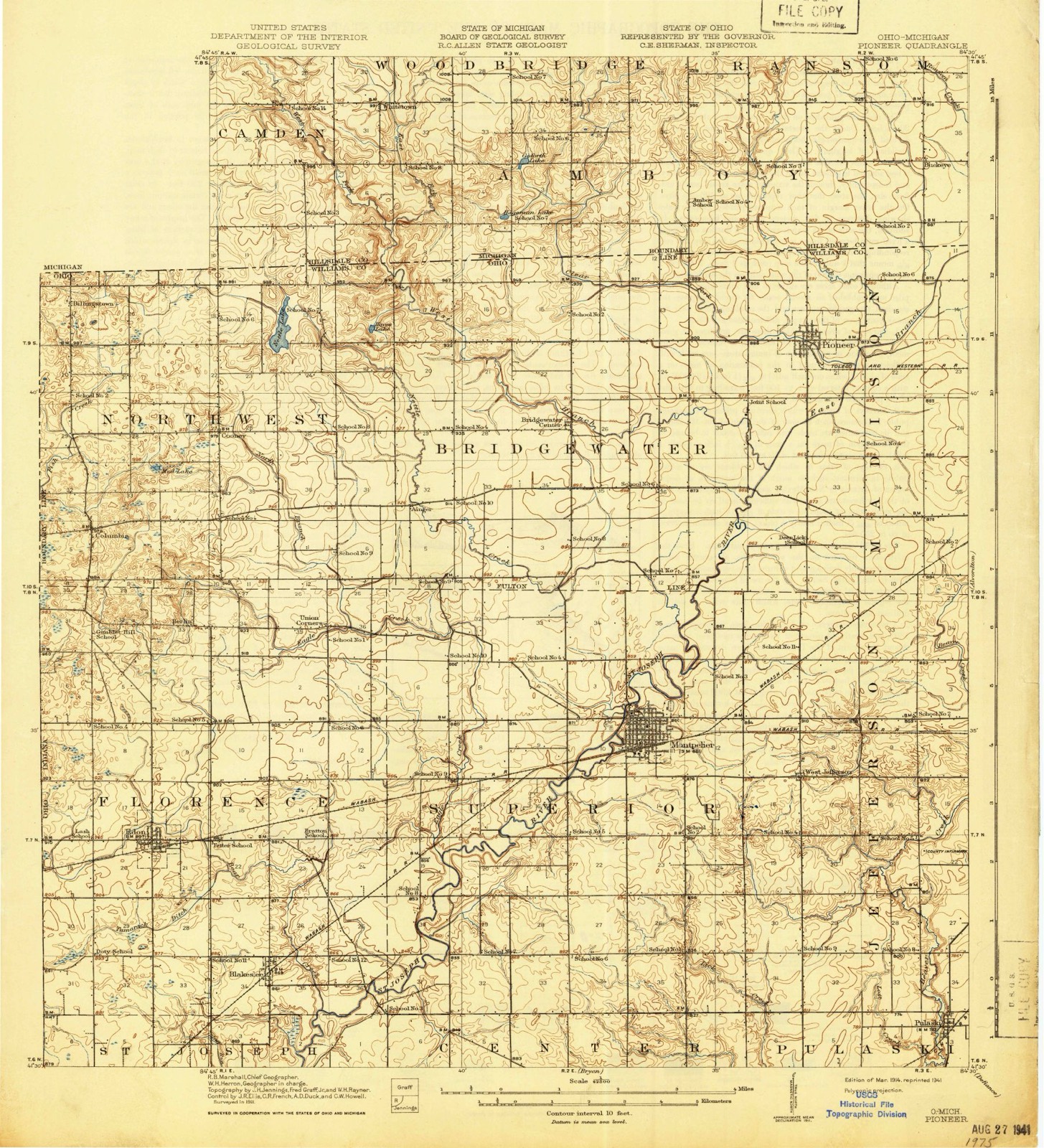
1914 to 1990The same ground, surveyed 76 years apart. Drag the handle to wipe between them. Both sheets are United States Geological Survey originals; neither has been altered.
Topographic sheets covering this place
14 sheetsMatched by testing this settlement's coordinate against the published boundary of every sheet in the United States Geological Survey's historical collection. Each opens the scanned sheet at the Survey.
- 1914 USGS Pioneer quadrangle1:62500
- 1914 USGS Pioneer quadrangle1:62500
- 1944 USGS Pioneer quadrangle1:62500
- 1953 USGS Fort Wayne quadrangle1:250000
- 1953 USGS Fort Wayne quadrangle1:250000
- 1953 USGS Fort Wayne quadrangle1:250000
- 1953 USGS Fort Wayne quadrangle1:250000
- 1956 USGS Fort Wayne quadrangle1:250000
- 1956 USGS Fort Wayne quadrangle1:250000
- 1961 USGS Nettle Lake quadrangle1:24000
- 1961 USGS Nettle Lake quadrangle1:24000
- 1961 USGS Nettle Lake quadrangle1:24000
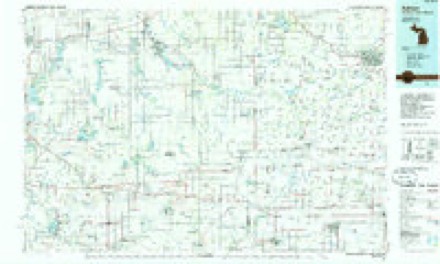
- 1985 USGS Adrian quadrangle1:100000
- 1990 USGS Adrian quadrangle1:100000
In the county-history sources
3,785 words on this townshipThe County of Williams : a History of Williams County, Ohio, from the Earliest Days, with Special Chapters on Various Subjects, Including Each of the Different Townships ; Also a Biographical Department, published 1905 names this settlement in its chapter on Northwest Township. These are the passages that mention it, exactly as the scans read.
Northwest is the second youngest township in the county, and was organized, December 7, 1S40. Since its organization there has been no change in its size, a slight misunderstanding in regard to the line between it and Bridgewater - causing the Board of County Commissioners to clearly establish it - being the only thing in the records concerning a change in its boundaries. As is well understood, it is the northwestern township in the county and state - hence its name - with Michigan on the north and Indiana on the west. Florence township and a part of a section in Superior bounds it on the south and Bridgewater is its eastern neighbor.
Passage source: The County of Williams : a History of Williams County, Ohio, from the Earliest Days, with Special Chapters on Various Subjects, Including Each of the Different Townships ; Also a Biographical Department, published 1905.
The precise date of the first settlement is not clearly known, but Aaron Burr Goodwin, about, whose life a great deal of romance and mystery lingers, is generally accorded the honor of being the first white resident. He was a man of fine education, an excellent surveyor, and for years before the settlement of the township had been an Indian trader in Michigan, Indiana and Ohio. He was possessed of a violent temper, which when kindled raged like a conflagration within him. He was brave but cautious, and he was wholly unscrupulous in his dealings, not only with the Indians, but also with the white settlers who were associated with him. He appeared in the township as early as 1837, an(l might have been in a year or two before, as the exact time of his arrival cannot he determined. He had taken two orphan children (a boy and a girl) from Cleveland, Ohio, to rear. The girl, Anna, afterward became the wife of Hiram Russell, who owned the land in the extreme northwest, corner of the township, upon which the cabin cf Goodwin was located. The cabin was situated about forty rods northwest of the residence on the Aldis Johnson farm and was near the state lines of both Indiana and Michigan. Goodwin was an experienced gunsmith and derived no little revenue from the Indians in tinkering their guns. He kept powder and lead, tobacco, calico, whiskey and various trinkets and ornaments for the Indian trade. He kept just such things as the Indians wanted, and when his unscrupulous character and violent disposition are taken into consideration, the result of his constant intercourse with the red men may be easily surmised. His practice was to take constant advantage of their wants by getting them drunk and then fleecing them to the uttermost farthing of their annuities and their valuable furs. He had many severe altercations with them, but managed to shield himself and Ins property from their attacks. It is said that he once shot an Indian, whom he found stealing his potatoes, though this circumstance is purely traditionary. On another occasion a very untractable and savage Indian was cheated out of an unusually large and fine bear skin, whereupon he threatened to kill Goodwin at the first opportunity. The Indian, whose name was Rig Jack, was one of the most desperate and revengeful of his band and was greatly feared by Goodwin, who knew that he would lose no chance of putting his threat into direful execution. This threat and other demonstrations from Indians who had been cheated and abused, rendered the situation of Goodwin precarious, and he became very cautious in all his movements. He scarcely dared to venture from his cabin at night and was constantly on his guard during the day. This led to the report that he was cowardly, but precisely the reverse was true - he was simply prudent, and had reason to be so. Events went on without any serious occurrence until the removal of the Indians westward terminated the siege of Goodwin's cabin. Goodwin had formerly lived, it is said, near Jackson, Michigan, where he had been an Indian trader. He was for a time mail-carrier in that section of the country and* carried the valuables of Uncle Sam in his hat, if tradition is correct. After a residence in Northwest township of some six or eight years, he removed to Iowa or Illinois, and his subsequent movements are unknown.
Passage source: The County of Williams : a History of Williams County, Ohio, from the Earliest Days, with Special Chapters on Various Subjects, Including Each of the Different Townships ; Also a Biographical Department, published 1905.
After the father became afflicted much of. the care of the family fell upon Thomas Knight, the elder son, who became one of the most expert hunters and trappers ever in the township. At that period an experienced hunter and trapper could make five times as much money as the one that turned his attention to farming. Deer skins sold quite readily at one dollar each ; bear skins at from three to eight dollars, and the furs of the mink, otter or raccoon at from fifty cents to five dollars. These facts caused the Knight boys to spend almost their entire time in the wonderfully exciting sport of hunting, trapping and fishing. They carried flint-lock rifles and always went armed with huge knives. Nettle Lake was a great resort for deer, which came there in the night to drink, and the boys spent many a nocturnal hour in their canoe in quest of their antlered prey. From the boat it was an easy matter to shoot a deer, and in this manner five or six were frequently killed in a single evening by Thomas and Philip Knight; and perhaps others of the first settlers did equally as well. One evening, while thus engaged, Thomas shot and wounded a very large buck, which ran up the bank a few yards and stopped. The canoe was darted to the shore and Thomas sprang out and up the bank after the wounded animal. He came to it almost immediately and instantly seized it by the antlers ; but the animal made a lunge and pinioned the hunter fast against a tree. He shouted for help, but ere his brother could arrive the wounded buck fell upon the ground in the agonies of death. The wound had been mortal. This and many other incidents, Thomas Knight was wont to tell to those of a later generation. He lived until 1896 and hence is well remembered by the people of Northwest township. His best days' work at trapping netted him eleven dollars and fifty cents, the particulars of which were given as follows: He used an ingenious wooden trap, which held the animals securely, and upon the day mentioned went out to inspect his traps, which previously he had set for raccoon. He had set many in the woods near his father's cabin and firmly expected to bring in five or six skins that morning. While he was walking along toward his destination, he suddenly heard a noise near by, and looking in that direction, saw what at first glance appeared to he an Indian pony. Nothing hut the back of the pony was visible above an intervening clump of bushes, and without thinking much about the matter, the hunter continued his walk. A moment later he looked again and was astonished and somewhat frightened to see walking directly toward him a larger hear than he had ever before encountered. The animal was some distance away and had not yet observed the hunter, so Mr. Knight instantly concealed himself, and examining the priming of his rifle, he anxiously awaited the approach of the bear. A moment later it came leisurely along, and when it had approached within easy rifle range shot, the hunter took careful aim and pulled the trigger. His aim was perfect and the bear, one of the largest of its kind, fell dead. It weighed almost five hundred pounds, and when alive, stood at least three feet in height. The skin sold for eight dollars, and when the value of the skin of the raccoons caught during the day was added, the total footed up to eleven dollars and fifty cents. The fore paw of this bear was taken to Columbus, Ohio, and for many years could be seen in a museum in that city.
Passage source: The County of Williams : a History of Williams County, Ohio, from the Earliest Days, with Special Chapters on Various Subjects, Including Each of the Different Townships ; Also a Biographical Department, published 1905.
Machine-read from a century-old scan, so expect the errors a machine makes: misspelled names, dropped words, stray characters.
Read the whole chapter on Northwest Township - it names this place 9 more 9 times.
Specimens collected near this place
12 of 210 shownRegional context, not property-specific evidence. Museums hold 210 specimens collected within 10 miles of Northwest between 1895 and 1969: 207 Animalia, 2 Plantae, 1 Unrecorded. 12 distinct Species records are shown. Collected by Barnes, T. N., Bauer, L., CLARENCE CLARK and others. Each is a physical object with a catalogue number, and each entry opens the museum's record. This is what was collected and kept, not a survey of what lives here - nothing can be concluded from a species being absent.
| Image | Species | Year | Collected by | Where, as recorded |
|---|---|---|---|---|
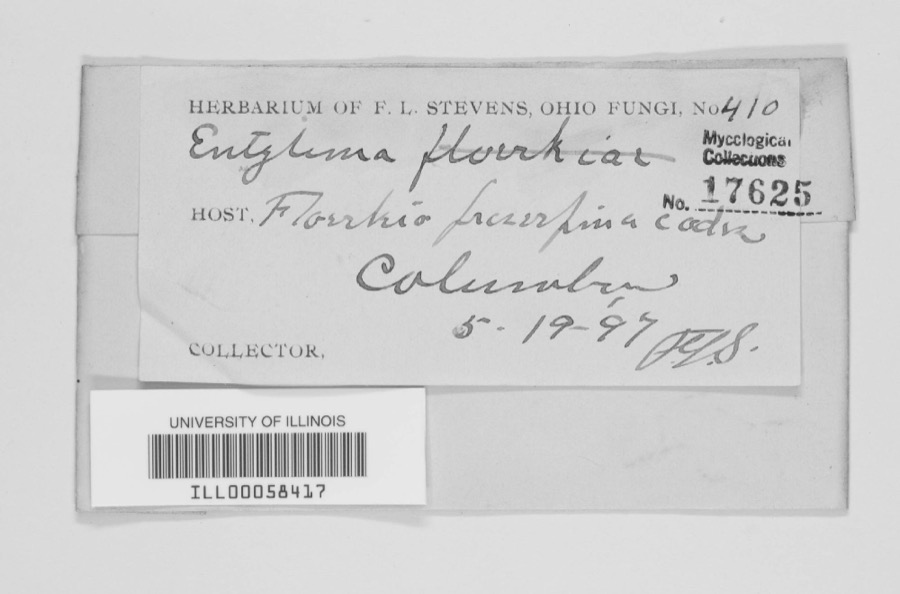 | unnamed | 1897 | F. L. Stevens | Columbia. |
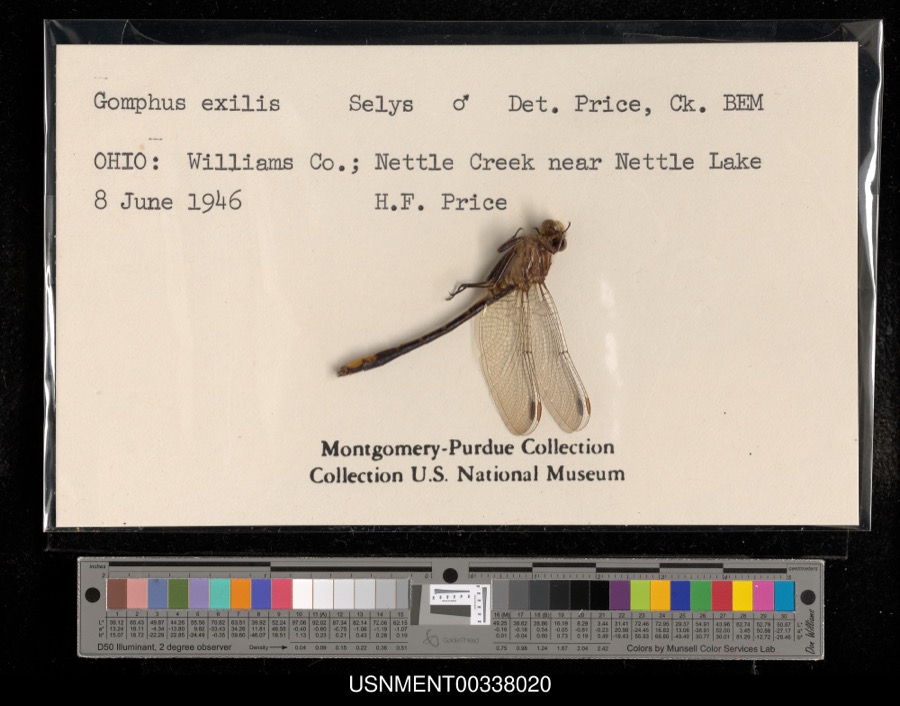 | Gomphus exilis Selys, 1854 | 1946 | H. Price | Nettle Creek near Nettle Lake |
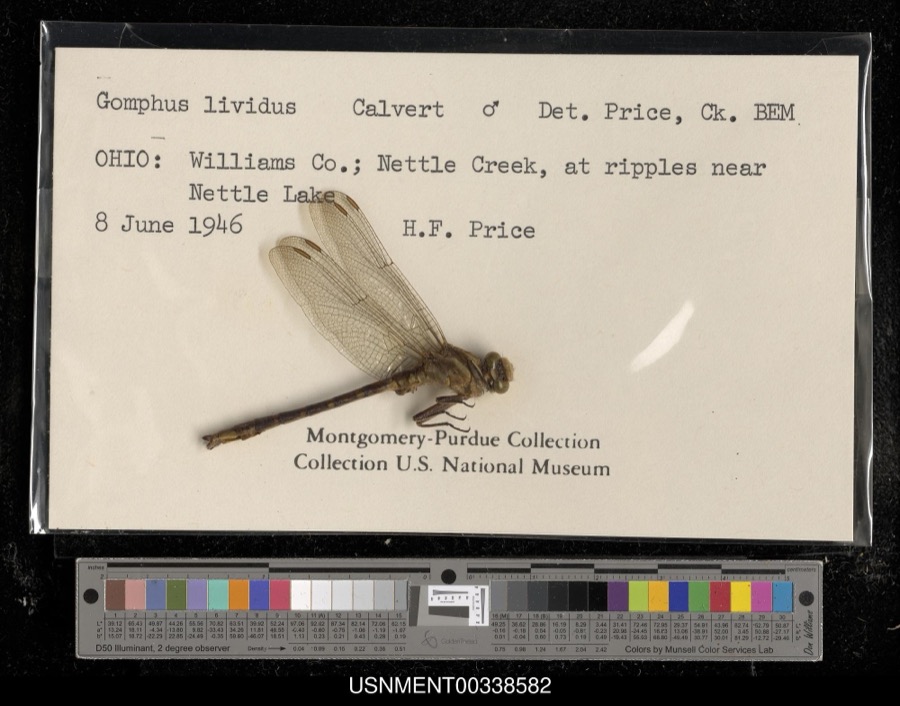 | Gomphus lividus Selys, 1854 | 1946 | H. Price | Nettle Creek, at ripples near Nettle Lake |
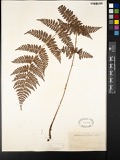 | Aspidium Sw. | 1895 | Collector(s): Edwin Lincoln Moseley | Florence |
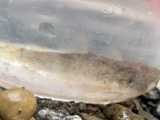 | Catostomus commersonii (Lacepède, 1803) | 1929 | Trautman, M. B. (Milton Bernard) | Nettle Creek, at inlet to Nettle Lake in Northwest township, 4.7 mi S of Camden, Northwest township |
 | Chaenobryttus gulosus (Cuvier, 1829) | 1929 | Trautman, M. B. (Milton Bernard) | Nettle Lake, Northwest township, ~5.4 mi SE of Camden, Northwest township |
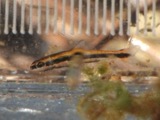 | Erimyzon sucetta kennerlii (Girard, 1856) | 1929 | Trautman, M. B. (Milton Bernard) | Nettle Lake, Northwest township, ~5.4 mi SE of Camden, Northwest township |
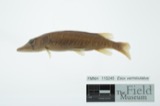 | Esox vermiculatus Lesueur, 1846 | 1929 | Trautman, M. B. (Milton Bernard) | Nettle Lake, Northwest township, ~5.4 mi SE of Camden, Northwest township |
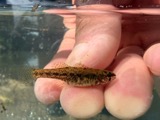 | Etheostoma microperca Jordan & Gilbert, 1888 | 1929 | Trautman, M. B. (Milton Bernard) | Nettle Lake, Northwest township, ~5.4 mi SE of Camden, Northwest township |
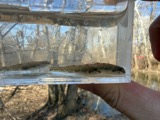 | Etheostoma nigrum Rafinesque, 1820 | 1929 | MB Trautman | Nettle Lake, northern northwest township |
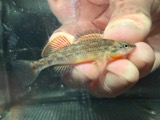 | Etheostoma spectabile (Agassiz, 1854) | 1929 | Trautman, M. B. (Milton Bernard) | Bear Creek, at Edon, ~0.3 mi N of Edon, Florence township |
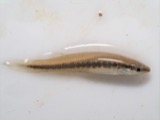 | Fundulus notatus (Rafinesque, 1820) | 1929 | MB Trautman | Nettle Lake, northern northwest township |
All 210 specimens within 10 miles, at the Global Biodiversity Information Facility.
Nearest settlements
The eight closest, with where each one stands in the county. Distances are straight-line, computed from the Geographic Names Information System coordinates.
| Map | Place | Distance | Sheets |
|---|---|---|---|
| Nettle Lake | 1.0 miles | 14 | |
| Cooney | 2.5 miles | 14 | |
| Billingstown | 3.3 miles | 16 | |
| Ainger | 4.4 miles | 14 | |
| Lake Seneca | 5.0 miles | 14 | |
| Columbia | 5.0 miles | 16 | |
| Berlin | 5.8 miles | 14 | |
| Bridgewater Center | 5.9 miles | 14 |
Provenance
This settlement is recorded in the Geographic Names Information System as feature 1058181. The sheet list is computed by point-in-boundary test against the United States Geological Survey's historical topographic inventory. Both are works of the United States government and carry no copyright under 17 U.S.C. 105.
Specimens. Global Biodiversity Information Facility (GBIF), https://www.gbif.org/. Only records licensed CC0 or CC BY are used. Records licensed CC BY-NC are excluded because this site carries advertising. Images are checked individually and any whose licence is non-commercial, no-derivatives or unreadable is refused.