Listed on the National Register of Historic Places in
1973. A historic map-sheet match is not published yet. The record needs a coordinate-quality review before it can be joined to a sheet boundary.
Research this district
This curated hub for Cuyahoga County, Ohio brings together the page's documented record links, visible map or image evidence where published, and routes to related local records.
Use the page's provenance and linked records to distinguish the source material from the site's navigation and summaries.
How should I cite it?
Open the original record, preserve its repository and identifier, then use the citation tool for this page as a path back to the source.
Where should I go next?
Follow the county or state hub for related places and records, then use the guide for a source-aware research sequence.
From the record
“In 1834 he removed to Detroit, and practiced there till 1838, when he returned to Cleveland, where he spent the remainder of his professional life, and made himself a high reputation both as a physician and a valuable citizen. His leading traits as a physician were the exercise of benevolence and fearlessness in the performance of his professional duties.”
History of Cuyahoga County Ohio (1870). Machine-read text.
one of 338 National Register listings in Cuyahoga County · listed in 1973 · category: Building · one of 3 National Historic Landmarks in Cuyahoga County.
National Register reference number.73001418- the number the National Park Service assigned this property when it was listed, and the key its nomination file is catalogued under at the National Archives.
The ground it stands on
23,212 words
The chapter on Cleveland City in History of Cuyahoga County Ohio, published 1870 names Cleveland. This is what it says, exactly as the scans read.
At the Erie Conference M. EK. Church, in the fall of 1838, resolutions were passed dis approving any expression by the churches on the question of American slavery. This action was received with disfavor by a portion of the members of the church in Cleveland. On September 1, 1839, an organization was effected, consisting of about sixty members, who withdrew from the First Methodist Episcopal Church for that purpose. This new church stood alone until May, 1843. when it sent delegates to a convention held at Utica, New York, and there went into the organization which has ever since been known as the Wesleyan Methodist Connection of America.
John W. Allen was born in Litchfield, Connecticut, in 1802. He resided in Chenango county, New York, from 1820 to 1825, when he removed to Cleveland, where he has ever since lived. He was admitted to the bar the next year, and for several succeeding years was engaged in the active practice of his profession.
Regional context, not property-specific
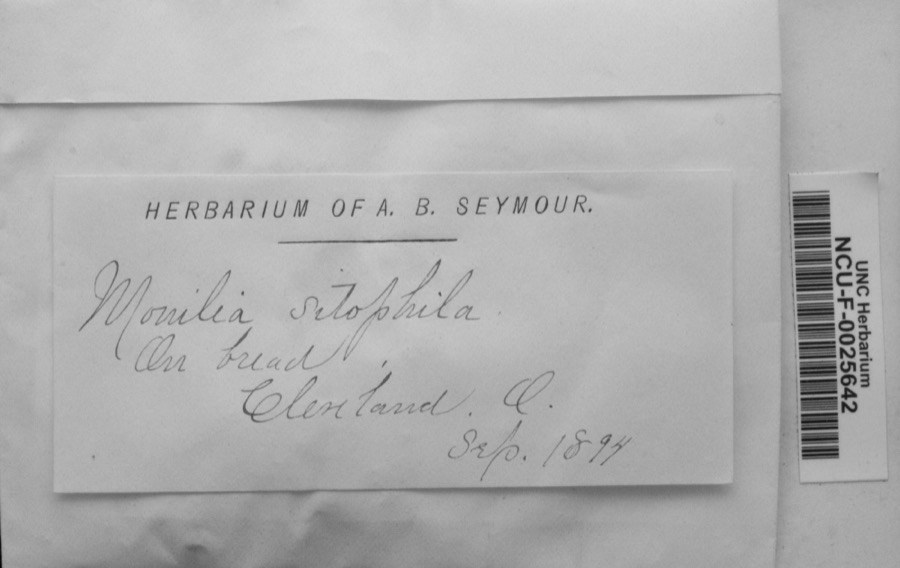
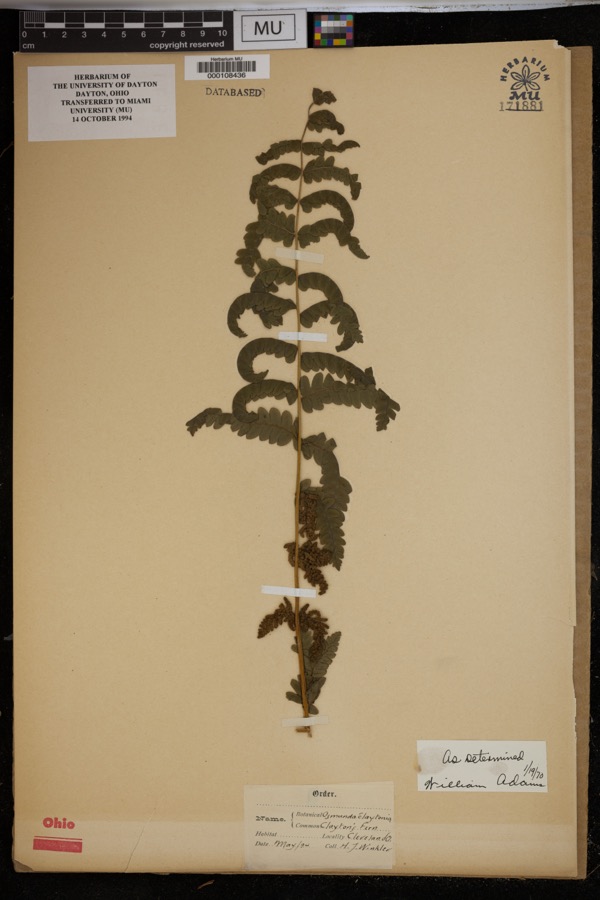
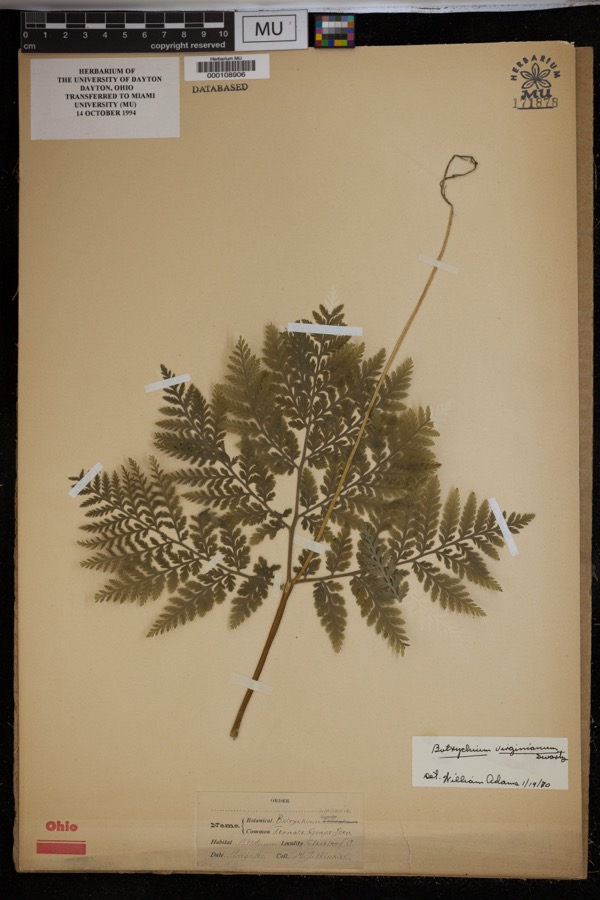
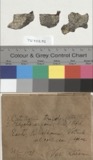
evidence. Museums hold 2,786 specimens
collected within 10 miles of St. John's Episcopal Church between 1849 and
1975: 2,379 Animalia, 210 Fungi, 118 Plantae, 73 Protozoa, 5 Unrecorded, 1 Chromista. 12 distinct Species records are shown.
Collected by A. D. Huryn, A. D. Selby, A. G. Newhall and others. Each is a
physical object with a catalogue
number, and each entry opens the museum's record. This is what was
collected and kept, not a survey of what lives here - nothing can be
concluded from a species being absent.
Regional context, not property-specific
evidence. The federal mineral resources record lists
20 workings within 5 miles of St. John's Episcopal Church: 10 unknowns, 6 producers, 3 past producers, 1 plant.
7 still produce. What was taken out: Iron, Zirconium, Silica, Halite. Distance is straight-line from the
map coordinates, so a quarry counted here may appear on a neighbouring
settlement's page as well.
Regional context, not property-specific
evidence. The National Weather Service names
Cleveland, the town this property stands in, in 95 storm reports between 1994 and 2025: 51 thunderstorm wind, 26 hail, 11 flash flood, 3 lightning.
The reports record 3 deaths and 6 injuries. Each account below is quoted exactly as the forecast office
filed it, from the NOAA Storm Events Database, and each date
opens the federal record of that event.
During a sailboat race on Lake Erie, two people who were not wearing life preservers, were swept overboard by high waves and drowned. A total of four boats capsized and twelve people were swept overboard.
Thunderstorm wind gusts of 35 to 40 mph blew down two large tents on the west side of Cleveland. Three people inside were injured when the tents collapsed. One person was hospitalized. A peak wind gust of 36 mph was measured at nearby Cleveland Hopkins International Airport.
During the afternoon hours of the 2nd, a severe thunderstorms moved over downtown Cleveland. This thunderstorm remained nearly stationary over the downtown area for around an hour, and dropped as much as four and a half inches of rain. Several rainfall reports of 3.0 to 4.5 inches were received from downtown Cleveland. This rain fell in less than 90 minutes. Local streets and highways throughout the downtown area quickly filled with water. Many roads, including Interstate 90 were impassable by flood waters as much as four feet deep. Many vehicles became stranded in the flood waters. Once the rain ended, the high water receded quickly. This was a very local event in Cuyahoga County as the southern part of the county remained mainly dry. In fact, Cleveland Hopkins Airport did not receive any rainfall from this thunderstorm.
Heavy thunderstorm rain caused widespread flooding of roads and low lying areas in Cleveland and surrounding suburbs. In Newburgh Heights, Interstate 77 was flooded with three to four feet of water and an elderly couple had to be rescued from their floating car. Over five inches of rain was measured in some southern and eastern sections as storms repeatedly crossed the area for several hours.
Thunderstorms dumped up to three inches of rain on downtown Cleveland during the late afternoon hours. A television station located just east of downtown recorded 2.75 inches of rain in only 48 minutes. Major street flooding occurred and dozens of cars became stuck in water up to four feet deep. Several motorists had to be rescued from their vehicles.
Broadcast media posted a photo on social media of a large tree that fell on a house on the west side of Cleveland. The time was radar estimated. The media also reported 25,000 residents within the metropolitan Cleveland area lost power. One Giant Eagle grocery store had to throw out all of their refrigerated items after losing power. Tree limbs were also reported down on Martin Luther King Boulevard.
Rainfall amounts of 2 to 3.5 inches fell over Cleveland during a span of 60-90 minutes. Citywide flooding resulted as storm water systems were overwhelmed. Many roads including I 480 were flooded and closed for a brief period.
The Big Creek in Cuyahoga County (drainage basin 35.3 square miles) cuts through parts of Brooklyn and Cleveland before draining into the Cuyahoga River. On the morning of the 7th radar estimated rainfall amounts between 1.5 and 1.75 inches over the Big Creek basin. Some roads adjacent to the creek were closed. Most notably, the Cleveland Metropark Zoo was closed as water flooded their parking lots and threatened the veterinary clinic and other buildings.
16 papers published in this town,
digitised by the Library of Congress and free to read: 0 issues,
0 pages. Every page is searchable, so a name or a street can be
looked for directly in what the town printed about itself at the time.
No historic map-sheet match is published
for this property yet. That does not mean no map exists. This record needs
a coordinate-quality review before it can be joined to a sheet boundary.
Browse the county's mapped places while that work is
pending.
From the nomination file
1,747 words on record
When this property was proposed for the
National Register, someone wrote the case for it: what the building is,
and why it matters. That document is a federal record in the public domain.
It is quoted below word for word, never summarised. The text was read off the scanned case file by machine, so the
occasional stray character is the recogniser's and the 1970s
typewriter's.
Description of the property
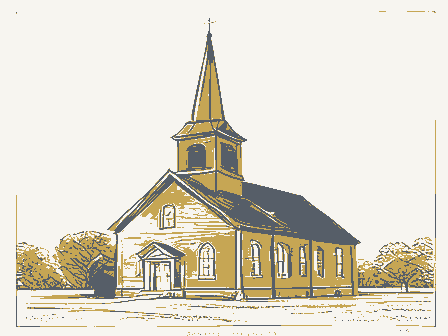
ISt. John's Episcopal Church is a fine example of the Early English The church was completed in1838.~ sandstone. The entrance door plus the nave windows, which are all of the Gothic pointed arch motif, are trimmed in a local white limestone. The exterior doors and sash are of pine wood, as are the frames. Most of the original glazing has had to be replaced, and the windows are In 1866 a fire completely burned out the interior, leaving only the the steeper pitch. The bell tower has also been modified as a result of kea FEB 1 5 1973 CONDITION REGISTER Excellent NATIONAL Ruins roof was retained. buttresses with setbacks and sloping caps mark the divisions of the Fair rectangular nave are all outstanding characteristics of this period.
This deep basement served as the first enclosure for the church while the out in five bays which are each fifteen feet wide.The rectangular retains the shallow pitch on the interior while the exterior expresses stained glass in wood sash. The exterior walls are of random ashlar sandstone blocks that were walls above grade were being constructed. bays on the exterior nave wall.Octagonal turrets give emphasis to The entrance to the church is raised on a stepped platform which is of The building measures forty-five feet by seventy-five feet and is laid ninety feet from the narthex floor.
Civil War era, the church served as the last stop in the under- He migrated from his birthplace of South Mansfield, Conn. to Weedsport, N.Y.; Rochester, N.Y. and then to Cleveland, Ohio. contracting. In addition to this building, he is also credited is Saint John's Episcopal Church, which remains a monument to the FEB 1 5 1973 Architecture Commerce Conservation Art REGISTER Communications Aboriginal NATIONAL Transportation Agriculture losophy itarian Theater Sculpture Political one of the most accomplished works of the architect-builder RECEIVED Saint John's Episcopal Church is also significant because it was them to freedom in Canada.The church still contains tiered parish commissioned the building from Hezekiah Eldredge in 1836.
It was Eldredge who designed and built the church which was Saint John's Episcopal Church is the oldest church standing in with designing and constructing in the Cleveland area the Ohio During this period he acquired a reputation as a fine carpenter where the slaves would hide and await the ships from Canada.It Religion/Phi. Erie.Also the deep basement afforded an ideal place to hide levels and adjoining side rooms in the three story bell tower the slaves until the ships arrived. and was forty years old at the time of the designing of this church.
Quoted from the National Register nomination
for reference 73001418, 10 pages, held by the National Archives in Record
Group 79. See the
catalogue record.
Listed places nearby
6 within 8 miles
Other National Register properties close
enough to walk or drive between, ordered by distance from this one. Both
positions come from the same geocoding pass that matched these properties
to their map sheets.
Listing record. National Park Service National Register of Historic Places, listed-properties dataset, current to 2026-05-22.
Map join. Address geocoded through the United States Census geocoder, then tested against the published boundary of every sheet in the USGS Historical Topographic Map Collection.
How this page is made. Listing fields come from federal records; map-sheet coverage is a labelled coordinate-to-boundary calculation, not a source-field claim.
Specimens. Global Biodiversity Information Facility (GBIF), https://www.gbif.org/. Only records licensed CC0 or CC BY are used. Records licensed CC BY-NC are excluded because this site carries advertising. Images are checked individually and any whose licence is non-commercial, no-derivatives or unreadable is refused.
Mines and quarries. USGS Mineral Resources Data System (MRDS) https://mrdata.usgs.gov/mrds/ A work of the United States government, no copyright under 17 U.S.C. 105.
Storms. NOAA National Centers for Environmental Information, Storm Events Database https://www.ncei.noaa.gov/stormevents/ A work of the United States government, no copyright under 17 U.S.C. 105. Narratives are quoted verbatim from the National Weather Service report and are not edited or summarised.
 Block
Block