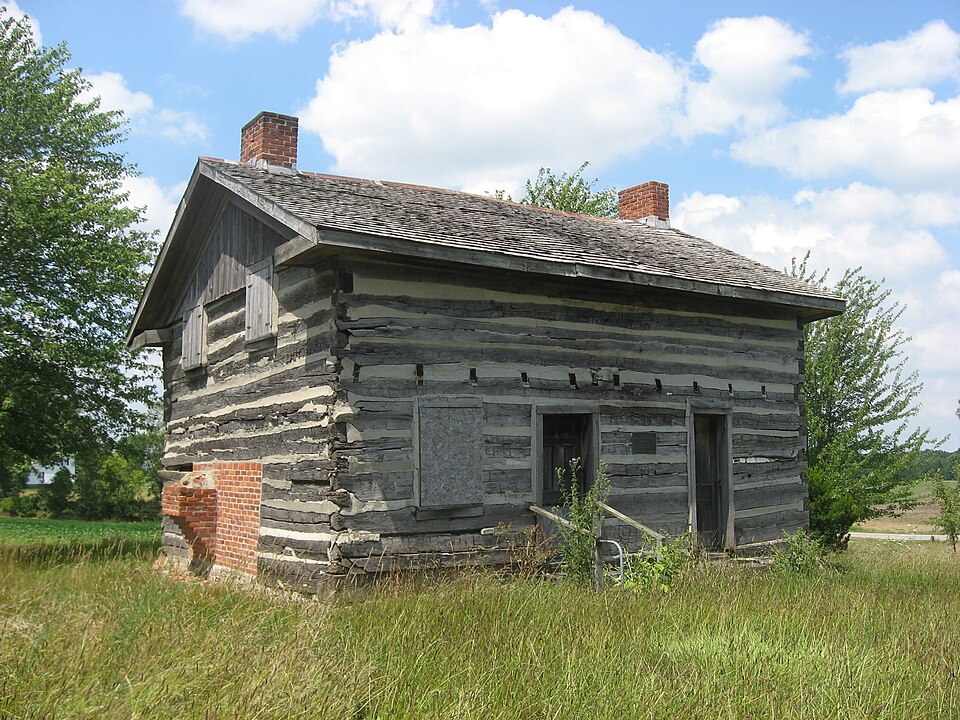
Built in 1838. Listed on the National Register of Historic Places in
1976. A historic map-sheet match is not published yet. The record needs a coordinate-quality review before it can be joined to a sheet boundary.
From the record
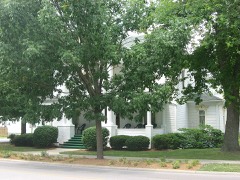
“The Kunkle Log House, also known as the Jacob Young Log House, is a historic log cabin located on County Road O east of Kunkle, Ohio. Jacob Young, who moved to Ohio from Vermont with his family, built the house in 1838.”
Wikipedia article Kunkle Log House, CC BY-SA 4.0.
one of 4 National Register listings in Williams County · listed in 1976 · category: Building · built in 1838.
National Register reference number.76001549- the number the National Park Service assigned this property when it was listed, and the key its nomination file is catalogued under at the National Archives.
The first settler of the township was Cyrus Barrett, who located with his family of ten members in the southeastern part, in 1838, and established his home near the present site of Kunkle. The Barretts came from Seneca county, New York, and built a rude log cabin in the Madison township wilds, chinking the same with mortar of mud and covering it with a roof of bark. The cabin was not larger than 18x20 feet; was built in such a hurry and with such a lack of assistance that the logs wrere but little better than poles ; and it was graced with a very large chimney, made of sticks and clay, that was peculiarly ornamental as well as useful. The architectural design is thus mentioned in detail, as the building was the finest in the township; and it is reasonable to conclude, judging fiom ordinary human emotion and character, that Mr. Barrett was the proudest, as well as the wealthiest resident. A well-populated temporary encampment of native North Americans was standing on the Little St. Joseph, near the forks, at this time ; and these nomadic people were, perhaps, Mr. Barrett's nearest neighbors - nearest in that they visited his humble abode more than occasionally and remained with him longer than necessary, as the wants of these humble denizens of the woods led their natures to covet almost everything of value in the white man's possession. They were mild, but importunate, and took evasion or negation to their demands with all the admirable imperturbability that is usually ascribed as a mental endowment of that product of modern civilization - the tramp. But, withal, they were interesting if not pleasant neighbors, as the family of Mr. Barrett had ample proof.
Kunkle is -a small village on the Detroit and Montpelier branch of the Wabash Railroad, the only town on a steam railway in Madison township. The old place known as Kunkle's Corners was never properly laid out and recorded, but its later pretentions have been as great as those of many villages which were first placed on the map by that method. As it grew in importance it was given the name of Kunkle in honor of an early merchant in the place. It is a pleasant little town of about three hundred and fifty inhabitants, in the center of a rich agricultural district. There are several mercantile houses, a grist-mill, mechanical shops, produce houses and a fine school. Philip Weidner was the first postmaster and Augustus Moore was the first merchant. The village does a thriving business.
Regional context, not property-specific
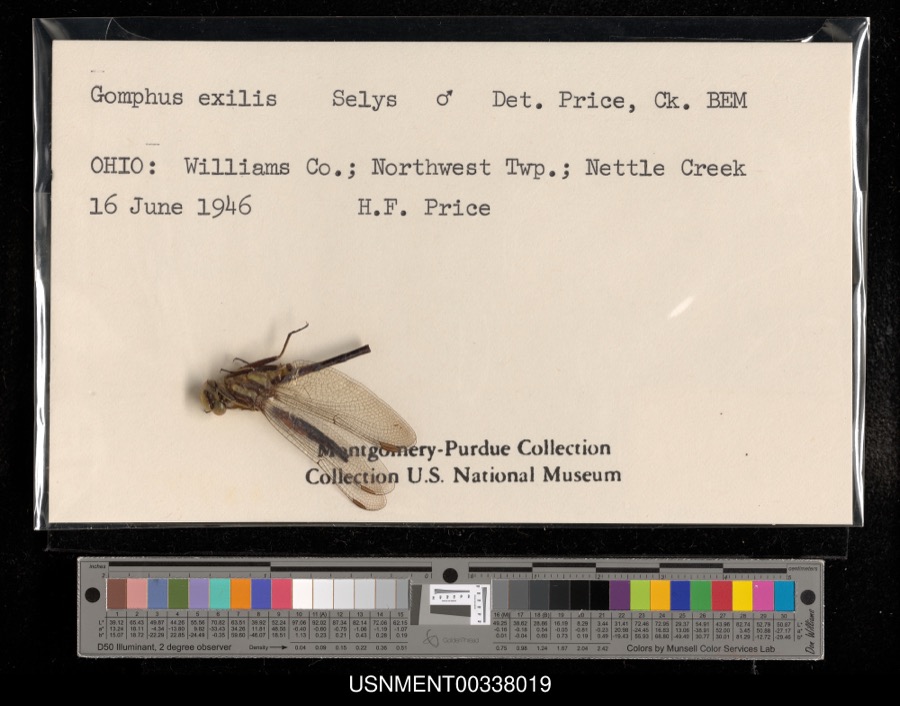
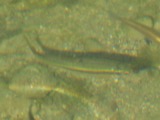
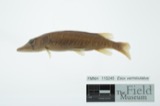
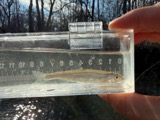
evidence. Museums hold 148 specimens
collected within 10 miles of Kunkle Log House between 1890 and
1974: 147 Animalia, 1 Fungi. 12 distinct Species records are shown.
Collected by Adler, K. K., Bauer, L., CLARENCE CLARK and others. Each is a
physical object with a catalogue
number, and each entry opens the museum's record. This is what was
collected and kept, not a survey of what lives here - nothing can be
concluded from a species being absent.
Regional context, not property-specific
evidence. The federal mineral resources record lists
1 working within 5 miles of Kunkle Log House: 1 past producer.
None of them still produces. What was taken out: Sand and Gravel, Construction. Distance is straight-line from the
map coordinates, so a quarry counted here may appear on a neighbouring
settlement's page as well.
Regional context, not property-specific
evidence. The National Weather Service names
Kunkle, the town this property stands in, in 2 storm reports between 2019 and 2023: 2 thunderstorm wind.
No death or injury is recorded in these reports. Each account below is quoted exactly as the forecast office
filed it, from the NOAA Storm Events Database, and each date
opens the federal record of that event.
No historic map-sheet match is published
for this property yet. That does not mean no map exists. This record needs
a coordinate-quality review before it can be joined to a sheet boundary.
Browse the county's mapped places while that work is
pending.
From the nomination file
1,778 words on record
When this property was proposed for the
National Register, someone wrote the case for it: what the building is,
and why it matters. That document is a federal record in the public domain.
It is quoted below word for word, never summarised. The text was read off the scanned case file by machine, so the
occasional stray character is the recogniser's and the 1970s
typewriter's.
Description of the property
doorway - The first floor consists of a large kitchen with fireplace and "beehive" oven, a black walnut, some original hardware remains. Floors are bleached nearly white. Aside from the outside oven, parson's cupboard and full basement, the house is of standard construction for its time period, 1838. CONDITION UNEXPOSED EXCELLENT UNALTERED GOOD CHECK ONE single window in the left side of the facade.The east end has four windows, an interior and exterior entrance to the basement.
The gable roof is shingled and a box cornice has been repaired.There are both chimneys in both ends of the structure.The rear of the building has a single XFAIR The Kunkle log house isa large,story and a half,rectangular structure kept),and a small "holding"or"borning"room.Upstairs there isa large LRUINS has two doorways, recessed and placed to either side of the center. There is a plaster with animal hair binder is found in the bedrooms.Woodwork and doors are with a full basement with windows.The foundation is fieldstone.The facade two on the first floor and two in the gable. The west end has two windows in DATE. AREAS OF
Statement of significance
half, fewer still in the northeast quarter. For this reason the Kunkle and to the continuity of log construction in Ohio in general. entry from inside, an exterior bake oven, a parson's cupboard above the living room fireplace, a built-in closet upstairs, and small "holding" MAR 1 7 1976 1838 1500-1599 1400-1499 1700-1799 PHILOSOPHY INVENTION ARCHEOLOGY-HISTORIC PERIOD AGRICULTURE SCULPTURE BUILDER/ARCHITECT SIGNIFICANCE RELIGION THEATER INDUSTRY REGISTER X1800-1899 SCIENCE NATIONAL 1900- MUSIC LITERATURE RECEIVED _ENGINEERING _POLITICS/GOVERNMENT _COMMUNICATIONS first floor joists strengthened by posts set in concrete in the basement.
Jacob Young X_EXPLORATION/SETTLEMENT _COMMERCE A deteriorated summer kitchen (not original) was removed.Windows, doors, In addition it has several interesting features:a full basement with an SPECIFIC DATES _TRANSPORTATION _EDUCATION _CONSERVATION Vermont with his family of eight children. to the southern half of the state, few log houses remain in the northern _SOCIAL/HUMANITARIAN _ECONOMICS The house is being restored as a house museum by the recently founded The Kunkle log house is believed to be the first permanent log residence -1600-1699 state and not until the construction of the Miami G Erie and the Maumee - MILITARY house is important to its section of the state aswell as Williams County, and exterior bake oven are yet to be done.
roof and deteriorated logs were replaced, new mortar was applied and the in Williams County.Northeast Ohio was settled late in the history of the - LAW
Quoted from the National Register nomination
for reference 76001549, 17 pages, held by the National Archives in Record
Group 79. See the
catalogue record.
Listed places nearby
1 within 8 miles
Other National Register properties close
enough to walk or drive between, ordered by distance from this one. Both
positions come from the same geocoding pass that matched these properties
to their map sheets.
Listing record. National Park Service National Register of Historic Places, listed-properties dataset, current to 2026-05-22.
Map join. Address geocoded through the United States Census geocoder, then tested against the published boundary of every sheet in the USGS Historical Topographic Map Collection.
How this page is made. Listing fields come from federal records; map-sheet coverage is a labelled coordinate-to-boundary calculation, not a source-field claim.
Specimens. Global Biodiversity Information Facility (GBIF), https://www.gbif.org/. Only records licensed CC0 or CC BY are used. Records licensed CC BY-NC are excluded because this site carries advertising. Images are checked individually and any whose licence is non-commercial, no-derivatives or unreadable is refused.
Mines and quarries. USGS Mineral Resources Data System (MRDS) https://mrdata.usgs.gov/mrds/ A work of the United States government, no copyright under 17 U.S.C. 105.
Storms. NOAA National Centers for Environmental Information, Storm Events Database https://www.ncei.noaa.gov/stormevents/ A work of the United States government, no copyright under 17 U.S.C. 105. Narratives are quoted verbatim from the National Weather Service report and are not edited or summarised.
 Block
Block