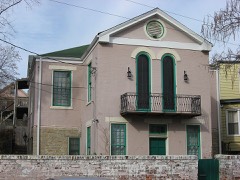
Listed on the National Register of Historic Places in
1979. A historic map-sheet match is not published yet. The record needs a coordinate-quality review before it can be joined to a sheet boundary.
From the record
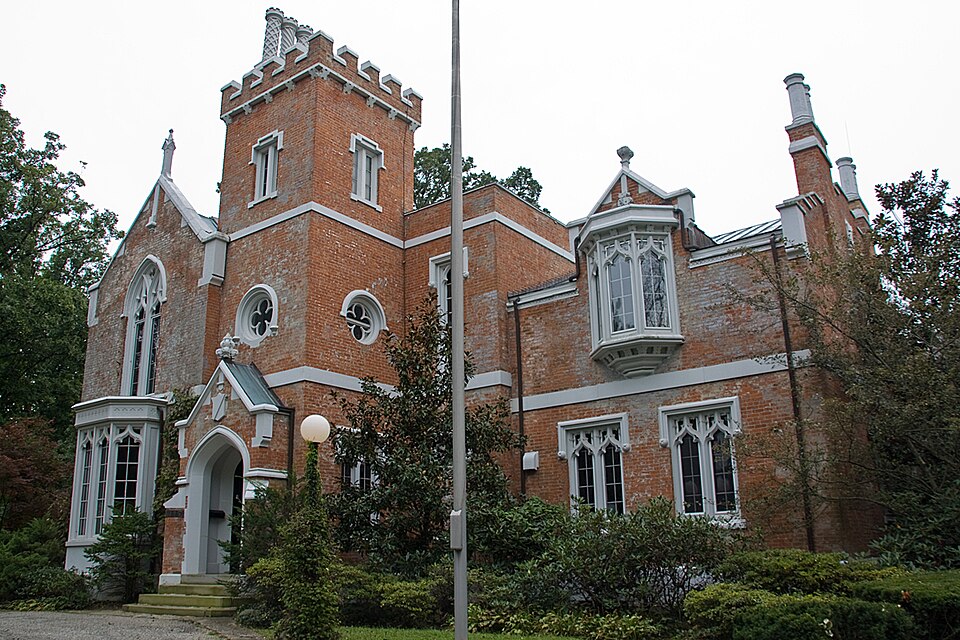
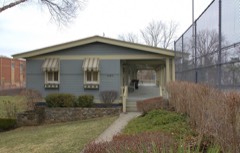
“Baker House is a historic house in the East Walnut Hills neighborhood of Cincinnati, Ohio, United States. Built in 1854 according to a design by Cincinnati architect James Keys Wilson, it was the home of New Jersey native John S.”
Wikipedia article John S. Baker House, CC BY-SA 4.0.
one of 314 National Register listings in Hamilton County · listed in 1979 · category: Building · one of 9 National Historic Landmarks in Hamilton County.
National Register reference number.79001852- the number the National Park Service assigned this property when it was listed, and the key its nomination file is catalogued under at the National Archives.
The reader looks forward to this, the first history of Cincinnati that has yet found itself in print. The writers look back across its half-century of chapters and the century of years embraced by its annals, and have, chiefest of all, to regret many unavoidable errors, both of omission and commission. The more important of these, it is hoped, will appear in our page of errata; but there are still many, doubtless, that have escaped the compilers' attention. In a few cases, discrepancies appear between their statements and those of an extract immediately following. In those instances they must assure the reader that the former rest upon an authority believed to be superior to the other in regard to the matter in hand; but time and space could not always be taken for the discussion and settlement of points concerning which there are variant reports. In all really important matters, they believe the history will be found quite trustworthy, especially when corrected from the page of errata.
Within the decade whose annals have just been passed in review, fell the birth of Cincinnati township, to which was entrusted, for almost twelve years, the government of Cincinnati village, which it of course contained. The township was created, after Columbia, by the court of general quarter sessions of the peace, which then had jurisdiction in these matters, in 1791. To the time of the erection of these townships, the whole county, which contained but a few hundred white inhabitants, was most conveniently governed as one municipality.
Regional context, not property-specific
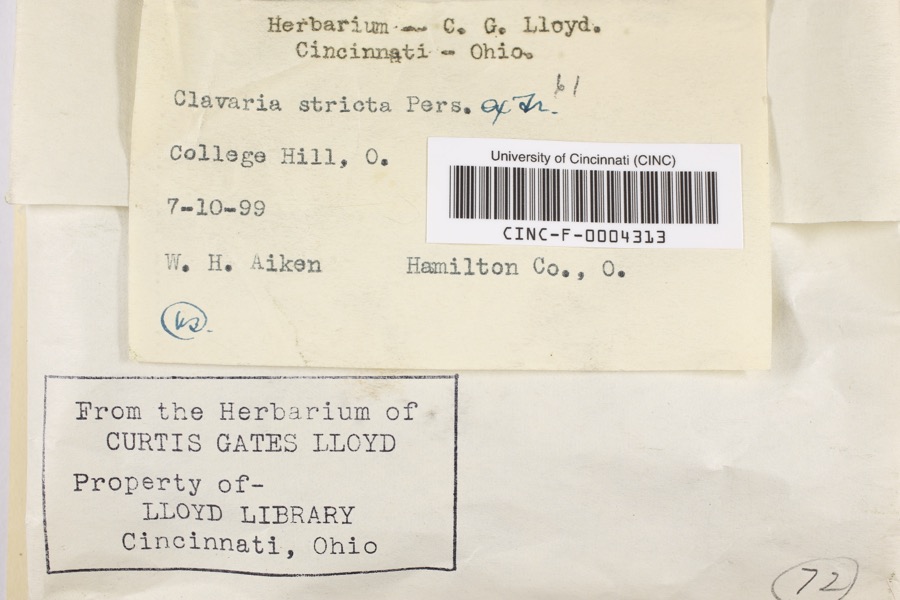
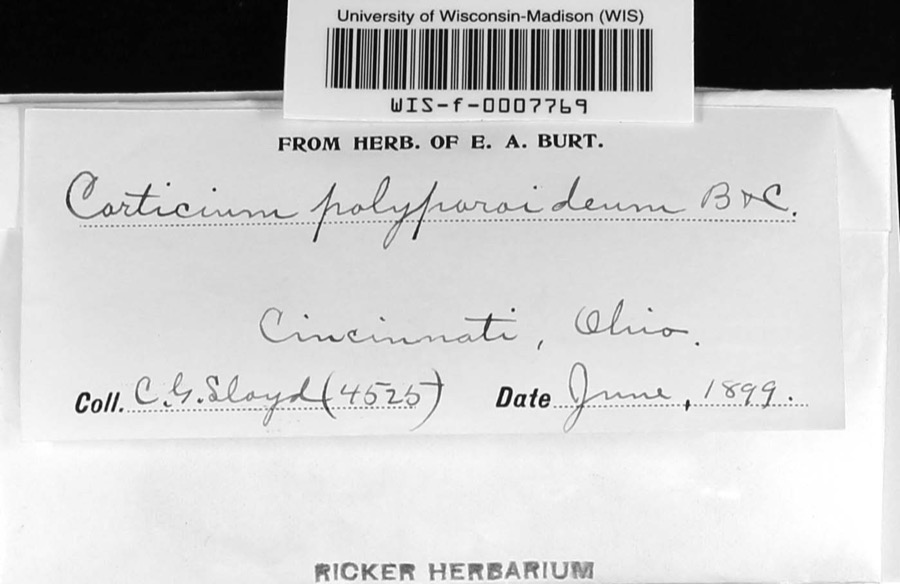
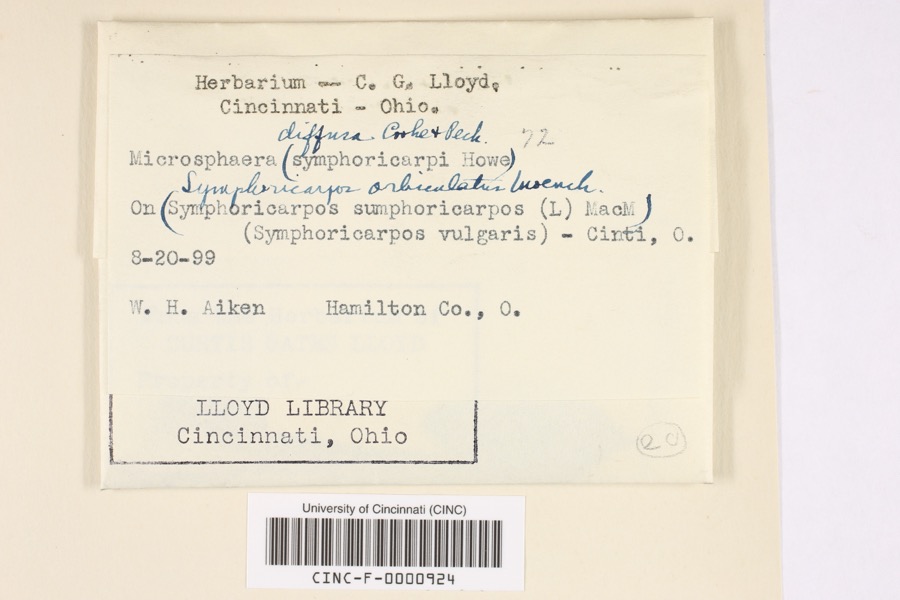
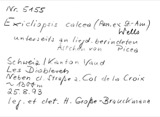
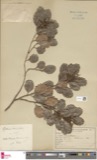
evidence. Museums hold 6,780 specimens
collected within 10 miles of Baker, John S., House between 1819 and
1975: 3,477 Fungi, 1,899 Animalia, 953 Plantae, 398 Protozoa, 33 Unrecorded, 19 Chromista, 1 Bacteria. 12 distinct Species records are shown.
Collected by A Schwartz, A. Braun, A. F. Braun and others. Each is a
physical object with a catalogue
number, and each entry opens the museum's record. This is what was
collected and kept, not a survey of what lives here - nothing can be
concluded from a species being absent.
Regional context, not property-specific
evidence. The federal mineral resources record lists
5 workings within 5 miles of Baker, John S., House: 3 unknowns, 1 past producer, 1 producer.
1 still produces. What was taken out: Sand and Gravel, Construction, Zirconium, Titanium, Tin, Lead, Antimony. Distance is straight-line from the
map coordinates, so a quarry counted here may appear on a neighbouring
settlement's page as well.
Regional context, not property-specific
evidence. The National Weather Service names
Cincinnati, the town this property stands in, in 70 storm reports between 1994 and 2025: 25 thunderstorm wind, 17 hail, 14 flash flood, 7 flood.
The reports record 1 injury. Each account below is quoted exactly as the forecast office
filed it, from the NOAA Storm Events Database, and each date
opens the federal record of that event.
Numerous roads were flooded throughout the Cincinnati area and some basements were flooded. Flooding also caused some damage at Reading High School and Whitaker Elementary School.
Lightning struck a home causing a fire in the attic, which spread toward the second floor before being extinguished. Significant fire and water damage occurred to the home.
High water was reported on several roads in the downtown Cincinnati area and the near West Side. A retaining wall collapsed onto a roadway near the intersection of State Avenue and Ernst Street and a building was flooded on Poplar Street. Also, an apartment basement flooded on Linn Street and one resident needed to be rescued.
14 papers published in this town,
digitised by the Library of Congress and free to read: 0 issues,
0 pages. Every page is searchable, so a name or a street can be
looked for directly in what the town printed about itself at the time.
No historic map-sheet match is published
for this property yet. That does not mean no map exists. This record needs
a coordinate-quality review before it can be joined to a sheet boundary.
Browse the county's mapped places while that work is
pending.
From the nomination file
3,332 words on record
When this property was proposed for the
National Register, someone wrote the case for it: what the building is,
and why it matters. That document is a federal record in the public domain.
It is quoted below word for word, never summarised. The text was read off the scanned case file by machine, so the
occasional stray character is the recogniser's and the 1970s
typewriter's.
Description of the property
a tudor arch on the west facade. The stair brackets have a modified ogee arch. The door and window surrounds are CONDITION arches. DETERIORATED lintels. FAIR ing molding.The ceiling treatment has intersecting compound ribs with foliated bosses. UNALTERED the second floor and the open side porch has cast iron columns with decorative tudor CHECK ONE pinnacle and the oriel window is accentuated with tracery.The first floor windows are XEXCELLENT the building rests atop a raised ashlar foundation.
The walls are broken by belt and string courses.The roof is metal standing seam and circular windows with quartefoils and the third floor paired rectangular windows are with long multi-paned window panels capped with curvelinear tracery and quartefoiled The ceiling molding also exhibits foliation and is a different motif in each room.The The east side facade exhibits two gable wall dormers with paired rectangular windows at crystal chandeliers were imported from France. balustrades having quartefoils and lancet arches. The porch is further highlighted by The back portion of the second floor exhibits an open porch treatment with cast iron cessed rectangular windows further accentuate the facade.
paired with decorative label 1intels and tracery.A horizontal band course with trac- detailing.The balustrade leading to the second floor has cast iron tracery and balus- belt courses, windows are 1/l double hung sash with flat stone lintels and lugsills. wood and many exhibit label lintels.The interior doors have relief panels with lancet The addition, constructed in 19o9,is sympathetic and in character with the Baker House. single pointed arch with gothic tracery.The frontispiece is distinguished by a recessed, The interior of the Baker House is asymmetrical in plan with distinctive Gothic Revival The John Baker House was constructed in c.1854 and exhibits Gothic Rivival architec- ery is found intermittently under the gutters.
building is attributed to him by Evelyn Hollister Perry, a great granddaughter of John Dexter Mausoleum (c. 1869) at Spring Grove Cemetery, Cincinnati; Issac M. Wise Temple (National Historic Landmark) (1864-66), Cincinnati; Scarlett Oaks (1867) (Schoenberger Residence), Cincinnati; and Old Main (1858-1872) Bethany College, Bethany, West Vir- John S. Baker emigrated to Cincinnati from Westfield, N.J. in 1814. In 1817 he married Ester Flint, daughter of Hezekiah Flint and a man of wealth. It is assumed that Mr. the house on a plateau above the Ohio River and set back from Madison Road, the main complimentary to the building.
1400-1499 1600-1699 1500-1599 1700-1799 ARCHEOLOGY-HISTORIC COMMERCE BUILDER/ARCHITECT AGRICULTURE ECONOMICS SIGNIFICANCE TRANSPORTATION EDUCATION POLITICS/GOVERNMENT PERIOD INDUSTRY EXPLORATION/SETTLEMENT THEATER MILITARY PHILOSOPHY LITERATURE Cincinnati architect who produced notable works in the Gothic Revival style.The tration overall is irregular and contains on the main facades curvelinear gothic and the asymmetrical facades and plan the building is further articulated:by crenelations Gothic Revival architecture in the City exhibiting the distinctive architectural de- The Cincinnati Historic Inventory has established this building as the only example of James Keys Wilson ginia.All but the Wise Temple are in the Gothic Revival style.
a sculptor of local fame.Wilson and Nathen Baker were cousins. Buildings designed by - ENGINEERING Baker managed his wife's estate upon the death of Mr. Flint.Mr.Baker built tailing for the residential mode of style. -1900- inga variety of architectural detailing associated with the style..Distinguished by on the large doors, balustrade, and window surrounds. -CONSERVATION The design of the building is attributed to James Keys Wilson (1828-1894),a noted The John S.Baker.House isa distinctive-exampleof Gothic Revival architecture and This house is now situated on a large lot in association with late 19th and early 20th road for the then rural suburb of Cincinnati.
Quoted from the National Register nomination
for reference 79001852, 33 pages, held by the National Archives in Record
Group 79. See the
catalogue record.
Listed places nearby
6 within 8 miles
Other National Register properties close
enough to walk or drive between, ordered by distance from this one. Both
positions come from the same geocoding pass that matched these properties
to their map sheets.
Listing record. National Park Service National Register of Historic Places, listed-properties dataset, current to 2026-05-22.
Map join. Address geocoded through the United States Census geocoder, then tested against the published boundary of every sheet in the USGS Historical Topographic Map Collection.
How this page is made. Listing fields come from federal records; map-sheet coverage is a labelled coordinate-to-boundary calculation, not a source-field claim.
Specimens. Global Biodiversity Information Facility (GBIF), https://www.gbif.org/. Only records licensed CC0 or CC BY are used. Records licensed CC BY-NC are excluded because this site carries advertising. Images are checked individually and any whose licence is non-commercial, no-derivatives or unreadable is refused.
Mines and quarries. USGS Mineral Resources Data System (MRDS) https://mrdata.usgs.gov/mrds/ A work of the United States government, no copyright under 17 U.S.C. 105.
Storms. NOAA National Centers for Environmental Information, Storm Events Database https://www.ncei.noaa.gov/stormevents/ A work of the United States government, no copyright under 17 U.S.C. 105. Narratives are quoted verbatim from the National Weather Service report and are not edited or summarised.
 Block
Block