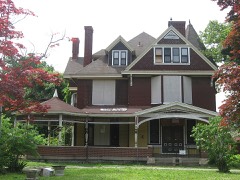
Listed on the National Register of Historic Places in
1982. A historic map-sheet match is not published yet. The record needs a coordinate-quality review before it can be joined to a sheet boundary.
From the record
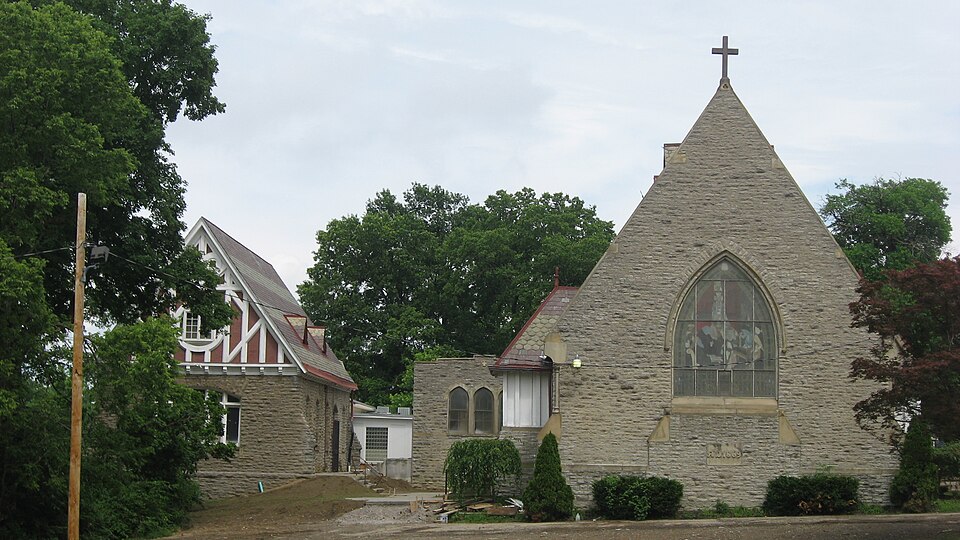
“Michael and All Angels Episcopal Church, formerly known as Grace Church, is an historic church in Cincinnati, Ohio. It is the only church in the North Avondale neighborhood listed on the National Register of Historic Places.”
Wikipedia article Grace Church (Cincinnati, Ohio), CC BY-SA 4.0.
one of 314 National Register listings in Hamilton County · listed in 1982 · category: Building · one of 9 National Historic Landmarks in Hamilton County.
National Register reference number.82003581- the number the National Park Service assigned this property when it was listed, and the key its nomination file is catalogued under at the National Archives.
The reader looks forward to this, the first history of Cincinnati that has yet found itself in print. The writers look back across its half-century of chapters and the century of years embraced by its annals, and have, chiefest of all, to regret many unavoidable errors, both of omission and commission. The more important of these, it is hoped, will appear in our page of errata; but there are still many, doubtless, that have escaped the compilers' attention. In a few cases, discrepancies appear between their statements and those of an extract immediately following. In those instances they must assure the reader that the former rest upon an authority believed to be superior to the other in regard to the matter in hand; but time and space could not always be taken for the discussion and settlement of points concerning which there are variant reports. In all really important matters, they believe the history will be found quite trustworthy, especially when corrected from the page of errata.
Within the decade whose annals have just been passed in review, fell the birth of Cincinnati township, to which was entrusted, for almost twelve years, the government of Cincinnati village, which it of course contained. The township was created, after Columbia, by the court of general quarter sessions of the peace, which then had jurisdiction in these matters, in 1791. To the time of the erection of these townships, the whole county, which contained but a few hundred white inhabitants, was most conveniently governed as one municipality.
Regional context, not property-specific
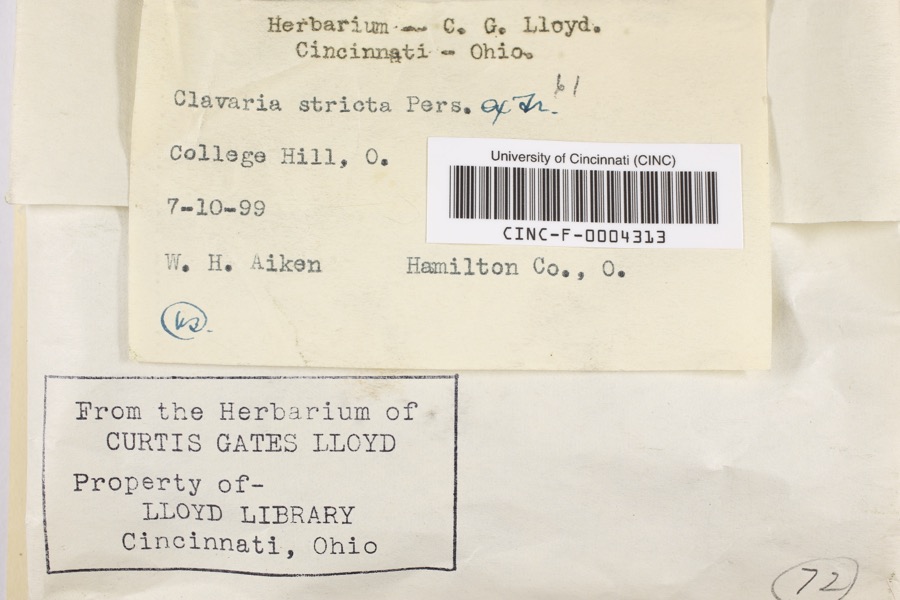
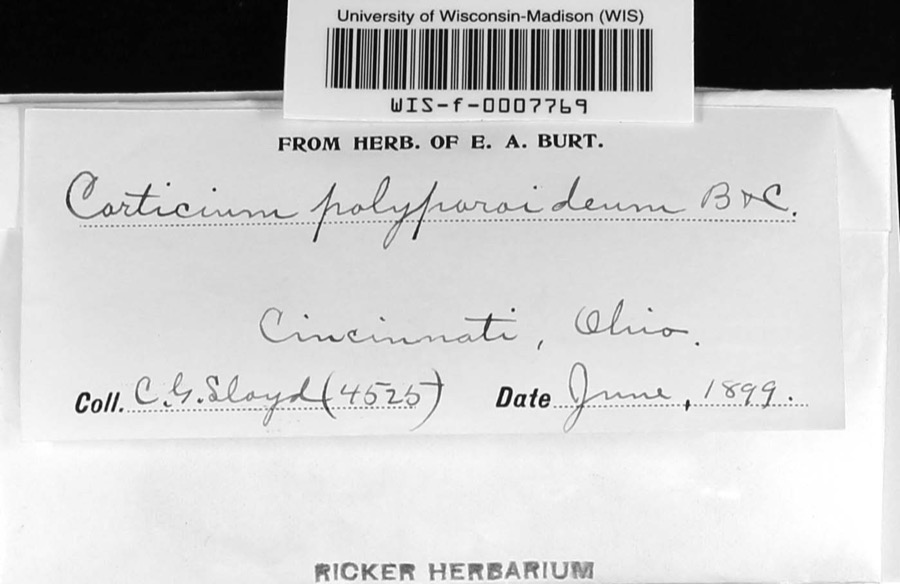
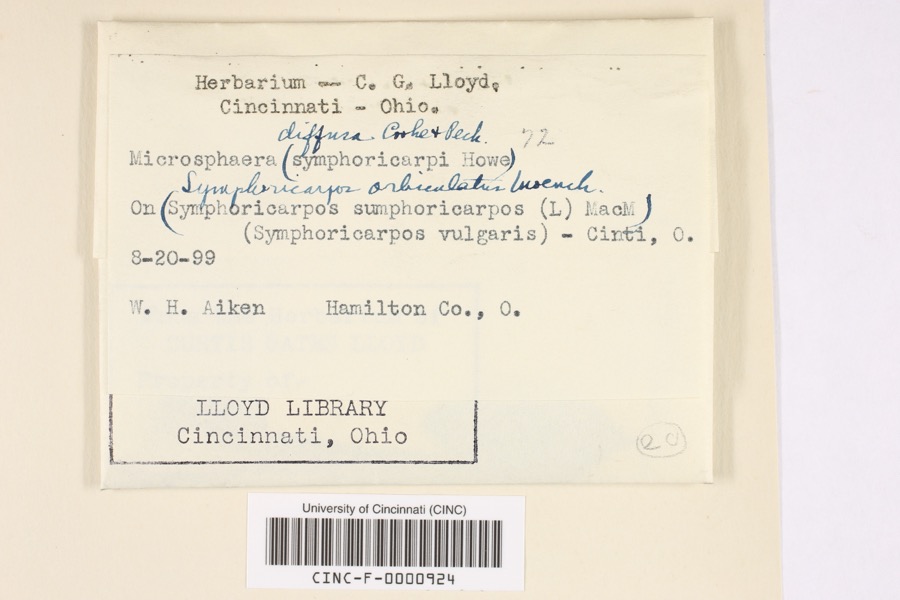
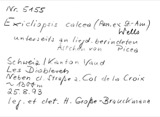
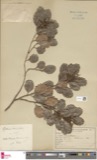
evidence. Museums hold 6,611 specimens
collected within 10 miles of Grace Church between 1819 and
1975: 3,396 Fungi, 1,850 Animalia, 929 Plantae, 385 Protozoa, 32 Unrecorded, 18 Chromista, 1 Bacteria. 12 distinct Species records are shown.
Collected by A Schwartz, A. Braun, A. F. Braun and others. Each is a
physical object with a catalogue
number, and each entry opens the museum's record. This is what was
collected and kept, not a survey of what lives here - nothing can be
concluded from a species being absent.
Regional context, not property-specific
evidence. The federal mineral resources record lists
5 workings within 5 miles of Grace Church: 3 unknowns, 1 past producer, 1 producer.
1 still produces. What was taken out: Sand and Gravel, Construction, Zirconium, Titanium, Tin, Lead, Antimony. Distance is straight-line from the
map coordinates, so a quarry counted here may appear on a neighbouring
settlement's page as well.
Regional context, not property-specific
evidence. The National Weather Service names
Cincinnati, the town this property stands in, in 70 storm reports between 1994 and 2025: 25 thunderstorm wind, 17 hail, 14 flash flood, 7 flood.
The reports record 1 injury. Each account below is quoted exactly as the forecast office
filed it, from the NOAA Storm Events Database, and each date
opens the federal record of that event.
Numerous roads were flooded throughout the Cincinnati area and some basements were flooded. Flooding also caused some damage at Reading High School and Whitaker Elementary School.
Lightning struck a home causing a fire in the attic, which spread toward the second floor before being extinguished. Significant fire and water damage occurred to the home.
High water was reported on several roads in the downtown Cincinnati area and the near West Side. A retaining wall collapsed onto a roadway near the intersection of State Avenue and Ernst Street and a building was flooded on Poplar Street. Also, an apartment basement flooded on Linn Street and one resident needed to be rescued.
14 papers published in this town,
digitised by the Library of Congress and free to read: 0 issues,
0 pages. Every page is searchable, so a name or a street can be
looked for directly in what the town printed about itself at the time.
No historic map-sheet match is published
for this property yet. That does not mean no map exists. This record needs
a coordinate-quality review before it can be joined to a sheet boundary.
Browse the county's mapped places while that work is
pending.
From the nomination file
2,316 words on record
When this property was proposed for the
National Register, someone wrote the case for it: what the building is,
and why it matters. That document is a federal record in the public domain.
It is quoted below word for word, never summarised. The text was read off the scanned case file by machine, so the
occasional stray character is the recogniser's and the 1970s
typewriter's.
Description of the property
supporting the projecting roof. This floor has been altered to accommodate the needs of the Russian Orthodox Church.The one and one-half stories high.It is distinguished by its limestone rock faced ashlar stone glass window is surmounted by a single rock faced ashlar stone course with sandstone trim. Check one the sanctuary today.Four Tiffany stained glass windows accentuate the window treatments. The north facade of the church building exhibits the same wall and entrance treatment as the The frame addition was constructed in 1886 and is approximately 45'x 52' in size and one _ unaltered A sandstone date plate, "A.D. 1869" is found below the window. The south facade is assymetri- the time of the 1886 addition.
The Parish Hall building, also Gothic Revival, is 29' x 53' rectangular in plan and facade is composed of buttresses, a raised entrance with red painted door, triangular same except the fenestration is all windows. The steep imbricated slate roof is pierced board siding and simple door and window surrounds is found to the rear on the east facade. deteriorated and large double red doors.The window heads are gothic pointed with keystone.A large exposed rafters..This same roof treatment is utilized for the frame addition except that story in height.It is composed of a limestone rock faced ashlar stone raised foundation of the main building at the south facade.
gable end exhibits adecorative half timber motif abovea large five paned window with The west a church constructedin1869anda parish ha1l constructedin1880.The church building is Areas of SignificanceCheck and justify below - archeology-historic - agriculture . sculpture - social/ - engineering .theater - transportation - other (specify) Builder/Architect J. W. McLaughlin & A. C. Nash Statement of
Statement of significance
(in one paragraph) Identified in the Cincinnati Historic Inventory for their architectural significance, the St. Michael's and All Angel's Protestant Episcopal Church buildings are excellent examples of Gothic Revival architecture characteristic of the English parish architectural mode. Both buildings were designed by prominent local architects and embody the distinctive architectural detailing and characteristics associated with the style as applied to church architecture. Together with a setting which maintains its integrity, these buildings have sanctuary and chancel, and a 1915 addition are in harmony with the architectural character- ing was designed by the noted Cincinnati architect, James W. McLaughlin (1834-1923).
prolific architect, he designed many significant buildings for public and private clients. the First Unitarian Church (1889), and the Cincinnati Gas, Light and Coke Co. building (1870).
The parish hall was constructed in 1880 and exhibits a decorative half timber gable end with quartefoils, rock faced ashlar wall treatment, steep polychromic imbricated slate roof, Presbyterian Church (1873) in the Gothic Revival style, which is located in a National His- and close juxtaposition, the two church buildings affirm a mutual relationship and distin- in 1866 when a group of citizens in the suburban community of Avondale, near Cincinnati, resulted in services being held in a nearby school with discussions taking place to formally become incorporated into the Episcopal Church and for the establishment of a church building.
In early 1867, a declaration of Association and Conformity to the Constitutions and Canons the years until 1938, the church functioned as a focal point for the Episcopal faith in totalling approximately 100 members. economics 1500-1599 1700-1799 1400-1499 industry education Period music humanitarian communications literature law 8.
Quoted from the National Register nomination
for reference 82003581, 15 pages, held by the National Archives in Record
Group 79. See the
catalogue record.
Listed places nearby
6 within 8 miles
Other National Register properties close
enough to walk or drive between, ordered by distance from this one. Both
positions come from the same geocoding pass that matched these properties
to their map sheets.
Listing record. National Park Service National Register of Historic Places, listed-properties dataset, current to 2026-05-22.
Map join. Address geocoded through the United States Census geocoder, then tested against the published boundary of every sheet in the USGS Historical Topographic Map Collection.
How this page is made. Listing fields come from federal records; map-sheet coverage is a labelled coordinate-to-boundary calculation, not a source-field claim.
Specimens. Global Biodiversity Information Facility (GBIF), https://www.gbif.org/. Only records licensed CC0 or CC BY are used. Records licensed CC BY-NC are excluded because this site carries advertising. Images are checked individually and any whose licence is non-commercial, no-derivatives or unreadable is refused.
Mines and quarries. USGS Mineral Resources Data System (MRDS) https://mrdata.usgs.gov/mrds/ A work of the United States government, no copyright under 17 U.S.C. 105.
Storms. NOAA National Centers for Environmental Information, Storm Events Database https://www.ncei.noaa.gov/stormevents/ A work of the United States government, no copyright under 17 U.S.C. 105. Narratives are quoted verbatim from the National Weather Service report and are not edited or summarised.
 Block
Block