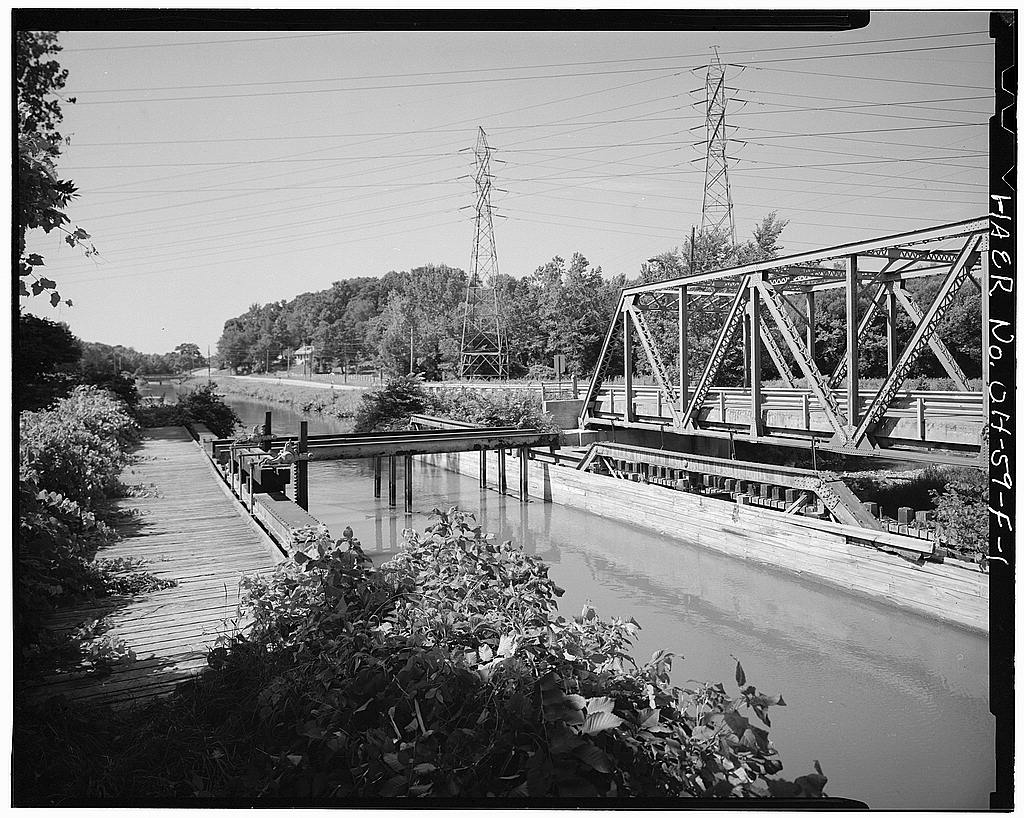
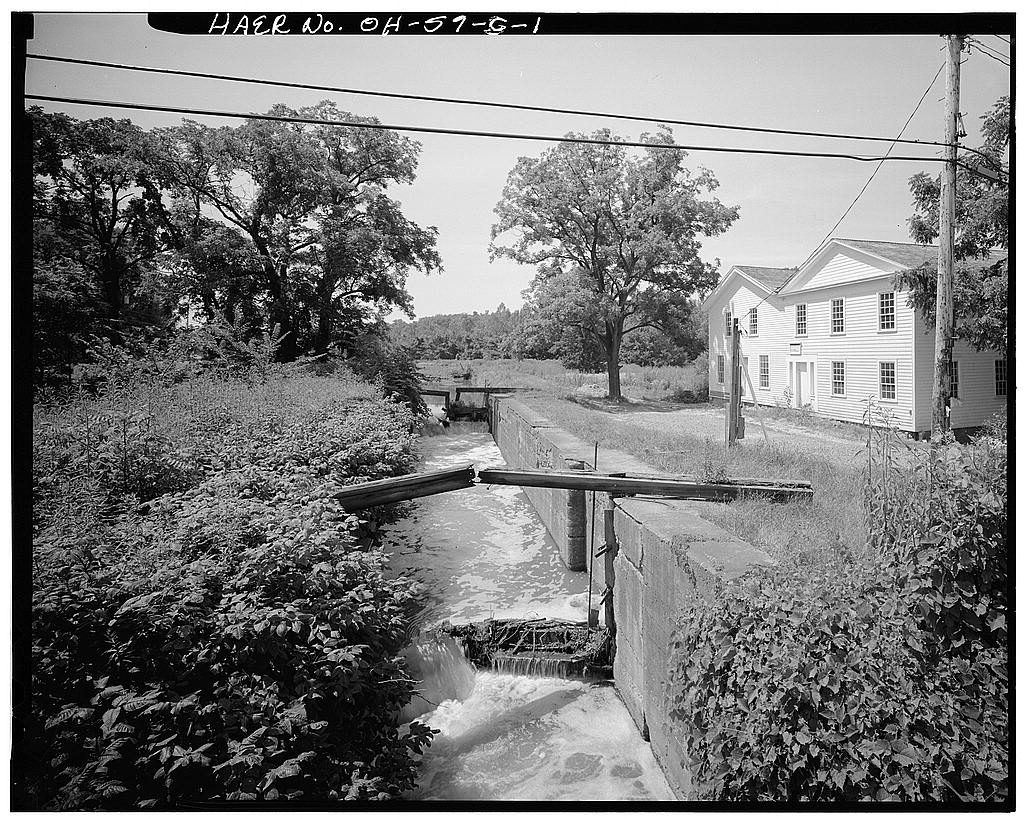
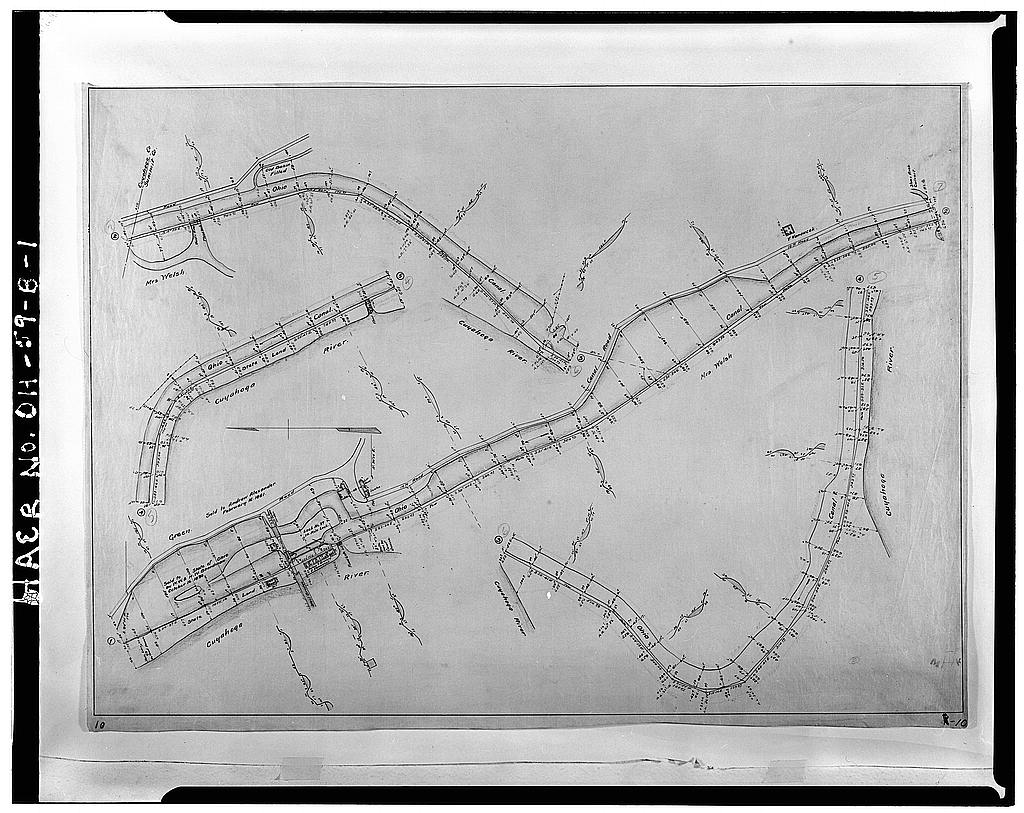
Thomas R. Wilson (Mill) Wilson Feed Mill, Inc. Canal Road Valley View, Ohio State of Ohio (Land) Department of Public Works 65 South Front Street Columbus, Ohio Feed mill; attached retail store sells animal feeds, gardening supplies, rock salt, and related items. Alexander's Grist Mill, part of the Ohio and Erie Canal National Historic Landmark, is the last surviving gristmill in Cuyahoga County and one of only a few in Ohio. After it was re-equipped as a feed mill, reflecting changes nationwide in the flour and feed milling industries. It continued to use water power until The mill's water-power system, including the headgates and turbines, is still in place. Carol Poh Miller, December Alexander's Grist Mill (Wilson's Mill) HAER No.
OH-58 (Page 2) Vestiges of not a dozen water-powered gristmills were to be found in Ohio by although in the state boasted over of them. As late as the Directory of Ohio Flour Mills, published by the Ohio Millers State Association, listed 94 such mills remaining in the state. They owed their rapid demise principally to changing technology and the consolidation of flour milling in the hands of a few large producers. One unusual survivor is Alexander's Mill, erected in by Andrew and Robert Alexander. Located on the Ohio and Erie Canal in Independence Township, 14 miles south of Cleveland, Alexander's Mill was a custom mill, grinding grist for area farmers.
After under the ownership of the Wilson family, the mill made a successful transition from flour to feed milling, continuing to use water power until Today, the mill still grinds and mixes animal feed to order, although increasing suburbanization had made dog food, wild bird seed, and road salt the mill's stock in trade since the Four generations of Wilsons, all named Thomas, represent an unusually long and rich association with agriculture and milling in the Cuyahoga Valley, as well as an ongoing tradition. The author would like to thank Tom Wilson and his uncle, Charles Wilson, both of whom gave generously of their time to answer questions about the mill's history and operations. Carol Poh Miller Historian Cleveland, Ohio December Alexander's Grist Mill (Wilson's Mill) HAER No.
OH-58 (Page 3) Flour milling was among the earliest industries in Ohio's Western Reserve. Wheat was grown and gristmills were built in most pioneer settlements. In Wheeler W. Williams and Major Wyatt built what is reputed to have been the first gristmill in the Western Reserve at the falls of Mill Creek at Newburgji, south of Cleveland. 1 Closer to Akron, George Wallace erected a gristmill on Brandywine Creek in Summit County in 2 With the opening of the Ohio and Erie Canal between Akron and Cleveland in farmers, newly-settled in the Cuyahoga Valley, began the commercial production of wheat for the first time. By growing trade made Cleveland the principal market for grain in the Great lakes and Ohio the nation's leading wheat-producing state.
Ohio remained the first wheat state for almost 20 years, and took first place occasionally as late as 3 Independence Township, at the southern edge of Cuyahoga County, did not have any early gristmills, although two sawmills were built on Hemlock Creek in West of the Cuyahoga River, the township was underlaid by a ledge of high-quality sandstone well suited for grindstones and, by the late quarrying had become the principal industry. Sandstone was shipped by canal boat or drawn by teams to Cleveland. The only gristmill in the township was erected in 4 Alexander's Grist Mill According to the Eighth Census of the United States, in Ohio boasted gristmills. Cuyahoga County had 21. "This seemingly vast number," D. W.
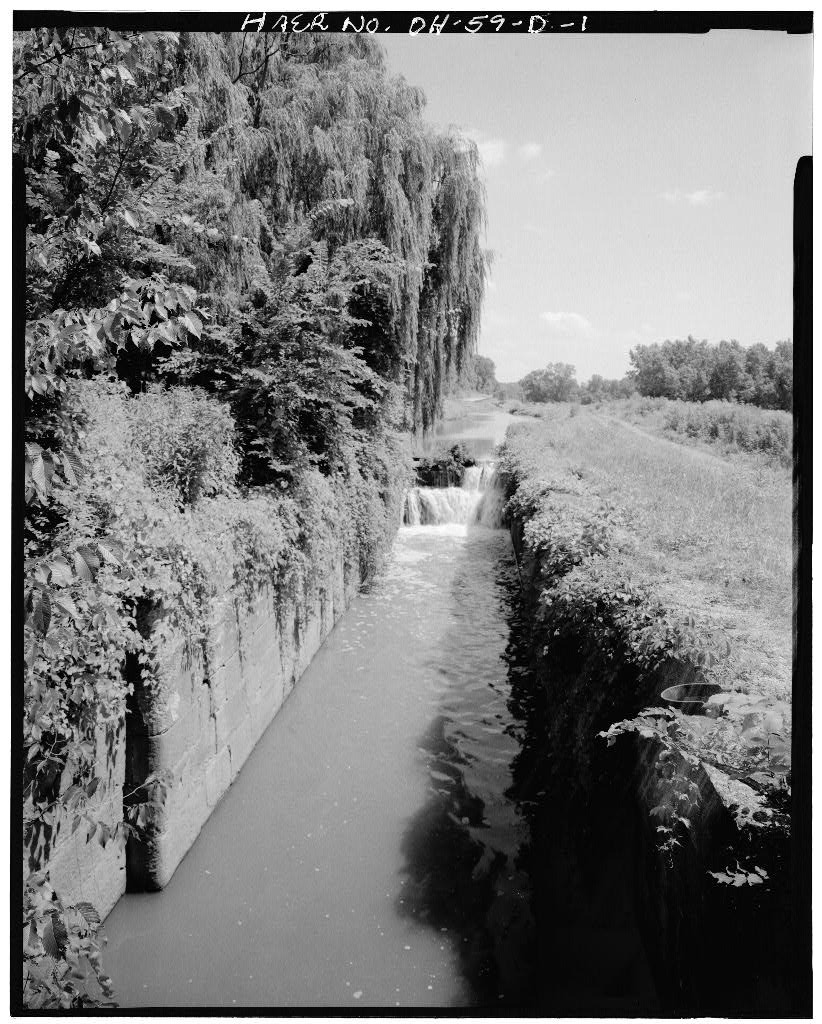
Garber writes, "was a reflection of the farmer's reluctance to go a long distance with a grist to be ground. Where a mill seat was available and the farm production warranted, a miller had sufficient justification for erecting a mill." 5 Country mills typically were small and ground only enough grain to satisfy the needs of local inhabitants. Grinding was done on a "custom" basis, with the miller usually keeping a percentage of the ground meal, called "miller's toll," for payment. In the decade that witnessed the greatest construction of country mills, Robert and Andrew Alexander erected a gristmill at lock No. 37 on the Ohio and Erie Canal in the southeastern part of Independence Township.
The date of construction of the mill, can be traced through the tax duplicate of the period, but there are no records to tell us who actually constructed the mill. Was it the Alexanders or did they hire a millwright? Not much is known about the Alexanders themselves. In the Ohio Board of Canal Commissioners was authorized to purchase land adjoining the state's canals wherever surplus water passing tlirough might be profitably used for "hydraulic purposes." In the State of Ohio purchased from William W. and Henry M. Boardman 10 acres adjoining the Ohio and Erie Canal in Independence Township on which Alexander's Mill was later erected. 7 Alexander's Grist Mill (Wilson's Mill) HAERNo.
OH-58 (Page 4) The county tax duplicate shows that the mill was instructed in with the property valuation having jumped from in to the following year. 8 The earliest record of a water lease does not appear until February 16, when the Board of Public Works leased for a term of 30 years "all surplus water passing Lock No. 37 north of Portage Summit not necessary for purposes of navigation" to "R. & A. Alexander" for an annual rent of 9 Curiously, a deed filed one year later shows that, although the water power lease was in the name of R. and A. Alexander, Robert Alexander and his wife, Jane, were the initial mill owners. On May 1, Robert Alexander and his wife, Jane, for consideration of sold to Andrew Alexander "the grist mill & fixtures situate[d] on . . . sub lot No. 3 Lot No. 5 tract No.
6 . . . being the same piece of land leased by the Board of Public Works by A. L. Backus to R. & A. Alexander, said lease dated Feby. 18, upon which R. & A. Alexander have erected said Grist Mill or Flouring Mill . . ." 10 The deed thus confirms that Robert and Andrew Alexander together built the mill, while the tax duplication, which includes the pencilled notation "and mill", for the year in which the value rose, confirms the date of construction. What cannot be explained is why the water and land leases were not executed until possibly the mill was not put into operation until that date. Andrew Alexander was born in Petersburg, Columbiana County, Ohio, the second of eleven children of James and Mary Gibson Alexander.
1 1 He was reared and educated in his native county, and married Hannah Hope there. He emigrated with his family to Cuyahoga County in but his biography between that date and the year Alexander's Mill was built, is a mystery. His father, James, was a blacksmith by trade and is said to have owned "one of the best sawmills" in Columbiana County. 1 2 The name "J. Alexander" appears on the Cuyahoga County landownership map of as the owner of 230 acres in the southwest corner of Bedford Township. 1 3 In Andrew Alexander purchased property in Bedford (including some from his own parents).
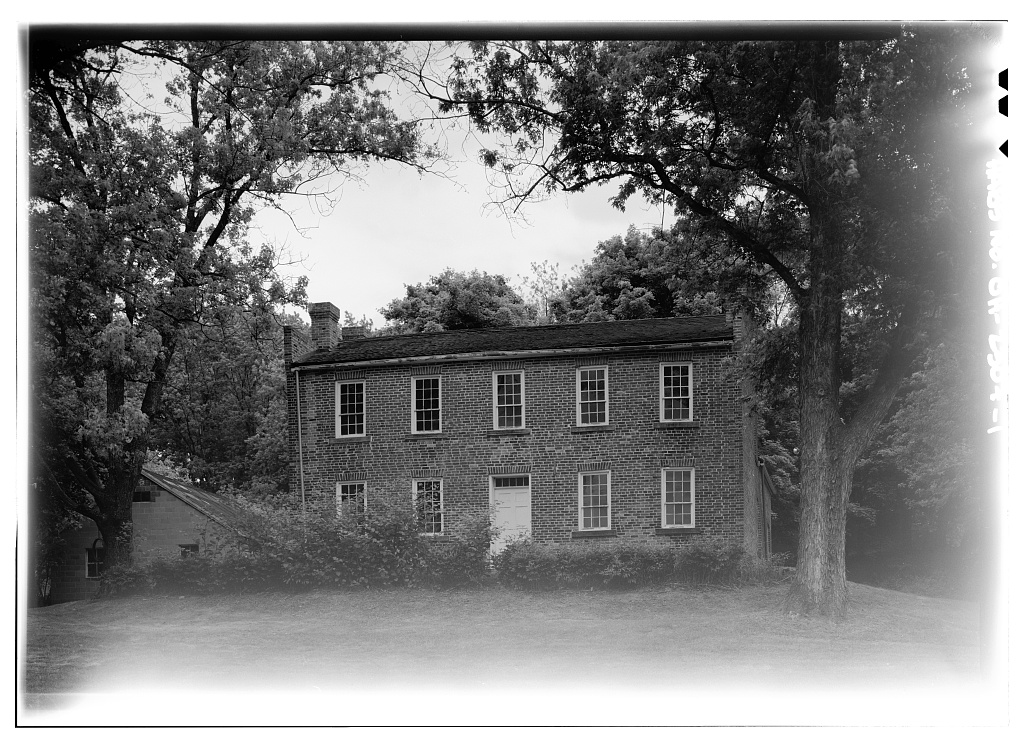
The Cuyahoga County census (the census is illegible) lists Andrew Alexander's occupation as "Owner of Grist Mill," and indicates that he had three children: James, 29 years old, a farmer; Almira, 25, "at home;" and John, 27, "works in Gristmill." The Cuyahoga County atlas shows Andrew Alexander as the owner of 116 acres plus a dwelling on what today in Alexander Road in Bedford, and 10 acres including a mill and a dwelling (opposite the mill and still extant) in Independence Township. Virtually nothing is known about Robert Alexander, with wham Andrew built the mill; even their relationship cannot be confirmed. 1 4 According to family legend, although Andrew Alexander owned the mill, he did not operate it himself.
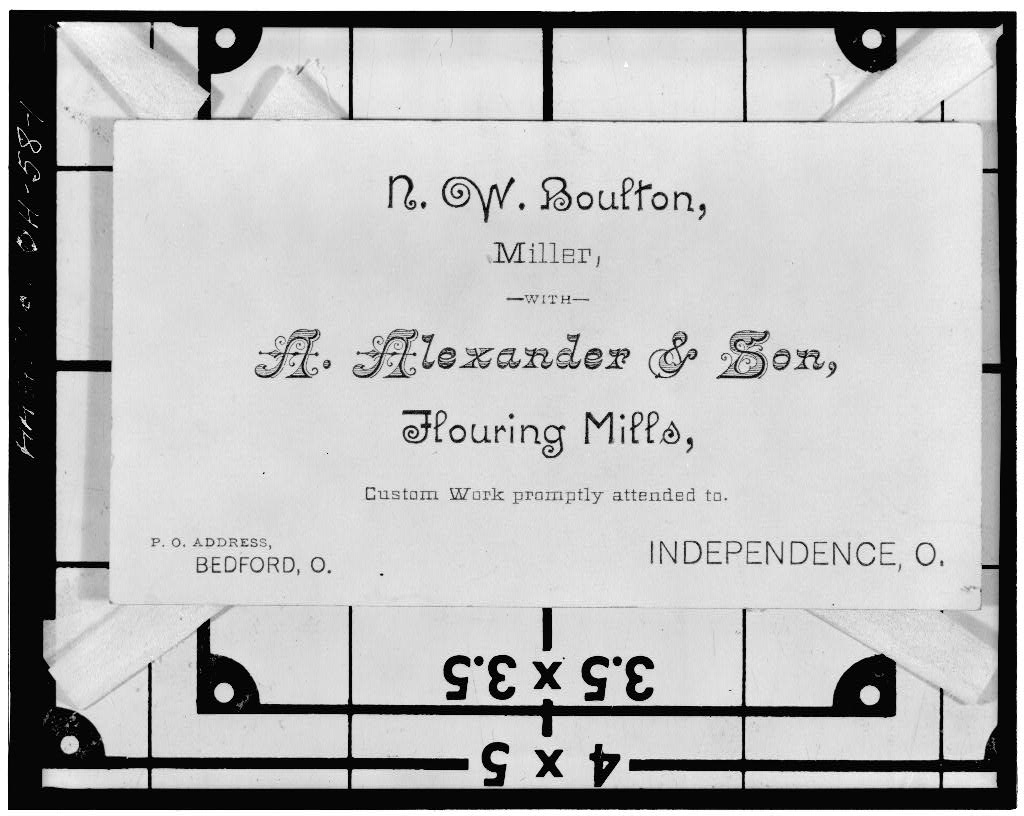
Instead, he is reputed to have hired a miller who lived in the small wooden frame house Alexander owned on the hillside opposite the mill. Andrew's son, John Clark Alexander known as Clark, Alexander's Grist Mill (Wilson's Mill) HAER No. OH-58 (Page 5) later joined his father in business, an arrangement that is confirmed by a business card containing the name "N. W. Bolton, Miller, with A. Alexander & Son, Flouring Mills, Custom Work promptly attended to" (see Photo About Clark Alexander, one historian has written that he "was a mere lad when he went into his father's flouring mill, where he received a thorough training in all the details of the business; for thirty years he was his father's trusted partner, conducting the business with marked ability.
1 5 Clark moved to Cleveland in where he embarked in real estate and served one term as Cuyahoga County Commissioner. In Andrew Alexander sold the mill to George Foster A 6 he died the following year. Alexander's Mill, of post and beam construction, was two and one-half stories high. It rested on a rubble sandstone foundation with a full basement. Plain in style, the mill's broad gable roof, square plan, and clapboard siding gave it Greek Revival overtones (see Rioto OH-58-2). Windows are wood, double- hung, twelve-over-twelve light. A small office adjoined the mill at the southeast corner. Although no records survive to tell us about the mill's early operations, we know that there had been no revolutionary changes in milling machinery or processes since Oliver Evans.
1 7 Turbines were not yet in widespread use (James leffel patented the "American Double Turbine" in and it can be surmised that a wooden waterwheel, probably an undershot wheel, given the canal's 10-foot fall at this point, was used initially. Grinding would have been done with millstones. Sometime before and probably by the mill was refitted with turbines. The earliest known photograph of the mill, dated shows no evidence of a waterwheel but does show a weir with the same configuration as that visible in later photographs.
1 8 According to Garber, "the turbine provided greater efficiency in operating a mill, and its substitution for the wooden wheel was a significant factor in the eventual abandonment of many country gristmills." 1 ^ In addition to the introduction of turbines, revolutionary changes in milling technology occurred during the late century. "New Process" flour milling, introduced in Minneapolis in provided a means of purifying the middlings (bran particles to which flour continues to adhere after the first grinding) through the use of corrugated rolls. To the three steps already in use, cleaning, grinding, and bolting (i.e., separating flour from bran by using fine-mesh silk cloth as a sieve), were added two more, the purification and the regrinding of the middlings.
The new roller system gained wide acceptance in the and within a decade had replaced millstones in thousands of mills in the United States. Corrugated rolls required less space, less power to operate, and less oversight. 2 0 According to Garber, numerous mortgages and foreclosures resulted when mills with waterwheels and millstones could no longer compete with those employing both turbines and the Alexander's Grist Mill (Wilson's Mill) HAER No. OH-58 (Page 6) modern roller system. 2 1 Ihe fact that Alexander's Mill adopted both of these new technologies suggests that either the mill was profitable enough, or its owner was wealthy enough, to do so. 2 2 Wilson / s Mill George Foster, who had purchased Alexander's Mill for in sold it for the same price to Thomas R. and Emma J.
Wilson in the fall of 23 Thomas Wilson a lifelong miller, had served as proprietor of the Cataract Mills in Newburgh (see thoto for almost 30 years. 2 4 A ledger he kept, beginning in September shows that between that date and November 8, while still at the Cataract Mills, Wilson ground and sold oats, corn, rye, and bran. He also sold hay, ice, and straw. Beginning in under the new heading "Alexander's Mills" (the mill's historic name apparently persisted through the Fosters' tenure and into the century), entries are similar in nature but are kept by customer rather than as a daily log of business. 2 5 In late March devastating floods struck much of Ohio. The Cuyahoga Valley suffered badly, with the waters of the Cuyahoga River and the Ohio and Erie Canal joining to form one huge torrent.
Ihe flood destroyed much of the canal system and brought canal travel to an end. There is no record of the damage to Wilson's Mill, but Charles E. Wilson, a child at the time, recalls a long period when the mill was closed. 2 6 A new water power lease agreement between the State of Ohio and Thomas R. Wilson was made on April 29, Surplus water passing Lock No. 37 was "to be conveyed to the mills or other hydraulic works over a regulating weir, to be constructed by, and at the expense of" Thomas Wilson. Wilson agreed to pay an annual rental of provided he was not deprived of the use of the water for more than five days in any one year.
Wilson agreed to erect the regulating weir, "to be constructed of stone or concrete walls and plates of wood, with a substantial iron bar securely bolted on the top thereof . . . [and] so constructed that a uniform quantity of water will flow from the upper to the lower level of the canal whether the hydraulic works are in operation or not." Wilson was further responsible for repair of the weir, headrace, and tailrace. 2 7 Until he died in Wilson enjoyed the assistance of sons Thomas G. and Charles. An extant ledger shows he was milling and selling wheat, rye, and graham flour, matchless amber, scratch feed, and shelled corn. Flour was sold in 140-pound bags, and customers sometimes received credit against their accounts for flour or grain.
By improved transportation allowed Wilson's Mill to sell to larger customers, including commercial bakers and restaurants. Ledger entries under the heading "Season shows sales of flour to a number of Cleveland businesses, including the Victoria Restaurant (Euclid Arcade); John Hulett, a baker at Superior Avenue; the Clark Eakery Company, East Street; the Star Baking Company, Lakeview Road; and Jacob Schneider, a baker at Central Avenue. 2 ^ After the season, however, milling took a new direction. Alexander's Grist Mill (Wilson's Mill) HAER No. OH-58 (Page 7) Since the the Cuyahoga Valley had been the province of the small farm and the small individual wheat crop.
Beginning in locally-ground flour was being systematically edged out of the market by powerful competitors in Buffalo, Minneapolis, and Kansas City. The census of revealed the rapid changes underway in the flour industry. Of flour mills reporting, only were custom mills. In their combined output was less than half what it had been 10 years earlier. Neighborhood mills, in fact, made less than two percent of the country's output of flour in 2 9 Longtime customers were buying flour commercially and turning to other crops.
Ihe tendency toward concentration in the wheat-flour industry was noted by the Federal Trade Commission in which reported that "mills of large size are rapidly driving out their smaller competitors." Industrialization and the growth of cities had created a demand for standardized brands of wheat flour, and concentration was further encouraged by the increased production of hard wheat on the high plains west of the Mississippi River. 3 C} According to one analyst, the number of small flour mills nationwide was "more than halved in the first three decades of the century, declining from more than in to less than and those that survived usually added other lines and, in a great majority of cases, flour became a minor part of their activities.
3 ^ Mill offals (wheat bran) has been held in low esteem throughout much of the century. Until the when Fred C. Pillsbury, brother of the famous miller, demonstrated their value as animal feeds, they were commonly given gratis to anyone who would haul them away or else spouted into the stream that turned the waterwheel. After however, the manufacture of commercial animal feeds in the United States began to take hold as a new industry. Manufactured feed combined cereal grains and cereal mixtures with other ingredients, including vitamins and drugs, to produce "formula" or "mixed" feeds. 3 2 As the demand for flour dwindled, Wilson's Mill, like many other mills of the period, turned to this new industry and to the sale of farm products. When Thomas R. Wilson died in his son, Thomas G.
Wilson took over as mill proprietor and largely presided over its transformation from grist to feed milling (see Rioto OH-58-4). According to the Directory of Ohio Flour Mills for Wilson's Mill, using water power, was still milling winter wheat, corn and oats, with a daily capacity of 40 barrels. 3 3 On the eve of the Depression, however, the mill cast about for new enterprises and, for a brief period, even ground scrap glass into powder for a local manufacturer. 3 4 This odd job seems to have marked a turning point for the mill. In Thomas Wilson explained to a reporter why the mill no longer ground flour. Neighbors had stopped farming during recent boom years, he said, many expecting to sell their farms for real estate development.
Families that had been growing wheat and hauling it to the mill began buying bread from bakery Alexander's Grist Mill (Wilson's Mill) HAER No. (Page 8) wagons instead. 3 5 An article about the mill, based on an interview with Thomas G. Wilson in reported: The Wilsons eventually got into the bulk feed business and their fortunes improved. This work was done by newer, more specialized equipment, and the old flour milling items fell into permanent disuse. Ironically, once this happened, cheap wheat came into the picture as a result of long distance trucking. Tom recalled that he soon saw wheat coming from Indiana by truck "cheaper than I'd ever bought it locally." But it was too late for the mill's altered machines. 3 6 Several letters in the possession of Thomas R.
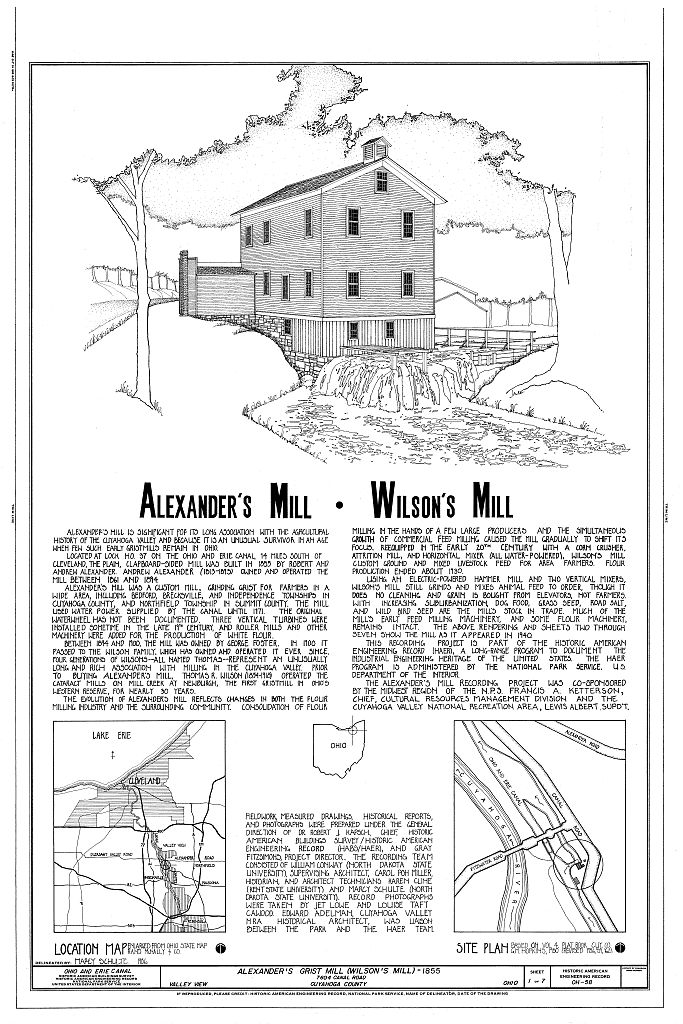
Wilson contain responses to an advertisement his father, Thomas G. Wilson, apparently placed in the journal American Miller in the fall of for a "French burr mill." 37 Which one he bought, or if he bought one, is unknown, but a news article suggests that as late as the mill was still producing a small quantity of flour. "I only make flour now when I haven't anything else to do," the article quotes Tom Wilson as saying. "But I have an old burr millstone that makes the finest whole wheat flour in the country." 38 The Mill in Though flour production had largely come to an end, remnants of flour milling equipment were still to be found at Wilson's Mill in (Rioto OH-58-5, HAER Drawings OH-58: sheets 1 - 7), as they are today.
In addition to three turbines still providing water power (now for feed milling), there was a wheat cleaner, flour packer, receiving separator, and bolter. Thomas G. Wilson, whose advertisement for a burr mill in had elicited several responses from millers anxious to rid themselves of obsolete equipment, seems to have kept these pieces of equipnent, and other early feed milling equipment already eclipsed by more efficient models, out of a sense of history the same sense, perhaps, that led him to keep boxed in a carton on the third floor back issues of American Miller , Flour and Feed , and other trade journals to which he subscribed during the years between and The "Eureka" cleaner, manufactured by the S. Howe Co.
of Silver Creek, New York, used reciprocating sieves to remove coarse foreign material from wheat before grinding. The Silver Creek flour packer, patented in remained suspended from the ceiling on the first floor of the mill. Nothing is known about its use or operation. On the second floor, a receiving separator, manufactured by the Robinson Manufacturing Company of Muncy, Pennsylvania, separated grains different in size and removed foreign material. Finally, a hexagonal reel bolter, dismantled in the attic, sifted the particles of endosperm after rolling. Alexander's Grist Mill (Wilson's Mill) HAER No. (Page 9) Our understanding of the mill's operation in is based on the recollections of Charles Wilson (born Thomas G. Wilson's brother; and Thomas R. Wilson (born the son of Thomas G.
Wilson, Who worked alongside his father from boyhood; 39 and on a comprehensive account of feed mill operations found in an industry annual, The Feed Bag Red Book . According to the Wilsons, the first turbine (in the northwest corner of the mill) powered the cleaner; the second (middle) turbine powered the elevator; and the third (in the northeast corner of the mill, see Photo OH-58-6)) powered the attrition mill or ear corn crusher and corn sheller. The attrition mill, manufactured by Sprout, Waldron & Company of Muncy, Pennsylvania, patented and ground corn, cats, and other grains into a final, uniform meal used primarily for hog and dairy feeds.
The ear corn crusher (manufacturer unknown, see Photo performed the initial, coarse grinding of ear corn, while the corn sheller (see Photo OH-58-8), manufactured by C. O. Bartlett & Snow Company of Cleveland, patented removed corn kernels from the cob. A "Blue Streak" hammer mill in the southeast corner of the basement, manufactured by the Prater Pulverizer Company of Chicago, was added sometime during the and represents the first electrically-driven machinery in the mill (see Photo This basic grain processing machine dropped free-mounted hard metal hammers against the grain; a perforated screen determined the final size of the product.
The hammer mill, which economically pulverized oats, alfalfa and corn, largely superseded the attrition mill, but the latter continued in use until the end of water power in The "Bison" corn cracker, manufactured by the Wolf Company of Chambersburg, Pennsylvania, was designed to crack kernel corn, but neither Wilson recalls it ever having been used (see Photo OH-58-10). A large horizontal mixer, manufactured by the Gedge-Gray Company of lockland, Ohio, mixed batches of animal feed to order (see Photo OH-58-11). This was largely superseded by two electrically-driven vertical twin-spiral mixers, added about on the first floor (see Photo OH-58-12). These "Blue Streak" mixers, manufactured by the Prater Pulverizer Company of Chicago, mixed feed batches by means of twin screw augers.
Grain was fed through a floor-level charging hopper. TWo "Eureka O.K." bagging scales weighed bulk feed (see Photo OH-58-13). Bags were closed with a portable electric bag-closing machine. A dca >le-<haTCiber belt and cup-type elevator elevated bulk materials received by truck and discharged them through spouts into hopper bins (see Photos OH-58-14 and Mill dust, collected by suction, was discharged into a ventilator in the third story (see Photo OH-58-16). Drawings 6 and 7 show cross sections of the mill, with the machinery of this period in place. Alexander's Grist Mill (Wilson's Mill) HAER No. (Page 10) After Wilson's Mill evolved as it always had to meet the changing demands of its market.
In a one-story, shed-roofed addition was built on the west side of the mill to provide bag storage (see Kioto OH-58-17). In a large addition was built on the south side of the mill to accommodate a new elevator and a corn cracker purchased from a one-time competitor, G. E. Conkey Co. of Cleveland (see Fhoto OH-58-18). The latter cracked corn for chicken feed; the considerable quantity of "fines" produced in the process for 15 years were used for cattle feed. Both kinds of farming diminished, however, and today the addition is used for storage. In Wilson's Mill supplied feed for 600 cows in the Cuyahoga Valley, and about 50 of its customers raised broilers. 4 0 But continuing suburban development of Cuyahoga County was gradually altering the mill's market.
With less call for ground animal feeds, bird seed, dog food and garden supplies became leading items. In a new retail store replaced the small office on the east side of the mill (see Kioto Although, by the electricity was supplying most of the mill's power, water power continued in use until when a storm deposited massive amounts of silt and mud within the headgates (see Hiotos OH-58-21, and OH-58-22). Wilson's Mill remains a vital business, employing eight men, in addition to several family members. Its history reflects the changes in the broad patterns of life in the Cuyahoga Valley and the evolution of gristmills generally.
It illustrates the technological changes that transformed flour milling in the late century; its consolidation in the hands of a few large producers; the rise of the feed milling industry, which took its place; and the gradual shift to new product lines in response to increasing suburbanization. Finally, Wilson's Mill illustrates its proprietors' marked ability to adept to change, which ensured not only the mill's economic survival, but its preservation. Alexander's Grist Mill (Wilson's Mill) HAER No. OH-58 (Page 11) Footnotes 1 Crisfield Johnson, History of Cuyahoga County, Ohio (Cleveland: D. W. Ensign & Co., p. The mill was located near what is today the intersection of Broadway and Warner Road in Cleveland. It was later known as the Cataract Mills.
2 William Henry Perrin, ed., History of Summit County (Chicago: Baskin & Battey, p. 3 Herman Steen, Flour Milling in America (Minneapolis: T. S. Denison & Company, Inc., pp. and Charles Byron Kuhlmann, The Development of the Flour-Milling Industry, with Special Reference to the Industry in Minneapolis (Boston: Houghton Mifflin Company, p. 70. 4 Johnson, History of Cuyahoga County , p. 5 Waterwheels and Millstones: A History of Ohio Gristmills and Milling , Historic Ohio Building Series, No. 2 (Columbus, Ohio: The Ohio Historical Society, pp. 6 Charles Howell, "Colonial Watermills in the Wooden Age," in America's Wooden Age: Aspects of Its Early Technology , edited by Brook Hindle (Tarrytown, New York: Sleepy Hollow Restorations, p. 7 Cuyahoga County, Ohio, Deeds, Vol. 9, pp.
Cuyahoga County Administration Building, Cleveland, Ohio. 8 Tax Duplicate, Independence Township, Cuyahoga County Archives, Cleveland, Ohio. 9 Ohio Board of Public Works, Journal No. 6 Series Minutes and Directors Journal), p. Ohio Historical Society, Columbus, Ohio. 10 Cuyahoga County, Ohio, Deeds, Vol. pp. H Unless otherwise noted, biographical information about Andrew Alexander is based on genealogical research supplied by Jones, 320 West Glendale, Bedford, Ohio 3-2 Memorial Record of the County of Cuyahoga and City of Cleveland, Ohio (Chicago: The lewis Publishing Company, p. Alexander's Grist Mill (Wilson's Mill) HAER No. OH-58 (Page 12) 13 Cuyahoqa County landownership Map Index (Cleveland: The Greater Cleveland Genealogical Society, pp. 3, 89.
14 Andrew Alexander is known to have had an older brother named Robert, but he died in according to family records. An uncle, Robert Gibson Alexander, was born in and would have been 69 at the time of construction. 15 Memorial Record of the County of Cuyahoqa , p. 16 Cuyahoqa County, Ohio, Deeds, Vol. pp. 17 Kuhlmann, Development of the Flour-Milling Industry , pp. 18 Photo from the James Cowles Collection, prints and copy negative on file at the offices of the Cuyahoqa Valley National Recreation Area, Brecksville, Ohio. 1 9 Garber, Waterwheels and Millstones , p. 90. 20 Kuhlmann, Development of the Flour-Billing Industry , pp. 21 Waterwheels and Millstones , p. 88. 22 Charles Wilson (born recalls, as a boy, seeing four stands of rollers on the mill's main floor.
These, he says, were gone by See Wilson's Mill," below. 23 Cuyahoga County, Ohio, Deeds, Vol. pp. 24 Cleveland City Directories. The first listing for Thomas Wilson appears in the directory for "Newburgh Flouring Mills, Thomas Wilson, propr." 25 Ledger with name "Thomas R. Wilson, Bedford, Ohio," covering, intermittently, the period September 25, to June 17, collection of Thomas R. Wilson, Valley View, Ohio. 26 Interview. August 18, Valley View, Ohio. 27 Ohio Board of Public Works, Record, Ohio Canal land Leases (DEW Series pp. Ohio Historical Society, Colvmibus, Ohio. 28 Thomas R. Wilson collection (see footnote 25, above). Alexander's Grist Mill (Wilson's Mill) HAER NO. OH-58 (Page 13) 29 Report of the Federal Trade Commission on Commercial Wheat Flour Milling (Washington, D.
C.: Government Printing Office, pp. 30 Ibid., pp. 7, 33. 31 Steen, Flour Milling in America , p. 71. 32 Ibid., p. 61. On the rise of the feed milling industry, see also R. M. Peters, "Incidents and Accidents," Flour and Feed 26 (January 38. 33 Directory of Ohio Flour Mills, , compiled and published September 1, Frank M. Tanner, Secretary, Ohio Millers' State Association, Columbus, Ohio. 34 lawrence JesensKy, "A Mill Turns with the Times," Western Reserve Magazine , SeptemberK^ctober p. 21. Entries in the Thomas R. Wilson ledger show the notation "Gd Glass" (Ground Glass?) during the period November to June See footnote 25. 35 George Davis, "Grist Mill New Grinds Only Feed," Cleveland Press , May 9, 36 Jesensky, "A Mill Turns with the Times," p. 21. 37 Among the responses to Thomas G.
Wilson's advertisement was one from H. E. Duncan, proprietor of the Hampton (Pennsylvania) Feed Mill, dated November 5, on account of installing a Hammer mill & other mills I hardly ever use this mill only for corn." Another, from the Arvada (Colorado) Flour Mills, of the same date, offered a "small 16 in. French Buhr Mill" with shaker screen attached and a brand new pair of millstones "never removed from the crate" for 38 Howard Beaufait, "Old Mill Still Sings- A lonely Tune," Cleveland News , May 7, 39 Interviews, July 2 and 11, The Feed Bag Red Book Buyers' Guide for (Milwaukee: Editorial Service Company, Inc., 40 Unidentified newspaper article by Ernest A. Benson, undated, in Thomas G. Wilson Scrapbook, collection of Thomas R. Wilson.
Addendum To: Alexander's Grist Mill (Wilson's Mill) Canal Road Valley View Cuyahoga County Ohio HAER No. w 1 REDUCED COPIES OF MEASURED DRAWINGS Historic American Engineering Record National Park Service Department of the Interior WAshington, DC
 Block
Block