 Block
Block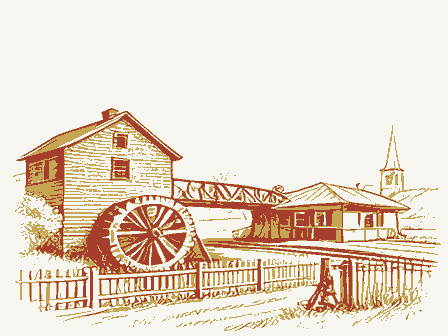
Bridgewater Township
The complete chapter on this township from Williams County, Ohio 1870 Census and Index to Brady Township and the Village of West Unity, published 1870; The County of Williams : a History of Williams County, Ohio, from the Earliest Days, with Special Chapters on Various Subjects, Including Each of the Different Townships ; Also a Biographical Department, published 1905. 3,485 words, covering 5 settlements. Source changes inside the text are labelled at the exact paragraph where the next book begins.
Contents
4 sectionsThe section headings the book prints inside this chapter. Each one jumps to where it begins.
The modern record here
5 settlementsWhat the federal record holds for each settlement inside this township: wildfires and storm reports since the 1950s, mineral workings, and museum specimens collected nearby. These are counted within a few miles of each settlement, so neighbours share them and the columns are deliberately not added up. Every row links to the settlement's own page, where each figure is broken out.
| Settlement | Fires | Storm reports | Mines and quarries | Specimens |
|---|---|---|---|---|
| Ainger | - | 2 | 1 | 286 |
| Bridgewater Center | 1 | 5 | 2 | 277 |
| Greyhound | 1 | - | 2 | 279 |
| Jim Town | 1 | - | 2 | 271 |
| Lake Seneca | 1 | - | - | 257 |
Settlements in this township
5 placesEvery populated place the Geographic Names Information System records inside this township's Census boundary. 2 of the 5 are named in the chapter; the rest were founded later or were never more than a post office.
The chapter
3,485 wordsReproduced complete and unedited from Williams County, Ohio 1870 Census and Index to Brady Township and the Village of West Unity, published 1870; The County of Williams : a History of Williams County, Ohio, from the Earliest Days, with Special Chapters on Various Subjects, Including Each of the Different Townships ; Also a Biographical Department, published 1905. The text is machine-read from scans, so expect recognition errors: misspelled names, dropped words, and stray characters. Nothing has been corrected, because correcting a proper name invents one. The headings below are the books' own; source changes are labelled in place.
Xenia, Oh 45385
Next to local vital records, the best source of genealogical data about specific individuals is the federal decennial census. At the present time there is no state-wide index to the 1870 Ohio Federal Census. With this in mind the 1870 Williams County, Ohio, Federal Census including a surname index was chosen to be transcribed into manuscript form township by the Williams County Genealogical Soceity to serve as a useful tool in family research.
The 1870 federal census for Williams County, Ohio was extracted from National Archives Microfilm Roll # 1282, housed at the BryanPublic Library, Bryan, Ohio. The following information is included in the census extraction:
{. Page number written by the census taker found at the top left of each microfilm frame, the date of enumeration, the township, and the nearest post office for residents on each microfilm page.
2. Capitalized surmame preceded by an asterick * for head of household, followed by lower case first name and initial, if given, for each person residing in the household; other surnames of those living within the
3. Age, sex, occupation/trade of each person given; the color of residents in Bridgewater Township was white, therefore it was decided to delete that information which would be an unnecessary repetition; in the case of children, the census taker may have listed "at home" or "attended school".
4. Householders possessing a valued real estate are indicated by the symbol r; householders possessing valued personal property are indicated by the symbol p; money values can be found by personal check of the microfilm itself.
6. A surname index is included with the surname of not only the heads of household but also those listed within the household whose surname is different from the head; all surnames are followed by the page number and the code BR for Bridgewater Township. When using this please check the entire census page as surnames are found in multiple spots.
7. An alphabetical list is included of children born in the 12 months prior to the 1870 census, the page number on which each is found, and the month of birth. This is followed by an alphabetical list of marriages which were indicated on the census form having taken place in the 12 months prior to the census enumeration.
If an individual wishes to take a personal look at the census roll, he/she can find additional information not listed here which includes: physical imnpairments, whether parents were foreign born, whether the individual attended school during the census year, and whether the enumerated males were eligible to vote. This transcription of the census is not to be considered a substitute for looking a the actual microfilm roll.
The microfilm census roll for Bridgewater Township was difficult to read in spots. In all cases the surnames were checked with other sources to make sure the transcription was correct. These other sources were: list of personal property taxpayers of Bridgewater Township, 1867; Williams County, Ohio Atlases, 1864 and 1874; biographical sketches within several county histories; and, Williams County, Ohio Marriages, Volumes I-III (1824-1863). There were some surnames that were obviously misspelled by the census taker; therefore, family researchers should be careful to check various surnname spellings.
Aside from the obvious family data that can be gleaned from this census, we found the following occupational statistics to be of interest in regard to Bridgewater Township:
There was one person who fulfilled the occupation/trade for each of the following: grain thesher, tailoress, minister, dentist, merchant, wheelwright, traveling salesman, woolen factory worker, wagonmaker, millwright, cabinet maker, and mitten Knitter.
Key To Usage State
*H sower °y uuy *f azeasg yzeqezttTa *y AtueH SASOTOx 9910905 Wet LITM yeyzsor qoorr UueTTa puowey 'HONOTSs °M PIELIIN °q SOPTTeEM yeuuely Teyued 'SANAVH+ TyeITqv PyAeq "IVAN. 0
UIAOMETTZ "Cf soUuetOTyZ °f UeTLa *y AIBN ae ysealtsAs *q uuy y2eqeztTy WETTTEM 'OUVITINs Azey 'XVACUALTVO ueTeH Teyory seTzeu9 ATUS}j SsTtnoy, Aeupts "TIIHx etpAT STMBT PISTTeD uyor SHLIWNSs OTIION qores1e ydesor *ZINT1II0Ox Azey 'NOD OpTeAtY *LISUIAT *y Axuey "N epl yenies a3i0ep 'FDdIUTIVs 31eqTIN yzeqezttTya Asuey 'XOVds stpes zeTpuey) 'LIOHs
°H Arey prempg 'qIqsiud PTAed SYATALS saTazeyg Azeyy *y ueyig '100d zayiny BuTtAYsyT uouLy °N SFLTeS yetuezer *100d+ otssor ByqzeW "WwTaAIVHS 331005 yreqezttTy SETIA 'XOONSs °H BEpAT soFasne "TTIMAIOU °f PeIzzTy yany uud{ 'NMOUds °*H souer @ uuy Arey uewkT 'HLINS=< °d STLION eq 2eTsze]] °c BUITON WETTITM 'SIAVGs *O WET We] 931005 *SIAVGs AOIPTIN SONINNAG '*}] Bpouy ydesor 'ANITIO suecr petuo) 'ssaHy Arey 832005 'YaAaUVd-: urepy pyaeq sotazeyg uyor 3912005 yyeqeztTga °V eTIne wyor *YyadIox SPTFIeN "TIANOGON eduei9 ueyyg *YaDDVHss qeresieyy SINAX dttitud etydog 33120385 yieqeztta uyor *YyaadVHSs IzTeqTtD eputy yerzes ydesor 'quodivLs»
Yiioms Tta
UeTTA Tenures 'aSNOHNALLIUs °M PTAED yaeqeztty Maipuy *YanVNAx "J er09 yuergy Aruay Avpteq Avarey saTaey9 epeTepy eufpzeyizeoD sourer 'NANOx epuy snysny qooer "SsIndDx AAP euuy eut1eyie9) e32085 'ssInds °) sesshTy YIIOMS TTA ATER *s snaf) '3TTIAOOS* 37 eF re} WETTLTIM 'ATIIAOISs ey Arey yeyarey WETTLIM 'LLINIGx 2390; 121e]y ydesor °V PZTTa *y yeres °W PePITTV euuy PrAeqd 'YTTTAs: uuesoy PIeUSTY *NAUYVMa euyages Woud 1e®9So PTOTA qeazes1ey opuetT3zg *LLANNIGs TeeuctN 'Nadad Sut Tore) Aauey] 'LLIANNAGs uture Cuag eputony pyaeg UeTTITN y2eqezt Ta pyaeg 'NIGIIUD-« eputony yreqeztta °d °V 'NITHDNVION: *9 Bpy °d STPLEM
9) metued 'SNuvds BATUTY Aausy 'SNUVEx euuy PAPUA et .eazon7T weatH uyor ouer PoDeqey T®PyotH 'SINIVHy sewoU, aut Lore) "gq 831005 euT Tepy yieqezttgy 229F11eH eg °fueg 'STYMONs °d UTMpy Buy as zayyD
SBTtS eBstq *H uyor SYaTTINx eunc sewoul 'AT ISNY eT TOWy Aaueyy 'NVNLLOG epueuy '}LYOMA00M yeyien sewoul 'XA ISNV« "0 Arey 2932q 'YINDVMs years yeaes oees] 'YaNdUVDx* 1ewTty uBuVety yeaes a3t0e) 'LSINx Bunny PAI Arey uostq ey Azen ydesor 'NOLIIITOx Tpouy yeuuely eprint *y yeaes ey Arey
PFARq *Ssoudx uyMIg 'YANDVM Arey *SNIIMVHs PeIzTy epltsaey WEFITIN 'ONINMVH»: uosiajsjer Arey WIeqTV yepaen uyor *HLINS x epyelepy yeaes "NM °L *ONTNOOLS» spourayz *9 piourey BLTFAIO °M NIPTO yeaes uesns MZBTD "SNADVax Bpy SUT TEPY uOSTON Teyueq eutaqes retueq 'ddVNi% yIeqezt Ty Azuey 'NOSdVNIx yzeqeztTa "Loo 2.eTAey Paney *y) e10TYZ °v eTpAT uyor 'Sq@IONAITYs 2129107 BAT euuy AorsT 'NOLIING waqey Zoueely 'YyaINuVds yaeqeztTga UOITTN 'LANSATx 83IeT ING enysor *STAVULx Baney em] Buy eupy epouy zeqseatAs 'quOIMVUdx yoFapery yaeqezyTg perl 'SIAvdy opueTz0 eaney, Pant] 7 BOoBIOY TFe3tqVv °W PerZ 'NOITdNVHOx yeres 'Nosnduad "y u0j3I0 *y qgooer qd BtpAT ef) UEqney "7 [e109 epueuy yIFA reuqy 'NMOWds
Source changes here: from The County of Williams : a History of Williams County, Ohio, from the Earliest Days, with Special Chapters on Various Subjects, Including Each of the Different Townships ; Also a Biographical Department, by Shinn, William Henry, published 1905; 2,442 words in this source stream.
Bridgewater Township
PREVIOUS to 1839, the territory of this township was a part of Florence. It was then organized as a separate township in conformity with the prayer of certain petitioners. The township comprises forty-one sections, but twelve of these are fractional. The St. Joseph river flows through the central portion of the township, and it is a very rich and valuable territory. Nettle Creek, Hudson Run and Clear Fork also take their course through the township, eventually joining the St. Joseph river, and they all enhance the value of the lands traversed, rendering them available for grazing purposes as well as farming.
Bridgewater township has had some evidences of the prehistoric race within her boundaries. Two large mounds were located on or near the land owned by John Lantz, on the bank of the St. Joseph, each circular in form, some six or seven feet in height, and fifty or sixty feet in diameter. On digging into one of them two human skeletons were found, one very large and the other of ordinary size. But the mounds have been leveled by the successive plowings of sixty years, aided by climatic erosion, and the casual observer would scarcely notice anything unusual in the conformation of the land.
The northern and eastern portions of Bridgewater township contain some broken and hilly land ; but the comparatively wide valleys along the streams are a very fertile sandy loam terminating in clay on the hill sides. Taking the township as a whole, the quality of the soil is unsurpassed in the county, and some fine farms and excellent improvements attest the truth of this statement. The surface of the township was originally covered with a heavy growth of excellent timber, embracing the varieties usually found in this section of the state. These were white-oak, black-oak, hickory, walnut, wild cherry, beech, sugar maple, elm, ash, poplar, buckeye and sycamore. While some valuable timber is still preserved, by far the greater part of it was destroyed in fitting the land for cultivation. That which survived the pioneer log heaps has submitted to oft-repeated cullings for market purposes, or the personal needs of the owners, until at this time the territory where it grew thickest more resembles the treeless prairies of the west than the original home of a dense forest.
are two good trading points - Bridgewater Center and Ainger - where considerable business is transacted. Chandler Holt was the first postmaster in the township. Bridgewater Center was laid out in 1871 by A. T. Bement in the employ of Joseph Diebely, and the name of course was selected because it is almost the exact geographical center of the township. Twelve lots were laid out on the southeast quarter of the northeast quarter of section twenty-seven, all being west of State street - three being south of School street and nine being north of the same. The town, however, had started long before this, and had grown into prominence as a country trading point. The first store was opened by Edington Sterner, in about the year 1850, his location then being about a mile north of the Center; but three years later he removed to the latter place. At the end of about two years he sold out to Robert Scannel, and Clark Backus and Henry Bennett became his rivals in business soon after this. They were followed by Putnam & Corbett, Horace P. Moore, James Beatty, Waldo Corbett, T. E. Whitney and John Hagaman.
Thomas E. Whitney was born in New York City, December 25, 1844, and while yet in his boyhood came with his parents to Akron, Ohio. Here the father died within a few years and the family becoming separated, Thomas E. came to Bridgewater township. Having received a very fair common school education, and possessing a good share of energy, he pushed his way through the world with reasonable success. During the Civil war he enlisted in Hoffman's battalion, doing garrison duty on Johnson's Island, and received his discharge, July 18, 1865. Two or three years later, he bought thirty acres of land, lying partly in Bridgewater township and partly on the other side of the Michigan line, and farmed until 1869, when he engaged in general merchandising. In 1882 he entered in the lumber business, at which he was profitably engaged for several years prior to his death. Dr. W. D. Stout was the first physician in the township, and he opened an office at Bridgewater Center with the inception of the town. Dr. Weldon was another of the earlier physicians, coming a little later than Dr. Stout. The village now has a population of several families, with a store, good school and churches.
The territory now embraced within Bridgewater township was first occupied about 1835, and almost all the land had been entered before the appearance of any permanent settler. Some time during the year 1835 Daniel M. Jordan built a small log shanty on section twenty-four and continued to occupy it until 1836, when he left, probably returning to the place from whence he had come. But the first permanent settlers in any portiqn of the township were the Smiths. On January 26, 1836, Asa Smith came from Lenawee county, Michigan, and entered three tracts of land, one for himself, one for his father, Daniel Smith, and one for his brother Anson. In May of the same year these men came to the township, cut small clearings on their lands, lived in the small vacant "shanty" of Jordan, and the following year, 1837, moved in with their families. The father and both sons had families of their own, and had all they could do from that time onward to live in a comfortable manner. Daniel Smith was a New Yorker by birth, and lived in the Empire state until well advanced in life. He then migrated to Lenawee county, Michigan, with his family, and later, as stated above, came to Bridgewater township. While living in Michigan one of his daughters married a Mr. Carleton and became the mother of the popular poet, Will Carleton.
Early in the fall of 1837 other families began to appear in the township, locating in the neighborhood of the Smith settlement in the southern part. Miles Putnam and Robert Follett arrived then, the latter being a native of Massachusetts. Curtis Cogswell came in February, 1838. He was born in Litchfield, Connecticut, May 20, 1805. When a small boy he was removed to Pennsylvania by his parents, and there he educated himself by the blaze of pine knots and at the age of twenty had become one of the best teachers in the locality where he lived, for ten years teaching in grammar and graded schools in New York State. He afterwards removed to Toledo, Ohio, remaining there five years, and then came to Bridgewater township, where he entered 400 acres, built a log cabin and became a pioneer, with only five families who had settled in the township before him. He became a Master Mason while in New York, but during the famous Morgan excitement withdrew and ever after was bitterly opposed to the order. He joined the Methodist Episcopal church, but on account of the prevalence of the Masonic element in that denomination, left it and affiliated with the United Brethren. He was the first man in Bridgewater township to volunteer at the call to arms during the Civil war, but was rejected on account of his age. He was strongly Republican in his political views and served as justice of the peace, school examiner, and in other official positions.
Erastus Back and Chandler Holt came in April, 1838. The former was a native of Connecticut, and, bringing his family to Bridgewater township, purchased 160 acres of land, and thereon ended his days in the fall of 1847. Clark Backus, Owen Mc- Carty, William P. Back, Geo. H. Back, Joseph W. Back and Erastus G. Back also came early in 1838. Joseph W. Back was not yet fourteen years of age at the time of the family's immigration into Bridgewater township. He was born in Chaplin, Connecticut, December 7, 1824, and, receiving a good education, began teaching a week before his twenty-first birthday, and taught eleven terms consecutively. Throughout his entire life he took a great interest in educational affairs. He held the office of township clerk in Bridgewater for ten years, and for six years was justice of the peace, and also postmaster for the same length of time. He was class leader
Francis W. Lindsay was born in Canada East, and was of Scotch descent. He migrated to the state of New York early in life and farmed in Essex county until October 1, 1836, when he removed to Sheridan, Chautauqua county, and remained there' until June 7, 1837. He then took the steamer, William Penn, at Dunkirk, for Chicago, but at Detroit the vessel was condemned, and thence he and family went to Eckford, Calhoun county, Michigan. In December, 1839, his son Whalon came to Bridgewater township, and in February, 1840, the rest of the family followed. They bought acres of land on section twenty-three, at five dollars per acre, built a log cabin without nails or boards, and paid for the farm in work. Mr. Lindsay died in 1859.
Bridgewater township was prolific in early industries, there being a number of saw-mills and grist-mills, constructed and operated at different times from the first settlement, according to the needs of the various communities which they served. These, for the most part were of brief existence, and, in fact, most of them were quickly and cheaply built with no idea of permanence, beyond the demands of the day. Among others was a steam saw-mill, built about 1870, in the western part of the township, at "Fuddletown." Messrs. Babcock & Strong, about the same time, put in machinery for the manufacture of wooden-ware, and the two industries were operated for a few years when they were abandoned. Riley W. Parker, Benjamin B. Van Court and Richard Wittington, all early settlers, built a saw-mill in 1844, to which was added in a short time a small set of "nigger-head" buhrs, which rude grist mill was in operation for about eight years. These mills were located on the St. Joseph river, at Bridgewater Center, but the machinery was too crude to compete with other and later inventions, and after a precarious existence of perhaps twenty years the whole enterprise was abandoned. In about the year 1848, Elias Depew erected a very large, three-storied frame grist mill in the southeastern part of the township, on the St. Joseph river. A saw mill was built near it, but after being operated some twelve or fourteen years, both mills were destroyed by fire under somewhat suspicious circumstances.
Curtis Cogswell was the first to plant an orchard in the township. He also kept one of the first public houses, opening his doors to the public not far from the year 1848. He hung out a sign with "Travelers' Home" emblazoned thereon.
Miss Mary McCrillis taught a school in the building on Anson Smith's farm during the summer of 1841. A Miss Heritage was another early teacher. The log house in which the first term was taught was used for about three years, when a hewed log school house was erected in the vicinity. About the time this house was built another was erected, one mile south of Bridgewater Center. A log school house was built in the southwestern part of the township, as early as 1843, and was located on James Allman's farm, and this house was used some twelve or fifteen years. A log school building was built in the Sumner neighborhood, in the northern part, about the year 1843, an<E about 1845, a house of the same description was erected in the McCarty district, in the northeastern part. These were the pioneer schools, from which has grown a most complete educational system, with eleven modern school houses, located at convenient distances from all of the pupils.
The first religious meetings, of which there is any record, were held in the old log school house, near Mr. Cogswell's, at a very early day. A small class of Methodists assembled there, and circuit riders visited the little band of worshipers once every two to four weeks. The first church structure was erected in the southern part of the township, in 1870, known as the Dean church, and was designed for the use of the Winebrinerians, or Church of God, as they style themselves. The class had been organized a few years before, but when they came to build the church they were not financially strong enough and were materially assisted by members of other denominations and outsiders. Previous to the erection of the church, public services were held in Hawkins' schoolhouse and other convenient places.
The Bridgewater Center Methodist Episcopal church was organized in quite an early day, and until their church was built, met in the schoolhouses. The class was first organized as a culmination of the efforts of various traveling ministers, covering a period of several years' labors. The church building was constructed about 1875, an^ it has served the people for almost a third of a century. The organization has been maintained from its first inception and is now numerically strong and in a flourishing condition.
The United Brethren class in the western part of the township was organized many years ago. Meetings were held in the Brandeberry and Waterston schoolhouses for some years before the church was built. The church building, erected in 1871, is a commodious frame structure, and has been used constantly since, not only for religious services, but for temperance lectures and other meetings of a moral or religious nature. Among the early members of this society were the families of Conrad Brandeberry, William Rainey, John W. Rainey and a few others. Liberty Chapel has been a source of great power and influence for good in the community, and is today one of the best known and most influential religious organizations in the township.
About ten years ago a fine brick structure was erected, one mile and a half north of Bridgewater Center, by the efforts of the Winebrinerians in that vicinity, under the leadership of Rev. John Clark.
A frame union church was built at Cogswell's Corners, in 1881, all denominations in the neighborhood and outsiders uniting their means for that purpose. The house was designed for any and every religious creed or class, and for the purpose of holding funeral services in, as it is located near a nicely situated cemetery.
Provenance
Text from Williams County, Ohio 1870 Census and Index to Brady Township and the Village of West Unity, published 1870; The County of Williams : a History of Williams County, Ohio, from the Earliest Days, with Special Chapters on Various Subjects, Including Each of the Different Townships ; Also a Biographical Department, published 1905, in the public domain in the United States and digitised by the Internet Archive. The settlements listed against this township are matched by point-in-polygon test of each Geographic Names Information System coordinate against the Census Bureau's county subdivision boundary, not by name.