Major Bibliographical References - preliminary determination of individual listing (36 x State Historic Preservation Office CFR 67) has been requested - Other State agency - previously listed in the National Register C Federal agency - previously determined eligible by the National - Local government - University U Other - recorded by HistoricAmerican Buildings Survey - recorded by Historic American Engineering Record # Significant Dates 1822-1880 Bibilography Register Significant Person our history. D Property has yielded, or is likely to yield, individual distinction. Previous documentation on file (NPS): N/A of a type, period, or method of construction or religious purposes Criteria Considerations significant in our past.
Applicable National Register Criteria (Enter categories from instructions) Cultural Affiliation designated a National Historic Landmark Architect/Builder Ethnic Heritage -- Black distinguishable entity whose components lack Other: Underground Railroad Period of Significance Name of repository: a significant contribution to the broad patterns of County and State Primary location of additional data: G less tnan 50 years of age or achieved significance Darke County, Ohio high artistic values, or represents a significant and (Cite the books.articles.and other sources used in preparing form on one or more continuation sheets.) (Mark "x" in one or more boxes for the criteria qualifying the propenty unknown Name of Property County and State 10.
Geographical Data (Place additional UTM references on a continuation sheet.) - See continuation sheet (Describe the boundaries of the property on a continuation sheet.) (Explain why the boundaries were selected on a continuation sheet.) 11. Form Prepared By - telephone city or town _ - State - zip code Submit the following items with the completed form Representative black and white photographs of the property. (Check with the SHPO or FPO for any additional items) Property Owner (Complete this item at the request of SHPO or FPO.) street & number Estimated Burden Statement: Public reporting burden for this form is estimatedto average18.1 hours per response including time for reviewing instructions, gathering and maintaining data,and completing and reviewing the form. Direct comments regarding this burden estimate or any aspect 43209 Columbus Photographs 45402 9/28/00 2765 Floribunda Dr.
date Easting name Zone Chio Dayton Maps Darke County, Chio (614) 239-0643 Northing Clemens, James & Sophia Farmstead organization Paperwork Reduction Act Statement: This information is being collected for applications to the National Register of Historic Places to nominate Additional Documentation name/title Continuation Sheets Boundary Justification (937) 461-7057 Additional items UTM References Verbal Boundary Description Cleo Mason & Mary Goens a benefit in accordance with the National Historic Preservation Act, as amended (16 U.S.C. 470 et seq.). Roane D. Smothers A USGS map (7.5 or 15 minute series) indicating the property's location. A Sketch map for historic districts and properties having large acreage or numerous resources. Acreage of Property - street & number 1l1 N. Patterson 3lvd. 4 Acres 1 1,6 OMB Approval No.
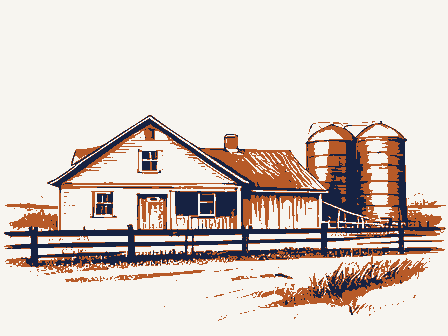
1024-0018 United States Department of the Interior Section number 7 Clemens, James & Sophia Farmstead The James Clemens farmstead at 467 Stingley Road is in the extreme northwest corner of Liberty Township Greenville. and one mile east of the Indiana State line. The Clemens farmstead is the first site of the Longtown settlement to be nominated to the National Register of Historic Places. On the four acre property is a two story brick I-House with Greek Revival details and a mid nineteen century English barn. According to the 1857 Atlas Map of Darke County, blacks and mulattos owned more than 3200 acres of land. and built two churches and four schools.
About 2000 acres was on contiguous farms in the north west corner of German Township and about 200 acres in the adjoining southwest corner of Washington The two-story brick house sits back about 100 feet from Stingley Road, but the main facade does not look toward the road. It faces open fields to the south while a one-story rear wing extends toward the road. To the farm. A gravel driveway forks about 45 feet from the road, and then extends to the barn and once ran on the south side of the house. According to the 1857 and 1875 atlas maps of German Township. the road used to make a sharp turn on either side of this property to run in front of this house. doorway, and a five-bay facade. The facade is a common bond brick pattern with classical Greek Revival sidelights, now covered with fiberboard for protection.
There is a wide wooden lintel and prominent house have Greek Revival cornice returns. Continuation Sheet Description Page limestone slab at the entrance.Above the doorway lintel is evidence of wooden supports for a one-bay portico that was attached to the front entrance. Other Greek Revival features at the roofline are the prominent entablature with architrave, and wide frieze under a projecting cornice.The gabled east and west sides of the National Park Service National Register of Historic Places James & Sophia Clemens Farmstead 467 Stingley Road details.The central recessed doorway has a full transom light with five panes of glass and divided glass Darke County, Ohio left of the house. and perpendicular to it.
sits a frame barn with a gable roof.the only other building on the The house appears tobe a Classic I-House.It has two rooms over tworooms with a central hallway.center of Randolph County.community members also owned another 1300 acres on the Indiana side. in Darke County in the western side of Ohio. The Farm is about 10 miles west of the county seat of NIS Form 10-900-a Township.The settlement also extended into Randolph County Indiana and according to the 1865 Atlas Map N'S Form 10-900-a ONB Approval No. 1024-0018 United States Department of the Interior National Park Service 467 Stingley Road Darke County, Ohio Page The balanced facade has nine original windows with six over six double hung sash windows and flat wooden lintels and sills. The five windows on the second floor are arranged exactly above the first floor openings. but are smaller in scale.
Because of these features, it appears that the Clemens house probably was built between 1822 and 1850. The main portion of the house has two internal chimneys. On the two-story east facade. there are no windows or doors. On the west facade, two windows are on either side of the chimney on the second floor while only one is on the first floor. On the north facade toward Stingley Road. three windows are exposed on the second floor. While two openings can be seen on the first floor. another door is now covered by the entrance to the story brick wing sits on a slight rise allowing for a higher stone foundation and full basement windows that porch was added in the middle 20~ century. Its wall surface is made up of three sets double windows and an off-center doorway onthe East Side.
and a set of three windows on the north side towards Stingley Road The doorway to the frame porch has two heavy limestone steps. The house is obscured from the road by two fir trees that are taller than the ridgeline of the house. The interior of the Clemens house retains its integrity even through the house has been vacant for about 20 years. The two-story portion has two rooms up and two rooms down with a center hall. and the one-story wing has been divided into two rooms. With one used as a kitchen. Two original wood fireplaces remain in design. but is shortened. The square Doric pilasters become smaller in width and in height in three increments as they rise to support a heavy entablature under the mantelpiece. The second fireplace surround has been cut at the bottom and reattached to the wall, but the most intricate part at the top remains.
To the right of the altered fireplace in one room are original wood cupboards with doors. Contributing Farmstead Buildings In a field east of the house stands a mid nineteen-century English barn with a gabled roof. It has hand-hewn beams, haymow, and threshing floor. The three-bay plan provided for hand threshing in the central bay with Interior Continuation Sheet Section number National Register of Historic Places James & Sophia Clemens Farmstead pilasters supporting the mantel.Above the center of the opening.a center pilaster matches the end ones in rear walls. the house although one has been altered.The fireplace surrounds are classical in design with two engaged a haymow along one side and oxen or horse stalls along the other. There are central doors at the front and one-story brick wing.
Both brick sections of the house have cellars with limestone foundation.but the one- face the west.A framed porch is attached to the East Side of the one story brick wing.This cinder block OMB Approval No. 1024-0018 United States Department of the Interior National Park Service Darke County, Ohio Section number 7& 8 Page - Similar to Levi Coffin House in Newport, Indiana The same house type can be seen in the Levi Coffin house, built in 1839 located ten miles to the south west in Newport (now Fountain City), Indiana. The Coffin house is also a Classic I-House with the same five-bay facade with center doorway that has a transom with five panes. It has a gabled standing seam tin roof with internal end chimneys, and Greek Revival returns at the gable ends. Its brick wing to the rear has a two-story façade with center doorway flanked by two six over six windows.
On the second floor exactly features a massive chimney built flush to the end wall. Another one-story wing is the last addition on the East Side Statement of Significance The Clemens farmstead is nominated under National Register Criteria A and B. The Ohio's earliest black settlements, Longtown (Greenville settlement). This farmstead was the home of James Clemens (1781-1870). This farmstead is significant to the broad patterns of the history of Darke County Ohio and for its association with James Clemens, who was the founding father of the settlement, was instrumental in starting the first school, donated land for the Wesleyan Church and established a cemetery for the community. Besides farming the Clemens family were ministers, teachers and and soldiers in the Civil War.
Longtown produced some very prominent black men who went out into the world to fill places of honor in nearly all walks of life, as judges, lawyers, doctors, bishops, and presidents of black colleges. From a study, "The Settlement of Rural Black Communities in Pre-Civil War Ohio" by Mary Ann Olding, records show more than 40 black communities were established in Ohio before the Civil War. Her study state's that black men and their families came to rural Ohio at different times for different reasons. Ms.Olding's study states that free black frontiersman like their white counterparts founded some settlements. Free southern blacks migrated from the south when their states passed racial laws making life difficult for free blacks to live. They left their southern homes and migrated west to Ohio for land and opportunity.
Runaway slaves, who gained freedom on their own or were helped by the Underground Railroad, began some settlements. Some white plantation owners these slaves were the wives, and children of the white owners. Some settlements began when WIN groups (White, Indian and Negro) migrated west for opportunity. Other Continuation Sheet National Register of Historic Places Clemens farmstead is one of the oldest and last remaining agricultural resources in one of above the first floor openings are two windows of smaller scale.The catslide roof James & Sophia Clemens Farmstead bought land in Ohio for their emancipated slaves and established settlements.Many times businessmen in the community. They were also conductors in the Underground Railroad 467 Stingley Road National Park Service Educators/reformers, or Ethnic-Welsh/Germans. the government just like the white settlers.
The book Early Ohio Settlers, Purchasers of Land in Southwestern, Ohio 1800-1840 shows that on October 16, 1818, James Clemens, Township with a cash value for his farm of S11.000. He had seven horses, three cows. seven Page 467 Stingley Road farming James Clemens and runaway slaves purchased land with their own money directly from man who bought land in both Greene County and Van Wert County. The second property on April 9, 1822 which is the property to be nominated to the National Register slaves. The slave owners often sent agents who bought land in Ohio, paid for the black Darke County enumerated 75 black residents in German Township including James settlement was in Licking County. John Roye, a runaway slave from Kentucky arrived in bushels of oats. and her sister Dorothy Green reside on the property until their deaths. is based on local folklore and secondary sources.
Ms Olding's research has provided two Clemens. The 1870 census of Darke County shows James Clemens living with Sophia Newark in 1802 and bought land in 1810. According to local folklore recorded by Dr. in 1870. The 1820 census of Darke County Ohio does not include German Township Continuation Sheet (later renamed Liberty Township during World War I). However, the 1830 census of Ms. Olding's study is ongoing and much of the documentation of these black settlements According to Ms Olding's study over half the settlements began when free blacks like property dated 1871 states that the property is transferred from James Clemens to families to move onto small acreage of land, and helped them build houses and begin Clemens his wife and a Dorothy Green at the same residence.
A copy of the deed of the The 1850 agriculture census shows that James Clemens was a prosperous farmer in German blacks migrated to Ohio with assistance from Quakers, Abolitionists, a man of color, purchased 387 acres of land in Range 1-east, township 1l sections 5 & 8. After purchasing land in 1818 in Darke County James Clemens bought some adjacent black man entering Ohio Lands between 1780-1785 was Godfrey Brown, a free black cattle, nine sheep. 50 swine, and produced 100 bushels of wheat. 1000 bushels of corn. and 40 founded in Ohio when slave owners, primarily in North Carolina and Virginia freed United States Department of the Interior W.E.B Dubois in the article"Long in Darke"Longtown was settled in 1804. rural black settlements in Ohio that began earlier than Longtown.The first record ofa William RJ.
Clemens with the provision that Sophia Clemens wife of James Clemens In addition Ms.Oldling study found that most of the remainder of the settlements were Darke County, Ohio of Historical Places.James Clemens lived on this Darke County farmstead until his death Section number 8 James & Sophia Clemens Farmstead National Register of Historic Places- OMB Approval No. 1024-0018 United States Department of the Interior National Park Service Darke County, Ohio According to the records of first landowners of Darke County Ohio, James Clemens was the first free black man to purchased land in German Township. According to the 1857 atlas of Darke County he owned 753 acres of land. By 1888 his family owned 920 Acres. The community reached its peak around 1880 with a population of about nine hundred persons.
According to Donald Ball's article A Home in the Heartland: Notes on the Darke County Mestizos along the Ohio-Indiana Border, Longtown is one of only two communities in Ohio to be considered Tri-racial, persons of Negro, Caucasian and American Indian ancestry. While the White and Negro ancestry are easy to document the remaining circumstantial in nature, available historical information concerning the settlement the Darke County enclave... and the inordinately high frequency with which the Ohio surnames correlate with Mestizo family names in other states strongly suggests that this population is, in fact of partial Native American ancestry, most likely unknown This is the story of Longtown, a community of mixed race people. W.E.B. Dubois descendants of the Randolph slaves in Ohio. In W.E.B Dubois's article "Long in Darke" he records the folklore of the beginning of the settlement.
In the article he states "There was, it seems, in the eighteen century a Pennsylvania Dutchman who went to Virginia and had a daughter too darkly beautiful to marry under Virginia Law. He had a neighbor, however, a man as moral as himself, whose son was born of an Indian-Negro squaw. This boy walked to Ohio in 1804, squatted on new land in the wilderness and returned and received the Dutchman's daughter as his wife." This first person of color made the area favorable for other persons of color to settle there. A similar story of Longtown's beginnings is repeated in E. Franklin Frazier's The Negro Family in the United States. In Frazier's book a resident of Longtown states "His grandfather was born free in Virginia.
According to the story that was told by his grandfather, he was compelled to leave Virginia when the state threatened to re-enslave all free colored people who did not leave the state. A white man arranged to meet the grandfather, who was still a boy, in Greenville Ohio. When the grandfather reached Greenville, he was taken in by the white man and later took up 160 acres of land at $1.25 per acre. After securing enough money through digging wells to purchase the land, the grandfather moved his family to the present location in 1808. This was the first family in the community." It is believed that the boy and grandfather mentioned in these stories is Page James Clemens.
Continuation Sheet Section number Historical background and significance: tribes in the Carolinas and Virginia." Native American ancestry is more difficult.In Mr.Ball's article he states"While 467 Stingley Road NPS Form 10-900-a National Register of Historic Places James & Sophia Clemens Farmstead stumbled upon Longtown in the early 2o century while attending a reunion of the (8-86) OMB Approval No. 1024-0018 United States Department of the Interior National Park Service 467 Stingley Road Darke County, Ohio Frazier Wilson's 1914 History of Darke County Ohio states, "There is a settlement of colored people in the northwestern part of this township which dates its origin from 1822 when James Clemens came from Rockingham County, Virginia, which had passed a law that all free-born colored people should leave the state. Clemens entered 320 acres of land.
He married Sophia Sellers, of his home county, and became the father of ten children, five sons and five daughters. Three of his sons, Charles, William and Perry, became ministers of the gospel." Land records show James Clemens (a man of color) purchasing land in Darke County, German Township, in 1818. Listed, as his place of residence was Warren County Ohio. James Clemens wife's maiden name is Sellers, In Tucker's History of Randolph County the biography of Thornton Alexander (the first brought him with his wife and nine children, to Warren County Ohio in 1816." Land records show Thornton Alexander purchasing land on the Indiana side of the settlement in 1822.
It is believed that Abraham/Adam Sellers is the Pennsylvania Dutchman mentioned in the Dubois article, and Adams's son Peter or cousin Jacob Sellers (who both settled in Warren County Ohio in 1796 and 1799 respectively) is the white man who helped the grandfather in Frazier's article. In Lee L. Dodds "Pioneers of Warren County and Their Descendants" he states "In the year 1817 Adam Sellers being about 72 years of age, decided to dispose of his holdings in Virginia and sell his slaves, or otherwise dispose of them and join his children in the wilderness. He decided to free his 16 slaves and, with the aid of his son, William brought them in two four-horse wagons overland, taking about 30 days to make the trip. They camped out every night and when they arrived in Lebanon they stopped at Peter's house for a week to rest.
They then proceeded to Darke County, where Adam Sellers purchased a small farm for each of his slaves and gave them their freedom." It is noted in " A History and Genealogy of the Sellers Family" by David Randolph Sellers that Adam Sellers had a number of free colored people living - with him in Virginia. A 65 year old Adam Sellers is listed in the 1810 census of Rockingham County Virginia. It is believed that Sophia Sellers, James Clemens wife is the daughter of Adam Sellers. When James Clemens bought land in Darke County in 1818, Warren County Ohio was listed as his place of residence. A James Clemens is recorded to have bought goods in a Dayton Ohio store in 1803, which is a direct route from Warren County to Darke County. At the disposition of Adam Sellers's estate in Warren County Ohio in 1821 a James Clemens purchases many items.
Page Continuation Sheet Section number 8 which is German. black settler on the Indiana side of the settlement) states "His master Abraham Sellers NPS Form 10-900-a National Register of Historic Places James & Sophia Clemens Farmstead M'S Form 10-900-a OSIB Approval So. 1024-0018 United States Department of the Interior National Park Service Continuation Sheet 467 Stingley Road Darke County, Ohio Section number eventually became the Longtown School. Tucker's History of Randolph County states "About 1845. the of the poor. both white and colored." The Clemens were Methodists from Virginia and sold land in 185+ 10 form the Wesleyan Methodist Church. later called the Bethel Wesleyan Church. The trustees of the newly Clemens and his brothers performed many marriages in the community. The Clemens also sold land for a Other Black families soon followed Clemens and the Alexanders.
among were Reuben Bass and his wite. states another resident of Longtown tells the story of the second family to settle in Longtown. "Uncle Tom team. They took up a homestead up there, each one of them. This country then was nothing but wilderness. Cemetery. The Bass Cemetery, and The Alexander Cemetery. Thompson, a white man came to Greenville early in the last century with a Negro common-law wife." Also listed in the 1830 census for Darke County are Linus Basclem, James Craig. David Briggs. Benjamin Carpenter and William Vance who are white men accompanied by black females. Page National Register of Historic Places James & Sophia Clemens Farmstead munificence of Benjamin Thomas.James Moorman.James Clemens.Thornton Alexander and others.friends in The History of Indiana by John W. Lyde states the records of Randolph County mention a Mr.
no roads.just woods.In the settlement there are three cemeteries.named for the first families:The Clemens public graveyard to the trustees of the Wesleyan Methodist Church.This is one of the three community Union Literary Institute.a manual labor boarding school.was established for indigent youth there by the cemeteries. which exist today. Squire Jim Clemens owned a gravel pit along Stingley Road and at one time or another:Clemens family members operated a sawmill.barbershop.and a tavern in the community. W.E.B.Dubois also states that Longtownbecame a haven for interracial couples.In a book titled The Negro W'illiam R. J. Clemens.minister of the Wesleyan Church.was granted license to solemnize marriages. than any other family that ever lived there.
James Clemens established the first school in the 1820's.which One can say that the Clemens family has had as much or more influence on the development of Longtown B---had told me at different times that two of the B----s rode in on horseback from North Carolina at that formed Wesleyan congregation were Charles Clemens.John Holland and Isaac Bass. On March 24.1845 who came from Guilford county.North Carolina in 1823.and entered200 acresof land.In Frazicrsbook he Charles.William.and Perry Clemens were early ministers of the W'esleyan Methodist Church.William R. J. time they were offered a section of land for those two horses-640 acres-and they didn't take that for the United States Department of the Interior National Park Service 467 Stingley Road Section number Before 1850 the settlement was know as the Greenville Colored settlement.
Tampico was platted as town shop and liquor-selling businesses. Tampico did not prosper. Around 1885 and after the demise of Tampico houses. at the intersection of the Hollandsburg-Tampico Road and Stingley Road be called Bethel because of its proximity to the Bethel Wesleyan Church. However. the idea was scrapped as not everyone in the community was affiliated with that church. The community leaders decided to name the evolving town after a new settler who had gained all their respect, a blacksmith named Long. "Long a white man had bought the shop sight unseen. was surprised when he arrived at the settlement of predominately Black Community. But Long stuck the business out and made a go of it.
The people of the community respected Long for making the best of an awkward situation and ask him if they could name the The Union Literary Institute On the Indiana side of the Longtown Settlement was The Union Literary Institute (ULI). This building still the institute in 1845. This school made no distinction for race. The ULI was a vocational school. which included the basic skills of reading, writing and arithmetic. According to the 1914 History of Darke County Thornton Alexander and others financed the school. One of the original trustees of the institute was John Clemens the son of James Clemens. Another trustee was Levi Coffin also known as the "The President of the Underground Railroad." Some very prominent men of both the white and colored races were educated here and went out in to the world to fill places of honor in nearly all the walks of life.
Noted Historic Persons associated with The Union Literary Institute are listed below: William McCown was born in Rush County Indiana. He was a member of the 45~ Pen U.S.C.T. and participated in the battles of Hatchers Run, Petersburg, Richmond and was present at the surrender of General Lee. He was a trustee in the Union Literary Institute. Hiram R. Revels was born in Fayetteville North Carolina and was a minister in the African Methodist Episcopal Church.
He studied at a Quaker seminary in Indiana and at Page Continuation Sheet "This settlement extends into Indiana and formally supported an academy known as the Union Literary National Register of Historic Places James & Sophia Clemens Farmstead the community wanted to establish a post office.At first it was decided that the post office and surrounding Darke County, Ohio Institute which about forty years ago was in a flourishing condition". James Clemens. James Moorman. stands today in Randolph County Indiana.The residents of the settlement and anti-slavery Quakers founded town after him.Long consented and the village was recorded.(The News-Gazette."October 18.1976) PS Form 10-900-a OMIB Approval No. 1024-0018 in1850 at the intersection of Hollansburg Tampico Road and Ross Road. Tampico consisted of blacksmith ONIB Approval No.
1024-0018 United States Department of the Interior National Park Service Continuation Sheet 467 Stingley Road Darke County, Ohio the Union Literary Institute. He was elected to the Mississippi State senate and on January 20.1870 the Mississippi legislature elected him to fill the unexpired U.S. Senate term of Confederate President Jefferson John G. Mitchell became president of Wilberforce College. James S. Hinton was the first Black elected to the Indiana House of Representatives. Joseph Lowery Johnson. M.D. was born in Darke County Ohio. He received his early education in rural schools and at the Union Literary Institute. Mir. Johnson received his doctorate of Medicine from Howard University: He was appointed Minister Resident and Counsel-General to Liberia on August 27.1918. The Underground Railroad Settlement) was a stop in the Underground Railroad. In Siebert's interview with Col.
David Putnam of Palestine August 13. 1898 Mr. Putnam states "At the Greenville Negro settlement was another station. The Clemens" and the Alexander's were the leaders in the movement there. These were Negro families." The consultation with a certain law firm. they went in the night to the colored settlement and searched several cabins." Before Levi Coffin moved to Newport in 1826 there was an active Underground Railroad conducted by free Black people in the area. Levi Coffin believed that these people were not very skilful in aiding escaped slaves. The Clemens' are listed as Darke County operators in Appendix E (Directory of the Names of Underground Railroad Operators) in Wilbert H. Sierbert's The Underground Railroad from Slavery to Freedom. In a 1981 letter from Mrs. Kenton Dye of Winchester Indiana to Mrs. Toni Seller the Director of the Garst Museum, Mrs.
Kenton writes that she talked to Maze Clemens a descendant of James Clemens. He stated to her that "His grandfather escorted runaway slaves from Newport (now Fountain City. Indiana) to Longtown where they were hidden all day before being transported to Paulding, Ohio where it was assumed trip after night to avoid detection; from this latter place they were helped into Canada." According to Tuckers 1882 History of Randolph County fugitive slaves stayed for a short time in the settlement to attend The Union Literary Institute to learn reading and writing before continuing their flight to Canada. Davis.
National Register of Historic Places James & Sophia Clemens Farmstead route of many fugitive slaves led them to the settlement.The hunters visited Greenville.and after According to a map by William Siebert in his manuscript The Underground Railroad.Longtown(Greenville Ps Form 10.900-a they were safe." A biography of Reuben Goens in Beers The History of Darke County states - As they would find their way to Newport, he would drive them to what is known as the Greenville Settlement making the Page Section number NPS Form 10.90-a OVIB Approval No. 1024-0018 United States Department of the Interior National Park Service 467 Stingley Road Darke County, Ohio Longtown was a strong abolitionist community: As elsewhere the men of color flocked to the appeal of Present Lincoln and when allowed. offered them freely as soldiers of the Union Army. However.
in the beginning of the Civil War men of color were not allowed to become soldiers. When the young men of the settlement were able to join. some joined the Massachusetts 54th the first colored regiment of the United Company A of the 8°~ United States Colored Troops infantry: There are approximately 38 men who fought in the Civil War and are buried in the settlement's cemeteries. Two served in the e.h.Massachusetts and others served in various USCT formed in Ohio. Indiana and Pennsylvania. Not many of the original structures of the Longtown settlement currently remain. Five houses. three schools. and one church are the only original buildings that remain. The Rufus Goens home located on the north side of Stingley Road was once a store and the post office of the settlement. The William Jones home located north of Stingley Road on Tampico Road is next to the Clemens cemetery.
This home covers a log cabin that Stingley Road. The James MeCown House on Stingley Road east of the Clemens house is still occupied the southeast corner of the intersection of Tampico-Hollansburg Road and Stingley Road is the Bethel Wesleyan Church rebuilt around 1920. Beside the church is a small sign stating Bethel Wesleyan Church Long Ohio* Only a handful of black families still farm their ancestral land. Most of the younger generations have made their homes in the near by cities. However. the settlement's descendents have influenced the Black communities of Dayton, Columbus. Toledo. Richmond, Fort Wayne, Lima. Cincinnati. Indianapolis: and the In Dayton Ohio a public housing complex is named after a well-known minister and community leader DeSoto Bass. He was born in the settlement and his ancestors were one of the founding families of Longtown.
Ira McCown whose family migrated to Longtown in the 1850's received a Medical Degree from Ohio State University College of Medicine in 1925. He went on to become Harlem Hospital's first Afro- American intern in 1925, where he later became a visiting surgeon of Harlem, Sydenham and Mt. Morris Park Hospitals in New York City. In 1952 Governor Thomas E. Dewey appointed him as Medical director of the New York State Athletic Commission. Page Continuation Sheet National Register of Historic Places James & Sophia Clemens Farmstead Section number 8 Along with the Union Literary Institute.the Longtown School and the Tampico School are still standing. On rest of the nation. States Colored Troops(USCT).James R.
Clemens.grandson of James Clemens served as a private in was built by Jacob Bass.Another home still standing is the Zebedee Bass House on Tampico Road.south of The Civil War NPS Form 10-900-a OMD ApprovalNo 1024-0018 United States Department of the Interior National Park Service Darke County, Ohio 9. Bibliography Ball, Donald, "A Home in the Heartland: Notes on the Darke County Mestizos along the Beers, W.H., The History of Darke County, Chicago, 1880. Brown, Mary-Ann, "Vanished Black Rural Communities in Western Ohio, unpublished, Ohio Historical Society, 1982. March 16, 1941. Dubois, Dr. W.E.B., " Long in Darke", Colored American Magazine, Volume XVII, p. 353-355, November 1909. Early Ohio Settlers, Purchasers of Land in Southwestern Ohio, 1800-1840, Complied by Ellen T. Berry & David A. Berry, Baltimore, Maryland, 1986. Frazier, Franklin E. The Negro Family in the United States.
The Citadel Press, New York 1948. P169-171 Lyda, John W. The Negro in History of Indiana, Terre Haute Indiana, 1953. Miller, Steven J., The Palestine Book, History of Liberty (German) Township, Darke County, Ohio, 1983. Oldling, Mary Ann, "The Settlement of Rural Black Communities in Pre-Civil War Ohio", unpublished, Cincinnati Ohio, September 2000. Rotman, Deborah L., Rachel Mancini, Aaron Smith, Elizabeth Campbell, "African- American and Quaker Farmers in East Central Indiana: Social, Political, and Economic Aspects of Life in Nineteenth-Century Rural Communities: Randolph County, Indiana". Prepared for: Division of Historic Preservation and Archaeology Indiana Department of Natural Resources, July 1998.
Continuation Sheet 467 Stingley Road (8-86) Dodds, Lee, L."Pioneers of Warren County and Their Descendants"Middletown Journal Section number 9 Page 11 James & Sophia Clemens Farmstead National Register of Historic Places- Ohio-Indiana Border", Tennessee Anthropologist, Vol. XXI, No 1, spring 1996.P. 44-66. United States Department of the Interior National Park Service Advertising, Inc.,Printers, Cincinnati, 1966 Siebent, Wilbur, "The Underground Railroad in Darke County Ohio", A Manuscript, Company, 1898 Wilson, Frazier E., History of Darke County Ohio, Milford Ohio, 1914 1995. 1882.
Continuation Sheet 467 Stingley Road People from Slavery to Freedom and Independence, Unpublished, Richmond, Indiana, Darke County, Ohio Siebert, Wilbur, The Underground Railroad from Slavery to Freedom, The Macmillan Royer, Donald M., The Longtown Settlement, Darke County, Ohio The History of a Tucker, Ebenezer. History of Randolph County, Indiana. Chicago: A.L. Kingman Co., Box 104 Volume 4., Ohio Historical Society Archives. "The News-Gazette." October 18, 1976 National Register of Historic Places- Section number - Sellers, David Randolph, History and Genealogy of The Sellers Family Robbins James & Sophia Clemens Farmstead Page - U.S. Census. Darke County. Ohio.Agriculture. 1850. 1870. NPS Form 10-900-a United States Department of the Interior 10.
Geographical Data Four acres of land off of the east end of a six (6) acre lot off of the north end of the These four acres are not farmed, and contain the Clemens house and barn. 467 Stingley Road, Darke County Ohio Fountain City, Indiana Photographer: Roane Smothers 1. South facade of house North facade of house (from Stingley Road) 3. South front door and window 4. West facade and brick addition 5. West facade of barn 6. West facade of Levi Coffin House 7. East interior Fireplace 9. Interior beam structure of Barn 1. Sketch Map of Clemens House 2. Sketch of Interior Structure of Barn 3. 1857 Atlas of Darke County Ohio, German Township 4. Ohio Underground Trails Page Boundary Justification Continuation Sheet Attachments: Levi Coffen House 5. Map of Longtown in the "Good Ole Days" Section number Range one (l) East.
Verbal Boundary Description National Park Service List of Photographs James & Sophia Clemens Farmstead Darke County, Ohio 467 Stirgley Road northeast quarter of the north east quarter Section eight(8),Township eleven (1l),of OMB Approval No. 1024-0018 (8-86) National Register of Historic Places Clemens, James and Sophia Farmstead Darke County, Ohio Framed Brick Wing Barn Fire Bedroom Porch Center Second Floor Hall 467 Stingley Road First Floor Place James & Sophia Clemens Farmstead Clemens, James and Sophia Farmstead Darke County, Ohio James &Sophia Clemens Farmstead Barn 467 Stingley Road D. Jelfiries : I Hines 120 135 - 160 100 219 From Atlas of Darke County Chio 1857 C.Ch.a J.Sell 120 : 1HCCabe 27. 20 G.Stingly Robison 158 Copstick 185 180 105 LSOr .M lindene«le J Cluvie :LA RUE LMT.
VERNON MA'S STATION" - MIDDLEBURO HEW MADISON @ STOVERTOWH SPRING BORO CARMEL - 6TRANQUILITY BETHEL CHURCH -POINT PLEASANT From The Mysteries of Ohio's Underground Railroads Copyright 1951 by Long's College Book Co. - Columbus, Ohlo Reprinted 1993, with permisslon, by Arthur W. McGraw Wilbur H.Siebert Clemens, James and Sophia Farmstead Darke County, Ohio Trails Underground MINERVA XENIA JAMESTOWN QUAKER INTERSET W.UNION MECHANICSBURG THORNVILLE BERLIN HOLLOW HUBBARDSVILLE SENECAVILLE FARM CINNATI SUMMERFIELD COLERNN HOCKINGPORT PIQUA RUSHYLVANIA MARTINSEURG CHESHIRE BELMONT SALINEVLLE MOSCOW GOOD HOPE PIKETON HAMILTON GRANVILLE MINGO NEWCASTLE GIORGESVIL W.CARLISLE WAPAKONETL J.W.STANSBIRRY NEW RICHMOND ATHAGENA DIAVERTOWN WASHINGTON C.H. BAANESVILLE LOCUST GRONE Cstroll TEW PHILADELPHLA - DELAWARE W. LIBERTY A.LEWISBURG DAVID VIRTUE PAZTERSONS ROBT.
SPEER A MeW CONCORD: -& REYNOLDSBUR - MOUNOVILLE NEW PARIS S.CHARLESTON SELMA DADAM TERRELL PALMER'S STATION MARTIN SVILLE JOS HEAROLD'S - BUTTERWORTH STA. - SAMANTHA NEW MARKET - BUFOKD & GEORGETOWN- BURLINGTON Y@ GUYANDOTTE COLD WASHINGT LANCASTER RAINBOW FELICITY PROCTORVILLE WAVERLY JACKSON RENO URBANA KENTON SETTLEMENT PATTERSONVNLE ZANESFIELD MAAYSVILLE SARDINIA WILMINTON CADIZ CAMBRIDGE FREDRICKSBURG TOWN POKE PATCH ETTA CEDARVILLE WODOSFIELD LYNCHBURO WHITE OAK WRIGHTSVILLE SOMERTON Stark BLOOMINGBURG MT.GILEAD RIPLEY LOUDOHVILLE STCLAIR FLOUR MILL CARDINGTON SCRAOOS NEW ROXABEL VILLE Clatk DALE HEW AArON Darke County, Ohio LONGTOWN IN "THE GOOD OLE DAYS" STRINGTOWN ROAD N ONGTOWN Clemens,James and Sonhia Farmstead STATE LWE ROAD KINGS HIGHWAY 1557 schad James PIKE From Steven J.
Miller, The Palestine Book, History o Liberty (German) Township Clemens House UNITED STATES DEPARTMENT OF THE INTERIOR NATIONAL PARK SERVICE NATIONAL REGISTER OF HISTORIC PLACES EVALUATION/RETURN SHEET NAME : DATE OF 16TH DAY: OTHER : N PDIL: N PERIOD: N PROGRAM UNAPPROVED: N COMMENT WAIVER: N Accept Ai B ABSTRACT/SUMMARY COMMENTS : DOCUMENTATION see attached comments Y/N see attached SLR Y/N REJECT TELEPHONE MULTIPLE RETURN 3/20/01 2/02/01 3/02/01 DATE REVIEWER RECOM./CRITERIA DATE RECEIVED: REASONS FOR REVIEW: DATE OF WEEKLY LIST: Historian STATE & COUNTY: OHIO, Darke DATE OF PENDING LIST: 2/14/01 DISCIPLINE Photo 1 467Sting ley Rd Davke Cant, OHt Clemers Farmstead James t Sophia Cleneas Photo 1 467Sting1ey Rd James t Sophia Cleneas 467 Stingley Rd James t Sophia Clemens 467 Stingley Rd Phota 3 Janes + Sophia C lemens Rhoto 4 467 Stungley Rd Photo 5 Janes + Sophia Clemens 4 67 Stingley Rd.
House Levi Coffin Clemens Frm stead Fountain City Ind.and Levi Coffin House Clemens Farmstead Darke County, Ohio Photo 8 Clemens Faensteul SPARTANBURG QUADRANGLE GEOLOGICAL SURVEY UNITED STATES Darke County, OH 1992 STATE OF INDIANA DEPARTMENT OF THE INTERIOR STATE OF OHIO SPARTANBURG, IN-OH 7.5 MINUTE SERIES TOPOGRAPHIC 2765 Floribunda Dr. James & Sophia Clemens Farmstead Ohio Historic Preservation Office 567 E. Hudson Street Dear Ms Powers: We, Cleo F.Mason and Mary B. Goens the owners of the property at (leo F.Mason September 18, 2000 Sincerely, Planning, Inventory, and Registration property. Columbus, Ohio 43211 Places.
We believe that this house and barn on four acres is a historical Barbara Powers, Department Head 467 Stingley Road, Darke County Ohio do give Roane Smothers permission to nominate the James and Sophia Farmstead at 467 Stingley Road in Darke County Ohio to The National Register of Historical Mary B.Goens
 Block
Block