Major Bibliographical References (Cite the books, articles, and other sources used in preparing this form on one or more continuation sheets.) Previous documentation on file (NPS) Primary location of additional data - preliminary determination of individual listing (36 CFR 67) has been requested - State Historic Preservation Office - previously listed in the National Register - Other State agency - previously determined eligible by the National - Federal agency - Local government - designated a National Historic Landmark - University - recorded by Historic American Buildings Survey - Other Name of repository: Central State University recorded by Historic American Engineering Record 1907-1953 Register Archives Education Bibliography Architect/Builder Criteria Considerations Applicable National Register Criteria Carnegie Library Cultural Affiliation our history.
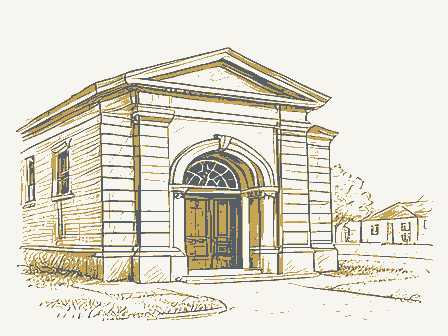
Significant Dates (Enter categories from instructions) 1907,1936 (Mark "X" in all the boxes that apply.) Property is: NPS Form 10-900 OMB No. 1024-0018 (Rev. 10-90) United States Department of the Interior National Park Service NATIONAL REGISTER OF HISTORIC PLACES CONTINUATION SHEET Section number 8 Page 1 Carnegie Library, Old Wilberforce University Campus Wilberforce, Greene County, Ohio The Carnegie Library on the Old Wilberforce University Campus is significant as one of only three historic buildings still extant on the Wilberforce and Central State University campuses, Ohio's only Historically Black College and Universities (HBCUs), and is being nominated under Criterion A for the themes of "Education" houses the administrative offices, archives, and research library of the National Afro-American Museum and Cultural Center.
Wilberforce and Central State universities are unique in that they both survive side-by-side as predominately black, small-town institutions of higher education in a northern state. It should be noted that Central State was formerly the Combined Normal and Industrial Department (CN & I) at Wilberforce University. The department split from the university in 1947, resulting in the establishment of two separate universities, one state and one private. The Carnegie Library (1907), Emery Hall (1913), and the CN & I Power Plant(1927) at Wilberforce, Ohio, are the only known extant pre-1930 academic facilities constructed expressly for HBCUs in the Midwest.
Wilberforce and CN & I Department, now Central State University, are the only HBCUs in Ohio, the oldest and most prestigious HBCUs in the Midwest, and two of only six HBCUs offering Background History - Wilberforce University In 1853, the African Methodist Episcopal (A.M.E.) Church and the Cincinnati Conference of the Methodist Episcopal Church joined forces to establish an institution devoted to the education of African American youth. This effort culminated in the purchase of Tawawa Springs (current site of the Old Wilberforce University Campus, the National Afro-American Museum, and Central State University*) for $13,000 and the founding of Ohio African University in 1856. (Map A) By 1860 enrollment stood at 200 students and in 1863 the institution was re-named Wilberforce University.
During the academic year 1926-1927, Wilberforce University had an enrollment of 1414, with "more than 500 aspirants turned away because of lack of accommodation." (Wilberforce University Bulletin 1926-1927, 19) Murphy, a Detroit chair manufacturer. Delaware State College was established in 1891, has Lockerman Hall, a private home built in degrees north of the Mason-Dixon Line. Historical Significance and "Ethnic Heritage." The Carnegie served as the university's library 1907 until the early 1980s. It currently ' Lewis College of Business in Detroit was founded in 1930. Its only historic building was built in 1910 as a residence for James Pennsylvania has the largest and most intact collection of pre-1930 academic buildings of all HCBUs in the northern states. the 1790s. Melrose at Cheyney State University in Pennsylvania was also built as a private residence.
Lincoln University in NPS Form 10-900 OMB No. 1024-0018 (Rev. 10-90) United States Department of the Interior National Park Service NATIONAL REGISTER OF HISTORIC PLACES CONTINUATION SHEET Section number 8 Page 2 Carnegie Library, Old Wilberforce University Campus Wilberforce, Greene County, Ohio Founded in 1856, Wilberforce University is the oldest institution of higher education owned and operated by African Americans. (McGinnus, 9) The establishment of Wilberforce University also led to the later (the normal and industrial department) in 1947. Several reasons have been suggested for the choice of Tawawa Springs as the site of Wilberforce University. migration patterns of freed slaves before the Civil War and the Underground Railroad, where a major route 42).
"It is worthy of mention," William Galloway, Xenia physician and Wilberforce board member, wrote in 1931 noting the historical connection between the two, "that the Columbus Pike past Wilberforce was a portion of the 'U.G.R.R.' [Underground Railroad] where the fugitive slave was hurried along at dead of night by brave Galloway continued, "travel this route day and night, happy and unmolested and avail themselves of the best education that church and state can furnish." Also, by 1850 there were numerous prosperous black merchants, artisans, shopkeepers, and farmers in Greene County and, by 1870, the county had more African-Americans in proportion to the total population than any other county in Ohio.
In 1887, through appropriations authorized by the Ohio General Assembly, a "Combined Normal and Industrial Department at Wilberforce University " was created to offer two year courses in vocational and teacher training Though no racial stipulations were made at the time, it was generally believed that only blacks would wish to attend an institution closely affiliated with a black university (Wilberforce) and located in a predominately With increased state funding, the state supported C. N. & I. Dept. grew yearly until it represented an investment of hundreds of thousands of dollars on the part of the state. Its modern physical plant and the size of its campus, faculty and student body eventually surpassed those of Wilberforce University, its parent institution (Goggin, 15). The C.N.& I.
Department and Wilberforce were separate institutions legally and with separate Boards of Trustees but they both shared the same President. During the 1920s several buildings were constructed on the Historical Significance cont. from Cincinnati to Columbus reportedly passed through Wilberforce along the Columbus Pike (U.S. Highway black community. Creation of the new department marked the rare instance of public support being extended to development of Payne Theological Seminary (the theological department) in 1894 and Central State University Foremost, perhaps, is the large number of African-Americans that settled in Greene County as a result of the a sectarian institution, earning the nickname "The Tuskegee of the North." (Goggins, 5-7) NPS Form 10-900 OMB No. 1024-0018 (Rev.
10-90) United States Department of the Interior National Park Service NATIONAL REGISTER OF HISTORIC PLACES CONTINUATION SHEET Section number 8 Page 3 The Carnegie Library, Old Wilberforce University Campus Wilberforce, Greene County, Ohio CN & I campus, including Stadium Hall (1920), Teachers Education Building - Lee Hall (1925), Business Manager's Residence (1927), Tawawa Hospital (1927) and the Power Plant (1927). Of these, only the Power Hall (1913). During the academic year 1926-1927, Wilberforce had an enrollment of 1414, with "more than 500 aspirants turned away because of lack of accommodation." In 1941, the state expanded the courses atthe CN &Ito four years and the department became the College of Education and Industrial Arts at Wilberforce University.
The two institutions split in 1947 and by 1951 the re- 1962 stood at 2,100 students and approximately 800 students at Wilberforce University. It should be noted that both Ohio University and The Ohio State University had no restrictive clauses pertaining to race. Ohio University, founded in 1804, enrolled its first African American student in 1824; Ohio State University, established in 1870, had eleven African American students enrolled in 1891. Oberlin College began admitting black students in 1835 and Antioch College's 1853 founding charter placed no racial restrictions on The Carnegie Library served as the library for Wilberforce University from 1907, when it was completed, until the early 1980s. The library was a gift from the American industrialist, Andrew Carnegie and was occupied in late 1907.
By the 1930s, the library had a collection of over 10,500 volumes including the collections of Daniel Payne, a leading African Methodist Episcopal Church theologian, and founder and first president of Wilberforce; and William S. Scarborough, a leading classics scholar and former president of the university. An addition with more space for library stacks and reading areas was added in 1936. The Carnegie Library continued to serve students - surviving both the split with the C N & I Department in 1947 and the 1974 offices and library for the National Afro-American Museum. admissions. Historical Significance cont. Plant survives.
On the Wilberforce campus, new construction included the Carnegie Library (1907) and Emery tornado-until the early 1980s.In1986,renovation began on the library for its operation as the administrative named Central State University was awarding degrees in the arts and sciences.Enrollment at Central State in NPS Form 10-900 OMB No. 1024-0018 (Rev. 10-90) United States Department of the Interior National Park Service NATIONAL REGISTER OF HISTORIC PLACES CONTINUATION SHEET Section number 8 Page 4 Carnegie Library, Old Wilberforce University Campus Wilberforce, Greene County, Ohio Historical Significance cont. Wilberforce Carnegie Library is also associated with the fundraising efforts of Hallie Q. Brown. Dr. Brown, a founder of the National Association of Colored Women, was an accomplished and acclaimed teacher, author, lecturer, elocutionist, and political activist.
Her active and passionate involvement in human rights placed her in the forefront of movements for African-American civil rights and women's suffrage from the late 1800s until her death in 1949. It is chiefly through her fundraising that Wilberforce University was able to build its first library building. There is evidence that Columbus architect David Riebel, who has other buildings on the National Register of Historic Places, prepared the plans for the library (Ohio Architect, 1904, 74). However, the form preparer was unable to document whether those were the final plans. Between 1881 and 1917, Andrew Carnegie contributed over $ 40 million to built 1, 680 libraries in communities across the United States. The old Wilberforce library is among only nine Carnegie Libraries built on HBCUs campuses (including Florida A.
& M., Fisk, Howard, Tuskegee, and Atlanta University) after the turn-of-the-century. (Negro Year Book 1937-1938, 183) Roughly half remain standing today. In addition, many Carnegie Libraries have a distinctive style; among them Classic (Bobinski, 3- 9) The Carnegie Library's history is associated with other major historical developments in African-American utilized their instructors and students in the construction of their campus buildings; from engineering, and consulting, to masonry, carpentry, and blacksmithing. According to a report on the work of the vocational department, Wilberforce, through its CN & I Department emphasized opportunities for practical experience as not only is this structure representative of the architecture of the time, but also of the craftsmanship of African- American skilled artisans and apprentices in the early twentieth century.
Revival, or the often-called Carnegie Classical style, such as the one on the Old Wilberforce University campus. the turn of the 2o"century.It is significant to note that during this time period HBCUs throughout the country done on the campus and in the community," states the report.(Wilberforce University Bulletin 1933,11) Thus, well as instruction in the trades. "The students were used for practically all of the building construction work higher education.It represents the period of growth and expansion that took place on this and other campuses at United States Department of the Interior National Park Service NATIONAL REGISTER OF HISTORIC PLACES CONTINUATION SHEET Section number 8 Page 5 Carnegie Library, Old Wilberforce University Campus Wilberforce, Greene County, Ohio well as instruction in the trades.
"The students were used for practically all of the building construction work done on the campus and in the community," states the report. (Wilberforce Bulletin Concerning the Work of the Vocational Division, 11) Thus, not only is this structure representative of the architecture of the time, but also of the craftsmanship of African-American skilled artisans and apprentices in the early twentieth century. The development and growth of Wilberforce University, again as represented by the Carnegie Library and other buildings built during that time period, have had a major impact on the Wilberforce community, as well as statewide. As the university grew, so did the surrounding community of Wilberforce with entire families moving into the area as family members accepted faculty positions or attended classes.
The vibrant community that developed provided the setting for a myriad of cultural and intellectual events and activities. The Penn Central Railroad brought many a student, teacher, and visitor from other parts of the country, as well as the world, to Wilberforce. Among the more notable: W.E.B. DuBois taught at Wilberforce in the late 1800s; Hallie Q. Brown, a founder of the National Association of Colored Women's Clubs and a noted elocutionist and human rights activist, was associated with the universities as both a student and professor for many years; William Scarborough, a prominent classics scholar, served as president of Wilberforce University from 1908 to 1920; Charles H.
Wesley, a founding scholar in the field of African-American history, served as the first president of Central State University; Charles Young, the third Black to graduate from the United States Military Academy, was a professor of military science at Wilberforce; composer William Grant Still studied music at Wilberforce, and opera singer Leontyne Price studied at Central State. Thus, Wilberforce has become one of the major African-American cultural and educational centers in Ohio and the nation. The establishment of the National Afro-American Museum and Cultural Center in Wilberforce in 1988 recognized this fact. The history of Wilberforce University (and later Central State University) tells the history of higher education for Blacks in the state.
It is within the walls of this structure (and others unfortunately demolished or destroyed by the 1974 tornado) that thousands of African-Americans received an education and many of the contributions of African-Americans to the advancement of education, medicine, law, technology, and the arts in Ohio have their roots at the Tawawa Springs in Wilberforce, Ohio. Historical Significance cont. consulting, to masonry, carpentry, and blacksmithing. According to a report on the work of the vocational department, Wilberforce, through its CN & I Department emphasized opportunities for practical experience as *For clarification purposes, Central State University, which is submitting this nomination, was the Combined Normal and Industrial Department (CN&I) at Wilberforce University.
In 1947 the CN&I, which was created by the Ohio General Assembly in 1887, split United States Department of the Interior National Park Service NATIONAL REGISTER OF HISTORIC PLACES CONTINUATION SHEET Section number 8 Page 6 Carnegie Library, Old Wilberforce University Campus Wilberforce, Greene County, Ohio owns the deed to the Old Wilberforce Campus property. Wilberforce University's new campus is located approximately one mile from its original site. Historical Significance cont. with the church-related Wilberforce. The split resulted in two separate universities, one state and the other private. Central State now NPS Form 10-900 OMB No. 1024-0018 (Rev.
10-90) United States Department of the Interior National Park Service NATIONAL REGISTER OF HISTORIC PLACES CONTINUATION SHEET Section number 9 Page 1 Carnegie Library, Old Wilberforce University Campus Wilberforce, Greene County, Ohio Major Bibliographic References Blumenson, John J.- G. Identifying American Architecture: A Pictorial Guide to Styles and Terms, 1600- 1945. New York: W. W. Norton, 1981. Bobinski, George S. Carnegie Libraries: Their History and Impact on American Public Library Development. Chicago: American Library Association, 1969. Brown, Hallie Q. Pen Pictures of Pioneers of Wilberforce. Wilberforce, OH: Aldine Publishing, 1937. Combined Normal and Industrial Department at Wilberforce University Board of Trustees, Minutes, Central State University Archives, Wilberforce, Ohio. Galloway, C. M.
"Circular: Tawawa House, Xenia Springs," 10 September 1909, Galloway Papers, Greene County Public Library, Xenia, Ohio. Galloway, William. "The First Dwellers in Greene County," 1931, Galloway Papers, Greene County Public Greene County, Ohio Plat Book M36-0002, Xenia, OH: Greene County, 0027. Hutslar, Donald and David A. Simmons. "Taking to the Waters: Xenia Springs in 1853." Timeline (Nov-Dec 1999): 36-40. Johnson, Charles S. The Negro College Graduate. Chapel Hill, NC: University of North Carolina Press, 1938. Joiner, W. A., A Half a Century of Freedom of The Negro in Ohio, Wilberforce, OH: Smith Adv. Co., 1915. Keys, L. B. "The Community of Wilberforce." Ph.D. dissertation, University of Cincinnati, 1943. Lowell, Cadance, John E. Silvius and Sheila Darrow.
"Tawawa Woods, Natural Landmark: Geological, Cultural, and Land Use History." Ohio Journal of Science 103 April 2003, 2 Library, Xenia, Ohio. NPS Form 10-900 OMB No. 1024-0018 (Rev. 10-90) United States Department of the Interior National Park Service NATIONAL REGISTER OF HISTORIC PLACES CONTINUATION SHEET Section number 9 Page 2 Carnegie Library, Old Wilberforce University Campus Wilberforce, Greene County, Ohio McGinnis, Frederick A. A History and an Interpretation of Wilberforce University. Blanchester, OH: Brown Publishing, 1941. Negro Year Book: An Annual Encyclopedia of the Negro. Tuskegee, AL: Tuskegee Institute, 1937-1938. Ohio Architect and Builder, 4 December 1904, 74. Payne, Daniel. Annual Report and Retrospective of the First Decade of Wilberforce University. Cincinnati, OH: B.W. Arnett, 1873. Ramsey, Eleanor Mason.
Wilberforce, Ohio and the Underground Railroad: Feasibility / Suitability Study. Wilberforce, OH: National Museum of Afro-American History and Culture, 1978. Robinson, George F. History of Greene County, Ohio. Chicago, IL: S.L. Clarke Publishing, 1902. Talbert, Horace. Sons of Allen. Xenia, OH: Aldine Publishing, 1906. Wesley, Charles H. Negro Americans in Ohio. Wilberforce, OH: Central State University Press, 1976. Wilberforce University Bulletin, Wilberforce, OH: Wilberforce University, 1926-1927. Wilberforce University Bulletin: Concerning the Work of the Vocational Division in the CN & 1 Department, Wilberforce, OH: Wilberforce University, 1933. Wilberforce University. Presidents' Annual Reports, Wilberforce University Archives, Wilberforce, Ohio. Major Bibliographic References Greene County, Ohio 10.
Geographical Data Acreage of Property 1/2 Acre 1 17 252960 4400170 (Describe the boundaries of the property on a continuation sheet.) Boundary Justification 11. Form Prepared By name/title organization Sheila Darrow, University Archivist date 9/15/00 organization Central State University street & number P.O. Box 1004 _telephone 937-376-6521 city or town Wilberforce state Ohio zip code 45384 Submit the following items with the completed form: A USGS map (7.5 or 15 minute series) indicating the property's location. Representative black and white photographs of the property.
(Check with the SHPO or FPO for any additional items) (Complete this item at the request of the SHPO or FPO.) name Central State University Paperwork Reduction Act Statement: This information is being collected for applications to the National Register of Historic Places to nominate properties for listing or determine eligibility for listing, to list properties, and to amend existing listings. Response to this request is required to obtain a Estimated Burden Statement: Public reporting burden for this form is estimated to average 18.1 hours per response including the time for reviewing instructions, gathering and maintaining data, and completing and reviewing the form. Direct comments regarding this burden estimate or any aspect of Management and Budget, Paperwork Reductions Project (1024-0018), Washington, DC 20503.
Photographs Continuation Sheets Additional items Carnegie Library Additional Documentation Verbal Boundary Description Property Owner UTM References See continuation sheet. (Place additional UTM references ona continuation sheet) Zone Easting Northing (Explain why the boundaries were selected on a continuation sheet.) A Sketch map for historic districts and properties having large acreage or numerous resources. this form to the Chief, Administrative Services Division, National Park Service, P.0. Box 37127, Washington, DC 20013-7127; and the Office of Maps NPS Form 10-900 OMB No. 1024-0018 (Rev.
10-90) United States Department of the Interior National Park Service NATIONAL REGISTER OF HISTORIC PLACES CONTINUATION SHEET Section number 10 Page 1 Carnegie Library, Old Wilberforce University Campus Wilberforce, Greene County, Ohio Wilberforce, Greene County, Ohio Parcel Number: M36900200270003800, pcrtion of, see plat map. The parcel above is located on the Old Wilberforce University Campus, on which the nominated structure is located. Boundary Justification Verbal Description OMB No. 1024-0018 (Rev. 10-90) United States Department of the Interior National Park Service NATIONAL REGISTER OF HISTORIC PLACES Section number 11 Page 1 Carnegie Library, Old Wilberforce University Campus Wilberforce, Greene County, Ohio Photographs by Sheila Darrow, May 2002, December 2002, and October 2003. Negatives located Central State University Archives 1. Looking northwest at south elevation. 2.
Looking northwest at Old Wilberforce Campus. 3. Looking northeast at south elevation entrance. 4. Detail of limestone-trimmed window on south elevation. 5. Looking southeast at north elevation. 6. Detail of commemorative plaque on west elevation. 7. Detail of basement window on west elevation. 8. Looking east at west elevation. 9. Looking southwest at east elevation. 10. Looking west interior first floor. 12. Detail brick fireplace. 14. Detail door and door frame Photographs CONTINUATION SHEET NPS Form 10-900 NPS Form 10-900 OMB No. 1024-0018 (Rev. 10-90) United States Department of the Interior NATIONAL REGISTER OF HISTORIC PLACES Carnegie Library, Old Wilberforce University Campus Wilberforce, Greene County, Ohio 15. Detail door and door frame Photographs (following renovation, Spring 2003) 16. Looking northwest at south elevation. 17. Looking west at east elevation. 18.
Looking southwest at northeast elevation. 20. Looking northeast at west elevation. 21. Looking north at south elevation. Photographs cont. CONTINUATION SHEET National Park Service 19.Looking east at west elevation(detail of new trim) Section number 11 Page 2 NPS Form 10-900 OMB No. 1024-0018 (Rev. 10-90) United States Department of the Interior National Park Service NATIONAL REGISTER OF HISTORIC PLACES CONTINUATION SHEET Section number 12 Page 1 Wilberforce, Greene County, Ohio Maps, Photographs, and Sketches A. Map A is taken from: The 1855 Atlas from the Map of Greene County. Philadelphia: A. D. Byles, 1855. The highlighted area on the map shows the property before the establishment of Wilberforce University.
The structures represented on the map were those constructed for use by the Tawawa Springs health resort, owners of the property prior to the establishment of Wilberforce University. They consisted of a hotel and surrounding summer cottages. B. This sketch depicts the buildings represented on Map A. Wilberforce University purchased the buildings and property from the Tawawa Springs health resort in 1956. Daniel Payne, the university's first president, described the site thus: "The original college buildings were of wood, constructed nearly in the form of the letter T," and the main structure (in the center of the photograph) was "three stories high without a basement." C. Map C is taken from the Combination Atlas Map of Greene County. Chicago: L. H. Everts, 1874. In 1865 the main building (the large central structure as seen in Sketch B) was destroyed by fire.
The structure represented on this map is the building that replaced it, University Hall. D. This sketch is of the building that replaced the original main building that was destroyed by fire in 1865. The building, known as University Hall and later Shorter Hall, was completed in the early 1870s. E. Map E is taken from Riddell's Atlas of Greene County. Defiance, OH: Riddell, 1896. This map was drawn after the creation of the Combined Normal and Industrial Department (CN&I Department) at construction of Emery Hall (1913) and Carnegie Library (1907). Highlighted is the ravine that divided the two campuses. Wilberforce University (please see historical narrative in the original application),but pre-dates the Carnegie Library, Old Wilberforce University Campus NPS Form 10-900 OMB No. 1024-0018 (Rev.
10-90) United States Department of the Interior National Park Service NATIONAL REGISTER OF HISTORIC PLACES CONTINUATION SHEET Carnegie Library, Old Wilberforce University Campus Wilberforce, Greene County, Ohio Maps, Photographs, and Sketches cont. F. Map F, from the early 1930s, indicates the general layout of the Wilberforce community, including Wilberforce University to the left of the ravine and the CN&I Department on the right. Highlighted are Emery Hall, the Carnegie Library, and the Power House. G. In the lower left foreground of Photograph G, the back of Emery Hall can be seen. In front of Emery behind Carnegie Library is the new Shorter Hall, the one that replaced University /Shorter Hall (see Sketch D) which burned in 1922.
published in 1949 after the split between Wilberforce University and the CN&I Department, leading to the creation of Central State University (please see historical narrative in the original application). Highlighted are Emery Hall and Carnegie Library on the "church" side, and the Power Plant on the "state" side. I. Photograph I is an aerial view of the campuses dating to the early 1940s. Emery Hall and Carnegie Library are to the very left and the Power House is at the top. J. Photograph J is from the Wilberforce Annual "The Forcean 1947," Wilberforce, OH: Wilberforce University. 1940s view of Carnegie Library entry. K. Photograph K is from Wilberforce Annual "The Forcean 1947," Wilberforce, OH: Wilberforce University. 1940s view of Carnegie Library.
H.Map His from a brochure titled,Facts About the State College atWilberforce."The brochure was Section number 12 Page 2 Hall is the Carnegie Library. The photograph is from the early 1930s. The larger building directly M.Collier Austin khing J. Hatchinson® *G Lunkheart * Bryson Are on Pages 30 & 31 J°C Collins A Miller -Wade PJacoby Draper - -J.C. Galloway R Hamill JH shields 1855 Soe Enlargements of Names RMarshall JWhiteman Near Each Village NDunderdale WDHowell ISquires Dbawhead JBull H Jacoby TABLE OF REFERENCE. *B Galloway S Wright *& Adami UX Lawhend OHIO G Hume nter S.Struthers MKendall. Tawawa SUGAR CROVE PDunlap CARNEGIE LIBRARY,GREENE CO.,OHIO WWatts. "Sstewart SELedbetter GYd JHJob1 Est 10 0 2277 1874 240 870 13.5 Quistiön Squires 2239 Bratton John 153 Jaclison Ledbetter Bichett J P Shorter S.T. Mitchell WILBERFORCE 1896 MAP OF Scale:800 feet to 1 inch.
OMH-OMIEL HALL S- SEMINARY GENERAL LAYOUT OF WILBERFORCE COMMUNITY O-RESIDENCES Wi/ber force U. 4-STORES AND R.R-RELREATION HEY - SHORTER HALL (CHURCH 1949 (State) 913 College of Education and Industrial Arts 1927 HALL Wilberfoece U. EMERY WILBERF OK -DEmO 1999 H. CARNEGIE LIBRARy, GREENE Co., OHIO Property Information Carnegie Library, Old Wilberforce University Campus Greene County, Ohio Geographic Information Systems Luwanna A.
Delaney (For best print quality, set browser text to Medium) Greene County Auditor Owner Info Legal Info Owner Name Par ID Owner cont PO BOX 1004 WILBERFORCE OH 45384 1004 Building Info Legal 1 Yr Built Legal 2 Legal 3 Building Sqft Survey Rec: 018 / 0248 Family Rooms Half Baths 2003 Taxes 1st Half 2nd Half Heat Fuel Utility Contd Act Frontage Eff Frontage Deed Info 87.37 929-1000 $990940 $2831250 $192.05 $3134100 $1096940 $302850 M36000200270003800 Assessed Document $106000 $384.1 Bedrooms Basement Construction District Heating Style SEPTIC Depth Acres Date Sales Values Price Due EXEMPT Land Delinquent WELL Fireplace Real Special Appraised Class XENIA TP XCSD Vol STATE OF OHIO Mail Address Full Baths Total Tax BRUSH ROW Addl Utilities Page 1 of 2 1400 BRUSH ROW RD Bidg.
173m http://www.co.greene.oh.us/Website/gcParce./gcParcels_GISMAPSERVER2124151253.jp 1/14/2004 CENTRAL STATE UNIVERSITY WILBERFORCE CLIFTON RD AT Library NATIONAL REGISTER OF HISTORIC PLACES EVALUATION/RETURN SHEET NAME : N PDIL: N PERIOD: PROGRAM UNAPPROVED: COMMENT WAIVER: N V ACCEPT ABSTRACT/SUMMARY COMMENTS: National Register RECOM./ CRITERIA If a nomination is returned to the nominating authority, the TELEPHONE RETURN 5/06/04 REJECT DISCIPLINE 6/09/04 MULTIPLE 6/19/04 DATE REVIEWER OTHER: NATIONAL PARK SERVICE REASONS FOR REVIEW: DATE RECEIVED: UNITED STATES DEPARTMENT OF THE INTERIOR nomination is no longer under consideration by the Nps. Bntered n the DOCUMENTATION see attached comments Y/N see attached SLR Y/N DATE OF WEEKLY LIST: DATE OF 45TH DAY: STATE & COUNTY: OHIO, Greene LESS THAN 5O YEARS: WILACAFORCE CARNECIE LIBRARY GREENE CO., OH Processing by DEC.
2002 MN Kodak Processing by NEC. 2002 MN Kodak GREENE CO., OH NEC 2002 MN GREENE CO., OH Kodak Processing by GREENE CO., OH Processing by ERECTED & GIVEN MUNIFICENT UNIVERSITY KINDNESS WILBERFORCE THIS LIBRARY THROUGH THE ANDREW CARNEGIE OF MR Greene Co., OH Caenegie Libenny NEC 2002 MN Kodak Processing by Greene Co., OH Processing by NEC. 2002 MN Greene Co., OH Processing by Libenr Y Grecne Co., OH Greene Co., OH NEC 2002 MN Kodak Processing by Greene Co., OH Processing by 002 MN Kodak Kodak Processing by Grccne Co., OH NEC.
2002 MN Kodak Processing by Pro Grecne Co., OH Wilberforce 002 OCT BA DANXØN NNN+ 2 4594 8468 Carnegic library Greene Co., O H Wilburforce OCT BA DANXØN NNN- 2 4594 8472 Wilberforee 006 OCT BA DANXØN NNN- 2 4594 008 Greenc Co., OH Wilberforce Wilberforco 010 Greenc Co., OH 8476 Carnegie library LIBR ARY WILBERFORCE 8478 012 Wilberforcc ORIGINAL BUILDINGS OF WILBERFORCE UNIVERSITY, 1856 UNIVERSITY HALL G.
EARLY 1930%, Air View WILBERFORCE UNIVERSITY 1945 CARnegie LibRARY 1945- 1946 Carnegie Library (Old Wilberforce _X_ Photographs (#s: A, C, E, F, H) 04000610 The following Core Documentation is missing from this entry: County, State Property Name Missing Core Documentation University Campus) Greene County, Reference Number Nomination Form USGS Map OHIO-GREENE CO Greene Co., OH XENIA QUADRANGLE GEOLOGICAL SURVEY UNITED STATES Carnegie Library 7/252960/4400170 7.5 MINUTE SERIES (TOPOGRAPHIC UTM Reference! DEPARTMENT OF THE INTERIOR SCALE 1:24 000 ROAD CLASSIFICATION XENIA, OH Wilberforce
 Block
Block