Major Bibliographical References - State Historic Preservation Office - Other State agency L preliminary determination of individual listing (36 CFR - Federal agency 67) has been requested - Local government - previously listed in the National Register - University L previously determined eligible by the National - Other - designated a National Historic Landmark L recorded by Historic American Buildings Survey Primary location of additional data 1916-1933 Register Bibliography Criteria Considerations Unknown INDUSTRY Architect/Builder Property is: Significant Dates Applicable National Register Criteria religious purposes. lack individual distinction.
Name of repository: Period of Significance for National Register listing) Significant Person Areas of Significance Cultural Affiliation (Enter categories from instructions) recorded by Historic American Engineering Record (Complete if Criterion B is marked above) and distinguishable entity whose components Lake County, Ohio significant in our past. A Property is associated with events that have made Previous documentation on file (NPS) a significant contribution to the broad patterns of G less than 50 years of age or achieved significance (Cite the books, articles, and other sources used in preparing this form on one or more continuation sheets.) (Mark X in one or more boxes for the criteria qualifying the property Foster, Claud, House Lake County, Ohio 10. Geographical Data Acreage of Property. 2.5 1 17 460280 4609600 - See continuation sheet.
Verbal Boundary Description (Describe the boundaries of the property on a continuation sheet.) (Explain why the boundaries were selected on a continuation sheet.) 11. Form Prepared By name/title organizationCarol Poh Miller/Historical Consultant under contract with owner date 1-20-04 street & number17903 Rosecliff Road city or townCleveland Submit the following items with the completed form: A USGS map (7.5 or 15 minute series) indicating the property's location. A Sketch map for historic districts and properties having large acreage or numerous resources. Representative black and white photographs of the property. (Check with the SHPO or FPO for any additional items) (Complete this item at the request of the SHPO or FPO.) name LeMarr L. & Patricia J.
French Paperwork Reduction Act Statement: This information is being collected for applications to the National Register of Historic Places to nominate benefit in accordance with the National Historic Preservation Act, as amended (16 U.S.C. 470 et seq.). Management and Budget, Paperwork Reductions Project (1024-0018), Washington, DC 20503. Maps Photographs Continuation Sheets telephone216-692-0747 Additional items Boundary Justification Additional Documentation UTM References Zone Easting Northing Property Owner (Place additional UTM references on a continuation sheet) city or townWillowick _stateOhio _ zip code 44095 instructions, gathering and maintaining data, and completing and reviewing the form. Direct comments regarding this burden estimate or any aspect of this form to the Chief, Administrative Services Division, National Park Service, P.0.
Box 37127, Washington, DC 20013-7127; and the Office of street & number30333 Lake Shore Boulevard telephone440-944-4905 (Rev. 10-90) United States Department of the Interior National Park Service NATIONAL REGISTER OF HISTORIC PLACES CONTINUATION SHEET Section number 8 Page 3 Foster, Claud, House Willowick, Lake County, Ohio industrialist, and philanthropist. Claud Hanscomb Foster (1872-1965) invented automobile parts, including a musical horn and the first practical shock absorber. The devices, which he manufactured in Cleveland and sold worldwide, made him a wealthy man. Following his retirement from business he chose to live modestly, and toward the end of his life he gave away most of his fortune to Cleveland charitable and educational institutions. seventeen years, a period during which he was at the height of his career as an industrialist.
With its stucco setback and lakefront setting preserve its historic ambience. Claud Hanscomb Foster (December 23, 1872-June 21, 1965) was born in Brooklyn Village (now part of the city of Cleveland), the second of four sons of George H. and Julia Williams Foster. He left school at eleven to work on his father's farm. At fourteen, he found employment with the Bolton Machine Company, where he learned the trombone in the Euclid Avenue Opera House orchestra, he gradually bought lathes, drill presses, punch Continuing to play the trombone, Foster became an agent for Cleveland-built General and Peerless automobiles. In 1904, Foster invented a musical horn for automobiles that operated from the exhaust of the motor. The horn - Foster dubbed it the "Gabriel" horn, after the angel - was hailed as a great improvement over bulb-type horns, which were not always reliable.
Foster rented a small shop on Superior Avenue and, with one employee, Gabriel windshield cleaner to his line. In 1909, Foster reportedly manufactured and sold 16,000 Gabriel horns. Cleveland Mayor Tom Johnson, himself an inventor, had a Gabriel horn installed on his imported Roche- Snyder and is said to have stopped often to visit Foster at his shop. Thomasson's biography and an extensive clipping file maintained by the History Department of the Cleveland Public Library. Historical Background presses, and other machinery to engage in experimental work. The shop was destroyed by fire in 1896. Statement of Significance He also made money buying and repairing automobiles."This talent for fixing things,"his biographer, built the first twenty-five Gabriel horns.
They were an immediate success.In 1907, he moved the Gabriel Horn Foster built this Bungalow/Craftsman-style house in 1916 and occupied it as his principal residence for The Claud Foster House is significant under Criterion B for its association with a prominent Cleveland inventor, the machinist's trade.In 1891,Foster rented a shop on Erie (East 9") Street.Using money earned by playing -NPS Form 10-900 OMB No. 1024-0018 Manufacturing Company into larger quarters, at 1407 East 40th Street, hired additional workers, and added the ' Claud Foster: A Biography (Cleveland, O.: Fenn College, 1949), 22. This account of Claud Foster's life is based principally on (Rev.
10-90) United States Department of the Interior National Park Service NATIONAL REGISTER OF HISTORIC PLACES CONTINUATION SHEET Section number 8 Page 4 Foster, Claud, House Willowick, Lake County, Ohio Following the success of the Gabriel horn, Claud Foster turned his attention to something else the motoring the market. While standing on the deck of a Detroit & Cleveland passenger steamer as it was being docked, Foster watched as a deckhand wound a rope around two steel posts and, with the loops of the rope forming a figure eight, easily controlled the surge of the vessel. Thus inspired, Foster sketched his idea for the Gabriel "Snubber," deriving the name from the verb snub, a nautical term meaning to secure a vessel by turning a rope world and earning profits of more than $1 million annually.
A 1918 profile of Claud Foster stated: "The and about 200 others indirectly, and ships his product all over the world. He is sole owner of the company, and Foster liked to attribute his success to the fact that he enabled his employees to share in the profits. According to his biographer, he was one of the first employers to develop the incentive plan of sharing profits with businesses after World War I.* An affable man, Foster also developed strong personal relationships with the heads of automobile companies, often joining them to play golf, a game at which he excelled. Following one such outing, Walter Chrysler agreed to install Gabriel snubber shock absorbers on one of his cars.
Chrysler reportedly was so impressed he gave Foster an order for 40,000 pairs and directed his engineers to consult the the "Doctor of Car Riding' for the motor car manufacturers." Sales boomed after the Dodge Company adapted the manufacture of its frames to accommodate installation of Gabriel snubbers. Other important makers, including Cadillac and Packard, followed suit. By 1925, biographer Thomasson later wrote, "Claud Foster had reached a pinnacle in the business world that convention, Foster shocked the business world by selling Gabriel to Otis & Company for $4 million-less than Publishing Company, 1918), 3:303. 3 "Horn Inventor Pays Biggest Tax," Cleveland News, November 12, 1924, 1. S Thomasson, Claud Foster, 42. 6 Ibid., 44. Cleveland inventor whenever new models developed riding difficulties.
Claud Foster later recalled: I became privately held Gabriel Company was selling approximately 75 percent of all shock absorbers marketed in the few men ever attain....The 53-year-old inventor who designed, manufactured and sold his own inventions public desired: the elimination of violent jerks and bounces. There was as yet no successful shock absorber on manufacture of snubbers has grown to 100,000 sets annually.Mr.Foster employs eighty people in his factory NPS Form 10-900 OMB No. 1024-0018 takes a justifiable pride in the fact that he has never worked on borrowed capital.*2In 1924, Claud Foster caused a sensation when local newspapers reported that he had paid $821,313.13 in income taxes for the prior year - more than any other Ohio taxpayer. employees. "In this way," Thomasson wrote, "he avoided the slowdowns and strikes that crippled so many * Thomasson, Claud Foster, 27.
According to Thomasson, from 1917 until 1925, when Foster sold the Gabriel firm to Otis & Company, employees reportedly were paid more than $600,000 from profits in addition to their salaries. quickly about a post or cleat. The Snubber patent was capitalized in 1914 for S1 million, and by 1920 the could now sell the company his genius made possible and pocket a personal fortune of $10,0o0,0oo."Defying (Rev.
10-90) United States Department of the Interior National Park Service NATIONAL REGISTER OF HISTORIC PLACES Section number 8 Page 5 Foster, Claud, House Willowick, Lake County, Ohio Cleveland a leader in automotive parts manufacture, citing his "contribution to the [automotive] accessory In 1916, Claud Foster purchased about eight acres on Lake Road (Lake Shore Boulevard) in Willoughby wealthy Clevelanders who established estates and engaged in fruit or dairy farming, viticulture, or the raising of livestock. In 1898, the Cleveland, Painesville & Eastern Railroad had opened the Shore Line, connecting Cleveland and Willoughby by way of Lake Shore Boulevard and Vine Street, for the purpose of opening up lakefront real estate for development.
To boost its business, the CP&E established Willoughbeach Park on lakefront property a short distance east of the park and opposite the Willowick Country Club. There, he built a during the period of his greatest productivity and success as an industrialist. It was there, too, that Foster first took up golf. According to an article in the Cleveland News, he played often at the Willowick Club, but in order Foster moved from Willowick to 1617 Sheridan Road in South Euclid, next door to the Mayfield Country After briefly taking the helm as chairman of Pressure Castings, Inc, a die casting company where he garnered Keeping a small office in the Union Commerce Building in downtown Cleveland, he built a $3,500 four-room cottage on Sandusky Bay near Vickery, Ohio.
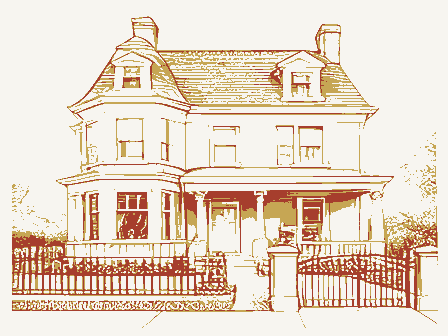
There, he spent each summer and fall gardening and duck The Golden Anniversary Book of the Cleveland Engineering Society (Cleveland, O., 1930), 9, 13. ° September 12, 1949. door to a golf course in order to have time to play." Thomasson writes: "He lived beside the Willowick Club for 17 years." Thomasson, Claud Foster, 74. CONTINUATION SHEET back of the house and pitch balls over the house onto the green. Naturally it helped me a lot. About 1933, stock at a fair price. The firm was incorporated as the Gabriel Snubber Manufacturing Company (the Gabriel the attention of local press by introducing a profit-sharing plan, Claud Foster permanently retired in 1941. horn had long since been superseded by the push-button electric horn),and Claud Foster remained as chairman handsome and substantial house in the Bungalow/Craftsman style.
Foster resided there for seventeen years, to improve his short game he built a putting green in his front yard.I could go up on a hill about 100 yards of the board until February 24,1928.In 1927,Gabriel was producing 14,000 snubber units per day.Marking NPS Form 10-900 OMB No. 1024-0018 half its estimated worth - with the proviso that his friends and business associates have an opportunity to buy business with the first snubber type of shock absorbers and other Gabriel products." Club.' 8 Warranty Deed, E. V. Hale, et. al to Claude H. Foster [sic], July 1, 1916. "Claud Foster was thrice married and thrice divorced. He married Emma Schultz on May 2, 1894. They had one son, Earl F. He married Lunetta Kelley on July 7, 1907. They adopted a son, Daniel, who, according to a 1918 profile of Claud Foster (n.
2, above), Township.® Since the late nineteenth-century, western Lake County had attracted "gentlemen farmers"- and roller-coaster. The surrounding area was a sparsely settled summer resort when Claud Foster purchased Lake Erie, offering swimming, dancing, picnic grounds, baseball fields, concession stands, and, later, a carousel (Rev. 10-90) United States Department of the Interior National Park Service NATIONAL REGISTER OF HISTORIC PLACES CONTINUATION SHEET Section number 8 Page 6 Foster, Claud, House Willowick, Lake County, Ohio Following World War II, Claud Foster began the philanthropic work that would bring him both local and national attention. His first large gift was to Cleveland's Fenn College, the nucleus of what would later become Cleveland State University.
Foster admired the Fenn plan of cooperative education, and in 1947 he gave the Foster Engineering Building was dedicated on September 14, 1949. In 1950, Foster gave $550,000 for a new Brooklyn-Parma branch of the YMCA, in memory of his mother, to serve the area where he had lived as a boy. Then, on July 21, 1952, without explanation, Foster invited the heads of sixteen charitable and educational institutions to a dinner at the Statler Hotel in downtown Cleveland. In the company of numerous friends, and with businessman Frederick C. Crawford serving as master of ceremonies, Foster dispensed $3.9 million, in Throughout his life, Claud Foster, a deeply religious man, maintained that his good fortune was the result of his seven hundred spinet-model electric organs to needy churches, mostly in small Ohio communities. He would gift was being properly used.
In April 1959, en route to a church near Milan, he was critically injured in an automobile accident. He spent the rest of his life in Bellevue (Ohio) Community Hospital, where he died on The Claud Foster House appears today much as it did when the industrialist built it in 1916, although the the CP&E ended rail service owing to financial losses. The suburb of Willowick, which was incorporated in 1924, saw a building boom following World War II, when the village was intensively subdivided with single- Portions of the former Claud Foster property to the east and the west were sold in 1945 and 1950, respectively, was then reported to be six years of age; the same profile noted that Earl F. Foster was then in military service. In 1938, Foster 12 Obituary, June 22, 1965, CPL clipping file. the Cleveland inventor who chose to live modestly and gave away most of his fortune.
Recalling that Claud Country Club was closed in the early 1950s, and Shoregate shopping center opened on the site in 1955. Foster "made all his money with his inventive genius, mostly on a horn and shock absorbers for autos," the often follow up by visiting the various congregations to take part in dedication services and to ensure that his University.The money represented proceeds from the sale of the Gabriel Company in 1925.Too many family homes. Between 1950 and 1960, Willowick's population grew from 3,677 to 18,749.13 The Willowick surrounding area has undergone dramatic change. Willoughbeach Park never reopened in 1926, the same year institutions get their money from dead men.
I wanted to see them get it,"Foster said.2 school $500,000for a new engineering building and an additional $300,000 to equip it.The three-story Claud Cleveland Press (June 22, 1965) eulogized him as "a great giver with a common touch." NPS Form 10-900 OMB No. 1024-0018 June 21, 1965. He was ninety-two. Both Time (July 2, 1965) and Newsweek (July 5, 1965) noted the death of 13 Lake County Historical Society, Here Is Lake County (Cleveland, O.: Howard Allen, 1964), appendix. NPS Form 10-900 OMB No. 1024-0018 (Rev. 10-90) NATIONAL REGISTER OF HISTORIC PLACES CONTINUATION SHEET Section number 8, 9, 10 Page 7 Foster, Claud, House Willowick, Lake County, Ohio its deep setback, expansive front lawn, and stunning views of Lake Erie, the Claud Foster House maintains a Avery, Elroy McKendree. A History of Cleveland and Its Environs. 3 vols. Chicago and New York: Lewis Publishing Company, 1918.
Cleveland, O. Cleveland Public Library. "Claud H. Foster" clipping file, History Department. Foundation, 1974. Hawkins, Larry. "Claud Foster, Duck Hunter." Cleveland Plain Dealer Pictorial Magazine, November 16, 1952, 14-16. Lippucci, Gale, comp. Willowick History Project. http://www.wepl.lib.oh.us/wick_History/WICK_history.htm Progressive Men of Northern Ohio. Cleveland: Plain Dealer Publishing Co., 1906. Thomasson, Wayman. Claud Foster: A Biography. Cleveland, O.: Fenn College, 1949. Van Tassel, David D. and John J. Grabowski, eds. The Dictionary of Cleveland Biography. Bloomington and Indianapolis: Indiana University Press, 1996. Verbal Boundary Description The nominated property consists of the lots identified by Lake County Permanent Parcel Nos. 28A043S000013 and 28A043S000060. It has a frontage of 118 feet.
Boundary Justification Bibliography The boundary represents approximately 2.5 acres of the original 8-acre lot on which the Claud Foster House Geographical Data National Park Service Earnest, G. Brooks.A History of Fenn College. Cleveland, O.:Fenn Educational Fund of the Cleveland United States Department of the Interior was erected in 1916.The rest of the property has been sold and is now occupied by other private residences. high degree of architectural integrity and still conveys the era of its original builder and occupant. 90.00i PLAT OF SURVEY Foster, Claud House Lake County DURELL N. 40*17'15'w BLVD 9-19-45 VOL. 210 RG. 244 SCALE, 1540 ONE SHEETS PARCEL B VERT 330.43 AKE SHORE DUZELL North High Sch WILLOWICK, LAKE COUNTY, 41°37'30'L+ R. 10 W.*60 2 280 000 FEET Produced by the United States Geological Survey Topography compiled 1953. Planimetry derived from imagery taken 1988.
Photoinspected using imagery dated 1994; no major culture or drainage changes observed. Survey control current as of 1963 Boundaries, other than corporate, verified 1997 North American Datum of 1927(NAD 27), Projection and 10 000-foot ticks: Ohio coordinate system, north zone 142 MILS 5 MILS NATIONAL GEODETIC VE DEPTH CURVES AND SOUNDINGS IN FE 1000-meter Universal Transverse Mercator grid, zone 17 TO CONVERT FROM FEET TO North American Datum of 1983 (NAD 83) is shown by dashed corner ticks. The values of the shift between NAD 27 and NAD 83 for 7.5-minute intersections are obtainable from National Geodetic DECLINATION AT CENTER OF SHEET THIS MAP COMPLIES WITH NAT Survey NADCON software FOR SALE BY U.S. GEOLOGICAL SURVEY Entire area lies within the Connecticut Western Reserve. Land lines A FOLDER DESCRIBING TOPOGRAPHIC M.
established by private subdivision of the Connecticut Western Reserve 2000 1000 EASTLAKE SCALE Middle CONTOUR INT (Lambert conformal conic) 11.460280.4609600 0°17' 27'30"62 81°30' WILLOWYOK Park Tafl Sch DRIVE UTM GRID AND 1997 MAGNETIC NORTH FERN FEET BARJODE ROYALVIEW Roosevelt Seh EVALUATION/RETURN SHEET NAME : DATE OF 16TH DAY: N PERIOD: PROGRAM UNAPPROVED: COMMENT WAIVER: N ABSTRACT/ SUMMARY COMMENTS: If a nomination is returned to the nominating authority, the TELEPHONE REJECT RETURN MULTIPLE 6/09/04 DISCIPLINE 6/19/04 5/06/04 DATE REVIEWER RECOM./CRITERIA PDIL: OTHER: UNITED STATES DEPARTMENT OF THE INTERIOR NATIONAL PARK SERVICE NATIONAL REGISTER OF HISTORIC PLACES VACCEPT DATE RECEIVED: DATE OF WEEKLY LIST: REASONS FOR REVIEW: DOCUMENTATION see attached comments Y/N see attached SLR Y/N DATE OF 45TH DAY: Foster, Claud, House DATE OF PENDING LIST: APPEAL: N REQUEST: N N SLR DRAFT: N STATE & COUNTY: OHIO, Lake PROPERTY 5/25/04 SAMPLE: NATIONAL: nomination is no longer under consideration by the NPs.
LESS THAN 5O YEARS: Entered m the CLAUS FOSTER HOUSE CAROL POH MILLER PHOTOGRAPH CLAUD FOSTER HOUSE WILLOWICK, LAKE COUNTM, OHIO CAROL POH MILLER PHOTOGRAPH PHOTO #3 OF 8 CAROL POH MILLER PHOTOSRAPH CLAUD FOSTER HOUSE CAROL POH MILLER PHOTOBRARA FACADE DETAIL, NOVEMBER 2003 PHOTO #4 OF 8 ULAUD FOSTER HOUSE CAROL POH MILLER PHOTOGRALH WEST ELEVATION, LOOKING NORTHEAST, PHOTO #5 OF 8 WILLOWICK, LAKE COUNTY, OHIO CLAUD FOSTER HOUSE CAROL POH MILLER PHOTOGRAPH CLAUD FOSTER HOUSE CAROL POH MILLER PHOTOGRAIH NOVEMBER Jo03 LIVING/DINING ROOM, LOOKINE TOWARD REAR OF HOUSE AND 7.5 MINUTE SERIES (TOPOGRAPHIC) EASTLAKE QUADRANGLE GEOLOGICAL SURVEY EASTLAKE, OHIO DEPARTMENT OF THE INTERIOR 11.460280.4609600 1994 Produced by the United States Geological Survey UNITED STATES COMMERCIAL SURVEY CO. OHIO
 Block
Block