Major Bibliographical References 10. Geographical Data Quadrangle name - UMT References A. The southern half of Lot 268, a triangular plot bounded by the tracks, Elm Street B. Lot 206 in the City of Oxford. - state 11. Form Prepared By city or town 12.
State Historic Preservation Officer Certification X local As the designated State Historic Preservation Officer for the National Historic Preservation Act of 1966 (Public Law 89 665), I hereby nominate this property for inclusion in the National Register and certify that it has been evaluated Chiet of Registration GPO 938 835 45056 523-2920 county Northing code Easting date Zone national telephone Oxford Attest: State Historic Preservation Officer signature name/title Verbal boundary description and justification List all states and counties for properties overlapping state or county boundaries For HCRS use only The evaluated significance of this property within the state is: ACREAGE NOT VERIFIED and a concrete pad. McBride, James. History and Biographical Cyclopedia of Butler County, Ohio, Western Biographical Publishing Co., Cincinnati, 0., name/title Lucy S.
Curry street & number 7120 Contreras Road according to the criteria and procedures set forth by the Heritage Conseryation and.Recreation Service. Acreage of nominated property Both less than one 413715 31115 House Depot 5/1/79 Ohio UTM NOT VERIFIED Ukeeper of the National Register .101979 Photos - ARCHITECTURAL HISTORIAN BRANCH CHIEF OTHER Inventory KEEPER Entered CONTROL TECHNICAL Send-back HAER HISTORIAN ARCHEOLOGIST FEB Maps Property National Register Write-up REVIEW UNIT State United States Department of the Interior-Heritage Conservation and Recreation Service 2-3-81 Re-submit Federal Register Entry 2.4.80 REVIEW UNIT CHIEF Working Number/3,28, 79, 30 /3 381980 DEC 28 1979 g DEC 2 8 1979 main facade., south side DEC 2 8.
1979 7.5 MINUTE SERIES (TOPOGRAPHIC) OXFORD, OHIO GEOLOGICAL SURVEY UNITED STATES OXFORD QUADRANGLE DEPARTMENT OF THE INTERIOR STATE OF OHIO S12 Dayton Street Cincinnati. Ohio 45214 (513) 721-4506 June 7, 1979 2 North Charles Street Baltimore, Maryland 21201 Historic Society Preservation Advisory Board, please be Ohio Historical Center 1-71& 17th Avenue Columbus, Ohio 43211 (614) 466-8727 program.
Enclosure Respectfully, Chessie System FM/cbf Ohio Historic Preservation Office Preservation Officer Fred Mitchell advised that the property listed below is being considered Oxford Railroad Depot-NW corner S.Elm at W.Spring Street,Oxford The enclosed brochure will explain the National Register for preliminary consideration for inclusion in the National In accordance with the policies and procedures of the Ohio Register of Historic Places at their next meeting to be held Regional Office:M...mi Purchase Association J in Hauck House 6-/14-79 Dear Sirs: C. Norman Murphy Manager-Field Services Real Estate and Industrial Development Chessie System 2 North Charles Street Baltimore, Maryland 21201 301 237 3971 June 27, 1979 CC-jj Mr. Fred Mitchell Cincinnati, Ohio 45214 Dear Mr.
Mitchell: This refers to your letter of June 7 advising us that the depot at Oxford, Ohio, has been nominated for inclusion in the National Ne are opposed to this nomination, particularly since the Columbus, Ohio 43211 Oxford, Ohio 45056 DEC 2 8 1979 0-04023 REGISTER Association John Hauck House Ohio Historic Center NATIONAL Preservation Officer Ohio Historic Preservation Office Municipal Building With this information,I trust that no affirmative action will be taken Sincerely, building has been condemned by the City Manager and Housing Inspector. Regional Office: Miami Purchase In reply refer to: Register of Historic Places. at the June 29 meeting. 812 Dayton Street I-71 and 17th Avenue City of Oxford File: is the parent for the railroads, Chessie Resources, Inc.,Western Pocahontas Corp. and The Greenbrier.
:: 29 1979 The Chessie System railroads are the C&O, B&O, WM and affiliated lines. Chessie System, Inc. 346 RECEIVED CC-jj Mr. C. F. King Mr. S. T. McGowan Sincerely Frosorvetion officer 0.04023 Ohio Historic Site Preservation Advsory Board July 6, 1979 C. Norman Murphy Baltimore, Md. 21201 Dear Mr. Murphy: I am pleased to inform you that your property, listed below, is being considered to the National Register of Historic Places of the Heritage Conservation and While public or private real property may be added to the National Register without the permission of the landowner, the Ohio Historic Preservation Office brought up for final action at the first meeting of the Ohio Historic Site for nomination to the National Register, written comments which we have received Registration in the National Register does not diminish or alter title to the land.
federally funded or licensed program by providing for a federal-level hearing in Please note that a copy of this letter is being sent to the appropriate public officials in your area for additional comments. Oxford Roalroad Depot & David A. Simmons Manager, National Register Program X. c: Mayor of Oxford Fred Mitchell, Regional Preservationist Oxford Ohio Historic Preservation Office Historian and Chessie System Junction House 2 North Charles Street 50%matching grants-in-aid for historic preservation through the state program. entitled "Tax Incentives to Encourage The Preservation of Historic Structures." encourages public participation and we are most anxious to receive comments Sincerely, Preservation Advisory Board after this 60 day period.If the property is approved South Elm Street is a Department of the Interior decision.
However, it does help protect listed property from demolition or harm from any by the Ohio Historic Site Preservation Advisory Board as qualified for nomination from property.owmers regarding listing of their property.A 60 day period A.sheet explaining the National Register of Historic Places has been enclosed. createdby Congress in 1966 by the National Historic Preservation Act (ending 8-28-79 properties pursuant to Section 2124 of the Tax Reform Act of 1976 (P.L. 94-455).
Ohio Historical Center 1-71& 17th Avenue Columbus, Ohio 43211 (614) 466-1500 OKI concerning the significance of the property under the National Register criteria Certain Federal tax consequences may result for income-producing (depreciable) by the staff in Washington before the property is listed.Listing in the Register The National Register of Historic Places had its origins in the Registry of National Landmarks, established in 1960 under the authority of the 1935 Historic to include the full range of cultural resources, not just properties of national is maintained by the Heritage Conservation and Recreation Service of the Department of the Interior and is a record of prehistoric and historic properties worthy of Register affords recognition and protection for districts, sites, buildings, structures and objects significant in American history, architecture, archeology, sites, and districts that are of special significance to a community and worthy of preservation.
WHAT THE NATIONAL REGISTER DOES Listing in the National Register makes the property owner eligible to apply for 50% preservation office. These grants may be used for repair and/or restoration work. either individually or as a part of a historic district, are aided by the tax Listing of a building, site, or district accords it a certain prestige, which can enhance the value of the property and raise community awareness and pride. National Register listing is often a prerequisite for funding applications for restoration work through various private, nonprofit organizations such as the I Home Improvement Loans.
It does not prevent the owner of listed property from remodeling, repairing, altering, selling or even demolishing a building listed in the National Register with other than (depreciable) property may not be able to deduct the cost of demolition or take is certified as not contributing to the character of the district prior to demolition. affect to a property listed on the National Register. rehabilitation and discourages demolition. National Trust for Historic Preservation or some federal programs such as FHA Title for all federally-assisted projects.
Income-producing (depreciable) properties which are listed in the National Register, Listing in the National Register provides a measure of protection from demolition or matching Department of the Interior grants for historic preservation through the state WHAT THE NATIONAL REGISTER DOES NOT DO properties as stated in Section 106 of the National Historic Preservation Act of 1966 It does not prevent the use of city or state funds for demolition or other adverse incentive provisionsof Section 2124 of the Tax Reform Act of1976 which encourages accelerated depreciation for new construction on the same site in accordance with the provisions of the Tax Reform Act of 1976,unless an individual property in the district THE NAONAL REGISTER OF HISTORIC PLACE federal funds.
It also does not obligate an owner to make any repairs or improvements other negative impact by federally funded or licensed projects through comment by the to the property. However, it should be pointed out that the owners of income-producing Advisory Council on Historic Preservation on the effect of such projects on historic Sites Act.In 1966 the National Historic Preservation Act was passed by and culture.It serves both as a planning tool and a means of identifying buildings, It does not provide assura.-e that federal project planners will always be able alteration of any existing structure must be reviewed by the Ohio Historic Preserva- tion Office to determine what impact it may have on historic, architectural or Historic Places.
If historic properties are identified within project limits, it is determined whether these properties will be affected and whether the effects will be beneficial and mutual agreement. HOW POTENTIAL SITES ARE CHOSEN FOR LISTING In Ohio, anyone may fill out the forms necessary to nominate a property to the properties in Ohio which have archaeological, historical, or architectural merit. When a nomination is complete, it is sent to the Ohio Historic Preservation Office Advisory Board, a 17 person board appointed by the Governor to advise the State and provided a 60 day period in which to comment. In the case of historic districts where it is difficult to contact each property owner, both public hearings and to comment. After the 60 day period the nomination is again reviewed along with forwarded to the State Historic Preservation Officer for his signature and then sent on to Washington.
Listing in the Register is a Department of the Interior decision. There are more than 1,200 properties listed in the National Register in Ohio. The program is one of the most active in the country and has proved to be a valuable means of locating, recording and protecting significant prehistoric and historic PUBLIC PARTICIPATION The Ohio Historic Preservation Office welcomes comments on the eligibility of a property to the National Register from owners, public officials, planning agencies and concerned citizens. properties. THE NATIONAL REGISTER OF HISTORIC PLACES in Columbus where a professional staff reviews it for completeness and correctness.
tation program can avoid adverse effects by following the"Basic Guidelines for is necessary to find some form of mitigation for any adverse effect through negotiation Historic Inventory and the Ohio Archaeological Inventory in order to identify all National Register.The Ohio Preservation Office has 22 Regional Preservation offices It is then scheduled for review ata meeting of the Ohio Historic Site Preservation CONSIDERATIONS WHICH EXIST FOR PROPERTIES WHICH ARE LISTED IN OR ELIGIBLE FOR Every federally-funded or licensed project which involves land development or the or adverse.
An example of an adverse effect would be the destruction or improper serving the state and most nominations are prepared by the staff of these offices or nomination, property owners and local officials and planning agencies are contacted a public notice in the iocal newspaper help assure that every resident has a chance Historic Preservation Officer on preservation matters.If the Board approves the the Rehabilitation of Historic Property,"prepared by the National Park Service.It TAX INCENTIVES TO ENCOURAGE THE PRESERVATION Section2124 tax incentive provisions apply only to income-producing (depreciable) properties, not to private residences. The provisions are: property.
However, the deduction is not denied if a property in a district is and restoration of historic properties by allowing only straight line depreciation (eliminating accelerated depreciation) for a structure which was built on the site altered other than by certified rehabilitation. estate, and gift taxes to liberalize deductions for conservation purposes, including Certified Historic Structures. Tax provisions 2124 (a) - (d) are related to properties of historic character which are either listed in the National Register, or b. Certified Statutes. Qualified historic structures located in historic districts designated under a statute of appropriate state or local government are properties. historic preservation. historic significance. tax consequences accrue.
ofa qualified income-producing property which was demolished or substantially expenses made in connection with qualified income-producing properties. Certifications of such structures must be made by the Secretary before the described Certified Rehabilitation.In order for the tax consequences described the rehabilitation meets certain standards with respect to preserving the historic The new tax provisions will encourage rehabilitation and discourage demoliton of OF HISTORIC STRUCTURES certified as not contributing to the character of the district prior to demolition. 4.Section special accelerated depreciation rules for integrity of the structure. Standards for such rehabilitation have been set forth. certified by the Secretary of the Interior as containing criteria which will sub- certified by the Secretary of the Interior as being of historic significance.
deferred reduced tax benefit created by adding demolition costs to the basis of the 2.Section business expense deduction for demolition with Secretary of the Interior to make the following classes of certifications: 1.Section 2124 a five-year amortization of certain rehabilitation Subsections of Section 2124 as briefly described above require the "Certified Historic Structures" which, generally, are defined as income-producing that the rehabilitation was done to a certified historic structure but also that 2124 "Tax Incentives to Encourage the Preservation of Historic Structures." certain rehabilitation expenses made in connection with quaiified income-producing certified income-producing structures.The Tax Reform Act of 1976 included Section stantially achieve the purposes of preserving and rehabilitating buildings of 5.Section 2124 charitable contribution deductions on income, above relating to rehabilitation to accrue, the Secretary must determine not only TAX INCENTIVES page 2 WHO MAY APPLY request of the State Historic Preservation Officer, the Secretary of the Interior Secretary may do so, however, only after notifying the property owner of record of the request, informing the owner of the possible tax consequences of the decision The Internal Revenue Service is responsible for all procedures, legal determinations Procedures for obtaining the above certifications, the standards of rehabilitation, Center, Interstate 71 & 17th Avenue, Columbus, Ohio 43211.
and rules and regulations concerning the tax consequences of the historic preservation a registered historic district is of historic significance to the district.The pursuant to these provisions shall not be considered binding upon the Internal and the standards for evaluating structures within registered historic districts may indicate to such officers whether or not a particular structure located within Revenue Service with respect to the tax consequences. and permitting the property owner to submit written comments to the Secretary provisions of the Tax Reform Act of 1976.Any certifications made by the Secretary Only the owner of record of the property in question may apply for the certification prior to the decision. are available from the Ohio Historic Preservation Office at the Ohio Historical of a historic structure or certification of rehabilitation.
However, upon the Municipal Building, Oxford, Ohio 45056 Phone 523-2171 July 11, 1979 Mr. Fred Mitchell Preservation Officer Miami Purchase Association 812 Dayton Street Cincinnati, Ohio 45214 Dear Mr. Mitchell: Please understand that the City of Oxford did notify the Chessie System earlier this year that this depot must be improved or demolished. building is presently dilapidated and continues to deteriorate while it is order indefinitely in order to allow interested parties to arrange with Thomas C. Dority C. Norman Murphy./ structure. National Register. Yours truly, City Manager 0-04023 I received a copy of the letter of June 27, 1979 from C. N. Murphy, Chessie System, to you regarding the placement of the Oxford B & 0 depot on the accomplished, including recognition by the National Register, this is pref- 346 cns Chio Mistorienl Conter Mr. S. T.
Mcfowan 0-04023 Mr.C.F.King Yours very truly, File: hr. David A. Sirons Nationel register Frngrrr Ireservatioy Officer In reply rofer to Scptenhcr 18, 1970 CC-sev Ir. David A. Sinmons I-71 & 17th Avenue Dear Mr. Sirmons: Please advise present status of this nomination to National Register. RegionalCffice: Miani Purchasc Cincinnati, Chio 45214 bc: Mr. C. F. King 0-04023 Preservation Officer Yours truly Chio Historical Center Ohio Historic:reservation Office the Bso station at Oxford,Ohio. National Register Frogram City of Oxford Columbus, Chio 43211 Mr. S. T. IcGowan In rorly refer to: File 346 Association John lauck louse 8l2 Iayton Street September 21, 1979 Mr. T. R. Jackson 2 North Charles Street Baltimore, Maryland 21201 Re: File 346 Dear Mr. Jackson: David A. Simmons DAS : cw X. c: Fred Mitchell 0-04023 Sincerely Ohio.
Ohio Historic Preservation Office Chessie System Historian and Ohio Historic Site Preservation Advisory Board when they consider their final recommendations for this property at their meeting on September 28. Manager, National Register Program Real Estate and Industrial Development We have received your letters and will bring them to the attention of the Thank you again for your letter. Thank you for your recent letter regarding the B& o Station at Oxford, Ohio Historical Center 1-71& 17th Avenue Columbus, Ohio 43211 (614) 466-1500 Ohio Historical Center 1-71& 17th Avenue Columbus, Ohio 43211 (614) 466-1500 December 14, 1979 Mr. T. R. Jackson Real Estate and Industrial Development 2 North Charles Street Baltimore, Maryland 21201 Re: File 346 Dear Mr.
Jackson: The nomination of the Oxford Railroad Depot and Junction House (an adjacent former railroad hotel) was reviewed by the executive committee of the Ohio Goetzman which indicated that the building was structurally sound, and also that an individual had visited our office to acquire information on the condemnation order by the city, it was felt that there was sufficient National Register of Historic Places, and since a listing would not prevent We wish to remind you that you have already received information regarding (P. L. 89-665) as well as the effects which may result for depreciable properties which are listed pursuant to Section 2124 of the Tax Reform Act of 1976 (P. L. 94-455). David A. Simmons Manager, National Register Program DAS : cw 0-04023 Register. Sincerely, Chessie System Historic Site Preservation Advisory Board at their September 28 meeting.
Historian and executive committee recommended that the Board approve and forward the Ohio Historic Preservation Office your organization from disposing of or even demolishing the Depot, the the benefitsof listing as outlined in the National Historic Preservation Act were made aware of a study of the Depot by Cincinnati architect Bruce Board's job to promote preservation through the benefits offered by the nomination to the Heritage Conservation and Recreation Service, United States The Board was provided with a copy of your letter at that time. They also the possibility of reusing the structure through our program. In spite of been made in Washington regarding placement of the property on the National Department of the Interior.You will be notified when a final decision has R. C. Peterson 101 E. Central Oxford, OH 45056 January 23, 1980 Ms. Carol Shull U. S.
Department of Interior 440 G Street NW Washington, DC 20243 Dear Ms. Shull: of the "Junction House" to the National register. Enclosed is a clipping from and maintenance and upkeep was minimal. As a result, the building is in need floor joists, installing support beams, leveling floors, installing steel tie rods, patching the roof, and doing sundry masonry work to make the structure and Errol A. Gundler roof. Sincerely, sound. related flashings.
Pension Building Acting Keeper of the National Register At present we are proceeding with the renovation by replacing deteriorated Heritage Conservation and Recreation Service the bicentennial edition of the Oxford newspaper which outlines the historical the structure into four apartments about twenty-five years ago on the first Listing in the National Register of Historic Places mansard roof is in a deteriorated condition as are the chimneys and their apartments will not be student rentals. the development of a passive solar collector in the southern side of the mansard background of the building and its relevance to Oxford and southwestern Ohio.
the installation of insulation on the interior sides of all exterior walls and Oxford Railroad Depot and Junction House Nomination for In response to your letter of January 7,1980,we fully support the nomination The third floor was added sometime between 1860 and 1880 for the possible purpose We purchased the bui1ding on June 30,1979.The former owner had remodeled Butler Co. second and third floors, however the third floor accomodations were never completed. These apartments were rented to students from Miami University We feel that the "Junction House"has both historical and architectural signi- Our present goal is to renovate the building and develop it into four apartments two levels. JAN 2 9 1980 TELEPHONE CALL (ATTACHED) INITIALS DATE ACTION TAKEN THE NATIONAL REGISTER OF HISTORIC PLACES INFORMATIVE MATERIAL SENT INDIVIDUAL RESPONSE (ATTACHED) DATE REC'D T. R.
Jackson Baltimore, Mary land 21201 301 237 3972 January 21, 1980 CC-jj File 346; 0-04023 Ms. Carol D. Shull Washington, D. C. 20240 Dear Ms. Shull: We have been, and still are, opposed to this nomination. Photocopies of correspondence exchanged with the Ohio Historic The Chessie System railroads are the C&O, B&O, WM and affiliated lines. Chessie System, Inc. is the parent for the railroads, Chessie Resources, Inc., Western Pocahontas Corp. and The Greenbrier. Sincerely, Manager-Field Services Historic Places. United States Department of the Interior Heritage Conservation and Recreation Service Preservation Office are attached.
In reply refer to: Acting Keeper of the National Register 2 North Charles Street Real Estate and Industrial Development This refers to your letter of January 7 advising that the B&o depot at Oxford, Ohio.has been nominated to the National Register of Chessie System STATE OHIO Kindleberger, Frederick, Stone House and Barn - Young-Shaw House Honorable Howard M. Metzenbaum Honorable John H. Glenn, Jr. Mr.
David Brook Columbus, Ohio 43211 Location Savage-Stewart House Kenton-Hunt Farm Monroe County Youngstown Sarahsville Oxford Clarington vicinity Butler County Honorable Tennyson Guyer Clark County Noble County Miami County Also Notified Honorable Douglas Applegate Date Entered 2/13/80 State Historic Preservation Officer Athens County Oxford Railroad Depot and Junction House The Ohio Historical Society Honorable Lyle Williams Canaanville vicinity Piqua Springfield vicinity Thematic Resources Honorable Clarence E. Miller Honorable Thomas N. Kindness Honorable Clarence J. Brown Mahoning County FEB81980 Interstate 7l at 17th Avenue ENTRIES IN THE NATIONAL REGISTER Seven Early Office Buildings at Central Square Arrowston (William Boal Wood House and Estate) For further information, please call the National Register at (202)343-6401.
Name FEB Byers/bjr OHIO Dy MARY LOLLI Student Staff Writer derailment this expensive to renovate it than "There was a minimal shame to just destroy it," he depots, and done with the building. It is Bruce Goetzmann, head of Besides being an historical being used by the railroad - the depot should be saved response to controversy that evaluating it this summer. developed last March over front entrance door where a from the city to "make the - fallen bricks, taking down Chessie System, which owns the building, revealed plans last March to either raze the about the building Endeavor (HOPE) became Preservation concerned about ONLYmajor Goetzmann said. building or sell it. members of the Historical from the surrounding yard, the department there. Goetzmann said he found repaired." definitely worth saving,' IN RESPONSE to an order found." and Spring Streets.
The structural condition of by the Miami Purchasing gutters and removing trash So far nothing has been (another Goetzmann said he heard He added that some its funds to save the building, so. train to destroy it and build a new that the depot, built in 1895 is a mann said, "but nothing was storage the demolition of the depot "The building is a good Miami students." this ONLY purposes, Architects call train depot structurally sound building safe' by repairing minimal damage was done Oxford Preservation "HOPE didn't have the building as a result of the lot of fallen bricks were the building to be "struc- because it would be less 8 1980 FEB Vol.-15 No. 42-406. OXFORD. OLIO. DECEMBER 30, 1869. The Oxford Citizen. ELIAS R. ZELLER, - Business Carus.
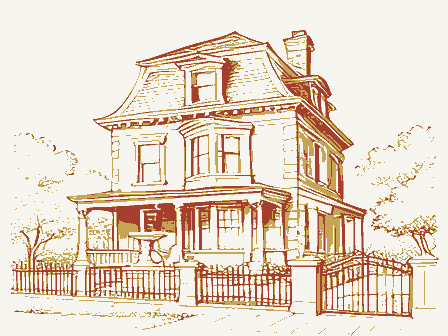
BY BOB WHITE "railroad" had the promising as "traction line," "highway," and "highway by-pass" have in 'Oxford, the "railroad fever" had begun in ine late 1840's, nearing "paper reality" in 1848, when Indiana incorpor- Company for construction of a to Hamilton, thus providing a link - or junction -- between Legislatureadded its approvalto was completed in 1858, opening for inspection on May 8, a day writing in his diary, called building had been constructed to the north.-Photo probably taken about 1880, after the Mansard roof Courtesy W. D. Meyer) another - Vanity Fair on the surrender to the ladies who Oxford; and Martin, who lives in Show."Tiffany wasuninterested moved to Oxford in 1865, and he the family home on Elm Street, anddisgusted, and he considered may have been employed at the prayers, scripture-reading, and the money expended for "a dead hymns. But the closing was brief.
In 1928, William Meyer bought operation of The Junction House The Miami Restaurant, located day" was June 4, 1859, with Meyer had attended the public Burkhardt building at Beech and school on Beech Street, got his High, and not long after, his son assume its present form. The old Hamilton to Oxford. then the doorway Junction House building. there Dayton and Cincinnati lines and nearly a thousand passengers horse." road from Rushville through had in the century following. Indianapolis and Chicago. On Iron Horse arrived. The big coming aboard two trains from Vanity Fair: nothing. Some are going after The George Meyer family over to his son William. Billy which John Josua H. Tiffany, ring of growth and sparked House in 1868.
those running from Rushville to Connersville and Oxford and on the Junction Railroad right-of- ated The Junction Railroad The above picture of The Junction House was first job at the College Avenue George Schatz and now lives in factory to the south on Elm St. road's coming,a frame depot a block anda half north of the old in the center section of the In 1892 George Meyer turned In anticipation of the rail- Under George Meyer's skilled Martin and wife Alma (Beckett, was added and before the frame bowling alley "This is a day of general TOYSI In the 1850's the seeing and to be seen of one Despite the pessimism, the Served Oxford For 37 Years community controversy much before buying The Junction intended railroad. Depot Big hands the building began to blacksmith shop or buggy corner.
William and Martin campus, where "a collation" vicinity of Central Avenue, near the present Capitol-Varsityplant In the time of speculation, W. he set up a brickyard. He took area, in addition to George and A. Irwin and Isaac Cooper handsome bar, with carved and over operation of the stock pens bought Inlot 206 across the street mirrored back, extending the and put in a telephone connection from the future depot, and here depth of the room. On the north they builta square two-story, red side, the storeroom which had Junction House. In 1898 he built a children: William Stephenson, seamed block tin roof. The first became a "dining room for north with an entrance on Collins Alex), and William D. "Bang" ladies" where wine was served, floor had a central entrance and hallway with a stairway leading since women were not allowed in Oxford's first bowling alleys.
great-great-grandchildren: Bill to the second floor, and there the bar. Finishing off the neat But the coming of prohibition, were large storerooms (one with together with the eventual the width of the building which a separate entrance) on either side of the first floor hall. A announced:JUNCTION HOUSE Grushas, both of Oxford and hostelry about 1905. He then went BY GEORGE MEYER. This caused local wits to make cracks into the livery business with Fred floor was the provision of five about going to "The Junction House, By George!" appointed Postmaster. A loyal Democrat, he served as Post- master for two terms, going out lacking, it is thought that Irwin of office about 1920.
and Cooper may have construc- University, but 'Bang' Meyer ted the building to serve as mess closing of the uptown Cone House proximity of the railroad, which since the Oxford portion of the mers" to town almost daily. An Oxford stockyard was located at McGonigle to Oxford, but also Avenue and the railroad, and pens for railroad shipment also In 1849, about the time that the where they enjoyed Walburger ed, 24-year-old George Meyer emigrated to the United States to "By George." The Meyers had an ice pond west of the railroad tracks in the vicinity of what is now Block M Apartments, and Hanover Township, which may ice and barrels of beer and havetaken its name from the Old whiskey were stored in the deep, World, since the community cool basement. The whiskey was Stahlheber, Vitzedom and Wass- erman.
Meyer worked for a time "Zinzinnati" (which had a married a German girl of 20 or so glass, came by wagon from the Soon after, they moved to Lick, near Germantown, a major Crawford, Walter Rogers and others in the early part of this century supplier who shipped as far east William B. were born. matching shutters. Meyer set up his blacksmith Cincinnati. Not only have Mrs. left his home in Germany and find work asa blacksmith.He named Walburger Eisenmann. The Junction House on South Elm St. was owned by William Marge Meyer Grushas (Mrs. patronized The Junction House, Although definite proof is near Kehr Road. shop.
It was in this Indiana more enterprising than his the triangle between College Junction Railroad was charter- the filling and trestle construc- Meyer's home-cooking and the Meyer, are three great-grand- married Edward Riggs), and liquid refreshment served up David Rohrer distillery on Mud and was rented out for storage or as a rooming house.A number of hall and sleeping quarters for caused Meyer to close the project included not only the men working on the railroad, dren Margaret Schatz and Bud closed when the Burkhardt Chestnut Street, and in the Walburger Meyer's grandchil- their forebearers with leader- notable feature of the second carried on family tradition of Still residing in the Oxford tion across Bull Run to the south, laying of ties and track from decline in rail transporation appearance was a painted sign building was sold in 1962.
Under Meyer's ownership, Martha Meyer and Miss Elaine farm men bringing hogs to the served as a grocery eventually Street and here he installed The Junction House prospered, sizeable Over the Rhine com- with tables and chairs and a brought salesmen or "drum- community that the Meyers' first went to Stillwell's Corner activities and interest in Miami brick building with a slanted Hugh in Oxford with the nostalgic- as blacksmith there, and in children George, Anna munity) he met and later (now McGonigle) in nearby the success due in part to the (Mansion House) and to the went to work as a carpenter for Philip D. Matson, Marshal, led the parade from the depot near gesting a third story, even old post office location at the though to this day it covers the original tin roof. Wooden father.
He acquired farm land 'Bud' Meyer sold the restaurant in 1946, Billy Meyer passed away Avenue railroad crossing to in 1950, and the ice cream store dent, the Rev. John W. Hall, and eachfurnishedand wall-papered William H. Miller, President of over the wood.
The south first frame building, 20'x99', to the Grushas and 'Bang' Meyer Nagel, and in 1912 he was and his wife, Mary Warwick Margaret Milders, of Hamilton, Meyer, also pay tribute to the family's long-time prominence Margaret, who married included such German family: supportedon woodencradles and names as Hummell, Lagetrost, the bartender would sometimes Krucker, Mehl, Mistler, Rader, accommodate those whose thirst exceeded their purse by sending them downstairs to "rock the cradle," preventing sedimenta- tion and encouraging "aging." Thewhiskey, servedfrom the tap from whichitwas poured into the Billingsville, where George families were housed there during the depression, when it became Francisco. In the famous Oxford quite run-down. Eric E.
Erickson bought the site about 25 years ago, The Junction House bar was the structure into four apartments and restoring the exterior to a neat ninth of ten local saloons to appearance reflecting nineteenth-century charm.Staff Photo partitions were constructed to the Junction company replied. Temperance Crusade of 1874, College Corner Pike. Lloyd and Hewitt, contractors. oriented Junction House on the William B. Meyer was even and upon his retirement spent almost four years remodeling the floor room served as a tavern, extending from the College create twelve sleeping rooms, in copper measuring vessels Spring Street to the Miami and they had three children: welcomed by Miami's Presi- as Boston and west to San 1dormer window openings sug- Stephenson and passed away in opened an ice cream shop in the was served. The group was between the yards and The
 Block
Block