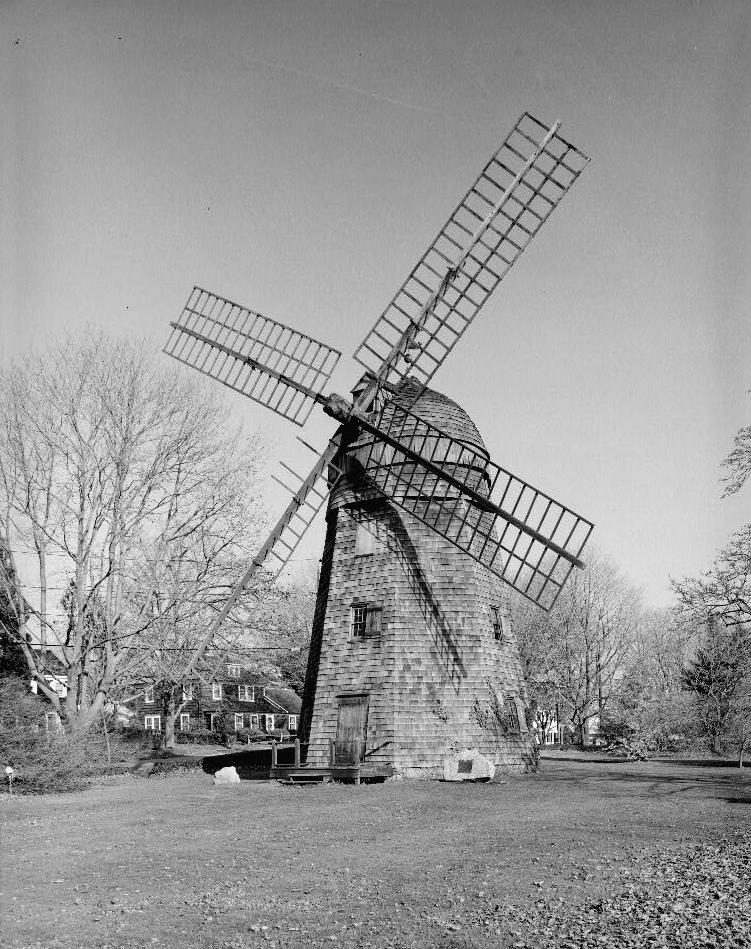
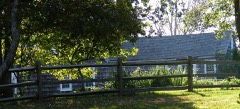
National Register reference number.78001918- the number the National Park Service assigned this property when it was listed, and the key its nomination file is catalogued under at the National Archives.
What happened here
An account from the chapter on Southampton town. The inset identifies its exact
source book and publication year.
Thomas Halsey, the first of this name, was one of the twenty original settlers whose names are affixed to the articles of agreement formed in Lynn. In 1637 he was a resident of Lynn, and in 1638 lie owned there 100 acres of land. His first wife, as before narrated, was murdered by two Indians. He married, as his second w Ann wid of Edward Johnes, March 1660.
Rev. James M. Huntting, of Jamaica, says, in reference to that revival in Mr. Babbit's day : "Fori some time previous to that revival an increased tenderness, fervor and interest in prayer, became manifest in the social meetings generally, but seemed to me most manifest in one attended Aveekly at Miss Harriet Foster's, on the road leading to Bridge Hampton and opposite where the Messrs. Elias and William Woolley then lived. I had for several years greatly desired to see a revival such as I had seen at East Hampton, and which left me, much to my sorrow, without hope and God in the world. Hence I visited all the prayer meetings I could. Others noticed it. On one evening, however, when I was not present at the meeting above alluded to, the joyful news was communicated that Capt. James Post and his wife were rejoicing in hope. The next morning a young friend of mine hastened to me to tell me the joyful news. The whole village soon was filled with deep solemnity and on the following Sabbath the sanctuary was unusually full, and the presence and power of the Holy Spirit were very manifest. The prayer meeting that evening was at Mrs. Huntting's, and so many came that the store and all the rooms adjoining were opened and filled with the solemn assemblage. Many not able to find seats, stood the whole evening - prominent among them, and near the front window, stood Capt. James Post. When the meeting closed nearly all remained and many approached him to hear him speak of Jesus. Meetings became very frequent at once, and very full at evening, and the church was opened and largely attended one afternoon and evening eacli week, when the neighboring ministers came to help Mr. Babbit, and elders and members from the neigliboring churches were often present, and took part in the prayer meetings - j^^^^^i^^^^nt among whom was Deacon Stephen Rose, of Bridgehampton. Conversions were constantly occurring among all classes, and the church, which I understood consisted of 70 members when the revival began, received an accession of about 45, among whom were nine husbands with their wives. Many of the most interesting youth of the i)lace had been gathered in Bible Classes, which the Pastor conducted so as greatly to increase tlie study of the Bible, and make the new members of the church able to give a scriptural and satisfactory reason of their christian hope. The Word of God was the chief theme of conversation in the youthful circles I visited, especially the lessons we recited from it weekly to the Pastor and Elders. Rev, Dr. McDowell's Question Book was used, and some of the class found out and interlined the answers with pen and ink, from the beginning to the end of that Question Book. The attachment of the new converts to each other and to Christ, made life pass so sweetly along, that deeji regret was often expressed when any of them had to leave tht^ place. And on my return to the place to teach school, after a year's absence to study in the Academy at East Hampton, I found that delightful christian grace ' Brotherly love ' delightfully prevalent. So it remained during the two and one-half years that I remained there in the school."
Rev'd Sylvanus White, second son of the Rev'd Ebenezer White of Bridgehampton, L(jng Island, was born in 1704 - went to Weymouth, Mass., in 1715 to attend a classical scliool. Entered Harvard College 1719, and graduated in 1723. Assumed the pastoral charge of the church at Southampton 1727, which he retained for nearly 55 years ; when after an illness of seven days he died October 22d, 1782.
Regional context, not property-specific
evidence. The
federal wildfire occurrence database
lists 82 fires within 5 miles of Beebe Windmill
between 2000 and 2019, burning about 33 acres in total. 4 started naturally. 8 were recorded as arson.
Distance is straight-line from the map coordinates, so a fire counted
here may appear on a neighbouring settlement's page as well.
Reported cause
Fires
Missing data/not specified/undetermined
54
Equipment and vehicle use
10
Arson/incendiarism
8
Natural
4
Debris and open burning
3
Power generation/transmission/distribution
2
Smoking
1
The most recent of
them, most recent first, with the day each was reported and the service
that recorded it.
Regional context, not property-specific
evidence. The federal mineral resources record lists
2 workings within 5 miles of Beebe Windmill: 1 past producer, 1 producer.
1 still produces. What was taken out: Sand and Gravel, Construction. Distance is straight-line from the
map coordinates, so a quarry counted here may appear on a neighbouring
settlement's page as well.
Regional context, not property-specific
evidence. The National Weather Service names
Bridgehampton, the town this property stands in, in 3 storm reports between 1995 and 2019: 2 thunderstorm wind, 1 flash flood.
No death or injury is recorded in these reports. Each account below is quoted exactly as the forecast office
filed it, from the NOAA Storm Events Database, and each date
opens the federal record of that event.
Thunderstorms moving across eastern Suffolk County generated winds sufficient to down numerous and large tree limbs. Some power lines were in turn brought down by the limbs.
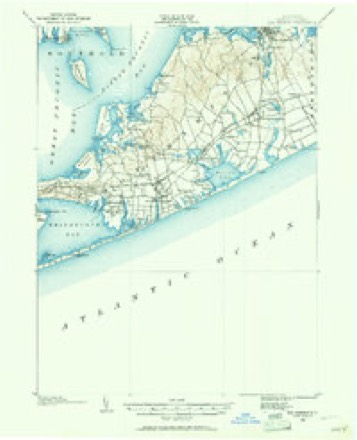
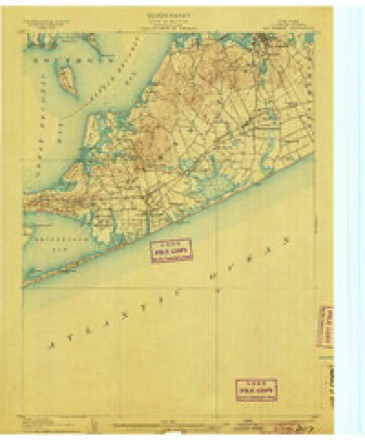
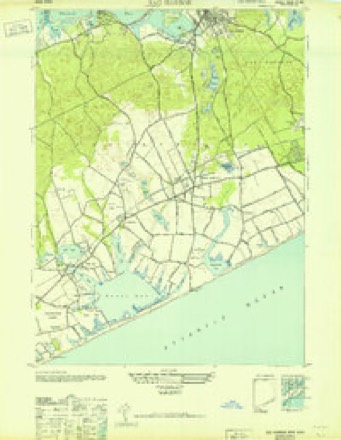
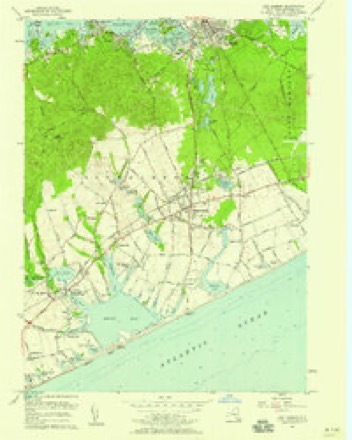
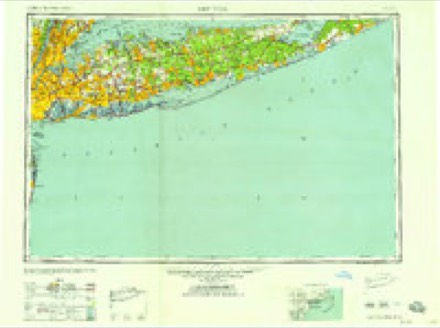
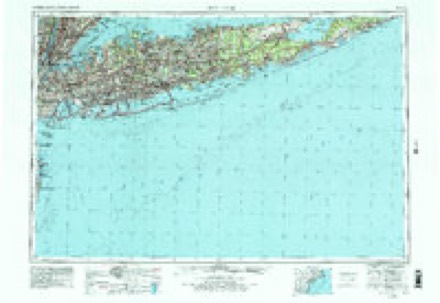
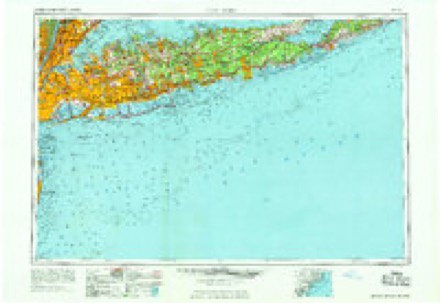
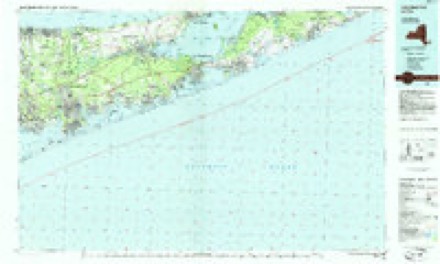
United States Geological Survey topographic sheets whose coverage includes this point. Matched by taking the coordinate the National Park Service records for this property, then testing that coordinate against the published boundary of every sheet.
Other National Register properties close
enough to walk or drive between, ordered by distance from this one. Both
positions come from the same geocoding pass that matched these properties
to their map sheets.
Listing record. National Park Service National Register of Historic Places, listed-properties dataset, current to 2026-05-22.
Map join. Address geocoded through the United States Census geocoder, then tested against the published boundary of every sheet in the USGS Historical Topographic Map Collection.
How this page is made. Listing fields come from federal records; map-sheet coverage is a labelled coordinate-to-boundary calculation, not a source-field claim.
Wildfire. Short, Karen C. 2022. Spatial wildfire occurrence data for the United States, 1992-2020 [FPA_FOD_20221014]. 6th Edition. Fort Collins, CO: Forest Service Research Data Archive. https://doi.org/10.2737/RDS-2013-0009.6 Collected with United States Government funding and usable without additional permissions or fees.
Mines and quarries. USGS Mineral Resources Data System (MRDS) https://mrdata.usgs.gov/mrds/ A work of the United States government, no copyright under 17 U.S.C. 105.
Storms. NOAA National Centers for Environmental Information, Storm Events Database https://www.ncei.noaa.gov/stormevents/ A work of the United States government, no copyright under 17 U.S.C. 105. Narratives are quoted verbatim from the National Weather Service report and are not edited or summarised.
 Block