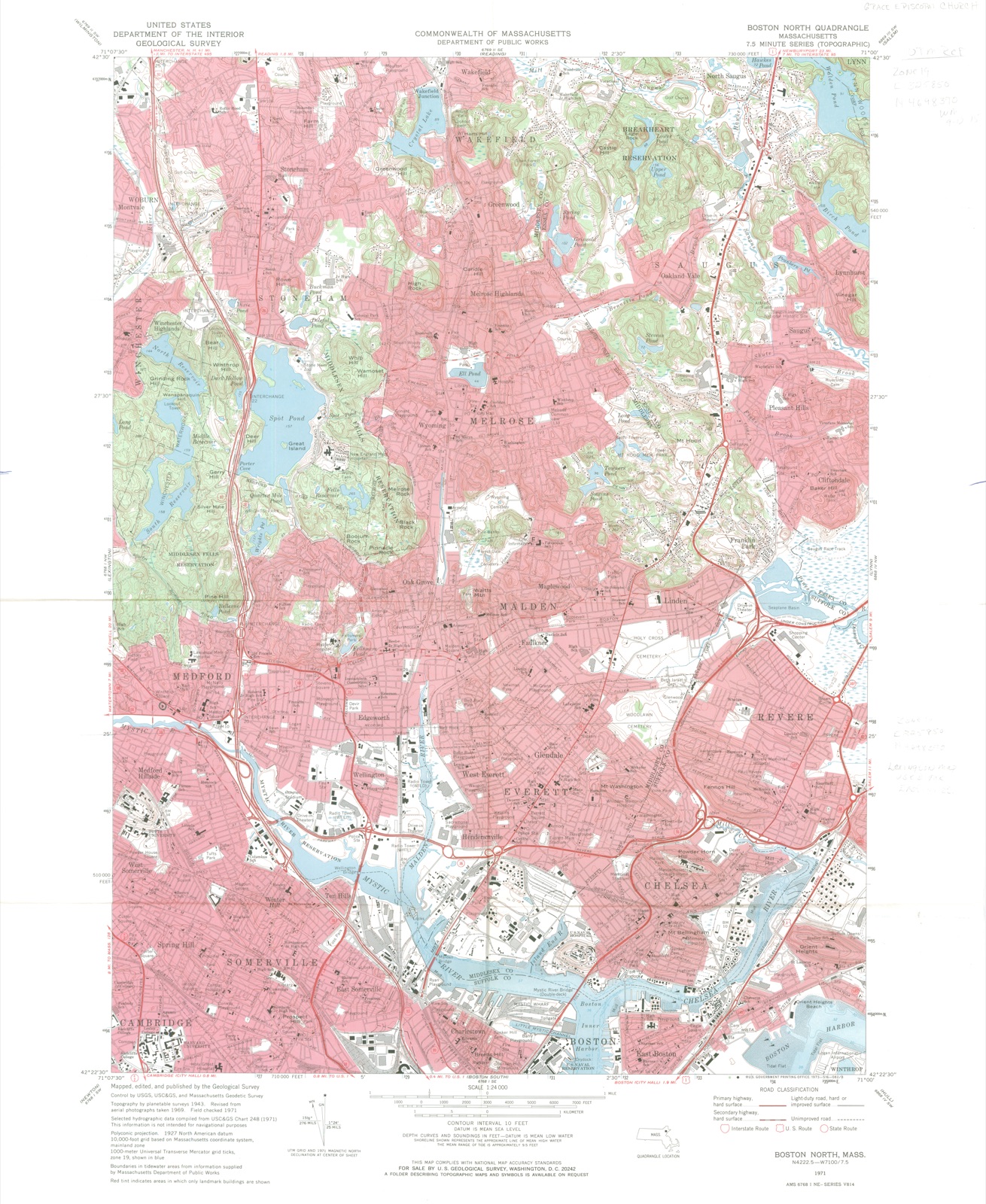
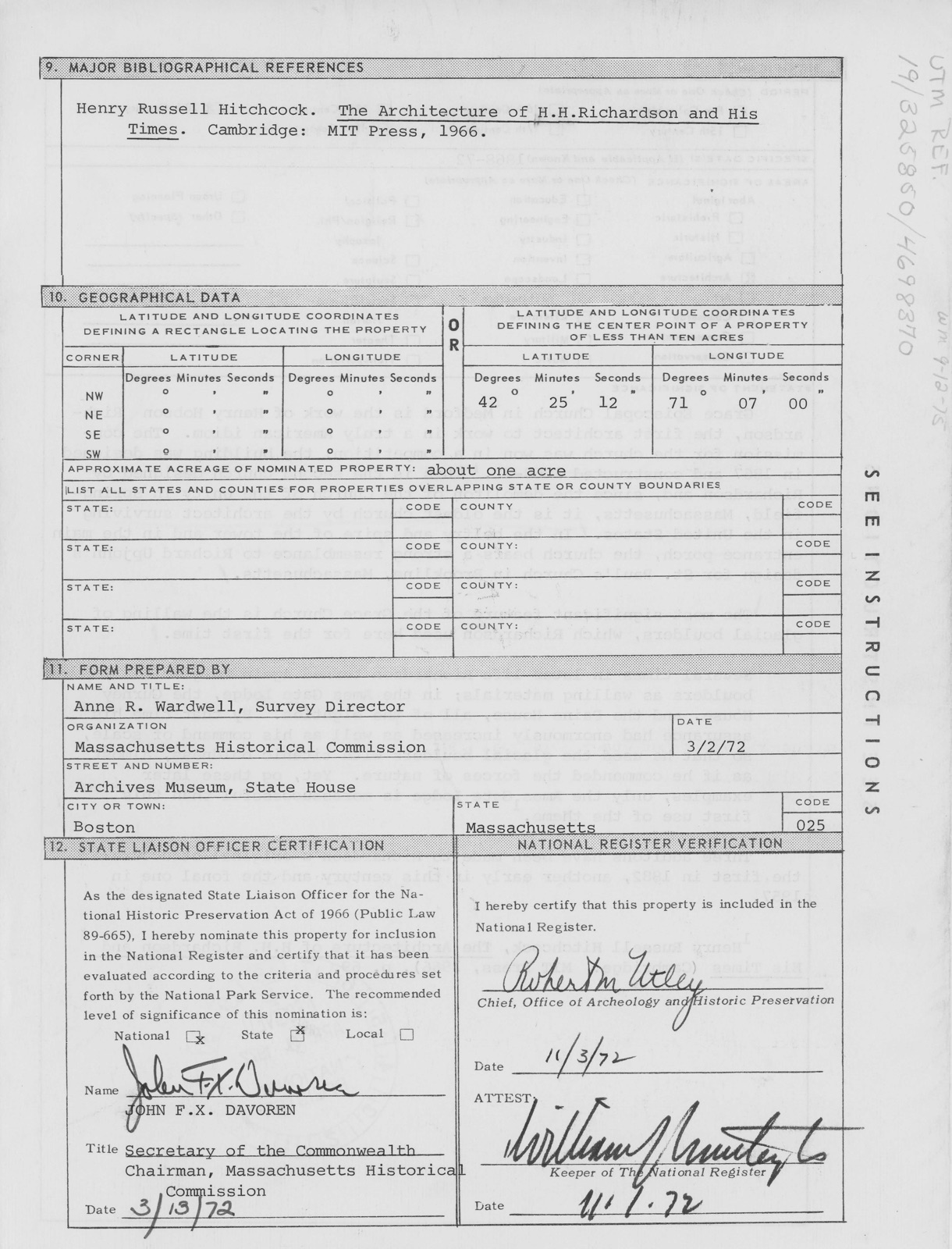
Photographs from the nomination case file, National Park Service records.
Grace Episcopal Church
Listed on the National Register of Historic Places in
1972. A historic map-sheet match is not published yet. The record needs a coordinate-quality review before it can be joined to a sheet boundary.
From the record
“Medford owes its first settlement to the influence of Governor Cradock and Governor Winthrop. The first gentleman was the richest individual attached to the New England Company; and he gave his money with the freedom of an enthusiast.”
History of the Town of Medford, Middlesex County, Massachusetts : from Its First Settlement, in 1630, to the Present Time, 1855 (1855). Machine-read text.
one of 1100 National Register listings in Middlesex County · listed in 1972 · category: Building · one of 3 National Historic Landmarks in Middlesex County.
National Register reference number.72000139- the number the National Park Service assigned this property when it was listed, and the key its nomination file is catalogued under at the National Archives.
In writing this History, it has been my -wish to secure Medford such territory in time as its acres are territory in space. The gathering of these annals has been too long delayed. Time, moth, and rust have done thenfatal work on many valuable materials ; and some gentlemen, who felt a deep interest in their native town, have died without leaving any manuscript testimonies. When the history of New England shall be written, the true data will be drawn from the records of its towns. Now, therefore, in humble imitation of those States in our Union which have contributed each its block of granite, marble, or copper to the National Monument at Washington, I ask leave to offer Medford's historical contribution to the undecaying pyramidic monument which justice and genius will hereafter raise to the character and institutions of New England.
The records of the first forty years are lost. I have reproduced them, as far as I could, from documents in the General Court relating to our earliest history ; from several monuments of the first settlers, which are yet standing among us ; from authentic traditions which were early recorded ; and from collateral histories of the neighboring towns. To find the lost, and remember the forgotten, seems to be the province of the local annalist. From the moment I reached the first town-records of Medford (1674), I implicitly followed those excellent guides. Where I could save space by abbreviations, without altering the sense, I have occasionally done so in my quotations, and have used our modern orthography. The spirit of antiquarian research, now beginning to show itself, will lead to the discovery of many facts concerning the early history of Medford which are beyond my reach. These may soon render necessary a new history of the town ; and I hope it may be undertaken by a person whose ability and leisure will enable him to do far greater justice to the subject than has been within my power.
Regional context, not property-specific
evidence. The
federal wildfire occurrence database
lists 78 fires within 5 miles of Grace Episcopal Church between
2015 and 2020, burning about 101 acres in total. None started naturally. 28 were recorded as arson.
Distance is straight-line from the map coordinates, so a fire counted
here may appear on a neighbouring settlement's page as well.
Reported cause
Fires
Arson/incendiarism
28
Missing data/not specified/undetermined
22
Debris and open burning
13
Recreation and ceremony
9
Smoking
3
Misuse of fire by a minor
2
Equipment and vehicle use
1
The most recent of
them, most recent first, with the day each was reported and the service
that recorded it.
Regional context, not property-specific
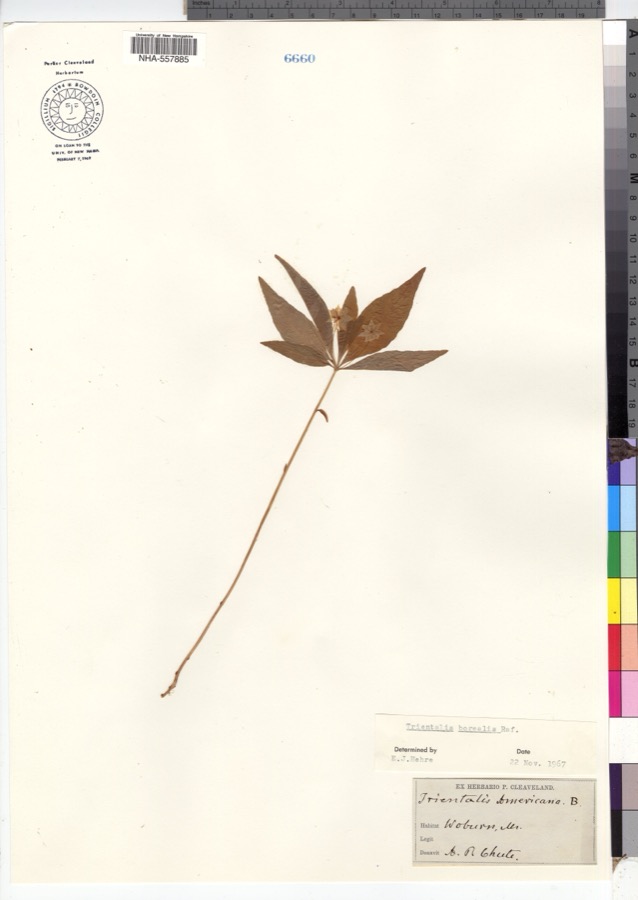
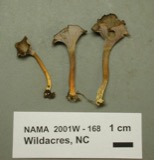
evidence. Museums hold 1,805 specimens
collected within 10 miles of Grace Episcopal Church between 1898 and
1975: 800 Animalia, 553 Plantae, 386 Fungi, 28 Protozoa, 17 Bacteria, 12 Chromista, 9 Unrecorded. 12 distinct Species records are shown.
Collected by ?, A B Seymour, A B. Proper and others. Each is a
physical object with a catalogue
number, and each entry opens the museum's record. This is what was
collected and kept, not a survey of what lives here - nothing can be
concluded from a species being absent.
Regional context, not property-specific
evidence. The federal mineral resources record lists
13 workings within 5 miles of Grace Episcopal Church: 7 plants, 4 past producers, 2 producers.
9 still produce. What was taken out: Iron, Lead, Stone, Crushed/Broken, Gypsum-Anhydrite. Distance is straight-line from the
map coordinates, so a quarry counted here may appear on a neighbouring
settlement's page as well.
Regional context, not property-specific
evidence. The National Weather Service names
Medford, the town this property stands in, in 20 storm reports between 1994 and 2025: 14 thunderstorm wind, 3 flood, 1 flash flood, 1 hail.
No death or injury is recorded in these reports. Each account below is quoted exactly as the forecast office
filed it, from the NOAA Storm Events Database, and each date
opens the federal record of that event.
Trees were downed on Corey Street and Riverside Avenue. A telephone pole was downed onto Massachusetts Avenue and wires on Lawrence Street were downed, all by thunderstorm winds.
At 12:52 AM EST, a large tree was down on a car and laying across Auburn Street in Medford. At the same time, a tree was reported down on Summer Street and a large tree was down on George Street.
In Winchester, a large tree was down on a house, which took the chimney off the house on Alden Lane. A tree was down on Cambridge Street by the boat club. A tree was down on wires on wires on the 30 block of Allen Road. Trees and wires were down on Ledyard Road. A tree was down on the 70 block of Lawson Road.
In Medford, multiple trees were reported downed. In Somerville, a tree was down on a house on Vernon Street and a large branch was down on power lines on Walker Street.
No historic map-sheet match is published
for this property yet. That does not mean no map exists. This record needs
a coordinate-quality review before it can be joined to a sheet boundary.
Browse the county's mapped places while that work is
pending.
From the nomination file
3,323 words on record
When this property was proposed for the
National Register, someone wrote the case for it: what the building is,
and why it matters. That document is a federal record in the public domain.
It is quoted below word for word, never summarised. The text was read off the scanned case file by machine, so the
occasional stray character is the recogniser's and the 1970s
typewriter's.
Description of the property
Moved - Unexposed (Check One) & Origiral Site Grace Episcopal Church, designed in 1867, was one of H.H. Richardson's earliest works. The church is located at 160 Highland Street in West Med- ford. Of all Richardson's churches, Grace Episcopal has the simplest plan. It consists of a nave, a low polygonal chancel and a tall bell tower. The east-west nave is covered by a steeply pitched ridge roof. The gray slate covering it is broken by three horizontal bands of red slate running the full length of the roof. In describing Richardson's choice of materials, Professor Henry Russell Hitchcock comments: The most characteristic thing is the walling of glacial boul- ders, suggested by Mrs. Brooks, one of the donors, who had used them for her barn.
But Richardson would hardly have accepted the sug- gestion and profited from it had he not had a personal taste for for the strong, the simple and the rough. | The trim is of quarry- surfaced cut granite, heavy and massive enough to preserve the scale of the boulder walls and to frame solidly their rather shapeless patterns. un Z The west facade of the rectangular nave is the simplest in fenestration and detail. The motif of the gothic arch over the center door here is re- peated in the larger gothic arch that frames the rose window set in the gable. This larger arch is made of cut granite set into the wall of glacial boulders around the rose window. A granite string course which crosses the facade at at eave level completes the frame below the window.
Another string course continues around the entire building forming the sill under all the first storey windows.
Grace Episcopal Church in Medford is the work of Henry Hobson Rich- ardson, the first architect to work in a truly American idiom. The com- mission for the church was won in a competition; the building was designed in 1867 and constructed 1868-72.' This is the second church designed by Richardson and, since the demoliton of the Church of the Unity in Spring- field, Massachusetts, it is the oldest church by the architect surviving in the United states. I In the belfry and spire of the tower and in the main entrance porch, the church bears a strong resemblance to Richard Upjohn's design for St. Paul's Church in Brookline, Massachusetts. / The most significant feature of the Grace Church is the walling of glacial boulders, which Richardson used here for the first time.
1 Several times in later life Richardson turned again to glacial boulders as walling materials; in the Ames Gate Lodge, the Gurney House, and the Paine House, all of the eighties. By that time his assurance had enormously increased as well as his command of scale, so that he used the glacial boülders with titanic boldness, almost as if he commanded the forces of nature. Yet, og these later examples, only the Ames, Gate Lodge is more successful than this first use of the theme. Three additons have been made to Richardson's original structure: the first in 1882, another early in this century and the fonal one in 1957. 'Henry Russe11 Hitchcock, The Architecture of H.H. Richardson and His Times (Cambridge: MIT Press, 1966),p. 69.1 10 APR RECEIVED 3 1972 NATIONAL REGISTER TTIL
Quoted from the National Register nomination
for reference 72000139, 15 pages, held by the National Archives in Record
Group 79. See the
catalogue record.
Listed places nearby
6 within 8 miles
Other National Register properties close
enough to walk or drive between, ordered by distance from this one. Both
positions come from the same geocoding pass that matched these properties
to their map sheets.
Listing record. National Park Service National Register of Historic Places, listed-properties dataset, current to 2026-05-22.
Map join. Address geocoded through the United States Census geocoder, then tested against the published boundary of every sheet in the USGS Historical Topographic Map Collection.
How this page is made. Listing fields come from federal records; map-sheet coverage is a labelled coordinate-to-boundary calculation, not a source-field claim.
Wildfire. Short, Karen C. 2022. Spatial wildfire occurrence data for the United States, 1992-2020 [FPA_FOD_20221014]. 6th Edition. Fort Collins, CO: Forest Service Research Data Archive. https://doi.org/10.2737/RDS-2013-0009.6 Collected with United States Government funding and usable without additional permissions or fees.
Specimens. Global Biodiversity Information Facility (GBIF), https://www.gbif.org/. Only records licensed CC0 or CC BY are used. Records licensed CC BY-NC are excluded because this site carries advertising. Images are checked individually and any whose licence is non-commercial, no-derivatives or unreadable is refused.
Mines and quarries. USGS Mineral Resources Data System (MRDS) https://mrdata.usgs.gov/mrds/ A work of the United States government, no copyright under 17 U.S.C. 105.
Storms. NOAA National Centers for Environmental Information, Storm Events Database https://www.ncei.noaa.gov/stormevents/ A work of the United States government, no copyright under 17 U.S.C. 105. Narratives are quoted verbatim from the National Weather Service report and are not edited or summarised.
 Block
Block