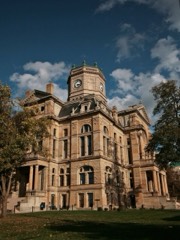
Listed on the National Register of Historic Places in
1973. A historic map-sheet match is not published yet. The record needs a coordinate-quality review before it can be joined to a sheet boundary.
From the record
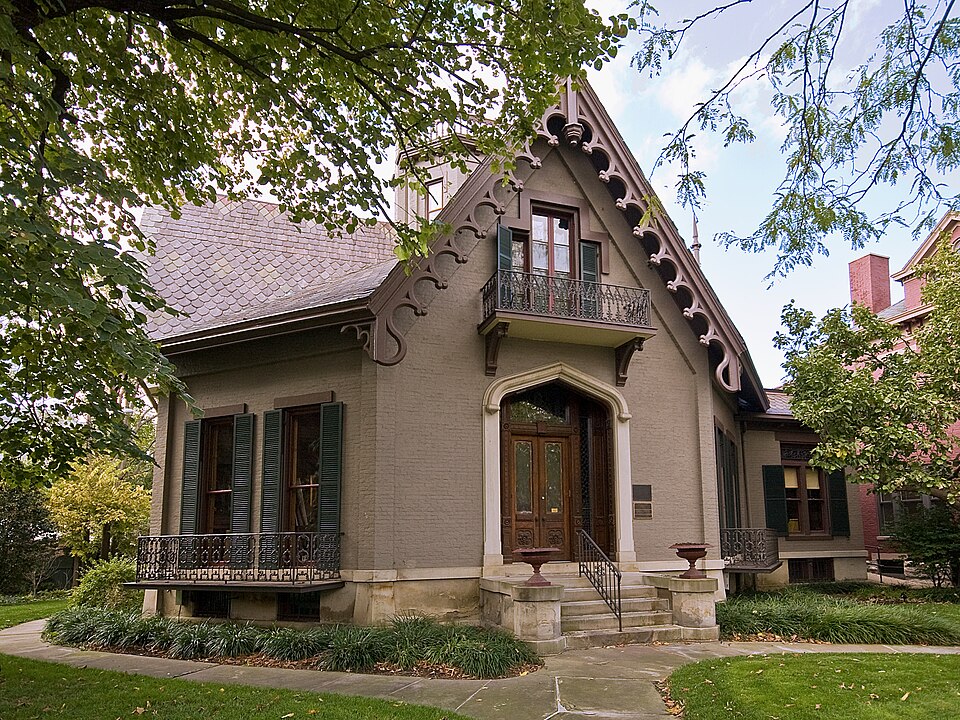
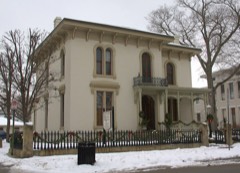
“The Lane-Hooven House is a historic house museum in Hamilton, Ohio. Built in 1863 for Clark Lane, a Hamilton industrialist and philanthropist, the octagonal house features a brick exterior with Gothic Tudor elements.”
Wikipedia article Lane-Hooven House, CC BY-SA 4.0.
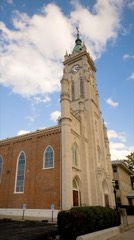
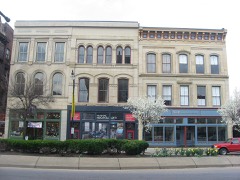
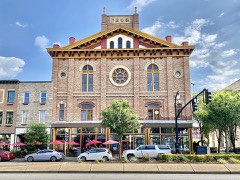
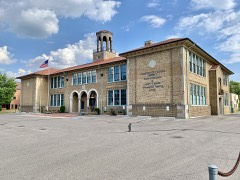
one of 63 National Register listings in Butler County · listed in 1973 · category: Building · one of 3 National Historic Landmarks in Butler County.
National Register reference number.73001389- the number the National Park Service assigned this property when it was listed, and the key its nomination file is catalogued under at the National Archives.
William Carry, the only lawyer in the place, kept his office in the same building with the clerk of the court. Several other lawyers, however, regularly attended the courts at Hamilton. At that time, nearly all that part of Hamilton lying east of Front Street was an impenetrable thicket, covered with small, scrubby oaks, blackjacks, vines, and hazel bushes. True, paths and roads were in some places cut through them, to admit a free passage, but, aside from these, underbrush was so thick that it was only in some places a person could make his way through them, or see a rabbit at the distance of a few paces. This was then the case from Sutherland's Corner to the Hamilton Hotel, and eastwardly to where the canal now is, and southwardly as far as the town lots extend.
At that time it was common to meet with Indians in the streets of Hamilton almost every day, who came to trade their furs and peltries with the storekeepers. In 1808 a band of seventy or eighty Indians encamped in the lower part of Rossville, and remained more than a week. When they got liquor they frequently became intoxicated, and were then, very troublesome. One night, when a number of them were intoxicated, Mr. McBride took a seat on the bank of the river, concealed from their view, and remained a considerable time, watching the squaws taking the drunken Indians across the river, at the ford opposite the lower part of the town, to their camp, on the other side of the river. Two squaws would take hold of an Indian, one on each side, and conduct him across the stream, singing a slow, monotonous song as they waded through the water.
Regional context, not property-specific
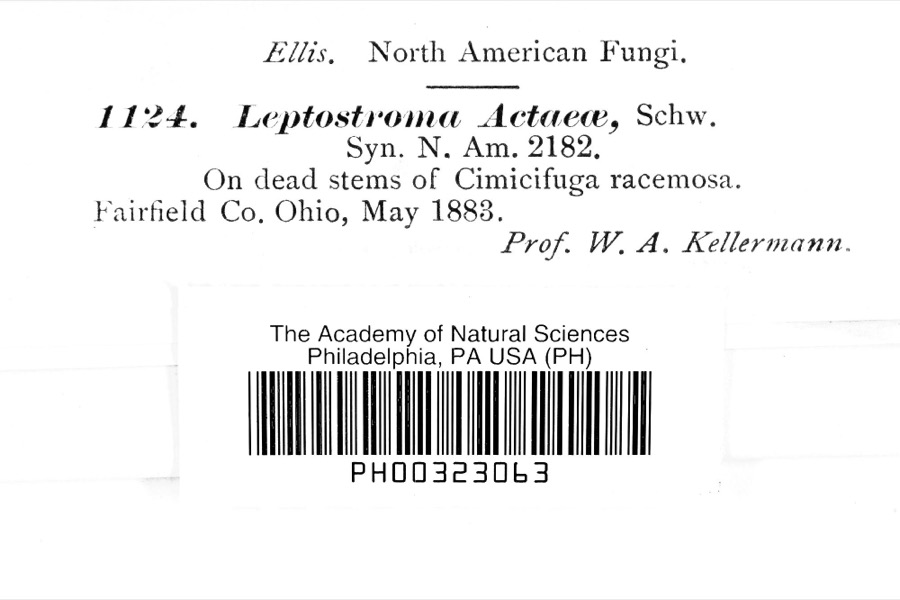
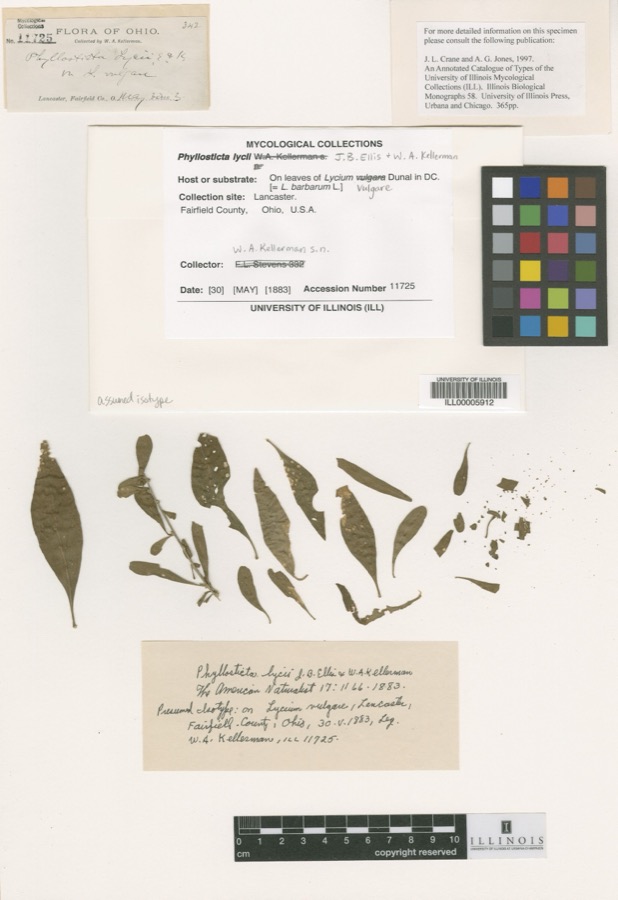
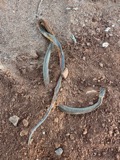
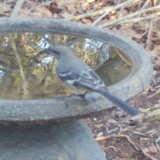
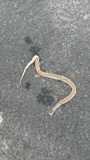
evidence. Museums hold 467 specimens
collected within 10 miles of Lane-Hooven House between 1835 and
1975: 404 Animalia, 47 Plantae, 13 Fungi, 2 Protozoa, 1 Unrecorded. 12 distinct Species records are shown.
Collected by A. R. Gaufin, A.R. Gaufin, H.H. Ross, Arden R. Gaufin and others. Each is a
physical object with a catalogue
number, and each entry opens the museum's record. This is what was
collected and kept, not a survey of what lives here - nothing can be
concluded from a species being absent.
Regional context, not property-specific
evidence. The federal mineral resources record lists
9 workings within 5 miles of Lane-Hooven House: 3 producers, 3 past producers, 2 unknowns, 1 plant.
4 still produce. What was taken out: Sand and Gravel, Construction, Iron. Distance is straight-line from the
map coordinates, so a quarry counted here may appear on a neighbouring
settlement's page as well.
Regional context, not property-specific
evidence. The National Weather Service names
Hamilton, the town this property stands in, in 63 storm reports between 1995 and 2022: 26 thunderstorm wind, 23 hail, 13 flash flood, 1 flood.
The reports record 2 injuries. Each account below is quoted exactly as the forecast office
filed it, from the NOAA Storm Events Database, and each date
opens the federal record of that event.
Street flooding occurred along Western Avenue and several other roadways in the Highland Park neighborhood of Hamilton. Water was as deep as 3 feet in some locations.
Hundreds of trees and some power lines were downed. Some of the trees fell across State Route 4, to the southeast of Hamilton. Power was out to around 30,000 customers shortly after the storm.
Flash flooding, several feet deep, occurred at several intersections in Hamilton, including Main St. and Lawn St., Franklin St. and Edgewood St., and Eaton St. and Rhea St.
1 paper published in this town,
digitised by the Library of Congress and free to read: 0 issues,
0 pages. Every page is searchable, so a name or a street can be
looked for directly in what the town printed about itself at the time.
No historic map-sheet match is published
for this property yet. That does not mean no map exists. This record needs
a coordinate-quality review before it can be joined to a sheet boundary.
Browse the county's mapped places while that work is
pending.
From the nomination file
1,767 words on record
When this property was proposed for the
National Register, someone wrote the case for it: what the building is,
and why it matters. That document is a federal record in the public domain.
It is quoted below word for word, never summarised. The text was read off the scanned case file by machine, so the
occasional stray character is the recogniser's and the 1970s
typewriter's.
Description of the property
structure on a raised foundation with stone water table in the Octagon the bargeboards terminate inan elaborate S curve. paired windows, and in the gable there is a semi-circular wrought iron CONDITION windows. carved open-work cornice above the entrance. Fair ing double doors. windows have stone label moulding. Above the entry is a wrought iron and wood balcony supported by carved are two rooms with fireplaces similar to the one in the dining room.
fluted pilasters and plain frieze.To the left of the entrance hall The eclectic detailing of the house is primarily Gothic Revival in char The parlor mantel is carved wood with a rectangular opening and finely north and south walls.To the southwest and northwest are two further boards.There is an eight-sided pendant at the peak of the gable and Mode.The roof is imbricated pattern slate with four gables at right elliptical window over the front gable and narrow 4/4 windows on alter- are paired 1/1 windows with a single stained glass transom over both Dn the rear facade, an elaborate two sectional one story ext- has a hipped slate roof with bracketed cornice.On the east wall there wall of this room to the one room addition which has a simple fireplace to the kitchen in the rear.To the right of the entrance is the parlor (Check One) On the south side there are also nating sides.
The tower has a flat roof with a bracketed cornice. The double door main entrance, above a short flight of steps, is recess- east facades of the first floor have a small foliated wrought iron and flat roofed octagonal extensions.
iron work for the McGuire, Kline and Ervine Paper Mill and the Beckett Vermont of Scotch ancestry and came to Ohio in 1837.He was a trained engineer and came to Hamilton in 1846 to build several flour mills and Bank and served until 187o when he retired to a farm east of the city. in in 1880 the and the.city by Lane in 1867.and is still in use. PERIOD (Check One or More as Appropriate) The house was originally built for Clark Lane in 1863. He was a mem- In 1875 John L. Martin (1814-1882) bought the house. He was born in County, Ohio. In 1864 John P. and his sons moved to Hamilton from direct successor to the company originally founded by Clark Lane. The his residence, was also built in the Octagon mode.
It was donated to of Public llorks from 1858 to 1862. Martin also served as Internal John P.
Hooven and Mary Baughman Hooven were originally from Pennsy1- business successes.They introduced to the Southern states the thresh- the iron and stone cells in the Butler County Jail.They also made the to supervise lock and dam construction.He served on the State Board Monarch and Eclipse Machine lorks) was formed.This company was the and Bigdon Mill.The Lane Company was prosperous and had many early grain in one operation.About 1856 they first manufactured for prac- pany became known as the John C.Hooven Company.The business was sold From 1911until 1948 the house was owned by the John C.Hooven family AREAS OF SIGNIFICANCE (Check One or More as Appropriate) Western Biographical Publishing Company, Cincinnati, 1882.
Quoted from the National Register nomination
for reference 73001389, 15 pages, held by the National Archives in Record
Group 79. See the
catalogue record.
Listed places nearby
6 within 8 miles
Other National Register properties close
enough to walk or drive between, ordered by distance from this one. Both
positions come from the same geocoding pass that matched these properties
to their map sheets.
Listing record. National Park Service National Register of Historic Places, listed-properties dataset, current to 2026-05-22.
Map join. Address geocoded through the United States Census geocoder, then tested against the published boundary of every sheet in the USGS Historical Topographic Map Collection.
How this page is made. Listing fields come from federal records; map-sheet coverage is a labelled coordinate-to-boundary calculation, not a source-field claim.
Specimens. Global Biodiversity Information Facility (GBIF), https://www.gbif.org/. Only records licensed CC0 or CC BY are used. Records licensed CC BY-NC are excluded because this site carries advertising. Images are checked individually and any whose licence is non-commercial, no-derivatives or unreadable is refused.
Mines and quarries. USGS Mineral Resources Data System (MRDS) https://mrdata.usgs.gov/mrds/ A work of the United States government, no copyright under 17 U.S.C. 105.
Storms. NOAA National Centers for Environmental Information, Storm Events Database https://www.ncei.noaa.gov/stormevents/ A work of the United States government, no copyright under 17 U.S.C. 105. Narratives are quoted verbatim from the National Weather Service report and are not edited or summarised.
 Block
Block