Listed on the National Register of Historic Places in
1976. A historic map-sheet match is not published yet. The record needs a coordinate-quality review before it can be joined to a sheet boundary.
From the record
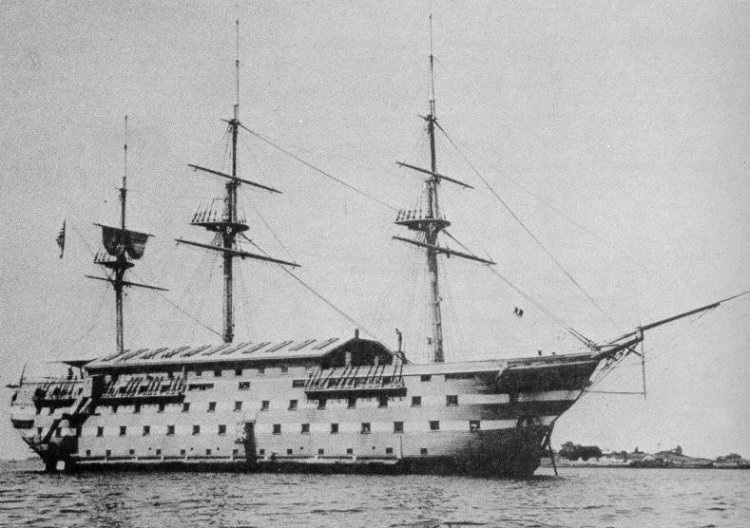
“USS New Hampshire was a 2,633-ton ship originally designed to be the 74-gun ship of the line Alabama, but after being laid down in June 1819, she remained on the stocks for nearly 40 years, well into the age of steam. Renamed as New Hampshire, she was launched as a storeship and depot ship for use during the American Civil War.”
Wikipedia article USS New Hampshire (1864), CC BY-SA 4.0.
one of 350 National Register listings in Essex County · listed in 1976 · category: Site · one of 2 National Historic Landmarks in Essex County.
National Register reference number.76000261- the number the National Park Service assigned this property when it was listed, and the key its nomination file is catalogued under at the National Archives.
Fires near this property
18 since 2015
Regional context, not property-specific
evidence. The
federal wildfire occurrence database
lists 18 fires within 5 miles of New Hampshire, The between
2015 and 2020, burning about 15 acres in total. None started naturally. 3 were recorded as arson.
Distance is straight-line from the map coordinates, so a fire counted
here may appear on a neighbouring settlement's page as well.
Reported cause
Fires
Debris and open burning
5
Recreation and ceremony
4
Smoking
4
Arson/incendiarism
3
Equipment and vehicle use
1
Missing data/not specified/undetermined
1
The most recent of
them, most recent first, with the day each was reported and the service
that recorded it.
Regional context, not property-specific
evidence. Museums hold 7,347 specimens
collected within 10 miles of New Hampshire, The between 1817 and
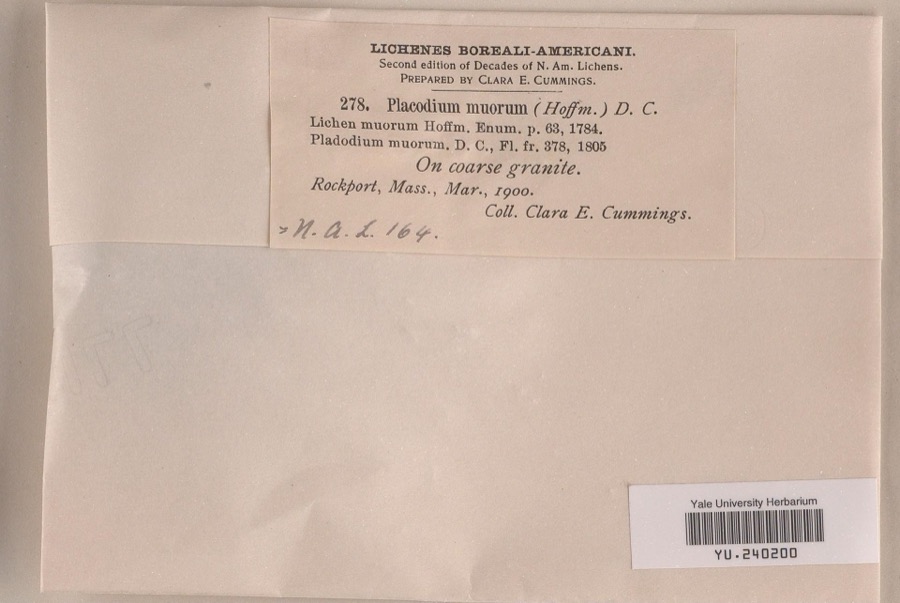
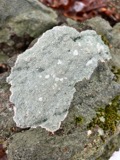
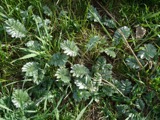
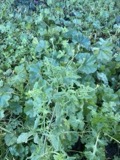
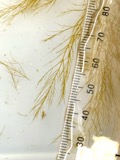
1975: 2,678 Animalia, 2,316 Plantae, 1,288 Fungi, 468 Chromista, 440 Unrecorded, 95 Protozoa, 62 Bacteria. 12 distinct Species records are shown.
Collected by A H HIGGINSON, A Perlmutter, A. A. Eaton and others. Each is a
physical object with a catalogue
number, and each entry opens the museum's record. This is what was
collected and kept, not a survey of what lives here - nothing can be
concluded from a species being absent.
Regional context, not property-specific
evidence. The federal mineral resources record lists
3 workings within 5 miles of New Hampshire, The: 2 producers, 1 past producer.
2 still produce. What was taken out: Stone, Crushed/Broken, Sand and Gravel, Construction. Distance is straight-line from the
map coordinates, so a quarry counted here may appear on a neighbouring
settlement's page as well.
No historic map-sheet match is published
for this property yet. That does not mean no map exists. This record needs
a coordinate-quality review before it can be joined to a sheet boundary.
Browse the county's mapped places while that work is
pending.
From the nomination file
2,674 words on record
When this property was proposed for the
National Register, someone wrote the case for it: what the building is,
and why it matters. That document is a federal record in the public domain.
It is quoted below word for word, never summarised. The text was read off the scanned case file by machine, so the
occasional stray character is the recogniser's and the 1970s
typewriter's.
Description of the property
The site of the wreck of the New Hampshire is located on the ocean side of Graves Island which is just off the coast of Manchester, Massachusetts. The wreckage lies on a sandy bottom in about thirty-five feet of water at its deepest. The New Hampshire was one of nine ships to rate not less than 74 gins each as authorized by Congress in 1816. Her keel was laid in the Portsmouth Navy Yard, New Hampshire, in 1819, and she is said to have been designed by William Doughty of Philadelphia. She was first named the Alabama in honor of that state's entry into the Union. The New Hampshire (a name she received on October 28, 1863, and by which she is most com- monly known) was a square rigged, three masted ship-of-the-line.
She measured 196 feet 3 inches by 53 feet, weighed 2,633 pounds, and had a draft of 25 feet 6 inches. The New Hampshire had 74 guns and was capable of carrying a crew of 820. On May 23, 1921 the New Hampshire caught fire and sank at her pier in the Hudson River. Her hal1 was sold on Aúgust 19, 1921 to the Mulholland Machinery Corporation, and she was refloated in July 1922 and taken in tow to the Bay of Fundy. On the way the towline parted and she again caught fire and sank. Today the New Hampshire lies underwater in various pieces. About six of her ribs protrude from the sandy bottom where the greater part of her wooden structure is found.
The copper and brass fittings and rolled copper sheathing are said to have been forged in Paul hogpenteh part of revere's foundry, and are still present throughout the remains of the wreckage.
Statement of significance
/ARCHITECT attributed to William Doughty The New Hampshire is significant as one of the last wooden battle ships to be constructed before the development of steam and speed. The wreckage is significant in Massachusetts because it is one of the few visible in New England waters. At the end of the War of 1812, most of the American Navy's warships were well worn out and beyond repair. The increased activity of piracy in the Caribbean and other develop- ments called for the building of a new efficient Navy. The American Navy had no so-called "ships-of-the-line" until after the War of 1812. A ship-of-the-line may be defined as a "ship of war large enough to have a place in the line of battle," or more precisely as a ship which carried from 70 to 140 guns on two or more armmred decks.
The ship of the battleline was the backbone of battle fleets and could hit the hardest blows and take the most punishment in conflict. The New Hampshire was one of nine of these ships to rate not less than 74 guns each authorized by Congress in April 1816. Three years later she was built in the Portsmouth Navy Yard in New Hampshire. Her design is said to have been by William Doughty of Phi- ladelphia who was the principal advisor in ship design and construction for the Board of Navy Commissioners. At the time of her construction in 1819, she was named the Ala- bama since it was the year that state was admitted to the Union. Even though ready for launch by 1825, there was no immediate need for the Alabama and she remained on the stocks for preservation until the Civil War.
As a battleship she was out- dated before she saw battle.
Quoted from the National Register nomination
for reference 76000261, 13 pages, held by the National Archives in Record
Group 79. See the
catalogue record.
Listed places nearby
6 within 8 miles
Other National Register properties close
enough to walk or drive between, ordered by distance from this one. Both
positions come from the same geocoding pass that matched these properties
to their map sheets.
Listing record. National Park Service National Register of Historic Places, listed-properties dataset, current to 2026-05-22.
Map join. Address geocoded through the United States Census geocoder, then tested against the published boundary of every sheet in the USGS Historical Topographic Map Collection.
How this page is made. Listing fields come from federal records; map-sheet coverage is a labelled coordinate-to-boundary calculation, not a source-field claim.
Wildfire. Short, Karen C. 2022. Spatial wildfire occurrence data for the United States, 1992-2020 [FPA_FOD_20221014]. 6th Edition. Fort Collins, CO: Forest Service Research Data Archive. https://doi.org/10.2737/RDS-2013-0009.6 Collected with United States Government funding and usable without additional permissions or fees.
Specimens. Global Biodiversity Information Facility (GBIF), https://www.gbif.org/. Only records licensed CC0 or CC BY are used. Records licensed CC BY-NC are excluded because this site carries advertising. Images are checked individually and any whose licence is non-commercial, no-derivatives or unreadable is refused.
Mines and quarries. USGS Mineral Resources Data System (MRDS) https://mrdata.usgs.gov/mrds/ A work of the United States government, no copyright under 17 U.S.C. 105.
 Block
Block