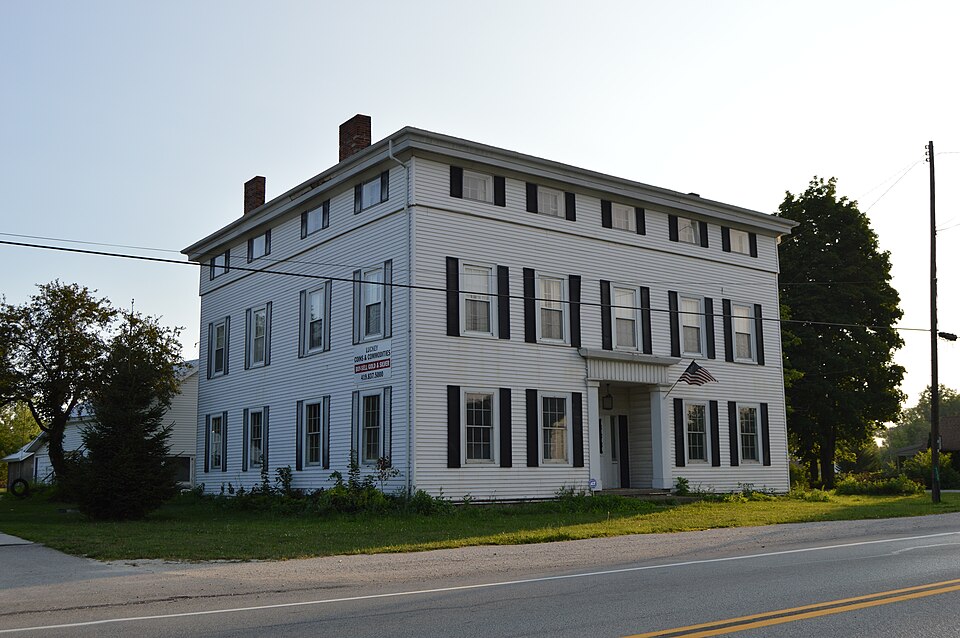
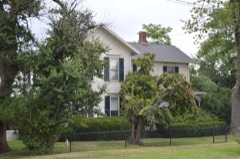
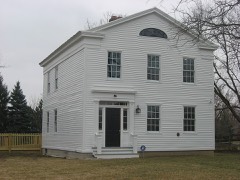
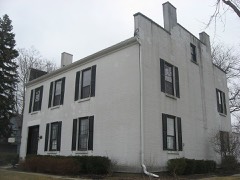
Built in 1849 in the Greek Revival architecture. Listed on the National Register of Historic Places in
1978. A historic map-sheet match is not published yet. The record needs a coordinate-quality review before it can be joined to a sheet boundary.
From the record
one of 21 National Register listings in Wood County · listed in 1978 · category: Building · built in 1849, Greek Revival architecture · one of 1 National Historic Landmarks in Wood County.
National Register reference number.78002216- the number the National Park Service assigned this property when it was listed, and the key its nomination file is catalogued under at the National Archives.
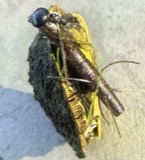
Specimens collected near this property
12 of 350 shown
Regional context, not property-specific
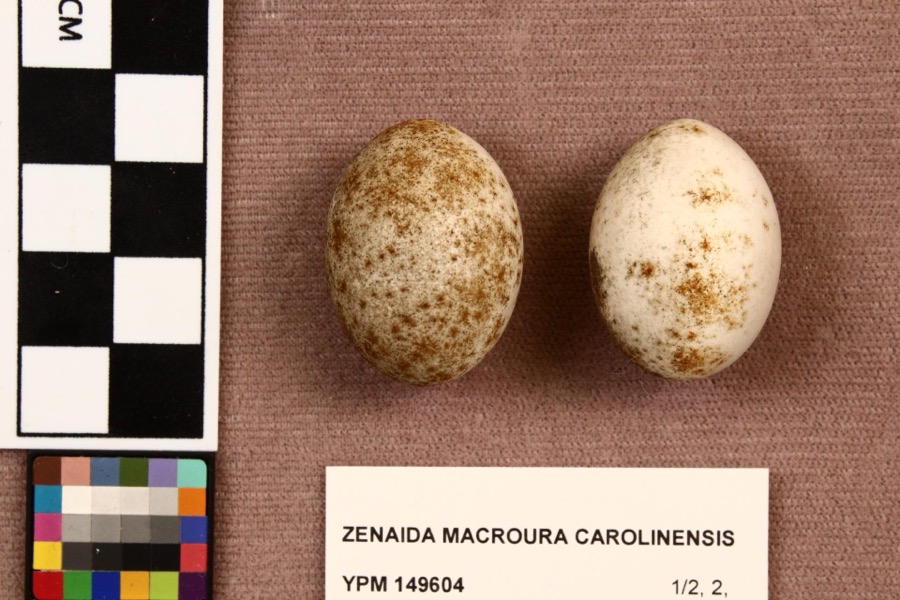
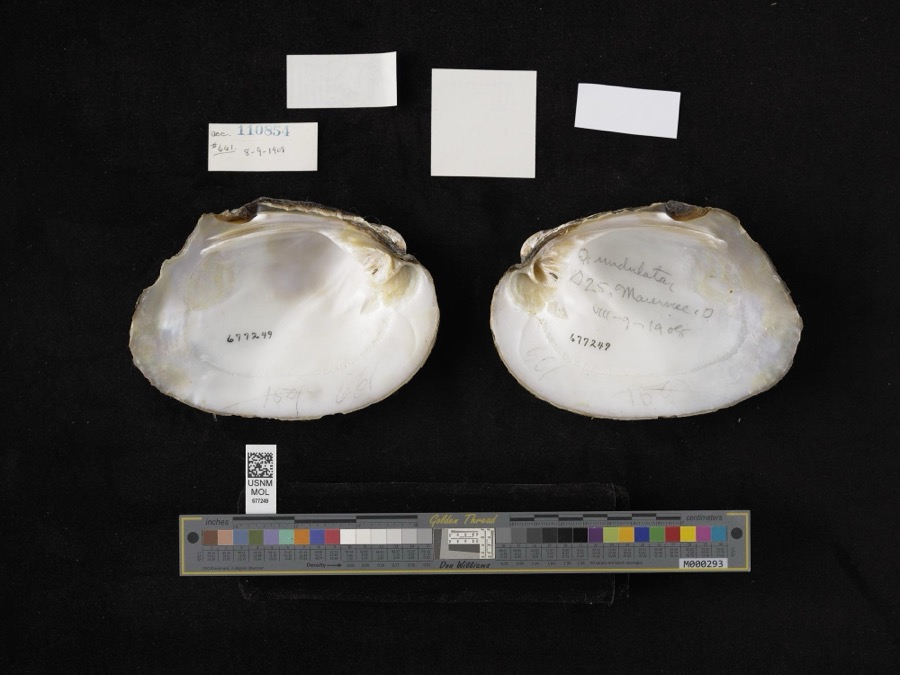
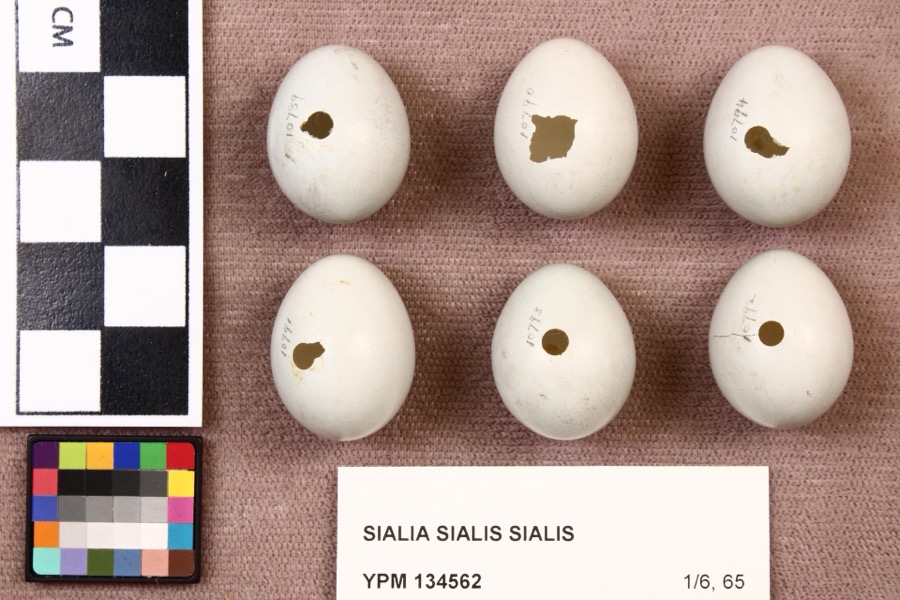
evidence. Museums hold 350 specimens
collected within 10 miles of Empire House between 1875 and
1975: 344 Animalia, 2 Fungi, 2 Plantae, 1 Unrecorded, 1 Chromista. 12 distinct Species records are shown.
Collected by Aborn, R., C. Rutter, CL & LC Hubbs and others. Each is a
physical object with a catalogue
number, and each entry opens the museum's record. This is what was
collected and kept, not a survey of what lives here - nothing can be
concluded from a species being absent.
Regional context, not property-specific
evidence. The federal mineral resources record lists
1 working within 5 miles of Empire House: 1 plant.
All of them still produce. What was taken out: Stone, Crushed/Broken. Distance is straight-line from the
map coordinates, so a quarry counted here may appear on a neighbouring
settlement's page as well.
Regional context, not property-specific
evidence. The National Weather Service names
Stony Ridge, the town this property stands in, in 2 storm reports between 2002 and 2007: 1 tornado, 1 hail.
No death or injury is recorded in these reports. Each account below is quoted exactly as the forecast office
filed it, from the NOAA Storm Events Database, and each date
opens the federal record of that event.
Law enforcement officers witnessed a small tornado touch down in an open area near the intersection of U.S. Highway 20 and Stoney Ridge Road in Troy Township. The tornado was only on the ground for a few hundred feet and caused no damage.
No historic map-sheet match is published
for this property yet. That does not mean no map exists. This record needs
a coordinate-quality review before it can be joined to a sheet boundary.
Browse the county's mapped places while that work is
pending.
From the nomination file
1,607 words on record
When this property was proposed for the
National Register, someone wrote the case for it: what the building is,
and why it matters. That document is a federal record in the public domain.
It is quoted below word for word, never summarised. The text was read off the scanned case file by machine, so the
occasional stray character is the recogniser's and the 1970s
typewriter's.
Description of the property
The Empire House is a massive, 3 story Greek Revival Inn with a shallow hip roof, which simple framing, and are 6/6 lite, double-hung sash. The front (north) facade is 5 bay, either side, piercing the roof. A side entrance once opened: from the northernmost bay of the east facade, but is now a window. A probable summer kitchen is at the southeastern rear of the main but is de- rough hewn, natural limestone foundation is ½ the height of the entire building. A shed ed by rooms on either side, including a spring hung, 'floating floor' ballroom on the CONDITION DATE UNEXPOSED UNALTERED DETERIORATED FAIR porch area. XALTERED and appears to match the original design. Black aluminum shutters have been added to the exterior at each window.
windows (single sash,3/3 lites).First and second story windows are unadorned with stairs on the eastern facade.Rock faced cement block fills in and supports the screened reliefs reminiscent of the Adam Brothers' floral motifs. closely matches the width and color of the original boards.
A plain entablature at the roof line features a simple molded cornice, and a wide freize board with square attic CHECK ONE walls are white clapboard, which have been covered with white aluminum siding, which tached.It is also gable roofed, and features an overhanging second story covering a XEXCELLENT roofed addition is attached at the rear, and there is an elevated entrance with wooden _MOVED -GOOD double hung sash windows is attached to thesouthwestern rear portion of the main building, lights flank the doorway.The entablature and pilasters are also covered with aluminum. entablature mirrors the simplicity of the upper entablature.Pilasters and simple side- The foundation is natural hewn limestone.
mantles, and doors, which define this outstanding Wood County landmark. The Empire House, built in 1848-49 by John Elderkin on the old 'mud pike" rests prominently atop an ancient glacial ridge. The importance of the 'mud pike' to the 'pike' was begun in1825, and connected lower Sandusky (now Fremont, Ohio) with Perrysburg, Ohio. Along its 31 miles, toll gates, mile posts (now restored and reconstructed), and The Empire House is now the most recognizable remaining Inn along the 'pike'. It was located midway between the Woodville and Perrysburg toll gates, and boasted 'clean The 'Empire' was popular throughout the area, and hosted all types of visitors for many years, but recently (1950) became an antique store.
Although it continues ARCHEOLOGY-HISTORIC SCIENCE ENGINEERING X1800-1899 BUILDER/ARCHITECT PERIOD THEATER SIGNIFICANCE EDUCATION ARCHITECTURE ART AGRICULTURE PREHISTORIC RELIGION PHILOSOPHY POLITICS/GOVERNMENT SCULPTURE TRANSPORTATION MILITARY LITERATURE INDUSTRY MUSIC John Elderkin XEXPLORATION/SETTLEMENT former turnpike known as the Western Reserve Road, which connected Northwest Ohio with as evidenced by the refined Greek Revival architecture and beautiful interior, woodwork, overland transportation route through the great Black Swamp of Northwestern Ohio.The that use, the Empire House retains much of its original character and setting.
regional settlement patterns cannot be over estimated, because it served as the major and travelers, from local farm hands to conestoga wagon trains.It remained hostelry -1400-1499 floating floor.A summer kitchen was built.to the rear of the main building, but its -1600-1699 _SOCIAL/HUMANITARIAN 3l Inns greeted hoards of travelers. date is unknown.A large horse barn was destroyed by fire. -1700-1799 (Local History) -1900- -CONSERVATION -LAW ARCHEOLOGY-PREHISTORIC COMMUNITY PLANNING rooms', an 'excellent kitchen', a 'refreshing bar', and an 'immense' ballroom with a INVENTION the eastern United States.
Quoted from the National Register nomination
for reference 78002216, 13 pages, held by the National Archives in Record
Group 79. See the
catalogue record.
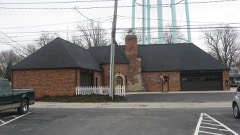
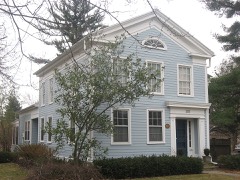
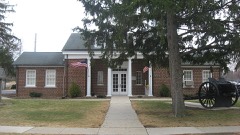
Listed places nearby
6 within 8 miles
Other National Register properties close
enough to walk or drive between, ordered by distance from this one. Both
positions come from the same geocoding pass that matched these properties
to their map sheets.
Listing record. National Park Service National Register of Historic Places, listed-properties dataset, current to 2026-05-22.
Map join. Address geocoded through the United States Census geocoder, then tested against the published boundary of every sheet in the USGS Historical Topographic Map Collection.
How this page is made. Listing fields come from federal records; map-sheet coverage is a labelled coordinate-to-boundary calculation, not a source-field claim.
Specimens. Global Biodiversity Information Facility (GBIF), https://www.gbif.org/. Only records licensed CC0 or CC BY are used. Records licensed CC BY-NC are excluded because this site carries advertising. Images are checked individually and any whose licence is non-commercial, no-derivatives or unreadable is refused.
Mines and quarries. USGS Mineral Resources Data System (MRDS) https://mrdata.usgs.gov/mrds/ A work of the United States government, no copyright under 17 U.S.C. 105.
Storms. NOAA National Centers for Environmental Information, Storm Events Database https://www.ncei.noaa.gov/stormevents/ A work of the United States government, no copyright under 17 U.S.C. 105. Narratives are quoted verbatim from the National Weather Service report and are not edited or summarised.
 Block
Block