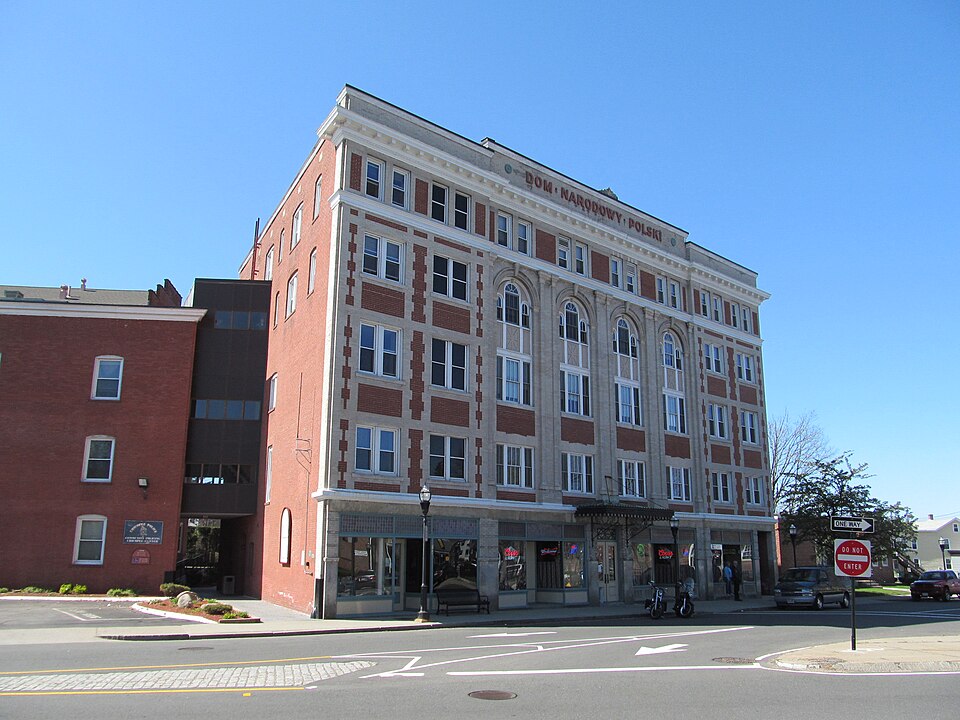
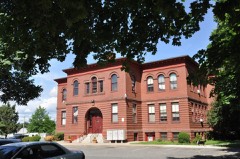
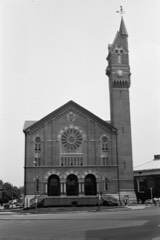
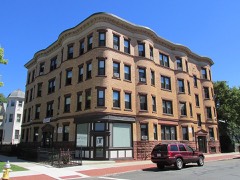
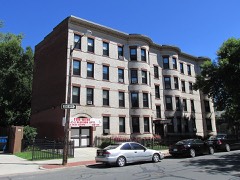
Built in 1914 in the Colonial Revival architecture. Listed on the National Register of Historic Places in
1980. A historic map-sheet match is not published yet. The record needs a coordinate-quality review before it can be joined to a sheet boundary.
From the record
“The Polish National Home, also known as Dom Polski Narodowy, is a historic social club at 136-144 Cabot Street in Chicopee, Massachusetts. It functioned as a community center for the large Polish immigrant community, providing a variety of community services, and served as transient housing for Polish migrants.”
Wikipedia article Polish National Home (Chicopee, Massachusetts), CC BY-SA 4.0.
one of 123 National Register listings in Hampden County · listed in 1980 · category: Building · built in 1914, Colonial Revival architecture, by Bruno Wozny.
National Register reference number.80000475- the number the National Park Service assigned this property when it was listed, and the key its nomination file is catalogued under at the National Archives.
Fires near this property
594 since 2015
Regional context, not property-specific
evidence. The
federal wildfire occurrence database
lists 594 fires within 5 miles of Polish National Home between
2015 and 2020, burning about 225 acres in total. 29 started naturally. 3 were recorded as arson.
Distance is straight-line from the map coordinates, so a fire counted
here may appear on a neighbouring settlement's page as well.
Reported cause
Fires
Missing data/not specified/undetermined
294
Equipment and vehicle use
175
Debris and open burning
45
Recreation and ceremony
30
Natural
29
Smoking
16
Arson/incendiarism
3
Misuse of fire by a minor
2
The most recent of
them, most recent first, with the day each was reported and the service
that recorded it.
Regional context, not property-specific
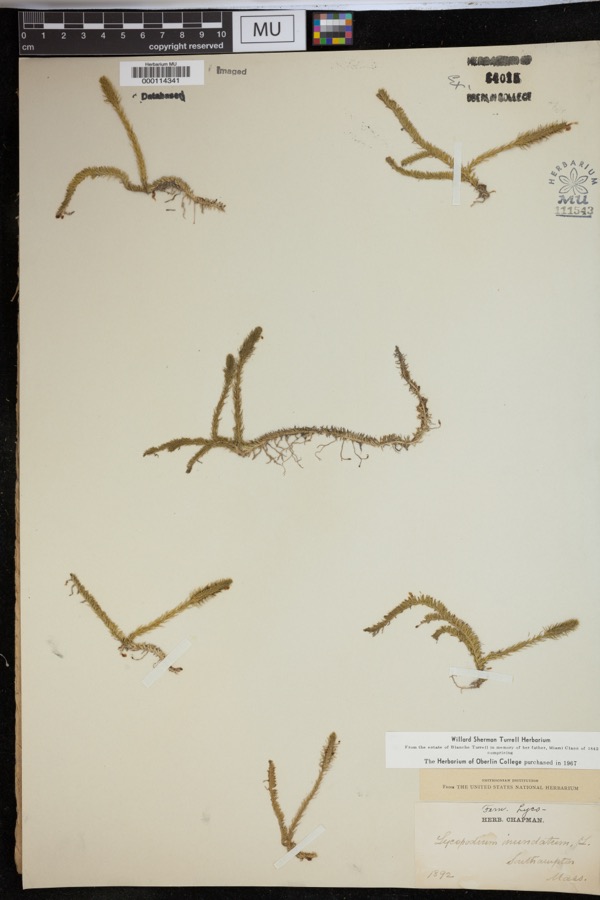
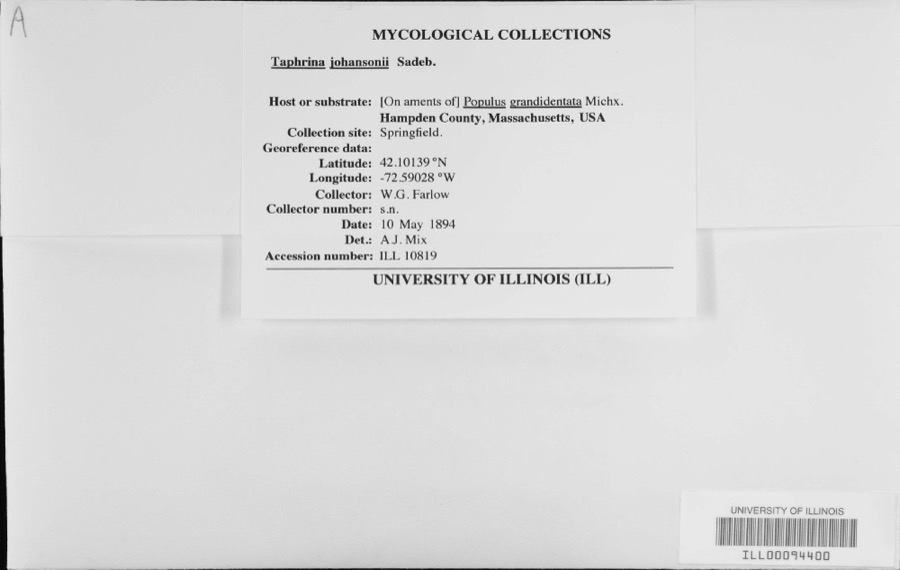
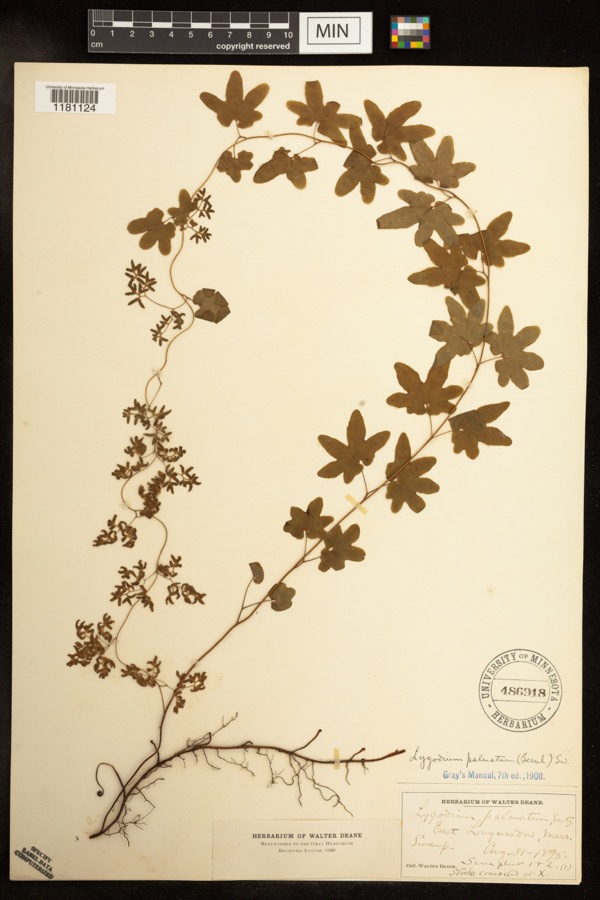
evidence. Museums hold 1,650 specimens
collected within 10 miles of Polish National Home between 1831 and
1975: 673 Animalia, 621 Plantae, 326 Fungi, 16 Chromista, 9 Unrecorded, 5 Protozoa. 12 distinct Species records are shown.
Collected by A. Albee, A. B. Seymour, A. E. Kirk and others. Each is a
physical object with a catalogue
number, and each entry opens the museum's record. This is what was
collected and kept, not a survey of what lives here - nothing can be
concluded from a species being absent.
Regional context, not property-specific
evidence. The federal mineral resources record lists
39 workings within 5 miles of Polish National Home: 19 past producers, 16 producers, 3 occurrences, 1 plant.
17 still produce. What was taken out: Stone, Crushed/Broken, Brick Clay, Clay, Sand and Gravel, Construction. Distance is straight-line from the
map coordinates, so a quarry counted here may appear on a neighbouring
settlement's page as well.
Regional context, not property-specific
evidence. The National Weather Service names
Chicopee, the town this property stands in, in 17 storm reports between 1995 and 2008: 11 hail, 5 thunderstorm wind, 1 flash flood.
No death or injury is recorded in these reports. Each account below is quoted exactly as the forecast office
filed it, from the NOAA Storm Events Database, and each date
opens the federal record of that event.
Four golfers were struck by lightning while standing in a shelter at the Wycoff Country Club. All were wearing cleats. Three were seriously injured and the other received minor injury. Two went into cardiac arrest. Three of the injured were recovering at local area hospitals. The lightning apparently struck a nearby tree and then jumped to the shelter.
Severe thunderstorms produced many reports of large hail as they moved east from Berkshire County to Worcester County. One storm, which had produced a tornado in southern Berkshire County moved east and dropped golf ball-size hail in Russell.
Severe thunderstorms produced large hail ranging from dime-size to golf ball-size. Half inch hail was reported to have covered the ground at one location in Hampden County.
No historic map-sheet match is published
for this property yet. That does not mean no map exists. This record needs
a coordinate-quality review before it can be joined to a sheet boundary.
Browse the county's mapped places while that work is
pending.
From the nomination file
2,416 words on record
When this property was proposed for the
National Register, someone wrote the case for it: what the building is,
and why it matters. That document is a federal record in the public domain.
It is quoted below word for word, never summarised. The text was read off the scanned case file by machine, so the
occasional stray character is the recogniser's and the 1970s
typewriter's.
Description of the property
Bom Narodowy Polski, the Polish National Home, is a five-story masonry building with steel I-beam framing members. It was constructed in 1912-14 in the Georgian Colonial Revival style, and has been changed little since then. A brick annex was added in 1922 to accommodate athletic facilities. The main building faces Cabot Street. Its facade is in original condition with the exception of the first floor storefronts. Until 1941, there were four separate stores on the first floor, and access to the second floor meeting hall was by two narrow staircases from the south and north ends of the building. In 1949, a larger staircase to the meeting hall replaced the southern-most storefront.
The three re- maining storefronts incorporate a band of translucent leaded glass approximately two feet wide in a grid pattern above the display windows. The storefronts are separated by masonry piers faced with white limestone, except for the bottom four feet of the piers, which are faced with a polished granite veneer. The building's original copper and glass canopy shelters the center doorway. The piers rise to support a sign band which is a stuccoed steel I-beam. Above this is a white limestone architrave, the base of the Colonial Revival facade. facade is organized symmetrically with a slightly projecting center pavilion four bays wide. The main block extends two bays out on either side of the pavilion.
These bays are distinguished by their limestone quoins and quoin-like patterns fram- ing the paired, double-hung sash. The windows have limestone sills and architraves. Red brick fills the spandrels and separates the bays, contrasting with the white limestone trim. The center pavilion's four bays are separated by paired pilasters of white brick rising from the second to the fourth floors.
/Architect Unknown Statement of Significance (in one paragraph) The Polish National Home possesses integrity of location, design, setting, materials and workmanship and was significant as a focus of social life for Chicopee's Polish population for many years, and also as a strong symbol of acculturation, because the edifice bespoke the Polish immigrants' social and economic advancement in their new land. This news item appeared in the local press three months after the Polish National Home (PNH) opened on September 21, 1914.
It is both laudatory and critical of the Polish community but clearly expresses the idea that the PNH was a public symbol of the Poles' successful acculturation: A matter in which the entire population is concerned, and which is more to the discredit of the Poles than their division among themselves, is the use of the club license at the new Polish home. There is no doubt that it is popular. There is a con- stant stream of "club members" into the barroom at the close of every working day. Fabulous tales have been told of the amount of beer consumed every Sunday. The boxing matches in the hall above, in connection with the license, are giving the new build- ing a rapidly growing reputation, which is no credit to the Polish citizens or to the city.
The Poles have made a place for themselves in Chicopee. In the main they are industrious and honest. There are many examples among them of the ability to assimilate American ways and to win success that may be envied by many of old American stock. Their new hall was an evidence of their growing importance in the commnity.1 In addition to its symbolic significance, the PNH served as a social club.
Quoted from the National Register nomination
for reference 80000475, 13 pages, held by the National Archives in Record
Group 79. See the
catalogue record.
Listed places nearby
6 within 8 miles
Other National Register properties close
enough to walk or drive between, ordered by distance from this one. Both
positions come from the same geocoding pass that matched these properties
to their map sheets.
Listing record. National Park Service National Register of Historic Places, listed-properties dataset, current to 2026-05-22.
Map join. Address geocoded through the United States Census geocoder, then tested against the published boundary of every sheet in the USGS Historical Topographic Map Collection.
How this page is made. Listing fields come from federal records; map-sheet coverage is a labelled coordinate-to-boundary calculation, not a source-field claim.
Wildfire. Short, Karen C. 2022. Spatial wildfire occurrence data for the United States, 1992-2020 [FPA_FOD_20221014]. 6th Edition. Fort Collins, CO: Forest Service Research Data Archive. https://doi.org/10.2737/RDS-2013-0009.6 Collected with United States Government funding and usable without additional permissions or fees.
Specimens. Global Biodiversity Information Facility (GBIF), https://www.gbif.org/. Only records licensed CC0 or CC BY are used. Records licensed CC BY-NC are excluded because this site carries advertising. Images are checked individually and any whose licence is non-commercial, no-derivatives or unreadable is refused.
Mines and quarries. USGS Mineral Resources Data System (MRDS) https://mrdata.usgs.gov/mrds/ A work of the United States government, no copyright under 17 U.S.C. 105.
Storms. NOAA National Centers for Environmental Information, Storm Events Database https://www.ncei.noaa.gov/stormevents/ A work of the United States government, no copyright under 17 U.S.C. 105. Narratives are quoted verbatim from the National Weather Service report and are not edited or summarised.
 Block
Block