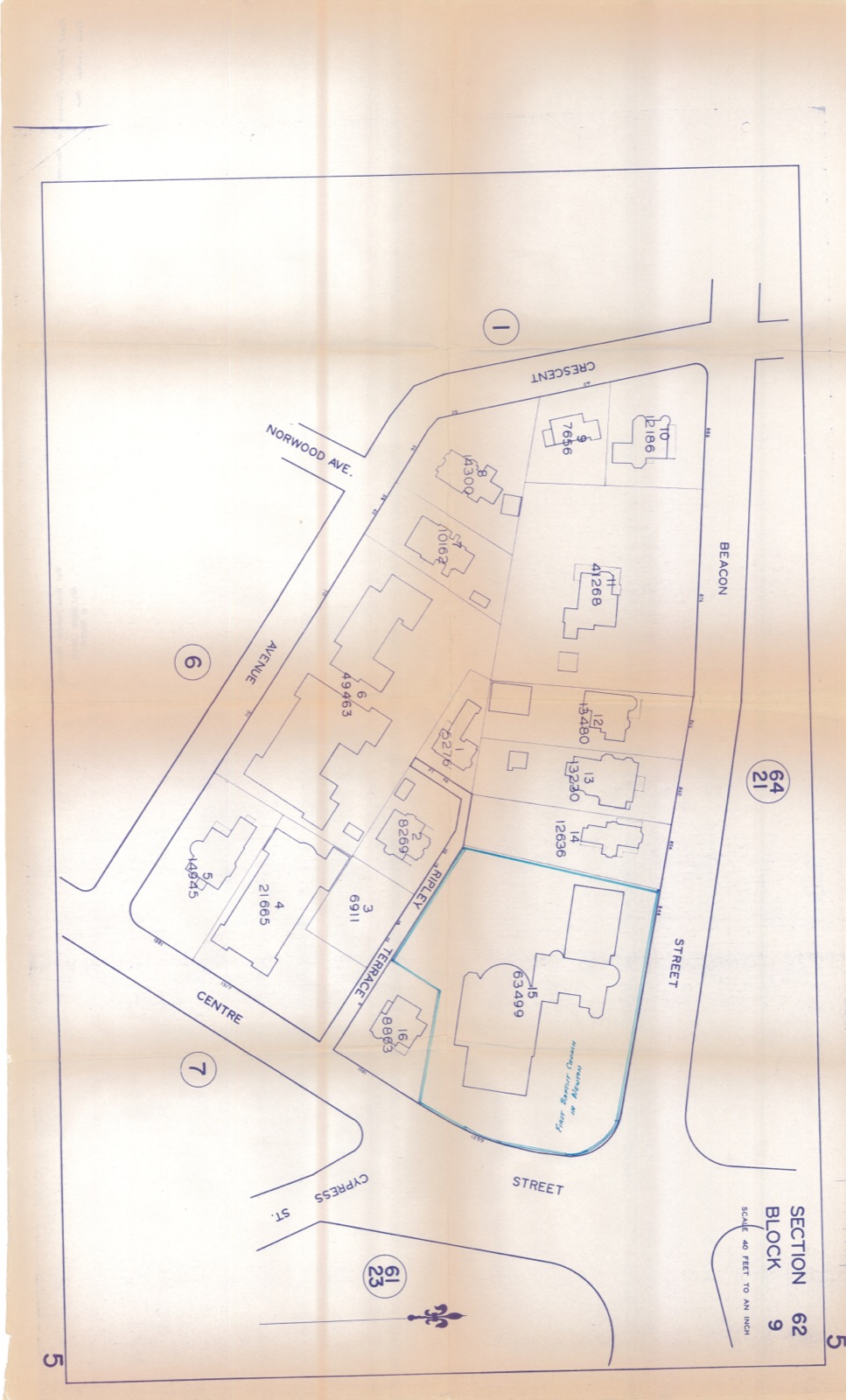
Photographs from the nomination case file, National Park Service records.
First Baptist Church in Newton
Listed on the National Register of Historic Places in
1982. A historic map-sheet match is not published yet. The record needs a coordinate-quality review before it can be joined to a sheet boundary.
From the record
“In the period extending from 1838 to 1845, the question of the division of the town into two independent organizations was warmly contested. Owing to the peculiar configuration of Newton, and the dispo^ of most of its villages at that period nearly on the circumference, because of the water privileges on Charles lUver on the one hand, and the conveniences created by railway stations along the line of the Boston and Albany Railroad on the other, many favored a division.”
History of Middlesex County, Massachusetts (1880). Machine-read text.
one of 1100 National Register listings in Middlesex County · listed in 1982 · category: Building · one of 3 National Historic Landmarks in Middlesex County.
National Register reference number.82002746- the number the National Park Service assigned this property when it was listed, and the key its nomination file is catalogued under at the National Archives.
What happened here
An account from the chapter on Newton city, The inset identifies its exact
source book and publication year.
JbIj^ 1700, M. 63. Capt. Noab, of Newton, an Officer in the Expedition against Canada. Killed in battle with the Freoch and Indians July C, 1C90. M. 50, leaving t son Thomas. Ebeneser, oC Newton, died June 21, 1691. .fi. 45. ... . . J. B. Jepson, Newton Comer, rereals many gravestones whose inscriptions are no longer l^ble, and others, recalling the names which filled a laige place in the early history of the town, and Belonged to the founders of its institutions and the authors of its prosperity.
Captain Prentice and his wife, Grace, had four sons and four daughters. Two of his sons died in childhood ; the other two were married. Thomas, the eldest, had three sons, and died in 1685, and the old captain had the bringing up of the three grandsons, to whom he gave a good education and all his estate. Thomas, the eldest grandson, was a leading man in Newton, a captain of infantry, and died in 1730. The second grandson, John, married a daughter of Edward Jackson, and died without children, aged thirty-five. The third grandson, Samuel, married Esther, daughter of Nathaniel Hammond, and settled in Stouington, Conn. Prom this marriage have proceeded numerous descendants. Captain Prentice's wife, Grace, died October 9, 1692. He died July 6, 1710, aged eighty-nine, and was buried under arms. He settled his own estate by deeds of gift to his grandchildren. He was one of the most substantial men of his age, and enjoyed the miliniited confidence of his associates in the settlement of New Cambridge. Edward Jackson, in his will, made in 1681, inserts this clause, which is a contemjoorary testimony to his merits: "I bequeath to my honored friend, Capt. Thomas Prentice, one diamond rhig."
The Parkers in Newton have descended from two distinct families, namely, John and Joanna of Hingliam, and Samuel and Sarah of Dedham. Nathaniel Parker was a prominent man in Newton; he was the son of Samuel and Sarah, born in Dedham, March ^6, 1670. He owned the land on which the third meeting-house was erected, - the site still occupied by the First Parish Church. He sold this land, containing one and a half acres and twenty rods, for £ 15, and conveyed it to the selectmen of Newton by deed, in August, 1716.
Regional context, not property-specific
evidence. The
federal wildfire occurrence database
lists 106 fires within 5 miles of First Baptist Church in Newton between
2003 and 2020, burning about 388 acres in total. None started naturally. 3 were recorded as arson.
Distance is straight-line from the map coordinates, so a fire counted
here may appear on a neighbouring settlement's page as well.
Reported cause
Fires
Recreation and ceremony
55
Missing data/not specified/undetermined
33
Smoking
7
Debris and open burning
5
Arson/incendiarism
3
Other causes
1
Equipment and vehicle use
1
Power generation/transmission/distribution
1
The most recent of
them, most recent first, with the day each was reported and the service
that recorded it.
Regional context, not property-specific
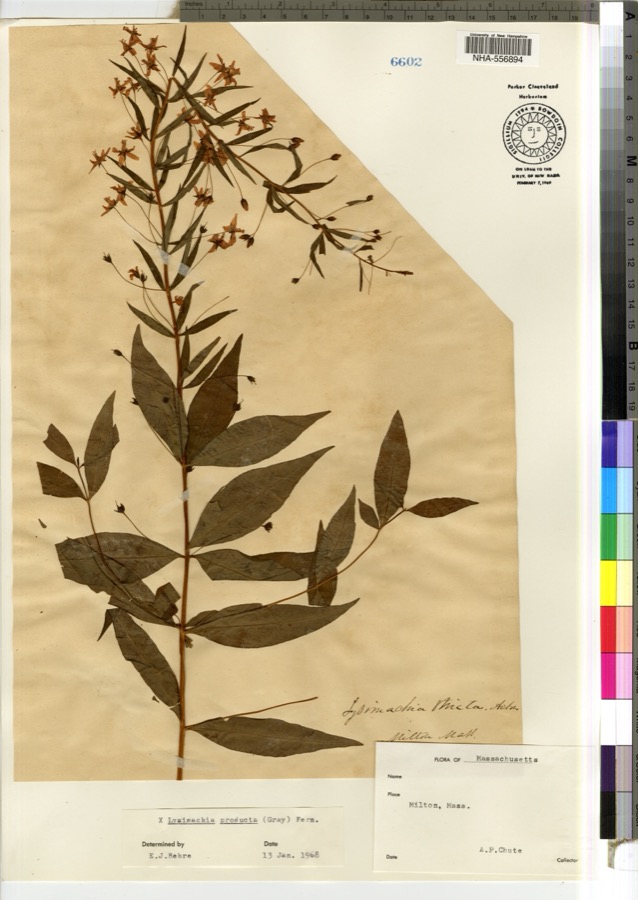
evidence. Museums hold 2,609 specimens
collected within 10 miles of First Baptist Church in Newton between 1898 and
1975: 1,303 Animalia, 695 Plantae, 550 Fungi, 29 Protozoa, 14 Bacteria, 14 Chromista, 4 Unrecorded. 12 distinct Species records are shown.
Collected by ?, A B Seymour, A. B. Seymour and others. Each is a
physical object with a catalogue
number, and each entry opens the museum's record. This is what was
collected and kept, not a survey of what lives here - nothing can be
concluded from a species being absent.
Regional context, not property-specific
evidence. The federal mineral resources record lists
9 workings within 5 miles of First Baptist Church in Newton: 6 past producers, 1 unknown, 1 producer, 1 plant.
2 still produce. What was taken out: Sand and Gravel, Construction, Stone, Crushed/Broken, Tantalum, Niobium (Columbium). Distance is straight-line from the
map coordinates, so a quarry counted here may appear on a neighbouring
settlement's page as well.
Regional context, not property-specific
evidence. The National Weather Service names
Newton, the town this property stands in, in 17 storm reports between 1997 and 2025: 8 thunderstorm wind, 4 hail, 3 flood, 1 flash flood.
The reports record 1 injury. Each account below is quoted exactly as the forecast office
filed it, from the NOAA Storm Events Database, and each date
opens the federal record of that event.
A 62-year old woman was struck by lightning. She endured a side flash after lightning struck a tree near her. She was alert and breathing at the scene but was transported to a hospital for further evaluation.
In Newton, a tree was down on a car near 1750 Commonwealth Avenue. Also, a tree was down on a house at 111 Prospect Street. A tree was down on Park Drive. A tree was down on Adams Street at Wiltshire Road.
In Newton, urban flooding caused two cars to have to be removed from flood waters near 100 Walnut Street. Also, Adams Street was flooded and impassable from Watertown Street (Route 16) to Cottage Court.
In Newton, a 20 foot stretch of Beacon Street was flooded with 1 foot of water. Also, Route 9 at the Parker Street underpass was flooded with 6 to 12 inches of water. Route 9 westbound near the Chestnut Hill Mall was flooded with 10 to 12 inches of water. In Natick, Speen Street near the Natick Mall was flooded with a foot of water. A few cars stalled out in the water.
After receiving two to three inches of rain with Tropical Storm Irene, the intersection of Commonwealth Avenue and Washington Street was impassable due to flooding in Newton. A car was stuck in flood waters on Commonwealth Avenue.
No historic map-sheet match is published
for this property yet. That does not mean no map exists. This record needs
a coordinate-quality review before it can be joined to a sheet boundary.
Browse the county's mapped places while that work is
pending.
Named in the fire insurance atlases
Sanborn surveyors printed an index of the
town's establishments at the front of each atlas. This property is named in
one, read straight off the scanned sheet.
When this property was proposed for the
National Register, someone wrote the case for it: what the building is,
and why it matters. That document is a federal record in the public domain.
It is quoted below word for word, never summarised. The text was read off the scanned case file by machine, so the
occasional stray character is the recogniser's and the 1970s
typewriter's.
Description of the property
The Eiss Bap tiat hurch in e tonc faceted at oh ente sterstc ton o he farisn Hal ling extends at right angles to the north and Beacon Street. Diagonally opposite the Church is a sizeable grassed park area, Newton's colonial common. The Church serves as a transition from commercial to residential uses being abutted to the north and east by primarily one story commercial structures and to the south and west by late nineteenth century single family res- idences. The Church, with its Parish Hall, is an excellent example of the Richardsonian Romanesque style, with its emphasis on horizontal mass and asymmetry. Typically, it is constructed of rock faced granite with dark red East Longmeadow sandstone trim.
The trim forms strong horizontal belt courses, accentuates door and window openings (often round arched) and forms decorative banding patterns. The complex gable roof is covered with gray slate. The Church follows a Greek cross plan and is enclosed by intersecting gable roofs. The apse at the western end, which houses the chancel, is enclosed by a conical roof. The Parish Hall which is attached to the Church at the northwest corner, assumes a basically rectangular form with projections and is enclosed by a gable roof. The Church measures approximately 85'x135' while the Parish Hall measures 50'x75'. The Church interior which seats 600 is dominated by four low, broad arches forming the central crossing.
Extensive ornamentation, much of it Christian symbols, ranges from elaborate sten- cilling and gold trim along the arches to a rich, gold frieze surrounding the room atop the dado and again at the cornice line.
(in one paragraph)' Builder/Architect John Lyman Faxon The First Baptish Church in Newton possesses integrity of location, design, materials, and workmanship and embodies the distinctive characteristics of the Richardsonian Romanesque style thereby meeting criterion C. It is historically significant as the home of Newton's first Baptist congregation. The Church is the work of John Lyman Faxon (b.1851), Boston architect strongly influenced by his brilliant contemporary, Henry Hobson Richardson.
Richardson's spirit is evident in the similarity of the over-all plan to that of Trinity Church (1877), of the tower to Richard- son's Town Hall in North Easton (1881) and of the porch to Austin Hall at Harvard Law School (1883), as well as the use of Romanesque detailing executed in rock faced granite and brown- stone. Richardons's powerful, uniquely American style was eclipsed within a decade by more traditional classicism, and well executed examples of "Richardsonian Romanesque" such as First Baptist Church are comparatively rare. Faxon was said to have studied the best churches of Europe and applied many of their features to the First Baptist. The strong Byzantine decoration of the interior is said to have been influenced by St. Mark's Basilica in Venice.
Faxon's other churches include Rollins Chapel (Dartmouth College), the Central Baptist Church (Norwich, Connecticut), the First Congrega- tional Church (Detroit, Michigan), and the Mount Olivet Baptist Church (Massachusetts Ave., Cambridge). Faxon also designed the Hotels Kensington and Victoria in the Back Bay, the East Boston High School, and the Ferdinand Department Store at 2260 Washington Street, in Roxbury. Cost of the First Baptist Church was reportedly about $90,000. Construction was by the firm of Mead, Mason and Co., and interior decoration was by L. Haberstroth & Son, a Boston decor- ating firm known for their work on the Colonial and Saxon/Majestic Theatres.
Quoted from the National Register nomination
for reference 82002746, 13 pages, held by the National Archives in Record
Group 79. See the
catalogue record.
Listed places nearby
6 within 8 miles
Other National Register properties close
enough to walk or drive between, ordered by distance from this one. Both
positions come from the same geocoding pass that matched these properties
to their map sheets.
Listing record. National Park Service National Register of Historic Places, listed-properties dataset, current to 2026-05-22.
Map join. Address geocoded through the United States Census geocoder, then tested against the published boundary of every sheet in the USGS Historical Topographic Map Collection.
How this page is made. Listing fields come from federal records; map-sheet coverage is a labelled coordinate-to-boundary calculation, not a source-field claim.
Wildfire. Short, Karen C. 2022. Spatial wildfire occurrence data for the United States, 1992-2020 [FPA_FOD_20221014]. 6th Edition. Fort Collins, CO: Forest Service Research Data Archive. https://doi.org/10.2737/RDS-2013-0009.6 Collected with United States Government funding and usable without additional permissions or fees.
Specimens. Global Biodiversity Information Facility (GBIF), https://www.gbif.org/. Only records licensed CC0 or CC BY are used. Records licensed CC BY-NC are excluded because this site carries advertising. Images are checked individually and any whose licence is non-commercial, no-derivatives or unreadable is refused.
Mines and quarries. USGS Mineral Resources Data System (MRDS) https://mrdata.usgs.gov/mrds/ A work of the United States government, no copyright under 17 U.S.C. 105.
Storms. NOAA National Centers for Environmental Information, Storm Events Database https://www.ncei.noaa.gov/stormevents/ A work of the United States government, no copyright under 17 U.S.C. 105. Narratives are quoted verbatim from the National Weather Service report and are not edited or summarised.
 Block
Block