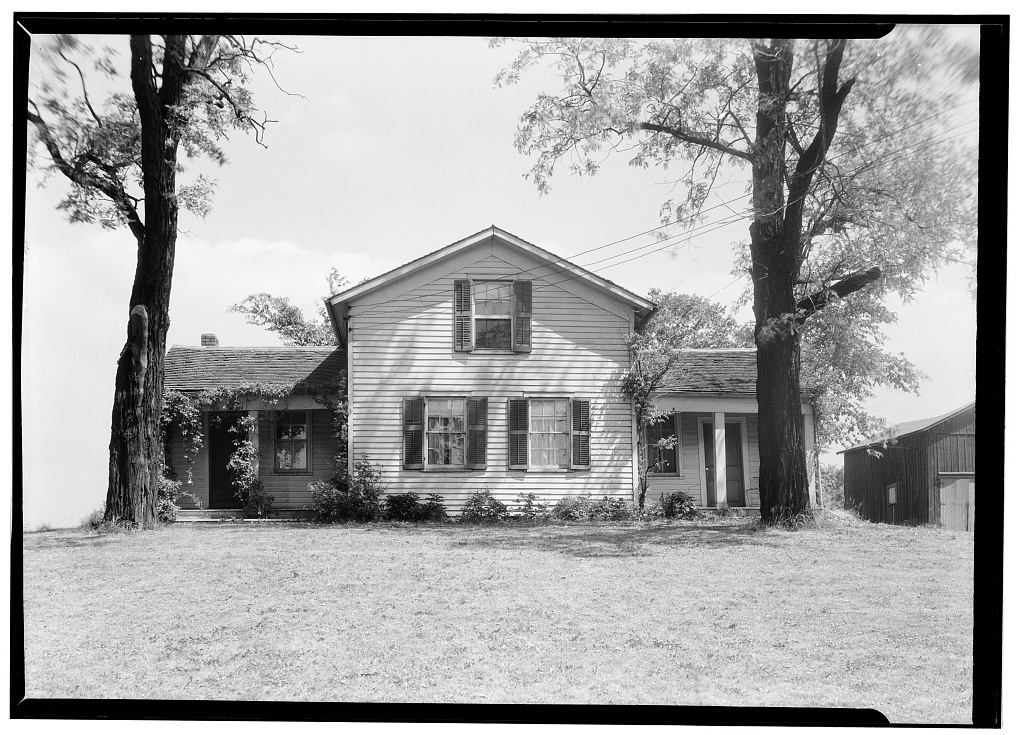
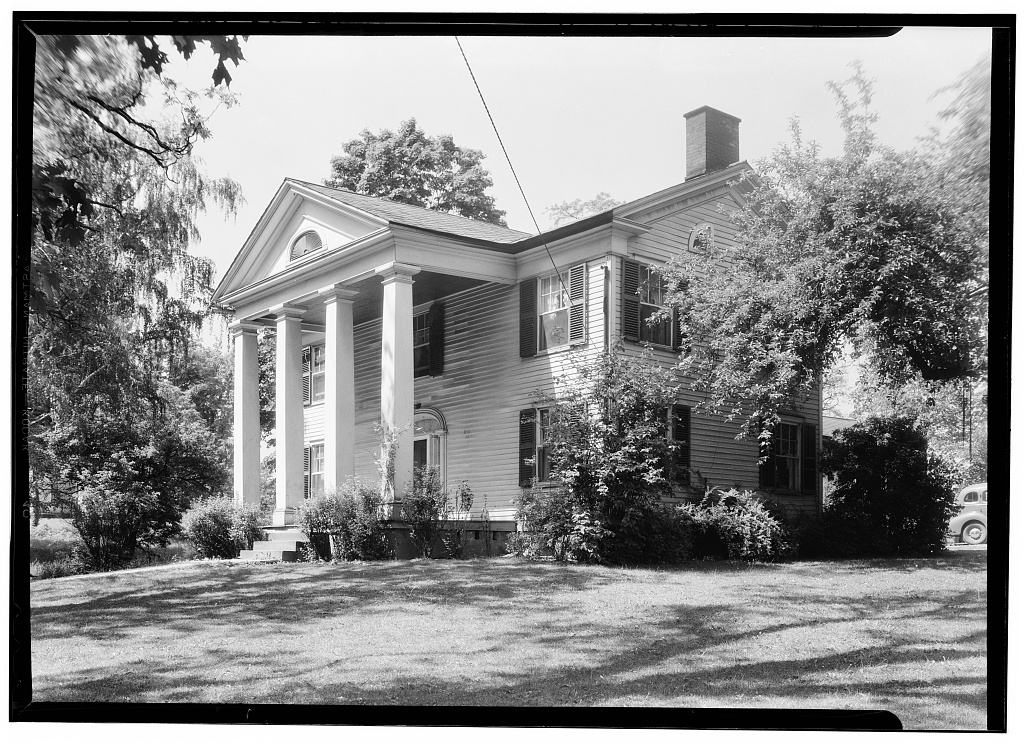
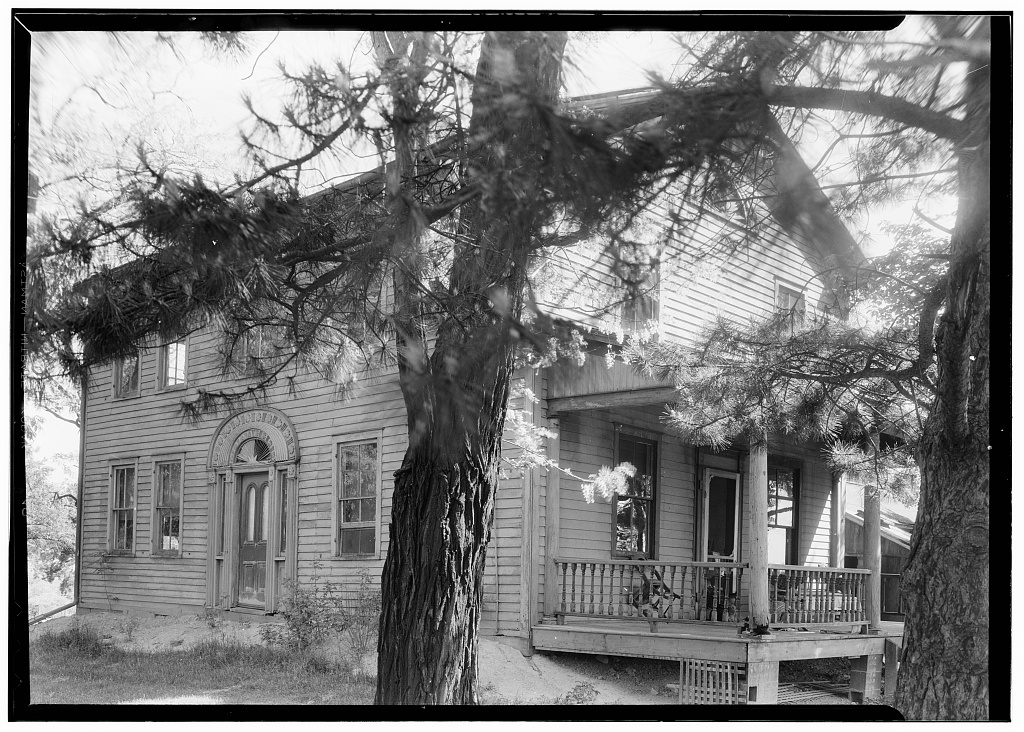
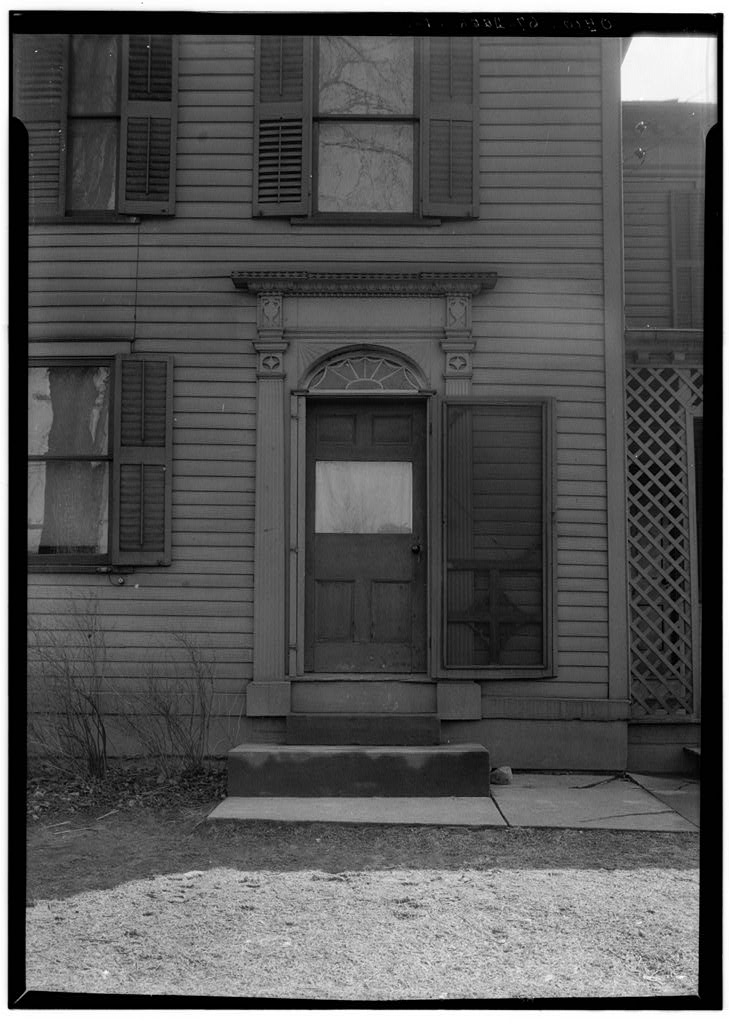
Ravenna Army Ammunition Plant, Ravenna, Portage County, OH. Surveyed as HAER OHIO,67-RAV,1-, with a 11,918-word written history.
From the record
“Historical Report Prepared by: Prepared for Transmittal by: In Portage and Trumbull Countries, Ohio, about ten miles east of Ravenna, bounded on the north by the Erie Railroad and on the south by the Baltimore and Ohio Railroad.”
Written record, HAER OHIO,67-RAV,1- survey. Machine-read text.
surveyed by the federal HAER program as HAER OHIO,67-RAV,1- · the record runs 11918 words · one of 14 surveyed structures published for this county.
Source document
Quoted word for word from HAER OHIO,67-RAV,1-.
Not written, edited or summarised by this site.
Historical Report Prepared by: Prepared for Transmittal by: In Portage and Trumbull Countries, Ohio, about ten miles east of Ravenna, bounded on the north by the Erie Railroad and on the south by the Baltimore and Ohio Railroad. Established in 194 0. Department of the Army Revanna Army Ammunition Plant was one of sixty plants established at the onset of World War II for the purpose of loading, assembling, and packing a variety of types of conventional ammunition. Robert Ferguson, Robie S. Lange, HABS/HAER, Ravenna Army Ammunition Plant HAER No. OH-30 Page 2
Executive Summary
The Ravenna Army Arrmunition Plant (Ravenna AAP) was constructed beginning in for the purpose of loading, assembling, and packing a variety of types of conventional anmunition. A part of the Army's Armament, Munitions and Chemical Command (AMCCOM), Ravenna AAP was one of 60 such plants constructed at the onset of World War II. It was originally constructed as two installations - the Ravenna Ordnance Plant, for production, and the Portage Ordnance Depot, for storage - which were combined under one administration in The plant was renovated and reactivated during the Korean and Vietnam Wars, and has carried out demilitarization and storage activities continuously since World War II.
Located on a 21,427-acre site near Ravenna, Ohio, the facility presently comprises buildings, of which date from World War II. The architecture of the buildings is utilitarian in style. All of the original production equipment has been replaced as the plant has retooled to meet changing production requirements and to take advantage of new technology. There are no Category I or II historic properties at Ravenna AAP. The Depot Telephone Building (Building A-l) is the last remaining building of the Bolton Farm, a well-known local landmark and former hcme of three members of the U. S. House of Representatives. Because of its association with important persons, and because it has local importance as an architectural landmark, the Telephone Building is a Category III historic property.
A stone arch bridge (no Building Number assigned) spanning the South Pork of Eagle Creek on Wadsworth Road, just south of the northern boundary of Ravenna AAP, is a Category III historic property Ravenna Army Ammunition Plant HAER No. OH-30 Page 3 ^ because of its local importance as an excellent example of masonry bridge design and construction, an intact historic engineering type. Ravenna Army Ammunition Plant HAER No. OH-30 Page H" CONTENTS Executive Summary PREFACE 1 1. INTRODUCTION 3 Scope 3 Methodology 4 2. HISTORICAL OVERVIEW 14 Background , 14 World War II 18 Korean War 43 Vietnam War 46 3. PRESERVATION RECOMMENDATIONS 52 Background , .
52 Category I Historic Properties 57 Category II Historic Properties 57 Category III Historic Properties 58 BIBLIOGRAPHY 62 Ravenna Army Ammunition Plant HAER No. OH-30 Page S PREFACE This report presents the results of an historic properties survey of the Ravenna Army Ammunition Plant (Ravenna AAP). Prepared for the United States Army Materiel Development and Readiness Carmand (DARCCM), the report is intended to assist the Army in bringing this installation into compliance with the National Historic Preservation Act of and its amendments, and related federal laws and regulations. To this end, the report focuses on the identification, evaluation, documentation, nomina- tion, and preservation of historic properties at the Ravenna AAP.
Chapter 1 sets forth the survey's scope and methodology; Chapter 2 presents an architectural, historical, and technological overview of the installation and its properties; and Chapter 3 identifies significant properties by Army category and sets forth preservation recommendations. Illustrations and an annotated bibliography supplement the text. This report is part of a program initiated through a memorandum of agreement between the National Park Service, Department of the Interior, and the U.S. Department of the Army. The program covers 74 DARCCM installations and has two components: 1) a survey of historic properties (districts, buildings, structures, and objects), and 2) the development of archaeological overviews. Stanley H.
Fried, Chief, Real Estate Branch of Headquarters DARCCM, directed the program for the Army, and Dr. Robert J. Kapsch, Chief of the Historic American Buildings Survey/Historic American Engineering Record (HABS/HAER) directed the program for the National Park Service. Sally Kress Tcmpkins was program manager, and Robie S. Lange was -i- Ravenna Army- Ammunition Plant HAER No. OH-30 Page (c project manager for the historic properties survey. Technical assistance was provided by Donald C. Jackson. Building Technology Incorporated acted as primary contractor to HABS/HAER for the historic properties survey. William A. Brenner was BTI's principal-in-charge and Dr. Larry D. Lankton was the chief technical consultant. Major subcontractors were the MacDonald and Mack Partnership and Jeffrey A. Hess.
The author of this report was Robert Ferguson. The author gratefully acknowledges the help of Robert J. Kasper, Conmander's Representative at Ravenna AAP; and of John P. Talkowski, Industrial Relations and Operations Manager, and Dan Jendrisak, Supervisory Engineer, Ravenna Arsenal, Inc. The complete HABS/HAER documentation for this installation will be included in the HABS/HAER collections at the Library of Congress, Prints and Photographs Division, under the designation HAER OH-30. -2- Ravenna Army Ammunition Plant HAER No. OH-30 Page 7 Chapter 1 IOTBDDUCTION SCOPE This report is based on an historic properties survey conducted in June of all Army-owned properties located within the official boundaries of the Pavenna Array Amnunition Plant.
The survey included the following tasks: Completion of documentary research on the history of the installation and its properties. Completion of a field inventory of all properties at the installation. Preparation of a combined architectural, historical, and technological overview for the installation. Evaluation of historic properties and developnent of reccmmenda- tions for preservation of these properties. Also completed as a part of the historic properties survey of the installation, but not included in this report, are HABS/HAER Inventory cards for 36 individual properties. These cards, which constitute HABS/HAER Documentation Level IV, will be provided to the Department of the Army.
Archival copies of the cards, with their accompanying photographic x Ravenna Army Ammunition Plant HAER No. OH-30 Page \ negatives/ will be transmitted to the HABS/HAER collections at the Library of Congress. The methodology used to complete these tasks is described in the following section of this report. METH ODOLOGY 1. Docatientary Research The Pavenna AAP was one of several government-owned, contractor-operated facilities constructed during for the manufacture and storage of conventional ammunition. Since the plant was part of a larger manufacturing network, an evaluation of its historical and technological significance requires a general understanding of the wartime munitions industry.
To identify published documentary sources on American ammunition manufacturing during World War II, research was conducted in standard bibliographies of military history, engineering, and the applied sciences. Unpublished sources were identified by researching the historical and technical archives of the U.S. Army Armament, Munitions and Chemical Ccrrraand {AMCCOM) at Rock Island Arsenal. In addition to such industry-wide research, a concerted effort was made to locate published sources dealing specifically with the history and technology of the I&venna AAP. This site-specific research was conducted priniarily at the AMCCOM Historical Office at Rock Island Arsenal, the Ravenna Army Ammunition Plant HAER No.
OH-30 Page ^ Ravenna Public Library, and the Ravenna AAP government and contractor files. On the basis of this literature search, a number of valuable sources were identified. These included a detailed, unpublished history through prepared by the original operating contractor, and a history of the construction process prepared and published by the general contractor. Army records used for the field inventory included current Real Property Inventory (RPI) printouts that listed all officially recorded buildings and structures by facility classification and date of construction; the installation's property record cards; base maps and photographs supplied by installation personnel; and installation master planning, archaeological, environmental assessment, and related reports and documents.
A complete listing of this documentary material may be found in the bibliography. 2. Field Inventory Architectural and technological field surveys were conducted in June by Robert C Mack and Robert Ferguson. Following a general discussion with Robert Rasper, Ccmriander 1 s Representative at the installation, the surveyors were permitted access to most exterior areas without escort. Exterior and interior surveys of the major manufacturing buildings were conducted, with John P. Talkowski serving as guide. Ravenna Army Ammunition Plant HAER No. OH-30 Page iO Field inventory procedures were based on the HABS/HAER Guidelines for Inventories of Historic Buildings and Engineering and Industrial Structures.2 All areas and properties were visually surveyed.
Building locations and approximate dates of construction were noted from the installation's property records and field-verified. Interior surveys were made of major facilities to permit adequate evaluation of architectural features, building technology, and production equipment. Field inventory forms were prepared for, and black and white 35 rrni photographs taken of all buildings and structures through except basic utilitarian structures of no architectural, historical, or technological interest. When groups of similar ("prototypical") buildings were found, one field form was normally prepared to represent all buildings of that type.
Field inventory forms were also completed for representative post-1945 buildings and structures.3 Information collected on the field forms was later evaluated, condensed, and transferred to HABS/HAER Inventory cards. 3. Historical Overview A combined architectural, historical, and technological overview was prepared from information developed the documentary research and the field inventory. It was written in two parts: 1) an introductory description of the installation, and 2) a history of the installation by periods of development, beginning with pre-military land uses. Ravenna Army Ammunition Plant HAER No. OH-30 Page )1 Maps and photographs were selected to supplement the text as appropriate.
The objectives of the overview were to 1) establish the periods of major construction at the installation, 2) identify important events and individuals associated with specific "historic properties/ 3) describe patterns and locations of historic property types, and 4) analyze specific building and industrial technologies employed at the installation. 4. Property Evaluation and Preservation Measures Based on information developed in the historical overviews/ properties were first evaluated for historical significance in accordance with the eligibility criteria for nomination to the National Register of Historic Places.
These criteria require that eligible properties possess integrity of location, design, setting, materials, wortafianship, feeling, and association, and that they meet one or more 4 of the following: A. Are associated with events that have made a significant contribution to the broad patterns of our history. B. Are associated with the lives of persons significant in the nation's past. Ravenna Army Ammunition Plant HAER No. OH-30 Page \ X C. Embody the distinctive characteristics of a type, period, or method of construction, represent the work of a master, possess high artistic values, or represent a significant and distinguishable entity Whose components may lack individual distinction. D. Have yielded, or may be likely to yield, information important in pre-history or history.
Properties thus evaluated were further assessed for placement in one of five Army historic property categories as described in Army Regulation 5 Category I Properties of major importance Category II Properties of importance Category III Properties of minor importance Category IV Properties of little or no importance Category V Properties detrimental to the significance of adjacent historic properties. Based on an extensive review of the architectural, historical, and technological resources identified on DARCCM installations nationwide, four criteria were developed to help determine the appropriate categorization level for each Army property.
These criteria were used to assess the importance not only of properties of traditional historical interest, but also of the vast number of standardized or / Ravenna Army Ammunition Plant HAER No. OH-30 Page 13 prototypical buildings, structures and production processes that were built and put into service during Vtorld War II, as well as of properties associated with many post-war technological achievements. The four criteria were often used in combination and are as follows: 1) Degree of importance as a work of architectural, engineering, or industrial design . This criterion took into account the qualitative factors by which design is normally judged: artistic merit, workmanship, appropriate use of materials, and functionality.
2) Degree of rarity as a remaining example of a once widely used architectural, engineering, or industrial design or process . This criterion was applied primarily to the many standardized or prototypical DARCOM buildings, structures, or industrial processes. The more widespread or influential the design or process, the greater the importance of the remaining examples of the design or process was considered to be. This criterion was also used for non-military structures such as farmhouses and other once prevalent building types. 3) Degree of integrity or completeness .
This criterion compared the current condition, appearance, and function of a building, structure, architectural assemblage, or industrial process to its original or most historically important condition, appearance, and function. Those properties that were highly intact were generally considered of greater importance than those that were not. y Ravenna Army Ammunition Plant HAER No. OH-30 Page \H 4) Degree of association with an important person, program, or event . This criterion was used to examine the relationship of a property to a famous personage, wartime project, or similar factor that lent the property special importance. The majority of DAKCOM properties were built just prior to or during World War II, and special attention was given to their evaluation.
Those that still remain do not often possess individual importance, but collectively they represent the remnants of a vast construction undertaking whose architectural, historical, and technological importance needed to be assessed before their numbers diminished further. This assessment centered on an extensive review of the military construction of the period, and its contribution to the history of World War II and the post-war Array landscape. Because technology has advanced so rapidly since the war, post-World War II properties were also given attention. These properties were evaluated in terms of the nation' s more recent accomplishments in weaponry, rocketry, electronics, and related technological and scientific endeavors.
Thus the traditional definition of "historic" as a property 50 or more years old was not germane in the assessment of either World War II or post-war CAECCM buildings and structures; rather, the historic importance of all properties was evaluated as completely as possible regardless of age. vf Ravenna Army Ammunition Plant HAER No. OH-30 Page i ^ Property designations by category are expected to be useful for approximately ten years, after which all categorizations should be reviewed and updated.
Hollowing this categorization procedure, Category I, II, and III historic properties were analyzed in terms of: Current structural condition and state of repair * This information was taken the field inventory forms and ^otographs, and was often supplemented by rechecking with facilities engineering personnel. The nature of possible future adverse impacts to the property . This information was gathered from the installation's master planning docunents and rechecked with facilities engineering personnel. Based on the above considerations, the general preservation reconmendations presented in Chapter 3 for Category I, II, and III historic properties were developed. Special preservation recommendations were created for individual properties as circumstances required. 5.
Report Review Prior to being completed in final form, this report was subjected to an in-house review by Building Technology Incorporated. It was then / Ravenna Army Ammunition Plant HAER No. OH-30 Page \U sent in draft to the subject installation for camtent and clearance and, with its associated historical materials, to HABS/HAER staff for technical review. When the installation cleared the report, additional draft copies were sent to DARCOM, the appropriate State Historic Preservation Officer, and, when requested, to the archaeological contractor performing parallel work at the installation. Ihe report was revised based on all corments collected, then published in final form. NOTES 1.
The following bibliographies of published sources were consulted: Industrial Arts Index , Applied Science and Technology Index , Engineering Index , Robin Higham, ed., A Guide to the Sources of United States Military History (Hamden, Conn.: Archon Books, John E. Jessup and Robert W. Ccakley, A Guide to the Study and Use of Military H istory (Washington, U.S. Government Printing Office, "Military Installations," Public Works History in the United States , eds. Suellen M. Hoy and Michael C. Robinson (Nashville; American Association for State and local History), pp. AMCCCM (Formerly ARRCCM, or U.S.
Army Armament Materiel Readiness Ccntnand) is the military agency responsible for supervising the operation of government-owned, contractor-operated munitions plants; its headquarters are located at Rock Island Arsenal, Rock Island, Illinois. Although there is no comprehensive index to AMCCOM archival holdings, the agency's microfiche collection of unpublished reports is itemized in ARRCCM Catalog of Common Sources, Fiscal Y ear 2 vols. (no pi.; Historical Office, AMCCOM, Rock Island Arsenal, . 2. Historic American Buildings Survey/Historic American Engineering Record, National Park Service, Guideli nes for Inventories of Historic Buildings and Engineering and Industrial Structures (unpublished draft, 3.
Representative post-World War II buildings and structures were defined as properties that were: (a) "representative" by virtue of construction type, architectural type, function, or a combination of these, (b) of obvious Category I, II, or III historic importance, or (c) prominent on the installation by virtue of size, location, or other distinctive feature. X Ravenna Army Ammunition Plant HAER No. OH-30 Page n 4. National Parfc. Service, How to Complete National register Forms (Washington, U.S. Government Printing Office, January 5. Army Regulation Historic Preser vation (Headquarters, U.S. Army: Washington, 15 April ^ Ravenna Army Ammunition Plant HAER No. OH-30 Page \Z Chapter 2
Historical Overview Background
The Ravenna Army Ammunition Plant (Ravenna AAP) is a government-owned, contractor-operated installation situated on a 21/427-acre site in Portage and Trumbull Counties, Ohio, about ten miles east of Ravenna (Figure 1). The Ravenna Ordnance Plant (Figure 2) was constructed largely in for the purpose of loading, assembling, and packing anitiunition, including medium and major-caliber projectiles, bombs, mines, fuzes, boosters, primers, and percussion elements. Storage facilities were also included, but storage of finished ammunition was the primary mission of the adjacent Portage Ordnance Depot (Figure 3), constructed at the same time.
The two installations were combined under one administration in and the name was changed to Ravenna Arsenal in For the sake of clarity and brevity, the current name, Ravenna Army Ammunition Plant, will be used in this report, except where the distinction between Ravenna Ordnance Plant and Portage Ordnance Depot (still referred to in as "the Depot" or "the Depot Area") is important. The original operating contractor, also primarily responsible for the design and organization of the plant, was the Atlas Powder Company of Wilmington, Delaware. Immediately following V-J Day, Ravenna AAP suspended its load, assemble and pack activities and assumed "standby" status.
Atlas contracts were terminated, and the plant turned over to the government, in November, The plant was reactivated for major production runs during the Korean and X > Ravenna Army Ammunition Plant HAER No. OH-30 Page \ l N RAVENNA ARMV AMMUNITION PLANT GENERAL AREA MAP A-109 Figure 1: Ravenna AAP. Current site plan prepared by Ravenna Arsenal, Inc., dated (Source: AMCCOM Historical Office, Rock Island Arsenal) X .A S.AVENMA lant x Ravenna Army Ammunition Plant P O TAO E Page **> a & W T2 Q>< <U 1) 5-1 3 % i-H ^ Ravenna Army Ammunition Plant HAER No. OH-30 Page 3a Vietnam Wars, and during standby periods has carried on renovation and demilitarization of various kinds of anmunition.
The operating contractor since April, has been Ravenna Arsenal, Inc., originally a subsidiary of Firestone Tire and Rubber Co. of Akron, Ohio. Ravenna Arsenal, Inc. was sold in to Physics International Co., a subsidiary of Rockcor, Inc. of Seattle, Washington. In Ravenna AAP comprised buildings, of which dated from the original construction period. Although most major World War II-era production buildings remained, nearly all of the plant's original production machinery had been replaced. R)r a more detailed understanding of the Ravenna AAP's architectural and technological history, it is necessary to look more closely at the installation's three major production periods: World War II, the Korean War, and the Vietnam War.
WORLD WAR II When war broke out in Europe in the fall of the tftiited States had virtually no industrial capacity for manufacturing military anmunition. As historians Harry C. Thomson and Lida ^yo observe in their authoritative work on American munitions production: Only a handful of small plants were making propellant powder and high explosives, and there were virtually no facilities fbr the mass loading and assembling of heavy ammunition. American industry was just beginning, through educational orders, to learn techniques for forging and machining shells and producing intricate Ravenna Army Ammunition Plant HAER No. OH-30 Page ^2> fuze mechanisms.
The only sources for new artillery ammunition were Frankfbrd and Picatinny Arsenals, while a few ordnance depots were equipped to renovate old anmunition. Private (military) anmunition plants did not exist, and, because of the specialized nature of the process, there were no carmnercial plants that could be converted to anmunition production. To meet this situation the Ordnance Department took steps in the sunxner of to create something new in American economic life a vast interlocking network of ammunition plants owned by the government and operated by private industry. More than 60 of these GOCO (government-owned, contractor-operated) plants were built between June and December 2 The Ravenna AAP was one of the first four of these plants.
Site Se lection and Former Land Use The selection of the Ravenna AAP site was governed by basic criteria used in evaluating locations for all load, assemble and pack facilities. These considerations included: (a) a non-coastal location as a defense against attack (b) remoteness from large centers of population (c) remoteness from other ammunition plants for reasons of security (d) availability of large tracts of land to permit necessary safe distances separating production areas and separating storage areas (e) availability of suitable labor (f) proximity to main highways and railroad lines (g) availability of adequate electrical power (h) availability of natural gas for processing purposes (i) ample supply of water for processing purposes. 3 yf Ravenna Army Ammunition Plant HAER No.
OH-30 Page The Ravenna MP site satisfied all criteria. Particularly important were the large industrial work force available in the Kent/Ravenna, Warren/ Youngstown, and Akron areas/ and the site's excellent rail connections the Erie on the north and the Baltimore & Ohio, with the Pennsylvania 4 holding track rights, on the south. The land was also relatively flat, and, being agricultural land, relatively inexpensive. About acres were originally purchased.5 Some 250 farms were involved, many of which, according to the general contractor's "history of the construction, "had never changed title since the days of the Connecticut Land Grants [1795-after The owners were given thirty days' notice to vacate.
During the construction period, farmhouses were used as field offices and temporary housing? barns "served admirably as warehouse facilities, or were converted into garages for overhauling and servicing machinery.
Hencoops and other small farm buildings, hooked up to tractors, became mudboats for 7 hauling tools and small equipment." Many farm buildings continued to be used at the completed plant, perhaps most notably the Bolton Barn, reputedly the largest barn in Ohio, which served as the administration building for the Depot Area until it was sold in Most of the other farm buildings were also gradually sold off or demolished; in only two remained: a barn, used for storage, on George Road between the Burning Grounds and Area 1, and the Bolton Farm Milk Bsuse (Figure 4), used as the Telephone Building in the Depot Area.
Also surviving from the pre-military period are the remains of a wall of cut sandstone blocks, identified as the mill pond dam of the Buckley-Jones q Mill, located west of George Road on Sand Creek; and a stone arch bridge, X Ravenna Army Ammunition Plant HAER No. OH-30 Page ^5 Figure 4: View looking east of the Telephone Building (Building A-l), Depot Area, formerly the Bolton Farm Milk House. (Source: Field inventory photograph, Robert C* Mack, MacBonald and Mack Partnership, X Ravenna Army Ammunition Plant HAER No. OH-30 Page 34p just south of the northern boundary of Ravenna AAP (Figure 5). This bridge, about 20 meters long by seven meters high, spans the South Fork of Eagle Creek on Wadsworth Road, which separated the former Wadsworth and Wocdworth Farms.
According to research done by the Western Reserve Historical Society in the method of construction suggests a date after The researchers further conjecture a date before the year of the death of T. J. Woodworth, at whose behest the bridge may have been built. Construction On 26 August, the Atlas Powder Company of Wilmington, Delaware, was awarded a contract for planning, designing, and organizing the Ravenna Ordnance Plant. The architect-engineer was Wilbur Watson and Associates, and the general contractor the Hunkin-Conkey Construction Ccmpany, both of Cleveland.
Hunkin-Conkey, experienced in industrial plant construction as well as such large-scale concrete projects as the Laurel Hill Tunnel on 12 the Pennsylnavia Turnpike and the Shasta Dam in California, was also the contractor for the Portage Ordnance Depot, with the Jennings-Lawrence 13 Company of Columbus as architect-engineer. Surveying and construction of the work camp began in September, 14 ixmiediately after the government's title to the land became legal. First production was scheduled for September, an estimated maximum of workers, working on a 24-hour, 7-day basis, managed to beat the schedule by a month. Load Line 1 produced its first completed round of ammunition on 18 August, the Atlas Powder Company's operating x Ravenna Army Ammunition Plant HAER No.
OH-30 Page ST) Figure 5: Stone arch bridge over the South Fork of Eagle Creek on Wadsworth Road. (Source: David Bush, Case-Western Reserve University, # Ravenna Army Ammunition Plant HAER No. OH-30 Page 3% contract went into full effect upon completion of the last of the other 15 original lines on 23 March, The buildings of the Ravenna AAP, generally, were grouped by function into separate "load Lines" and storage "Areas" laid out on the site to facilitate rail transportation of raw materials and finished ammunition. The Load Lines, the actual ammunition production areas, were separated from one another by distances sufficient to preclude the possibility of a catastrophic incident at one line causing sympathetic explosions and/or 17 structural damage at adjacent lines.
Such required distances were calculated using standard spacing formulae, developed by the Ordnance Department, relating distances in feet to quantities of explosives in pounds. The underground "igloo'-type (Figure 6) and above-ground magazines (Figure 7) in the storage areas were similarly spaced according to standard formulae. Individual Load Line layout reflected industrial production and concerns for safety. Atlas Powder Company engineers, working with the Ordnance Department standards and requirements, developed schematic layouts which were then adapted to the site by Wilbur Watson and Associates. As an example of such adaptation, the Operating Contractor's History explains that . . . the shell loading lines were laid out across the contours rather than parallel with them.
This was done with a definite purpose of obtaining as much natural protection as possible for the various buildings. It was recognized that in order to maintain a level grade throughout a shell loading line, excavation would be necessary, but this was more than offset by the advantages gained in protection. This is particularly true of Load Line X4 Ravenna Army Ammunition Plant HAER No. OH-30 Page o^ Figure 6: View looking southwest of Underground "Igloo"-type Magazine (Building Area No. 1. (Source: Field inventory photograph, Robert C. Mack, MacDonald and Mack Partnership, X Ravenna Army Ammunition Plant HAER No. OH-30 Page 3^ Figure 7: view looking south of Above-ground Magazine (Building AC-165), Area No. 2. AC-164, etc. in background. (Source: Field inventory photograph, Robert C.
Mack, MacDonald and Mack Partnership, X Ravenna Army Ammunition Plant HAER No. OH-30 Page 31 The typical Load Line configuration was an extended, linear arrangement of widely spaced buildings interconnected by enclosed "ramps" which "housed conveying systems (usually overhead monorail). For example. Load Line 1 (Roman numerics were used during construction; this report will conform to the current usage of Arabic), designed for shell loading, had a cumulative length of about one mile (Figure 8).
Its major buildings included a Power House an Inert Storage Warehouse (CB-eOl), a Shell Receiving Building two Explosive Preparation Buildings or Screen HDUses (CA-6 and CA-6A), two Melt and Pour Buildings and CB-4A screening and melt/pour facilities were doubled in these lines in order to 20 meet revised production capacity requirements) (Figures 9, a Drilling and Assembly Building a Packing and Shipping Building and several Change Houses 15, 22 and 23) (see Figure all joined by ramps up to 600 feet in length.
Since Load Line 1 produced fixed and semi-fixed ammunition (i.e, including cartridges with propellant charge), a Propellant Charge Building (CA-14) and Propellant Charge Receiving Building (GA-17) were also included; in other respects this line was very similar in scale and arrangement to Load Lines 2 and 3 (Figure Load Line 4, which was added to the plan later in the war, was designed for loading of large bombs and didn't use a monorail conveying system; therefore, its configuration was somewhat different from the others (Figure although the components and process . .. 21 were similar. Fuze, booster and primer production required a less extensive industrial plant (large-scale melt/pour facilities were not necessary) and involved # Ravenna Army Ammunition Plant HAER No.
OH-30 Page ^33 Figure 9: Melt/Pour Building (Building No. Load Line 1. Construction progress photograph, dated May 30, Hunkin-Conkey Construction Co. (Source: Government files, Ravenna AAP) & Ravenna Army Ammunition Plant HAER No. OH-30 Page % 3 ,L j Figure 10: Melt/Pour Building (Building No. Load Line 1 Construction progress photograph, dated June 17, Hunkin-Conkey Construction Co. (Source: Government files, Ravenna AAP) > t ! j : t* m \\ i\\ Ravenna Army Ammunition Plant HAER No. OH-30 Page 3S $ t- z < l\ it! in I", a % < S < i i l Hi > * z o IW* I I >1 JJ Tl .. ft) (!) ^ o * . s, 01 (1) n c H 03 9! Oi % c a <n % <-t o Ti o,r~ C \ 01 iJ o 1 1 C ft (0 w MO H-H X 3 U * m k % * TJ (I) t> 0) K % H c lW H o U-J l-l c u n l-t m h. m a ffi o % 1-1 c u K <n o u. f0 -p CO an 1 m c a P^.
c c (] <l> <i> (,, I > % 2 y- Ravenna Army Ammunition Plant HAER No. OH-30 Page 34^ far smaller quantities of explosives. Load Lines collectively referred to as the Fuze and Booster Area, were therefore more closely spaced and smaller in scale (Figure Connecting ramps were open and conveyance was by hand carts; shipping and receiving were by truck rather than by rail. The group now called Load Line 12 was actually not a loading facility, but an ammonium nitrate production plant. Two virtually identical lines were built, the first of which served as a prototype for such facilities at 22 other ordnance plants.
The steel bin barricades used on these lines for explosion protection were also developed at Ravenna and used more widely elsewhere; very few barricades were originally built at Ravenna AAP because 23 the wide spacing of the buildings made them unnecessary. Except for a few buildings used for other purposes, the Antnonium Nitrate Line no longer existed in of the production buildings at Ravenna AAP were of "permanent/ fireproof" construction, in contrast to the "temporary" construction that would be used at later ordnance plants. These buildings were constructed with concrete foundations and floors, internal concrete explosion walls, steel framing, and infill walls of structural clay tile. (Figures 7, 9 and 10) Roofs on buildings and ramps were corrugated asbestos.
An exception 24 to this pattern was Load Line 4, constructed later in the war, when steel was in short supply. The buildings on this line were framed in wood and clad in corrugated asbestos (Figure at some places, such as in the melt/pour tower (Figure there is concrete and seme steel framing, and brick/tile infill. x Ravenna Army Ammunition Plant Page No. 37 fei in H 0> CO o & *v % HD ^ J 0 (C * -H 0) >i u 1) . to 0 --H 3 C 0 CD to to s ~ 8 3 o to c (J) rH a) c M % H S48 O * 0) U) o Ci M-l O (N 8. X Ravenna Army Ammunition Plant HAER No. OH-30 Page 3% Figure 13: view looking east of Change House (Building No. Load Line 4. (Source: Field inventory photograph, Robert C. Mack, MacDonald and Mack Partnership, >r Ravenna Army Ammunition Plant HAER No.
OH-30 Page 3C| Figure 14: View looking east of Melt/Pour Building (Building No, Load Line 4, showing enclosed ramps and barricade. (Source: Field inventory photograph, Robert C. Mack, MacDonald and Mack Partnership, X Ravenna Army Ammunition Plant HAER No. OH-30 Page < _i Q Buildings in the administration and staff housing areas were also framed in Only (Figure 25 wood. Only in these areas was attention paid to architectural appearance Technology The design and layout of equipment for the production lines at Ravenna AAP followed a pattern very similar to that of the building design- Typical plans and equipment lists, along with manuals on shell and bomb loading procedures, had been prepared at Picatinny Arsenal and the Ogden Ordnance Depot.
Atlas Powder Company engineers visited both these installations as well as Frankfbrd Arsenal and the Remington Arms Company in Bridgeport, Connecticut, before collaborating with designers from Wilbur Watson and Associates to lay out the Ravenna lines. The plans were then submitted to the Office of the Chief of ordnance in Washington, which had the responsibility of coordinating production among the various munitions 27 plants then in the planning stages. The Operating Contractor' s History goes on to explain: As the work of designing these loading plants progressed, the Ordnance Department adopted a policy of specializing on certain given items of ammunition at certain given plants or ...
of distributing the loading program among the various loading plants in such manner as to require only two, three, or four of the indicated items to be loaded in any individual loading line. Nonetheless, the lines at Ravenna AAP were originally tooled to produce a wide variety of items, including 75-nni, 6" and 8" shells; Ravenna Army Ammunition Plant HAER No. OH-30 Page *// Figure 15: view looking west of Administration Building (Building No. (Source: Field inventory photograph, Robert Ferguson, MacDonald and Mack Partnership, X Ravenna Army Ammunition Plant HAER No.
OH-30 Page V^ and bombs; six kinds of fuzes, five kinds of boosters, two kinds of percussion elements, five kinds of primers, eight kinds of detonators; and all the small metal parts for the 29 detonators, primers and percussion elanents. The load, assemble and pack process at Ravenna AAP primarily consisted of the final assembly of component parts and materials into complete ammunition. This process, common to all load, assemble and pack facilities, has been described in the following way: The explosives, shell or bomb casings, cartridge cases, fuzes, primers, boosters, and detonators are received from outside manufacturers [or, as at Ravenna PAP, from other areas of the same plant]. They are then inspected and stored, until required, in the loading departments.
The loading and assembling of these materials is carried on as an assembly-line process. Various departments or so-called "load lines" are maintained for the processing of each particular type of ammunition.. Thus, a plant may have, in addition to one or more shell- or bomb-load lines, separate lines for loading such component parts as detonators, fuzes, primers, and boosters. In seme cases, however, these smaller cemponents are received from other plants, already loaded with the explosive charge and ready for final assembly into the completed projectile. The main loading operation for shells and bombs is generally performed by either the melt-load or the press-load process. Cn the load line, the shell or bomb casings are cleaned, inspected and painted.
large-caliber shells and bombs are usually filled by the melt-load process, the major operation of which consists in screening, melting, and pouring the main explosive or bursting charge into the shell or bemb cavity. The most commonly used bursting charge is TOT, which is readily melted either alone or with anmoniun nitrate. After the TNT has hardened, the booster and fuze are inserted. Seme large-caliber shells are shipped to combat zones unfuzed, and the fuze is assembled in the field prior to firing the shell. In the case of fixed and semifixed rounds of ammunition, the projectile is assembled to the cartridge case, which contains the propellant charge X Ravenna Army Ammunition Plant HAER No. OH-30 Page and artillery primer.
The final operations involve labeling and packing or crating for storage or shipnent. Inspection is carried on continuously at each stage of the operation. The operations performed on the lines loading shells by the press-load process differ somewhat from those where the melt-loading process is used. The main explosive charge is loaded into the projectile in a rather than molten state, and consolidated in to the shell by means of a hydraulic press. Press loading is most generally applied to smaller-caliber shells, such as those used in and cannon. The process of loading such component parts as fuzes, boosters, detonators, and primers is largely confined to very simple assembly work.
Artillery primers, the bodies of which are metal tubes filled with a specified amount of black powder, are generally loaded on a volumetric loading machine. The heads, containing a small percussion element which ignites upon friction from the firing pin, are staked to the loaded bodies. Most of the operations on the primer-load lines are mechanized. The method of loading detonators, fuzes, and boosters varies somewhat from plant to plant, but in general the operations involve a large amount of bench assembly work. On. the booster-loading line, for instance, each minute task is performed at long tables having numerous stations. Although most of the operations are performed by hand, small crimping and staking machines are used at the tables to assemble the various parts.
Throughout the period, ammunition production lines and machinery at the Ravenna AAP were continually modified in response to changing materiel needs for the war effort. For example, the Operating Oontractor's History notes the following changes "shortly after the start of operations" in Load Line I Facilities were added for loading shells. Load Line III Facilities were added for loading 300 lb. armor piercing bombs. Fuze Line II bomb fuze was discontinued and the line was changed to make the or bomb tail fuze. / Ravenna Army Ammunition Plant HAER No. OH-30 Page T ' Booster Line I All booster loading facilities were transferred from Ravenna to the Arkansas Ordnance Plant.
Percussion Element Half of the percussion element Line loading equipment was changed over to make the M-36A1 percussion element and P.E.T.N. drying, screening, and mixing facilities were added to this line. Detonator Line facilities and tools were added to this line for loading the detonator and booster cap, for the 20 mm. fuze, these being urgently required by the Ordnance Department. . . . The Ravenna AAP also responded to technological innovation, most notably by adopting the volumetric-multiple-pour machine procedure for loading. In the plant's three-story melt and pour buildings (Buildings No.
CB-4/CB-4A, EB-4/DB-4A, EB-4/EB-4A, and G-8 on Load Lines 1, 2, 3, and 4, respectively), TNT flows "by gravity from the transporters to melter, to the Dopp kettle [a hot-^water-jacketed kettle at the second floor level that maintains the molten TNT at a constant degrees F], to the tempering 32 tanks, to the pouring machine and into the shells." Volumetric-multiple-pour machines capable of simultaneously loading up to sixty shells were installed at Efcivenna AAP during the first three months of 33 Previously, the molten TNT was drawn the Dopp kettles into first floor tubs and then poured hand-held buckets into the casings, an inefficient, labor-intensive endeavor prone to error. Other changes made during World War II involved the production and use of anmonium nitrate.
Throughout the first years of the war, due to a shortage of most shells and were loaded with amatol, a mixture (at Ravenna usually of TNT and anmonium nitrate, as a bursting charge. Atlas Powder Go. designed the facilities for producing crystalline anmonium &0 Ravenna Army Ammunition Plant HAER No. OH-30 Page s-AS" nitrate from anmonia and nitric acid, and production began on 25 November, (Figure Atlas furnished the plans and specifications for this line to the Ordnance Department for use at other munitions plants, and also used them for construction of another line at Ravenna, when production 35 requirements increased.
In May, when increased availability of TNT permitted a changeover to straight TNT loading, all of the loading lines went through a period of experimentation and change in both techniques and equipnent. The Ammonium Nitrate Line was closed on 22 May, On 25 November, Atlas Powder Go. turned the plant over to the Ordnance Department. The plant, the name of which was changed to Ravenna Arsenal, was placed in standby status, and ammunition renovation and 38 demilitarization (demil) operations began. Most demil at this time was by detonation; however, ammunition disassembly and TNT washout equipnent was installed in load Line 2, and experimentation with both equipnent and 39 methods continued throughout the standby period.
Also during this period, the Ammonium Nitrate Line was reconditioned (1 July-25 November, and operated (25 November, January, by the Silas Mason Company of Shreveport, Louisiana, producing ammonium nitrate fertilizer for 40 distribution through the government's foreign aid program. Most of the Ammonium Nitrate Line buildings (Load Line heavily damaged by the corrosive materials handled there, were demolished after the line was closed in 41 # Ravenna Army Ammunition Plant HAER No. OH-30 Page C? Figure 16: Evaporating and Crystallizing Building (Building No. Annonium Nitrate Line (now called Load Line Interior and exterior. War Department Industrial Facilities Inventory photographs, February, (Source: AMCCCM Historical Office, Rock Island Arsenal) X Ravenna Army Ammunition Plant HAER No.
OH-30 Page
Korean War
On 1 April, Ravenna AAP was reactivated to produce materiel for the Korean War. Ravenna Arsenal, Inc.,. a wholely-owned subsidiary of Firestone Tire and Rubber Cb. of Akron, Ohio, served as the operating contractor. &rmunition produced during this period included 90, and shells, 8" shells, and anti-tank mines, a new item, for which Lead Line 4 was entirely renovated. Construction Prior to reactivation of Ravenna AAP, the Hunkin-Cohkey Construction Co. rehabilitated and renovated buildings and facilities at most of the load lines and other areas. Ramps connecting load line buildings were enclosed at this time (Figure and new loading and receiving buildings were built at Load Lines 1, 2 and 3 (Buildings No. E8-13B, and - EB-13B).
4 2 Technology Load Lines 1 and 4 were mechanized during the Korean War period. In addition to new production equipment, including stainless steel Dopp kettles, both lines received new drag-chain arrmunition conveying systems, 43 which were installed directly under the old monorail systems. In Line 1, belt conveyors, terminating in a weight-zoning system with automatic scales, were also installed. X Ravenna Army Ammunition Plant HAER No. OH-30 Page <4 ^/ Figure 17: view looking north of Melt/Pour Building (Building EA-4), Load Line 3, showing enclosed ramps and earth barricade. (Source: Field inventory photograph, Robert C. Mack, MacDonald and Mack Partnership, yC Ravenna Army Ammunition Plant HAER No.
OH-30 Page The most unusual feature of the mechanization project was the installation on load Line 1 of a pneumatic system for conveying TNT the Screen Bouses (CA-6 and CA-6A), where the explosive is received and prepared, to the Melt/Four Buildings and CB-4A). The original intention had been to adapt this camion industrial conveying system for propellant powder, but 45 the powder grains tended to break up. The system worked well, however, for TOT in flake form, which was metered at the Screen Bouse into batches to be sucked through the tube to the Melt/Pour Building. The conveying tube was constructed with quick-release collars so that it could 46 be disassembled and cleaned weekly to avoid accumulation of TOT dust.
This was "the first application of vacuum lines to TNT in American ordnance 47 history," and, with the similar but later installation on Load Line 3, 48 remained "the only pneumatic conveyors for TNT in the entire IAP complex" in After the Korean Truce of 27 July, the work force at Ravenna AAP was gradually reduced, until shell loading operations were placed in standby status on 1 October, Aiwnunition rehab and demil operations of 49 various kinds continued. Beginning in October, melt-out kettles developed at Ravenna AAP were installed in Building {Figure one of the three buildings remaining of Load Line 12, the old Ammonium 50 Nitrate Line. By these vertical kettles or furnaces, which remained unique to Ravenna AAP, had been adapted for shells.
The melted-out TNT was collected in pans beneath the kettles and moved to a cooling area where the TNT solidified and was packaged for reclamation. /* Ravenna Army Ammunition Plant HAER No. OH-30 Page SO
Vietnam War
In a local newspaper announced: "Arsenal Ships 500-Pound Bcnibs to Viet Nam." Ravenna AAP was still in standby status at this time/ with 170 employees. Ihis was the first shipnent since of ammunition stored in the Depot Area, and no official statement of its destination was made. A year later, shipping of ammunition, its destination still not officially announced, was one of the three major activities carried on by 340 employees. The other two were cleaning, refurbishing, and airtight storage 52 of equipment from other plants, and demilitarization of anmunition.
It 53 was not until 1 May, that Ravenna AAP was reactivated, "to support 54 the SEA conflict." In production in were and 8" projectiles, cartridges (on Load line 7, a former booster line 55 56 converted for cartridge manufacture in , and two kinds of primers. Besides the conversion of Load Line 7, major projects undertaken during the Vietnam War period included mechanization and renovation of Load Lines 2 and 3, installation of entirely new 8" shell loading equipnent on Load Line 4, the construction or reconstruction of barricades (Figures 13, 16) on all Load Lines (in compliance with new safety regulations), and installation of a post-cyclic heating (cooling) system on Load Line 2.
In this system, shells freshly loaded with Composition B (a compound of TNT and cyclonite, or REX) were dragged slowly (6 hours per igloo) through a series of eight concrete igloos at controlled temperatures, to control the cooling of the sensitive explosive. Ravenna AAP was returned to standby status on 31 August, Various demil and rehab activities continued in June, 90-rrni demil and mine rehab projects were in progress. In X Ravenna Army Ammunition Plant HAER No. OH-30 Page *57 the Firestone Tire and Rubber Co* sold their Firestone Defense Products Group, including Ravenna Arsenal, Inc., to Physics International Co., a 59 subsidiary of Rockcor, Inc., of Seattle, Washington. Ravenna Army Ammunition Plant HAER No. OH-30 Pagejra SJOTES 1. Harry C.
Thomson and Lida Mayo, The Ordnance Department: Procurement and Supply (Wash., Office of the Chief of Military History, Department of the Army, pp. 2. Thomson and Mayo, p. 3. Thomson and Mayo, p. 4. "History of the Operating Contractor's Organization and Operation of the Ravenna Ordnance Plant" (unpublished report, prepared by the Atlas Powder Co., Wilmington, Delaware), Vol. I (August 28, 1940-June 30, p. 7. 5. William Voight, "Ihe Ordnance Organization in World War II" (unpublished report prepared for the Ordnance Department, p. After the completion of construction at Ravenna, various tracts were sold off through the Army Corps of Engineers. The Army's Real Property Inventory for 31 December, shows the plant's acerage at 6.
Lorraine Lepere McDowell, Building the Ravenna Ordnance Plant: A Job History (Cleveland: the Hunkin-Conkey Construction Co., p. 6. This part of Ohio was included in the Connecticut Western Reserve, sold to the Connecticut Land Company in is the date of the earliest settlement in Freedom Township, the last settled of the four townships partially occupied by the Ravenna AAP. 7. McDowell, pp. 8. William Canterbury and Kathy Fraze, "Arsenal's Buildings Are Going, Going . . .," Akron Beacon Journal , Thursday, January 9, 9.
John Edvrard Blank and David Bush, "Results of Preliminary Reconnaissance Archaeological Survey of the Ravenna Army ammunition Plant, Portage and Trurribull Counties, Ohio" (unpublished report prepared at Cultural Resources Research Laboratory, Cleveland State University, Cleveland, Ohio, pp. 95, 10. Western Reserve Historical Society, "Ravenna Arsenal Historical Research" (unpublished report prepared by Eric Johannesen, preservation officer, See also Blank and Bush, pp. 11. "Operating Contractor's History," Vol. I, p. 1. 12. McDowell, pp. 13. McDowell, p. 14. McDowell, p. 6. Ravenna Army Ammunition Plant HAER No. OH-30 Page 53 15. "Operating Contractor's History," Vol. I, pp. 16. "Operating Contractor's History," Vol. I, p. 8.
See also "Army Constructs 119-Mile Railroad at Ordnance Plant," Railway Age , 112 (28 March, pp. 17. According to the Ordnance Department's Safety Officer, "the guiding principles which were followed in laying out [a] plant are: 1. Hazardous operations have been separated from each other by barricades or by placing them in separate buildings. 2. Operating buildings have been separated from each other by safe distances to prevent the spread of fires or explosions. 3. Operating buildings have been grouped into separate production lines whose sizes and capacities are based on efficient and economical operation. Examples are fuze-loading manufacturing lines, complete rounds loading lines, and anhydrous ammonia manufacturing lines.
The lines are separated from each other by distances which not only will give protection against the spread of fires and explosions, but also will prevent exlosions in one line from structurally damaging buildings in other lines. 4. Equipment layouts in operating buildings have been made with a view toward eliminating hazards from electrical installations, mechanical or static sparks, and fires from lightning or other causes. 5. Change houses and bomb proof shelters have been provided where necessary for the comfort and safety of operating personnel." (Major George D. Rogers, "Military Explosives," National Safety News , 44 (July, p. 22. 18. A discussion of the design and spacing of magazines is presented in C. H.
Cotter, "Naval Ammunition Depot Near Hawthorne, Nev., Built to Serve the Pacific Coast," Engineering News-Record , 105 (November 20, pp. Igloos at the Ravenna AAP were the single barrel vault, "Standard Underground Storage Magazine." They were constructed of reinforced concrete with an earth cover and varied in dimension from 12* x 12' to a nominal 28 feet in width by 40, 60 and 80 feet in length. A discussion of similar igloo construction is presented in Paul Nissen, "Igloos of Concrete," Pacific Builder and Engineer , 47 (September, pp. 19. "Operating Contractor's History," Vol. I, p. 9. 20. "Operating Contractor's History," Vol. I, p. 12. 21. "Operating Contractor's History," Vol. I, p. 15. 22. "Operating Contractor's History," Vol. I, p. 17. 23. "Operating Contractor's History," Vol.
I, pp. 24. "Construction of load Line IV was completed April 5, and operations were scheduled to start on April 20, but official word to start was not received. . . . Load line IV officially entered in production operation on March 1, ("Operating Contractor's History," Vol. I, p. & Ravenna Army Ammunition Plant HAER No. OH-30 Page .5" 4 25. With the result, the author feels compelled to add, that only here are the buildings stuffy, ill-proportioned, and boring. 26. "Operating Contractor's History," Vol. I, pp. 27. "Operating Contractor's History," Vol. I, p. 49. 28. "Operating Contractor 1 s History," Vol. I, p. 50. 29. "Operating Contractor's History," Vol. I, p. 51. 30. "Hourly Earnings in the Ammunition-Loading Industry, Monthly Labor Review , 60 (April, pp. 31.
"Operating Contractor's History," Vol. I, pp. 32. L. A. Quayle, "Volumetric Pouring Machine," Mechanical Engineering , 67 (September, p. 33. "Operating Contractor's History," Vol. VII, p. 26. 34. "Operating Contractor's History," Vol. I, pp. 35. "Operating Contractor's History," Vol. I, p. 17. 36. "Establishment of Ravenna Ordnance Arsenal" (unpublished report, continuation of Operating Contractor's History, prepared by Atlas Powder Co., but internal evidence for 2 July, pp. 43, 47. 37. "Establislment," p. 46. 38. "Historical Sunmary of Ravenna Arsenal For the Period 2 September to 1 July (unpublished report, government files, Ravenna AAP), pp. 39. "Historical Summary," pp. 40. "Historical Sunmary," pp. 41. According to information obtained during a tour of the facility guided by John P.
Taltowski, on 29 June, 42. According to John P. Talkowski, 29 June, 43. According to John P. Talkowski. See also "Anti-Tank Mines Flow On New Mechanized Line At Arsenal," Warren Tribune-Chronicle , Monday, September 21, 44. Is Spent To Modernize Arsenal's Shell Load Line," Warren Tribune-Chronicle , August 31, 45. "Semiannual History of Ravenna Arsenal from July 1, through December 31, (unpublished report prepared by Ravenna Arsenal, ^ Ravenna Army Ammunition Plant HAER No. OH-30 Page 5S" Inc.), p. 89. See also "Semiannual History, January 1, - June 30, pp. 46. According to John P. Talkowski. See also 47. 48. "Modernization Engineering Project for U.S. Army ammunition Plants," Vol. 19, Ravenna Army Airtnunition Plant (prepared for U.S. Army Munitions Command, Dover, New Jersey, August, p.
49. "DARCCM Installation and Activity Brochure," p. 4. 50. According to John P. Talkowski. 51. "Arsenal Ships 500-Pound Bombs to Viet Nam," Ravenna Record-Courier , Tuesday, February 16, 52. '"Ihe Arsenal: No Sleeping Giant," Ravenna Record-Courier , Friday, March 25, 53. "DARCCM Brochure," p. 4. 54. "Modernization Engineering Project," p. 55. "Modernization Engineering Project," p. 56. "Modernization Engineering Project," p. 57. This discussion is based on information obtained during a tour of the facility guided by John P. Talkowski, on 29 June, and on "Modernization Engineering Project," p. 58. "DARCCM Brochure," p. 4. 59. "Defense firm expects bright future in area," Akron Beacon Journal , Sunday, November 28, * Ravenna Army Ammunition Plant HAER No.
OH-30 Page ^ Chapter 3 PRESERVATION RECCMME3STIATIONS BACKGROUND Army Regulation requires that an historic preservation plan be developed as an integral part of each installation 1 s planning and long-range maintenance and development scheduling. The purpose of such a program is to: Preserve historic properties to reflect the Army's role in history and its continuing concern for the protection of the nation' s heritage. Implement historic preservation projects as an integral part of the installation's maintenance and construction programs. Find adaptive uses for historic properties in order to maintain them as actively used facilities on the installation.
Eliminate damage or destruction due to improper maintenance, repair, or use that may alter or destroy the significant elements of any property. Enhance the most historically significant areas of the installation through appropriate landscaping and conservation. lb meet these overall preservation objectives, the general preservation recommendations set forth below have been developed: Category I Historic properties All Category I historic properties not currently listed on or nominated to the National Register of Historic Places are assumed to be eligible for 7* Ravenna Army Ammunition Plant HAER No- OH-30 Page &*) nomination regardless of age .
The following general preservation recarraendations apply to these properties: a) Each Category I "historic property should be treated as if it were on the National Register, whether listed or not. Properties not currently listed should be nominated. Category I historic properties should not be altered or demolished. All work on such properties shall be performed in accordance with Sections 106 and of the National Historic Preservation Act as amended in and the regulations of the Advisory Council for Historic Preservation (ACHP) as outlined in the "Protection of Historic and Cultural Properties" (36 CFR b) An individual preservation plan should be developed and put into effect for each Category I historic property.
This plan should delineate the appropriate restoration or preservation program to be carried out for the property. It should include a maintenance and repair schedule and estimated initial and annual costs. The preservation plan should be approved by the State Historic Preservation Officer and the Advisory Council in accordance with the above-referenced ACHP regulation. Until the historic preservation plan is put into effect. Category I historic properties should be maintained in accordance with the recommended approaches of the Secretary of Interior's Standards for Rehabilitation and # Ravenna Army Ammunition Plant HAER No. OH-30 Page D& 2 Revised Guidelines for Rehabilitating Historic Buildings and in consultation with the State Historic Preservation Officer.
c) Each Category I historic property should be documented in accordance with Historic American Buildings Survey/Historic American Engineering Record (HABS/HAER) Documentation Level II, and the docunentation submitted for inclusion in the HABS/HAER collections in the Library of Congress. When no adequate architectural drawings exist for a Category I historic property, it should be documented in accordance with Documentation Level I of these standards. In cases where standard measured drawings are unable to record significant features of a property or technological process, interpretive drawings also should be prepared.
Category II Historic Properties All Category II historic properties not currently listed on or nominated to the National Register of Historic Places are assumed to be eligible for nomination regardless of age . Ihe following general preservation recartnendations apply to these properties: a) Each Category II historic property should be treated as if it were on the National Register, whether listed or not. Properties rot currently listed should be nominated. Category II historic properties should not be altered or demolished. All work on such properties shall be performed stf Ravenna Army Ammunition Plant HAER No.
OH-30 Page 5> \ in accordance with Sections 106 and of the ISiational Historic Preservation Act as amended in and the regulations of the Advisory Council for Historic Preservation (ACHP) as outlined in the "Protection of Historic and Cultural Properties" (36 CFR b) An individual preservation plan should be developed and put into effect for each Category II historic property. This plan should delineate the appropriate preservation or rehabilitation program to be carried out for the property or for those parts of the property Which contribute to its historical, architectural, or technological importance. It should include a maintenance and repair schedule and estimated initial and annual costs.
The preservation plan should be approved by the State Historic Preservation Officer and the Advisory Council in accordance with the above-referenced ACHP regulations. Until the historic preservation plan is put into effect. Category II properties should be maintained in accordance with the reccmmended approaches in the Secretary of the Interior's Standards for Rehabilitation and Revised Guidelines for Rehabilitating 4 Historic Buildings and in consultation with the State Historic Preservation Officer. c) Each Category II historic property should be documented in accordance with Historic American Buildings Survey/Historic American Engineering Record (HABS/HAER) Docunentation Level ^ Ravenna Army Ammunition Plant HAER No.
OH-30 Page hO II, and the documentation submitted for inclusion in the HABS/HAER collections in the Library of Congress.
Category III Historic Properties The following preservation recommendations apply to Category III historic properties: a) Category III historic properties listed on or eligible for nomination to the National Register as part of a district or thematic group should be treated in accordance with Sections 106 and of the National Historic Preservation Act as amended in and the regulations of the Advisory Council for Historic Preservation as outlined in the "Protection of Historic and Cultural Properties" (36 CFR Such proper- ties should not be demolished and their facades, or those parts of the property that contribute to the historical landscape, should be protected major modifications.
Preservation plans should be developed for groupings of Category III historic properties within a district or thematic group. T3ie scope of these plans should be limited to those parts of each property that contribute to the district or group's importance, tfevtil such plans are put into effect, these properties should be maintained in accordance with the recommended approaches in the Secretary of the Interior's Standards for Rehabilitation and Revised Guidelines for Rehabilitating Historic Buildings" and in ? Ravenna Army Ammunition Plant HAER No. OH-30 Page consultation with the State Historic Preservation Officer.
b) Category III historic properties not listed on or eligible for nomination to the National Register as part of a district or thematic group should receive routine maintenance. Such properties should not be demolished, and their facades, or those parts of the property that contribute to the historical landscape, should be protected from modification. If the properties are unoccupied, they should, as a minimum, be maintained in stable condition and prevented from deteriorating. HABS/HAER Documentation Level IV has been completed for all Category III historic properties, and no additional documentation is required as long as they are not endangered.
Category III historic properties that are endangered for operational or other reasons should be documented in accordance with HABS/HAER Documentation Level III, and submitted for inclusion in the HABS/HAER. collections in the Library of Congress. Similar structures need only be documented once. CATEGORY
Historic Properties
There are no Category I historic properties at the Ravenna AAP. CATEGORY II HISTORIC PROPERTIES There are no Category II "historic properties at the Ravenna AAP. yf Ravenna Army Ammunition Plant HAER No. OH-30 Page U U~
Category Iii Historic Properties
Telephone Building (Building A-l) Background and Before the construction of the Ravenna AAP, the 1200-acre Bolton Farm was a landmark in the Ravenna vicinity/ well-known both because of the size and quality of its buildings and because of the prominence of the Bolton family. Chester Castle Bolton served in the U.S. House of Representatives for the through Congresses His wife, Frances Payne (Bingham) Bolton was elected to the House for the Congress and retained her seat for 27 years, retiring after the Congress A Trustee of the National Trust for Historic Preservation, Bolton also served in as U.S. delegate to the Eighth General Assembly of the United Nations, and in became the first female member of Congress to head a U.S. mission abroad.
One of Chester and Frances's four children, Oliver Payne Bolton, also became a U.S. Representative, serving another Ohio district in the and Congresses 8 After the farm was deeded to the government in it became the administration and service area of Portage Ravenna Army Ammunition Plant HAER No. OH-30 Page (o5 Ordnance Depot. Of the Bolton Farm buildings, only the Milk House (Figure 4) remains. The one-story stone structure has a gable roof with a bulls-eye window in the front gable. A brick addition was built on the east side, and the roof extended, in when the Milk Bouse became the Telephone Building (Building A-l) for the Depot. At that time the roof was covered with wood shingles; these have since been replaced with asphalt composition roofing.
This building is a Category III historic property because of its association with the Bolton family and its local importance as an architectural landmark. Condition and Potential Adverse Impacts : The building is currently "laid away." It receives routine maintenance and is in good condition. There are no current plans to alter or demolish it. Preservation Options : Refer to the general preservation reccmnendations at the beginning of this chapter for Category III historic properties not eligible for the National Register of Historic Places.
Stone Arch Bridge (No Building Number assigned) Background and located just south of the northern boundary of Ravenna AAP, this single-arch bridge, about 20 meters long by seven meters high, spans the South Pork of Eagle Creek on Wadsworth Road, which separated the Ravenna Army Ammunition Plant HAER No. OH-30 Page former Wadsworth and Woodworth Farms. According to research 9 by the Western Reserve Historical Society, the method of construction suggests a date after Ihe researchers further conjecture a date before the year of the death of T. J. Wcodworth, at whose behest the bridge may have been built. The name "S. W. Shepard" is engraved on the inner parapet of the bridge, but no historical reference to Shepard has been found.
(See Chapter 2, Site Selection and Former Land Use , and Figure 5.) The bridge is a Category III historic property because it is a good example of an intact historic engineering type and because of its local importance as an excellent example of masonry bridge design and construction. Condition and potential adverse impacts ; Ihe bridge appears to be in good structural condition and receives routine maintenance. There are no current plans to alter or demolish it. Preservation recommendations : The bridge should be routinely maintained and all original features should be kept intact. When mortar repairs are made, the original mortar should be duplicated in strength, color, composition, and texture. Mortar joints should be duplicated in width and joint profile.
Stonework repairs should be made with like materials and follow the structural principles on which the bridge was built. # Ravenna Army Ammunition Plant HAER No. OH-30 Page ^ *3 NOTES 1. Army Re gulation Historic Preservation (Headquarters, U.S. Army: Washington, 15 April 2. National Park Service, Secretary of Interior's Standards for Rehabilitation and Revised Guidelines for Rehabilitating Historic Buildings, (Washington, Preservation Assistance Division, Natinal Park Service, 3. National Park Service, "Archeology and Historic Preservation; Secretary of the Interior's Standards and Guidelines," Federal Register , Part IV, 28 September pp. 4. National Park Service, Secretary of the Interior's Standards . 5. National Park Service, "Archeology and Historic Preservation." 6.
National Park Service, Secretary of the Interior's Standards . 7. National Park Service, "Archeology and Historic Preservation." 8. Who's Who in America (Chicago; The A. N. Marquis Company / Marquis-Who's Who, Incorporated, Vols. 19 p. 33 p. 39 p. 9. Western Reserve Historical Society, "Ravenna Arsenal Historical Research" (unpublished report prepared by Eric Johannesen, preservation officer, See also John Edvvord Blank and David Bush, "Results of Preliminary Reconnaissance Archaeological Survey of the Ravenna Army ammunition Plant, Portage and Trumbull Counties, Ohio" (unpublished report prepared at Cultural Resources Research laboratory, Cleveland State University, Cleveland, Ohio, pp. 95, * Ravenna Army Ammunition Plant HAER No. OH-30 Page (x>lo
Bibliography
Published Sources "Anti-Tank Mines Flew Cm New Mechanized Line At Arsenal." Warren Tribune-Chronicle /" Monday, September 21, "Army Constructs 119-Mile Railroad at Ordnance Plant." Railvreiy Age , 112 (March 28, Describes rail system layout at Ravenna AAP with respect to manufacturing needs, and construction process. "To avoid giving information that might be of value to the enemy, this article does not indicate the location of the plant or the names of the connecting railroads . . ." (p. "The Arsenal: No Sleeping Giant." Ravenna Record-Courier , Friday, March 25, "Arsenal Ships 500-Pound Bombs to Viet Nam." Ravenna Record-Courier , Tuesday, February 16, Canterbury, William, and Fraze, Kathy. "Arsenal's Buildings are Going, Going Akron Beacon Journal , Thursday, January 9, Cotter, C. H.
"Naval Ammunition Depot Near Hawthorne, Nev., Built to Serve the Pacific Coast." Engineering News-Record , 105 (November 20, Contains a discussion of the design and spacing of magazines. "Defense firm expects bright future in area." Akron Beacon Journal , Sunday, November 20, Hammond, R. J. Profile on Munitions, . No pi.: no pub., Microfiche, AMCCOM Historical Office, Rock Island Arsenal, Rock Island, Higham, Robin, ed. A Guide to the Sources of United States Military History . Hamden, Conn.: Archon Books, "Hourly Earnings in the Ammunition-loading Industry, Monthly Labor Review , 60 (April, Contains an excellent overview of load, assemble and pack process. Hoy, Suellen M. and Michael C. Robinson, eds. Public Works History in the United States .
Nashville: American Association for State and Local History, Jessup, John E. and Robert W. Coakley. A Guide to the S tudy and Use of Military History. Wash., U. S. Government Printing Office, f Ravenna Army Ammunition Plant HAER No. OH-30 Page Le") McDowell, Lorraine Lepere, ed. Building the Ravenna Ordnance Plant: A Job History . Cleveland: The Hunkin-Conkey Construction Company, Detailed accounts of the construction process by members of the general contracting firm. National Park Service. "Archeology and Historic Preservation; Secretary of the Interior's Standards and Guidelines." Federal Register , Part IV (28 September . How to Complete National Register Forms . Wash.,D.C.: U. S.
Government Printing Office, ._ Secretary of Interior's Standards for Rehabilitation and Revised Guidelines for Rehabilitating Historic Buildings, . Wash., Preservation Assistance Division, National Park Service, Quayle, L. A. "Volunetric Pouring Machine." Mechanical Engineering , 67 (September, Contains a comprehensive discussion of the development and operation of mechanized shell-loading processes. Rogers, George D. (Major). "Military Explosives." National Safety News , 44 (July, Contains information regarding safety considerations for ammunition plant layout. Is Spent lb Modernize Arsenal's Shell Load Line." Warren Tribune-Chronicle , August 31, Thomson, Harry C. and Lida Mayo. Ihe Ordnance Department: Procurement and Supply .
Wash., Office of the Chief of Military History, Department of the Army, Contains an excellent chapter on the construction and operation of government-owned, contractor-operated plants during World War II. United States Army Armament Materiel Readiness Camland. Catalog of Common Sources, Fiscal Year No pi.: Historical Office, AMCCOM, Rock Island Arsenal, Rock Island, Who's Who in America . 42 Vols. Chicago: The A. N. Marquis Company / Marquis-Who' s Who, Incorporated, "A Biographical Dictionary of Notable Living Men and Women of the United States." Unpublished Sources Blank, John Edward, and Bush, David. "Results of Preliminary Reconnaissance Archaeological Survey of the Ravenna Army Atmiunition Plant, Portage and Trumbull Counties, Ohio." Report No. BLA prepared under: Contract No. DAA.
for Ravenna Arsenal, Inc., Ravenna, Ohio, by Cultural Resources Research Laboratory, Cleveland State University, Cleveland, Ohio, fHf Ravenna Army Ammunition Plant HAER No. OH-30 Page (^ "DARCOM Installations and Activity Brochure [for Ravenna Army Ammunition Plant]." Report prepared by DARCOM, c. AMCCOM Historical Office, Pock Island Arsenal, Rock Island, "Establishment of Ravenna Ordnance Arsenal." Prepared by Atlas Powder Go, but internal evidence for 2 July, Government files, Ravenna AAP. Continuation of Operating Contractor's History. Historic American Buildings Survey/ Historic American Engineering Record, National Park Service. Guidelines for Inventories of Historic Buildings and Engineering and Industrial Structures .
Draft, "Historical Summary of Ravenna Arsenal For the Period 2 September to 1 July Government files, Ravenna AAP. "History of the Operating Contractor's Organization and Operation of the Ravenna Ordnance Plant, Apco, Ohio." Vol. I (August 28, - June 30, - Vol. IX (July 1, - September 30, Prepared by Atlas Powder Company, Wilmington, Delaware. Government files, Ravenna AAP. Since the operating contractor was also responsible for the design of Ravenna AAP, the design process is covered in great detail. "Modernization Engineering Project for U.S. Army annunition Plants." Vol. 19, Ravenna Army Ammunition Plant. Prepared for U.S. Army Munitions Command, Dover, New Jersey, August, Contains a comprehensive summary of the history and capacity of each load line at Ravenna AAP.
"Semiannual History of Ravenna Arsenal from July 1, through December 31, Prepared by Ravenna Arsenal, Inc., April 14, Goverrment files, Ravenna AAP. "Semiannual History of Ravenna Arsenal January 1, through June 30, Prepared by Ravenna Arsenal, Inc., October 10, Government files, Ravenna AAP. Voight, William, Jr. "The Ordnance Organization in World War II." Report, c. Microfiche, AMCCCM Historical Office, Rock Island Arsenal. Western Reserve Historical Society. "Ravenna Arsenal Historical Research." Report prepared by Eric Jbhannesen, preservation officer, Discusses the Wadsworth and Woodworth Farm Sites, the Buckley-Jones Mill Site, and the stone arch bridge, with plat maps and county history material on the Woodworths. X
The federal survey recorded these other structures elsewhere in Portage County. These are the other structures
they measured and filed a report on, longest report first.
 Block
Block