 Block
Block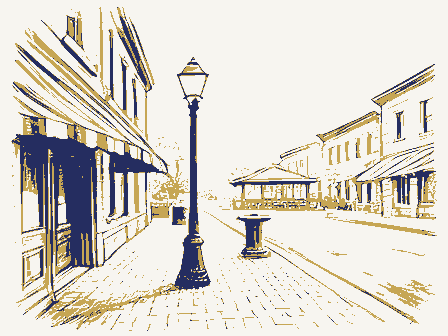
Wilbraham Town (part 7 of 8)
Part 7 of 8 of the account of this town in King's Handbook of Springfield, Massachusetts : a Series of Monographs, Historical and Descriptive, published in 1884. 15,978 words, covering 6 settlements.
Contents
38 sectionsThe section headings the book prints inside this chapter, on this part. Each one jumps to where it begins.
- Fine Loan Exhibit
- Unveiling Boulder Soldiers' Boulder At Glendale
- Dr. Marshall Calkins
- Anti-Slavery Demonstration
- Farms And Homes Of Wilbraham
- Congregational Church Erected In 1912
- Rev. Martin S. And Mrs. Howard
- The Merrick Elm
- Home Of Clarence M. Ripley
- View Of Main Street
- Home Of Chauncey E. Peck
- Home Of Fred'W. Green
- The Nelson Mowry Homestead
- Home Of William G. Rogers Robbet E. Weight
- Mr. And Mrs. Nathan C. Rice
- Old Homestead Of Rev. Joseph A. Merrill
- Rev. Nathaniel J. Merrill
- Schoolhouse, District No. 8
- Homestead Of Francis E. Clark
- Schoolhouse, District No. 1
- Schoolhouse, District No. 2
- The First Bungalow In Wilbraham
- Schoolhouse, District No. 5
- A Rare Scene
- Home Of Mrs. Leola B. Edson
- Schoolhouse, District No. 7
- Home Of Allyn M. Seaver
- The Rindge Oak
- Rev. Charles H. Gates
- Home Of Ernest L. Thompson
- Present Railroad Station At North Wilbraham
- Collins Inn
- The Baldwin Maple
- Erasmus B. Gates
- The Colonel Butler Homestead
- Jason Butler
- Home Of James S. Morgan
- Schoolhouse, District No. 6
Parts
8 pagesThe source prints this as one continuous account. It is split here so no single page grows too heavy to load; the text runs straight on across the parts and nothing is omitted.
The chapter
15,978 wordsReproduced complete and unedited. The text is machine-read from a scan of the 1884 printing, so expect the errors a machine makes reading a century-old page: misspelled names, dropped words, stray characters. Nothing has been corrected, because correcting a proper name invents one. The headings below are the book's own.
"A large crowd assembled at 3 o'clock to witness the beautiful cantata, 'The Flower Queen,' by 30 young girls, all prettily attired in gay costumes and carrying flowers of the season. The cantata was given on the spacious grounds adjoining the home of Mr. and Mrs. H. W. Cutler and Mrs. Cutler was in charge of the cantata, which was a most complete success. A young woman representing a recluse disgusted with the world was depicted as finding in a garden where fragrant flowers grew, helpful lessons of unselfishness and purity. As the young woman beheld the crowning of the queen of the flowers she was led to see that true preferment comes unsought and through service to others. Esther Bell was the May queen, Verena Griswold took the part of the recluse, and Mrs. Alice Hoyt was mistress of ceremonies. Among those impersonating the flowers were Esther Calkins as a dandelion ; Edith Roberts the crocus; Mrs. Lillian Dickinson, the lily; Ruth Bell. a violet; Dora LaBroad, the sunflower; Mrs. Ethel Bradway, the chrysanthemimi, while many little girls acted the parts of poppies and fairies.
"The loan exhibit which was held in the library all day, while naturally not as large as the one seen in Wilbraham the day previous, was large and decidedly interesting, completely filling three rooms on the ground floor. There was a sideboard handed down in the Warren family from Col. John Bliss, who was bom in 1727, a fireplace presented to the library by Miss E. 0. Beebe, pots and kettles of old-fashioned make, many articles belonging to Mrs. W. F. Morgan, tapestry coverlets, school books, bills of ancient date, old trunks, guns, china, pictures, pikes carried by John Brown's men, medicine chest, wearing apparel, and Indian-made buckskin coat loaned by Miss Beebe, kitchen utensils, chairs, chests and old looms.
"Among those who contributed to make the exhibit such a success were Mrs. Maria Baldwin, the Woodward family, G. M. Greene, Mrs. N. I. Bradway, the Collins family, Mrs. A. L. Bell, Mrs. D. C. Griswold, Mrs. H. M. Green, Mrs. Stephen Fiske, Mrs. Carlos Alden, J. M. Perry, Mrs. Emma A. Mowry, Mrs. C. F-. Fuller, Lila Atchinson and others."
Fine Loan Exhibit
"Wilbraham, June 20, 1913 - Glendale with its grassy glen and dale, its historic church, ancient homes near by, gay with bimting, and its massive boulder, on which were lettered in bronze the names of its war heroes, presented a scene not soon to be forgotten. To add to the charm of the picture a goodly company of Civil war veterans came to lift the Stars and Stripes from their comrades' monument, school children from district No. 7 sang, and recited patriotic selections, or assisted in the pageant and a large nimiber of former residents by their kindly words of greeting helped to give a real old home character to the celebratiori. Springfield, the mother of Wilbraham, was well represented by Dr. Marshall Calkins, a former resident, who though 85 years old in a few days, is wonderfully well preserved, and by William R. Sessions, also formerjy of Wilbraham. There were many from Springfield drawn to the celebration by ties of kinship. Many distinguished men and women have come from Glendale. Close by on the Munsell place was bom Chief Justice Marcus P. Knowlton, and Dr. Calkins was bom very near the huinble district school. Many others might be mentioned who, now scattered widely, are proud to acknowledge Glendale as their birth place, as their letters of regret read by Miss Beebe after dinner testified.
"The exercises of the morning opeijed at 11 o'clock at the boulder with selections by the local band. Then the school children of district No. 7 assisted by A. M. Seaver and Miss F. M. Moore, teacher of No. 7, sang a welcome. B. F. Greene, the presiding officer, said that he wished to thank the women especially for their part in furnishing meals and in other ways encouraging the men of the neighborhood in getting out the boulder and in setting it in place. Rev. W. L. Jennings offered prayer and as the two flags that covered the boulder were lifted the children sang 'The Star Spangled Banner.'
"The first speaker to be introduced was William R. Sessions, who expressed his regret that Dr. George Fuller of Monson, who was to have given an address, was ill.
"Mr. Sessions said in part: "This is the 150th anniversary of the incorporation of the old town of Wilbraham. You people of Glendale have arranged to celebrate the time by a neighborhood observance and have coupled with it the unveiling of a tablet to the memory of soldiers of the war that gave to these United States their independence, and also of the soldiers of the war that preserved the tmion of states.' This is certainly a wise and patriotic arrangement. Wilbraham has always been conspicuous for its readiness to do its fidl share in the support of the government, particularly in the time of war.
Unveiling Boulder Soldiers' Boulder At Glendale
when the town was only 12 years old came the war of the Revolution. At least 36 men of Wilbraham turned out on a minute's notice at the Lexington alarm and marched on foot to the scene of conflict. More than 50 marched to the Bennington alarm. Wilbraham had in 1860 a population of 2081 : she sent to the war 223 men or just about one soldier for each nine inhabitants. These 223 men from Wilbraham were 26 in excess of all calls, so that when the war closed this town had furnished all the men called for by the government and had a credit of 26 already in the service. The town with a valuation of $842,000 expended $25,000 for war purposes. Besides the $25,000 expended by the town there were large sums raised by women's soldiers' aid societies.
" 'In this hasty manner I have tried to give an idea of conditions, during the Civil war. The war was in full blast at the time of the centennial of Wilbraham 50 years ago and little space was given to it in the historical address on that occasion; hence I have deemed this effort to be not out of place.'
"Referring to some of the men from Wilbraham who have been most conspicuous, Mr. Sessions first instanced John Bliss, who came into Wilbraham from Longmeadow about the year 1750, served in the old French war, was selectman many terms, member of the provincial Congress, representative in the General Court, judge of the court of common pleas and had a fine Revolutionary war record. Col. Bliss has only one descendant living in Wilbraham. One of his daughters manied the first minister of the South parish. Rev. Moses Warren, and Fred A. Warren of North Wilbraham is his great-great-grandson. Mr. Bliss left no son but one of his daughters married Edward Morris, whose son. Judge Oliver B. Morris of Springfield, the long time judge of probate for Hampden Coimty, was John Bliss' grandson and Henry Morris, son of Oliver B. Morris, who was judge of Mass. court of common pleas, was his great-grandson. George Morris, son of Oliver B., who was clerk of courts of this county for many years, was his greatgreat-grandson. He served as clerk of courts until his death, when he was succeeded by his son, the present clerk of courts, Robert 0. Morris, who is a great-great-grandson of John Bliss of Wilbraham. E. B. Maynard was bom in Wilbraham and served for years as judge of the superior court.
Marcus P. Knowlton, who was bom in this neighborhood of Wilbraham, of Wilbrahani bom parents. He was for years a justice of the superior coiirt, promoted to the supreme court and then to be chief justice.'
" Dr. Marshall Calkins whose naine is a household word with Glendale people, followed, and in a short address showed how fitting it is that nations should honor their dead with monu-
Dr. Marshall Calkins
"Dr. Calkins said: 'The study of evolution and history shows a gradual progress during thousands of years and the most intelligent peoples have erected monuments and artistic tombs to perpetuate the memories of those who have been of great service to their country. Monuments as well as history show that the English people have been in the advance. In colonizing they have the best success - ^in the Western hemisphere the Pilgrim and Puritan have shown their mental and physical superiority - ;this fact is shown by our genealogy at the present time, as most of our ancestors and soldiers are descendants of the English and Anglo-Saxon stock. Heredity shows its power. The names on our boulder are reliable witnesses. Most of them are descendants of the Puritans and trace their pedigree back to periods between the 12th and 18th centuries. As illustrative fact, the number of soldiers serving in our wars imder the Calkins name is 430 during our short history. This fact is established by the military records. No doubt under other names the proportion of soldiers to population may be even greater. The names on our boidder show this probability.'
Anti-Slavery Demonstration
"The children then sang 'The Prison Cell' and as they were closing, the audience was surprised to see coming down the hill, pursued by men, old time slaves, who, just as they were about to be seized by their masters, were rescued by Glendale people and borne away in safety. This was intended to typify just such scenes as occurred in the North 60 years ago when Glendale was said to be a famous underground railroad station. Then there were recitations and more singing by the children, and at 12 o'clock the women of Glendale served a most excellent dinner in the church, which was partaken of by 200 people. Miss E. O. Beebe was toastmistress at the after-dinner speaking and among those who spoke briefly were representatives of the Connecticut Valley Historical society, former residents, the resident pastors and stimmer guests.
"Following the exercises in the church a large number of the visitors present repaired to the old Mixter tavern, a mile up the road, where was displayed from 2 to 8 o'clock what William F. Adams, president of the Connecticut Valley Historical society pronounces one of the best exhibits of its kind in the state. Indeed, as an illustration of the life of the common people in the olden time it is undoubtedly the best in Massachusetts. The collection bears the name of the Beebe collection, named for Miss E. O. Beebe, who for years has been treasiiring antiques used and passed on by her ancestors. At the time of Springfield's 275th anniversary Miss Beebe kindly loaned her collection to the Connecticut Valley Historical society as a part of its notable exhibit in the First church parish house.
"The exhibit yesterday was so large that it occupied practically the entire space in five large rooms and the piazza. One room was filled with rare old china, another with needle craft, while in a chamber upstairs was displayed articles in use in a home of the year 1830. The articles on the veranda all came from the attic. In the first or china room stood a long table on which was arranged old china in the order of its date or years of service. Here were seen old wooden utensils used in Wilbraham, stag horn sets, specimens of wedding dishes, such as the wedding china of John and Lucia Calkins. The collection of Ludlow bottles is probably the best in the state. In the typical living room of 75 years ago there could scarcely be found anything that was modeni. The fireplace with its ancient foot stoveg and warming pans, was decidedly unique, and scattered about the room were the Beebe coat of arms worked here and there, an old sampler of 1793, a Hancock's
"In an old closet was glassware of every description; this was fitted up with furnishings from an old Wilbraham house. In one of the upstairs rooms was a fine rare collection of old almanacs and anti-slavery documents. A chair near by contained a full gentleman's costume of the old time, with tall hat, vest, gloves, necktie and collar. On a large, curious bed was arranged a young woman's costume of 75 years ago.
"The replica of a room of 1830 contained an old-fashioned high bed, rag carpet, wax flowers, and on the bed referred to, the entire costume of an old-time lady. The tables here and all through' the house were draped in homespun and old-time fabrics used ,as backgroimds.
''The piazza was perhaps the most interesting of all, and here were ..arranged various curiosities, many hardly understood by the present generation, such as a bee smoker for driving out bees, queer reels and wheels, strange appearing cradles, a pedler's trunk, a picture painted by Miss Brewer, second preceptress of the academy, a large bread trough in which children could be rocked in case of emergency, queer lanterns, ladies' caps and slippers, baskets and unique examples of the photographer's art.
"The Mixter tavern," where the exhibit was held and in which Miss Beebe makes her horae, is nearly as ancient as the treasures that it holds and admirably adapted for the purpose.
And so, the three days' celebration of the 150th anniversary of the Incorporation of the Town, of Wilbraham was brought to a close. Almost perfect weather prevailed throughout the entire time, and not an accident marred the occasion.
Farms And Homes Of Wilbraham
Following is a list of the homesteads of the town, in their order, on the different roads and crossroads. The names of present owners are given, also those of former owners, beginning with the latest, and continuing in their order to the earliest, so far as we have been able to ascertain them. A dash will indicate that some names are unknown to us.
There are four roads rtmning north and south through the town, nearly parallel with each other and about one mile apart. To assist in readily locating these places, we will call the most westerly- road, the one rtmning along Stony Hill, West Street; the next one east, Main Street; the next one east, along the top of the mountain. Ridge Road; and the one still further east, East Street.
which stood just south of the monument, was burned about 1875. The monimient was erected in 1894 by the kindly munificence of Mrs. Lucia S. Foskit.
Just south of the monurrient lot was a store, kept for several years'; about 1860-75, by Clinton C. Leach. South of that, and north of the lane (formerly called "Burt's Lane"), is the cellar hole, .which marks the site of the AUis House, where a hotel was kept for a ntmiber of years by Mrs. E. M. Allis, also by Mr. James P. Brown.
centre village with the railroad line. The stage line and stable, are now owned by Fred W. Green, who also ownes the two lots last mentioned. The stage line business was formerly owned by W. L. Collins.
3. "Burt's Lane" (subject to some rights of way), and also the two lots in front of the livery stable and horse sheds are now owned by the North Parish of Wilbraham, which is the legal name of the First Congregational Church Society.
Congregational Church Erected In 1912
4. First Congregational Church. Erected in 1912-13 and dedicated May 11, 1913. The entire cost of the building, including organ and furniture was about $17,000. This building was erected to replace the one which was struck by lightning and destroyed by fire on the afternoon of July 5, 1911, and is the fourth meeting house on that location.
The one preceding it was erected in 1877, to replace one that was destroyed by fire, through the act of an irresponsible boy, on June 24 of that year, and which was built in 1857. The first meetinghouse was erected on Wigwam Hill in 1747-8, and was moved on to this ground in 1794, where it was used for public worship until 1857, when it was moved on to the ground now occupied by the livery stable and converted into a bam. It served the useful purpose to shelter beasts for twenty years and was burned, with four dwelling houses, in the conflagration of 1877. One of the dwelling houses, which stood north of the present church, about where the road leads into the horse sheds, had been used for many years as a store and postoffice by R. R. Wright, Roderick Burt, Pliny Cadwell, Mrs. Hempstead, and others. In 1906 the Parish purchased the lot south of the church, formerly occupied by the dwelling of Monroe Pease, which was burned in 1902. Former owners: Monroe Pease, 1873, L. B. Bliss, 1865, S. Foskit, and others. A meat market and store was kept there for a few years about 1890.
5. West side of street, now owned by Mrs. Mary B. Gumey. Former owners: Heirs of E. B. Brewer, Edwin B. 'Brewer, William Brewer, Jr., William Brewer, Isaac Brewer, who was the first settler of that name in town. In May, 1746, the Precinct "Voated and granted to Isaac Brewer, att the Rate of three poimds, old tenor per year, for the use of his Chamber to Gary on the publick worship in." It was used for that purpose in 1746-7-8. There is a stone in the underpinning; on the north side of the house, with the date "Ocf 2, 1748," cut in it. The house was also used for a tavern, probably until about the time of the death of Isaac Brewer in 1788.
6. Now owned by Mrs. Lucia S. Foskit, who inherited it from her husband Stebbins Foskit, M.D. Former owners: Ralph W. Allen, 1865, George Bishop, S. A. and Elizabeth Gushing, Elizabeth Hale, E. B. Brewer, - - , Isaac Brewer.
7. Opposite Congregational Church, owned by Mrs. Martha C. Munsell, inherited from her husband Elijah Munsell, who purchased it in 1889 from Asa Bushnell. Sold by former owners as follows ; James Luke in 1860, Mark Trafton in 1858, James W. Mowry in 1857, R. R. Wright in 1851, Pliny Cadwell in 1839, Ebenezer Brown in 1826, heirs of Dr. Joel Lyman in 1819, Rachel and Elijah Work in 1803, Jonathan Merrick in 1801, William King, Jr., in 1779, Charles Brewer in 1778, Luke Bliss
8. The Foskit Memorial Grange Hall. Owned by Wilbraham Grange No. 153, Patrons of Husbandry. The site for the building was purchased from Mrs. Munsell in 1900.
The hall, above the foundation, was built and furnished by Mrs. Lucia S. Foskit as a memorial to her deceased husband, Stebbins Foskit, M.D., and was dedicated to its present use February 27, 1901. It is used, every other year, for town meetings, and for many purposes of a social character, and is a welcome addition to our public buildings.
Rev. Martin S. And Mrs. Howard
On September 26, 1905, a large company assembled in the Congregational Chapel to join with them in celebrating their Golden Wedding Anniversary. I insert a few verses from a poem written for the occasion, illustrative of their work here.
9. The Deacon Warriner Parsonage. Owned by Congregational Society, North Parish of Wilbraham. Purchased by the Parish in 1868, and has been occupied by their pastor, Rev. Martin S. Howard, for forty-five years. Purchased by previous owners as follows; George L. Felton, 1858, Ralph Glover, 1855, George Bishop, 1851, Samuel Leach, 1834, who is supposed to have built the present house.
In 1890, the Parish "voted that the Parsonage shall be named the Dea. Warriner Parsonage, in honor of the first donor of money to the Parish." The lot originally contained about fifteen acres.
10. Just south of the Warriner Parsonage. House now owned by Edward M. Stephens. This place includes a large part of the land which was purchased by the North Parish in 1868, and was sold to Horace Clark and. others in 1869. Other owners: H. E. Miller, Chas. D. Woods and U. A. Morgan, Horace Clark, who built the present house about 1870.
Luther B. Bliss, who built the present house about 1855. It was used for a store and postoffice and also for a residence. The store and postoffice, also his residence, having previously been in the old schoolhouse which stood just south of the present house.
that there were about 65 scholars who attended the school. The new schoolhouse in district No. 2 was built a little north of the present stone church, and that in the new district No. 12 was erected about half a mile further south. It is the house now owned by Rev. Josiah G. Willis. I attended school there. The old schoolhouse, which had also served as a store and postoffice, was moved across the street onto land now owned by- Edward M. Stephens, converted into a dwelling and was occupied by tenants until 1869, when it was removed to the
The Merrick Elm
Standing about 20 rods east of Main Street, and about 8 roda south of the road leading to the Woodland Dell Cemetery, in the mowing now owned by M. C. Wade. Girth iS feet and 6H inches, at five feet above the ground. The view is to the northwest, showing Congregational church in the background.
13. Owned by Richard J. Sackett. Former owners: Dr. H. G. Webber, heirs of Edmund Jones, Edmund Jones, who built the present house, probably about 1850.
Merrick, his father, Lieut. Jonathan Merrick, his father, Dea. David Merrick, who settled there about 1735. The house was used for a tavern for many years. John M. Merrick was licensed as an "Innholder" in Wilbraham in 1840 and probably
Home Of Clarence M. Ripley
15. On east side of street, just south of the brook. Owned by Mrs. Isabel Ripley. Former owners: Rev. James Sutherland, Jane A. Lilley (Twing), Rufus Twing, who probably built the house.
17. Just north of the road to Monson, now owned by Jane E. Hancock. Former owners: Moses Hancock, who purchased the place in 1840, William Twing, Benj. Fuller, 1831, Asa
18. On w^est side of street. Marble shop, now owned by M. C. Wade. Formerly owned by George W. Lilly, who built the shop and carried on the business of marble cutting, erecting gravestones, etc., for about twenty years, until about' 1883. The shop has been used for storage purposes for more than twenty years.
19. Blacksmith shop. Formerly owned and carried on by Rufus Twing for many years, until about 1882. It is now owned by Elias S. Keyes, and used for storage of lumber.
20. East side of street, south of road to Monson. Now owned by Myron L. and Mrs. Laura Bruuer. Inherited from Myron Bruuer, who inherited it from his father. Dr. Luther Bruuer, who pi^rchased the place in 1824. The present house was built about 1835. Former owners: Jonathan Dwight, George Bliss, Joseph Sexton in 1791, David Shearer, Gabriel Bumham, Abel King, Phineas Newton, Jr., Phineas Newton, Simeon Willard. In 1791, the North Parish "Voted that the Meeting House be set 'on the south side of Joseph Saxton's lot in the Street." Probably the intended location was near this house.
21. A little south of Bruuer place. Now owned by Mrs. Josephine (Bliss) Johnson, of Providence, R. I. Former owners: Mrs. Rower.a Bliss, L. Stowell, Rev. Moulton.
William Twing, William" Gilbert, who inherited the place from his father-in-law. Dr. Gideon Kibbe, whose father, Capt. Gideon Kibbe, built the house about 1810, on land purchased from M. K. Bartlett. Dr. Kibbe lived here and practiced his profession for about fifty years.
person who settled in town, and whose daughter, Comfort, bom, March 15, 1734, was the first white child bom here. It was on these grounds that the ordination services of the Rev. Noah Merrick were to have been held, June 24, 1741, but the rain prevented.
Here also the first postoffice in Wilbraham was established, William Knight, Esq., postmaster, and the door leading from the hall into the front room, still shows the place where letters could be dropped in when the office was closed. A few rods south of this house, "Federal Lane" leads off to the east.
probably built the house. He kept a private school there. There is some hand carving in the finish of the north front room, which is said to have been done by him.
28. Now owned by Delbert H. Eaton. Former owners: Elias S. Keyes who built the present house, about 1890, on the site of one burned, which formerly belonged to H. Bridgman Brewer, who lived there for some years about 1850. Former owner, Maj. Wm. Clark.
29. Now owned by Rev. Josiah G. Willis. Former owners: George Summers, Mrs. Francis J. Warner. This house was the schoolhouse in District No. 12, from about 1842 to about 1880. It had a hall on the second floor which was sometimes used for social gatherings.
30. Now owned by Thomas H. Nims. Former owners : Mrs. James O. Martin, Chauncey E. Peck, Mrs. Nellie M. Scofield, who inherited it from her mother, Mrs. Sarah Mears, Mrs.
Dea. Na,thaniel Warriner, who had no children. Deacon Warriner located here about 1734, and was the fourth settler. He kept a tavern in the house. (See history for further details.)
31. Ten or fifteen rods south of the Deacon Warriner homestead is a cellar hole which marks the site of the first house erected in the territory now known as Wilbraham. Here Nathaniel Hitchcock erected his log cabin in 1730, which was occupied by his family the following year. Here, Dr. Samuel F. Merrick lived for many years and I suppose his daughter, Abigail, went from here to join the "Merry Making" at the house of Levi Bliss in 1799, when she, with the six yoimg persons were drowned in Nine Mile Pond. Probably Polly Warriner, who was drowned at the same time, lived in the next house north (now owned by Mr. Nims), as her father, Noah Warriner inherited that place by the wUl of Dea. Nathaniel Warriner in 1780. The house which formerly stood here was a fine specimen of colonial architecture. It was burned about 1875. The land is now owned by Thomas H. Nims.
32. Eight or twelve rods south, is another .cellar hole, which marks the site of a house which was burned about 1892. The land is now owned by Lee W. Rice. Former owners: Mrs. Miller, J. Oakes, James Robinson, Town of Wilbraham, perhaps - King.
33. On east side of street. Now owned by heirs of George W. Pease, inherited from his father, Reuben Pease, who carried on the shoe-making business there in a little shop which stood on the northwest corner of the lot. He made my first pair of boots. He was librarian for School District No. 12, and kept the books in his shop. A few of them may still be found in town.
34. On west side of street. Now owned by L. L. Stone. Former owners: Frederick and Edward Merrick, who inherited it by the will of Lorenzo Bliss, who inherited it from his father Pynchon Bliss, who purchased it from the heirs of Solomon Warriner, and may have inherited it partly from his wife Betsey, who was a daughter of Solomon Warriner, who was a son of Capt. James Warriner, who may have lived on this place. Solomon Warriner was librarian of a library in operation here in 1781. (See history.)
36. On west side of street. The stone house. Now owned by Charles S. and Fannie M. Merrick, who inherited it from their father James Merrick. Former owners ; Roderick Burt, Moses Burt, who built the house about 1830, Moses Burt Sr., who located here about 1740, or earlier.
37. Now owned by heirs of Samuel F. Merrick, who built the stone, bam about 1854. The house was built later. The north line of this farm is the north line of the overplus land in the second division, which is said to be 82 rods wide and extends south, probably to the north line of the Henry D. Foskit place.
A black oak tree, about one mile south of the Soldiers' Monument. When the selectmen of Springfield altered the road "running east & west near the revd Noah Miricks dwelling," in 1749, they began, "about 40 rod south of Moses Burts Dwelling House, at a black oak tree." This may be the same tree that was there 165 years ago. The view is looking east.
owned, or occupied by the stone cutters who worked in the quarry, at the foot of the hill, a little further to the east. The business was carried on by Joseph McGregory and others.
until the layer of brown sand-stone, on which they were working, was exhausted. I have been told that another layer of the stone was found to lie beneath the upper one, but it has not been worked.
39. The schooUiouse, District No. 3, on the "Green." Sometimes called the "MUe Tree." This building was erected in 1880 at an expense of about $900.00, not including furniture. In 1769, the town voted that the "Green" should be " Common Land or Highway."
40. On west side of street, and on north side of "Tinkham Road." Now owned by Mrs. Sarah (Adams) Coe. Formerowners : Dea. David Adams, John Adams, who built the house in 1794. On the east side, just south of the "Tinkham Road" is the site of a house burned some years ago, formerly owned by G. Frank Adams, his father, George Adams, his father, John Adams.
42. On west side of street. Now owned by Mrs. Luthera E. Bosworth. Former owners : D. L. Bosworth, James Richards, Ralph Scripter, J. O. Lincoln, Clark.
43. On east side of street. Now owned by Mrs. Jennie (Foskit) Rayen. Former owners: Henry D. Foskit, E. B. Bloomer, Roderick S. Merrick, Noah Merrick, Dea. Chileab Merrick, who is said to have built the house for his son, Noah.
About 20 or 40 rods further south, on the east side of the street, is the meadow, mentioned in the will of Dea. Nathaniel Warriner, as "Ashe swamp." It was called by that name for many years.
48. On east side of street, now owned by Jesse L. Rice, who purchased the place about 1868. Former owners: John Work, - - . Probably Moses Warriner lived here, or in a house some distance further to the east. There is a hewed stone in the foundation of the house marked "M W"
Oct. 2 1744 In 1744, Moses Warriner purchased lots 15, 16, 17, 18, in the third division of the outward commons, making a total width of nearly fifty rods north and south, and those lots must have been in this vicinity.
49. On west side of street. Now owned by J. Wilbur Rice, who built the house about 1906, on land purchased of Mrs. Lizzie G. Moore. When the foundations for the piazza were being dug a well was uncovered. There may have been a hotise there much earlier.
50. On east side of street. Now owned by Mrs. Lizzie G. Moore, who inherited it from her husband, Charles G. Moore. Former owners : , - Simons, , John Lincoln.
Twenty or forty rods south of the Moore place, is a branch road leading eastward up the mountain, and the only piece of woodland on the entire length of Main Street. Passing through the woodland about 50 rods, we find the original road leading up the mountain, also, a few feet beyond, a road leading off to the west. Both of these roads may be called the Stebbins Road, in remembrance of the first settler of that name who located on the road which leads to the eastward.
On the east side of stxeet, opposite the road leading to the west, the schoolhouse of District No. 3 was located for manyyears, until 1879, when, because of the division of the town, the location was changed to the "Green." The old schoolhouse was sold to the Congregational Society for $41.00, and was moved by J. C. Oooley and others, with the assistance of several yoke of oxen, to the grounds north of the church, and now constitutes the four most westerly ones, of the line of horse sheds in the rear of the church.
51. On east side of street, about 50 to 70 rods south of the Stebbins Road, is the old Mirick house, famous for its connection with the tragic death of Timothy, only son of "Lef tenant" Thomas Mirifck. (See History). The house was built in 1761. It was changed somewhat in 1910. It is now occupied by Walter M. Bliss.
52. On west side of street. Now owned by Ethelbert Bliss, who inherited it from his father about 1895. Purchased by former owners : Albert Bliss in 1870, Porter Cross, 1849, Joseph
Porter Cross built the present house in 1852, which was remodeled by Mr. Bliss in 1909. The present commodious bam was built in 1900, and is too small for present needs. The land, and the old Mirick house on the east side of street, belong to this place, which has been called "Mapleside Farm" for many years. It is popularly known as the birthplace of Wilbraham peaches. These are the last houses on Main Street north of the present town of Hampden.
on land purchased in 1826 by Caleb S. Fisk, "Trader," from Dr. Jesse W. Rice, and the same as all of the buildings on the north side of Springfield Street over to Pole Bridge Brook, is on the land formerly owned by Charles Brewer and others. (See No. 4.) The upper part of the building has been used for a Masonic Hall since 1870.
View Of Main Street
Pease, Charles M. Pease, who btiilt the store in 1888 which has been much enlarged by Mr. Gumey. On the southwest comer of the store lot, there was a shoemakers shop for many years, and ia it, Lorenzo Hancock established the postoflfice, when he was appointed postmaster by the Lincoln administration in 1861. I have been there for mail. In 1888 the building was removed to the northeast comer of the Virgin lot, converted into a small bam, and is there now. The west side is painted red. Just north of this store, was the house of Rev. Charles N. Virgin, which he probably built about 1830. It remained in his possession and that of his widow Lydia Virgin and her heirs, until about 1882. It was much used as a boarding place by students of the Academy, and was called "The Virgin Hollow Hotel." It is said that it may have been a "station" on the "Undergrotmd railroad." The house was torn down a few years ago.
4. On west side of Main Street, about ten or fifteen rods north of Springfield Street, first house north of Phillips' store, now owned by Chauncey E. Peck who built the present house in 1893, on the site of a house which was torn down, which is supposed to have been erected about 1740. Purchased by previous owners as follows: Ira G. Potter, 1893, Luther Markham, 1869, Lucius Stowell, 1864, Dr. Jesse W. Rice, 1826, Charles Brewer, 1781, who kept an Inn there for many years. He was also a cabinet-maker, Eleazer Smith, 1770, Sergt. Daniel Cadwell, 1765, Samuel Warner, by wUl of his father Ebenezer, "It being the lot whereon the said Samuel now lives," 1754, Ebenezer Wamer, 1732. Samuel Warner, called "Clark Warner" kept the record of births and deaths in this precinct, (now Wilbraham) beginning "March ye 15"' 1734," to "August 28, 1783." Twelve days after the last entry, he laid down his pen forever. The record is still in existence. The two strange stones, in front of the house, were placed there in 1899. They were found lying down, in low wet ground, a little way up the moimtain, in a northeasterly direction, near the "Lower Reservoir" of the Wilbraham Academy.
Born at Willington, Conu., in 1815. Came from Monson to Wilbraham in 1865. Served as Selectman, as special County Commissioner for six years, as Kepresentative in the legislature, as special trial Justice, as Justice of the Peace for 42 years, and, as Executor or Administrator, settled one hundred and eleven estates in the Probate Court. He died in 1909, in his 94th year.
Home Of Chauncey E. Peck
who was killed in 1853 (see History). His widow "Atmt Fanny Brewer," as she was familiarly called, lived here for about twenty years after the death of her husband, and had many students as boarders and roomers. The house was built by Rev. John W. Hardy about 1836 while he was Steward at the Academy.
6. On east side of street, the first house south of the road leading up the mountain, south of the stone church, now owned by Chauncey E. Peck. This house was the first Methodist meeting house in Wilbraham, and was built in 1793-94 and was occupied by the Methodists tintil about 1835. The ground on which the building stands, was owned by Charles Brewer, and was leased by him to the society for the consideration that the society should pay him "one pepper-corn" annually while they used it. It was pturchased by different owners as follows: Chauncey E. Peck, 1908, WilUam W. Merrick, 1841, Anson L. Brewer, 1835, Susan Brewer, 1829, Charles Brewer, 1781, Calvin Brewer, son of Charles, may have owned the place about 1825, and it was on this land, and on that on the west side of the street, where he wished the Academy to be located, and was much grieved when they selected another location. The, house is now occupied by tenants, Mrs. Allis and Dr. H. G. Webber.
7. On west side of street, opposite the first Methodist Episcopal meeting house. Methodist parsonage, which was probably purchased by the Methodist Episcopal society about 1855. Former owners: Capt. A. S. Flagg, Dr. Jesse W. Rice and others. (See No. 4.) House built by S. F. Pickering about 1852.
church. House now owned by Miss Fannie M. Merrick. Former owners : Heirs of Henry and Horace Cadwell, Emeroy McGregory, who inherited it from his mother, Eunice Rice (McGregory) (Cadwell), who inherited it from her husband, James Rice.
9. On east side of street. The Stone Church of the Methodist Episcopal Society. Erected in 1868-69, at a cost of about $45,000 and dedicated in 1870. The meeting house which had served the society since 1835, being moved to the east, and converted into a music hall by the Wesleyan Academy. Just north of the stone church was the schoolhouse of District No. 4, erected about 1842, burned about 1869. Just north of the schoolhouse was a house owned by Ezra White, which was burned about 1855.
10. On west side of street, opposite the stone church. Now owned by Fred W. Green. Former owners: Chauncey E. Peck, Sarah M. Taylor, Dr. Taylor, Mrs. Emily Work, Porter Cross Rev. Lorenzo White, Ezra White, Charles Warriner.
Home Of Fred'W. Green
11. Store of Charles N. Mowry, first place south of Rich Hall. Former owners, Samuel F. Pickering, who built the buildings about 1855, and kept a store there until about 1870.
12. Rich Hall. The Academy Boarding House. Named in honor of Isaac Rich who contributed largely towards the expense of its erection. (See History.) On East side of street, opposite the north end of Rich Hall, and just south of the road leading up to Fisk Hall, was the home of Dr. John Stems in 1768 and later. This road was the town road from Main Street up to the Ridge Road, and was laid out in 1768. The road was changed to the present location, about 1824.
13. Faculty Street. This road was laid out by the town in 1764, and, according to the old record, is "to begin from the Road or Street that David Warriner lives upon, on the Main Road leading to Samuel Glovers, - on the North side of the Lot originally laid out to John Dorchester, (No. 96) Extending west across Cowpen Meadow Swamp." The road may have been relaid about 1854.
14. The Principal's House, Wilbraham Academy. The present house was built about 1856 to replace the original one which was built in 1827, and which was moved some rods to the west and converted into a Dormitory for the use of the students.
15. Now owned by Mrs. Sarina E. Godfrey. Inherited by the will of her nephew, Edward H. Brewer, who died in Dalton, Mass. in 1911. Inherited by him, from his mother, Anna Keyes Brewer. Inherited by her from her husband, Henry Burt Brewer. Partly inherited by him, from his mother Lovice Brewer. The present place being the widow's third set off to her from the estate of her husband, Henry Brewer, who purchased it in 1814 from Samuel Hale and his wife, Mindwell Hale. Former owners: William Buel and others. The tract then included original lots 92, 93, 94, 95 and was 24 rods, 8 feet,
4 inches wide, counting 16 feet to a rod, and lay on both sides of Main Street, and probably extended north to the south line of the present Hurd farm, formerly of Timothy Brewer.
16. Now owned by J. Herbert Starr. Former owners: Mrs. Mary Wheelwright, Prof. Charles M. Parker, who built the present house about 1880, and was a teacher at the Academy 1870-1885.
17. Owned by Miss Louise Manning Hodgkins, who is engaged in literary work, and lectures to Colleges or Clubs, and has called the place "Fayre Houres." Former owners: Prof. Benjamin Gill, who was a teacher at the Academy for twenty years, 1872-1892. The house was built by James Luke about 1850, who lived there for several years.
18. Now owned by Mrs. Sarah W. Chapin. Former owners : Mrs. Hattie F. Bartlett, DeWitt Mowry, who inherited it from his father. Nelson Mowry, who lived there for many years, having pturchased it from Samuel F. Pickering. About the time of the beginning of the Civil War, Mr. Mowry had a young colored man in his employ, who may have been a runaway slave, called Isack. A daughter of Calvin Brewer, who lived on Springfield Street, just beyond the first branch of Pole Bridge Brook, (where Mr. Chase lives now), had married a southern man named Newell, and lived in the south for several years with slaves to attend on her, until the death of her husband, when she returned to her old home. Her sympathy was with the South, and one day she hung out the confederate colors. Excitement ran high in the village, a crowd quickly gathered, rushed over to the house and ptdled the colors down. A day or two later, she drove into Mr. Mowry's yard, and chanced to see Isack standing there, and asked who he was? Mr. Mowry gave an evasive reply, and Isack heard Mrs. Newell say "He looks like one of my boys." That night Isack disappeared, and was never seen by any of the Mowry family afterwards. Mrs. Newell had several of those arrested, who were engaged in
The Nelson Mowry Homestead
19. On east side of street, now owned by Charles L. Hubbard. Former owners: Samuel J. Goodenough, James Luke, who built the house about 1850. There is a story in connection with the building of this house. One day Mr. Luke took some boards up to Harris's saw mill in Ludlow, to have them cut up. When the work was done and he was about to pay the bill, he found his pocketbook was missing. There was $6,000 in it, and he hurried back along the road, asking all whom he met, if they had seen it. On the Old Bay Road, probably near where the electric road now passes over the railroad, he met a man who looked like a tramp, and asked him. The man replied that he had, and produced the pocketbook. After finding the contents were all there, Mr. Luke gave him $100.
20. On west side of street, opposite the Hubbard place. Now owned by Mrs. Nancy M. Flagg who purchased the place in 1887. Former owners: Heirs of Williani E. Brewer, William E. Brewer, Mrs. Nancy (Bliss) Smith, Abel Bliss, who built the house about 1845, for his daughter, Mrs. Nancy Smith, who afterwards married a Dr. Rice and settled in the west.
21. North of the Flagg place, now owned by Theodore Gebrault. Former owners : Miss Harriet Bliss, Abel Bhss, who built the present house for his daughter Harriet, about 1846. The piazza is a recent addition.
22. On east side of street, now owned by Miss Emily Wright, who inherited it from her father Robert R. Wright, who purchased the place about 1868. Former owners: Isaac Plumley. The. house was built and owned for a time by a Mr. Lane.
Home Of William G. Rogers Robbet E. Weight
Born in South Wilbraham in ISll. Came to Wilbraham Centre in 1839. Was a mer<- ohant liere for 35 years. Trustee of Wesleyan Academy for 60 years. Died in 1906, aged 95 years.
The building was erected in 1871 for a school house, and used as such until 1906, when the new schoolhouse on Springfield Street was occupied. Mr. Rogers has changed the appearance and arrangement of the building very much.
24. On west side of street, now owned by Mrs. Calvin G. Robbins. Former owners: Calvin G. Robbins, Mrs. Agnes McCaw, Mrs. A. S. Curtis. The house was built in 1891 by Chauncey E. Peck.
25. On west side of street, ten or fifteen rods from the same, with a lane or driveway leading to the house. Now owned by Mrs. L. R. Hurd and heirs of William Hurd. Former owners; Maria S. Robbins, Calvin G. Robbins, M3rron A. Bliss, heirs of Timothy Brewer, Timothy Brewer who lived there for many years previous to 1870. The place may have been owned by Gains Brewer. The main street formerly ran close to this house, and on up the hill to the north, but was changed to the present location about 1840.
26. On east side of street, ten or fifteen rods from the same, with a lane or driveway leading to it is the house now owned by Mrs. Fannie Coote. Inherited from her husband John R. Coote who purchased the place about 1894 from Philip P. Potter, who built the house about 1878.
27. On west side of street opposite the carriage shop. Now owned by Mrs. Edna Gebo. Former owners: Chauncey E. Peck, who built the house about 1888. Much of the timber in this house was originally purchased for the Town Hall, which was begtm early in 1886, but never finished.
28. On east side of street, opposite the Gebo house. Carriage and blacksmith shop, now owned by Theodore Gebeault (or Gebo). Former owners; Chauncey E. Peck who built the shop early in 1871, and carried on the carriage and wagon manufac-
29. On west side of street, just north of Mrs. Gebo's house. Now owned by Mrs. Ellen M. Stephens, who inherited it from her husband James Stephens, who inherited from his sister Elizabeth Stephens, who inherited from her father Isaac Stephens. Former owners : Olds and others.
30. Now owned by William H. McGuire Sr. who has been engaged for several years in supplying coal to the townspeople, handling about 500 tons each year. Formerly owned by Mrs. Sophia Eustis, who was a daughter of Timothy Brewer, and very much interested in the "Millerite" movement, about 1850. Ten or twenty rods north of this house, on the east side of street, is a narrow lane, leading up. to what was once called "Harmony Grove," where the Millerites, or" Adventists, as they were afterwards called, held meetings in summer time. The grove has been cut down and the land recently set to peach trees. Now owned by Lee W. Rice.
31. Up on the hill just west of the street. Now owned by Mrs. Martha A. Day, who inherited the place from her father Isaac Brewer, who was a son of Timothy. For many years, until about 1906, Mrs. Day's husband, William H. Day, carried on the cider manufacturing business, in the large building on the east side of the street, opposite the house, on quite a large scale, but the business has now been abandoned. Fifteen or twenty rods north of Mrs. Day's house, on the north side of the hill and ten or fifteen rods west of the street, is the cellar hole, which marks the site of what was called the Hoyt place, once owned by George Hoyt. The house burned about 1876.
The bam still standing, a little further to the west, was on the west side of the original Main Street, which formerly went over the top of the hill, until about 1840.
Mr. And Mrs. Nathan C. Rice
32. Continuing on down the hill to the north, in the track of the old road, which is still plainly visible, is the small house now owned by James G. MacLain, who purchased it from Mrs. Eliza Rice in 1901, who inherited it from her husband, Nathan Rice, who inherited it from his mother Nancy Rice, who lived to be 101 years old. Nancy Rice purchased it in 1831 from Ruhamah Babcock, who purchased it in 1814 of Abel Bliss, Jr. It is reported that this was the first Methodist parsonage in town. A narrow lane now leads from the house to the street. On account of the large number of lilac bushes, the house has been called "Lilac Cottage."
Bom in Wilbraham in 1784, one of twelve children of Thomas and Temperance Bliss who probably lived on the "Stebbins Road." Died August 10, 1886, aged 101 years, 8 months, and 26 days. I thinlc the portrait was taken on her 100th birthday. Buried in Adams Cemetery.
33. On east side of street, now owned by Mrs. Sarah (Bliss) Gillet, who inherited the place from her father John Wesley- Bliss, who inherited it from his father Abel Bliss 3d, who probably inherited it from his father, Abel Bliss 2nd, who purchased part of lots 65, 66, 67, 68, 69, 70, 71, 72, and 73 of Joseph Sikes in 1769, "bounded westerly upon Nathaniel Hitchcocks land near the Pine or Spruce Island, and easterly upon the top
Mrs. Gillet has a large number of old deeds and other papers, some of them dating back to 1733. She has the original lease which Charles Brewer gave to the methodist society of the ground on which their first meetinghouse was erected in 1794. She also has the contract which her grandfather made with Calvin Brewer and Wilbur Fisk, to build the Principal's House
35. West side of street. Now owned by Albert W. Torrey. Former owners: Leon G. Bartlett, L. J. Potter, Ira G. Potter, who purchased it in 1865. Dexter Allis, L. M. Warren, S. S. Gilman, B. C. Gilman, Truman Kimpton, Abraham Avery and others. On the hill east of this place, a bungalow is being erected by Frank C. Learned.
36. Now owned by Mrs. Beatrice L. Millard. Former owners : Alden Knowlton, his mother Mrs. Nathaniel Knowlton, Nathaniel Knowlton, Buell, John Jones, Abraham Avery, who is said to have had his tannery a few rods west of the house. In 1861, Charles Buell lived here with his father. He was the first soldier who enlisted from Wilbraham.
I have been told that there was an acqueduct to this house from a spring quite a distance to the east, and in the time of the Civil War, the price of lead was so high that the pipe was dug up and sold.
38. On west side of street. Now owned by Arthur A. Chilson. Former owners: Alvin Chilson, James Conners, C. S. Niles, David M. Havens, William Jones.
Old Homestead Of Rev. Joseph A. Merrill
39. Now owned by Mrs. Rose (Merrill) Welch. Former owners : Joseph Merrill, Rev. Joseph A. Merrill, who built the house probably about 1830. He was a presiding Elder in the Methodist Episcopal Church for more than twenty-five years. He was one of the founders of the Wesleyan Academy here, and its third treasurer 1832-1842. His son Joseph Merrill was Librarian of the Methodist Episcopal Sabbath School for forty years, and it is said, never missed a Sunday. Three of his sons were ministers, and two of his daughters married ministers. One of the daughters of Joseph, married Rev. Henry E. Hempstead. He was a Chaplain in the Civil War, and died in the South soon after the battle of Fredricksburg, Dec. 13, 1862, and his widow Mrs. Hempstead, was appointed postmistress in Wilbraham.
Rev. Nathaniel J. Merrill
Died in 1912, aged 95 years. Tlie oldest man in Wilbraham at that time, and tlie oldest member of the New England Methodist Episcopal Conference. He was a son of Rev. Joseph A. Merrill.
from her father, Willard F. Munsell, who purchased it in 1859, and lived there 47 years. Luther Fay purchased it in 1857, Robert R. Wright in 1852, Levi Bliss who inherited it from his father, Levi Bliss, who probably built the house about 1772. For in that year he bought of the town, the west half of the Ministry Lot in the Second Division, Lot No. 38, which was 37 rods, 4 feet wide, 16 feet to the rod, beginning at Main Street and extending west to the Inward Commons. This house was the home of Gordon, Leonard and Asenath Bliss, who with three other young people were drowned in Nine Mile Pond, Aprjl 29, 1799, and the bodies of the first five who were recovered from the waters were brought to this house.
46. Now owned by tSe Cutler Co. who built the house about 1880, on land formerly owned by Lorenzo Bliss. The house is now occupied by Benj. Chase, and G. D. Keith who conducts a small store.
Schoolhouse, District No. 8
48. School House of District No. 8. Built by the town in 1905 at a total cost of a httle more than $5,000, to replace one that was burned on the same ground which was built in 1879 at a total expense of $2,411.70.
49. On west side of street, near old Bay Road. Church of St. Cecilia, belonging to the Catholic denomination. Erected in 1890, on land purchased from Warren L. Collins. Just north of this church the original Boston Road crosses our Main Street.
50. On east side of street. Buildings owned by J. M. Perry, and used for a garage. A few rods north of this place, the Main street turns east and enters the Boston Road, the places on which will be given under another heading.
1. Near the southwest comer of the town, Robert W. Day of Springfield has recently purchased about 170 acres of land and has commenced setting it to young whi^e pine trees. About fifty thousand have already been set, and it is intended to increase the nimiber to 150,000 in two or three years. A few; hundred red pines have been set for ornamental purposes. Some of the former owners of the land were, James Phelps, Lyman Warner, William Leach, Isaac Leach and others.
Robert O. Morris of Springfield also has about 25 acres in that vicinity. Former owners: S. B. Warner, Wm. Leach, Isaac Leach. Mrs. Laura Crane of East Longmeadow has about 30 acres near there. Inherited from her husband, Sylvester Crane, Jr., who inherited from his father, Sylvester Crane Sr., who inherited from Ziba Crane, who purchased of Moses Burt in 1833. There are no houses on any of this land.
About 142 acres of land have been purchased of different owners, and the following varieties of game are raised, Wood, Black and Mallard Duck, Wild Turkey, Reeves, Ringneck Pheasant, and Quail. The duck and pheasant are now released to go free.
Homestead Of Francis E. Clark
4. On east side of street. ..Now owned by E. A. Gleason. Former owners : C. Langdon, Mrs. Ella (Clark) Shaw, Francis E. Clark, Dea. Horace Clark.
5. On west side of street, and 15 or 20 rods north of Pole Bridge Brook. Now owned by Mrs. James S. Sherwin. Former owners: Dea. Henry Clark, Dea. Horace Clark who purchased from Alvin and William Vining in 1842.
7. Now owned by Gardiner W. Files. Former owners : Frank Learned, M. S. Blodgett, Charles C. Learned, Francis J. Warner, Samuel Warner and others. A little north of this house was a small house which burned.
9. At the four comers where Springfield Street crosses West Street. On west side of street and south of Springfield Street. Now owned by Edmund W. Jones. Former owners: Reuben Jones, Lyman Warner, Vashni Warner.
10. On west side of street, and north side of Springfield Street. Now owned by Mrs. James C. Cooley, who inherited it from Mrs. Lucinda (Brewer) Cooley. Former owners: Dwight A. Brewer, Andrew Brewer, Gains Brewer (?).
11. On east side of street. Now owned by Miss E. Louise Brewer. Former owners: C. A. Brewer, D. A. Atchinson, G. S. Atchinson, Benoni Atchinson.
12. On west side of street. SchooUiouse, District No. 1., erected in 1870 to replace one that had become outgrown. The school lot was very much enlarged at that time.
14. Now owned by F. A. Bodurtha. Former owners: James Richards, D. A. Atchinson, Electa Atchinson, D. L. Atchinson, Gilling Atchinson, Benoni Atchinson, Jr., Benoni Atchinson, Sr., who settled on the east side of the street, near where the well is now, about 1745. His son Joshua was baptised in the church here in 1746. The place remained in the possession of the Atchinson family for nearly 150 years.
Schoolhouse, District No. 1
15. On east side of street. Now owned by Mrs. Lena S. White. Former owners: John Duteau, Arthur F. Smith, Mrs. Emogene (Atchinson) Wheelock, D. A. Atchinson, D. L. Atchinson, Ethan Warriner, Ezra Barker.
16. On west side. Now owned by Henry M. Bliss and Charles B. Hitchcock. Former owners: Henry M. and Myron A. Bliss, who inherited it from their father Samuel M. Bliss, who moved here in 1847, Richard D. Hudson, John Russell, Ebenezer Warner, Benj. Warriner. There are brownstone quarries on the west part of the farm, which were formerly worked by Hudson, the stone being sent to Worcester and Springfield. There is a fine view of the moiintains from this place and it is appropriately called, "Mountain View Farm."
Former owners: H. H. Burbank, Ephraim Fuller, Jr., Ephraim Fuller, Sr. The latter had a reputation for teUing big stories. Once he was shingling his bam and carried 1000 shingles up the ladder. When he stepped off the ladder onto the staging, the staging broke, and he felt himself going down, but he caught hold of the lower course of shingles, which were nailed to the roof, with his teeth, and held on tmtil a ladder was put up to rescue him. Another, which I heard about fifty-five years ago. He was out hunting wild pigeons and started a large flock. He fired, swinging his gun sideways as he pulled the trigger. His aim was a fraction too low. He did not Idll a single pigeon, but he picked up two bushels of pigeons legs that his shot had cut off. There was a brick in the chimney of this house marked 1779.
22. On east side of street. Now owned by Dr. James M. Pease, who inherited from his father, Loren C. Pease. Former owners: Frank Chaff e, E. Chaffe.
23. On west side of street. Now owned by William N. Wallace. Former owners, Kate B. Kallman, Patrick Quinlan, who built the house in 1870. He had previously lived in a small house on the east side of the street, a little way up on the small hill.
24. "Peggy's Dipping Hole" Road, leading off to the west. Just north of this road is the cellar which marks the site of the home of E. Russell Warner, which was burned many years ago.
26. On east side of street. Now owned by Ward A. Allyn, who built the house about 1900, in an orchard formerly on the estate of James C. Pease.
27. Now owned by Gilbert H. Pease, who inherited it from his father, James C. Pease, who had 16 children bom to him in the house which formerly stood on the site of the present house.
28. On west side of street. Now owned by Charles W. Hardy who purchased it about 1908, of Dr. H. 0. Pease, who built the house about 1901 on land inherited from his mother. Formerly owned by James C. Pease.
29. On east side, some rods from the street. Now owned by Seymour Holland. Former owners: Dr. H. 0. Pease, who built the house, Emeline Pease, James C. Pease.
30. On west side of street. Now owned by Philip Babineau. Former owners: Joseph Frederick, E. J. Gendreau, John Trask, Henry Trask, who lived there for many years previous to about 1870.
31. On west side of street. Now owned by Robert Welch. Former owners : Mary Welch, Patrick Welch, Henry Robbins, M. Langdon, who bmlt the house about 1830.
33. On east side of the street. Now owned by William Fitzgerald. Former owners: Timothy Powers, James Powers, who built the house, a little north of the site formerly occupied by the blacksmith shop of J. P. Streeter. The shop was discontinued about 1875.
34. On west side of street. Now owned by James P. McDonald. Former owners: Mrs. Minerva (Langdon) Streeter, her father, Walter Langdon, his father, Capt. Paul Langdon, who probably settled here, from South Wilbraham previous to 1800. About 1863, in the time of the Civil War, Walter Langdon went to the blacksmith shop one morning to hear the war news. The Union forces had gained a victory. He became excited, and died in a few hours. He was nearly ninety years old.
36. Down the hUl and past the little brook at the foot of the hill, on west side of street. Now owned by E. Towne. Former owners: Alburtus Langdon, Hanson Langdon.
37. On east side of street. Now owned by John B. Ebright. Former owners: J. Poduski, John Trask. Some 40 or 60 rods north of this place. West Street crosses the new section of the Boston Road which was constructed in 1896, making a great improvement over former conditions.
40. On west side, in the triangle made by the new and old Boston Roads is an old cemetery, in which a stone tells of the death of Roswell P. Stevens, who was killed at the original
Wilbraham depot August 10, 1840, "By falling across a Rail Road Track, Aged 23." In the record of deaths the first name is given as "Parmele."
41. On west side, very close to the railroad. Now owned by John B. Dumane. Former owner, W. Stevens. At this point West Street formerly crossed the railroad at a grade crossing. In 1883 the course of the road was changed a little way to the ' east, an underpass constructed, and the grade crossing abolished. The Boston Road formerly ran on the south side of the railroad, some 50 or 80 rods further to the east, and crossed there at a grade crossing near where the Wilbraham station was first established, which station was moved to the present Oak Street, in 1851.
West Street continued. The following places are all north of the railroad in the northwest comer of the town. After going through the underpass and entering the original road.
Schoolhouse, District No. 2
11. On east side of street. SchooUiouse, District No. 2. which was erected in 1886 at a total expense of $1954.00. Because of the pine trees surroimding the location it is appropriately called "The Pines." I think that all of the other places on this street, to the Springfield line, belong to the Ludlow Manufactiuing Associates, which have about 60 houses in this vicinity which are not entered here individually.
About 30 or 50 rods east of Bridge Street, so called, is an old road leading northerly from the old Boston road towards Chicopee river. Now, sometimes called River road. On the west side of this road and on the north side of the old Boston road, is the site of the Elisha Fuller tavern which was moved to Indian Orchard station (now called Oak Street) in 1851. There are now two houses on this road.
2. Now owned by Peter Biurdon. Former owners: William Gorven, Ludlow Mfg. Co., L. H. Brigham, Matthew Welch. Fifty years ago this place was known- as the "Red House."
There is a short street leading from the River Road west to Bridge Street, on which three houses have been recently built, all on the south side.
This road formerly ran north and south nearly the entire length of the original Wilbraham. That part of it which runs south from the four comers, at the top of the mountain, where the Monson Road crosses it, was discontinued as a highway.
about 1870, and called a "Bridle Path." This south part was laid out by the town in 1769, in consequence of a "Petition by Joseph Jones to lay a Road back side of Bauld Mountain." It commenced near what is now called "Burleighs comer," as follows: "Beginning at Black oak staddle on the Middle Road about 40 rods north of Serg. Bangs fence," then north in all 330 rods, "to a stake and stones the east side of Joseph Jones house, then as the path now goes the east side of Joseph Masons house" - then past the west side of Perminas (?) Kings house, "then north by east the west side of Rattle Snake Peak, so called, to the Road formerly laid out by Springfield." (Monson Road.) So it appears there were three houses on that road in 1769, where there are none now. The road continues on to the north, until it enters the Old Bay Road, now called Maple Street at North Wilbraham. I have called this road Ridge Road because the name is so descriptive of the locality. For about one mile north of the Monson Road, there are no houses now, although several cellar holes, along the road, show where there were houses once.
Among them, are the colonial homes of Cadwell, Webster, Chapin, who is said to have brought the first rat to town, in a sack of wool purchased in Rhode Island. Ezra Barker, Town Clerk for many years, lived on this road.
Some of these cellar holes, near the four corners, -mark the place where the men went in the night time, to dig for "Cap. Kidd's Gold," about 1850.
1. A little more than one mile north of where the Ridge Road crosses the Monson Road, some 50 to 70 rods east, is the first house on this road. Now owned by George W. Ely, or by his daughter, Mrs. Edith (Ely) Patterson. Former owners: Andrew Anderson, , Solomon Brewer, D. L. Atchinson,
2. Some 30 or 50 rods east of the Ely place is another house, now owned by George W. Ely, who built it about 1900. Mr. Ely owns several large tracts of land in this vicinity.
3. On west side of road. The old stone chimney still standing marks the site of the- Webster house. The place is now owned by George W. Ely. Former owners : Orrin Webster, Moses K. Bartlett, S. Bartlett. Just north of this chimney is the road leading down to Wilbraham centre.
4. On east side of road opposite the old chimney. House, now owned by Mrs. Edith (Ely) Patterson. Former owners: Roswell P. Mills, Orrin Webster.
The First Bungalow In Wilbraham
5. On west side of road. Monus Konus Bungalow. Now owned by Miss Effie L. Morgan. Former owners : Mrs. W. F. Morgan. Erected in 1910 on land formerly owned by Charles Tupper, Jennie E. T. Dowe, R. P. Mills, J. Duncan, Jonathan Ely. This was the first bungalow erected on the mountain. About 1850, a small shoemakers shop stood near, and that business was carried on by Jonathan Ely and his son Dixon.
7. On west side of road. Now owned by Louis G. Stacy. Former owners: George W. Tupper, William Tupper, Warren Collins, Capt. James Shaw, who commanded the company that responded to the Bennington alarm in 1777. The house formerly stood on the east side of the road, where the bam now is. It is said, that Warren Collins and his wife cared for Captain and Mrs. Shaw in their last days.. He died in 1831. Mr.
Schoolhouse, District No. 5
8. West side of road. Now owned by Herbert E. Tupper. Former owners: Edwin L. Tupper, who purchased the place in 1842 of WilHam Bliss, it being part of the original Bliss farm. Mr. Tupper is the rural mail carrier on the R. F. D. route and is famUliarly called "Bert" by those whom he serves. On the
9. On east side of road, and on north side of the road, leading eastward to East Street. Schoolhouse of District No. 5. This schoolhouse formerly stood about one-half mile further north, and was moved to the present location in 1881.
10. On west side of road. Now owned by Mrs. Edith Miniter Former owners: John Hitchcock, John Thayer, Samuel M. Bliss, J. Bliss. The house was built in 1830 by Samuel M. Bliss. It is said that the town's poor were kept in this house about 1845-50. A very tall oak tree stood near this house, and was sold by John Thayer, about 1857, for $100, to make a mast for a ship.
12. On east side. Now owned by Benj. F. Green. Former owners: Miss Angeline Woodward and her sister Jerusha Woodward, Dea. Aaron Woodward. This place was known for many years as "The Deacon Woodward place." Deacon Woodward settled here, probably about the year 1803. In the records of the First Congregational Church is this entry, "Jan. 1.. 1804, Rev. Aaron Woodward & his wife were admitted by letter from the church of Christ in Wilten (?) Norwalk Conn." Elizabeth; his daughter, was bom here April - , 1804. Deacon Woodward died February 21, 1840, aged 79 years. He never served here as a pastor, but was a deacon for many years. There is a stone in the underpinning of the house marked 1769. Probably Oliver Bliss lived here at that time.
13. On east side. Now owned by T. D. or Charles S. Potter. Former owners: Miss Abbie Spear who inherited it from her mother, Mrs. Antoinette (Bliss) Spear. John Bliss, Oliver Bliss, Ensign Abel Bliss. It is now used for a suburban home. (See History.)
14. On east side of road. Now owned by William Whitney. The house was built by Lawrence Wrinkle about 1883 and being visible at quite a distance from the east, is sometimes called "The Lighthouse."
A little north of this place, the Ridge Road enters what was formerly the "Old Bay Road," and turns to the west, and continues along what is now called Maple Street, until it
A Rare Scene
In 1767, the town "new laid the Third Road in this Town (so called) as^ follows." "Beginning near the south side of Jabes Hendricks Lot - thence northerly." They ran the line from one tree to another. (In all 81 trees are mentioned.)
Also, "near Caleb Stebbins Bam - ^near Daniel Cadwells House - to a White Rock on the north side of Twelve Mile Brook - to a Bl,ack Rock North of Stebbins Mill - then to the Bay Road by a Pine Tree." It is interesting to recall these ancient boundaries. The White Rock is still there. It is on the west side of the road" and is about four or five feet in diameter.
Home Of Mrs. Leola B. Edson
1. On east side of road. Now owned by Mrs. Leola (Blanchard) Edson. Former owners: Mrs. Sophronia (Calkins) Blanchard, Mrs. Lucia (Day) Calkins, A. Jackson' Blanchard, Susan Lamson, Shadrach Thayer, Abisha Blanchard, Eleazer Bishop, Peter Walbridge, 1806, Moses Hancock, Amos Beebe, Judah Wiley, 1793. First cultivated strawberries in this neighborhood were raised by Shadrach Thayer.
Dr. Wm. Carpenter, Capt. John Carpenter, Moses Hancock, Jr., Moses Hancock, Mrs. Wealthy (Bishop) Hancock was the "yarb docter" of the neighborhood, and her "Bee Bahn" grows there beside the wall today as it did one hundred years ago.
Schoolhouse, District No. 7
This was among the first places in town purchased by persons of the Jewish nationality, about 1902. All the residents agree that they were good neighbors, but they only remained a short time.
5. About one-quarter of a mile north of the Knowlton place the street crosses the Monson Road. On the west side of the street, and on north side of Monson Road is the Glendale Cemetery. Probably established previous to 1800.
6. Opposite the cemetery on east side of street is the Glendale Methodist Episcopal Church, which was erected in 1868. The Duty Partridge house stood many years ago, just north of the site of the church.
7. On east side. Now owned by Albert L. Farr who built the house in 1913, on land purchased of his father, James H. Farr. This is the first new house built in this vicinity for several years.
9. On west side. Now owned by James H- Farr. Former owners: Wm. P. Clark, George Edson, Isaac N. Chapin, Solomon Chapin, Zebulon Chapin, Samuel Bishop, 1777. The south part of the farm is on the overplus land and was purchased of the town of Wilbraham in 1773. Isaac Chapin had a Brandy Still just north of the bam on this place. At the time when the temperance wave was sweeping over the land, about 1845, the still caught fire. The neighbors gathered, but they were glad to see it go, and would not lift a finger to help Mr. Chapin put out the fire, although he begged them with tears to aid him. It is said that Zebulon Chapin, father of Isaac, lived about 50 rods east of the Ridge Road, near the top of the mountain, and that several rock maples now mark the site of his house, and that his 12 children were bom there, from 1769 to 1791. He gave this place to his son Isaac.
Home Of Allyn M. Seaver
Benjamin Edson, 1802, Justin Stebbins, Zebtilon Chapin 1783, Caleb Stebbins, 1739, Daniel Warner. The old deed was part of lots 114, 115 and 116.
12. On east side of road. Now owned by Dwight W. Eddy. Former OTOiers: Eleazer Bishop, Shubal Davis, Nathaniel Knowlton, Orson Holdrich, Elmer Lemon, Albert Bliss, Anna Bennett.
14. On east side of road. Now owned by Allya M. Seaver. Former owners: A. Delos Seaver, Jason Stebbins, Frederick Stebbins, Caleb Stebbins, David Chapin, Jr., in 1751. This is said to be part of the original lot, 105, allotted to Japhet Chapin in 1685, and came to his son Daniel in 1685. Many Indian relics have been found on this farm.
Daniel Cadwell, who from 1737 to 1764 bought of Samuel Warner, David Warriner, Isaac Brewer, the east end of lots 97 to 102. The deed from Samuel Warner reads, "From Brimfield line, west, to a gutter where a road is to be laid out." (Ridge Road.) It is said that the early settlers got bog iron ore near the brook east of the house, and that Temperance Day Knowlton raised silk worms with considerable success at the time of the silk industry excitement. This was one of the places purchased by the society for the promotion of agriculture among the Jews a few years ago.
16. On west side of road. Now owned by Joshua L. Brooks. Former owners: A. M. Seaver, Oscar F. Benedict, John Bullard, Stephen Cadwell. Capt. Daniel Cadwell purchased of Nathaniel Warriner in 1764. Being the east end of lot 96,
22 rods, 2 feet and 9 inches wide. Mr. Brooks purchased the place in 1903. He was instrumental in getting the telephone line established in this vicinity. He has called the place "Brookmont." Mr. Brooks is now President of the Springfield Board of Trade.
19. On east side of. road. Now owned by Fred C. Phelps. Former owners : George W. Ely, George Leadbetter, James W. Bennett who built the house.
20. On east side of road. Now owned by J. Addison Bennett. Purchased from John Rindge. There are some curious stones on this place which may have done service for the Indians.
21. On west side of road. Now owned by George L. Rindge. Former owners : Lucius Rindge, Royal R. Rindge. This place, having been occupied by the Rindge family for more than one hundred years, is very appropriately called "Century Homestead."
On east side of road there is a cellar hole which marks the site of a house burned several years ago. The place is now owned by Henry M. Green. Former owners: Mrs. Julia (Butler) Green, Benjamin Butler, Orsemus Smith, Alvin Bennet. Mr. Orsemus Smith was killed on the railroad near the North Wilbraham station about 1867, and Mrs. Smith drowned herself and her child in the brook east of the house about 1872. .
The Rindge Oak
A red oak tree standing at the inteisection of the roads just north of the "Century Homestead." Girth is 16 feet, at 3 feet above the ground. The view is looking northerly.
Rev. Charles H. Gates
Born at Palmer in 1823. He was ordained in the Congregational Church in 1851. Most of his service as a clergyman was in other states. He retired from the active ministry in 1893. He was the oldest man in town and held the Boston Post cane. Died December 12, 1914, in his ninety-second year.
24. On the east side of the road is the home of Rev. Charles H. Gates. Former owners: Asa Gates, Dr. Shearer. Rev. Mr. Gates was bom in Wilbraham in 1823, and is now the oldest man in town.
28. On west side of road. House, owned by Estate of E. O. Gates. These last five places were formerly the property of Dwight W. Ellis, Gates and Nelson, Stebbins and others, and were used as homes for the help employed in the saw mill, grist mill, and woolen mills, some of which were operated here, from about 1762, until recently, using the power furnished by the brook. The road formerly -yyent over the railroad at a grade crossing, and entered the Boston Road, between the houses now owned by E. N. Lyman arid Bradway and Warren. Now the road nms under the railroad, at an underpass several rods west- of the former crossing, and enters the Boston Road.
East Street, completes the list of roads running north and south through the town. We will now commence on the roads running east and west in our territory, beginning with the most northerly one.
4. A little east of Cormack house. Now owned by James Flanigan. This place was owned or occupied for many years by C. M. WUlard, who conducted the saw mill on the south bank of Chicopee river. The first railroad station in Wilbraham was established here, probably between these last two houses. The road continues on about half a mile and crosses the railroad by an overhead bridge and again connects with the new Boston Road. Just before crossing the railroad, on the north side of the road is the cellar hole which marks the site of the house of Patrick Moran. This crossing is still called " Moran's crossing." It was formerly a grade crossing, eight or ten rods ftirther to the east.
5. On north side of road. Now owned by George C. Rose. Former owners: Allyn M. Seaver, James W. Bennett who built the first house there about 1900 and which was burned some years later and the present house erected. The place has been called Overlook Poultry Farm.
7. On south side of road. Now owned by heirs of Levi R. Bliss. Former owner: L. Ruggles BHss who built the house, about 1840. Known as Minnechaug Farm and as a summer resort.
8. On south side of road, near the edge of Nine Mile Pond. 14 cottages, property of Mrs. F. A. Towne of Springfield. Mostly used for summer residences.
10. On south side of road. Now owned by Mrs. Mary P. Moore. Former owners: Mrs. E. B. Gates. Mrs Dexter Tufts, Mr. Fred Pease, Marshall A. Lane.
12. On north side of road. Auto Inn. Now owned by William E. Liversage. Former owners: Marshall A. Lane, Augustus J. Lane, , Captain Shepard, a retired sea captain,
13. The "Island." Now called Bungalow Point, Nine Mile Pond. Now owned by Mrs. J. N. Northrop who owns ten cottages there which her husband commenced to biaild about 1909. Occupied in summer by families for vacation purposes. Open May 1 to October 15. These cottages are on a peninsula which extends into the pond from the east shore.
14. On south side of road, and east side of Nine Mile Pond. Club House. Owned by the Manchonis Club of Springfield, formerly Bicycle Club. House built about 1888.
North of Auto Inn, and a little north of the Boston & Albany railroad are two houses, connected with the Boston Road by a cart path. Begiiming at the west.
18. On north side. Now owned by Bernard Lynch. Former owner, Augustus Lane. A little east of this place the Boston road enters the main street leading to Wilbraham centre.
3. On north side of road. Toiyn library. Former owners: Henry Cutler, James W. Bennett, who built the house about 1875. This place was conveyed to the town by the will of Henry Cutler, subject to the life use of Abner E. Bell, which use expired at the decease of Mr. Bell in 1912. It was fitted up for its present use at an expense of about $2,500, paid by the town.
6. On south side of road. Present owner. Ernest L. Thompson who built the house in 1909 and who is employed as paymaster by the Fred T. Ley Co.
Home Of Ernest L. Thompson
8. On north side of road. Present site of Boston and Albany depot. The station was probably established here about 1852, called " Collins Depot."
Present Railroad Station At North Wilbraham
9. On south side. HoUister Block. Now used as postoffice and James Logan's drug and grocery store. Now owned by Julia F. HoUister of Lee, Mass., and built by Frank HoUister and T. Hulbert.
10. On north side of road. Bradway's grocery store. Owned and built by Nelson Bradway in 1912 on site of former postoflfice and store occupied by E. B. Gates, Charles Stacy and
11. On south side of road. Collins Inn. Now owned by Mrs. Emma (Collins) Mowry. Built by W. L. Collins in 1874 and has been the Central Telephone Station since the line was first established. A livery stable has been kept in connection with this house for many years.
12. On south side of road. Small house. Now owned by Mrs. Emma (Collins) Mowry. Former owners : W. L. Collins, Warren Collins who built it in 1847. This building was the first railroad station and stood on the site of the present depot.
13 and 14. On north side. Two small buildings, owned by estate of W. L. Collins. Built about 1880. One formerly used by town for storage purposes, and the other a meat market.
Collins Inn
15. On south side of road. Building owned by Joseph Baldwin's heirs, and used by Frank A. Fuller as a general grocery store. Built about 1892 on the site of a cheese factory, which was erected about 1867, and which was burned.
built it in 1887. The road now runs by the underpass, under the railroad. We will complete the list of places in North Wilbraham village, before continuing along the rest of this road.
1. On north side of street. Now owned by John Baldwin, postmaster. Former owners: Joseph Baldwin, John Baldwin, who kept a tavern from 1836 to 1860 or 1865. Formerly called "Ten Mile House."
6. South side of street. Present owner, Frank A. Fuller, merchant. Former owner, Hiram Dahks who built house in 1877 on land purchased from John Baldwin. This was the site of an
7. North side of street. Present owner, Mrs. Frances E. Wall, widow of Edwin Wall, who built house in 1891 on land purchased of W. L. Collins. Mr. Wall was Town Clerk for many years.
The Baldwin Maple
9 and 10. On north side of street. Two houses owned by H. W. Cutler. They were built in 1877 by the late Henry Cutler. This is practically the site of the old Sikes tavern of colonial times. Marcus Lyons body was left here, and the inquest was held here, when the tavern was managed by a Mr. Calkins. Also site of first home of Warren Collins. The garden of this estate was the scene of the cantata presented during the anniversary in June 1913, by the young people of North Wilbraham imder the direction of Mrs. H. W. Cutler.
11. On south side. Home of Mrs. Maria Baldwin. House built by her husband, Joseph Baldwin on the site of the Glover tavern. The barn stands on, or near, the site of a Revolutionaryblacksmith shop, probably . the one where several witnesses observed the movements of Halligan and Daly, murderers of Marcus Lyon.
4. On east side. Owned by Collins Manufacturing Company, who built house about 1872. It has been occupied a large part of the time by some of the superintendents of the paper mill.
Erasmus B. Gates
Born at Wilbraham in 1827. Merchant and Postmaster at North Wilbraham for many years. Served as Town Clerk and Treasurer, also aa Selectman for several terms. Died in 1914, aged 87 years.
On both sides of this road and at some distance west of the road are about' fifteen or twenty houses and also the paper mills of the Collins Mfg. Co., and the grain mills of the Cutler Co. There was formerly a large growth of trees on this land and from 1857 to 1864 it was used as a campmeeting ground by the Springfield District Methodist Conference, in the summer of each year. The houses of the Collins Mfg. Co. are not entered here separately.
Before the present underpass was constructed the road crossed the railroad at a grade crossing, just east of the railroad station, and ran down towards the river, just west of this house.
After passing through North Wilbraham village and going, by the underpass beneath the Boston & Albany railroad, the road continues along eastward neai* the Chicopee river, without any houses on it, for about half a mile. After crossing Eleven Mile Brook the first house is :
1. On north side of road. Now owned by Mrs. George Cady. Former owners: Henry C. Butler, Benjamin Butler. A little east of this place is the site of the old Toll Gate.
3. On north side. Now owned by Mrs. Herbert F. Green. Former owners: Henry C. Butler, Col. Benjamin Butler, who was a colonel in the militia about 1838.
The Colonel Butler Homestead
5. On north side. Cement house owned by A. L. Warriner who built the house in 1908 on land purchased of Jason Butler whose house was burned in 1907.
6. On north side. House moved from Lyon place on Ridge Road about 1850. Present owner, James K. Butler. Former owner, Benjamin Butler, about 1870.
Jason Butler
A teacher in the public scbools for several years. Member of School Committeet of Selectmen, Representative to the Legislature. A son of Col. Benjamin Butler.
Home Of James S. Morgan
10. On north side of road. Now owned by C. W. Vinton. Former owner: Benjamin Butler. On the east side of this place, a road runs northerly to Three Rivers.
14. On south side of road. The meeting house of the Christian Union Society. This was erected in 1868 on land given to the society by Col. Benjamin Butler.
15. Some little distance north of the road. Now owned by Benjamin B. Green. Former owners: Palmer Savings Bank, Samuel Swift, Rufus Graves, George Burr.
Schoolhouse, District No. 6
19. On south side. Now owned by Henry M. Green. Former owners: Walter M. Green, Alonzo Ingraham, Elisha Burr. Just east of this house there was once a "store," where it is said that "booze" was sold in former days.
Ezekiel Terry conducted his printing business at this place, for a short time, about 1810. This is the last place in Wilbraham on the Boston Road.
1. Wilbraham Academy Dormitory, a little west of the principal's house. Was built in 1827, on the site of the present principal's house and used as such for twenty-eight years, when it was removed to present location and fitted up for students.
3. Mrs. S. F. White the present owner, inherited from her husband, Rev. Lorenzo White, who bought from Nancy and Margaret Burt. Perry Goodale and William H. Bussell who may have built the house were former owners.
4. Present owner, William D. Bridge, Orange, N. J. Former owners were Mrs. Abigail L. Bridge and Albert Smith, a sea captain. This was the home of Timothy D. Smith, killed in a skirmish at JefESrsonville, Va., April G"", 1865.
5. Owned by C. Francis Home. Former owners were Mrs. L. S. Nesmith, who was a large collector of antiques and curios. Mrs. F. A. Billings, Mrs. H. J. French, Mrs. S. A. Curtis, Prof. Oliver Marcy, who built it.
This road was laid out in 1764. "The Road to begin from the Road or Street that David Warriner lives upon or the Main Road leading to Samuel Glovers, - on the north side of the lot originally laid out to John Dorchester (No. 96) and now owned by David Warriner Extending west across .Cowpen Meadow Swamp."
- Going south on Main Street from Faculty Street, we come to the road leading eastward up to the Ridge road. There are now no houses on that road.
1. First house west of Phillips' store. Now owned by Edith A. Holman. Former owners: Phebe A. Holman, Cecelia B. Chilson, Emeline R. Sterling and Catharine B. Sherman, Lucinda D. Moody, Nancy B. Moody, Gaius Brewer. The blacksmith shop of John Brewer, and of his father Gaius Brewer, stood just east of the present house. About 1850, a six or eight years old boy and his sister were sent on an errand to this place. They found the lady of the house smoking her pipe, (something not tmusual in those days). In order to attend to their errand she was obliged to leave the room for a few minutes and laid down her pipe. The children took several whiffs from it before she returned, and soon the floor of the room seemed to them to be whirling around and the sides of the house falling in. They got out of the house and ate some sorrel which they found near the shop, and hurried home. But the doctor had to be called before their troubles were ended. The "Boy" told me the story only a few days ago.
4. First house on south side of Springfield Street. Now owned by William H. Foster. Former owners: Dr. James M. Foster, Mrs. Lottie (Kent) -Cross, William Kent who built the house. In 1812, the town purchased the land where this house stands, (or very near it) for a Town Pound, described partly as follows : "Beginning at the bars north of William Brewer's cider mill, about 20 rods west of Gaius Brewer's blacksmith shop, - bounded north on the lane." So it appears that our present Springfield Street was called a lane in 1812.
5. Just west of the Foster house. Now owned by Mrs. Ellen M. Stephens, who inherited it from her husband, James Stephens. Former owners : Dr. C. W. Cross, W. Kent.
6. On north side of street. Now owned by Mrs. Jane Wynn, who inherited it from her husband, Henry Wynn, who carried on the blacksmith business there for about twenty years imtil about 1898, in a shop north of the house. Former owner, James P. Brown, who built the present house.
7. A few rods west of Wynn house. Now owned by Miss Juliette A. Bosworth. Former owner, Charles M. Pease, who built the present house about 1893.
8. A few rods west of the Bosworth house. Now owned by George W. Rice. Former owners: L. G. Bartlett, Juliette A. Bosworth, Mrs. Theodosia Bosworth, Dea. Horace Clark. Now occupied by Frank Sweatland. This is the building which previous to about 1842, was the schoolhouse, which stood on the east side of Main Street, just north of the road leading up to the Dell cemetery. Afterwards the store and postoffice of Luthur B. Bliss, which was moved about 1858 to the west side of the street, and used for a tenement, until about 1869, when it was moved to the present location.
9. On south side of street. No. 4 schoolhouse, built in 1905, at a total expense of about $5,000 including the land, purchased of Mrs. Mary B. Gumey.
10. Just beyond the schoolhouse. Now owned by William A. Rice. Former owners: Mrs. Caroline Lyman, William Kent, who built the house about 1865.
11. ' On north side of street. Now owned by Mrs. Ellen M. Stephens who inherited it from her husband, James Stephens. Former owner, - - Hendrick - - .
12. Now owned by G. F. Comstock, who purchased it in 1907 from the estate of Ann Robinson, who purchased it in 1872. Purchased by former owners : W. Kent in 1872, James Robinson, (husband of Ann) 1865, Ichabod Marcy, 1858, E. B. Morgan, 1854, Larkin Fay, 1838, Dr. Jesse W. Rice, 1826. This place, like all the others on the north side of Springfield Street over to Pole Bridge Brook, are on the tract purchased by Charles Brewer in 1781. Larkin Fay bxiilt the house. George of Ezra White, and stood on the east side of Main Street, a few rods north of the stone church, and was moved to the present site, probably about 1853. Recently in scraping the paint from the outside of the house, the name E. WHITE, was uncovered.
15. About forty or sixty rods west of Wadsworth house. Now owned by Mrs. Elizabeth (Granger) Burbank. Former owners: Judge E. B. Maynard of Springfield, Emma P. Parmenter, Whitcomb Grey, Mr. and Mrs. Ira Hitchcock. Just east of this place is the cellar hole which marks the site of a house owned or occupied, for many years by Alvin Banister. Down at the foot of the hill, on the south side of the road, is the site of the cheese factory which was erected about 1866, and burned some years later.
16. Passing over the first branch of Pole Bridge Brook, and about half way up the small hill beyond, on the north side of the street, is the house now owned by George N. Chase. Former owners: John W. Robb, L3Tiian Warner, Mrs. Cornelia (Brewer) (Newell) Blanchaird, who inherited it from her father, Calvin Brewer, who built the house in 1830, and moved into it in 1831, as I have learned from old letters in my possession. About 1800, a tannery was conducted here by Henry and Harvey (or Hervey) Howard. This is the house where the confederate flag was displayed in 1861. (See 18, North Main Street.)
Some sixty or eighty rods further to the west, the street crosses the second and principal branch of Pole Bridge Brook. Fifty or seventy rods further, on the south side of the street, is the well where Phebe Ann, the three years old daughter of Benoni Atchinson, was drowned in 1830.
About half a mile west of West Street, beyond a small trac of wood-land, is the original western boimds of the Outward Commons. The line is very well defined by the stone walls, runjiing north and south on both sides of the street.
Provenance
Text from King's Handbook of Springfield, Massachusetts : a Series of Monographs, Historical and Descriptive, by King, Moses, 1853-1909; Clogston, William, published 1884 and in the public domain in the United States. Digitised by the Internet Archive. The settlements listed against this township are matched by point-in-polygon test of each Geographic Names Information System coordinate against the Census Bureau's county subdivision boundary, not by name.