 Block
Block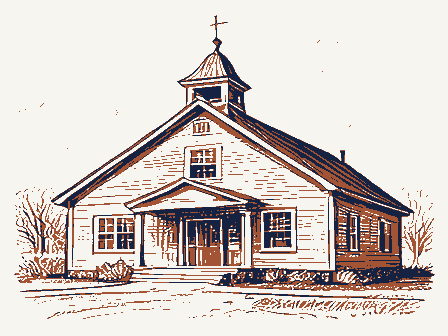
Anderson Township (part 2 of 4)
Part 2 of 4 of the account of this township in History of Hamilton County, Ohio, with Illustrations and Biographical Sketches, published 1881; 1789 History of Hamilton County Ohio with Illustrations and Biographical Sketches, published 1881. 15,903 words, covering 22 settlements. Source changes inside the text are labelled at the exact paragraph where the next book begins.
Contents
4 sectionsThe section headings the book prints inside this chapter, on this part. Each one jumps to where it begins.
Parts
4 pagesThe source prints this as one continuous account. It is split here so no single page grows too heavy to load; the text runs straight on across the parts and nothing is omitted.
The chapter
15,903 wordsReproduced complete and unedited from History of Hamilton County, Ohio, with Illustrations and Biographical Sketches, published 1881; 1789 History of Hamilton County Ohio with Illustrations and Biographical Sketches, published 1881. The text is machine-read from scans, so expect recognition errors: misspelled names, dropped words, and stray characters. Nothing has been corrected, because correcting a proper name invents one. The headings below are the books' own; source changes are labelled in place.
Anton Barkly, florist, near the German Protestant cemetery, was born in the grand duchy of Baden, January 15, 1823. He came to America and landed in New Orleans in 1846, then went to Polk county, Tennessee; in 1847 came to Cincinnati; and in 1849 went to Nashville, Tennessee, and engaged in the gardening business. In 1863 he returned to Cincinnati, from which time his gardening business here dates. Of late years he has given his attention to the florist business,, of which he is making a good success. He has two hot-houses in good order, one sixty by thirteen feet in size, and the other eleven by forty feet. Mr. Barkly's father was a large grower in the old country; he was also a soldier under Napoleon, and participated in the battle of Waterloo. He died in Polk county, Tennessee, at ninety-six years of age.
Christian Henning, florist, near the German Protestant cemetery, was born in Hanover, Germany, March 3, 1834, where he learned the art of landscaping, gardening and florist, working at different private places on the Rhine. He then came to the United States, and landed in Baltimore. In December, i860, he came to Cincinnati and accepted a position with one of the leading florists of Cincinnati, where he remained for some fifteen months. He afterward was gardener for some of the leading private families of the city. Then he accepted a position with the German Protestant cemetery, where he remained for thirteen years, during which time he superintended the laying out of the grounds and the erection of the buildings; after which he began his present business. Mr. Henning has just begun in the business, but is meeting with good success, ranking as a number one florist.
John D. Seefried, florist, near the German Protestant cemetery, was born on the old homestead where he is now engaged in business, March 11, 1857, and is the son of John and Margaret Seefried, who came to Hamilton county and located on this farm at an early day. Our subject is a practical florist. He worked at his trade as a florist in some of the leading private places around Cincinnati. In 1877 he purchased his present business, which had been operated for some years before his purchase. Mr. Seefried has three hot-houses, size seventeen by fifty, fourteen by fifty, and eleven by fifty. He is an active worker, and is meeting with fair success in his enterprise.
Henry Bertrand, florist, near the German Protestant cemetery, was born in Brunswick, Germany, August 19, 1839. Learning the florist's art in his native country, he followed this business in Leipsic, Brunswick, and Hanover, in some of the leading gardens. He then sailed for America, landing in New York city in August, 1865; thence to New Jersey, where he remained some eight months; thence to Louisville; and in 1866 he came to Cincinnati. Here he was engaged as a private gardener and florist in two of the finest private places in Cincinnati, where in the later years he was as manager. He then began his present business, now occupying three buildings, and it is perhaps one of the best and most complete houses in the florist business. Mr. Bertrand is a practically educated florist, standing at the head of his profession. He was appointed as one of the judges of the florist department of the Cincinnati exposition, where he gave entire satisfaction.
Reinhold Schaefer, florist, at the rear of the stock yards, was born in Germany in 1850. At fifteen years of age, he began to learn the florist business. He spent some four years in the city of Perlin, being foreman of private gardens. He made a study of landscape gardening. In 1872 he came to the United States, and worked at his trade in Brooklyn, New Haven, Cleveland, thence to Cincinnati, where he worked six years for H. Harline, one of the leading florists, three years as foreman. In 1879 he commenced his present place, which, for a new place, is one of the most attractive, having two hothouses thirty-five by fifty-four feet, and one house twelve by thirty-two feet. Mr. Schaefer has made very good improvements on his new place, and is doing a veiy profitable business.
William Schilling, gardener, was born in Hanover, Germany, September 15, 1831. He came to the United States and landed in Baltimore in 1858, coming thence direct to Cincinnati; commencing to work at the gardener's business in 1858, which business he has continued ever since, moving to his present place in 1868, consisting now of four and one-fourth acres of fine, improved land, which property he accumulated by hard work and good manageinent in the garden business. Mr. Schilling has been married twice - the first time in i860, to Miss Sophie Voss, a native of Germany. From this union five children were born. Mrs. Schilling died about 1877. He afterward married his present wife, Sophia Righfeld. She is a native of Germany.
William Hockstedt, gardener, was born in Prussia, September 3, 1832. He came to the United States and landed in New Orleans in 1849, thence went direct to Cincinnati. He then went on a farm in Delhi township, Hamilton county, where he remained until about 1856, when he commenced gardening, which business he has continued ever since. In 1865 he moved to his present place, which is a fine, improved gardening farm, which improvements were made principally by Mr. Hockstedt. He was married in Delhi township April 30, 1852, to Miss Louisa Kolthoff, who was born in Prussia, Germany, in 1831, coming to Hamilton county in 1852. By this marriage they have one child, William H., who was born in Hamilton county, Ohio, August 3, 1859. Mr. Hockstedt owns nearly seventeen acres of fine land situated near Cumminsville.
Frederick Parker was born in England in 1818. In 1839 he came from England to America, and made his first home in Mill Creek township, Hamilton county, Ohio. Margaret Langland, his wife, was born in 1820. They have had six children - four are now alive - David F., Mary F., William, and Alexander L. David is the only one married. The names of children not living are Sarah and John. Mr. Parker has been for some time employed in the lumber trade.
Herman Henry Fricke, gardener, was born in Prussia, December 15, 1824. He came to the United States and landed in Baltimore in 1847, coming direct to Cincinnati,' arriving here December 25, 1847. Coming here he commenced to work on a farm as a laborer. In about 1849 he embarked in the garden business, which he has continued ever since. He moved to his present place in 1861, which is a very fine garden farm of twelve acres, located near Cumminsville. Mr. Fricke married in Cincinnati Miss Mary Liella, of Cincinmti, Ohio.
By this marriage they have nine children. Mr. Fricke was trustee of Mill Creek township for two years, filling this office with acknowledged ability. He is a member of the German Protestant church.
Edward Morris, gardener near Winton place, was born in Realm of St. David, North Wales, July 4, 1819. In 1832 he came to the United States and located in Washington county, Maryland, where he remained until 1839, when he moved to Cincinnati. Here he was engaged for several months as stage driver to Lebanon, Ohio. He worked for John Kilgore in the gardening business for some six years. In 1847 he entered the gardening business for himself; has been locacated on the present place for the last twenty-seven years. Mr. Morris married, in 1847, Miss Jane Watson, of England. She came to Cincinnati in 1831. By this marriage they have nine children.
Thomas Cope, gardener, residence near Winton place, was born in Staffordshire, England, in about 1803 or 1804. He came to the United States and landed in Philadelphia in 1829; remained in Pennsylvania until 1832, when he came to Cincinnati, Hamilton county, which has been his home ever since, with the exception of four years in Iowa. In 1840 Mr. Cope commenced gardening. In 1866 he moved to his present place of six acres. Mr. Cope is one of the oldest gardeners around Cincinnati. He married in Cincinnati, in 1834, Miss Jane Lister, of England. She came to Cincinnati in 1831. She is the only one living of the family. By this marriage they have eight children living; had one son in the late civil war; he enlisted in the Second United States artillery. He was a brave soldier. In 1862 he was killed at the battle of Hanover Court House, Virginia.
Lawrence Kessel, gardener, residence near Winton Place, was born in Germany and is the son of J. Kessel, who was born in Byron, Germany, in 1820, where he married Miss Susan Deal. They, with three children, in 1854, came to the United States and landed in New York city; thence direct to Cincinnati. Here he commenced to work as a private gardener, working in Clifton and suburbs, then in business for himself on a piece of land where the toll-gate is located - Spring Grove - thence moved to the place where our subject is now gardening. Here he continued gardening up to his death, which occurred in about 1878. He was respected and honored for his liberal and honest dealings. Leaving a good estate, Mr. Lawrence Kessel is working on the old homestead.
Henry Beckmann, a gardener, was born in Prussia, February 21, 1826. He came to the United States and landed in New Orleans in 1855. From there he came to Cincinnati, and has been a resident of Hamilton county ever since. Coming here very ppor, he went to work as a hired man. After working by the day for about two years, he purchased a piece of land and began gardening for himself, and to-day owns a fine improved property of over nine acres of land situated near Cumminsville which he has accumulated by hard work at the gardening business. Mr. Beckmann was married in Cincinnnti in 1856, to Miss Louisa ^^''eded. She was born
F. Varnan, gardener, was born in Germany, March i, 1833. He came to the United States and landed in New- York city in 1848. From there he came directly to Cincinnati, commencing to work at the gardener's business which he has continued ever since. He came here in meagre circumstances, and to-day owns one of the best improved gardening farms in Mill Creek township, consisting of five and a half acres of land. Mr. Varnan was married in Cincinnati, to Miss Caroline Coldhof. She was born in Germany, having come to Cincinnati in 185 1. By this union they have ten children. He has been a resident of the present place near Cumminsville since 1859.
Lucas Niehaus, retired dairyman, is one of the old and respected citizens of the township. He was born in Hanover, Germany, October 31, 1800; was married in Germany, to Anna Pheodock. In 1838, with wife and one child, he sailed for America, landed in Baltimore, and then set out in a wagon for Cincinnati, arriving here in June, 1837, after being on the road some seventeen days. Mr. Niehaus, walking the greater portion of the way, came here very poor. He went to work by the day as a laborer; he was engaged in cutting and selling wood for a number of years, and then entered the dairy business in a small way with one cow. His business gradually improved until he at one time had some ninety cows; he was doing exceedingly well, and, after continuing in the dairy vocation for some thirty years, he has retired, the business being carried on by his son, who is meeting with fine success. Mr. Niehaus has been a resident of his present home for the last thirteen years. His first wife died, and he was married a second time, to Miss Mary Lambers, of Germany, who came here in 1840. They have five children, two by the first wife, and three by the present wife. Mr. Niehaus has led a very active life. He, in later years, has suffered from pains, being unable to attend to business.
John Schrenk, a dairyman, was born in Germany September, 1829, where he remained until 1853, when he came to the United States and landed in New York city. While in this country he was working in the tanneries. In 1868 he moved to Mill Creek township and entered the dairy business for himself, and with his enterprise and hard work he to-day owns a very neat dairy with fifty-four cows, doing a very profitable business. -He married Mary Klaiber, of Germany, by whom he has two children.
B. H. Macke, a dairyman near Bond Hill, was born in Oldenburgh, Germany, in 1824. He came to the United States and landed in New Orleans in 1848, coming directly to Cincinnati. Here he commenced to work in a foundry, where he continued for some eight years. In 1858 he began the dairy business, starting with thirty-two cows; his business has increased through his management until now he owns eighty- four cows in connection with the dairy business. Mr. Mackey commenced the improvements on his present dairy farm some thirteen years ago until now he has one of the best improved
Thomas H. Kaiser, a dairyman and one of the most succcessful and fair-dealing men in the business, may be mentioned. The above-named gentleman was born in Hanover, Germany, in 1831. He came to the United States and landed in New Orleans in 1850, thence directly to Cincinnati. Coming here in meagre circumstances he worked at different kinds of business until he entered the dairy business in 1866. Commencing with twenty cows and some six head of stock, his business has gradually improved until now he owns ninety-five head of cows and twelve head of stock. His dairy is located near St. Bernard, is very complete and kept in first class order.
John Philipp Rhein, proprietor of the Island house near the German Protestant cemetery, was born in Germany April 15, 1828. He came to America and landed in New Orleans in 1851, thence to Cincinnati the same year. Coming here in meagre circumstances, he worked as a hostler, then as an omnibus driver from Cincinnati to Mt. Auburn, which he continued some four years, when he began vegetable gardening near his present home. Here he gardened for some seven years, when he and his brother Jacob started in the omnibus business and purchased four omnibuses and horses for the same, to run between Cincinnati, Mt. Auburn and suburbs. This business increased until they had seven omnibuses in the line. Doing a good business in 1872 Mr. Rhein retired and entered his present vocation. He was was married to Mrs. J. Bessemer, a daughter of John Seefried, who was born in Germany, and came to America and landed in Philadelphia, thence to Cincinnati, where he worked at his trade as a locksmith ; he then moved to the farm, where he died respected and honored, one of the oldest pioneers.
H. Broermann, a stock-raiser near Bond Hill, was born in Germany, came to the United States and thence to Hamilton county in 1855. He was for some ten' years engaged in the dairy business ; since then he has been engaged in stock-raising, which he has been very successful in. He was married in Mercer county, Ohio (where he resided for some five years), to Miss Agnes Kramer. Mr.' Broermann has been a resident of his present homestead for the last fourteen years.
H. H. Macke, hotel keeper, near Bond hill, was born in Aldenbush, Germany, April 19, 18 19. In 1844 he sailed for America, and landed in Baltimore, thence to Cincinnati, arriving here in 1844, about June 13th. Mr. Macke, by his hard work and good management, saved sufficient money and went into the grocery business, which he carried on in Cincinnati for some ten years. He was for a short time a resident of Plainville and the Four Mile house. He also carried on the dairy business for some four years. In 1861 he moved to his present homestead, where he has put up some very valuable buildings and improvements. He is engaged in the hotel and saloon business, and is one of the best-known and most highly respected German citizens of this vicinity. Mr. Macke married Mary Niehaus, who has since died. He married for his second wife Anna Gotting. He had seven children, four by his first wife, and three by the second.
John H. Funk was born in Prussia, September 25,1828; came to the United States and landed in New Orleans in 1852, thence direct to Cincinnati, arriving here June 8, 1852. He carried on the saloon business for several years, and then engaged in the sale of glassware and queensware, at which he continued up to 1875, when he moved to his present place, where he has remained in active business since. Mr. Funk was married in Newport, Kentucky, to Miss Louisa Kramig. She was born in Germany, coming to the United States when she was about two years of age. By this marriage they have one child living.
Mrs. Nancy (White) Culbertson was born in the northwest corner of Hamilton county, May 10, 1810, and is the daughter of Providence White, who was born in Pennsylvania, or Virginia, March 9, 1784. He came to Hamilton county when he was a boy, with his parents. Then there were plenty of Indians, and he had his toe shot off by them while making a trip to Fort Washington for soldiers to come and help the settlers, who were in danger. He married Catharine Tucker. Both of Mrs. Culbertson's parents are dead. She was married to William Culbertson and went to Kentucky, where she lived thirty-two years, and, in 1877, returned to near the old home, where she is now living. Her grandfather was a captain under General Washington.
Charles Gries, residence Lick Run, Mill Creek township, was born in Baden, Germany, December i, 182 1. He came to the United States and landed in New York city in 1852, thence direct to Cincinnati, arriving here in December of the same year. He commenced to work with his brother, Michael, in the butcher business, where he remained for some fifteen months, when he engaged in the same business for himself, and continued in it for about ten years, when he entered his present business, grape-growing ind wine-manufacturing. He now owns seven and a lialf acres of land in the cultivation of grapes - one of the best improved vineyards in the vicinity. His son, John, is manager of the Union Eagle wine hall, situated iti the vineyard, and is a very neat summer resort. Mr. Gries' first wife was Theresa Eline, who is now dead. He married his present wife, Louisa Wyreck, in Lick Run. She was born in Germany, and came here in 1853. Mr. Gries is a member of the Catholic church.
Herman Grover, farmer, residence Mill Creek, near Walnut Hills, was born in Hanover, Germany, November I, 1828. He came to the United States in 1845. He stopped in New York and Buffalo a short time, and then came to Hamilton county. He is now one of the oldest German pioneers in this vicinity, and is a member of the Catholic church. He is the son of Henry and Ann Grover. They were married in Germany, and with four children came to America. Henry Grover worked on a farm, and died in 1849, with the cholera. Mrs. Ann Grover was born in 1800. The subject of this sketch owns seventeen acres of fine land.
church, Avondale, was born in Gambler, Knox county, Ohio, May 28, 1842, and is the son of Rev. Alfred and Anna Jane ; Leonard, his father, was an Episcopal minister; he came to Ohio and located in Knox county, as early as 1828. Our subject, after receiving a thorough collegiate education, having graduated from Kenyon college in 1862, and after graduating from a theological seminary, he, in 1867, was ordained as minister, when he soon afterwards came to Avondale and took charge of his present congregation, where he has remained since.
Rev. D. O'Meara, pastor of the Catholic church, Avondale, was born in the city of Cork, Ireland, December, 1839, and is the son of David and Mary (Casey) O'Meara. In i860 our subject came to America and located in Cincinnati; here, in 1864, he graduated from Mount St. Mary's college. In 1866 he was ordained as minister. He went to Mobile, Alabama, where he took charge of St. Mary's church; which church and congregation, with hard labor, he built up and left in good condition, afterwards visiting Ireland and other parts of Europe. In 1876 he returned to Cincinnati, and in March, 1878, he was appointed to his present charge, since which he has done very noble work, bringing the church out of debt. It is now in a flourishing condition.
Thomas A. Stephan.head animal-keeper of the Zoological garden, Avondale, adjoining Cincinnati, was born in Dayton, Ohio, May 22, 1846, his parents being early settlers of that city. Our subject, when quite young, moved to Lafayette, Indiana. He learned a trade as a machinist, which business he followed for a short time. He at twenty years of age began his present business taking care of animals, which business he has made a study, and to-day is, perhaps, one of the finest as well as one of the best animal-keepers and trainers in America. He has travelled with a number of leading circuses and menageries of this country - De Haven's, Heming & Cooper, Great Eastern, Great Hippodrome, Dan Rice, etc., visiting in his travels thirty-four States of the Union and throughout Canada. In 1875 Mr. Stephan was appointed to his present place, since which time he has bebecomeso familiar with all the animals under his charge that he can enter the dens of the most ferocious beasts.
William Borman, tin-shop, Avondale, was born in Prussia, June 4, 1827, came to the United States and landed in New York city in 1846; remaining there for a time working at his trade as a tinner, then went to Buffalo, and in 1847 came to Cincinnati. Here he began to work at his trade. In 1849 Mr. Borman established himself in the tinner business in Cincinnati. He has filled several offices of public trust with honor and credit - six years as justice of the peace and a member of the school board some fourteen years. Mr. Borman married Miss Matilda Retsch ; he has nine children living.
J. B. Cook, Avondale, was born in Hanover, Germany, March 14, 1826; came to the United States, and landed in New Orleans in 1853, and in 1854 came to Cincinnati. He came here poor. In 1862 came to Avondale and purchased an interest in the dairy business, which he continued very successfully until 1876, when he retired. He is now^ in the saloon business, and
Jacob Clark
Jacob Clark was born at Wakefield, New Hampshire. June 25, 1819. His great-great-grandfather, Robert Clark, came from England at the close of the Seventeenth century and settled at Stratham.the same State; was the fathei of five sons and two daughters : Mayhevv, Benjamin. John. Satchell and Jacob, the latter, who was born April 15, 1751, is his grandfather. Jacob Clark, sr.. had three sons and two daughters: John, Mayhew and Johnson benig the sons; the former being the father of Jacob Clark, jr.
His great-grandfather, on his mother's side, came from England at a very early day, and settled at Portsmouth, New Hampshire. Thomas Cotton, his grandfather, was professionally a Free- Will Baptist preacher, and father of five children. Betsey, his oldest daughter, being the mother of Jacob Clark, jr., but who died when he was six years old. John Clark was born May 8, 1784, at Wakefield, New Hampshire, and married three times. By the second marriage, November 10, 1814, to Mrs. Cotton, who was born at Wolfboro.New Hampshire. November 17, 1793. four sons and two daughters were born, Jacob being the third son. Johnson, his father's brother, is the only uncle on this side who is living, and. out of a family of ten children, only one son remains, who lives at Salem. Massachusetts. Jacob's jDrothers and sisters are: John, Thomas C, Johnson, Lucy P., Elizabeth P., Isaac T.Savinia G.,and Mary B.John is dead; Johnson served as surgeon in the late war at Fortress Monroe in 1861; Savinia and Mary are both dead. Jacob obtained his early education by attending the old district school from two and one-half to five months in the year. At sixteen he left home with ten dollars - seven of which was given him by his father - and went to Dorchester, Massachusetts, but what is now Boston, and labored for two years. By means thus accumulated, he returned to New Hampshire, and attended school at Wolfboro - a select school - and also soon after at a school at Merideth village, same stitL md 1B38 he taught at Water village 1 deth. After these two >eais at teachm.
Maine. In 1 1839 at Merileft for Boston with ten dollars again, and served as a clerk for three years at the Elm Street house, Hanover and Broomfield. His employer, Daniel Chamberlain, offered to set him up in business, but on account of illhealth and a desire to see the west, he left Boston in 1843. and came by rail to Albany. New York, and from there to Buffalo by canal, a distance of three hundred and sixty-nine miles; then to Cleveland by steamer; thence to Portsmouth by canal, and to Cincinnati by steamer. He remained for three days in the city, and then crossed over in Kentucky, engaged to work for Colonel James Taylor three months. After this time he resided at Locust Corner, Clermont county, with the exception of three years and six months, when he came to Sweet Wine, this county. While at the latter place he acted in the capacity of school te-acher for three years, and trafficked generally.
February i, 1849, he married Mary Ann Ricker. Rev. John Westeman, a travelling Methodist minister, performing the ceremony. By this marriage three sons and four daughters were born, of whom three are Uving - Addle, Leslie and |ewett. The eldest son married Louisa
Windeler. of Cincinnati, November 7, 1876, and lives in Clermont county, occupying a handsome residence on a high point of land, and is one of the prominent fruit growers in this section. He is the father of two sons: Jacob Raymond and George Edward. Mrs. Clark's great-gra n dfather, Jabez Ricker, was born in Berwick, Maine. Her grandfather, Samuel Ricker, was born in the same place, July 7, 1766, and came from sound English parentage. Susanna Jewett, her grandmother, was born in Londonderry, New Hampshire, March 28, 1770, and married in 1790. Her father was born, July 7, 1796. and married Mary ReedWilson. November 24, 1816, of Durham, Maine, in Campbell county, Kentucky. Her mother was born February 12,1800. By this marriage two sons and three daughters were born ; Mrs. Clark being the fourth, who was born November 26, 1827, in Rush county, Indiana. While at Locust Corner, Mr. Clark held the oflftce of postmaster fifteen years, though actively engaged in keeping a country store and dealing in real estate. Since 1875 he has engaged mostly in turnpikes, building most of the New Richmond and Columbia road, and is owner of twenty miles. Three Clermont county pikes have been aided much through his skill, and, as a government and county contractor, is prominent.
Politically, he afliiliated himself with the anti-slavery people, and has since, in the matter of public offices, been mentioned for some of the most influential positions in the county.
He is one of our genial men. Business tact and energy have rewarded him with unparalleled success in financial matters. His judgment is rarely at fault, and his word cannot be questioned.
Goswinn Bauer, wagonmaker and blacksmith, Avondale, was born in Baden Baden, Germany, April 9, 1838. Here he learned his trade as blacksmith and horse-shoer. He was foreman of the horse-shoe department of the artillery for seven years - he received a diploma for fine work. Mr. Bauer served in the army nine years, six years for himself and three as a substitute. In 1866 he came to America, and located in Cincinnati. Here he worked at his trade until 1867, when he began work in Avondale, since which time his business has gradually improved, until to-day he owns one of the leading shops of Avondale, employing a number of first-class mechanics.
Jacob Haehl, blacksmith and wagonmaker, Avondale, was born in Bavaria, Germany, February 9, 1816. Here he learned his trade as a wagonmaker. He then came to America, landing in New Orleans, November 6, 1833, thence to Cincinnati, taking twenty-one days in making the trip from New Orleans to Cincinnati by steamer. Arriving in Cincinnati Mr. Haehl began to work at his trade. In 1835 he established in business for himself, and to-day is one of the oldest (if not the oldest) wagonmaker in business in Hamilton county. Mr. Haehl has been a resident of Hamilton county ever since 1833, with the exception of some five years in Indiana. He was for a number of years working at his trade near the old Brighton House, with Daniel Young, an old pioneer blacksmith. In 1865 Mr. Haehl came to Avondale, where he has remained since engaged in blacksmithing and wagonmaking, employing some four hands, and occupying a two-story building thirty-one by fifty feet in size. He was married in 1836 to Barbara Bolander. She was born in Germany, and came to America in 1835. By this union they have ten children. Had three sons in the late civil war - Jacob, Henry and George; all were brave soldiers, being honorably mustered out. Mr. Haehl was four years a member of the school board of Cincinnati and two years overseer of the poor.
Louis H. Bauer, residence Avondale, was born in the grand duchy of Baden, Germany, October 30, 1836. He came to America and landed in New Orleans in 1851. Mr. Bauer worked at the bakery trade in New Orleans, St. Louis, and Cincinnati; at the latter place he carried on the bakery business for himself, being very successful. He, in 1877, moved to Avondale and erected his present building; here he has carried on the saloon business. Mr. Bauer was a soldier in the late civil war; he enlisted in company G, Ninth Ohio volunteer infantry, where he did good service for two years, participating in the engagements of his regiment. He contracted sickness (rheumatism), and on this account was honorably discharged. He has suffered from the rheumatism very much since, being a cripple in the hand from its effects. Mr. Bauer was a policeman in Cincinnati five years and was a good officer.
William Asmann, retired, residence Avondale, was born in Hanover, in 181 1, about September. He came to America and landed in Baltimore, in 1842, thence went direct to Cincinnati. Coming here in meagre circumstances, he went to work at day's labor. He managed to save a little money, and in 1850 he entered the grocery business on Mulberry and Main streets, in Cincinnati. Here he remained until 1858, when he moved to Avondale and opened a grocery store, being one of the first in business in this town. Mr. Asmann continued actively in business up to 1880, when he retired, being very successful. He married in Germany to Miss Annie Bruchemann, and with wife and one child, accompanied him to America. By this union of marriage they have two children living, a son and daughter. Mrs. Asmann died in 1880.
S. Newby & Son, wagon manufactory and blacksmith shop, Avondale. Among the leading manufacturing establishments of Avondale is that owned and operated by S. Newby & Son, both men being practical mechanics, learning their trade in England. Henry, the son, finished his trade as a machinist in one of the largest machine shops in the world. In 1870 this firm came to Avondale, where they erected a small shop. Since then, by their good management and attention to business their trade has steadily increased, until now they occupy a large three-story house, twenty-five by eighty feet in size, and employ as high as three hundred hands doing a general wagon manufacturing, repairing and blacksmithing business.
Gustave Jander, residence Avondale, was born in Prussia, April 30, 1827. He came to America in 1849, and was for three months a resident of Cleveland, Ohio, thence in the same year came to Cincinnati; here he began to work at his trade as a saddler, which trade he learned in Germany. Continuing in Cincinnati, he in 1868 moved to Avondale and carried on the saddlery and harness business in the brick house opposite his present location, for some six years, when he soon after opened a saloon. Mr. Jander married Miss Annie Schuster, of Bavaria,, Germany. By this marriage they have four children.
F. J. Diss, contractor and builder, residence Avondale, was born in Lorraine, France, September 6, 1821. He learned his trade as a carpenter in his native country. He then came to America and landed in New York city in 1840. He went to Pittsburgh and worked at his trade for some six months. In 1840 he came to Cincinnati and commenced to work at his trade. In 1852 Mr. Diss moved to Avondale and has remained one of its honored residents ever since, during which he has contracted and erected a number of prominent buildings of this place. He was the first builder boss to locate in Avondale. Mr. Diss came to Cincinnati in poor circumstances; to-day he is one of the successful builders and contractors of this vicinity.
Catharine Karl, residence Avondale, and the subject of this sketch, is one of the old and respected pioneers of Avondale. She was born in Germany in about 18 14. She was married in Germany to the late Frederick Karl, of Germany, and they, in company with three children sailed for America and landed in New York city in 1835, coming direct to Cincinnati. Here Mr. Karl worked as a day laborer; he was for a short time watchman on a steamboat. In 1849 the family moved to Avondale. Here, in 185 1, he began in a small way in the dairy business, and by his industry he built up a good and profitable trade. He continued in business until his death, which occurred in 1864. Thus passed away an honored and respected citizen of Avondale, leaving a wife and three children to mourn his loss. The three children are, Maggie, Amelia and Caroline.
F. Spangler, residence Avondale, and the subject of this sketch, was born in the city of Brunswick, Germany, August 5, 1822. He, in 1848, came to America and landed in Galveston, where he remained but a short time, thence to New Orleans, and in the spring of 1849 came to Cincinnati, where in this vicinity he has remained ever since one of its honored and respected citizens. Mr. Spangler was for a number of years engaged in the ladies' furnishing and trimming business, on the corner of Fifth and Vine streets; he was also engaged in other mercantile occupations. He was married in Cincinnati to Miss Mariah Lizzie Warner, of Albany, New York, by whom he has two children living. Mr. Spangler was very actively engaged in the late civil war; was captain in the Seventh Ohio regiment. He was promoted and served as general inspector of ammunition, where he did good duty. Mr. Spangler, in 1849, became a member of the Cincinnati Leidertafel Singing society, the third oldest singing society in America, and Mr. Spangler being the sixth oldest singer in the northwest. At an early day Mr. Spangler was presented with a beer mug trimmed with silver mounting, with an iron screw on the top, for best singing.
Thomas Knott, florist, residence Avondale, was born iij the western portion of Ireland, in the year 18 18. Here he grew into manhood, and in 1840 came to Cincinnati, where he accepted a clerkship in a dry goods store. He remained but a short time. In 1841 he moved to Avondale, then Locust Grove, and with a capi tal of some three hundred dollars embarked in the florist business, near his present location. He states that when he commenced there were only four more in the florist business here in Avondale. Mr. Knott has remained ever since, working continuously at his occupation, and today is perhaps the oldest florist near the city, and the oldest settler of Avondale. He has been very successful as a florist, owning one of the largest places of the kind near Cincinnati, having some fifteen large houses, under glass, and all filled with the choicest plants. One rosebush he has, which is the LaMark, a pure white rose, he cut from it, one Easter, one hundred dollars' worth of buds at a moderate figure. Mr. Knott employs six hands in the florist business.
George Thale, dairyman, Avondale, was born in Hanover, May 25, 1838, came to the United States and direct to Cincinnati in 1864. Here he worked at day's labor. He was then engaged in driving a sprinkling cart in watering the streets; then as driver of a milk wagon. Coming to Avondale, he commenced in the dairy business with forty-two cows. Since then his business has grown very extensive, and to-day he has the credit of keeping one of the best dairies in Hauiilton county, owning seventy-seven head of cows, and running two milk wagons in connection with his business.
Thomas Lambert, retired, residence Avondale. The subject of this brief notice was born in Fifeshire, Scotland, March 5, 1825, coming to the United States and direct to Avondale in 1850, which has been his home ever since. He is now one of Avondale's pioneers. Here he entered the nursery business, which he carried on very successfully for a number of years. He-entered the grocery business in Avondale, and continued in it up up to 1878, when he retired. Mr. Lambert has been very active in building up Avondale. He has filled several ofiSces of public trust with honor and credit. He was for twelve years assessor of Avondale precinct. He is now superintendent of streets.
John Schroeder, saloonist, residence Avondale, was born near Frankfort on the Rhine, Germany, September 24, 1839. He learned his trade as a carpenter in Germany, and in 1867 came to America, landed in New York city, and then came direct to Cincinnati. Here he worked at his trade, and in 1870 he opened a grocery and saloon in Mount Auburn, continuing there until the year 1S77, when he erected his present brick block, which is two stories high, and an ornament to that part of Avondale. Here he entered his present business, which he has continued since.
Rev. Hilary Hoelscher, pastor of the Catholic church at Carthage, was born in Cincinnati, Ohio, October 14, 1857, and is the son of John and Mary Elizabeth (Mitgoes) - both parents, natives of Hanover, Germany, having come to America at an early day. Our subject, when he was two years of age, moved with his parents to Covington, Kentucky. Here he received his education, graduating from the St. Francis college in 1875, when he entered upon his ministerial studies, and was ordained as a minister in 1880, his first appointment being as pastor of the Catholic church at Carthage, which pulpit he is now filling.
E. A. Brown, supervisor of Longview asylum, was born in Windham county, Connecticut, and followed farming in his native State. In 1861 he enlisted in company B, Eleventh Rhode Island infantry, where he served full time and was honorably mustered out. In 1876 he came to Hamilton county, Ohio, and received a place in the Longview Asylum as watchman. He was soon after appointed to his present position, in which place he is giving the best of satisfaction.
A. L. Stephens, superintendent of the colored department of the Longview asylum, residence Carthage. The subject of this brief notice was born in Montgomery county, Ohio, July 19, 1839. He was for seven years connected with the lunatic asylum at Dayton. In 1873 Mr. Stephens accepted a position with the Longview asylum, where he has remained ever since. He has been very faithful, and is acknowledged to be the right man in the right place.
John T. Colling, warden of the Hamilton county infirmary, residence Carthage, was born in Aisne, France, in 1834, where he received his principal education. In
1852 he came to Cincinnati. He was for four years an employe of the Commercial hospital, when he received an appointment from Dayton Asylum, and was superintendent of that institution for some two years, and returned to Cincinnati and was in charge of the asylum at Lick Run for two years. In i860 he entered the employ of the Western Insurance company as assistant secretary for one year, then secretary for nineteen years, being a faithful employe. He was very successful, and took an active part in improving Carthage. He moved there in 1866. He was eight years a member of the council, and trustee of the schools for some ten years, filling these oiifices with acknowledged ability. In 1879 Mr. Colling was appointed to his present position, where he is giving the best of satisfaction. He was married in Cincinnati in 1856 to Miss Elizabeth Sauer, of Maryland, and has five children, four sons and one daughter.
J. E. Ash, station agent Cincinnati, Hamilton & Dayton railroad at Carthage, was born in Logan county, Ohio. When a young man, he went to Bellefontaine and worked in a carriage manufactory as a carriage painter. The work not agreeing with him, he left and began to learn telegraphing, which business he has followed for the last twenty-five years. He opened the office at Middletown, and was telegraph operator there until he went to Springfield. From there he came to Carthage January i, 1862, as telegraph operator and station agent. This position Mr. Ash has filled ever since, and is to-day the third oldest railroad operator between Toledo and Cincinnati. While a citizen of Carthage, Mr. Ash has won many warm friends. He has filled several offices of public trust with honor. He was councilman one term and clerk one term. He, in connection with his station agency, operates a coal and lumber yard, which business he has been in for the last ten years.
John Bickers, section boss Cincinnati, Hamilton & Dayton railroad, residence Carthage. Was born in Germany, having come to Hamilton county in 1852. In
1853 he began work on the Cincinnati, Hamilton & Dayton railroad as a section hand. In 1857 he was made foreman of his present section, which position he has filled with the best of satisfaction ever since, and today perhaps is the oldest railroad section boss in Hamilton county. Mr. Bickers was a member of the Carthage council for two terms, filling this office with acknowledged ability.
John McCammon, contractor and builder, residence Carthage, was born in Shippensburgh, Pennsylvania, November 9, 1814, and is the son of Thomas and Mary (Piper) McCammon. His father was a native of Ireland, and a cabinetmaker by trade. He died in 1858, aged eighty-six years and two months. Our subject, with his parents, in 1816, came to Cincinnati, floating down the Ohio river in a keel-boat, locating in Cincinnati, where they remained until 182 1, then moved to a farm in Springfield township, Hamilton county. Here Mr. Mc- Cammon remained, working on the farm. In June, 1831, he began to learn the carpenter's trade in Cincinnati, which business he continued up to 1858, when he was appointed superintendent of buildings of the schools of Cincinnati. This position he filled until June 20, 1875, during which time about all the public schools of this city were erected under his supervision. Mr. Mc- Cammon superintended the erection of the new music hall and the wings. He also superintended the erection of the gas building in Carthage. His life has been very active, and to-day, perhaps, he has superintended the erection of more prominent buildings than any one man in Cincinnati. He was married, June 14, 1840, to Miss J. Bonnel, a native of Hamilton county, Ohio. By this marriage they have had eight children, of whom six are living. In 1868 Mr. McCammon moved to Carthage, which has been his home ever since.
Mrs. Hannah French, dealer in dry goods at Carthage, is the wife of the late Mr. French, who was born in England. He graduated from the Kilkenny college and soon after came to America, locating in Chicago, thence to Sandusky, Ohio, where he taught a select school. He then went to Plasdated, on the Peninsula, and here taught school and became acquainted with the subject of this sketch. Miss Hannah Slackford, who was born in London, England, and is the daughter of Thomas Slackford, who was a sea-faring man. They, in about 1867, came to Cincinnati. Mr. French was acknowledged to be the best penman around Cincinnati. He taught penmanship in Covington. He entered the office of Gilmore & Dunlap, as a clerk, and soon afterwards was their general correspondent. In i860 they moved to Carthage. Here Mrs. French commenced the notion and drug store business, being the first to start a drug store in Carthage. She continued in business up to 1879, since which time her sons have been carrying on the business. Mr. French died in April, 1878 - a man respected and honored. Thus passed away one of Carthage's best citizens, leaving a wife and four children to mourn his loss.
Pedro Benner keeps a drug store at Carthage. He was born in Hamburgh, Germany, in 1851, and came to America in 1855, and in 1S59 came to Cincinnati, where he received his principal education, and then entered a leading drug store in Cincinnati, where he remained for several years as a clerk. In December, 1874, he commenced business for himself, in Cincinnati. In 1877 he moved to Carthage, and began business in the post office building. Here he remained up to 1879, when he moved to his present cozy quarters, which is the leading drug store of Carthage. Since Mr. Benner came to Carthage his business has gradually improved, and today he is doing a very good drug business.
Edward P. Oberle, grocer at Carthage, was born in Bavaria, Germany, November 16, 1827. He came to the United States and landed in New York city, in 1853, thence direct to Cincinnati, arriving here in August of the same year. Here he learned the trade of a baker with his brother. In 1855, he moved to St. Bernard, and carried on the bakery business up to 1858, when he moved to Carthage, where he embarked in the bakery trade in a small frame house. In i860 he built his present store and continued the bakery up to 1874, since which time he has been in the grocery business, being very successful. Mr. Oberle, in connection with the grocery, is engaged in the lumber and coal business. He was married, in Cincinnati, to Miss Anna Mariah Schreck. She is from Germany, and came to Cincinnati in 1S53. By this marriage they have three children living.
Leonard Engel, butcher, at Carthage, was born in Wodenburgh, Germany, April 16, 1836. He came to the United States and landed in New York city in 1855, thence to Indiana, where he remained two years. In 1857 he came to Hamilton county. In 1865, he moved to Carthage. He is the oldest, as well as the most successful butcher in this vicinity. Mr. Engel has filled several offices of trust. He was elected a member of the city council, but on account of his business he resigned. He has been a member of the school board for the last four years.
Chris Schmidt, gardener, at Carthage, was born in Germany, in 1837. He came to the United States and landed in New York city in 1854, thence direct to Cincinnati, arriving there in Maj', of the same year. He engaged in the gardening business. He was a resident of Camp Washington some .ten or fifteen years. In 1870 he moved to Carthage, and in 1873 was elected to the city council, which office he has filled with honor and credit for some two terms. He was married, in Hamilton county, to Miss Mary Gruber, of Germany. They have three children.
H. H. Lammers, keeper of a hotel and feed store, at Carthage, was born in Oldenburgh, Germany, in 1830. He came to the United States and landed in New Orleans in 1848; thence he came to Cincinnati, arriving there in January, 1849. Here he began to work at his trade as a wagon-maker, which trade he had learned in Germany. He continued at his trade in Cincinnati up to 1858, when he moved to Carthage and carried on the business until i860, when he entered his present business. Mr. Lammers has been very successful while 'a resident of Carthage. By his hard work and good management he has accumulated a good property, and made hosts of friends. He was one of Carthage's honored councilmen for one term. He is a hard worker in the Catholic church, taking an active part in the church and school. He is a director of the St. Mary's cemetery, which bids fair to become one of the handsomest cemeteries around Cincinnati.
L. W. Haley, who keeps a tin and stove store at Carthage, was born in Winterport, Maine, in 1848. He learned his trade as a tinner in Waldo county, Maine, when he was eighteen years of age. In 1869 he came to Cincinnati and worked at his trade. In September, 1873, he embarked in business for himself in Carthage, where he has remained since. He is now doing a good business - employing as high as seven men - doing work for the public works in and around Carthage. Mr. Haley has represented Carthage as city councilman for one term, filling that office with honor and credit.
Rev. Daniel Heile, pastor of St. Bernard's Catholic church, was born in the province of Hanover, August 6, 1842, and is the son of Bernard and Elizabeth (Schulter) Heile, both parents natives of Germany. Our subject, in
1867, came to America, coming to Cincinnati. He entered the St. Francis college, where he remained for several years. After receiving a thorough education, attending different colleges, he was ordained as minister July 26, 1874, at Oldenburgh, Indiana. He was for six years pastor of St. Stephen's church, of Hamilton, Ohio, when, in 1880, Father Heile received a call from his present church, where he has filled the pulpit ever since.
G. H. Esselmann, superintendent of the German Catholic cemetery, at St. Bernard, was born in Hanover, Germany, May ii, 1853; came to the United States and landed in Baltimore in 1871, coming direct to Cincinnati. Since then he has learned his trade as a steel polisher, working in Chicago, Pittsburgh, Cleveland, Mansfield, thence to Cincinnati. He was for four years connected with the St. Joseph cemetery. In 1879 he was made superintendent of the present cemetery, which position he has filled with ability since, giving the best of satisfaction. He married, in 1878, Miss Katie Estermann, she being a native of Cincinnati, her parents locating here at an early day.
Joseph Wallrath, superintendent of the New German cemetery near St. Bernard, was born in the Rhine province, Germany, May, 1848; came to the United States and landed in New York city in 1867, coming direct to Cincinnati. Here he was engaged in landscape gardening, being concerned in laying out some of the finest places in Clifton. He made a visit to California, remaining a short time. He returned to Cincinnati and again entered his profession as a landscape gardener, and was made superintendent of the new cemetery, which so far is acknowledged to be one of the handsomest cemeteries around Cincinnati.
Bernard Strothman, gardener near St. Bernard, was born in Hanover, April 19, 1841; came to the United States, and landed at New York city, in 1854, thence to Cincinnati. Here he was engaged by day's labor. In 1864 he entered his present business, in which he has been very successful. He built the improvements on his present place, which consists of four and one-fifth acres of land, all in good order. Mr. Strothman attends to the gardening. He married, in Cincinnati, Miss Henrietta Faurnan, of Germany, by whom he has had five children.
Frank Kaufmann, grocer, St. Bernard, was born in Prussia in 18 16. Here he learned his trade as a blacksmith. He soon after came to America and landed in New York city in 1848. He then went to Pittsburgh. Here he worked at his trade, and was married to Miss Mary Brandhover. After remaining there until 1850 Mr. Kaufmann, with his wife and one child, came to Cincinnati, where he worked at his trade up to 1854, then on the Reading road some two years, when, in 1856, he came to St. Bernard and worked at his trade for a number of years, when he engaged in the grocery business, and coming to Cincinnati with but little money, is to-day one of the most successful and highly respected business men of St. Bernard. He has five children.
Herman Knuvvener, head of the prosperous firm of Knuwener & Verhage, owning and managing the Cincinnati soda and mineral water works, is of full German blood on both sides; was born in Hanover, now in Prussia, July 23, 1848; the oldest son of William and Lizzie (Huxal) Knuwener, both natives of the same German State, and both are still living at the old home in the Fatherland. He was educated in the elementary schools, under the compulsory system of school attendance long in vogue throughout Germany. In his fourteenth year he began active Ufa among total strangers at Diepholtz, some distance from his native place. He engaged as an apprentice in the dry goods business, serving according to the German system, not only without pay, but at his own cost for instruction in the business. For four-years he sustained this burden, not being allowed the use of any money, and being pledged against the use of tobacco in any shape, his father signing a bond that he would observe an agreement to this effect. At the expiration of his apprenticeship, feeling opposed to the stern, severe military laws, which would presently have called him into needless service for three years, he resolved to emigrate to America, and again started out alone in the world. He landed in New York in 1866, came on at once to the Queen City, and for about a year did not engage in business, but improved his time in learning the language of his adopted country and taking a full course in Nelson's Business college. His acquaintance in the city, and with the English speech, then enabled him to obtain a situation in the now great dry goods store of Alms & Doepke, then a comparatively small establishment in the old building at the head of Twelfth street. He was given the honorable post of salesman at the front counter, and was otherwise very kindly treated by the firm, to whom he justly attributes the beginning of his fortunes in Cincinnati. He was with them but a year, however, and then entered as a salesman the store of Messrs.C. Steinkamp & Co. , on Main street above Twelfth, in which, after only about half a year, he became a junior partner. He went out of this connection in 1874, and the house has since become extinct. Mr. Knuwener sold his interest to Mr. Steinkamp, and embarked in the soda and mineral water manufacture, buying the business of his father-in-law, Mr. J. H. Overdyck, at 719 Home street, after the death of the latter. He conducted the business alone until 1876, when the establishment was consolidated with the similar works of Mr. Henry Verhage, on Walnut street, and the two joined their energies m a strong and prosperous partnership. In the spring of the same year, they moved to the much more spacious and convenient quarters they now occupy, at 270-2 Sycamore street, near the corner of Eighth street, where their business and popularity have grown upon their hands until they now have the largest establishment of the kind in the city and in the State of Ohio, and probably in the entire west. They have certain specialties in soda fountains (steel) not enjoyed by any other house in the city, and now supply most of the dealers in soda-water. Their business is almost exclusively with city retailers, and is a good, safe traffic, which nets them very profitable results. Mr. Knuwener is the sole manager in charge of the works, and to him may be credited the success and prosperity of the firm.
He has taken time, however, to interest himself somewhat in politics and other affairs, and is a member of the Lincoln club and sundry other organizations. In 1880, though a Republican, he was elected, against his inclination, in the strong Democratic Sixteenth ward, a member of the board of councilmen, in which he is now acceptably serving his constituents. When the new committee of the council was formed on the consumption of smoke, under a recent act of the legislature, he was appointed a member of this important committee. In the council he has kept a vigilant eye upon the public interests, particularly the plunder of the city treasury, and not long since moved a resolution of inquiry into the vast expense of the city advertising, which was passed and has already been productive of much good.
Mr. Knuwener was married in Cincinnati February 23, i87r, to Miss Louisa, daughter of Mr. J. H. Overdyck, a well-known German citizen, and Mrs. Henrietta (Dunker) Overdyck. Their children number two: Millie and Henry Knuwener. The family live in a pleasant residence at No. 388 West Court street.
Hanover, Germany, October 8, 181 1. He came to the United States and landed in Baltimore July 13, 1833, where he remained in that vicinity for about four years, working as day laborer. In 1837 he came to Cincinnati and worked at gardening. He soon after began teaching school, and followed school teaching for some six years. In 1850 Mr. Schulhof started in the gardening business where is now located the Catholic graveyard, which business he continued there until 1862, when he began the grocery business, which he has continued in St. Bernard ever since, being now one of its highly honored pioneer settlers. Mr. Schulhof married Miss Catharine Dickmann, who came to Cincinnati at an early day. She was a good Christian lady, respected and loved by all. She died January 26, 1877. There are five children living - two sons and three daughters.
George Young, blacksmith, St. Bernard, was born in Camp Washington December 30, 1845, and is the son of George Young, who came to Hamilton county at an early day. Our subject is to-day the pioneer blacksmith of St. Bernard. He is now engaged at the blacksmith business, employing three hands in the manufacture of wagons and the general blacksmith business. He married Miss Annie Sprung, of Cincinnati. By this marriage they have seven children living. Mr. Young was a soldier in the late war, serving in the Twenty-second Indiana volunteer infantry, company B, for two years and a half. He was a faithful soldier, and was honorably mustered out at the close of the war.
The subject of this sketch, Jacob Ries (deceased), of St. Bernard, was born in Germany in 1822. He came to the United States in 1841, coming direct to Cincinnati. In 1856 he moved to St. Bernard. Here he was actively engaged in business up to his death, which occurred in 1880. He was a man liked by all for his uprightness and honorable dealings. He took an active part in the building up of St. Bernard. He died respected and loved by a host of friends. He was an active member of the Catholic church. Thus passed away a kind father and a loving husband, leaving a wife and five children to mourn his loss. He was married in Cincinnati in 1848 to Elizabeth Morio, who came to Cincinnati with her father, Michael Morio, his wife and four children.
Herman Witte, a resident of St. Bernard, was born in Hanover, Germany, February 18, 1820. He learned the bakery trade, and in 1845 he sailed for America, and landed in Baltimore. Here he worked for some six months at his trade, and in the same year (1845) he came to Cincinnati, coming here very poor, having only a five-franc piece, which was soon after stolen from him. He, besides working at his trade, worked on the railroad and at other labor until he, in 1850, entered the grocery business on the corner of Race and Green streets. In 1852 Mr. Witte moved to St. Bernard, and has been one of its honored and respected citizens ever since, and is now one of the oldest settlers of the place. He moved in a little frame house, where he carried on business until 1861, when he built his present place of business. Mr. Witte was married in 1850 to Miss Rosena Stubbe,
Mrs. Carrie Meyer Eckert, a resident of St. Bernard, was born in Baden Baden, Germany, and is the wife of the late Val Eckert, who was born in France in 1815. He came to the United States and landed in New York city in 1834. He went then to New Orleans, and in 1845 came to Cincinnati. Coming here in meagre circumstances, he went to work at day labor. He managed well, and by hard work he accumulated a good property. In 1854 he moved to St. Bernard, where he became one of its most honored and prominent citizens, taking an interest in the building up of the town. He was married in Cincinnati in 1846 to Carrie Meyer, the subject of this sketch. Mr. Eckert died in 1878, leaving a wife and five children to mourn his loss.
Mrs. Julia A. Kemper, of St. Bernard, was born in Mill Creek township, Hamilton county, Ohio, March 31, 1820, and is the daughter of John Boswell, who came to Hamilton county from Maryland as early as 1812. He farmed here up to his death. Of that family there are five children living: George, Elizabeth, Mary Jane, Alexander and the subject of this sketch, who has remained a resident of Mill Creek township ever since she was born. She was married in 1841 to the late Reuben Kemper, who was born in Hamilton county, Ohio, July 28, 1813, and is the son of Presley Kemper, who was one of the pioneers of this county. Reuben Kemper was raised on the farm. He also followed the tannery business for several years, but spent the greater portion of his life on the farm. He died on the old farm respected and honored, leaving a wife and four children: Robert, Henry, Mary E. and Sarah.
Thomas Branch Weatherby, retired, a resident of College Hill, was born in Thetford, Vermont, July 20, 1802, and is the son of Danforth and Lucy (Stiles) Weatherby. Our subject, with his father and family, in 1806 started in wagons for Kentucky, but on their way, after being out eleven weeks, arrived in Cincinnati, where they located, remaining there until about 1808, when they moved to Columbus, and in 1809 returned to Cincinnati, living in a rented log cabin on the land where the Grand Hotel is now located. In 18 10 the family moved to Eighth street, between Broadway and Sycamore. Here they remained until 1816, when they moved to a farm in Springfield township. In 183 1 the father and mother moved to Oxford, where they both died. Our subject engaged in farming on the old farm, which he purchased in 1832, where he has remained ever since. Mr. Weatherby was married in Springfield township to Miss Mercy Van Zant. She was born in Hamilton county, her parents being among the early settlers, by whom they have had four children.
A. B. Johnson, superintendent of the Avondale public schools, was born in Ogden, New York. His father was a teacher of thirty years' experience, and gave his son a good education in the schools of his native town and in those of Rochester, New York. -He also learned to work on a farm, and afterwards studied book-keeping and the principles of penmanship, and the knowledge thus gained enabled him to earn a sufficient amount to graduate him in the Oberlin college, which occurred in the year 1853. He taught school in the college, and during vacations on the evenings and Saturdays of each week he posted books. In 1856 he received the degree of A. M. He taught school one year after graduating in New York, having charge of the Academy of Sodus, Wayne county, of that State. In 1855 he came to Avondale, where he has been elected superintendent of the school twenty-five times in as many years, without a single opposing vote in the board of education of his place. He has been for years an active member of the teachers' association of Hamilton county; has been county examiner of teachers of his own county, and now holds the position as one of the State examiners of applicants for State certificates. His estimable wife has labored with him during these long years of toil, and done much to make the schools of Avondale what they are.
John Trotter, sexton of Spring Grove cemetery, was born in Scotland May 12, 1836. In 1863 became to America, and landed in New York; thence to Chicago, Illinois, where he remained, engaged in the gardening business, until 1867. In 1869 Mr. Trotter entered the employ of the Spring Grove cemetery as gardener. In 1 87 1 he was made the sexton, which position he has filled very satisfactorily since.
Keeshan & Weber, grocery and meat store, Avondale, is one of the leading business firms of Avondale. The meat store was established about the year 1864 and was one of the first meat markets of the place. Mr. T. J. Keeshan is a native of Ireland, having come to America when very young. He has been engaged in the mercantile business for the last twelve years. Mr. Henry Weber is one of the old pioneers of Hamilton county. He was engaged in farming m Glendale. Afterwards the firm of Keeshan & Weber was formed, since doing business in Avondale.
Source changes here: from 1789 History of Hamilton County Ohio with Illustrations and Biographical Sketches, by Henry A. Ford and Kate B. Ford, published 1881; 26,982 words in this source stream.
Boundaries And Topography
Anderson, the southeasternmost township in Hamilton county, and the only one of this county lying east of the Little Miami river - that is, in the Virginia Military district - is bounded on the south by the Ohio river, on the west by the Ohio and the Little Miami, on the north by the latter stream, which divides it from Columbia and Spencer townships, and on the east by a line drawn from the southeast 'corner of fractional section numbered twenty-two, in Columbia township, or-from the mouth of the East fork of the Little Miami, south of its intersection with the Ohio at the mouth of Eight Mile creek. By this line it is separated from Clermont county on the east, and is the only township of Hamilton which immediately adjoins Clermont, without the intervention of a stream. The greatest length of the township, about nine miles, is on this line, but the length of that portion of the Little Miami that touches Anderson township is very n@arly the same. The other sides, being bounded altogether by the Ohio and Little Miami rivers, are exceedingly irregular in their boundary lines; but the township, varying from the breadth of a few yards at its northeasternmost and southeasternmost points to its greatest breadth of six and a half miles on an east and west line from the mouth of the Little Miami, has an average width of five miles. Its area is equivalent to nearly thirty-seven sections, or twenty-three thousand five hundred and seventyone acres. A large part of this tract, on the west and north sides of the township, lies in the broad, flat, and fertile valley of the Little Miami, upon which the site of Newton lies, and near which, in a commanding position, Mount Washington sits upon the hills, easily overlooking a broad view of the valley. The general level of the hilltops in this township is high, Mount Washington being other heights almost as lofty. One or two points in this township are said to be the loftiest in Hamilton county. The ancient plateau of this region has been deeply cut through, not only by the greater waters of the Ohio and the Little Miami, but by several small streams, prominent among which is Clough creek, with its two principal headwaters or branches taking their rise, respectively, in the eastern and southern parts of the township, uniting east of Mount Washington, and flowing thence in a general northwesterly and westerly course to the.Little Miami below Union bridge. Its valley and the bordering hills are exceedingly picturesque, and comprise many valuable farms and fine farm buildings. Five Mile creek is another stream of some local importance in the south of the township, likewise formed by the junction of two headwaters, one rising a little northeast of Cherry Grove, near: the county line, and the other just south of the Ohio turnpike, a mile and a half west of the same place. They unite their waters - like Clough creek, also receiving a very small stream near their point of junction - about a mile north of the Ohio, and after a westerly and southwesterly course of some two miles, reach that river about midway of its course along the southern border of the township. Three or four minor tributaries of the Ohio also aid in breaking down the hills on this side of the township, the highlands here, asin Columbia and all the river districts of Cincinnati east of the old city, crowding closely upon the river, and' leaving scarcely room enough for the wagon-road long existing there and the track of the projected Ohio River & Virginia railway. A few rods above the mouth of the Little Miami a petty stream sets into that river, bearing the name of the noted creek that ploughs through the western hills of Cincinnati - Lick run. Three other brooks, more or less ramified toward their sources - two of them bearing the names, respectively, of Little Dry run and Big Dry run - feed the Little Miami at various points in the township above Clough creek; and channels or mill-races of some size, in two instances, connect points on the river northeast, northwest, and north of Newtown, thus virtually forming islands of two and a half tothree miles in circumference, which nearly adjpin each other just opposite Plainville, and about a mile due north from Newtown. It isa remark-
Besides the natural features of Anderson which vary its topography, its broad surface is further intersected by the Batavia turnpike in the northern part, which takes Union bridge and Newtown on its way; the Richmond turnpike on the extreme south, passing California and hugging the river closely until its exit from the county, shortly after which it trends rapidly northeastward; the Salem and Ohio turnpikes, also in the southern half of the township, the latter passing through Mount Washington and Cherry Grove; a number of other good wagon roads; the Cincinnati & Eastern narrow-guage railway, along the valley of the Little Miami, by Newtown, in the north part; with a branch from a point a mile and a half east of Newtown, running up the valley of Dry run, to a point due east of Mount Washington, where it leaves the township; and the Cincinnati & Portsmouth narrow-guage railway, cutting the southern and eastern parts in an exceedingly tortuous line, as compelled by the broken country, from the crossing of the Little Miami southwest of Mount Washington to the departure from the township and county considerably to the northward, near' Mount Carmel, in Clermont county. As well as the nature and demands of the township will permit at present, it is served with means of transportation; but, other railroads have been projected, as that already mentioned along the Ohio.
Ancient Works
The observations of an intelligent man, who saw the mounds and other ancient remains in this region in the early day, must ever be of interest. marks were made by the Rev. Philip Gatch, who came to Anderson township in 1798, in his autobiographic sketch:
This beautiful land has been a hidden space to civilization for many ages. There are traces in many parts of ancient fortifications and other works which could not have been made by the Indians, but by a people much further advanced in civilization than they now are. The growths of timber upon these works, consisting of mounds and elevated embankments, seem to be the same as on the ground generally, which shows their great antiquity. What people or race constructed these works is not now known, and probably never will be. Some think these formations were before the flood; but this notion, it appears to me, is refuted by timbers being found in the earth to agreat depth. I saw timber that was found on digging a well on high land; also by salt water shells being found in high places. Nature isa grand laboratory, and it is ever in progress - imperceptible it may be to the eye, but its doings are marked by centuries. The process of change in the natural world is ever in progress.
Much later, but still so far in the past as to lend some special interest to the narrative - in Mr.-E. D, Mansfield's Monthly Chronicle for August, 1839 - one "T. C. D." (said to have been Timothy C. Day) gave an interesting description of the works as they were to be seen in his time: :
In perhaps no portion of this State are these gigantic vestiges of an unknown dnd populous age so abundant as in the alluvial bottoms and adjacent neighborhoods of the Miami. They are to be met with at almost every step, and in groups so numerous that the eye can scarcely embrace their number. Mounds of every description, size, and shape, circular forts, embankments miles in length, and of great size, point out the immense labors and workmanship of a mysterions people. Allowing for the probable absence of the requisite implements for their erection, and the washing of their friable soil for centuries, they may be truly reckoned as successful rivals to the greatest of their prototypes of the sandy plains of Egypt. Some are even so stupendous that, were it not for the evident signs of haman mechanism that mark their construction, they might claim the impress of a mightier hand.
About a mile east of Newtown, in this county, on the farm of Levi Martin, is a mound of the largest class. Its shape is an oval oblong, rounding to its apex with the most perfect accuracy. It is situated on a shelf of land about thirty feet above the alluvial bottom of the Little Miami. The soil around it is gravelly, hut the material of its structure, as usual, is a brick clay. Near its summit is a large beech, probably two feet in diameter, and its sides are covered with a thick growth of underwood, with several large forest trees. It is within three hundred yards of a high range of hills, and could not, therefore, have been erected as a watch-tower or a place of defence. It has never been opened, but the most probable conjecture is that it is the monument of some mighty chief, who lies interred in its centre. The plain around its base is perfectly level, except within twenty feet of what was probably its original circumference; the washing of rains has filled it up to a considerable height. The dimensions of the mound, from actual admeasurement, are as follows:
Last summer the workmen, in procuring gravel for the Batavia turnpike, immediately in the rear of Newtown, in the bank of a small stream called Jennie's run, disinterred an immense number of human skeletons. This ancient burial ground is on a gravelly point that juts out from the bank into the run, forming an acute bend. 'The graves are not, on an average, more than two feet in depth, though probably they were originally a great deal deeper, as the ridge has evidently washed toa considerable degree. As far as caved, the point is a solid body of coarse gravel till within about two and a half feet of the surface, which is composed of sand andloam. 'The skeletons lay in the sandy stratum, between the gravel and earth; and so far as preservation is concerned, it has answered the purpose well. Whole anatomies have been exhumed in an excellent state of soun Iness - the teeth particularly, some of them, as white as ivory, and perfect in every respect. Forest trees, such as beech, sugar, and oak, some at least two feet in diameter, were growing immediately over the graves, and their gnarled roots twisted fantastically through the skulls of these remnants of an ancient people.
A fall of gravel would frequently leave bare the whole front of a grinning skeleton, seemingly thrust in the grave feet foremost; and, in fact, the whole of the bodies bore evidence of a promiscuous burial, some placed horizontally facing the west, others level, anon a group of four heads within the space of two feet, and in every imaginable position. About twenty feet from the first discovery of the bones, the workmen came to a large body of charcoal and the remains of a stone fire-place. An earthen vessel was found by some boys, which was broken and destroyed before an actual description could be obtained. Several of the skulls exhibited traces of violence, such as would lead one to suppose that this had been a scene of carnage, and the dead bodies thus furnished a rude and hasty burial.
Several curiosities have been found in the neighborhood, such as pipes, earthen pots, and copper plates. Two small limestones, hollowed out from an inch on the outer edge to an eighth in the center, were found ina ploughed field. They are perfectly round, and are very neatly carved, the one about two-thirds the size of the other. The largest is about four inches in diameter.
The principal pre-historic monuments in Anderson township, as previously intimated, are found, like those generally in the eastern parts of Hamilton county, in or near the valley of the Little Miami. They are:
1. A large mound in the doorway of the old Turpin homestead, now occupied by Philip Turpin, esq., about a mile northeast of the Union bridge, on the Batavia turnpike. Although undoubtedly much smaller than when first heaped, it is now ten feet in height, with a circumference at the base of one hundred and seventy-five \ feet. It is situated directly in a line between the front gate and front door of the premises, and the foot-way between these points runs around it. It thus forms a com- manding and very interesting object in the scene, as viewed by the passer-by on the turnpike. About it is an ancient cemetery, probably not older than the Indian period, however, from which human remains may be exhumed with almost every lift of spade or shovel. Upon the same premises, it may be here remarked, was the camp of Tod's campany-of independent scouts, for some time during the Morgan raid and scare of 1863. It was, although bearing an "independent" name, a regularly organized command under the leadership of Captain
Wheeler, and named from Governor Tod, then at the helm of the State. While heré it did considerable scouting, marching, and countermarching, but was not called upon to burn much powder in the face of the enemy. The marks of its occupancy are yet to be seen in the boards and fences gnawed by the horses, in the stabs of bayonets upon the house-doors, and otherwise. Some distance south of Union bridge is a rather curious old brick school-house, situated below the roadway to Mount Washington. It was built in 1847, and is still used with tolerable convenience for the needs of the sub-district. :
2. Nearly a mile and a half across the hills from the Turpin homestead, and about three-quarters of a mile south of Newtown, in the valley of a small tributary of the Little Dry run, on Colonel Jewett's farm, is a large mound. This reaches fifteen feet in altitude, and is two hundred and twenty-five feet in circumference at the base. It is further in the interior than any of the important tumuli of this part of the valley.
3. In Newtown itself formerly, immediately before the old Methodist church, at the junction _of the Plainville road with the Batavia turnpike, was a mound of size enough to make its removal worth while for the sake of the material, which was used in the construction of the Plainville highway. We do not learn that any specially noticeable relics were discovered in she process of removal.
4. Near this spot, east of Newtown, and on the line of the Cincinnati & Eastern railroad, is the Odd Fellows' cemetery, in which is a beautiful mound of ten feet height and a base circumference of two hundred and ten feet. It is a very appropriate mark and ornament of the cemetery.
5. A tumulus existed until recently on the Plainville road, three hundred yards northwest of the cemetery mound. It was about seven feet high and one hundred and fifty feet around at the base. It was. thoughtlessly and remorselessly removed two or,three years ago, simply to fill hollows in the road; and in the process of removal sundry bones, pieces of charcoal, and other objects came to light, unmistakably identifying it as an artificial work and a veritable relic of the Mound Builders.
_6. Southwest of both these, on the bank of the Little Dry run, on the "first bottom" of the Little Miami, and at the foot of the hill cut by the Batavia turnpike, was a mound which was destroyed when that road was built, and some bones.and other relics were found in it, as described in the article of "T. C. D." from its ancient height by the long processes of cultivation upon it, its surface having been annually plowed over- for many years. Its site is upon the Levi Martin estate, south of Little Dry run.
8. Upon the same property, three hundred yards south of east from the last mentioned, is the "Big Mound," as'it is familiarly known. Says Dr. Metz,-in his article on 'The Pre-historic Monuments of the Little Miami Valley" (Journal of the Cincinnati Society of Natural History, October, 1878):
This is the largest mound in this vicinity, and in the country. Its present elevation is about thirty-nine feet, with a circumference of six hundred and twenty-five feet at base. It has been cultivated for the last thirty years, with the exception of the last two years, and is now overgrown with blackberry bushes. It was at one time covered with forest trees. A large oak on its top had a diameter of four feet: this I have from reliable authority. It has not been explored ; the proprietor desires to let the dead rest, as he expresses it.
9. Recrossing Little Dry run nearly half a mile north of east, we come upon two low mounds, near the Batavia turnpike - one five feet high and the other three and a half above the general level.
to. North of these, across the turnpike on the estate of William Edwards, is a scattered group of four mounds, but nearly in a line from east to west, with an average distance from each other of two hundred feet. The easternmost of the four is in the first bottom.of the Big Dry run, and but a few yards west of that stream, It is excellently preserved, very regular in its form, eight feet high, and about' eighty feet in diameter at the base. Upon an elévation of thirty to forty feet above the level upon which this mound stands - that is, upon the sécond terrace or bottom of the Miami valley - are the other three mounds. The two in the centre of the group are each about four feet in height; the fourth, or westernmost, is ten feet high, and has a circumference about the same as that of the mound at the foot of this terrace. The smaller tumuli were once, very likely, as high as this; but they have been plowed over annually for a long time.
11. Two miles northeast of this group, almost in the northeastern corner of the township, on the farm of Michael Turner, is another very interesting series of ancient works, consisting of one large and one smaller enclosure and fourmounds. The Jarge enclosure, north and west of the Cincinnati & Eastern railroad, which, together with a small stream, passes between this and the other members of the group, is designated as No. 1 upon Dr. Charles L. Metz's chart of the pre-historic monuments of the Little Miami valley; the smaller. enclosure, about a fifth of a mile north of east of the other, and the northernmost of the four works east of the Cincinnati & Eastern track, as No. 2; the two mounds next south of this, in order, as Nos. 3 and 4; and the eminence east of No. 3 as No. 5. This explanation will render intelligible the following description, which is extracted from Dr. Metz's article accompanying the chart, in the Journal of the Cincinnati Society of Natural History, for October, 1878:
No. 1 is the largest and most interesting work in the Miami valley. An extract from an article by T. C. Dale, or Day, on the antiquities of the Miami valley, published in the November number of the Monthly Chronicle, in 1839, is as follows: ''The site of this stupendous fortification, if we may socall it, is a few rods to the right of the road lead- ing from Newtown to Milford, and about midway between them. It is situated on a ridge of land that juts out from the third bottom of the Little Miami, and reaches within three hundred yards of its bed. From the top of the ridge to low-water mark is probably one hundred feet. It terminates with quite a sharp point and its sides are very abrupt, bearing evident marks of having once been swept by some stream of water, probably the Miami. It forms an extremity of an immense bend, curving into what is now called the third bottom, but which' is evidently of alluvial formation. Its probable height is forty feet, and its length about a quarter of a mile before it expands out and forms the third alluvial bottom. About one hundred and fifty yards from the extreme point of this ridge the ancient workmen have cut a ditch directly through it. It is thirty feet in depth; its length, a semicircular curve, is five hyndred feet; and its width at the top is eighty
At the time of its formation it was probably cut to the base of the ridge, but the washing of the. rains has filled it up to its present height. Forty feet from the western side of the ditch is placed the low circular wall of the fort, which describes in its circumference an area of about four acres. The wall is probably three feet in mean height, and is composed of the usual brick clay, occasionally intermixed with small flat river stone. It keeps at an exact distance from the top of the ditch, but approaches néarer to the edge of the ridge. The form of the fort is a perfect circle, and is two hundred yards in diameter. Its western side is defended with a ditch, cut through the ridge in the same manner as the one on the eastern side. Its width and depth are the same, but its length is greater by two hundred feet, as the ridge is that much wider than where the other is cut through. The wall of the fort keeps exactly the same distance from the top of this ditch as of the other, viz., forty feet. Its curve is exactly the opposite of that of the other, so as to form two segments of a circle. At the southeastern side of the fort there is an opening in the wall thirty-six yards wide; and opposite this opening is one of the most marked features of this wonderful monument. A causeway extends out from the ridge about three hundred feet in length and one hundred feet in width, witha gradual descent to the alluvial bottom at its base.
The material of its construction is evidently a portion of the earth excavated from the ditches. Its easy ascent and breadth would induce the belief that it was formed to facilitate the entrance of some ponderous vehicle or machines into the fort. To defend this entrance they raised a mound of earth seven feet high, forty wide, and seventy-five long. It is placed about one hundred feet from the mouth of the causeway, and is so situated that its garrison could sweep it to its base. The whole area of the fort, the wall and causeway is covered with large forest trees; but there is not a tree growing in either of the ditches, and there are but a few low underbrush ou their side.
At present the circular wall is almost leveled, but can be readily traced by the color of the soil and the large number of flat river-stones. The ditches can be easily recognized. The mound is still prominent. It measures now in height five and one-half feet, diameter twenty-five yards, circumference seventy-five yards. The causeway is cut through by the Cincinnati & Eastern railroad, the forest cut away, and the soil _cultivated annually.
No. 2 of this group is alarge, circular embankment, with a diameter of about one hundred and twenty-five yards. The material forming the embankment is evidently taken from within theenclosure. This work is a perfect circle, with an opening or gateway thirty feet wide to the south. It is about three hundred yards distant from the first work of this group.
Two hundred yards to the south of this circle are two mounds, No. 4 on chart being the larger. It has acircumference at base of two hundred and fifty feet and an elevation of twelve feet. and fifty yards east of these mounds is another of very regular shape (Group D, No. 5, on chart); height, four feet, circumferenee one hundred and fifty feet.
Members of the Madisonville Scientific and Literary society have done much excellent work in the survey and description of the works in this part of Anderson township; and to the chart and accompanying article of 'Dr Metz, of that society, we acknowledge invaluable aid in preparing the above notice.
The Original Land Owners
of Hamilton county which lies on the Virginia military tract, reserved between the Little Miami and Scioto, for land bounties to the soldiers of the Virginia line, serving in the war of the Revolution, on Continental | establishment. The history of this reservation, with many interesting: facts pertaining thereto, will be found in the chapter on land titles, in the first division of this work. The following memoranda indicate the original owners of the respective surveys noted in that part of the Military tract which is now Anderson township:
No. 410. Major John Crittenden, one thousand acres. He was the father of John J. Crittenden, the Kentucky statesman, and was an officer in tne Revolutionary war, settling afterwards in Woodford county, Kentucky. His tract was one of the finest in the Little Miami valley; and yet, so little was the value of land esteemed in those days, that he traded the whole thousand acres of splendid bottom and hill land to Major John Harris, of Mannicantown, near Richmond, Virginia, for a mosquito. bar. Harris in his turn sold it to Dr. Turpin, of the same place, for a pair of blooded mares; and Turpin made a present of it to. his son Philip, who-settled it, and developed it into a rich estate, which is still held by his descendents.
No. 535. Robert Blair, William Cassel, John Demsey, Benjamin Gray, John Halfpenny, Daniel Sahon, one thousand acres; also John Green and James Giles. No. 536. John Steele, six hundred and sixty-six and two-thirds acres.
No. 620. Theodore Bland, one thousand three hundred and thirty-three and one-third acres. No. 624. A. Singleton, five hundred and fifteen acres, No. 637. William Taylor, one thousand acres, No. 706. Jacob Fears, James Friggin, James McDonald, James Payton, one thousand acres; John Brown,
No. 1,581. General James Taylor, five hundred and fifty acres. This gentleman was the well-known Newport pioneer, father of the venerable Colonel James Taylor, who still resides upon the old place on the Kentucky shore, and retains large landed interests in Anderson township. We here acknowledge much indebtedness to him in the preparation of this work. General Taylor became possessor, first and last, of a very large share of the lands in the township, most of which he re-sold.
No. 1,677. Colonel Richard Clough Anderson, four | derived from the narrative of Thomas Fitzwater, a dehundred and fifty-four acres. He was the chief surveyor | scendent of William Fitzwater, who had personal knowlof the Military district, appointed to that office by the State of Virginia. He resided ten miles south of Louisville, where he kept the office for many years, and until it was removed to Chillicothe, in this State. He was father of the late Hon. L. Anderson, of Cincinnati, and Marshall P. Anderson, of Circleville, also a well-known citizen, more recently deceased. The township takes its name from Colonel Anderson.
of the United States, nine hundred and ninety-seven acres. A yery appropriate number for the greatest of Revolutionary heroes to hold. It was in the year 1775 that he took command "of the Continental armies, at Cambridge, Massachusetts. His was the triangular tract next the present Clermont county line, the northeasternmost survey in the township, the point of -it resting on the Batavia turnpike, but a little way from the mouth of the East fork of the I'ittle Miami.
No. 2,276. General Nathaniel Massie, six hundred acres. This owner was one of the most active and enterprising surveyors in the Military district, and the founder of the earliest. towns within its borders - Manchester in 1794, and Chillicothe in 1796.
Provenance
Text from History of Hamilton County, Ohio, with Illustrations and Biographical Sketches, published 1881; 1789 History of Hamilton County Ohio with Illustrations and Biographical Sketches, published 1881, in the public domain in the United States and digitised by the Internet Archive. The settlements listed against this township are matched by point-in-polygon test of each Geographic Names Information System coordinate against the Census Bureau's county subdivision boundary, not by name.