 Block
Block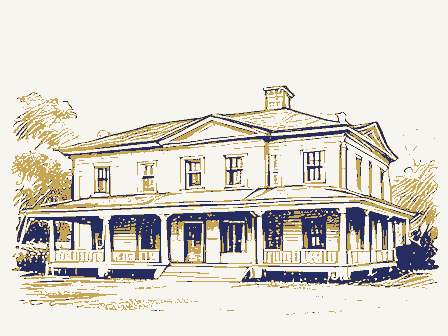
Belpre Township (part 3 of 3)
Part 3 of 3 of the account of this township in History of Washington County, Ohio, published 1881; History of Marietta and Washington County, Ohio, and Representative Citizens, published 1902. 4,877 words, covering 9 settlements. The chapter predates the incorporation of Belpre Township and Belpre City, so it covers both. Source changes inside the text are labelled at the exact paragraph where the next book begins.
Contents
5 sectionsThe section headings the book prints inside this chapter, on this part. Each one jumps to where it begins.
Parts
3 pagesThe source prints this as one continuous account. It is split here so no single page grows too heavy to load; the text runs straight on across the parts and nothing is omitted.
The chapter
4,877 wordsReproduced complete and unedited from History of Washington County, Ohio, published 1881; History of Marietta and Washington County, Ohio, and Representative Citizens, published 1902. The text is machine-read from scans, so expect recognition errors: misspelled names, dropped words, and stray characters. Nothing has been corrected, because correcting a proper name invents one. The headings below are the books' own; source changes are labelled in place.
abodes of the fathers of the settlements east of the Little Hocking. The Ohio has gradually been encroaching upon this graveyard until it is feared that the whole will eventually be swallowed up by the rapacious stream. On account of this insecurity of the land there have been few interments since the earlier days, and there have been a number of removals. 'The cemetery is kept in good order, as in the days when Deacon Perley Howe was its sexton. Most of the graves are marked by head stones taken from the neighboring hills. The inscriptions are rudely chiselled, and on many monuments cre illegible. It is impossible to give the name of the first person buried in this cemetery, inasmuch as both name and date have faded from public memory, and may never have been recorded on a headstone, for there are many unmarked graves. The earliest inscription is found on the monument of Israel Stone, jr., who was drowned in the Ohio April 25, 1791, aged thirteen. He who strolls among the graves and deciphers the moss-grown inscriptions, will find among the more prominent names and early dates the following, viz: and his son Charles, in 1817; Deacon Benjamin Miles, 1817; Major Robert Bradford, 1822; Benjamin F. Stone, 1824; Theodore Foster, 1825; Amos Sternes, 1813; William Browning, 1823; Reuben Robbins, 15z¢; Colonel Silas Bent, 1848; Daniel Loring, 1825; Dr. William Beebe, 1821; Benoni Lewis, 1821; Joseph O'Neal, 1810; Levi Benedict, 1824, and others.
In this vicinity Mrs. Armstrong* and her children were killed by the Indians on the Virginia shore in 1795. 'This stone is erected to rescue their names and fate from oblivion. Eerected by G. Dana, 1836.
In the vicinity of Newbury the traveller on the Ohio is attracted by the sight of a plain marble stone standing on the brink of the river. This monument is on the land cleared by Stephen Guthrie, and marks the graves of a number who died during the first years of settlement. The following is the inscription :
Pioneers Of Ohio
Anthony Spacht and his wife Catharine; Hannah, wife of Joseph Guthrie; Stratton, Levins, Bliss, +Denham; one woman and two children killed by the Indians. These and some other names, not remembered, died and were buried near this spot, between 1790 and 1810. Erected by some of their descendants as a token to their memory.
The mounds have sunk out of sight, and the old headstones which were once over the graves are now piled in a heap near the monument which was erected in 1871. Captain Eleazar Curtis, his daughter Eunice, and Noah and William Oakes, who were buried here were, in 1825, removed to the second graveyard, which was laid out back of the river, a little over a half mile directly west of the first burying-ground.
This second place of sepulture, though only one of ""God's acres," is rich with the dust of those who were the pioneers of the neighborhood. The mounds are thickly strewn about as the autumn leaves. Whole families are here sleeping side by side, and almost every grave is marked by some memorial tablet or monument. With a praiseworthy regard for the beauty of the cemetery, it is kept green with numerous evergreens, and those who control it see that the. graves are neatly kept. The first burial was that of Mrs. Eunice (Hoyt) Curtis, wife of Captain Eleazar Curtis, who died May 6, 1814, aged forty-nine years. An examination of the monuments shows that some are here buried who died prior to this date, but these were brought from other cemeteries. There are found the graves of the following of the most prominent pioneers: Joel Oakes, died in 1822; Captain Eleazar Curtis, 1301; Judge Walter Curtis, 1876; Truman Guthrie, 1841; Stephen Guthrie, 1827; Captain Charles Devol, 1845; Benajah Hoyt, 1807; James Knowles, 1830; Joseph Levins, 1814; Aaron Clough, 1824; Daniel Oakes, 1801; and many others. This cemetery is known as the Newbury burying-ground.
A little further west of the last named ground there is a family burying-ground belonging to R. C. Knowles. The first person buried there was Rebecca White. Those buried in this lot are members of the Knowles family.
the township. The first one buried here was Nathaniel Sawyer, jr, who was drowned in the Ghio, June 14, 1801. Here among others are buried John Bartlett and Eleanor his wife; Mary Ann, wife of Elias Bellows; Ebenezer Porter and his wife Lydia, and Reuben Allen with Magdelene his wife. Here, too, are many forgotten graves. There is a neighborhood burying-ground about two miles due north of Centre Belpre post office. In this place are buried the families of the Delanos, the Coles, the Eastmans, and others who formally lived in the vicinity.
The principal burying-ground in the township adjoins the old brick Congregational church. The cemetery was laid out about the same time that the church was built. It was ready just in time for the reception of the remains of those who died during the sickly seasons of 1821-3. The first burial was that of Mrs. Mary Fisher. Other burials quickly followed, among them being Colonel Daniel Fisher, Charles Medburry, and Major Putnam and wife. Several additions have been made to the grounds, which now comprise several acres. It is not possible to note the names of even a small portion of the numerous burials that have taken place in this quiet country churchyard. Suffice it to say that since its beginning it has been the burying-ground of the neighborhood for miles around, and in this place sleep the devarted friends and relatives of the majority of the people of Belpre township. The grounds have always been in charge of Cyrus Ames, who keeps them in good order. By a special act of the legislature in 1851 this cemetery was handed over to the management of the township trustees. All the other public cemeteries of the township are under the same control.
Personal Mention
Stephen Druse, sr., settled in Warren township in 1817, having emigrated to Ohio from New York State, where he was born. He died in 1818 and his wife Nannie Denslow died in 1844. Of their children Riley and Stephen settled in Belpre township; Lucy (Cooper) lives in Iowa; Harrison is in Illinois, and Warren and Joseph are in Missouri. Riley who settled in Belpre was born in New York in 1806. He married in 1839 Mary Cockshott, a native of England. Six of their eight children survive, viz: Sarah, Mary A., Maria, Melissa, Olivia, and Lucy.
Hon. Charles H. Brough, brother of the famons "war governor" of Ohio, was born in Marietta in 1813. He lived in Marietta until about twenty years of age, during which he learned the painter's trade and assisted his brother in the publication of the Hegister. He afterwards removed to Fairfield county, Ohio, where he published a paper called the Ofio Eagle. He also represented that county in the legislature. In 1844 he removed to Cincinnati and purchased the Cincinnati Advocate, the name of which he subsequently changed to the Cincinnati Enguirer, the same paper now published by Faran & McLean. Mr. Brough was Colonel of the Fourth regiment in the Mexican war. In 1839 he was married to Abigail Ames of Belpre. He died in 1849, and his widow is still living in this township.
Mr. C. A. Brown was born in Marietta in 1835. His father was sheriff of the county. He afterwards removed to Athens county, but soon came back. Mr. C. A. Brown served through three yetrs of the late war, and on his return in 1865 settled at Brown's Mills, Washington county, Ohio. 'Thence he removed to Belpre, in 1869, where he engaged in the grocery, book, and stationery business. He is still engaged in this business. He was married in 1856 to Miss Martha J. Breckenridge. He has two sons.
Mr. Andrew Breckenridge was born in Argyleshire, Scotland, in 1814. In 1836 he married Miss Jean Mackay, and the young couple immediately came to this country. They came to Washington county and settled in Belpre village. In 1869 Mr. Breckenridge moved to his present residence in Centre Belpre. In 1877 his wife died. Seven of the nine children of this marriage are still living, three sons and four daughters. His eldest son is a Congregational minister in Iowa. Mr. Breckenridge was married a second time, in February, 1881, to Mrs. Naomi Higly. Mr. Breckenridge started out as a poor boy, and has steadily risen by his industry and perseverance until he now owns a fine farm of two hundred acres.
Mr. George B Dunfee was born in 1816, in New Jersey. When he was two years old he removed with his parents to Washington county, Ohio, and from thence to Athens county, and thence to Little Hocking. In 1837 he was married to Miss Nancy Tipton, who is still living. They have had eight children, of whom seven are living. Mr. Dunfee is proprietor of the Dunfee house in Little Hocking. He has in his possession a passport given to his father in 1796, signed by Timothy Pickering, Secretary of State; also a description of his father, sworn to when he embarked on his journey to Jamaica in this same year. These papers are of great interest.
Parker Lewis was born in Harrison county in 1827, and in 1846 came to Belpre middle settlement. He married Elizabeth Pickering, born in Harrison county in 1828. They have had ten children, of whom nine survive. Mr. Lewis is engaged in the general store business. From 1846 to 1861 he was in the pork business, and has been engaged in the manufacture of grape wine. At one time he owned seventy acres of orchard land. He has been postmaster at Centre Belpre since the establishment of the office in 1873. treasurer from 1866 to 1880. The names of his children are as follows: Morgan E., born February 22, 1847; Leonora, August 30, 1849; Levi L., June 10, 1851; Sylvanus P., September 14, 1853 (died January, 1860); Ligzie P., July 28, 1855; Isaac T., Juné 29, 18893 Lillie M., March 19, 1862; William P., December 2, 1863; Lincoln G., September 26, 1860; Seth E., January 12, 1868.
J. W. Davis came to Belpre in 1855 from Bellaire, where he was born in 1825. His wife, Anna Krebs, was born in 1831, and died in 1879. Their son, O. L. Davis, who is a hardware dealer in Belpre, married Julia from West Virginia. In 1832 he married Lucy A. Henderson, by whom he has had six children: Josiah, William, Robert, Caywood, Emma Jane and Fanny. The two last named are now dead.
Dr. C. C. J. Guthrie located in Belpre in 1863, and is now ina large practice in the neighborhood. He was married in 1854, to Miss M. F. Collier. In 1871 they lost a child, Frank, who was killed by falling off the railroad bridge. There are three surviving children, viz: Anna, D. P., and George W. The sons own a drug store in Belpre village.
J. B. Mawhinney came to Ohio from Parkersburgh in 1866, whither he had come from Pennsylvania in 1858, and started a store in Cedarville. He has five children by his wife, Amy Wiley. He has been postmaster of the Rockland office, at Cedarville, since 1873, when it was established.
George M. Pinnell, born in West Virginia in 1850, came to Belpre in 1871. In that year he married Rosa E. Paden, by whom he has three children. Dr. Pinnell is a practicing physician in Belpre village and neighborhood.
J. M. Farson became a resident of Belpre upper settlement in 1866, having emigrated from West Virginia, where he was bornin 1824. He married Catharine Stag, by whom he had nine children, five of whom survive. His first wife died in 1861, and he was married to Anna E. MacTaggart, a native of Wood county, West Virginia. It was on Mr. Farson's land that the old relic of the Mound Builders stood until he removed it several years ago.
H. W. Gettel, a resident of Belpre village, was born in Marietta in 1845, he being the son of Michael and Margaret (Molder) Gettel. He is one of the nine. surviving children of a family of ten. He married Emeline }{
Collins, who was born in Athens county in 1843. They have four children. Mr. Gettel has been in the bakery business during the last twenty years. He served ona gunboat during the late war.
In 1847 Thomas Hibbard located in the middle settlement, where he has since resided. He came from New York State to Ohio in 1822, stopping first in Meigs and then in Athens county. In 1848 he married Sarah M. Forter, born in this township in 1824. They have had two children - Sarah A., and Edna Amelia (deceased). 'The latter married David P. Guthrie, and left two children - Frank H., and Hattie A. Mr. Hibbard pays special attention to the raising of Spanish merino sheep.
Jonathan S. Plumly settled north of Little Hocking in 1839. He emigrated from Pennsylvania, where he was born in 1806. In 1828 he was married to Rebecca Nicholson, who was born in 1808. By this marriage nine children were born, five of whom are living, most of them being in Decatur township. J. N. Plumly was born in Belmont county in 1829, and came to Belpre with his father when ten years old. In 1857 he married
James Gandee, born in Parkersburgh in 1825, went to Missouri, whence, in 1851, he emigrated to Ohio, locating in Belpre. In 1853 he married Maria Smith, by whom he has had two children - George W., and Mary A. - both living. Mr. Gandee is a farmer and stockraiser, and has practiced medicine for over thirty years.
Robert Bess did not come into this township until 1851. He was born in Pennsylvania in 1817. In 1841 he married Ann Coates, who was born in England in 1823. Twelve of their fourteen children are living. He resides a short distance above Little Hocking, on the Ohio river.
Mr. William Mullen was born in October, 1822, in Newport, Washington county, and lived there until he was fifty-two years old. He was married in 1853 to Miss Mary C. Cook. Mr. and Mrs. Mullen have had four children, of whom three are living. All of the children were daughters, and the three surviving ones live in the county, the two youngest with their parents. Mr. Mullen has a fine farm near Belpre village. His parents were old settlers of the county, having moved to Newport in 1815. His mother is still living with him at the advanced age of ninety years. In spite of her great age she is still very active and vigorous.
Mr. Robert Brewster was born in 1820 in Watertown township. He removed with his parents when two years old to Chenango county, New York. At the age of thirteen he moved into what was then Roxbury township. He moved into Belpre township in 1864, where he now lives. He was married in 1859 to Miss Annie Bachelor, who died in 1853. By her he had one son who is now living. Mr. Brewster was married again in 1864 to Miss Sarah E. Knowles, who is still living. By this marriage Mr. Brewster has had three chilldren, who are still living.
Dr. G. W. Reed was graduated in March, 1873 from Miami Medical college, Cincinnati, Ohio. At that time he resided in Harmar, Washington county. In June of the same year he removed to Lowell, where he practiced until September, 1880. He then removed to Belpre where he now has his office.
James Gandee was born in Parkersburgh, West Virginia, in 1823. He attended the schools in his native town until he moved with his parents to the State of Missouri. He stayed there about six years, making frequent visits to his old home for the sake of his health. He then came back and settled in Belpre township where he still resides. Mr. Gandee was married to Miss Maria Smith in 1858. They have two children, a daughter and son.
William H. Barkley has been a resident of Belpre all his life - fifty-nine years. The farm he now occupies his father purchased in 1822, but he came to the township as early, probably, as 1810. The tannery of William H. Barkley was established in 1867, and sold by him in October, 1880, to Kuhn & Brothers. Mr. Barkley was married in 1842, and has had three children, one having died.
Walter Curtis
In September, 1791, Eleazer Curtis, with his wife and six children, in company with Stephen Guthrie and a number of other young men, left their home in Warren, Litchfield county, Connecticut, destined for Marietta. The outfit consisted of one wagon drawn by two horses, and one drawn by four oxen. After a tedious journey of several weeks, the party reached McKeesport, and there sold one wagon and team, and bought a small flatboat, in which the whole company, with their goods and cattle were crowded. 'All went along without any particular incident, until one cold, blustering day in November, the boat was permitted to drift too close to the Virginia shore at the head of Wheeling Island. One of the studding caught in an overhanging tree, causing it to spring off a plank." Mr. Curtis, "seeing the imminent danger of the flat sinking from taking in water, seized a feather bed and pressed it into the opening; the women and children were put into a canoe, the boat landed, and the stock driven ashore, and the boat was kept from sinking. Having repaired the boat, the next object was to hunt the stock that had strayed off into the woods, which caused a delay of nearly two weeks."
Walter Curtis, the subject of this sketch, was born at Warren, Litchfield county, Connecticut, September 20, 1787, and was consequently four years old when the family came to the county. 'About the year 1798," he says in a reminiscence of early events, my father was clearing land back of the hill; I was sent to the spring near by for drinking water, and while dipping up water, heard an animal walking in the woods, looking up, I saw a beautiful bay mare going toward the east. I ran and told my father, who went across the hill and caught her; this was the first horse owned at Newbury. The mare had undoubtedly been stolen from Virginia by the Indians, taken to the Scioto and was endeavoring to reach her old home.
Mr. Curtis' early education was quite limited, and in 1809 he spent about six months in college at Athens. Soon after becoming of age he commenced building keelboats, the. lumber for which was prepared by the slow process of whipsawing, there being no saw-mills in the vicinity. The boats were loaded with produce and pushed up the Big Kanawha to Charlestown, where the produce was traded for salt, which was taken to Pittsburgh and sold.
Mr. Curtis, although deficient in early intellectual culture, had a thirst for knowledge, and by diligent study became a man of more than ordinary intelligence. An accurate memory and reliable judgment made him one of the leaders of society, as the several official positions to which he was chosen testify. Few men hada more intelligent acquaintance with history, and his reading covered a wide range of literature. In conversation he was particularly interesting, always having at command a refreshing fund of anecdotes and quotations for illustration. He always interested himself in politics, was a Whig until the decline of that party, and then, until his death, acted with the Republicans. In religion he held decided views, but never subscribed to any creed.
Mr. Curtis represented his county in the legislature in 1827-8, was associate judge from 1824 till 1827, and served as county commissioner from 1852 till 1855. In the township and district offices he performed his share of duty.
Walter Curtis died, after a profitable life of nearly ninety years, June 27, 1876, having lived in the same community nearly eighty-five years, and at the same place eighty-three years.
Eleazer Curtis was born in Warren, Connecticut, October 20, 1759. Eunice Starr, of Bridgefield, Connecticut, was born August 1, 1766, and was married to Eleazar Curtis, November 7, 1782. Their children were: E. S. Curtis, born in 1783; Jason R. Curtis, 1785; Walter Curtis, 1787; Mary Curtis, 1789; Benjamin Curtis, 1791; Horace Curtis, born at Belpre, 1793; Clarissa Curtis, 1796, and Lucy Curtis, 1800.
Walter Curtis was married to Almira Guthrie, February 3, 1819. They had four children, viz: A.S., born April 7, 1822; C. C., born April 11, 1824; Marian, born August 8, 1826; and A. L., born December 19, 1828. Mrs. Almira Curtis died May 13, 1880, aged seventy-nine years.
Howe Family
Among the early settlers at Marietta, the name of Perley Howe appears. He was born at Killingly, Connecticut, May 14, 1768. He came to Ohio at the early period of settlement and was one of the first male teachers at the stockade. While there he formed the acquaintance of Persis Putnam, daughter of General Rufus Putnam, whom he married May, 2, 1798. He soon after came to Belpre and settled on a farm given him by General Putnam, on which his grandson, George A. Howe now lives. Mr. Howe was familiarly known among the old settlers, as "Master Howe." He, for a long time taught school in Upper Belpre, and the few old men yet living, remember him as their first teacher. He was one of the best teachers of the community, a good writer, and "good in figures." He lived to see the farm on which he settled, well improved, and the border country to which he came, developed into a well organized community. He died May 17, 1855. His first wife, Persis Putnam, died September 16, 1822. He married for his second wife, Sarah Emerson, September 2, 1827; she died February 19, 1863. By his first wife he had five children, viz: Joseph, born July 4, 1800; Perley, born May 28, 1802; Abigail Putnam, wife of William R. Walker of Athens county, born December 31, 1804:
Mr. Howe was commissioned Captain of the first brigade, third division of the Washington county militia, in 1804, by Governor Tiffin. At the time of Aaron Burr's conspiracy, this company stood guard, and Captain Howe was a witness at the trial.
Rufus William Howe was a farmer all his life. In his youth, after passing through the country schools, he attended the academy at Marietta, and boarded with General Rufus Putnam, his grandfather. He married for his first wife, Lucy Eastman, May 23, 1833, of the Lower Belpre settlement. She died September 22, 1834, leaving no children. He married for his second wife, Polly Proctor, of Watertown township, June 24, 1835; the family consisted of four children, viz: Joseph Perley, born April 6, 1836; George Augustus, born October 1, 1838; Rufus Putnam, born May 16, 1841; and Persis Putnam born January 1, 1844; two of whom are living - Geor,e Augustus and Persis Putnam. George, the second son, is the only member of the family who married. He married Charlotte Ann Wyatt, of Amestown, Athens county, October 26, 1865. They had five children, viz: Charlotte Wyatt, Mary Emily, Persis Putnam, Blanche and Jessie, the three oldest of whom are living. He married for his second wife, Mary S. Chapman, of College Hill, Ohio, February 12, 1880.
William Howe lived in a house facing Blennerhasset Island first, afterwards removed to the plain. A pictorial sketch of the residence of George A., which stands on the plain overlooking the valley and river, will be found on an adjoining page.
Source changes here: from History of Marietta and Washington County, Ohio, and Representative Citizens, by Andrews, Martin Register, published 1902; 915 words in this source stream.
And Representative Citizens
The location of the settlements is thns described by Dr. S. P. Hildreth : "The main body of the new colony tract was divided into two portions, known as the 'Upper' and 'Middle' settlements. The lands on the river were of the richest quality; rising as they receded from the Ohio on to an elevated plain, 30 or 40 feet higher than the low bottoms, and extending back to the base of the hills. This plain was in some places more than half a mile in width, forming with the bottoms alluvions of nearly a mile in extent. The soil on the plain was in some places fertile, loamy sand ; and in others inclined to gravel, but everywhere covered with a rich growth of forest trees, and producing fine crops of small grain. About a mile below the Little Kenawha, this plain came into the river, presenting a lofty mural front of eighty or a hundred feet above the surface of the water. This precipitous bank is continued for half a mile, and on its brow, and for some distance back, is clothed with evergreens, being chiefly different varieties of the cedar. That portion of the plain is known by the name of 'the Bluff,' and is located near the head of Blennerhassett's Island, close to the landing and crossing place to the mansion erected a few years after by this celebrated man. 'The Bluff' divided the 'Upper settlement from those below. The 'Upper' lay in a beautiful curve of the river, which formed nearly a semi-circle, the periphery of which was about a mile and a half, and rose gradually from the bank of the river on to the second bottom by a natural glacis, the grade and beauty of which no art of man could excel. From the lower end of 'the Bluff,' the plain gradually receded from the river, leaving a strip of rich bottom land, about three miles in length, and from a quarter to a third of a mile in width. This distance, like that portion above, was laid off into farms, about 40 rods wide and extending back to the hills, which ' rose by a moderate slope to an elevation of an hundred feet above the surface of the plain, and were clothed with oak and hickory, to their tops. This charming location was well named 'Belle-prairie,' (or beautiful meadow), but is now generally written 'Belpre.' "
The Belpre of today reflects creditably the intellectual and cultured characteristics of the stalwart pioneer of the "block-house"' days. There still remains some traces of the old pioneer blood, and a few of the historic points made famous during the days of the first settlers are cherished and protected by the present inhabitants.
The geographical limits of Belpre have been encroached upon, from time to time, until now Belpre - proper - represents an iiicorporated village about one mile long and one-half wide, directly opposite Parkersburg, West Virginia. Though the settlement of Belpre is one of the oldest in the county and hence in the State, and for many years the most popular community in the county, outside the present Marietta, yet it was not until July 22, 1901, that it was voted to incorporate it. The following January (1902) the charter was received, and on the 13th day of the same month, the election of the first officers of the corporation was held. The estimated population is 900, - no census has as yet been taken since the incorporation.
The valley in which Belpre is located is still one of the most productive along the Ohio River, being especially adapted tO' truck-gardening, and yet retains the pristine beauty, which gave to it its poetic name. Belpre is essentially a residence village, its commercial and industrial interests having been greatly damaged by the 1884 Ohio River freshet, from which it has only partially recovered. However, in a retail way, it has a number of institutions which do a thriving business. It depends upon Parkersburg, West Virginia, for its banking facilities. A building and loan
Belpre has ever taken a front rank in its interest in education. Its pubhc schools are noted for their e.xcellence, and have an enrollment jpf 300 pupils, with eight teachers. The school building is a well-equipped brick structure of eight rooms, erected in 1876. Connected with the schools is a circulating library of 650. volumes, to which additions are made each year.
TIhe churches of the village are four, viz. : The Methodist Episcopal, a direct descendant of the first organization of Methodism in Belpre township, effected by Rev. Mr. Morris in 18 1 6. Their present place of worship - Lewis Chapel - was dedicated February 24, 1867, and was remodeled in 1896. The present membership is 200.
Tire Congregational Church - with 120 members - tracing its origin to a mission of the First Congregational Church of Marietta, was organized in 1802, at what is now Rockland. The first service held in the village limits was in 1858. The church building, in which they still worship, was erected in 1869.
The Catholic Church, for many years an outer mission of the Marietta Church, and later assigned to the Little Hocking Church, always holding its services once a month at the horne of some of its members, now worships in a little church of its own - St. Ambrose Church - donated by P. W. O'Connor of Columbus, Ohio, in 1 901, with 3S communicants.
Provenance
Text from History of Washington County, Ohio, published 1881; History of Marietta and Washington County, Ohio, and Representative Citizens, published 1902, in the public domain in the United States and digitised by the Internet Archive. The settlements listed against this township are matched by point-in-polygon test of each Geographic Names Information System coordinate against the Census Bureau's county subdivision boundary, not by name.