 Block
Block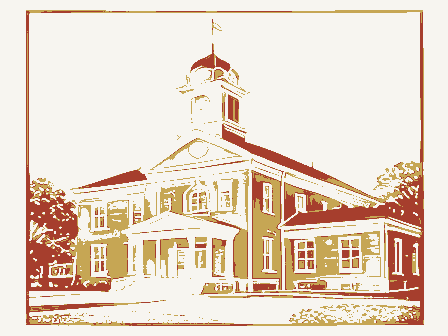
Chardon Township (part 2 of 4)
Part 2 of 4 of the account of this township in Pioneer and General History of Geauga County, with Sketches of Some of the Pioneers and Prominent Men, published in 1880. 15,882 words, covering 2 settlements. The chapter predates the incorporation of Chardon Township and Chardon City, so it covers both.
Contents
4 sectionsThe section headings the book prints inside this chapter, on this part. Each one jumps to where it begins.
Parts
4 pagesThe source prints this as one continuous account. It is split here so no single page grows too heavy to load; the text runs straight on across the parts and nothing is omitted.
The chapter
15,882 wordsReproduced complete and unedited. The text is machine-read from a scan of the 1880 printing, so expect the errors a machine makes reading a century-old page: misspelled names, dropped words, stray characters. Nothing has been corrected, because correcting a proper name invents one. The headings below are the book's own.
As the sugar-making season is near at hand, it may not be amiss to mention the manner, or what sort of utensils the Indians had for catching sap. The proper sized trees wrere selected, and, after being felled, were cut into logs of desired length, and split in the middle, and the bark taken off each section, and thinly shaved at each end, and turned up at each end higher than the depth of the trough, and fastened by fine, fibrous strings of bark. Captain Edward Paine, jr., once made some sap-troughs here in Chardon, after the Indian fashion. It is said that, when the Indians boiled sap, they put in meat to boil, or anything else they wished. If this be so, "Indian sugar" must not be quite as pleasant and romantic as "Indian Summer."
This encampment in Hambden broke up in the fall, and went to Canada, and it is said that the arms-bearing portion joined the British against the Americans, in the war soon following. After the war, very few ventured to return to this section. Perhaps, five or six came within the township limits of Chardon, but they were regarded with no more favor than wolves or mad dogs. Mr. Harrington and Mr. Burlingame are said to have each done duty in preparing hasty ways for Indian exit. No inquests were ever held to inquire after the manner of death, however sudden. Crows and vultures were the self-constituted officials who alone performed the last acts of coroner and scavenger, too.
There were other pioneer settlers here, cotemporaries of the Indians, or rather tenants in common, that we ought not to pass un mentioned. They were bears, wolves and deer, and other wild animals. As mentioned before, this territory we now occupy was anciently considered choice hunting ground. When this town was first settled, and for several years after, deer were very plenty, and, as late as 1830, would occasionally come from the woods to the cleared fields, but were very shy and cautious. It is needless to say that, at the proper season, they made excellent eating. The settlers made traps for bears and wolves, constructed something like a log house, though only large enough to accommodate one animal at a time. These traps were four-sided, and of suitable sized logs for the required strength, pinned at the ends. One side was detached, or so made that it formed a sliding door, and could be raised high enough, and fastened by a spring pole or baited attachment, so that, when the animal was far enough inside, and disturbed the tempting bait, and the door would descend, and Mr. Wolf or Mr. Bruin was the property of the trapper; being forced to quit all further pretensions to leading itinerant life. Bears were also considered good eating, and cub-meat was quite a palate-tickler, and would almost have been "legal tender" for debts private, if not public. For a number of years after Chardon's first settlement, the few who kept sheep, were obliged to yard or stable them at night, so great was the danger from attacks by wolves. Bears were not a whit behind in greedy rapacity, and one informant said, "they did have such a master appetite for pigs." Many a skirmish has occurred in a pigpen, between Mr. Bruin determined to "go the whole hog," and some unlucky porkship, and fortunate it was for the latter, if, by high-toned, uproarious squealing, he could call some one to his rescue before Bruin, who does no tender hugging, had stifled his outcry.
One of the early settlers, now living in town, says that a party composed of three or four went with Captain Paine to the southwest part of town, to look at some land. When ready to return, Captain Paine took another route home, having a gun, and, while the others were coming home, they heard a noise, and, looking, saw four or five black bears coming down a cucumber tree. Their mode of descent attracted their attention. They would seem to slide hastily, or almost drop, for a few feet, and then, seemingly for fear the weight of their bodies and increased velocity might be hazardous, claw tightly on to the trees, thus "shutting down the brakes," and then, "letting on more steam," pursue their head-long course. Nearer home, they saw another trio, but none of them showed fight.
My father informs me that, when he was abodt thirteen or fourteen years old, in 1817 or '18, he had eighteen sheep. He usually guarded them at night, but, one afternoon, the family had company, and the sheep were seen near the barn so late that risk was run, and they were left out. That night, the wolves attacked the flock, and killed three or four outright, and wounded others, so that, in time, nine died - one-half the flock. It was then a serious loss, for sheep were valuable, though their wool was coarse and bodies small. Great pains were taken to raise them, and, for many years, they were not taxed. The wolves did not eat them badly, but snapped and bit their throats for blood, as a sheep-killing dog does. Occasionally, when quite hungry, they would devour most of the meat of a carcass, or tear it open for the tallow. The sheep were killed but a short distance east and south of the cemetery. I have before me the county auditor's printed statement of the receipts and expenditures of Geauga county for the year ending June 1, 1835, and one of items of expense is "Paid wolf scalp" one dollar and seventy-five cents. So you will see it was a long time before these vexatious pests to sheep-raising were entirely exterminated. It is said, but I cannot tell with what per cent, of truth, that, in early times, or after they were numerous enough to run in the woods for mast and shack, the hogs, when attacked, would form in a circle, heads pointing outwards, with the young pigs inside the circle, and make the best fight possible. This may have been so, because hogs then were of the alligator breed, "as long as a rail," and their
Soon after the first settlement of Chardon village, which formed a nucleus or headquarters for further settlements in the township, land was bought or articled, and improvements made in all portions of it. Mention has been previously made of many of the pioneers who settled on King street, and on the north street, leading to Painesville. Those who settled in the southwest, northwest, and central parts of the township are, of course, entitled to as early and honorable mention as others, and the seeming neglect has been solely the result of inability to obtain correct and sufficient information. The desired information might have been looked up before this, had not a daily round of duties, that could not be postponed, forced the further publication of this history into the background.
In 1813 or 1814, Amasa Clough, and Jare, his son, came to Bondstown (now Hambden), and frow there to Chardon, in search of a home in the, then, far west. It seems that, for a night or two, and a day, these travelers were the guests of Mr. and Mrs. Samuel King, who entertained them with all the cordiality consistent with their limited log cabin accommodations. At meal-times, the frugal housewife spread the economical repast upon a chest that had been brought from the east, and then was obliged to do double duty - for table and packing purposes. Mr. and Mrs. King were short of chairs on this occasion, and, as a substitute, they used some pumpkins, arranged alphabetically, or wheeled into line around the chest. Pumpkins then, as now, had eyes and stems, but no legs, and the occupant had need of all circumspection, lest his seat should become vacant. Of the quality of their lodgings we have no information, but no doubt they slept as soundly as if in a palace chamber and on a bed of down. Mrs. King used to speak of this occurrence often afterwards, and how it mortified her for fear her eastern visitors would think she had acted unwisely in leaving home comforts, and accepting the discomforts of pioneer life. The sacrifices involved by such changes were greater than we can now easily imagine. As an appropriate instance, let me here mention an item received too late for insertion in connection with the family history to which it belongs: Zadok King, George
King, and Samuel Collins, with their wives, came to Chardon in 1815. Zadok King and his wife, Fanny, had two children with them, aged respectively three years, and one year. They moved- into a log house (the three families), just built by Platt Canfield, about two miles west of the village. The house 4iad not been "chinked" between the logs, and had only a floor of loose boards. A light snow was drifting through the cracks, and, as the women sat down upon the loose, hard floor, though they had strong hearts, and willing, loving husbands, it is needless to say that, when they thought of all they once possessed, the tears ran down their faces, and notes of lamentation reached each other's ears.
The two Mr. Cloughs went back to York State, intending to return soon, but sickness prevented the fulfilment of all their expectations. Amasa Clough died in York State, and his wife was so sick that no hopes were entertained of her recovery, and the friends prepared all her burial clothes ; but she did recover, and in 1818, perhaps, came to Chardon : and, five or six years after, died, and was clad in the grave clothes made for her years before. Of course, the hasty and premature preparation of this clothing was not exactly a dead loss, but obliged the one for whom it was intended to lay out of the use of it for a number of years.
In 1818, Jare Clough and Eunice, his wife, came to Chardon from York State. They came to Norman Canfields hotel and staid over night. The next day, they went as far as Truman Bushnell's, and the day following, to the farm now occupied bv Ambrose Clough. Chester Clough, an unmarried man, had come to Chardon, in 1817, and made a clearing on this same farm. The roads then were almost entirely untraveled and unmarked; and, to show the family of Jare Clough where the road "forked," to go the clearing of Chester Clough, the latter had dug up a little tree by the roots, chopped off the top, and turned the lower portion, roots up, by the side of a larger tree, for a guide-board. The children of Mr. Clough were: Olive (afterwards Mrs. Elam Sawin), Daniel, Emily, Lovica, Ephriam, Ambrose, and William. Mrs. Sawin is now living in this town, active and intelligent. [Mrs. Sawin has since died]. Her husband died several years ago. Daniel died in Chardon, aged about nineteen years. Emily married William Bushnell, and died about 1857. Lovica married Lewis Thompson, and died about the time that Emily did. Ephriam now lives in Minnesota. Ambrose lives on the old homestead, is a good farmer, and respected by all. William is dead. Jare Clough died July 8, 1853, aged sixty-nine years. His wife died September 15, 1869, aged eighty-three years. So these tw'o pioneers have gone to their last account, full of years and good deeds.
Chester Clough was married to Maria Sanger, June 10, 1819, by George King, esq. Mrs. Clough died, I am unable to say when, and Mr. Clough married, for his second wife, Amy Gates. They are now living in Bazetta, Trumbull county, Ohio. Mr. Clough has seen much sorrow and sickness in his life, and it is said he is now, in his old age, quite feeble and helpless. [He has since died].
In the summer of 1815 or 1816, Abijah Sawin and his wife, Polly, came from Connecticut to Chardon, and settled on King street, where Mrs. McBride now resides. Their children were: Elam, Horace, and Chester. Mr. Sawin died in August, 1818. His wife afterwards married a Mr. Allen, and died in Wisconsin, five or six years ago. Elam died several years since. Horace moved to Illinois, and is supposed to be living. Chester is ^aid to be living in Wisconsin. Not very much that is reliable or interesting can be obtained of the history of this family, on account of the early death or removal of most of its members.
To me, there are some interesting items of history, pertaining more particularly to the early settlement of the village ; and, thinking their narration may be entertaining to all who favor these articles with a perusal, they are herewith given. It may not be known or remembered by all that Samuel W. Phelps was appointed director of the town plat of Chardon, and held the directorship from 1808 to 1826, a term of eighteen years. I have before me the original contract entered into between Simon Perkins, agent for Peter Chardon Brooks, with Mr. Phelps, and it reads as follows:
"The subscriber, Simon Perkins, of Warren, in the county of Trumbull, and State of Ohio, attorney to Peter Chardon Brooks, of Boston, in the commonwealth of Massachusetts, do hereby agree to sell to Samuel W. Phelps, esq., director appointed for the purpose by the court of common pleas of Geauga county, two hundred acres of land, to be located on or about the place selected by the commissioners appointed to fix a place for the permanent seat of justice for said Geauga county, and so that the plan of trees marked by said commissioners shall be central in said tract, which is to be square, and to be sold at the price of two dollars per acre, payable one-half in one year, and the other half in two years, w'ith interest, to be paid annually, and the deed to be executed to Samuel W. Phelps, as director, on the receipt of the money or good security for it. In witness whereof, I have, for said Peter C. Brooks, hereunto set my hand this twenty-third day of November, 1809.
"At a meeting of the board of commissioners of Geauga county, September 2, 1811. Ordered by the board that the sum of sixty-one dollars and eightyseven cents be appropriated for the purpose of chopping down all the standing timber, and chopping off the same into sixteen feet lengths, and also all the lying timber, and piling all the brush and other small stuff, in a workmanlike manner, on all the ground contained in the public square of the town plat of Chardon, in the county aforesaid, except ten trees on each acre, which are to be left lying, suitable for 'roll bodies/ and also all ash and butternut timber that is suitable for rails to be left standing ; and that J edediah Beard be agent for this board, to contract with some person or persons to perform the same, and take report of his proceedings thereon to this board on the first day of next November court, where an order will be drawn on the treasurer of said court for the above sum.
"At which November meeting, further time was allowed by the board, until the June meeting, 1812, for the said agent to make his report, at which time he made his report as follows:
" 'Agreeable to the within order, I hereby certify that I have contracted with Seth Hays and Burrit Durand, to perform the labor required by the within order, and that they have performed the same to my acceptance.'
In my first article of this history, I said that most of the clearing off of the public square was done by Gomer Bradley and Curtis Wilmot. Probably Mr. Bradley took no part in the labor. Mr. Wilmot was killed by the falling tree, as stated, and Mr. Hayes did the lifting. As soon as possible, the land purchased by Samuel W. Phelps was divided or platted into lots, and sold or contracted to whoever desired to purchase. I have Mr. Phelps' statement of account rendered to the county, of the amounts received on contracts for sale of lots. August 10, 1817, he received of Lyman Benton, of Burton, on contract for lot No. 52, five dollars. October 9th, same year, he received on same contract, eight dollars. July 22, 1812, he received of Thomas Jordan, five dollars, on account for lot No. 83. August 31, 1813, he received sixty dollars, sixtythree and one-half cents, of Norman Canfield, for price of lots 39, 40 and 41, and the interest on purchase price, these lots having been previously contracted. July 16, 1814, he received of Samuel King, thirty dollars, on contract for lots 87, 88, 95 and 96. Mr. Phelps charged only the moderate sum of thirty dollars per annum for his services, and paid every expense of executing contracts and deeds, etc. Lots Nos. 26, 31, 37, 40, 49 and 52, were sold for twenty dollars each, except No. 40, which sold for twenty-one dollars. After the seventeenth of September, 1816, -Mr. Phelps charged seventy-five dollars for each lot. In the sale of one of these county lots, the director deducted two dollars and fifty cents on account of a mistake in the survey, and the lot fell short twenty shillings'worth from the proper measurement. In April, 1823, the price per lot was seventy-five dollars, and there were then twenty-four lots not sold or contracted.
In the third article of this series it was stated that the first jail ever built in Chardon was a log one, attached to the west end of Norman Canfield's tavern. To show how much it cost, I give the following from the county records:
"At a meeting of the board of commissioners of the county of Geauga, September 7, 1S13. Resolved by this board that the sum of twenty-three dollars and fifty cents be appropriated to pay the expense of building a temporary jail on Norman Canfield s land, in Chardon."
Who the fortunate "contractor" was, how much clear profit was made, and what he did with his gains, and how much was paid the architect for plans and drawings, are matters that, unfortunately, no one remetnbers.
The first murder committed in Geauga county, or the first trial for murder,, was in the court of common pleas af Chardon, begun on the eighteenth day of March, 1823. Hon. George Tod was president judge, and Vene Stone, John W. Scott and Solomon Kingsbury were associate judges. James R. Ford was sheriff, and Edward Paine, jr., clerk. The grand jurors, who found the indictment, were Abraham Tappan, foreman; Samuel Collins, Caleb Sweet, Silas Newcomb, Merrick Pease, Shelburn Bostwick, Asa Wilmot, John Hubbard, John Bachelder, Cyrus Cunningham, James Ware, Jesse Ladd, Eleazer Patchin, Asa Cowles and Jonathan Brooks. On the first day of February, 1823, Benjamin Wright, jr., a blacksmith, who lived in Leroy (now Lake county), stabbed one Zopher Warner with a knife, upon the right side of his body, about two and a half inches below the pit of the stomach. The wound proved to be a mortal one, and, on the ninth day of February, following, at five o'clock in the afternoon, Mr. Warner died. The thirty-six jurors summoned to try the case, or the full panel from which the required twelve were to be selected, were Eli Bond, Hezekiah King, William Kerr, Haven Rockwell, John Ford, Erastus Goodwin* Daniel Kellogg, Stephen Pomeroy, Paul Clapp, Peter B. Beals, Asahel Barnes, Nathaniel Spencer, Chester Treat, Timothy Wells, Jare Clough, John King, Ariel Benton, Zadok Benton, David Hill, John Hanks, Benjamin Hanks, Thos. Murphey, Obed Hale, Julian #C. Huntington, Alvord Beals, Orrin Spencer, B. P. Cahoon, William Holbrook, Robert Blair, Ralph Cowles, A. A. Skinner, R. W. Skinner, Henry Bishop, Ambrose Drake, David Hull, and Hercules Carroll. The twelve who sat as jurors in the case were the two Skinners, two Hanks, Drake, Hull, Bond, King, Goodwin, N. Spencer, Cowles, and Rockwell. Alfred Phelps and Elisha Whittlesey appeared on the part of the State. Noah D. Mattoon and James H. Paine, at the request of the prisoner, were assigned by the court as council for his defense. Alfred Phelps, esq., was prosecuting attorney of this county, then residing at Chardon, and ever after until his death. The case occupied three or four days, was then given to the jury and a vefdict of guilty then rendered. The sentence pronounced by the court was "that the said Benjamin Wright, jr., be taken to the common jail of the county, and that he be there confined until the third Thursday of May, following, and that he be taken from thence to some convenient place within the town of Chardon, between the hours of ten o'clock, a. m., and twelve o'clock, at noon, of said day, and that* within the hours aforesaid, he be hung by the neck until he be dead," etc.
. Of course, the few remaining weeks and days of the doomed man's prison confinement rapidly wheeled away into the past, until the day of expiation came. The officers of the law had erected a hideous looking frame-work called a gallows, and planted it just south of the village, near the present residence of P. McDonald, on the land of S. N. Hoyt. Anticipating also a full turn-out to this- "hanging-bee," they had employed extra police and military assistance. There were rifle and horse companies from' Painesville, Burton and Kirtland, with drum and fife accompaninents, and a great many civilians volunteered to do special duty for the day. The sun rose higher in the eastern sky; the appointed hour came, and the prisoner was taken from the jail to the south part of the public square, where a stand had been built to hold the religious services upon. His mother and brother were with him at these exercises, but she did not witness the execution. His funeral or rather ante-mortem sermon was preached before his death, at his request. He had heard a great deal that was wicked and damaging said of himself, and was quite solicitous to know if anything good could be spoken by his spiritual adviser, who was expected to spin a fine- woven web to cover up the sternness and severity of truth of the later life of him who was so soon to "shuffle off this moral coil," or, rather, for whom the hempen coil was so soon to do the shuffling off. Listening to one's own funeral sermon is a felicity rarely vouchsafed to earthly mortals, and should be all the moie appreciated as it can happen but once in a life-time. His sermon was preached by a Mr. Hughes, a Presbyterian clergyman from Pennsylvania. Elder Ira Eddy having then recently entered the ministry of the Methodist Episcopal church, offered fervent prayer in his behalf. These services ended, and his mother shook his hand, and kissed him good-bye. This is almost too serious a matter to admit of jesting, but to show that, in the case, the commonly deep-seated fountains and full-flowing streams of a mother's love and solicitude were suffering something of a drouth, it may be stated that she urged him to "keep a hard upper lip, and hang as stiff as steelyards. It must have been a sweet sollace to her in after days, to remember that the latter part of her programme was a decided success. Olden history tells us that Achilles was a Grecian hero. Homer's Illiad makes famous mention of him. In the Trojan war, he was brim full of bravery. While an infant, his mother dipped him in the river Styx, which rendered him incapable of being hurt in every part of his body, except the one heel, by which she held him. At the siege of Troy, he received a wound (of course in that heel), which caused his death. The mother of our criminal, if she ever dipped her youthful Benjamin in any fabled waters, must have held him by the neck, for, on the eventful third Thursday of May, aforesaid, he received a hurt in the neck that never was repaired.
But, to return from this digression, the criminal was pinioned and taken to the gallows, closely attended by the body-guard and faithful men of God. The crowd of spectators was variously estimated from four to eight thousand, some of them coming fifty miles away. Old men were there, used to seeing death in all its forms, save this more ghastly phase, and hundreds of women gazed upon the sickening sight with horrid fascination. It is useless to enter into minute detail. It is enough to say that the fatal noose was adjusted, the rope was cut, and, in a few minutes, the teeth-clenched jaws and the unbeating heart told that death was there. His body was delivered to his friends, and taken to Leroy for burial. The gallows was taken down, and the posts were afterwards used for dwelling house purposes in the porch of the house where J. O. Worallo now resides on South street.
I have felt justified in entering thus fully into details of this trial and execution, as it is the only instance in which capital punishment has been inflicted in Geauga county, for the crime of murder.
Other trials afterwards occurred, where the prisoners at the bar were charged with crimes incurring the death penalty, and a brief narration of some of their most noteworthy features will now be given. At a term of the court of common pleas begun ^nd held at Chardon, on the nineteenth day of September, 1831, before the Hon. Reuben Wood, president, and Asa Cowles, John Hubbard, and Daniel Kerr, associate judges, the grand jury returned a "bill of indictment" against one Decius Barnes, of Chardon, for the murder of Sally Russell, of Kirtland. When arraigned at the bar of this court, and having heard the indictment, he elected to be tried in the supreme court of Ohio. On the tenth day of August, 1832, the supreme court commenced its session, with the Hon. Joshua Collett and the Hon. Ebenezer Lane upon the bench. I). D. Aiken was the clerk, William Kerr, sheriff, and S. Mathews, prosecuting attorney. The killing of Sally Russell was accomplished in a piece of woods in the eastern part of Kirtland, on the twenty-second day of June, 1831. She was an intelligent girl of not more than fourteen or fifteen years of age, and had been sent on an errand to a distant neighbor's, and much of the distance was through the forest. After doing her errand, she started on her return with a happy heart, and a nature as full of innocence as the birds upon the trees, that were humming and singing their tunes of perpetual gladness. But she was waylaid by some human devil, whose passions were inflamed by the fires of hell, and, with the ferocity of a wild beast, she was choked, strangled, bruised, her pe'rson shamefully and namelessly violated. But her shudderings and struggles were in vain, and her outcries reached the ears of no one save the Father of all mercies. When night came, and she did not i^turn, her family began to be apprehensive, and made search for her. It was supposed that she had been where she had set out for, and had started to return. She was not found until the next morning, and then her dead body was found laid beside a log, partially covered by leaves and brush. The ground around showed that she had iesisted the ruffianly attacks until death closed the unequal combat. When the news of this foul and unnatural murder was spread in that neighborhood, it is needless to say that all the people were excited, and in a state of wrathful ferment. Suspicion at once rested upon Decius Barnes, of Chardon, who was a peddler of tin-ware, and then in the employ of David T. Bruce, esq., of Chardon, for he drove that day through the woods near where the girl was killed, and his horse was left standing in the road, and its driver nowhere to be seen. He was arrested, confined in jail more than a year, and then tried and acquitted at the time and term of court before mentioned. The evidence was all circumstantial, and, as*is often the case, whisperings even were full of dire and dreadful meaning, and "trifles light as air" were looked upon with as much import as if floating in blood. The jury called to try the case was composed of the following named men: Reuben Gilmore, George Higley, Harlow Bailey, Charles Burr, Amos Cunningham, S. D. Williams, Russell McCarty, T. W. Burt, Nathan Hanchett, Orrin Spencer, Neri Wright, and Sherman Dayton.
Mr. Mathews, the prosecuting attorney, was assisted by Hon. S. J. Andrews, of Cleveland. Alfred Phelps, esq., was employed in his defense, and Joshua R. Giddings was his associate counsel. Mr. Phelps, Mr. Bruce, and a few others, always firmly believed Barnes to be innocent of the crime, for he was small in size, quite lame, and had always shown a quiet and inoffensive disposition; but the general and almost universal opinion was that he was guilty of the crimes of which he stood charged in the indictment. If suspicions ever rested upon any one else, they were not confirmed by any proof. It is said that Barnes, in his last sickness, urged his attending physician to write to Judge Phelps that he was innocent of the charge, and that it was a death-bed statement. Whoever the guilty person was, he had a fearful secret to keep inprisoned, and the agonies of guilt, "sharper than a serpent's tooth," continually gnawing in memory, heart and brain, unrelieved by tears and confessions, must have turned the well-springs of a natural life to dust and ashes ; and visions of this innocent, murdered girl, in his sleeping and waking hours, must have been ghastly conspicuous.
At the September term, 1845, of the court of common pleas of Geauga county, Luther Britton was indicted for the murder of Truman Allen. On the 21st flay of August, 1845, Britton stabbed Allen with a knife in the left breast, and he instantly died. He was tried for this offense at the spring term in 1846, which commenced March 31st. A great number of militia men had been mustered at Burton, for the purpose of public parade and discipline, and in the night time, Britton, while intoxicated, became troublesome and insulting to those doing military duty, and, in attempting to arrest him, the stabbing was purposely done. H. H. Tucker, Edmund Moore, Ely Odell, J. E. Stephenson, Anson Mathews, Jeremiah Evans, Hamilton Utley, Jonathan Burnett, Joseph Patch, Jacob Burroughs, Russell Williams, and Zebina Strong, were the jurors. Hon.
A. G. Riddle was the prosecuting attorney, and was assisted by Hon. Reuben Hitchcock. Britton had brothers who were men of property, and they employed Hon. S. J. Andrews, Hon. D. K. Carter, and William L. Perkins for his defense. Hon. B. Bissell was president judge. The trial was very ably conducted in all respects, and very many will now remember the plotting and counterplotting, the far-reaching legal acumen displayed by those subtle practitioners. He was found guilty of murder in the second degree, and was sentenced to the penitentiary during his natural life. It seems penitentiary life was not agreeable, or at least not natural, as confemplated in his sentence, for, in a year or two, the governor pardoned him.
At the October term of court, 1857, Hiram Cole was indicted for poisoning his wife. He was tried at the February term, 1858. Hon. Horace Wilder was then upon the bench. Judge M. C. Canfield was prosecuting attorney, and Hon. A. G. Riddle assisted in the prosecution. A. H. Thrasher, esq., and Hon. R. P. Ranney were assigned by the court as counsel for the defense. The trial occupied several days, and the jury failed to agree. A change of venue was granted, and, in June or July following, he was again tried in Ashtabula county, and there acquitted. It is unnecessary to enter into lengthy details of this case, because it occurred so recently, and is so fresh in the remembrance of most of my readers. Mr. Thrasher worked with untiring patience to clear this man, and his incessant efforts in his behalf, (for he sincerely thought him innocent), no doubt induced the disease of which he afterwards died. The ruling popular verdict was that he was guilty, and ought to be hung, but jurors are bound to remember that maxim of law and justice, "that every man under accusation of crime should be held innocent until he is proved to be guilty."
It has been stated before that settlements were commenced at an early date, in the northwest and other parts of Chardon township. One of these hardy pioneers who has rendered aid to the improvement of Chardon township in many ways, such as by industry, economy, good counsel, rearing a large family, and by half a century's residence, is Salmon Carver. He, with his first wife, to whom he was married April 1, 1814, came from Boulton, Tolland county, Connecticut, in the fall of 1817. On their way to Ohio they stopped in central Newr York till the tenth of January, 1818, and again started, arriving in Chardon February' 2d. They brought one child with them, and made a halt of about a w'eek at the Caravansary, a hold-all tavern of Norman Canfield. They then moved into a log house standing upon the west side of the Public square, owned by James Bronson. While living there their second child wras born (William H. Carver, w'ho lives in East Claridon). In this house Mrs. Carver died, aged twenty-three years. After this calamity Mr. Carver and his tw'o children lived with Edward Kibbee, in Hambden, until October, 1821, wrhen he was married to Laura Clough, and moved into the "Beebe settlement," beyond the center of Chardon, where he had previously built a house of logs, cleared two acres of land, and sowed it to w'heat. He resided there a little more than twro years, and then moved on to the farm where he nowr resides, and where his second wife died, July 19, 1869, aged sixty-nine years. Mr. Carver, in his letter tome, narrating items of his early life in Chardon, says: "When I first came to the farm wrhere I now live, there w'ere no roads excepting the central one, then called the Beebe road, and no inhabitants in the northern and western parts of the town.
In the village, a man by the name of Morgan, a shoemaker, lived a little west of the Randall block. James Bronson was in town, staying at Norman Canfield's, his family not having then arrived. Mr. Sweatland, quite an aged man, lived on the south side of the square, a little east of Captain Paine's. I think
Mrs. Corbin was a granddaughter of Mr. Sweatland. Mr. Beebe's family, at that time, lived in a house near the Widow King's, but soon moved on to their land. Mr. Hanks moved into the house vacated by the Beebes. I think he was a Baptist preacher, and the first one located in Chardon. Levi Edson was there, teaching singing in his house."
Mr. Carver has raised a large family, most of them located in this township, and near his residence. He is (1871) eighty years old. [Mr. Carver has since died.]
From the best information now at hand, the family of Horace Hosford, con sisting of himself, his wife Parmelia, and a young child, came to Chardon from Rutland, Vermont, in 1818. A Mr. Loveland came with them. They had two yoke of oxen, and also brought a cow. They were fifty-five days, in their journeyings. They were all one day in coming from what was called "Perkins' Camp," on the Painesville road, to the Hendryx settlement. Mr. Hosford ha> lived in that part of town, where he now is, most of the time since he came to Ohio. Some of his children are living near him. His first wife died about seventeen years ago. He married, for his second wife, an Irish woman. Mr. Hosford is a very large man, and his wife is very small, so that, when seen together, as they used to walk to town, about three and one-half miles, they presented an odd contrast; but what she lacks in size seems to be supplied in hardy endurance and lively, sprightly activity. Mr. Hosford used to make a great many old-fashioned "bull-plows," going about the county for that purpose but those old-time avocations of hand-craft are mostly driven out of date b\ invented arrangements of machinery, whose din is now heard in almost every town and city in this land. Mr. Hosford is (1871) nearly eighty-seven years c : age, and, from year's end to year's end, finds something to busy his hands. [Mr. Hosford has since died.]
Mr. Hosford related to me some incidents of early life in town that will do to repeat. One day, late in the fall, while in the woods in company with another man, they espied at a short distance a bear. Not having their guns, they kept at respectful distance, and watched him till he entered a large hollow tree. Mr. Hosford soon told Captain Paine what he had seen, and his instructions were to wait for a proper day, and they would have a fine hunt. He was fearful that the bear might change his location, but the captain, whose word was the "end o: the law" in such matters, told him to trust his judgment. When the suitable day came, notice was given, and the tree was surrounded by quite a number o: men with guns and dogs, and, after plenty of yellings and poundings, and othei needful appliances to "call him out," Mr. Bruin made his exit from the tree, amidst the shouts of the men and the barking of the dogs. Several shots were fired at him, and at length, finding such treatment un-^rar-able, he surrendered to his pursuers.
One day Mr. Hosford went up to Mr. Benton's, one mile north of this village, to make a "bull-plow" for Mr. Benton. He w?as paid for his labor in meat of some kind, and, at night, he put the meat in a bag, shouldered it, and started for home. At a certain point in his journey, he had to cross a gully, and, a he was climbing the bank, he heard some noise, and, looking up, saw a larg< wolf, the wild beauty of whose glaring eyes seemed to say, "My right there i none to dispute." He was fearful that the smell of the meat might cause the wolf to call his comrades, and then there might be a mass meat- ing, over which he might not preside with credit to himself. However, he took up a large, dr\ piece of limb that was near, and, by striking it loudly over a log, caused the wolf to disappear.
Once he had occasion to go to mill, the mill mentioned in a previous chapter, -that was in »the south part of Hambden. He put what grain he thought he could carry in a bag, and, taking it on his back, started on his five or six miles' trip. He did quite well in going, but, in returning with his grist, night overtook him, and he lost his "bearings." He remembered that it had been said, when one was lost, if he came across cattle, that, by driving them, letting them take their own course, they would lead to a settlement. He found some cattle in the night, and tried this receipt, but it was of no use. When the morning came, to his great surprise, he found himself within a mile of his own house.
One year, soon after Mr. Hosford came to Chardon, his hogs that got their living principally in the woods, upon mast and shack, had strayed so far away that he knew nothing of their whereabouts, till some one hunting came across them, told him of them, and that there was a litter of small pigs with them. He thought best to go that afternoon, and see if they could get them home. His wife went with him, leaving her young babe in the cradle, in the care of an older child. They took a basket and a blanket, thinking to catch the pigs, and she carry them home, and he drive the others. They wandered on, and on, hoping the next minute to find them, not at all observing how late it was getting. Soon it began to grow dark, and they had to return without the object of their search. In the night they heard the welcome sound of horns, and, in impatient haste, started in the direction of the sound. In going home, they had to cross the flat or marsh upon the Hosford road, (much worse then than now, of course), and Mr. Hosford took his wife most of the way upon his back, but it was no great trial of bone and bottom, for the burden was, under the circumstances, light ; for such occasions nerve the arms, brain and all to any strain. It is needless to say that, in due time, home was found.
Full enough of such incidents in pioneer life has been cited to show its trials and perplexities, and thankful should the present generation be that time has wrought such happy changes.
The common, natural thought would be that the very few first settlers of our town would have manifested greater anxiety about the number of its future inhabitants, and less as to their eminent qualities or lack of character. But this seems not to have been so, for we can find that no special inducements were ever offered to emigrants, and the records of Chardon township show that as early as 1 8 1 6 two overseers of the poor were chosen, whose duties seem to have been looking to the wealth of new-comers, and to the probabilities of their becoming successful, independent residents, rather than giving aid to actual, permanent dwellers, though perplexed by poverty or distressed by sickness. The township records are full of cases where single men and women and men with families were served with warrants commanding them "forthwith to depart the township." This warrant was given a constable, and required to be served personally or by copy. It was not then considered so much of a disgrace to be "warned out of tow'n" as such a proceeding would now incur, for it was generally acquiesced in by all as a wise official precaution, or a means of township self-defense, lest drones and vagabonds should become fastened upon a settlement, and soon become township or county paupers. There are numerous instances of men served by the constable in the manner before mentioned, who rapidly acquired property and position, and in time held the highest official trusts in the gift of the township. I have before me the township record of 1825, where it mentions the issuing, service and return of such a warrant or warning upon a man and his family, and the very next year he was chosen township clerk, and until his death was a prominent man in Geauga county. Perhaps it may be wrell to here insert a transcript of a record in such a case, made about half a century ago. Omitting some half dozen of the usual legal aforesaids and whereases that always mystify and mislead, and never simplify and explain, it says: "Whereas, information has been given to us, overseers of the poor of the township of Chardon, that Gregory Jackson and John Cain, who have come to reside within the township of Chardon, and are likely to become chargeable to said township; we, therefore, command you forthwith to warn the said Jackson and Cain to depart the township aforesaid, and of this warrant make legal service and due return," etc. Signed by Aaron Canfield and Lucius Smith, overseers of the poor.
It was served by the constable, and duly returned. Whether the township authorities were fearful the latter named person in the warrant would "raise Cain" in Chardon, the papers don't show. Perhaps he was unlike his illustrious namesake Cain, the eldest son of Adam and Eve, and refused to be a "tiller of the ground." Though differing in authority, degree and tribunal, how coincident to a person of thought are the sentences passed upon the Cain of Scripture and the Cain of Chardon. The Lord told the former, as he was about to go out of His presence, "a fugitive and a vagabond shalt thou be in the earth," and the language of the human edict was, "to depart from the township forthwith." From the authority of Heaven's Great Monarch there can be no appeal. Whether the punishment of John Cain was greater than he could bear, we cannot tell; but no further mention is made of him in Chardon's later history.
The office of "overseer of the poor" was maintained till about 1840, perhaps later, when township trustees assumed their duties. From the early organization of the township to about the date just mentioned, there was also an office of "fence viewer," and two men were annually chosen to this office, whose duties were to decide questions about fences, such as where cattle or other stock committed trespasses, whether the fence enclosing them was of sufficient height or strength to comply with the law, and all such matters of dispute. These duties were also assigned to township trustees. There was also the office of "lister" and "appraiser," but all those duties were long ago dispensed with, and the offices, too, being superceded by that of assessor.
When looking at the record of fifty years ago, and seeing how general, if not universal, was the inhuman system or custom of ear-marking stock, one is led to conclude that many sermons must have been preached from the text, "A merciful man will be merciful to his beast." Most every keeper of sheep had a recorded mark. It could also be legally used for cattle, but was not commonly, because they were fewer in number, not similar in size and color, and more easily identified, and, upon them, such marks would be deemed as deformities, or, rather, unsightly mutilations. The following are some of the recorded marks : "Half crop on the under side of the left ear," "half crop on the under side of the right ear," "slit in the left ear from tip to base," "swallow-tail on both ears," (probably the owner and proprietor of this ear mark, when dressed up, wore a "swallow-tailed" coat, and had "swallow holes" in the gable ends of his barn), "crop from the left ear, and a slit in the end of the right ear," "the left ear doubled, and a hole punched through," "hole through both ears," "two round holes through each ear." All the variations that human ingenuity could devise, short of entire destruction of both ears, were resorted to. Perhaps we ought not to become too highly indignant over the matter, for, had we lived then, we should have done no better than the best of men did; but, thanks to the progress of humanity and civilization, this vein of brutal treatment has, in a great degree, been softened and melted away; and, furthermore, we hope the day is near at hand when the cropping of dogs' ears, cutting off their tails, and docking horses' tails, will be an offense against the statute laws of Ohio.
Mr. Canfield's history, though mentioning most of the pioneer families of Chardon, was never completed. Some names are therefore omitted which would otherwise have appeared. Among others are those of Dr. Evert Denton, a learned and skillful physician, famous throughout this section of country, who wore himself out in his practice, and died in 1830, when but forty years of age; and Thomas Metcalf, who, having survived nearly all of his early associates, still resides in Chardon, and is in his eighty-first year. Mr. Metcalf, who is the fifth of a family of twelve children of Thomas and Sybil (Chapin) Metcalf, was bom in Enfield, Hartford county, Connecticut, January 10, 1798. He came to Ohio and located in Chardon in 1817, arriving June 24th. Six others accompanied him, none of whom are now living, viz: Samuel Smith and his wife,
Sybil (Mr. Metcalf's sister, the eldest of the family), their two children, Horton and Maria; Sidney Metcalf (another sister, then but thirteen years old, who, in 1824, became the wife of Dr. Denton, and two years after his death married Jude Converse), and one Benjamin Hibbard. On the journey to Ohio, which occupied six weeks; he drove a yoke of oxen and lead horse, then called a "spike team," for his board. After his arrival in Chardon he worked for about a year and a half for his brother-in-law, Mr. Smith, subsequently known for many years as the landlord of the popular old Stone tavern, in the village, who first located and opened a tavern in the north part of the town. He then took up one hundred acres of land at the center of Chardon, now owned and occupied by Mr. Samuel Churchill, where his parents afterwards settled, and where his father died and now lies buried. He there erected a log shanty, and kept "bachelor's hall" for about a year. His parents followed him to Ohio in 1819. In 1824 he removed to the village, and built a house, the frame of which is standing as a part of the old homestead on North Hambden street, still occupied by himself and family. He also built an ashery on the same premises, and near the site afterwards occupied by the cooper shop burned in 1876. This ashery he occupied for some twenty years. His father died March 17, 1828, aged sixty-two; his mother, March 6, 1859, at the great age of ninety years. Mr. Metcalf was united in marriage on November 15, 1827, to Paulina, daughter of Jedediah and Charlotte Beard, of Burton. Twelve children were born of this union, eight of whom are still living, and exemplify in their lives the virtues of their parents. The Metcalfs, wherever found, seem to have had a common origin, and to possess the same sterling characteristics - honesty, intelligence, frugality, and independence. In 1873, at the age of sixty-five, Mrs. Metcalf was stricken with paralysis, from which she has never recovered, though otherwise enjoying, with her husband, a good degree of health.
The Great Fire
The most important event in the later history of Chardon, when the effects are considered, was the great fire of 1868, which destroyed the entire business portion of the village, including the court house. On Saturday morning, July 25th, between two and three o'clock (as the account was given in the Geauga Democrat extra of the twenty-seventh), a small fire was discovered in the rear, and on the outside of J. O. Teed's saddle and harness shop, where it adjoined Parlin & Parkin's store; and immediately after two others near by, the circumstances showing conclusively that they were all the work of an incendiary. The one first discovered spread so rapidly that, before many of the citizens were aroused from their slumbers, all efforts to extinguish it wore abandoned. It soon swelled into an immense conflagration, spreading terror and destruction on either side. On, on, in their appalling course, swopt the flames, gathering volume every moment, until they enveloped the whole line of business blocks, from the court house to the Democrat office and postoffice. One building after another (says the account), w'ith the certainty of fate, went down before the devouring element, until only a few blackened walls remained standing.
The wind, which was from the northeast, wras light, or the flames must have spread still further. When they had reached the Democrat office and postoffice, on the corner opposite the Chardon house, there was a crisis in the fate of the town. Were they to sweep over? Fortunately, the wind veered a little further to the west, and, thanks to a merciful Providence, the crisis was passed ! The hotel, and the dwelling houses and barns in the vicinity, on the west and south, were saved only by the utmost vigilance and the strongest exertions. Several bams took fire from the cinders with which the air was filled, and, had a single effort been spared, it is impossible to tell where the work of destruction would have ended.
All was done that could be done to save the court house, and it was only when the roof and cupola were on fire that it was given up for lost. A number of men remained at work on the roof until they could do so no longer, except at the peril of their lives. The attempt was made to blow up two or three buildings with powder, in the hope of preventing the flames from reaching the court house. The safe, with its contents, the books, records, etc., were saved.
The citizens, generally, displayed the utmost presence of mind, and worked to the best advantage, and the women as faithfully and efficiently as the men. Under the circumstances, it is truly wonderful that so much property was saved, and no lives lost. Not only were the most valuable contents of the court house and postoffice saved, but also those of the stores and offices generally. " We cannot," says the writer, "express our gratitude to our good people for the almost superhuman efforts by which they removed from the office our power press, and other heavy articles essential to our business, while the flames were surging around them."
The next issue of the Democrat (August 5th) gave, in addition to the contents of the extra, some of the thrilling incidents of the fire, of which there were "enough to have filled a volume." The first alarm was thus described: "A more fearful cry than came from the few who were first at the fire, cannot be imagined. It broke in upon the silence of the night like a loud and prolonged wail of despair, and all who heard it seemed to feel instinctively that the great disaster, so long dreaded, had come. It needed but that cry to banish sleep from all eyes, and, in a few moments, the whole town was alive with excitement."
The following losses were reported: J. O. Converse, Democrat office and postoffice; Rush & Harrison, hardware store and tinshop ; A. Weaver, boot and shoe store; E. A. Hayes, billiard-room and saloon; Canfield & Canfield, lawoffice; L. J. Randall, dry goods store ; J. U. Adams, boot and shoe store; Mrs. M. A. Marsh, millinery rooms; Eggleston & Bro., photograph gallery; Henry Chapman, photographer; Tucker & Clark, grocery store; Parlin and Parkin, grocery and crockery store; Bestor & Tibbals, photograph gallery; B. W. & H. F. Canfield, insurance agents; Miss Caroline Parmele, dressmaker; J. O. Teed, saddle and harness shop; Alpheus Cook, drugstore; Nichols & Parsons, drugstore; W. S. Wight, jeweler; Samuel Squire, dry goods and grocery store; B. W. Canfield, clothing store; John Strohl, tailor; I. N. Hathaway, law-office; E. D. Richardson, dental rooms ;' Murray & Canfield, bankers ; Robert Murray, dry goods store; J. F. Bruce, hardware and tin store; B. N. Shaw, shoe shop; C. H. Marsh, tin shop; Shaw & Shaw, dry goods store; D. C. Kellogg, store building; Kelley Brothers, hardware, dry goods and groceries ; Mrs. F. A. Eaton, millinery rooms; Joseph Ehrlich, dry and fancy goods; R. P. Munsell, boot and shoe store; Durfee & Stephenson, law-office; Masonic Lodge; I. O. O. F. Lodge; A J. Walton, sheriff, furniture; James Brewer, bakery; Geauga county court-house.
The Rebuilding Of Chardon
On the Monday following the fire (July 27th), a meeting of citizens was held at the town hall for the purpose of consultation, and the adoption of such meas-
After appropriate remarks by several gentlemen, and the appointment of some necessary committees, the meeting adjourned until evening. The following report of this action was published in the Cleveland and Painesville papers, and also in the next issue of the Democrat:
"A meeting of the business men and citizens, generally, of this place was held this day at the town hall, and called to order by the mayor, E. V. Canfield, who briefly stated the object of the meeting to be to devise ways and means to rid and relieve ourselves, as nearly as possible, of the damaging effects of the late disastrous fire. On motion, Samuel McGonigal was chosen president, and E. V. Canfield, secretary.
"After quite a long discussion, a committee on resolutions was appointed, and, through J. O. Converse, chairman, reported the following, which were unanimously adopted, and truly express the sense and spirit of our people :
"The committee appointed to draft resolutions expressive of the sense of this meeting, in view of the awful calamity with which our town has been visited, beg leave to report the following:
" Resolved , That, while we are conscious of the magnitude of the loss, both public and private, we are yet profoundly grateful to the Father of Mercies that all our lives are spared, and no more property destroyed; and that we are neither ruined nor disheartened, but hopeful, confident, and firmly determined to so act that this evil may result in ultimate and permanent good to us as a community.
" Resolved , That immediate steps be taken to ensure the erection, as soon as practicable, along the whole line . of the burnt district, of fire-proof buildings, thus repairing the loss, and rendering the occurrence of a like calamity in future impossible.
" Resolved , That, in this emergency, feeling bound together by a common interest, we will work unitedly, and make every personal sacrifice that a renewal of our general prosperity may require."
The meeting adjourned from day to day, and considered various propositions, until the project of organizing a building association was perfected.
At the first meeting steps were taken to secure the consent of the town council to the erection of temporary places of business on the south side of the park. This was, of course, cheerfully' given, and the next morning, (Tuesday, the 28th,) was commenced the erection of the "Bee-hive," a rude but commodious building, 150 feet long by 50 feet deep, and divided into seven apartments or stores. It was completed in a few days, and, with the various other buildings moved into line with it, constituted, for several months thereafter, the business center of the town.
Two weeks later, (Monday evening, August 10th,) a meeting of the Chardon building company was held, at which the company was permanently organized by the election of the following officers: President, J. F. Bruce; Directors, B.
"The meeting was largely attended and unusually enthusiastic, as may be inferred from the fact that no less than between thirty and forty thousand dollars' stock was subscribed, in shares of fifty dollars each, before the meeting adjourned, and enough land pledged to raise the amount to about fifty thousand dollars. Subscriptions are still coming in, and the company may already be regarded as a splendid success, far exceeding the expectations of the most sanguine."
The officers of the company at once directed their energies to the work before them, and on Thursday of the same week (August 13th), less than three weeks after the fire, entered into a contract with Messrs. Herrick & Simmons, of Cleveland, a well-known, responsible and enterprising building firm, for the erection, af a cost of fifty-three thousand dollars, of what is now known as the u Union block." On the following Monday (August 17th), the work was commenced &nd, one week later (Monday, August 24th), scarcely a month after the fire, the corner-stone of the new block was laid, with appropriate ceremonies. The work on the block was prosecuted with the utmost vigor from first to last, and, with the exception of some of the stores, which needed furnishing, was completed,' and several of the intended occupants had moved in, by the middle of the following winter. It is a two-story brick building, two hundred and thirty-one feet long by sixty-six feet deep, comprising twelve stores, varying in front from fifteen to twenty-two feet, and with a basement under each.
The erection of the Union block, so soon after the fire, was as great an enterprise as, under the circumstances, the people of Chardon could be expected to undertake; but about one-third of the burnt district was still unprovided for, and, but for the prompt and judicious action of the late L. J. Randall, would doubtless have so remained, if not permanently, a least until some more favorable season. By agreement among the parties interested, Mr. Randall, who was the largest owner of the land, and whose proverbial energy and business skill were a guarantee of success, on the eighteenth of September, contracted with Messrs. Herrick & Simmons for the erection of the "Randall block," which adjoins the Union block on the south, and was completed nearly as soon as the latter. This block is about one hundred and forty feet long by sixty-six deep, of two stories, with attic and basement, and seven feet higher than the Union block. It has stone window caps and recess fronts to the stores (which are seven in number, varying in width from fifteen to twenty-three feet), and is probably unexcelled by any block of its class in the country.
The centennial year, 1876, finds Chardon with about eighteen hundred inhabitants, and, like all other places, in a financial crisis. It was this year that the bank of Messrs. Canfield, Murray & Canfield failed, which tended to make matters still worse with the people in the metropolis of Geauga county. While the liabilities of the bank amounted to about one hundred and ten thousand dollars, its assets invoiced (appraising real estate at cost) were about one hundred and fourteen thousand dollars - a portion of its assets being in real estate that had depreciated in value in the three or four years previous, to at least sixty per centum, at a time when it was almost impossible to convert it into money on any tenns. No business men ever enjoyed the confidence of the people of Geauga county more than they; and the failure was perhaps more attributable to the embarrassed state of the country than to any other cause.
This leaves but one bank, the Geauga Savings and Loan Association, which was organized in 1873, by the strongest and best men of the county, and whose responsibility is unquestionable - Hon. B. B. Woodbury, president, and T. C. Smith, esq., cashier. The banking house is a fine brick structure, which would appear respectable in any one of our larger cities.
men of Chardon, no town appears more prosperous at this time. There are four dry goods, three variety, two hardware, two clothing, two drug, two boot and shoe, two jewelry and silverware, two furniture, and three grocery stores, making in all twenty-two mercantile firms, doing, to all appearance, a fair business.
The court house is located on the north half of the public square; erected in 1869, at a cost (including fencing, flagging, etc.) of about seventy-two thousand dollars. This is said to be one of the most beautiful court houses m the State.
The county jail, which was erected in 1868, is of brick, with stone and iron cells, made with the most modern improvements ; and, be it said to the credit of the county, has fewer inmates than any other jail in Ohio.
The graded school building, also of brick, was erected in 1872-73, under the supervision of the school board, who were E. V. Canfield, J. E. Stephenson, and Philo Pease. The board awarded the contract to Messrs. Conley & Gloin, for the sum of twenty-two thousand three hundred dollars. Walter S. Hayden was the first superintendent, who held that position until 1875. He was succeeded by Alvan Smith, who held the position for three years. Mr. C. W. Carroll is the present superintendent (1878) and teacher in the high school. Miss E. Metta Rogers has been assistant teacher in the high school since the schools have been in the present building. The grammar department has been taught by C. W. Carroll, Miss Arvilla Goodell, C. R. Hollis, H. N. Stephenson, Miss Kate Smith, Miss F. M. Bard, Frank P. Howard, and Mrs. Anna T. Treat; the intermediate, by Miss Minnie Taylor, Miss Kate Smith, Mrs. Burnett, and Miss Emma Shuart; the secondary, by Miss Kate Smith, Miss Laura M. Stephenson, Miss Mattie Parker, Mrs. Adalir.e Benton, Mrs. Rose Burnett, and Miss Mary E. Pomeroy; the primary, by Miss Alice J. Fowler, Miss Sarah N. Wright, and Miss Laura I. Bartlett.
The opera house was constructed in 1874, in the northwestern brick block, facing the court house from the west, is a beautiful edifice, and an ornament to the town. For this enterprise the town is indebted to our esteemed fellowcitizen, Judge H. K. Smith.
The Painesville & Youngstown railroad, known as the "narrow gauge," was made from Painesville to Chardon, in 1872, and the first train arrived in Chardon on the first day of July of that year. Two years later the road was completed to Youngstown. This road, although doing but little compared with some of the older lines, is of great advantage to Chardon.
Geauga county has for a long time taken the lead in Ohio, in cheese manufacturing, and Chardon has well done her part. There were manufactured in this county, in 1866, five million one hundred and twelve thousand five hundred and thirty-seven pounds of cheese, and five hundred and twenty-nine thousand and ninety-nine pounds of butter, being the greatest dairy product ever produced on the same amount of territory in the United States. In 1876, the first oleomargarine cheese was manufactured in Chardon, and the first in the State. Mr. E. G. Ellis, agent of the American Dairy and Commercial company, of New York, introduced this method of cheese-making here. The process of its manufacture need not be mentioned here, but suffice it to say, the cream is extracted from the milk and made into butter, and its place supplied with oleomargarine, which makes the best of cheese. Although some prejudice exists against it now, we anticipate much for it in the future. There were made in this factory, in 1877, ninety thousand pounds of butter, and one hundred and sixty thousand pounds of cheese of a superior quality.
The first cheese factory established in Chardon was by L. J. Randall, in 1862. Mr. Randall died in 1869, being the owner of five extensive factories - one in Chardon, one in Burton, one in Montville, one in Thompson, and one in Munson.
There was erected in 1873, by Orange Pomeroy and H. G. Skinner, a steam flouring mill, on Water street, near the Painesville & Youngstown depot, that did an extensive custom business for two years, when it burned down, and is not yet rebuilt. This was a great loss to the people of Chardon, as it was of great convenience to the farmers in the neighborhood, and added much to the business appearance of the place. There is but one grist-mill in the township, which is in the west part of Chardon, and was erected in 1836, by Martin Mitchell, and is yet called "Mitchell's Mills." Mr. Mitchell now lives in Chardon, at a ripe old age,* and this mill and others on the Western Reserve are marks of his former usefulness. This mill has been kept in good repair, now owned by A. Armstrong, and doing a large business.
Chardon has her quota of blacksmith shops, carriage shops, paint shops and gun shops, but nothing extensive in the way of manufacturing in any of them.
There are four churches in this place - the Methodist, the Congregational, the Disciple, and the Baptist. The pulpits are supplied by Elder R. F. Keeler, of the Methodist; Rev. John Patchin, of the Congregational, and Elder Dan R. King, of the Disciple. The Congregational church, a fine brick edifice, was erected in 1875.
The present board of county officers (1878) are: H. K. Smith, probate judge ; William Howard, auditor; S. E. Bodman, treasurer; William N. Keeney, clerk; William H. Young, recorder; S. P. Warriner, sheriff; N. H. Bostwick, prosecuting attorney; Daniel Johnson, Darius Wolcott, and O. M. Barnes, commissioners; P. M. Cowles, coroner; E. L. F. Phelps, surveyor.
Chardon has one continuous block, known as the Randall and Union block, being three hundred and seventy-one feet in length, in which may be found the following business men: O. R. Canfield, postmaster, postoffice; Canfield & Canfield, .grocers and stationers; J. O. Converse, printing office, Geauga Republican ; J. O. Teed, harness manufacturer; D. W. Canfield, law office; Misses Stephenson & Parmele, millinery and dress-making; George C. Smith, hardware; Orange Pomeroy, M. D., office; Sawyer &: Pomeroy, dentists; Hayes & Barker, restaurant; H. L. Eggleston, photographer; Seth F. Eldredge, billiard saloon; T. L. Childs, shoemaker; Lydia M. Bruce, fancy dry goods; A. Cook, drugs and medicines; M. L. Wright, dentist; Mrs. C. Sanger, dress maker; H. H. Bisbee, jewelry; S. Patchin, dry goods; A. D. Downing & Co., grocers; E. A. Johnson, barber; Mrs. T. H. Eaton, ladies' furnishing goods; Mrs. M. A. Brown, dress maker; T. H. Sweeney, M. D., office; Wilder C. Parsons, drugs and medicines;
O. H. Pitkin, jewelry; Farr & Metcalfe, attorneys, law office; Hilliard & Howard, groceries, crockery, etc.; Miss L. R. Merwin, millinery goods; Canfield & King, clothing; B. W. Canfield, express office; Henry Shelton, barber and hair dresser; J. Houghton, central market; Hathaway & Osborne, attorneys, law office; Shaw & Bartlett, boots and shoes; J. F. Bruce & Son, hardware; J. T. Field, dry goods; E. Hastings, boots and shoes; H. P. Pease, harness macufacturer; Kelley Bros., dry goods; Kelley Bros., hardware; Durfee & Stephenson, law office; Mrs. E. A. Davis, milliner; Miss Nellie Hosford, dressmaker; A. J. Cooley, boot and shoe manufacturer; L. Johnson, boot and shoe manufacturer. In other blocks may be found: The Geauga Savings & Loan association; Smith & Bodman, dry goods and clothing; Lester Moffet, dry goods and notions ; Henry Bickle, undertaker and furniture: Parks Bros., hardware; N. H. Bostwick, prosecuting attorney, law office; Thomas Christian, merchant tailor; George H. Garrett, flour and feed store; Toop Bros., meat market; D. F. Avery, fancy painting; John Bickle, fancy painting.
Geauga county has produced some excellent men, and a most worthy example may be formed in the life and character of Milton C. Canfield, who was the eldest of three sons of Helen Canfield, who came from Tyringham, Massachusetts, to Chardon in the year 1814; and Milton C. was born on the nineteenth day of March, 1820, and died on the eighth day of February, 1875. In his younger days he was a fine scholar, and at the age of sixteen entered Alleghany college, at Meadville, Pennsylvania. He graduated, in 1840, with honor to himself and his friends. Soon after he entered the office of Whittlesey & Newton, at Canfield, Ohio. The firm was composed of Hon. Elisha Whittlesey and Hon. Eben Newton, who were prominent in the early history of the State. While here he formed an acquaintance with Miss Dorcas Church, daughter of Judge Church, of that place, to whom he was afterwards married, and with whom he lived at the time of his death. The fruits of this marriage were two children - Mr. Church Canfield, who is an active merchant in the city of Cleveland, and Miss Arabelle Canfield, who, until recently, also resided in the same place, but is now married and resides in Indianapolis, Indiana. Soon after his marriage, he opened a law office in Defiance county, Ohio. While here he served one or two terms as prosecuting attorney. His health failing him, he moved to Chardon, and, for a while, performed some labor on his father's farm. Improving in health, he* formed a partnership with Hon. O. P. Brown, and, in addition to the practice of law, they became editors of the Free Democrat , the first Free-soil paper published in the county.
In the year 1852, having dissolved his copartnership with Mr. Brown, his health being impaired, he and his tw o brothers (who are still living), C. L. Canfield, esq., of Chardon, and T. N. Canfield, of Boonsboro, Iowa, with a number of others from Geauga county, went to California, where he remained a little more than two years. On his return from California, in good health, again opened an office for the practice of his profession, and the next fall was elected prosecuting attorney of Geauga county, which office he held for four years.
At the close of his third term, he formed a co-partnership with D. W. Canfield, under the firm name of Canfield & Canfield, which lasted for several years, or until he was elected judge of the common pleas court of the ninth Judicial District of Ohio, composed of the counties of Ashtabula, Lake and Geauga. This position he held to the time of his death. In politics, he was a Whig until 1848, when he joined the Free-soil party, since which time he was an earnest advocate for liberty and union.
acterized his every act. He was no dissembler; what he said he believed, and what he believed he acted upon, without fear of criticism. As judge, or as attorney, no opinion was ever given by him until he examined the question to the fullest extent; and when given, was most invariably correct.
For more than twenty years, in all matters pertaining to the interests of the public, and the duties of county officers, his opinion was regarded as almost a finality upon all legal questions of public policy. It may be truthfully said that Judge Milton C. Canfield was one of the most useful and worthy men that Geauga county ever produced.
Hon. O. P. Brown, to whom allusion is made above, was also, for many years, a leading citizen of Chardon and Geauga county, holding many honorable positions. He was a man of large heart and brain, an able lawyer, a fluent and forcible writer, and an eloquent speaker. He was one of the most zealous and efficient supporters of the anti-slavery and Union cause - first as a Free-soiler, and finally as a Republican. Removing to Portage county, he became a prominent and nearly successful candidate for congress, was elected to the State senate, and subsequently probate judge, and held the latter office until compelled to resign it in consequence of the painful illness which caused his death, when in the meridian of his life, and the midst of his usefulness and promise.
We wall state, in conclusion, that most of the last portion of this history has reference to the centennial year, which will explain what might otherwise seem inaccurate, as some changes have since occurred.
A new Odd Fellow's hall was erected over the north end of Randall block, in the summer of 1879, F. C. Conley, contractor. Its dimensions are about forty-five feet front by sixty-six feet deep; and it is one of the most commodious and tasteful halls of its class in the State.
The old Chardon house, which had stood for over sixty years, was destroyed by fire on the night of March 3, 1879, with the adjacent buildings, involving a loss of about twelve thousand dollars. The fire was undoubtedly the work of an incendiary. No lives were lost, but eight horses, three cows, two calves, and three hogs perished in the flames. It was a great calamity to the entire community. The enterprising proprietors, Benton & Co., immediately opened a temporary hotel in the town hall and an adjacent dwelling house, and, with the aid of the citizens, devoted their energies to the project of rebuilding^ As the result, on the 17th of June following, a contract was made with George A. Brakeman, of Painesville, for the erection of a new Chardon house, to occupy the site of the old one. Work on the same was commenced at once, and the new hotel, complete and furnished, opened to the public October 1 ith. It is, indeed, a credit to the place, being a fine, three-story brick edifice, with a frontage of seventy-two feet on South street and eighty feet on Water street and the public square. The harmony of its architectural design, and the beauty of its finish, adds much to the attractiveness of the town, and is an honor to the enterprising proprietors, Messrs. Benton & Baldwin.
Military Roster Miscellaneous Sketches
Born August 5, 1798, few lives comparatively have been so long; certainly in the varied usefulness of an active man of fine practical ability, unusual public spirit, wide experience, and large intelligence, devoted more to general and public affairs, and the advance of the whole than to private gain and aggrandizement, very few in Geauga county have approached it. FoY the later years Mr. Taylor has quite given his time and unimpaired faculties to various causes of enlightened neighborhood, township, and county improvement; the collection, collation, and preservation of the history of the county; and to other causes
I have been familiar with this long, useful, and unselfish life, the example and lesson of which should be preserved, and I turn to the three or four pages of data, a dry outline without breadth or color, as if the hand that furnished it did so grudgingly, and I feel that my labor must be less fruitful than I could wish. Especially I ivould have known more of the subjects, measures, and bills brought to the attention of the legislative bodies of which Mr. Taylor was a conspicuous member, and the condition and needs of his time.
The Taylors must have been of a good, vigorous race in their Connecticut antecedents, of which I have not a word. Horace, the elder brother, was a public-spirited man, and built an academy at the center of Claridon, and on a less extended field lived a life of practical usefulness like his brother.
The family, by New England thrift, was well-to-do. This, to the newer generation of the Western Reserve, furnishes the idea of rich lands, abundant harvests, fat cattle, and easy lives, but which, in fact, was a steady, unrelenting struggle, almost a war, with a hard, sterile soil, a rigorous climate, and unkindly surroundings, for what, to the easy-going, well-off farmer of Geauga, would be a meagre, thankless return, compelling a study and practice of all the small economies in order to make the least advance in acquisition, and the slow, almost imperceptible gains of even the most successful New England farming family.
Of such Mr. Taylor was a son. He received a good common school education. His parents were never able to send him to an academy, that hope and ambition of the aspiring youth of his day.
The common school of that time was a totally different institution from the schools of to-day. A course in the Chardon high school of this day is a better and more useful course than Yale or Harvard furnished at the day of his birth. He began with Dilworth's arithmetic and ended with Daboll ; a small abridgment of Murray's grammar came in late. In geography, a book of questions and answers - a map, not to speak of an atlas - was then unheard of in a country school, and yet with those meagre, scanty helps were formed the intelligent, sinewy, fibrous minds of that time, which did not grow up indolent in the fatness and abundance of easy means of learning, but were hungry, craving, and unsatisfied. He never attended a summer school after he was ten. At eighteen he taught school, as did Garfield and Ludlow, though such cases were rare.
Hartland, the town of his nativity, had an abundance of good air and fine scenery, was rough, hilly, rocky, and had plenty of good water. It was not a had place to raise children. The hardy and enterprising usually left it as soon after reaching years of discretion as parents permitted. One would hardly remain there later.
Lester went at twenty and joined Horace in the still abundant woods of Claridon. Notwithstanding his hardy rearing, young Taylor had reached early manhood with a slender constitution and slight strength, compared with most of the robust pioneers. He went on to the farm where he now lives, then beautiful forest slopes, and struck the first of the incessant blows which changed it with time to the beautiful present. When he left Hartland he left his troth with sweet Mary Wilder, and it was to make a home for her that he journeyed and toiled three years, cleared the home fields, built his cabin, and set rose tree^ about it, and in 1821 he visited Connecticut, married, and 'carried her to the new Claridon residence.
From the first he taught school in the winters. In 1819 he "kept" a fourmonths school in Mentor, and the surviving pupils gave him a famous reunion a few years since. The year of his marriage Claridon celebrated the Fourth. Mr. Taylor was the "young Demosthenes," and a blunderbuss of good Queen Ann's time, a "queen's-arm," was the artillery of the occasion.
In 1824 the log cabin, the homestead, was consumed by fire, with quite all its contents - a calamity for any time, a great one then and to them.
Mr. Taylor early organized a literary club and debating society, and Claridon has seldom been without one since. He had decided to be a farmer, and an intelligent one - not merely to plant and grub, but understand, study, sympathize with all the processes involved, and be enabled to conduct farming with intelligence and profit, and derive from it something of the higher pleasures of science and observation, as well as that of gain. He became a subscriber to the Neu> England Farmer , and extended his patronage to other agricultural journals as they sprang up. He began also to buy and collect books as occasion and means permitted, which in time became quite as extensive a library as any to be found in the county. He early turned his own and the attention of his neighbors and friends to the uses and beauties of tree-planting and culture about the houses, lawns, yards, highways, and public places; is to be regarded as the pioneer in this, and was quite the first to discover and make available for this purpose the rare qualities of our native trees, the elm and maple. His own beautiful farm, and Claridon generally, bear ample evidence of his fidelity to an early matured taste for arboriculture.
His early devotion to the cause of a thorough common school education was marked and practical, wisely judging that in this field was the mission of the American educator. At an early day it was the duty of the co'urts to appoint examiners o*f teachers, and Mr. Taylor was one of the earliest, with William L Perkins and others, in the county. At an early day his then fine, erect, soldierly person attracted the attention of Colonel C. C. Paine - all that family were colonels and generals - and he appointed him adjutant of his regiment. Such was his popularity that the commissioned officers of the regiment, with whom it lay, not long after elected him to command them, and the title of colonel, thus acquired, only yielded to that of judge afterwards.
As is generally known, the Western Reserve had received for school purposes a large grant of government lands, situated in Tuscarawas and adjoining counties, all in the State. It became necessary to utilize the proceeds of them, as well as to open them to settlers, and permit the country to be improved; and in 1830 an act was passed for this purpose, which required that they should be appraised. Mr. Taylor was appointed to this responsible duty, in company with Amos Seward, of Portage, and Ahaz Merchant, of Cleveland. These lands, aggregating sixty thousand acres, were not to be sold for less than the appraised value, although, if not sold within the time specified, were to be offered at public sale. The proceeds were the foundation of the common school fund for the Western Reserve. That Mr. Taylor executed this duty with fidelity needs no assurance.
Mr. Taylor was elected to represent Geauga county in the general assembly of Ohio, and re-elected - the first for the session of 1832-33, and the second for 1834-35. I think these elections were by the anti-Masons, who then embodied much of the active intelligence of the county, and the last time he and Seabury Ford were probably rival candidates. However it was, the people of Geauga have always had a serious purpose in the elections of representatives.
None of the second generation of men remember the State politics of those years. We know there were threats of awful war by Governor Mason, the territorial governor of Michigan, about a strip of land, on which stood the then small town of Toledo. The people of that region, in May, 1835, assembled in convention and formed a State constitution, with a boundary so liberal as to include Maumee bay, the mouth of the river, Toledo, and a wide strip of Ohio; and Governor Mason, then quite twenty-one years of age, assembled his forces, with a proclamation, at Monroe, which some people in Ohio then supposed to be a stout-headed, malicious old man, instead of a town, who was setting the young cockerel up to this mischief, and who marched toward Toledo with bloody intent. Good old Robert Lucas, Democratic governor of Ohio, convened the Ohio legislature by proclamation as stout as that of the governor of all Michigan, and Colonel Taylor was of those who responded. Governor Lucas called for volunteers finally, and some of us boys offered to go, but were never mustered. It made a national commotion, however, and John Quincy Adams, who had a capacity for being wrong-headed, stood with "that old Monroe, egging on Governor Mason. Congress finally offered to admit Michigan if she would relinquish her claim to Ohio, and take the upper peninsula instead, a wide wild region north of Mackinaw, between Lakes Superior and Michigan. She refused in 1836, and accepted in 1837. Colonel Taylor, who had a hand in holding Ohio quiet during this excirement, could have told us all about his part of it.
Time elapsed, and in 1846 he was elected one of the associate judges of Geauga county, with Judge Aiken and Judge Converse, which made a very respectable court of itself. Judge Taylor had in his younger days often appeared in the magistrates' courts and before arbitrators, had presided as justice of the peace for many years, had read some of the elementary books, and, with his quick accurate apprehension of things, and the respect entertained for him and his associates by the bar, he made a very good presiding judge. Under the old constitution, many powers and duties more municipal than judicial devolved on the associate judges. This place he filled until the change of the judiciary under the new State constitution in 1851.
In politics Mr. Taylor was a Whig of the Giddings and Frank Wade school, which, with a few notable exceptions, was the Geauga type. With the most of these he became a Free-soiler in 1848. In 1854 he was elected by them again to the house, where, with the memory of his former service, he at once took a high position.
In 1856 he was elected to the senate by the counties of Ashtabula, Geauga, and Lake. These were the years of Tom Ford as lieutenant-governor, who was never in the chair, the only real service he could render; and it was one of those "nevers" that was much better than late or even early. Judge Taylor was elected president pro tem ., and presided at the opening ceremonies of taking possession of the senate chamber in the famous new State capitol, and generally during his senatorial term was regarded as one of the best presiding officers of that body. During these years Judge Taylor was justly regarded throughout the State as one of the most able and faithful legislators.
Reared with a profound respect for New* England orthodoxy, Judge Taylor gave his enlightened assent to the general soundness of its faith more than fifty years ago. He carries his warm vitality, and is carried by it, into all things which he deems worthy his concern. He would necessarily be of a new-school wing, and could not fail of being one of its representative men ; was moderator of the Lake and Geauga church conferences for twenty years, and chosen by conference to represent it in the first national council of the Congregational churches at Boston, in 1865. Also in the nation council at Detroit, in 1857.
Judge Taylor was largely instrumental in the formation of# the Geauga Historical society, in 1875. Upon its organization he became its president, and has continued at its head to the present time. He has devoted much time to traveling about and holding pioneer meetings in the various townships, delivering addresses, looking up the surviving settlers, stimulating the interest of all classes in the general subject, gathering material, and securing the selection in each of the townships of a competent person to write its history, and has urged them to such diligence that the society has felt itself authorized to canvass for a cheap edition of its undoubtedly valuable collections.
Judge Taylor was one of the most active promoters of the organization of the Claridon Farmers' club, instituted some twenty years ago, which has had his steady and warm support to the present time. At the present August reunion and festival of the Claridon, Chardon, and Hambden clubs, at the center of Claridon, he delivered a valuable extemporaneous address, full of practical wisdom, the fruit of long experience and wide and varied observation, reading, and reflection.
Prominent in all the social and so-called domestic associations of his region, Judge Taylor, a few years since, organized what is known as the "Central Park Association," the objects of which are to ornament the public grounds of the township, create a taste for, and lead to, general arboriculture, and the laying out and planting of lawns, yards, and grounds of private residences.
Judge Taylor early became a practical speaker, with an easy flow of language and good manner, a thing so useful, and to most Americans born so easy of acquisition, that one wonders why so few intelligent and leading minds acquire the power. Mr. Taylor's mind is of a logical order. He has the capacity, full capacity, of seeing and hearing, which so many lack, and thus draws information from what goes on about him, which he works into thoughts and ideas. He is without imagination, has little fancy, and perhaps less humor, save of a grim sort. His mind is sound, practical. Kindly, a just and liberal man, pure of spirit, and blameless of life, not greatly seeking, giving more than he receives.
His Mary Wilder fell by the wayside many years ago, after a true woman's unselfish life. True heart, her husband sought no other love. Sons and daughters she left. One devotes her maiden life to him. A son, in a tasteful home, is just across the way.
His homestead, one of the pleasantest situated in that region, has a fine outlook down a gentle slope, westerly, into the sweet vale of "Aquilla lake" and the western Cuyahoga. Here, with faculties unimpaired, in the serene mellowness of ripe years, with the softened rays of the "western sun" gilding his years, they will run their serene and still luminous course.
The Taylors were from England, and at an early day came to this country, settling at Chatham, Connecticut. The father of Lester was a soldier in the Revolutionary war. Was stationed at Ticonderoga, and from thence went to Montreal, but hearing of General Montgomery's defeat, he returned, and was sent south; was engaged in the battle of Princeton and Germantown, and other important actions.
Upon the maternal side, Judge Taylor was of Welsh extraction, and is traced back to Colonel Hinsdale, who was one of the original land proprietors in that locality, and in his honor the town of Hinsdale, New Hampshire, was named.
At this point a fort was, at a very early day, established. In 1755 this fort was taken by the Indians, and the garrison massacred. At the time of this massacre, Colonel Hinsdale had a daughter in school at Middletown, Connecticut She married a Mr. Drew, of Middletown, and a daughter of theirs married Captain Oliver Bates, of Durham, Connecticut. His second daughter, Rhoda, was the mother of Lester Taylor. They came from Durham to Hartland, Connecticut, before the Revolution, and at this place he was bom and brought up. From such a parentage, and early Newf England training, it was to be expected he should prove, as he has done, strong, active, energetic, and self-reliant.
2d. La Royal, born May 27, 1827, married Ann B. Cleveland, daughter of John S. Cleveland, M. D., and Chloe Butler, of Burton, Geauga county, Ohio, May 18, 1854. Their children were: Annettie Sophia, born March 26, 1855;
4th. Lester De Witt, bom December 1, 1832, married Carrie Brainard, daughter of Nelson Brainard and Lucia Rudd, of Mayfield, Cuyahoga county, Ohio, September 29, 1868. Their children were: Wilder Brainard, born September 16, 1869; Arthur Wallace, born March 14, 1872.
5th. Lucy Wilder, born August 19, 1835, married Clinton Goodwin, of Middlefield, Geauga county, Ohio, May 31, 1859. Their children were: Florence
6th. Jane Sophia, born November 23, 1837, married Wm. D. Ringland, of Chardon, Geauga county, Ohio, January 1, 1863. Their children were: Effie
Jane, born February 23, 1864; Heman Lester, born August 12, 1865. Mrs. Ringland died in Barrington, Illinois, January 30, 1866, aged twenty-eight years.
7th. Susan Roseboom, bom April 16, 1841, married Ozro R. Newcomb, of Chardon, Geauga county, Ohio, January 1, 1863. They had one child: Ozro Robinson, born July 21, 1866. Mr. Newcomb died January 1, 1866, during his second term of office as treasurer of Geauga county, aged thirty-two years.
Judges Horace And Eli T. Wilder
Of these honorable gentlemen held in such high esteem here in the earlier days, there is at hand only a brief note, clipped from a letter penned by A. L. Tinker, esq., when on a visit to Red Wing, Minnesota, where they now reside:
Provenance
Text from Pioneer and General History of Geauga County, with Sketches of Some of the Pioneers and Prominent Men, by The Historical Society of Geauga County, published 1880 and in the public domain in the United States. Digitised by the Internet Archive. The settlements listed against this township are matched by point-in-polygon test of each Geographic Names Information System coordinate against the Census Bureau's county subdivision boundary, not by name.