 Block
Block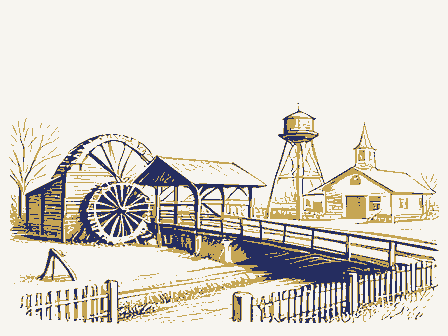
Green Township (part 2 of 2)
Part 2 of 2 of the account of this township in History of Shelby County, Ohio, published 1883; History of Shelby County, Ohio, and Representative Citizens, published 1913. 4,718 words, covering 5 settlements. Source changes inside the text are labelled at the exact paragraph where the next book begins.
Contents
2 sectionsThe section headings the book prints inside this chapter, on this part. Each one jumps to where it begins.
Parts
2 pagesThe source prints this as one continuous account. It is split here so no single page grows too heavy to load; the text runs straight on across the parts and nothing is omitted.
- Part 1
- Part 2
The chapter
4,718 wordsReproduced complete and unedited from History of Shelby County, Ohio, published 1883; History of Shelby County, Ohio, and Representative Citizens, published 1913. The text is machine-read from scans, so expect recognition errors: misspelled names, dropped words, and stray characters. Nothing has been corrected, because correcting a proper name invents one. The headings below are the books' own; source changes are labelled in place.
son of Jacob and Sarah Bowersock, was born in Brown Township, Miami County, Ohio, Dec. 25, 1829. He received his education at Delaware, Ohio, where he attended school several years. In i 849 he engaged as clerk in the mercantile business with Samuel Bowersock, of St. Paris, Ohio, with whom he remained several years. In 1865 he came to New Palestine, Shelby County, where he engaged in the mercantile trade, and has since been conducting the business successfully, dealing in all kinds of general merchandise necessary to keep in stock in a country village. In 1865 he was elected to the office of justice of the peace of Green Township, and has since filled the office (excepting one term) until Dec. 5, 1881, when he resigned his position as justice of the peace to accept the office of probate judge of Shelby County, to which he was elected in the fall of 1881 by the democracy of Shelby County. Jan. 8, 1856, he married Miss Elizabeth H. Woolley, by whom he has one son and one daughter.
was born in Bucks County, Pa., Sept. 12, 1818. He came to Ohio with his parents, Thomas and Rachel Anderson, who located near Centerville for a short time or until 1837, when they came to Shelby County and settled on the S. W. quarter of section 5, Green Township, on which they made improvements and lived many years. William B. Anderson, the subject of this sketch, was brought up on a farm and made farming his avocation through life. Nov. 18, 1841, he married Miss Elizabeth A. Dorsey, born in Green Township, Shelby County, May 9, 1823, daughter of John and Catharine Dorsey. Mr. and Mrs. Anderson settled on the farm in section 5, Green Township, where she is now living. Mr. Anderson died June 21, 1861. They reared a family of seven children, viz., Elvira, John D., Clara, Thomas J., William H., Charles A., aud George D. Of these all are living, except Clara.
was born in England Aug. 7, 1800, and immigrated to America with his parents, Richard and Ellen Pardington, in 1810, who located in Maryland, where he, Joseph Pardington, married Miss Tabitha Clark. They remained in Maryland until 1831, when they in company with his father's family moved to Ohio and located in Green Township, Shelby County, remained about one year, when they all returned to Maryland. In 1837 Mr. Joseph Pardington returned to Green Township with his family and made a permanent settlement on a tract of land between Palestine and Plattsville, on which he made improvements and lived until 1868, when he moved to Miami County, where he died June 19, 1881. His companion died Sept. 3, 1844. He reared a family of five children, Ann, Jemima, Ellen, John, and Mary. He was considered one of the best historians that has ever lived in Green Township, and was esteemed and respected by all who knew him.
Mr. Dormire was born in France Nov. 20, 1808. He is a weaver by trade, and made weaving his principal vocation while in his native country. In 1830 he emigrated to America and located in Baltimore, remained a short time; from there he went to Philadelphia, Pa., stopped a few months, and from thence to Chainbersburg, Pa., where he married Miss Dorothea Piper May 15, 1834. Miss Piper was born in Germany June 28, 1808, and emigrated to America in 1830. Mr. and Mrs. Dormire settled near Chambersburg, Pa., remained until 1836, when they moved to Ohio and located in Montgomery County one year or until in the spring of 1837, when they came to Shelby County and settled on a tract of land in Perry Township, on which he made improvements and lived until 1850, when he purchased and moved on the farm in section 2, Green Township, where he has since resided. He erected his present brick residence on his farm in 1857. He reared a family of three children, Jacob, Margaret, and George. Margaret is now deceased.
son of the above-named Nicholas Dormire, was born in Shelby County Oct. 5, 1838. He was reared on a farm. Sept. 21, 1865, he married Miss Catharine C. Foster, of Shelby County, born Feb. 12, 1849, daughter of John and Catharine Foster. Mr. and Mrs. Dormire settled on the farm in section 8, Green Township, where they are now living. They have a family of five children, three sons and two daughters.
Mr. Dormire was born in France Jan. 18, 1806. He is a weaver by trade, which he followed in his native country. In 1829 he married Miss Magdalene Balhoon, born in France Jan. 18, 1806. In 1840 Mr. and Mrs. Dormire emigrated to America and settled in Shelby County, Ohio, on a tract of land in Perry Township, near where his brother Nicholas Dormire was then living, on which he made improvements and lived about nine years. In 1849 he purchased and moved on the farm in section 1, Green Township, near New Palestine, where he now resides with his son, David Dormire, surrounded by the many comforts of life, enjoying good health for one of his years. His companion died March 6, 1880. He reared a family of four children, viz., Caroline, Margaret, John, and David, all of whom are now married and have families. He erected his present brick residence on his farm in 1859.
Mr. Lovett was born in Bucks County, Pa., February 20, 1823, and came to Ohio with his parents, Joshua and Hepzibah Lovett, who settled in Champaign County, near the Shelby County line, August 28, 1835, where young Lovett passed the remainder of his boyhood days on a farm. May 26, 1842, he married Miss Hannah, daughter of Nicholas and Mary Speece, born in Virginia May 16, 1818, and came to Champaign County, Ohio, with her parents in 1823 or 1824.
Mr. and Mrs. Lovett settled in Champaign County, remained until 1857, when they purchased and moved on the farm in section 2, Green Township, Shelby County, where they are now living. They reared a family of four children, viz., Joshua, William S., Nicholas S., and George H., all of whom are now married, and have families. Joshua and Nicholas served about four months each in the late war in Company H, 132d O. N. G.
Mr. Arbogast was born in Greenbrier County, Yn., in October, 1801. When he had attained the age of ten years, or in 1811, his parents came to Ohio and located in Clarke County, where he grew to manhood. April 12, 1821, he married Miss Sarah Davidson, then of Clarke Count}', but a native of Franklin County, Ohio, where she was born in December, 1800. Mr. and Mrs. Arbogast settled on a farm in Clarke Count}', remained until 1851, when they came to Shelby County, purchased and settled on the northwest quarter of section seven, Green Township, remained until 1858, when he purchased and moved on a farm in Clinton Township. In 1865 he sold his farm in Clinton, returned to Green Township, purchased the farm which is now owned by his sou, Allen Arbogast. In 1865 he made a division of a part of his property among his nine children, giving to each child one thousand dollars, and still retaining for himself his farm in section thirty, on which he resided until March, 1880, when he sold his farm, and has since made his home among his children alternately. His companion died October 19, 1881.
He reared a family of nine children, viz., Adaline, Margaret, John H., Elizabeth, Lewis, Allen, Ruth. Lydia A., and Cornelius. Lydia A. is now dead. Allen Arbogast served three years in Company F, 20th O, V. I. during the war of 1861. John H. Arbogast served nearly two years in the war of 1861.
third son of Cornelius and Sarah Arbogast, was born in Clarke County, Ohio, March 11, 1837. He came to Shelby County with his parents in 1851, and located in Green Township as aforesaid. He received a common school education, also attended several terms of school at Sidney and Troy. When at the age of sixteen years he taught his first term of school. He attended school during the summer, and taught from four to five months each winter for two years. Then for six years he followed farming during the summer months, and teaching in the winter. Then for two years he gave all of his time to teaching winter and summer - in all making eleven years. A part of which time he was employed at leaching. In 1866 he retired from teaching, and has since given his attention to farming and stockraising, which he has conducted with success, and now owns a farm of 161 acres, on which he now resides. September 3, 1857, he married Miss Lydia Schobey, of Miami County, Ohio, where she was born March 2, 1839, daughter of John and Margaret Schobey. By this union he has a family of ten children, five sons and five daughters.
On the 16tli of September, 1861, he enlisted in Company F, 20th O. V. I., and served three years as first sergeant of his company, and was discharged from the service October 1, 1864. He was actively engaged in the battles of Fort Donaldson, Shiloh, Siege of Vicksburg, the Atlanta Campaign, and other minor engagements. He received a slight wound in the leg at the battle of Vicksburg, but not serious enough to render him unfit for duty.
Mr. Cory was borne in Tyrone, Schuyler County, New York, November 27, 1831, and was brought to Ohio by his parents, Joseph L. and Abigail Cory, who settled on a farm near the northeast corner of Brown Township, Miami County, in 1832, where they remained several years, or until 1840, when they moved to New Palestine, Shelby County, and remained one year. In 1841 they moved on their farm in Miami County where Mr. Joseph L. Cory died June 8, 1865. He was a bricklayer and plasterer by trade, having learned his trade in New York, which he followed as his principal avocation through life. His companion, Mrs. Cory, died at the residence of her son, Albert J. Cory, October 18, 1869. They reared a family of two children, Albert J. and Sarah C. W. Sarah C. W. married Jasper Scott December 11, 1856, and died March 23, 1869.
In 1847 Albert J. Cory, subject of this sketch, went to Spring Water, New York, for the purpose of learning the tanner and currier trade with his cousin, where he remained about one year, or until August 23, 1848, when he returned to his home in Ohio, and began working with his father at the bricklaying and plastering trade, which he has since made his principal vocation, having designed as well as built some of the best dwellings in the vicinity in which he resides. October 14, 1852, he married Miss Hannah Woolley, by whom he had two children, Oscar F. and Clarence W. Oscar F. died April 13, 1861.
Mr. and Mrs. Cory settled in- New Palestine, where they have since resided, with the exception of six years, during which time they lived one year on a farm in Van Buren Township, Shelby County, and from the spring of 1865 until ihe fall of 1869 they were living in Indianapolis, Ind-, where he was engaged at his trade. November 4, 1861, he enlisted in Company 1, 42d O. V. 1., and served his country faithfully for over three years, and was honorably discharged from the service at Columbus, Ohio, December 3, 1864. He served under Colonel, now General, Garfield, and was at the battle of Tazwell, Tenn., August 3, 4, 5, and 6, 1862. He was taken prisoner at Cumberland Gap, September 17, 1862, and was in the rebels' hands as a prisoner one month and thirteen days, when he was paroled and sent to the Union lines, and again returned to his company. He was with his regiment in the battle of Arkansas Post in 1863. lie witnessed the gunboat flight on Grand Gulf, April 29, 1863. He was engaged in the battle of Thompson's Hills, May 1, 1 863-, Champion Hills, May 16, 1863, Big Black River, May 17, 1863, the siege of Vicksburg, which lasted forty-seven days, the siege of Jackson, Miss., which lasted seven days. Also in other engagements not here mentioned. A part of his time he was in the regimental hospital, acting as hospital steward.
In September, 1855, he connected himself with the Tawawa Lodge, No. 253, I. O. O. F., by initiation, and passed the chairs while a m-mber of that lodge. He received a withdrawal card February 10, 1866, from the Tawawa Lodge, and deposited it in the Philoxenian Lodge, No. 44. of Indianapolis, Ind., February 21, 1866. In March, 1866, he joined the Metropolitan Encampment, No. 5, of Indianapolis, Ind. In November, 1866, he was a representative to the Grand Lodge of Indiana, and in November, 1867, he was a representative to the Grand Encampment of Indiana.
About the year 1760 or 176ft four brothers came from England to the American colonies. Upon their arrival they separated. One located in Richmond, Va.; one in Boston, Mass.; one in Trenton, N. J.; the fourth we cannot learn where he located. One of these brothers afterward became one of the original major-generals of the Revolutionary army; one ltecame a brigadier-general, and one a captain. John Heath, one of these - brothers, was the grandfather of the subject of this sketch. He located in New Jersey. He left at his death a family of three children, two sons and one daughter. John Heath, Jr., one of these two sons, was born in Hunterdon County, N. J., in 1788, and married Mary Burruck. They reared a family of seven children. Austin, the subject of this sketch, was the third son of this fatuity. He was born in the same county and township as that of his father. He was born June 4, 1814. He remained in New Jersey until the fall of 1839, when he came to Ohio and located near Urbana, Champaign County, where, in the year 1845, he married Miss Eliza Lyon, who was born in Champaign County in 1826. In the fall of 1855 they moved to Shelby County and located where they now reside, in Green Township. They have raised a family of ten children, nine of whom are still living. Mr. Heath from the year 1834 to 1854 made school teaching a profession exclusively. From 1855 to 1872 he taught during the winter season and worked on his farm during the summer. He has during life devoted much time and thought to the study and investigation of the science of Geology - having travelled throughout nearly every State and Territory in the Union east of the Rocky Mountains, as well as the Canadas; having been all along the sea-coast from Maine to the reefs of Florida. He has within his possession a very large and fine collection of specimens of corals and shells from the 'seashore; minerals from every State east of the Rocky Mountains, among which may be found an aerolitic stone which he dug up in the State of Iowa within one hour after it fell. He has a large collection of fossils, representing all the formations from the lower Silurian up to the latest; also a fine collection of archaeological specimens known as Indian relics. Among his collection are several hundred specimens gathered in Shelby County, consisting of the bones of the Orthoceros, found near Sidney ; some exceedingly fine specimens of the Pentemeris, gathered near Pontiac; also Trilobites from the same place, and numerous specimens of crinordal and coral rock, all collections from this county.
Source changes here: from History of Shelby County, Ohio, and Representative Citizens, by Hitchcock, Almon Baldwin Carrington, published 1913; 2,086 words in this source stream.
Green Township
Begins at the southeast corner of the county; thence north to the south line of Perry township, between sections 3 and 4 of town. 2, range 13; thence west with the sections line to the east line between sections 33 and 34 in the aforesaid town. 2, range 13; thence south to the country line between sections 34 and 28, town. 2, range 12 ; thence with the county line east to the beginning.
This township, forming the southeast corner of Shelby county, is five miles square and contains 25 sections of land. It was a part of Orange township prior to March 7, 1820, when it was erected as an independent township. It possesses a fertile soil, is mainly level, and is well drained by various streams, principally by Tawawa or Mosquito creek and Leatherwood creek, with their respective numerous tributaries. There are also numerous drain ditches, which have been established through the flat sections of the township. Settlement here antedates the organization of the township some years, the first known family to penetrate the forest here and establish a home being that of Henry Sturm, who came from Clark county, Ohio, in 1814. This pioneer, with his wife and twelve children, settled in the southwest quarter of section 1. His children were Matthias, Margaret, Nicholas. Henry, Peter, William, Jacob, Frederick, Ephraim, Elizabeth, George and John, most of whom grew to become well known residents of this or other townships in the county.
The spring following their arrival marked the coming of Henry Sturm's son-in-law, Samuel Robinson, who also had several small children. Among those who came a little later we may mention : Ezekiel Sargeant, who came from Clark county, Ohio, in 1816; William Bothel, who came from Pennsylvania, in 1816; John R. and Adam Medaris, who came in 1817, and were progressive men and active citizens here for many years; John Ellsworth, who came in 1817: Peter Princehouse, who also came in 1817 or the year following: Thaddeus Tuttle, Edward Conroy and family; David Larue, who came from Champaign county, Ohio; all came in 1818. About this time - some of them even earlier - Joseph Park, William Richardson, Jacob Kiser, George W. Frazier, Daniel Apples, John Botkin and John Dorsey cast their lot with the newly developing community.
Among those of a latter period we might mention Robert C. Cunningham and Samuel Redenbo. who arrived in 1819 ; Silas Dorsey, in 1824; Peter V. and David S. Sherwood, in 183 1 ; Samuel Bird and William Xiswanger, in [832; John Piatt and William B. Williams, in 1833; Elias Barbee, in 1834; Timothy Conover and John Dickensheets, in 1835; Herman R. Hunt, in 1836; Matthias Gray, in 1837; Paul F. Verdier and Samuel Woodward, in [839; Mahlon Moon, in 1840; and Dr. John C. Leedom, in 1842. Dr. Leedom was by no means the first practicing physician here, as he was preceded by Doctor I'ratt, who came as early as 1820, and by a Doctor Little, who came subsequently to Doctor I'ratt. The first election was held in the house of John R. Medaris in April, '1820. The first justices of the peace were Henry Sturm and Charles Johnston, who were chosen at the election above mentioned. The first clerk was Charles Dorsey.
Schools. - Although this subject is dealt with in another chapter of this volume, we may here make some mention of the pioneer school. It was at first held in the homes of the settlers About the year 1818 or 1819 a school was conducted in a primitive round log building on the farm of David Larue, in section 10. The first term consisted of but seven days and it is related that the teacher, Mr. Dorsey, received but fifty cents a day, or three and a half dollars for the term. The first house built especially for school purposes was erected in 1820 near the old graveyard in what is now Plattsville. Miss Lucy Wilson was the first instructor here. In 182 1 another log schoolhouse was built near the Sturm graveyard, and the first teacher was Doctor Pratt. Until 1853, there were none but subscription schools, but on June 1 8th of that year the township was divided into six school districts and a tax levied on the township for school purposes. The first brick schoolhouse had its inception in that year, and since that time the community has been blessed with good buildings and superior instruction, school affairs being under the guidance of capable directors chosen from among the citizens whose hearts were in the work.
Churches. - Hand in hand with development educationally and commercially, was the development spiritually. From almost the first the settlers were wont to gather in the home of some settler for divine worship, and from this humble beginning societies were gradually formed and in time churches erected. Denominational lines were not so closely drawn in those days, as there were too few of any one denomination. We herewith present facts regarding some of the religious bodies that struggled and conquered under the most adverse circumstances:
The Salem Methodist Episcopal church was organized in 1825 by Rev. Simes or Rev. Westlake, and among the most prominent of its members were David Larue and wife, Silas Dorsey and wife, and Mrs. Jemima Conroy. A hewed log church was erected in section 4, and served as long as the organization continued, which was until about the year 1840.
The Charity Chapel Methodist Protestant church was organized about 1840, with Silas Dorsey as the leader of the society, it drawing considerably from the membership of the Salem Methodist Episcopal church. Meetings were held in Mr. Dorsey's house for a number of years, when a frame 'building was erected in section 4 of Green township. It ceased to exist as a church body in 1864 or 1865.
The Spring Creek Christian church was organized March 15, 185 1, by James T. Hunt and James Skillen in a log schoolhouse on the Cephas T. Sanders farm, with sixty-one members. Meetings were held in the school building until 1852, when a frame building was constructed in the southeast corner of section 28, near the Miami county line. It was dedicated in 1853 by Rev. Griffin. In 1868, a fine new church building was erected and was dedicated in November of that year by Rev. James Linn. Among the original members may be mentioned: Cephas and Nancy Sanders, Cephas T. Sanders, Rachel Sanders, David and Chloe Sherwood, John Luseney, Martha Luseney, Martha Sanders, David and Catherine Wiles, William and Rachel Williams, Jackson and Mary Cramer, John and Almira Henman, David and Matilda Hall, and Catherine Sanders. It started out with a goodly membership, and the church affairs have always continued in a good healthy condition. The present pastor is Rev. L. W. Ryan.
taut church building in 1864 or .1865 by Elder Asbury Watkins. William Benham and Thomas Stith were appointed the first deacons of the church. Worship was held in the Methodist Protestant building until 1878, when they erected a building of their own, which was dedicated on December 27, 1878, by Elder E. M. Rapp. The church is served by Rev. L. W. Ryan, pastor of the Spring Creek Christian church.
The Methodist Episcopal society at New Palestine (now Tawawa) had its inception about the year 1820, and was organized by Rev. Finley. Among the members were Philip Locker and wife, William Bathel and wife, Jacob Riser and wife, and Ezekiel Sargeant and wife. They met around at the various homes for worship and continued in that way while the organization lasted, which was until the late thirties.
The Christian church at New Palestine had its beginning in an organization formed at the residence of Daniel Neal in Champaign county, by Elders Jeremiah Fusion and John T. Robertson. The latter was the first pastor and meetings were held in the Neal home for about one year, and in May, 1838, they equipped a vacant house on the Ira Hunt farm in Green township with seats, using that as their house of worship for many years. They next built a frame church in New Palestine, which was dedicated in June, 1851, by Elder Samuel Fusion, assisted by Elder Justus T. Hunt. When this building proved inadequate for further use for church purposes, the society erected a larger structure near the old one, it being dedicated January 1, 1882, by Elder A. L. McKinney, of Troy, Ohio. The original members of the congregation were Ira and Anna Hunt, Justus T. Hunt and wife, David Bever and wife. Daniel Neal and wife, Joseph Basey and wife, David Greeley and wife, Ira F. Hunt and wife, Eleanor Woolley, Mary A. Flemmon and Daniel Currier. This church is at present served by Rev. A. J. Adriance, of Defiance, Ohio.
The Plattsville Methodist Episcopal church, at one time known as the Antioch Methodist Episcopal church, was organized about 1819 or 1820, and until 1828 or thereabouts, meetings were held in the homes of various members. In that year or the following a hewed log building was erected on the ground later occupied by the cemetery at Plattsville, the land being donated for that purpose by Thaddeus Tuttle. They continued in this building until 1849, when a new one was built on property purchased at Plattsville, from John R. Medaris. The church was dedicated in 1850, the name being changed from the Antioch Methodist Episcopal church to the Plattsville Methodist Episcopal church society. Among the original members were Thaddeus Tuttle and wife, John R. Medaris and wife, and William Ellsworth and wife
The Plattsville L niversalist church was erected in 1877, and was dedicated on July 29th of that year by T. S. Guthrie, assisted by the local pastor, Rev. f. D. Lawer. The society was organized on September 30th following, J. D. Lawer and thirty-six others constituting the membership. It has been a very prosperous organization. Rev. Colgrove is the present pastor.
And Representative Citizens 855
New Palestine was laid out on September 27, 1832, by Ephraim Davidson, who owned the land on which it was located, and the first settlers in the village were George Swiger and family. The first store was conducted by John Stephen, and the first hotel by Joseph Knot. The former postoffice for this village was named Tawawa, but has been abandoned, and the village is now known by its original name only. New Palestine has two lodges, a K. G. E., with a membership of ninety-eight, and on I. O. R. M. lodge, membership about sixty.
Plattsville, with a population of 134, is located near the center of Green township, on what was the old John R. Medaris farm. The latter had it surveyed in 1844 by Jonathan Counts, and it was recorded September 26, 1844. In 1849, an addition to the village was surveyed for J. R. Medaris, and this was recorded on July 4th of that year. The first business at this point was an ashery and general store, of which Thomas Farshee was proprietor. The Methodist Episcopal and the Universalist churches are located here, drawing membership largely from surrounding territory. Plattsville Lodge No. 643, I. O. O. F., was instituted in the village on July 12, 1876, by Nathan Jones, grand master of Ohio. The original members were: Samuel Griffis, L. P. Redenbo, P. R. Hunt, B. F. Johnson, G. W. Frazier, \Y. H. Bulle, J. T. Princehouse, W. L. Woolley, D. Bowersock and James Williams.
Industries of Green Township. - -The first mill was established by John Medaris, and was a corn cracker, located near the village of Plattsville. A water power saw mill was erected on Leatherwood creek, in 1826 or 1827, by William Ellsworth, and a few years later Abraham Medaris also built a saw mill in the same locality near Plattsville. The next saw mill was the one conducted by Samuel Robinson on Leatherwood creek. In 1854 Hageman Brothers built a steam saw mill one mile south of Plattsville, and a steam saw mill was built by John Sargeant and John Neal near New Palestine. In 1879, a portable steam saw mill was started by Gabriel Harbaugh and was operated many years with great success. At the present time William F. Valentine operates the only tile mill in the township, his output being from 18 to 22 kilns annually. Mr. Valentine also engages in ditch contracting and in a season uses over 200 carloads of tile additional to the product of his own plant.
Provenance
Text from History of Shelby County, Ohio, published 1883; History of Shelby County, Ohio, and Representative Citizens, published 1913, in the public domain in the United States and digitised by the Internet Archive. The settlements listed against this township are matched by point-in-polygon test of each Geographic Names Information System coordinate against the Census Bureau's county subdivision boundary, not by name.