 Block
Block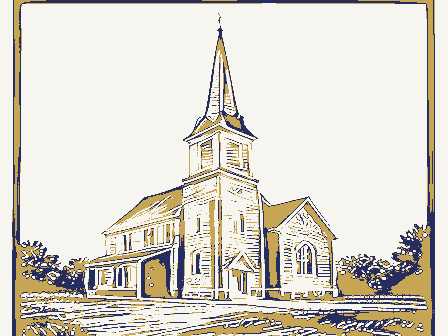
Jackson Township (part 7 of 7)
Part 7 of 7 of the account of this township in History of Allen County, Ohio, and Representative Citizens, published 1906. 2,520 words, covering 2 settlements. Source changes inside the text are labelled at the exact paragraph where the next book begins.
Parts
7 pagesThe source prints this as one continuous account. It is split here so no single page grows too heavy to load; the text runs straight on across the parts and nothing is omitted.
The chapter
2,520 wordsReproduced complete and unedited from History of Allen County, Ohio, and Representative Citizens, published 1906. The text is machine-read from scans, so expect recognition errors: misspelled names, dropped words, and stray characters. Nothing has been corrected, because correcting a proper name invents one. The headings below are the books' own; source changes are labelled in place.
Methodist Episcopal services were held first in the cabin of R. M. Pitticord on the west side of the canal. There were present five members, the minister officiating was Rev. Graham. A Sunday-school was organized and John Miller elected superintendent. This was in 1846. The services were continued from time to time at the home of John Miller, corner of Main and Third streets, and later at a cooper shop owned by Amos Metcalf, and located on the rear part of the lot now known as the Deubler property, on East Third street. In 1848 E. N. Martin moved to Section Ten from Piqua. He was an ordained minister, and this with his means and liberality gave the organization the position of a church. Steps were soon taken to build a church, and until this was accomplished, services were held in the upper room of a building erected by Mr. Martin as a woolen mill. In 1848 Rev. Harmount was sent as preacher in charge of the circuit. In 1850 the foundation was laid for a church on a lot donated by Samuel Pettit, of Piqua, and completed in 1851. The present church was commenced in August, 1879, anc^ completed in 1880. The present membership of this church is 400. The congregation is united and prosperous, owing largely to the untiring efforts of their talented young pastor, Rev. Ascham, who was given leave of absence in September, 1905, to pursue his studies at Harvard. Rev. J. B. Gottschall was appointed to fill Rev. Ascham's pulpit.
Wayne & Chicago, was opened from Crestline to Fort Wayne. The first railroad engine used on this line was named "Lima" and was brought from Toledo to Delphos on a canalboat by Casper Smith and put on the track here for construction work. Woolson & McCune took the contract for bringing the iron to Delphos. Captain Fisher, Sr., bought a boat in Toledo named "Seneca Chief" and McClure owned a boat named "Damsel," and these two boats brought the iron to Delphos. Captain Fisher took the contract to build a basin just west of Mills' elevator for the purpose of anchoring these boats while they unloaded the railroad supplies. On July 4, 1875, the formal opening of the Toledo, Delphos & Burlington took place. In 1876 was the big excursion to Dupont, and in 1878 the Toledo, St. Louis & Kansas City Railway was completed. The Clevelannd, Delphos & St. Louis (now the Northern Ohio) was built in 1881.
The Press. - The first newspaper was issued in 1849 by the late Judge Ben Metcalf and called the Section Ten Budget. It existed about one year. This was followed by the Delphos Oracle edited by Noah Huber, who was succeeded by O. H. Perry, then by Bell, who published it until 1854, when it expired. In the same year came the Northwestern Republican, S. E. Brown, editor. This lived a little more than a year. From this date until 1869 there was no paper. Then the Herald made its appearance with D. H. Tolan as editor and later with his son, C. M. Tolan. At present Gasson & Sevitz are publishing the paper with a circulation of 800 copies. The Courant was established in 1877 with E. B. Walkup as editor and is still owned and published by him with a circulation of 1,400 a week.
The Klccblattr published by C. Jettinghoff, the only German newspaper published in Delphos, was established in December, 1889, and has a circulation of more than 1,000 copies.
Schools. - The Delphos schools up to 1S59 had been kept up in each county divided by the canal, and separate schools were sustained and examinations given on the same principle as all count rv schools. On January 29th. after legal notice, the voters of these two districts met at the little old frame schoolhouse on the Allen County side and voted to organize the Delphos Union School District, under the general law governing village districts, the first Board of Education under the law consisting of Charles C. Marshall, F. J. Lye, H. Weible, Lester Bliss, M. Brickner and S. F. Conklin. Charles C. Marshall was the first president of the board. At the time of this organization of the Delphos Union School District, C. P. Washburn was teaching the highest grade of the public schools. On April '8, 1868, the district voted to levy a tax and issue bonds for the erection of a new schoolhouse. The schools remained in this scattered condition until August 5, 1869, when W. H. Wolfe was elected superintendent and schools were organized and graded in the new building. In 1870 J. F. Jones was elected to the superintendency and in 1871 W. H. Wolfe was reelected. In 1873 E. W. Hastings was employed and held the position for 25 years, until 1898. when he resigned on account of ill health and died the following year. In 1877 C. P- Washburn was elected clerk of the Board of Education and held the position for 22 years.
Mr. Hastings was loved and revered by the entire population. He was succeeded by G. W. Lewis, who after two years' work was followed by T. W. Slump.
The teachers in the Delphos Union School District (Allen and Van Wert counties) in 1904-05 were: T. W. Shimp, superintendent; J. E. Fast, J. T. Omlor, J. I. Miller, Anna Welsh, Ella Peltier, Carrie Anderson, Mary Walkup, Rose T. Lindemann, Callie Huysman, Bertha Weiss, Mellie McMahon, Margie Mc- Mahon, Ethel Hart, Lulu Walkup, Wilma Clay, Grace Boardman, Ameda Davis, Doris Eysenbach, Amedius Laudick and Inez Bladwin.
Hotels. - The first hotel called "Traveler's Rest'' was opened in 1845 and was kept by a man named Savage. It stood on the corne of Canal and Second streets where the Opera House now stands. Joseph Ostendorf came to Delphos in April, 1847, coming by ,boat from Minster and landing here about 3 o'clock in the morning. After the boat moved out, he looked around him for some place to lodge. The weather was cold and it was intensely dark, so dark that he was afraid to step off the platform for fear of getting lost in the mud. Not being able to see a ray of light in any direction, he concluded to walk the platform until daybreak. At dawn he saw a high bridge on the south and started for it, keeping to the heel-path. After crossing the bridge, the "Traveler's Rest'' came into view, and here just half a century ago he took his first breakfast in Section Ten.
The second hotel was built in 1845 and was called the "Ohio House." In 1846 the American House was built on the corner of Main and Fourth where the Shaffer Block now stands. The Union or Hecker House, as it was called later, was built in 1848. The Commercial House was built in 1847 and kept by C. Ross and later by W. D. Jones, who is now running the New Aveline in Fort Wayne. The Burnett was built in 1855 by Henry Brown, familiarly called "Uncle Henry" Brown. The first proprietor was Col. Amos Evans, who was succeeded by Oliver P. Brown. Brown sold out to T. Webb, who was succeeded by John Roby, who had charge of it until 1880 when he went into the Phelan House. The Phelan House is now the best hotel in Delphos.
Post office. - In 1847 the first postoffice in Section Ten was established in a small room built on the platform of the lock, between the gates, on the Van Wert County side, with Mr. Clutter as postmaster. At that time there were no postage stamps, the postage being paid either by the sender and the letter marked "Paid," or the letter was marked "Due" and the receiver paid the postage. In 1S49 Lynn succeeded Clutter, holding the office for three years, and then began a postoffice war and in May, 1853, Winchton Risley was appointed postmaster. He held the office (removing it to Allen County) until his death in September, 1854, after which Mrs. Mary Risley was appointed and held the office for 25 consecutive years. Then followed Cowdin. Shenk, Baxter, Washburn and Weger. the present incumbent.
calf, Conklin, Butler, Pennington and H. P. Wagner, who came in 1847; anc^ C. A. Evans, Davenport, Burkholder and Ruel, who came in 1850. Joseph Hunt was for a number of years called "Doctor" Hunt. He was a leading -chemist and druggist and also a prominent citizen. In 1855 when business was suffering from stagnation, Mr. Hunt conceived the idea that he might aid the pioneers of the wilderness and add to his own trade by offering to purchase the bark from slippery elm trees which were abundant in the swamps. The supply soon reached hundreds of cords of cured bark and brought him quite a revenue.
Early Industries. - The ashery was another branch of industry, established in 1849, extensively carried on in the early days. Wrocklage & Esch were the first proprietors, and later Wrocklage & Stallkamp. Every particle of ashes was carefully horded by the settlers and sold for 10 cents a bushel to the ashery, where it was converted into pearl ash and shipped to all parts of the country'. It was sold in a crude state to be used in the manufacture -of baking soda.
Delphos was the possessor of a dry dock in 1846, built by Father Bredeick. It was handled by John Daub and B. Nate. They built the boat "M. King," but found it too heavy for the canal and converted it into a barge to be used on the Ohio River.
The First Undertaker. - - David Minnig, the first undertaker, came to Delphos in 1851, started the business in partnership with Mr. Garfield in 1852 in the old Lytle warehouse, -corner Main and Third streets, where the Commercial Bank now stands. Garfield died in 1854 and Minnig carried on the business until 1866. The first hearse was a common spring wagon with curtains hung on the sides. The first regular hearse was built in 1854. In 1866 this was put away and a more modern conveyance presented to the people of Delphos. Mrs. Thomas Chambers made the majority of shrouds for the dead for at least 10 years. Not only making them, indeed, but dressing and laying out the persons for whom they were made.
industrially. It is on four lines of steam railways - the Pittsburg, Fort Wayne & Chicago, the Cincinnati, Hamilton & Dayton, the Toledo, St. Louis & Kansas City and Northern Ohio, besides being on one of the best traction lines in the country. - The Fort Wayne, Van Wert & Lima. The most important industrial plant in Delphos is the Delphos Can Company, manufacturing the non-overflow pump can which is sold all over the United States, Canada and South America. This company was organized with Delphos capital in 1898 but, owing to infringements of patents of other manufacturing concerns, business was at a standstill till Ii. L. Leilich became manager. At a cost of $14,000 he prosecuted infringe1 ments of patents in the United States courts and gained favorable decisions. Under the same management, the plant has since expanded, now employing 125 hands and having a monthly output valued at $22,000. A large addition is contemplated as the supply has never equaled the demand. The George F. Lang Milling Company, with a capacity of 125 barrels per day, and the Delphos Roller Mills, owned by Dalby & Morton, with a capacity of 100 barrels, are giving employment to a large number of men. The latter mill was established in 1846, the first mill in this section of Ohio and was the market for wheat from a section of country extending to Findlay and St. Marys. The following are some of the industries contributing to the wealth of Delphos : Delphos Paper Mill, the furniture manufactory of Ricker & Sons, Gun Novelty Company, Felix Steinle Brewing Company, the cement block works of Eger & Enslen and of A. L. Fisher and the lumber-yards of Ricker & Sons and J. F. Horine & Sons.
The stores are especially good for a town of its size. The drug-store of King Brothers is one of the finest drug-stores in the State of Ohio. F. H. King is a member of the Ohio State Pharmacy Board. Among the new projects is the Delphos Foundry Company, which has erected an immense building and fitted it with new machinery for the manufacture of furnaces, stoves and registers.
town lias 13 physicians. The oldest doctor in Delphos in point of continued service is Dr. Charles C. Bliss, who graduated from Bellevue Hospital Medical College in 1874. He practiced medicine in Delphos until two years ago when he gave up his practice for the office of mayor to which he was elected. Dr. H. C. Bradshaw has practiced in Delphos about four years. He graduated from the Eclectic Medical Institute of Chicago in 1895. Dr.. E. N. Brundage graduated from the Fort Wayne Medical College in 1892 and has been located in Delphos ever since. Dr. E. R. Burnett took his medical degree at the Ohio Medical Unisity in 1893 and has practiced in Delphos about four years. Dr. E. Edwards has practiced in Delphos since 1894, in which year he graduated from Jefferson Medical College. Dr. L. J. Eger graduated from Starling Medical College in 1893 and has been located in Delphos for seven years past, making a specialty of the eye, ear and throat. He has been to New York six different times and taken post-graduate courses. Dr. John B. Egts has been long established in Delphos. He graduated from the Chicago Homeopathic College in 1885 and has since practiced here. Dr. H. M. Hixson, who graduated from the Cincinnati Medical College in 1876, has been at Delphos about four years ; he was formerly at Continental and Dupont. Dr. L. P. Jackson, who graduated from Starling Medical College in 1898, has practiced in Delphos nearly three years. Dr. E. B. Mauk, who graduated from the Western Reserve Medical College in 1881, has been located in Delphos about 14 years. He came here from Malinta, Ohio, where he practiced subsequent to taking his degree. Dr. H. G. Steman graduated from the Fort Wayne Medical College in 1878. He has practiced in several different places and returned to Delphos five months ago. Dr. George S. Weger has been located in Delphos since 1898 in which year he took his medical degree at the Baltimore Medical College. Dr. L. C. Till itson graduated from the medical department of the State University of Ohio in 1904 and has been located at Delphos about one year. All the above mentioned doctors are regular practitioners with the exception of Dr. Egts, who is a homeopath and Dr. Bradshaw, who is an eclectic.
Dr. G. G. McCoy, a graduate of the University of Michigan, class of 1891, and Dr. M. H. Viel, a graduate of the same institution, class of 1898, are the dental practitioners of Delphos.
Provenance
Text from History of Allen County, Ohio, and Representative Citizens, published 1906, in the public domain in the United States and digitised by the Internet Archive. The settlements listed against this township are matched by point-in-polygon test of each Geographic Names Information System coordinate against the Census Bureau's county subdivision boundary, not by name.