 Block
Block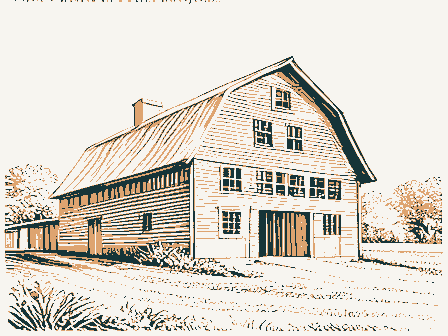
Jackson Township (part 3 of 5)
Part 3 of 5 of the account of this township in History of Preble County Ohio: Her People, Industries and Institutions, published in 1915. 15,619 words, covering 4 settlements.
Contents
20 sectionsThe section headings the book prints inside this chapter, on this part. Each one jumps to where it begins.
- Tile Factory
- Load Ler
- Ancient Work
- Early Settlement
- Jacob Fudge
- Mrs. Jacob Fudge
- Elder James Neal
- First Birth
- The First School
- The Reformed Church
- Salem Evangelical Lutheran Church
- The Enterprise Methodist Episcopal Church
- Methodist Episcopal Church Of West Alexandria
- Bethlehem Chapel
- Ssg See
- Masonic
- Husbandry
- Present Business Houses
- Manufacturing Interests
- Enterprise
Parts
5 pagesThe source prints this as one continuous account. It is split here so no single page grows too heavy to load; the text runs straight on across the parts and nothing is omitted.
The chapter
15,619 wordsReproduced complete and unedited. The text is machine-read from a scan of the 1915 printing, so expect the errors a machine makes reading a century-old page: misspelled names, dropped words, stray characters. Nothing has been corrected, because correcting a proper name invents one. The headings below are the book's own.
Tile Factory
which was started in 1878. -It is owned by James Baker, and a very large business is carried on. The land in Jefferson township has been greatly improved by draining during the last few years, and great thanks are due to both this factory and the one at Gettysburgh, previously mentioned.
Load Ler
Lanier lies in the east range of townships and is - bounded on the north by Twin, on the south by Gratis, on the east by Montgomery county, and on the west by other townships of Washington and Gasper. It was set off and organized as a separate towrship in 1811, and was named for Alexander C, Lanier, the first clerk of the court of common pleas of the county. Being unable to find the early township records, we cannot give the names of the first township officers elected, with the exception of the clerk, who is said to have been John Halderman, sr. Among the early justices of the peace were Martin Ruple, William Swisher, James Wilson, Peter Van Ausdal, and James Dennison. James Campbell, the present incumbent, was first elected in the spring of 1858, and has served continuously since, with the exception of three years, during which D. J. Naeff held the office. i j ;
The surface of the township is generally level, except in those portions traversed by Twin creek and its tributaries, Aukerman's creek and Banta's fork, where it is somewhat broken. Twin creek, the principal stream, flows a north and south course through the township, entering ita short distance east of West Alexandria. It discharges its waters in the Miami river, in county, and has its source in Darke county. - Banta's fork and Aukerman's creek are western branches of Twin; the former in the northern part of the township, and the latter in the extreme southern part. They are so named from the settlement of Abraham Banta and John Aukerman upon them respectively. Lanier probably contains as large a proportion of good soil as any other township in the coünty, the bottom lands along Twin creek being unsurpassed in fertility and productiveness. The raising of tobacco largely engages the attention of the farmers on these bottoms, the soil being peculiarly adapted to its successful cultivation. The principal variety of native timber east of the creek was oak, while west of it the soil being of a more clayey nature, beech was chiefly found, though cherry, walnut, sugar, maple, lynn, poplar, etc., grew in considerable abundance.
Ancient Work
In this township is located the most interesting work cf antiquity to be found within the bounds of Preble county. Qn the high point of land at the confluence of Twin creek and Banta's fork are the remains of an earthwork of the defensive order, which consisted of a semicircular ditch and stone wall, built of boulders, extending from one creek to the other. There was a gateway to the north, and to the southeast what seemed to be asubterranean passage to the creek. Within the enclosure was a mound, which, in 1847, was excavated and explored by Judge Haines and others of Eaton. Human bones, charcoal, and, many boulders were found. A depression in the earth, still quite plainly marks the line of the work, but hardly any other feature can now be distinguished, and in a few years from the tilling of the ground this evidence of the existence of such a work will be lost. The natural position for a defensive work is an exceptionally strong one, the banks of both streams at this point being high and precipitous, and making access difficult from any direction except from the north.
Early Settlement
The first pioneers who penetrated the wilds of Lanier three quarters of a century ago found an interminable forest and dense undergrowth, the home of the Indian and wild beasts. With their axes and guns, and with sturdy arms and will they began the work of carving out the grand civilization which their descendants behold today. We of the present day who have witnessed the rapid settlement of the west can form but a faint idea of the slow and tedious process of settlement in the beginning of the present century, nor appreciate the difficulties by which it was attended. Our western States have been opened by railroads and water communication before the emigrant has been invited thither to take possession of the open prairie lands which are ready for the plow and the reaper, and which, to a great extent, are offered gratuitously to all who should desire to possess them. 'There were but few wagon roads, even, open to the emigrant when Preble county was first settled. In fact, it was a common experience for the travellers to cut their road as they journeyed. Those who came with families had a lumber wagon with a large box, over which was a covering of canvas or cotton cloth spread over hoops, into which were packed all the household goods, heds, clothing, provisious for the journey, wife, children, and other necessaries for furnishing the log cabin the settler had in prospect of erection in the woods. Many also who came without families made the journey on foot, carrying all the possessions they had on their back. The early settlers were generally poor and but little capital was brought into the new country ; but they possessed what was more necessary, brave hearts and strong hands, and the wealth of to-day has been drawn from a productive soil through the industry and energy of the people.
The first permanent settler in what is now Lanier township was, without doubt, Jacob Parker. There is much that was romantic in the early life of this pioneer which we can only briefly touch upon here. He was born October 10, 1777, in Morristown, New Jersey. At thirteen years of age he was left an orphan, without a home or means of support. When about fifteen he fled to the far west to escape from a hard and cruel master to whom he had been bound out to learn a trade. He found his way to Fort Washington, Ohio} where he enlisted as a soldier, and subsequently served under General Wayne in the campaign which followed against the Indians. During the march to Fort Greenville he was one of a squad of men detailed by Ceneral Wayne to capture a deserter from the ranks. They started in pursuit, and the first night camped on the west side of Twin creek, southeast of where West Alexandria now stands. It was this circumstance that determined his future settlement. Struck with the beauties of the Twin creek bottoms in their native state, young Parker resolved that he would make at some future day this rich valley his home. After his discharge from the army, and before the lands came into market he visited Twin creek, and as early as 1798 built him a cabin on the spot where he had camped a few years before. When the lands were offered for sale he entered together with Martin Ruple the east half of section three, Parker taking the north quarter on which his cabin stood. This is now the Motter farm. Parker first settled near Middletown (now Butler county), Ohio. His first wife died there, and in 1803, he married Miss Mary Loy, and the same year moved into his cabin on Twin creek, where he spent the remainder of his life He died February, 1848, and was buried in the cemetery in West Alexandria, a part of the ground for which he donated. His children by his second marriage, most of whom grew up in this community, were: Peter, Christian, Isaac, Moses, George, Barbara, Jacob, Nancy, and Joshua; Four of them are living, namely: Christian, near Fort Wayne, Indiana; George, in Missouri; Barbara (Brower), in Humboldt, Nebraska; and Nancy, in Fort Wayne.
John Aukerman settled on the creek which has since borne his name, on what is now the Focht place, in the fall of 1804. He remained here only a couple of years, and in 1806 sold out to Samuel Teal, and moved to Washington township, locating on the farm near Eaton, a portion of which is now occupied by his son, John. He lived there for more than sixty years, dying in 1867.
Jacob Loy, sr., was born in Maryland in 1776, and in 1801 moved to Ohio and settled in Warren county. In 1805 he came to Lanier and settled on the hill across the creek from Jacob Parker's. He lived there until his death, which occurred in 1853, in his eighty-seventh year. Of his nine children only two are now known to be living. Jacob, who lives in Pyrmont, Montgomery county, was born in September, 1794, in Washington county, Maryland. He married in 1816, in Butler county, Ohio, Susannah Tem- ple, who died in 1855. In 1870 he married the widow of William King, of Montgomery county. Conrad Loy, son of Jacob, was born in 1815, and came into Preble county when only six years of age. He has been twice married.
Martin Ruple, as previously mentioned, entered with Jacob Parker the half of section number three, and was one of the first pioneers of Lanier. The farm on which he settled is now owned by John Glander. Mr. Ruple afterward moved to Darke county.
Christian Price was the original owner of the land where Mrs. Abraham Black now lives. Mr. Price sold the land to John Black, sr., about the year 1812.
Peter Van Ausdal was one of the earliest pioneers of this part of Preble county. He came out from Virginia in 1805, being then unmarried. He commenced clearing upa farm in section ten - the farm now owned by his son, James M. His father, John Van Ausdal, moved out a short time after, and settled upon this farm, Peter then entering land in section seventeen. He was bornin 1777, was married to Rachel Banta, and died February 11, 1857. His wife, Rachel, died in 1843, and he was, subsequently, again married. Of his five surviving children three are living in the west and two - James M. and Cornelius - in this county. James M., who lives in West Alexandria, was born in January, 1813. His wife was, before marriage, Martha Kitson.
John Van Ausdal, father of Peter, died February 21, 1826, in the seventy-fourth year of his age. The Van Ausdals, with Peter and Isaac Banta, and a few others, are buried in the family burying-ground on the old homestead.
Christian Van Doren, a native of New Jersey, was the first of that name who settled in Preble county. When a young man he moved to Virginia, and there married Phebe Van Ausdal He resided in that State several years, during which time three children were born to him. In 1805 or 1806 he moved to Ohio with his father-inlaw, John Van Ausdal, and settled in Lanier township, Preble county, where he lived the rest of his life. Soon after his death the land passed out of the possession of ^is family. He was one of the founders of the Presbyterian church in Eaton. His wife survived him several years, and died at the residence of her daughters, in Indiana. But three of his children are now living - two in Minnesota, and one in Dakotah territory. His descendants in this county now number thirteen, all of whom are the children or grandchildren of his eldest son, John, who was the only one of Christian Van Doren's children who passed his entire life in Preble county. John Van Doren was born in 1806, and was one of the first white children born in the county. In 1834 he married Frances Spacht, a daughter of Jacob Spacht, one of the first settlers in this county. Jacob Spacht entered a quarter section of land adjoining Eaton on the west. His first wife was a daughter of William Bruce, and his second a in Eaton during part of the time that he was a resident of this county. In 1837 he sold his land to his son-inlaw, John VanDoren, and moved to Indiana, where he died in 1864. The land he entered still belongs to his descendants, having been in their possession seventy years. John Van Doren's five children still survive him. Abram, the eldest, was the first grandchild of William Bruce, the proprietor of Eaton.
Jacob Fudge, sr, was one of the earliest pioneers of Preble county. He was born in Rockingham county, Virginia, in 1779. His father died when he was quite young, and when about sixteen, he emigrated with his mother and stepfather from Kentucky to Warren connty, Ohio. Soon after he became of age, he and his brother, David, came to this township, and together purchased five hundred acres of land in section thirty-four, where Jacob, his youngest son, now lives. Here he resided until his death in 1861, He was married in 1810, to Elizabeth, daughter of the pioneer, Gasper Potterf. Mrs. Fudge survived her husband several years, and died in 1869, aged seventy-nine. Upon the organization of the county in 1808, Jacob Fudge was elected its first sheriff, which position he occupied for several years. He was the father of thirteen children, ten daughters and three sons, as follows: Malinda Pence (deceased); Susan, widow of Silas Gregg, living in this township; Nancy Pence (deceased); Lucinda (deceased); Sarah Kesling (deceased); Eliza Ann, wife of Daniel Christman, of Washington township; David, who died in California in 1849; Minerva Harlan, living in Dayton, Ohio; Margaret Wieland (deceased); Franklin N., who married Susannah Markey, and resides in Lanier township in section thirty-five; Seraphina, wife of John T. Shaw, also in this township ; Ermina Gifford in Harrison township, and Jacob, who married Barthena Kincaid, and occupies the old homestead.
In 1805 Benedick Stoner, who was born in Frederick county, Maryland, in 1767, moved into this township, and settled on Twin creek, near where the bridge now crosses it east of West Alexandria. He took up fifty acres of land in Lanier, on which he built his cabin, and one hundred and sixty acres across the line in Twin township. During the War of 1812 he, with Judge Nesbit, built a distillery just east of the creek, near where 6 lived. The property was, a few years after, destroyed by fire, and was rebuilt by Stoner who carried on the business alone until his death, which took place June 20, 1822. His wife, Keziah (Morris), died July 2, 1850, at the age of seventy years. They had a family of nine children: John, Lewis and Elizabeth are deceased; Mrs. Michael Loy lives in Jay county, Indiana; Mrs. Nancy Black, widow of Abraham Black, just south of West Alexandria; Henry and Frederick in Indiana; Mrs. Frank Ramsey on Dayton pike, west of West Alexandria, and Barbara, widow of John Oswalt, in West Alexandria. Mrs. Black was born in 1807, within about half a mile of where she now lives, and she possesses an excellent recollection of early events in this vicinity. She is now almost entirely blind.
came out from Botetourt county, Virginia, in 1805. There were about two or three families within the limits of Lanier township at that time, one of which was that. of Jacob Parker on Twin creek. Halderman entered section thirty-two, and settled on the southeast quarter, his sons and son-in-law, Shewman, taking the other three quarters.
John Halderman, his son, came out with his family the next year, accompanied by Samuel Teal and family, who located on Aukerman creek. Abraham Halderman was unmarried at the time of his settlement here, but he
1811, and his death was one of the earliest in his neighborhood. He was buried on his farm. The family seem to have been rather a remarkable one for longevity. Christian Halderman died at the age of about ninety, and John Halderman at about the age of eighty-seven, December 28, 185g. His wife was Mary Kinsey, by whom he had nine children. There are six, at present, living, viz: Abraham, John, Cornelius, Mrs, Elizabeth Stiles, Allen and Mrs. Chloe Andrews. Abraham who resides in this township, and is one of its oldest inhabitants, was born in Botetourt county, Virginia, September 9, 1797. His father, John Halderman, was one of the first surveyors of Preble county, and Abraham has followed surveying more or less regularly ever since he was seventeen. In 1825 he was married to Elizabeth, daughter of John Fisher, sr., and has had six children, three of whom are living, viz: Catharine, widow of John H. Gale, in West Alexandria; Eli in Lanier, south of West Alexandria, and Allen at New Paris.
Samuel Teal, a native of Maryland, and afterward a resident of Virginia, came to Ohio in the fall of 1806, with John Halderman and family. He settled at the mouth of Aukerman creek, buying out John Aukerman. He was one of the first Dunkards in the county. He died on the place where he settled in 1819, about fiftyseven years of age. There are only two children now living of Samuel Teal: the aged widow or Christian Sayler, in Gasper township, and Joseph N., in Noble county, Indiana.
John Clawson, familiarly known as "the great Indian fighter," was one of Lanier's earliest pioneers, having settled on Banta's tork as early as 1805. He was a native of Virginia, born about the year 1765. Reared in the midst of the Indian depredations upon the white settlers in his native State, he formed, early in life, an intense autipathy to the race, which clung to hit through life. About the year 1788, he came down the Ohio and settled at the mouth of the Little Miami, where he lived until his removal to this township. While residing there he became a great hunter, and was somewhat celebrated as an Indian spy. He would often lease the small settlement on the rivers, and go off into the wilderness with his rifle and remain for weeks ata time. He would shoot an Indian at sight. He had frequent encounters with them, and had many narrow escapes, but always came out victorious. He seemed bent upon the extermination of the race, and believed in inflicting the same cruelties practiced by the savages, and always scalped his victims. He was a man of great personal courage and great physical strength. He resided in this township a few years, and then moved down on Four Mile creek, in Dixon township. In 1818 he removed to the State of Indiana where he died three years afterward.
John Price came at an early day and settled on the farm, just west of where Alexandria now stands, which was afterwards owned by Jacob Hell, and later by Michael Klinger.
David Fouts emigrated to Preble county from North Carolina, in 1806, and settled on Banta's fork in Lanier township, in section five. He resided there until his death, in 1848, at the age of eighty-eight.
Frederick Fouts, the father of David, emigrated from Germany. He was a coppersmith, and his great-grandson, Harvey Waymire, of West Alexandria, has a piece of his handiwork, consisting of a spoon molds, which are supposed to be one hundred and fifty years old.
David Fouts was the father of seven children, as follows: Michael, John, Catharine, Elizabeth, Sarah, Jonas and David. All are now dead but David, who lives in Wayne county, Indiana. Catharine was the wife of George Miller, Elizabeth married George Whitesell, and Sarah was the wife of Andrew Waymire. Andrew Waymire and wife lived and died in Lanier township, on a part of the old Fouts homestead. Of their seven children five are residents of this county, namely: Mrs. Rosanna Siler, on the pike near Eaton; Mrs. Huldah Sherkey, in Twin township; Mrs. Catharine Quinn, in Washington township; Mrs. Elizabeth Lesh, on a part of the old Fouts place; and Harvey, in West Alexandria. John lives in Indiana, and Mrs. Sarah Kinser, in Montgomery county.
The Wolf family were among the earliest pioneers of the township. Michael Wolf, born in Lancaster county, Pennsylvania, in 1771, was married to Christine Wheland, and with four children they removed to Ohio in 1805, and to Preble county in1806. They settled on Banta's fork in this township, entering a quarter section of land. Michael Wolf died there in 1856, surviving his wife some eight years. As early as 1820 he bullt a saw mill on Banta's fork, which he carried on for twenty-five or thirty years. Of a family of ten children all are now dead but Samuel, who lives in Twin township. The other children who grew up were: David, Jonas, Mrs. Susannah Guntle, Mrs. Sarah Sallee, Mrs. Catharine Wolf, Mrs. Samuel Widner. The widow of David Wolf, whose maiden name was Elizabeth Shaffer, is still living with her son, William, in this township.
Abraham and Albert Banta came from Virginia in 1806. They were the first settlers on Banta's fork, which circumstance gave the name to the stream. Abraham settled in this township on the Erhart farm, and Al-
The subject of this brief sketch is the second child of Jacob and Elizabeth Fudge, a sketch of whom will be found in another part ot this work. Her parents emigrated from Virginia at an early day and settled in Lanier township, where their daughter Susan was born
November 1812. She received the best education which that early community afforded, in a little log school-house of the true pioneer type. Though her father and mother had a family of thirteen children, tenof them were girls, and not until the seventh child was born was there a boy in the family. On this account much of the heavier work fell to the lot of the girls. Mrs. Gregg has vivid remembrance of assisting her father in the work of clearing' away brush, going to mill and the like. Nor was she idle in the domestic circle. The spindle and shuttle were her companions in the manufacture of linen, flannel and cloth for home use. She was also accustomed to braid her own straw hats and bonnets.
Thus she continued busily employed until January 27, 1833, when she was married to Silas Gregg, who was born in Georgia, January 4, 1801, and when but four years of age came to Ohio with his parents, who settled in Gratis township about one mile anda half south of Winchester, residing there until their death. Mr. Gregg's father, Silas Gregg, was born April 29, 1759, and his mother, Rhoda, was born March 6, 1764. They had eight children, three girls and five boys, of whom Jacob Gregg is the only survivor. The old people were of English descent. They both died about the year 1850. Silas and Susan Gregg went to housekeeping upon the old home farm, where they lived five years. In 1838, they removed to the present farm of one hundred and sixty-three acres, in section twenty-seven of Lanier township. At the time of their removal to this place about seventy acres were cleared, and since then the area of plowed landh as become over one hundred acres. The residence into which they moved consisted of what is now known as the old brick part, which was erected in 1830, by Jacob Brown, the building assuming its present dimensions in 1852, when Mr. Gregg built the frame addition. The barn, which is seen in the view of Mr. Gregg's residence, was erected in 1840, and received an addition ten years ago. February 27, 1856, Mr. Gregg was called away by death, and his widow has occupied the place ever since. Mr. Gregg left a family of seven children, four boys and three girls, one of whom is deceased. The eldest, Nancy, was born May 25, 1834, and married Washington Ozias; she died in 1861, leaving two children, Eliza A., born January 6, 1836, married Noah Coler, and resides in Montgomery county. They have five children. William, who was born April 17, 1837, married Lavina Smith, and after her death, married Catharine Smith. He has one child by his first wife. Mary A., born January 21, 1841, and resides with her husband, Robert H. White, just west of Mrs. Gregg's; John, who was born March 13, 1843, married Sarah A. Young, by whom he has two children. He resides on the home place with his mother, having thecare ofthe farm ; Elijah, born January s, 1847, married Eliza Morningstar by whom he has had one child. They reside in this county.
Mr. Gregg at his death left his family in comfortable circumstances. He was a faithful member of the Christian church at New Lexington, to which church Mrs. Gregg stil! belongs. Mr. Gregg, by an upright course through life, marked by many kind deeds, established for himself an unsullied reputation and won the esteem and honor of his fellow citizens. His widow, finding herself in charge of the large farm, did not flinch from the responsibilities which were suddenly thrown upon her, and it is greatly to her credit that, instead of allowing the property to decrease, as is so often the case under similar circumstances, she has largely added to its value. She purchased, subsequent to her husband's death, eighty acres across the pike, just west of the home place, which is now occupied by her son-in-law, Mr. White, and one hundred and sixty acres. of land in Wabash county, Indiana. She has bought, also, with her son John, the old Dennison mill, on Twin creek. Mrs. Gregg, in the management of the property, has had the cordial assistance of her children, whom she raised to habits of industry and economy. Her son John has the management of the home farm, which consists of rich bottom land and productive upland. Considerable corn and tobacco are raised. Being bordered on the east by Twin creek, the low lands are well watered. Stock raising, though not made a specialty, is an important industry onthe Gregg farm. Looking at the surrounding country from the point from which the view is taken, the scenery is beautiful and the farm is one which any one might well be proud to own.
Peter Banta came subsequently, and settled on the farm north of Abraham Halderman. He was a preacher of the Christian denomination, and one of the earliest of the neighborhood. He died in 1836, in his sixty-sixth year, and is buried on the Van Ausdal farm.
John Neff settled in this township in 1806, coming from Virgini. He settled on the farm where widow Eikenberry now lives. He died in Randolph county, Indiana. The only member of the family now living in Preble county is Mrs. Isaac Eikenberry.
James Dennison, sr., and family came from Pennsylvania about the year 1807 or 1808, and settled where the Gregg mill now is, which mill his son, James, erected. The father died in the early settlement of the township, and his widow became the wife of William Swisher, one of the early settlers, who afterwards moved on to ''Four Mile creek" in Dixon township. Thomas Dennison now living in Niles, Indiana, is the only survivor of nine children. James resided at the mill, which he erected, until a few years before his death, when he removed to Eaton. He died in February, 1863, aged about sixty-two or sixtythree years. His wife was a daughter of William Eidson.
The Eikenberrys were among the earliest settlers in the southwest part of the township. Henry Eikenberry and family, consisting of his wife and five children, and his father, Peter Eikenberry, came out from Virginia in 1807. They settled where Isaac Eikenberry now lives. They camped there for the first six weeks after their arrival, during which they built a small log house and moved into it. Fora year after their settlement there were, it is said, no other settlers nearer than three miles of them. Peter Eikenberry died in the year 1800, and his was the first burial in the church graveyard near by.
Henry Eikenberry was born in Pennsylvania in 1772. He removed to Virginia, where he afterwards married Mary Landee. He died in 1828, and his wife survived him many years. They raised seven children, named as follows: Elizabeth, Samuel, Henry, Peter, Isaac, David, and Benjamin. Elizabeth, Samuel, Peter, and David are deceased. Henry was born in Virginia in 1800, and has resided in the county ever since his settlement in 1804, a period of seventy-six years. He married Polly Holdaman, now dead. Isaac was born in 1804, and was less than a year old when the family moved here from Virginia. He married Sally, daughter of John Neff. Benjamin resides in Iowa. Peter Eikenberry was born in Preble county in 1804. He married Eliza Morningstar, who was born in Maryland in 1806. After his marriage he settled where John Brubaker now lives, which farm he eventually sold and moved to the place now occupied by his widow and son Peter. He died there in 1862.
David Eikenberry married, in 1828, Hannah Cloyd, and first settled about a mile north of where his widow now lives Some years afterwards he removed to the old Cloyd homestead, which was settled by Stephen Cloyd in 1809. He died here in the spring of 1880,
Lexington, Kentucky, when William was but alad. He came in 1807 or 1808, then a young man, to this county and located in Lanier township. He had learned the tanning business in Kentucky, and soon after his arrival here - in 1808 or 18o09 - he established a tannery near Twin creek, southeast of where West Alexandria now stands. The vats of this rude establishment were made of hewed puncheons. Mr. Campbell followed the business for a number of years. He, afterwards, with two others, run a line of stages from Hamilton to Eaton, and also bought and sold horses, driving them to South Carolina. About a year or two after he came to Lanier he found a wife in the person of Elizabeth Van Ausdal, daughter of John Van Ausdal, and began housekeeping in a cabin where he had established his tannery, in section eleven. He died in Eaton June 16, 1837. His wife survived him and died February 3, 1800. They raised five children. Maria, the eldest of the children and only daughter, became the wife of Hon. Francis A. Cunningham, and is now a widow residing in Eaton. James is the present mayor of West Alexandria. John V., attorney and ex-probate judge, resides in Eaton.
Twin township. James Campbell, the only member of the family now residing in Lanier, was born in this township August 29, 1812. In 1844 he married Caroline Dennison, daughter of James Dennison. Mrs. Campbell died, after a brief illness, September 7, 1880, aged fifty-seven.
Jacob Lesh was born in Berks county, Virginga, in the year 1793. When three years of age he removed with his parents to Bedford county, Virginia, and in 1808 came to this county. He was united in marriage to Mary Lautes, and shortly afterward settled in section eighteen of this township, and resided there until his death. His widow is still living at the advanced age of eighty-seven. There are six children living, to-wit: John, Aaron, and Mrs. Albaugh in this towriship, the latter on the homestead; Jacob and Susannah in Missouri, and Daniel in Indiana.
Joel Young came to Preble county from Maryland with his parents in 1809. His father, Henry Young, settled on Aukerman creek, near Winchester. Joel married Maria Swihart, whose parents were early settlers in Gratis, and located where his widow still lives. He died in 1869, aged about sixty-five. He had twelve children, eight of whom are living, as follows: Mrs. Josiah Eikenberry, Mrs. Christian Eikenberry, Isaac, David, Josiah, and Flizabeth in Lanier, and Mrs. Brubaker and Amos in Gratis. Daniel married Martha E. Longstreet, and resides on the pike west of West Alexandria.
Daniel Adney came from Virginia about the year 1808 or 1809, and entered the farm now owned by Harvey Heckman. Adney afterwards sold to Jacob Harter, and Harter to John Clawson. Clawson was called the "great Indian fighter," deriving this soubriguet presumably from his brushes with the Indians.
James Cloyd came from Botetourt county, Virginia, with his family, consisting of his wife and seven children, in the fall of 1810. They wintered on Bear creek, in Montgomery county, and the next spring moved to Preble and settled on section twenty-six, where the widow of Eikenberry now lives. , He died in 1816, and four of the family, one son and three daughters, are now living, of whom Stephen, now aged eighty-two, and living in the northeast part of Lanier township, is the oldest. One of the daughters, Mrs. Leslie, lives in Darke county; Mrs. Swihart in Montgomery, and Mrs. David Eikenberry inthis township, where her father settled in
Jacob Deardorff was born in York county, Pennsylvania, December 27, 1781. When about nine years of age he moved with his father, Peter Deardorff, to Botetourt county, Virginia. While yet a young man he came to this county, and on the twenty-sixth day of January, 1811, he married Elizabeth Lesh. They began their married life in a cabin on the Joseph Potterf (now David Ockerman) farm, in section eight, and lived there until their own cabin in section eighteen was erected, where they took up their abode in the spring of 1812. Mr. Deardorff was a millwright by trade, but was skilful in woodcraft, being able to make almost any article of household utility. Healso made plows having wooden mould-boards, fanning mills, and other farming implements. He assisted in the carpenter work of the old Nesbit building at Lexington, built in He lived to be about seventy-four years old, dying January 27, 1856, on the farm on which he first permanently settled. His wife died previously He was the father of nine children, six of whom survive, viz.; Peter, a silversmith in Philadelphia ; Jacob, in this township; Samuel, in Washington township ; Benjamin, on the pike east of Eaton; Rebecca, in Dayton, and Silas, in Miami county, Indiana. Jacob married Sally, daughter of Daniel Harter, and is a prosperous farmer; Benjamin was married in 1854 to Miss Sarah. R. Trout, who died two years afterward, and two years subsequent to her death he was married again to Miss Susannah Harter. He began teaching school soon after he became of age, and taught regularly and irregularly for a number of terms until his marriage, when he purchased and commenced farming on the old homestead. During the period of his school teaching he held the office of county school examiner, and after he began farming he served several years as county commissioner.
Isaac Banta was born in Lanier township, Ohio, in the year 1812, and came to Preble county at an early date with his parents, Peter and Effie Banta. They settled in Lanier township on Banta creek. His wife was Anna Reed, who bore him ten children, only two of whom survive: Hannah M., wife of George Harter, of California, and James Banta. Before his death, which occurred in the year 1847, Mr. Banta was a minister of the Christian church.
first wife was Eliza Jane Halderman, by whom he had two children, one of whom still survives. Mrs. Banta died in 1861 at the age of twenty-five. In 1865 he married Elizabeth Chrisman, who was born in 1839. Five children were born them, all of whom are living. After his first marriage, Mr. Banta settled in Lanier township, where he lived for ten years. He then moved to Twin township. In 1876 he moved to Preble county and settled in Washington township. He is the owner of a fine farm of over one hundred and forty acres. While in Twin township he held the office of township trustee for several years, and has for several oe been president of the school board.
Joseph Harter entered the land where Jacob Deardorff now lives, and after making an improvement sold to his brother, Daniel, about 1812, and moved away. Daniel resided here until his death.
Jacob Heckman, who was born in Pennsylvania in 1771, emigrated from Virginia to Ohio in the winter of 1811. He settled where his son, Isaac Heckman now lives, and died there in 1854. Mary Heckman, his wife, died some fifteen years before. 'They were the parents of six children, viz: Anna, Helen, David, Catharine, Isaac and Barbara. Anna was the wife of Henry Brow er, and Helen the wife of Abraham Wimmer; Catharine is now the widow of Joseph C. Harter, and resides in Indiana; Barbara became the wife of John Werhley. Isaac, who has ever since occupied the old farm where his father settled in 1811, was born January 9, 1803. He married in 1825 Mary Young, who was born in Maryland in 1807. Mr. and Mrs. Heckman have had ten children, nine of whom are still living. Christian Siler was born in Bourbon county, Virginia, in 1794. In 1811 he emigrated to Preble county and settled on a farm now owned by Eli Fisher. In 1823 he married Miss Hannah Nichum, who was born in Kentucky, in 1801, and came to this county with her parents in 1812. John Nichum, her father, was in the war of 'There have been born to Christian and Hannah Siler eight children, two of whom are deceased. The survivors are Margaret, Chloe, Catharine, Nancy Jane, Susan B. and Clementine.
John Black and his family, consisting of his wife, Catharine, and children, John (his wife and one child), Frederick, Sarah, Susan, Jacob, Elizabeth, Polly and Abraham emigrated to Preble county from Rockingham county, Virginia, in the year 1812. The father purchased some four hundred acres of land in sections number three and four, a short distance south of where West Alexandria now stands, and this land has always remained and is now in possession of the family. John Black, sr, was born December 13, 1756, and died in 1826. He was a Revolutionary soldier. His wife died in 1853. They raised a family of nine children, the youngest of whom, Catharine, was born after the settlement of her parents here. She now resides in Wabash county, Indiana, and is the wife of Solomon Oswalt. Sarah (now the widow of Samuel Moore) resides in Montgomery county, O., and is now in her eighty-eighth year. These two are the only survivors of the family.
John, jr, married Barbara and raised six children, three of whom are now living, viz: John in Illinois, Joseph in West Alexandria, and Mary Ann, wife of Joseph Jones, in this township also.
Frederick Black was 'born in 1793; was married in 1815 to Susannah Montle whose father, Christopher Montle, came from Augusta county, Virginia, in 1810 or 1811, and settled in the south part of Lanier township. Frederick Black died in 1861, and his wife in February 23, 1869, aged seventy-seven. 'They raised but two children, Samuel and John. The latter died in Darke county, in 1877. Samuel resides in West Alexandria, where he has been engaged in merchandizing for the last thirteen years. He was born in 1817, and has been twice married, first to Mary Ann Caton, and for his second wife Harriet Johnson. Frederick Black served six months in the War of 1812.
Abraham Black was born July 30, 1807, and was married to Nancy Stoner, April 16, 1830. He entered the service of the Government in October, 1861, in the Thirty-fifth regiment Ohio volunteer infantry, and was discharged at Chattanooga, Tennessee, in September, 1864. He died May 17, 1875. His widow is still living. She is the mother of three boys and three girls, three of whom are living, viz: David, who married Mary Ann Porter, and lives on a portion of the homestead; Catharine, widow of J. L. Cupp, in West Alexandria, and Samuel S., where his grandfather settled.
Abraham Brower emigrated from Rockingham county, Virginia, to Montgomery county, Ohio, about the year 1801. He resided in Montgomery county until 1815, when he moved to Preble and settled on Banta's creek, south of West Alexandria, on what is now the Potterf farm. He cleared this farm, or a considerable part of it, and erected a saw-mill on the creek near by. He lived there until his death, in 1821. He was born in Rockingham county, Virginia. His wife, Elizabeth, survived him many years. Her maiden name was Harter. They were the parents of twelve children. The survivors are Catharine, wife of John Hart, Nancy, widow of George Teal, Joseph, George, Susannah (Parker), Abraham, Elizabeth, wife of Isaac Hart, Henry, and Christina, wife of William Campbell. Mrs. Hart, Joseph, George, Henry and Mrs. Campbell reside in this county. The rest live in the west.
Joseph Brower was born in 1807; married Maria Spatty in 1838, and resides one mile east of West Alexandria. He has been, with the exception of a few months, a resident of the township since 1815. A daughter is the wife of Dr. Tillson, of West Alexandria. George Brower resides in Euphemia, Harrison, township. He was born in Montgomery county, Ohio, in 181o, and was married to Christina Swihart in 1837, and after her death again married. Henry, who lives in this township, was born in 1819, and in 1839 was united in marriage to Catharine Nevinger, who died in 1865. His oldest son, Albert, was married to May Black in 1877, daughter of Joseph Black, and occupies his father-in-law's farm near West Alexandria.
1822. His wife was Anna Rudy, who was born in 1789 and died in 1876. They had eleven children born to them, of whom the following named are now living: Daniel, John, Sarah (Fouts), Jacob, and Susannah, wife of Daniel Dillman. Daniel Brower was born in the State of Virginia in 1803, and came to Ohio with his father in 1815.
Jacob Sorber, born in Pennsylvania in 1785, came to Preble county with a family of wife and four children in 1816, and settled on Twin creek, where the grist-mill southeast of West Alexandria now stands. Sorber was a millwright by trade, and soon after his settlement put up a saw-mill on Twin, and sawed the lumber used in the construction of most of the buildings in the neighborhood. In 1832 or 1833 he built the grist-mill now owned by Mr. Brower, and carried on the milling business for many years. He died June, 1848, aged sixty-three years. His wife, Catharine (Wescoe), died in 1863, aged seventyseven. Of nine children, four daughters are now living, as follows: Mrs. Anna Potterf, widow of David Potterf, in West Alexandria; Mrs. Judy Coover, in Greenville, Ohio; Mrs. Sarah Brower, in Crawfordsville, Indiana; and Susannah, wife of Lewis Drayer, in West Alexandria.
Henry Eidson, st, was a native of Bedford county, Virginia, and removed to Preble county in 1816. He settled near where Enterprise now is, in section fourteen and resided there until his death. He was a zealous and prominent member of the Methodist Episcopal church, and is regarded as the father of Methodism in the community in which he lived. His house was for many years a preaching place and a home for the preachers of his church, and the first meeting-house erected by the denomination in the township was on his farm. He died February 2, 1847, aged sixty-nine years and ten months. He had four sons and several daughters. The sons were Shelton, Boyce, Henry and William. Only two of the children - one son and one daughter - now survive, viz.: Mrs. Nancy Borden, in Olney, Richland county, Illinois, and Dr. William H. Eidson, in Liberty, Jasper county, in the same State. Henry Eidson, jr, who occupied the homestead, was a justice of the peace for some time in this township, and a leading citizen. Two sons of Boyce Eidson, who died in Johnsville, Montgomery county, G. H. Eidson and W. A. Eidson, reside in Eaton.
John Fisher, sr., emigrated to this township from Virginia in the fall of 1817, and settled on the farm now owned by his son Eli. He was born in Rockbridge county, Virginia, February 23, 1770, and died at the homestead in this township, January 25, 1844. His wife, Catharine (Humbert), survived him some twenty years, and was eighty-four at the time of her death. Mr. Fisher was an industrious, hard-working man, and died possessed of a large property, which he divided among his children, The most prominent trait of his character is said to have beeh his benevolence. He was the father of twelve children, eight of whom survive, as follows: Elizabeth, wife of Abram Halderman, and Jacob H. (who married Lavina Holsman), living in this township; Mrs. Jacob Dillman and Mrs. Henry Rupsam and Eli, who married Phebe Kesler, in Eaton; David, in West
Peter Rinehard, Elijah Pappaw, George Morningstar, and others, came from Botetourt county, Virginia, in the year 1817. "They came by way of Cincinnati, and were two days in effecting a passage across the Ohio river, being obliged to construct for the purpose a raft out of logs and boards to carry their wagons and stock across. Peter Rinehard settled in section twenty-one on the farm now owned by William Wright. He died in the fall of 1850, at an advanced age.
William Wright, sr, came at this same time, being then a mere boy. He worked for Abraham Rinehard for a number of years and afterward married Eva Rinehard, daughter of Peter Rinehard, and moved onto the farm where Henry Rinehard now lives. He subsequently settled on the farm now owned and occupied by Jobn 'T. Shaw, and resided there until his death, which took place in 1864, at the age of sixty-three years. His wife died a few months before. They had eight sons and three daughters, two of whom are dead. The others are: James, living in Illinois; Peter, Jacob, John, and Mrs. Elizabeth Gill in Indiana; Andrew, in Darke county, Ohio; William, who married Anna Heckman, in 1857, and occupies the old Rinehard homestead; David and Mrs. Thomas Morningstar, in this township.
George F. Zitzer was born in Baden, Germany, August 5, 1782. He married, in 1818, Mrs. Catharine Frey, whose maiden name was Mangold. Their acquaintance was formed during their passage across the ocean to this country in 1817, and were married in Lancaster, Pennsylvania. Mr. Zitzer was by trade a cabinetmaker, and in 1824 he came to, Ohio and established himself in that business in West Alexandria, and continued in it for many years with great success. His wife died January 24, 1860, aged sixty-seven, and he seven years subsequently, in his eighty-fifth year. They raised a family of seven children. The son, Mr. John Zitzer, of West Alexandria, came there with his parents in 1824, and has continuously resided in the place ever since, a period of fifty-six consecutive years. He has lived in the town a longer period than any other inhabitant, with the exception of Mrs. Alexander. Mr. Zitzer continued the business formerly conducted by his father and it is now carried on by his son George L. The other surviving children of Frederick Zitzer are: Mrs. Elizabeth Heister, who lives in Montgomery county, Ohio; Mrs. Sally Singer, in Lewisburgh; Mrs. Susan Coplentz, in Springfield, Ohio, and Mrs. Louisa Ridenour, in Indiana.
Samuel Gregg settled in West Alexandria in 1828. He was born in Pennsylvania in 1797, and was married in October, 1821, to Sarah Miller, who died in West AIexandria July 23, 1829. In March, 1831, he was married by N. Benjamin, esq., to Sarah Martin, who is still living, at the age of seventy-nine. Mr. Gregg is probably the oldest shoemaker in the county. He commenced working at the trade in 1808, and has followed it, with the exception of brief intervals, ever since, and still works at the last at the age of eighty-three. He has never been farther away from West Alexandria since his settlement in the town than Dayton, and has yet to take his first ride on the cars.
Abraham Fisher settled in this county in the year 1829, having emigrated from Franklin county, Pennsylvania. He first settled in Montgomery county, near Dayton, but after a residence there of eighteen months, removed to Gratis township, in this county, near Winchester. He was born in Westmoreland county, Pennsylvania, in the year 1805. His wife, Lydia, died in-1839. Mr, Fisher resides with his son, David, who; of the six children, is the only one now residing in this county. David, in 1848, was married to Sarah, daughter of Christian Neff. She died November 24, 1878, and he was again married June 13, 1880, to Christina Deeter, of Miami county, Ohio.
Jacob Trout was married in the spring of 1831 to Elizabeth Bowman, and in the fall of the same year emigrated from Rockingham county, Virginia, to Preble county, and settled in Lanier township, having previously purchased two hundred and twenty acres in section twenty-eight. He died in the spring of 1875, aged seventy-four. His widow, born in July, 1809, still occupies the old homestead. Their children were eight in number, all of whom are now deceased but two - Mary Jane, wife of Alfred Johnson, living with their mother, and Caroline Elizabeth, wife of John Halderman, of West Alexandria.
John Michacl Buehner, born in Germany in the year 1783, emigrated to the United States with his wife, Augusta, and five sons, in the fall of 1833. He settled in Butler county, and lived there until 1839, when he came to Preble county and bought one hundred and sixty acres of land in Lanier township, which is now owned by Charles F. Buehner, his son. He died there in 1856, but the widow is still living, at the age of seventy-five. The family consisted of seven children, two of whom were born in this country. The names of the surviving children are as follows: John M., who married Christina Campbell, and now lives in Washington township; Charles F., who married, in 1851, Margaret Pappaw, and occupies the old homestead in this township; Gotlieb, who lives in Wabash county, Indiana; Mrs. Leah Ailer, and Ann Dorothy, wife of William H. Laird, both living in this township.
Joseph Potterf, oldest son of Gasper Potterf, the pioneer of Gasper township, was a resident of Lanier, and operated the old oil mill, south of West Alexandria, for some time. He married Elizabeth Kesling, and had a family of thirteen children. He died, in 1859, while temporarily residing in Iowa, at the age of sixty-seven. His wife died September 30, 1872, aged seventy-six years and six months. Nine of the children are living as follows: James and Samuel, in Defiance ; George T. and Mrs, Esther Fouts, in Lanier; Mrs. Saur, in West Alexandria; Joseph, in Washington township; Mrs. Dunlap and Mrs. Singer, in Iowa ; and Mrs. Ozias, in Kansas.
Jacob Fudge
The subject of this memoir was one of the earliest pioneers of the county and a prominent and valued citizen for considerably more than half a century. He was born in Rockingham county, Virginia, December 26, 1779. His father died when he was about three years of age, leaving a wife and two small boys, Jacob and David. The mother subsequently re-married and the family removed to Kentucky. They resided in Kentucky until Jacob was about fourteen, when they emigrated to Warren county, Ohio, settling where Lebanon now stands. Some six years afterward they settled on Clear creek, in the same county, near Springsborough. After living there a few years Jacob and his brother David, having attained their majority, concluded to strike out for themselves. They made their way to what is now Lanier township, Preble county, Ohio, and purchased five hundred acres of land on Twin creek, in sections thirty-four and thirty-five. This tract is now occupied by F. N. and Jacob Fudge, and is as rich and productive a soil as the county affords.
At the time of the purchase Jacob Fudge was obliged to go to Cincinnati to make a payment and receive the patent for the land. Cincinnati, now a city of a quarter of a million of inhabitants, was then a mere village, situated on the outskirts of civilization, and the court house in which Mr. Fudge transacted his business consisted of the upper story of a log building. While in the ''city" he was offered a real estate investment, which had he accepted, would have proven a most fortunate one for him, but he preferred his broad acres in the wilderness on Twin creek, to a few acres in the embryo city. Mr. Fudge finally became possessed of his brother's share in the Twin tract, having exchanged lands on Price's creek for it. When Preble county was organized Mr. Fudge was elected to the office of sheriff, and was therefore the first incumbent of that office in the county.
Mrs. Jacob Fudge
But he had no fondness for official life, and it is said that he even bought an admirer a gallon of whiskey on condition that he would not urge his election as a candidate for a certain office. "This is in striking contrast to the practice in vogue at the present day.
Mr. Fudge was an unostentatious. hard-working, industrious man, attending strictly to his own affairs. His early education was of necessity neglected, but he was a man of sound judgment, and prospered in his worldly affairs. He was not a member of any church, but inclined to the Universalist belief.
'He was united in marriage November r4, 1810, to Elizabeth, daughter of Gasper Potterf, the pioneer of the township which perpetuates his name. Mrs. Fudge was born February ro, 1790, in Rockingham county, Virginia. They began married life in a log cabin on the hill west of where their son, Jacob, now lives. In 1819 Mr. Fudge erected a brick dwelling - a two-story with a story and a half wing - one of the earliest brick houses in the county, and a stately structure for those days. He died March 27, 1863, aged eighty-three years and three months. His wife survived him several years, and died February 3, 1869. They were the parents of thirteen children, seven of whom survive: Malinda (Pense), born August 23, 1811, now deceased; Susan (Gregg), born November 9, 1812; Nancy (Pense), born February 16, 1814, deceased; Lucinda, born September 6, 1815, died unmarried; Sarah (Kesling), born July 28, 1817, deceased; Eliza Ann (Christman), born September 6, 1819; David, born June 26, 1821, died in California in 1850; Elizabeth M. (Harlan), born June 29, 1823; Margaret (Wieland) born May 23, 1825, deceased; Fianklin N., born December rs, 1826; Seraphina (Shaw), born April 8, 1829; Armina (Gifford), born April 18, 1832; Jacob, born July 13, 1837.
Elder James Neal
His paternal great-grandfather emigrated from England, and his maternal ancestors came from Ireland. His grandfather, John Neal, settled in Kentucky ata very early day. His father, Benjamin Neal, one of seven children, was born in Kentucky in 1777. He grew up as farmer boy, and when quite young, was married in Kentucky, to Mary Sellers, the daughter of Natban and Sarah Sellers. She was born in Westmoreland county, Pennsylvania, May 3, 1776. The young couple lived first in Bourbon, and then in Franklin county, Kentucky, and raised seven of their nine children. Sarah married William Duggins, and both are dead. Nathan is in Fontain county, Indiana. James was the next child. Jane, wife of Levi Fleming, is dead. Benjamin and John are in Eaton, as is also Mary A., the wife of George Wagoner.
When James was in his fourth year, in the fall of 1811, his parents, in company with his mother's pareuts, emigrated to Preble county, where old Mr. Sellers entered land two and a half miles south of Eaton. Forty acres of this land were occupied by the Neal family. At the time of their emigration the journey was made by wagon, and was long and tedious. During two months after their arrival they lived in an open faced pole shanty. 'They moved into their round log cabin ere the puncheon floor had been laid. 'The chimney was of the ''cat and clay" style, and the back wall and jams of the huge fire-place were of clay.
Mr. Sellers built an Indian proof block house, with bullet proof walls pierced by port holes at convenient distances apart. The predatory warfare of the Indians frequently caused the settlers to transfer their families to the block-house.
Mr. Neal well remembers how, one night, during an Indian alarm, he and his playmates were hastily concealed in the clay pit whence the material for the chimney had been taken. Happily the alarm was false, and the scared little prisoners were soon liberated.
Mr. Neal was early inured to pioneer hardships. Schools were few and farbetween. He attended for a time a school on Rocky fork, having to blaze his path through the woods in order to find the way home.
Mr. Neal removed with his father and worked on breaking bark in Nisbit's tannery. After the death of his father in 1822, the familv removed to a farm just northeast of Eaton. James' oldest brother leaving home to learn a trade, left him/ with the management of the farm. Soon after this they moved into a hewed log house on Barron street, in Eaton. For two years Mr. Neal supported the family by day's labor. Then his mother married Thomas Fleming, who took the family first to Darke county, and finally settled about three and a half miles south of Eaton. At this time Mr. Neal learned the blacksmith trade on the farm of George Leas, on the Camden pike. He finished his apprenticeship with Daniel Mack, of Somerville. While in Somerville, June 7, 1827, he married Ruth, the daughter of Courtland and Susan Lambert, native Kentuckians, who settled near Friendship church, near which Mr. Lambert had a little grist-mill. Their daughter was born in Kentucky, September r, 1808.
Soon after Mr. Neal's marriage he started in the blacksmith business on the south line of Dixon township, cooking in an old log schoolhouse, and living in the adjoining house erected for the use of the school-master. After two years removing to Vermillion county, Illinois, near Danville, the county seat, he remained there two years and twenty days, working at his trade and farmiug. Compelled by sickness and misfortune to return to Ohio, he found a home on Paint creek, on the southeast corner of Silas Dooley's farm, where he built first a log shop and afterwards one of brick. While living here an incident occurred which illustrates the pluck and indomitable perseverance which has always characterized the actions of Mr. Neal. Having had ten cords of wood cut for conversion into charcoal, he dug a pit in the frozen ground from which to obtain the earth to throw over the wood before setting it on fire. So hard was the frozen ground that it had to be quarried in great chunks. After the wood had been fired, Mr. Neal remained for five days and nights without rest or sleep. At one time the fire penetrated the earth covering, and Mr. Neal in his anxiety to repair the breach, fell into the fire, which almost swallowed him up ere he could escape.
was intensely cold, and Silas Dooley was accustomed to come over every morning to see if his friend had survived the bitterness of the night.
After remaining on Paint creek for five years he removed to a farm of one hundred acres in Jackson township, on the Indianaline. After remaining there seventeen years he removed to Eaton, in the property on Cherry street, opposite Fulton's blacksmith shop. In 1854 he removed to his present farm of one hundred and thirty acres, three miles east of Eaton, on the Dayton pike. When he first moved to this place only about thirty acres were cleared, and there were no improvements. At first he lived in a deserted frame school-house, which had been removed to the farm. The present house and barn were erected in 1855, the building of which was personally superintended by himself. This farm is now considered to be one of the best improved in the neighborhood.
Mr. and Mrs. Neal have nine children, seven of whom lived to years of maturity, six of whom survive. Benjamin died in infancy. Mary Ann, who was born in Illinois, where she now lives, is the wife of Jacob Johnson. Sarah is the wife of Aaron Brandon, of Illinois. Susannah died in Eaton in 1853, aged twenty-one years. John lives in Eaton. Johannah, the namesake of old Mrs. Dooley, died in infancy. Nathan W. and Elizabeth J., the wife of John Kitson, lives in Illinois. iam C. and family live on the home place.
Mr. Neal's domestic life was saddened by the almost life-leng derangement of his wife, whom he faithfully eared for until death released her, April 6, 1879.
In the year 1832, whileliving in Illinois, he was converted to Christianity, and joined the Christian church. Immediately after his conversion, feeling constrained to speak in public, he became an exhorter, much against his natural inclinations. After removing to Ohio he continued public speaking, and in 1834 attended conference as a licentiate. While attending conference at Bethel chapel, Warren county, he con-
Willsented to become a regular minister, and in 1835 was installed, and ordained pastor of the Paint church, by Elders David Purviance and Nathan Worley. During his twelve years pastorate at Paint he received but fifty-eight dollars cash for salary. For one year, being too poor to own a horse, he walked to and from his appointment, a distance of twelve miles, through all kinds of weather. He reorganized the Bank Spring church, and was pastor for eighteen years. Organizing the churches at West Florence and Union Chapel, he served the former seven years and a half in all, and the latter seventeen years. He preached one year in Eaton, and after 1854 was pastor of the Bethlehem: church for twenty years. He preached in all five years at Philhpsburgh, Montgomery county. Not long ago he reorganized the New Westville church.
Above are noted the mile-stones in a faithful minister's life, During the forty-five years of Elder Neal's ministry he has received not less than one thousand members into' the church, baptized eight hundred, preached eight hundred funeral sermons, and married seven hundred couples. His salary has averaged less than twenty-five dollars per annum. Pioneer preachers worked literally on the apostolic plan.
Next to the Purviances Elder Neal was the pioneer representative of his church in Preble county. To-day he alone is a living monument of the early ministry. Taking into consideration the vicissitudes of his life, his success is wonderful. Being well read in the Scriptures he never lacked the material, and only needed the art of discourse. In a series of twenty-four lessons in Greenleaf's grammer he obtained mastery over the English language, and many a night he studied by the light of a bark torch, doing all this after beginning to preach.
Mr. Neal always speaks extemporaneously. In years gone by no man had a better voice for singing than he. To-day, though approaching four score years, he is as able to preach now as ever, and expects to
George B. Unger, born in Lancaster county, Pennsylvania, in 1808, came to Ohio, and located in West Alexandria,in 1831. He was, by trade, a tailor, but gave it up to accept a clerkship with N. L. Derby, and later was in the employment of J. H. Gale. He married, in 1832, Mary Sorleer, who died in 1837: In 1840 he married Sarah Hart, and after her death, he married for his third wife, in 1848, Caroline Gale, who is still living. He has had seven children, four by his first wife, and three by his second. Two are living - Aaron, of Unger, and Derby and John, of Eaton.
Jonathan Ridenour settled upon the southeast quarter of section sixteen, in 1836. He was one of the earliest pioneers of the county, having first lived in Israel township. In the history of that township mention of the settlement of the family is.made. The west half of the Ridenour homestead is now occupied by the widow of Casper Ridenour, son of Jonathan. Casper Ridenour died in May, 1880, at the age of forty-seven. In the spring of 1873, he married Miss Mary Pontius, of Twin township, who was born in 1847. Mrs. Ridenour has two children.
John H. Coffman and family, with his brothers, Daniel and Andrew, came to Preble county, from Washington county, Maryland, in 1836. They located where Enterprise now is, which village, or a part of it, John H. Coffman laid out. Their brothers, Jacob, David, Joseph and Isaac, also came out, and all made a settlement here, with the exception of Joseph. John H. died a few years since, in 1877. He is buried in the Methodist Episcopal church cemetery, at Enterprise. Jacob moved to Illinois, and finally to Colorado, where he died. David is living in Montgomery county. Joseph and Isaac are deceased. Daniel is now living at West Alexandria, and Andrew, at Eaton. Daniel was married, in 1840, to Margaret Naef, and resided on a farm near Enterprise, until about eleven years ago, when he removed to the farm he now occupies, on the pike just west of West Alexandria. Andrew married Elizabeth Walters, of Camden, where he resided in 1845. In 185o he moved on a farm in Dixon township, and three years afterward, to West Alexandria, where he operated a mill for three years. In 1856 he moved to Eaton, where he has since been engaged in business.
Josiah Davis, born in Buxton center, Maine, in 181o, married Harriet Jane Gale, of Massachusetts, in 1835, and in 1838 removed to Preble county. He began in a small way in the grocery business in West Alexandria, and continued actively in business for upwards of forty years. He was a careful and industrious business man, and acquired a good property He died September, 1878. For two years previous to his death his business was managed by his only son, John: E., who was a partner. His widow is still living in West Alexandria. His other children are. Mrs. Harriet A. Eastman, Mrs. Mary A. Huston, of West Alexandria; Mrs. Eliza C. Halderman, of New Paris, and Mrs. Bertha A. Crume, of Peru, Indiana.
opened a small grocery in West Alexandria, and continued in business there, with the exception of two or three years, until 1847, when he was succeeded by John H. Gale. His health failing him, he went to Saratoga Springs, New York, and died there in 1848. His only surviving child, E. L. Derby, is a member of the firm of Unger & Derby, of West Alexandria.
Lewis Drayer was born in Ayer township, Bedford county, Pennsylvania, in 1812, and when six years of age, came with his parents to Montgomery county, Ohio. In the fall of 1839 he was united in marriage to Susannah Sorber, daughter of Jacob Sorber. Mrs. Drayer was born in 1820. Mr. Drayer removed in 1864, from his farm in Twin township to West Alexandria, where he still resides.
John N. Clemmer moved into this county in the spring of 1840. His father was an early settler in Montgomery county, Ohio, having emigrated from Virginia. John N. was born in Montgomery county in 1819. He married Phebe Herbaugh, of the same county; and after their remoyal to this township they resided for a couple of months in a log cabin on Twin creek, belonging to Daniel Fisher, when he erected the house he now lives in. The land was then owned by his father, and at the time he took up his residence on it, there were about nine acres cleared. He began as a renter, and paid rent for some four or five years, when he received from his father seventy-nine acres in lieu of one thousand five hundred dollars, which some of the other children received. By industry and good management Mr. Clemmer has from a small beginning become one of the wealthiest farmers of the township, his several farms comprising some six hundred acres of land, and all of them well improved.
John Fadler was born in Germany in the year 1828. After his emigration to this country, he remained in Pennsylvania a few months, and then went to Wisconsin. In 1852 he came to Cincinnati, and subsequently to Preble county, where he has since lived. He moved to his present location in section fifteen, in 1870. His wife was Mary Elizabeth, daughter of George and Mary Ann Sauer, whom he married in 1860.
Michael Focht moved to Preble county in the spring of 1853, from Montgomery county. He was born in Berks county, Pennsylvania, in 1814, and removed to Montgomery county with his father at an early day, and is, at present, residing in that county near Miamisburgh. He has been twice married, and has had eleven children by his first wife, who was Magdalene Swinney before marriage. He has nine surviving children, viz: Lucinda (Bouer), John and William (twins), Mary (Wright), Lydia A. (Snavely), Catharine (Street), Jane (Gazelle), Michael, Mahala (Andrews), Flora (Mathews), and Addie (Neff). Alfred and Douglas are deceased. John, born in 1838, married for his first wife, Elizabeth Patterson, and for his second wife, Kate Hul. He was in the army three years, from 1862 to 1865, as private in company E, Sixtythird Ohio volunteer infantry.
family from Maryland to Ohio about the year 1854. His father, Isaac Gilbert, and family came at the same time. They settled in Montgomery county, where the father died some years since, over seventy years of age. In 1865 Willam moved to Preble county, and settled in this township. He married Julia Ann Clark, and has had four children, only one of whom is now living. Peter Smith became a resident of West Alexandria in the summer of 1859. He was born in Lancaster county, Pennsylvania, in 1823| and came to Ohio with his father in 1828. The family resided in Stark county until 1832, when they removed to Montgomery county. He was married in 1856, to Elizabeth Williamson. He was
John H. Gale, now deceased, was formerly one of the leading and most active business men of West Alexandria He was a native of New England, but in early life came to Ohio. After residing for a time in Montgomery county, where, we believe, he was engaged as clerk in a store, he came to West Alexandria, where he resided until his death. He was chiefly engaged during his life in merchandising, and erected the building in West Alexandria now occupied by Messrs. Unger & Derby. He was also engaged in the milling business in partnership with Mr. Stotler, his brother-in-law, and Mr. Glander, which firm erected the flouring mill on Twin creek, east of town. His widow (formerly Miss Halderman) still resides in West Alexandria,
John Motter emigrated to Ohio from Maryland with his wife and two children, about the year 1830. He first settled in Ashland county, and resided there until 1840, when he moved to Iowa. Returning to Ohio he settled in Montgomery county. He moved to Preble in 1858, buying out the old Parker farm, near West Alexandria, where he lived until his death, in: 1861, aged sixty-nine. His wife is still living, in her eighty-sixth year. They had five children, three of whom are living, viz: Luther V., Rufus E., and John E. Luther and John occupy the farm with their mother, and Rufus lives in Indiana.
John Spitler, born in 1819, in Pennsylvania, emigrated with his parents to Montgomery county, Ohio, in 1832, settling near Brookville. In 1843 he married Lydia Baker, daughter of John and Mary Baker, who were born in Pennsylvania, in the years respectively of 1800 and 1806. They both died in this township; he in 1876, and she in 1879. Mrs. Spitler's great-grandmother was killed by the Indians in Pennsylvania, about 1780, while her husband was out in the military serwice. After inflicting the most horrible cruelty upon her, the savages compelled her to walk around in a circle until she dropped dead. Jacob Spitler, the father of John, died in 1874. His widow is still living near Brookville.
First Birth
The first child born in the township was a daughter (Sarah) of Martin Ruple, this event occurred early in the year 1804, but the exact date we are unable to record. A short time afterward - February 11, of the same year - Peter Parker, oldest child of Jacob and Mary Parker, was born. He is believed by many to have been the first male child born in the county. He married Betsey Black, and finally removed to Fort Wayne, Indiana.
The First School
The first school-house in the township was erected as early as 1809, and stood about where the brick now is, in section twenty-nine. It was built of logs, of course, and had no floor except that which mother earth furnished. Sticks placed vertically in an opening, cut in each side of the house and covered with greased paper, constituted the windows, and nearly one whole end of the room was appropriated for a fireplace. The furniture was as primitive as the house itself, the seats consisting of slabs hewed on the upper side and supported by wooden legs. Mr. Abraham Halderman attended school in this house and preserves a vivid recollection of its appearance and surroundings.
John Purviance taught the first school, and was followed by Usebius Hoag, a peripatetic Yankee, who is remembered as both a good teacher and scholar. 'To go through the double rule of three was the highest ambition of the scholars.
As early as 1805 or 1806 a few devout men and women, members of the German Baptist or Dunker denomination, gathered regularly every four weeks at the cabin of Samuel Teal, on Aukerman creek, for the purpose of religious worship. These were the first religious meetings ever held in what is now Lanier township. The little band first consisted of the Teals, Aukermans, and Haldermans, and from this small beginning has grown a large and prosperous society. The Teal dwelling continued to be the meeting place for a number of years, after which services were held from house to house throughout the neighborhood. The first meeting-house erected was the Brower church, near widow Eikenberry's, which is no longer used for church purposes. It was built in about 1845 or 1846. Abraham Brower was among the earliest members of the church. John Hart, sr., and Peter Eikenberry were the earliest preachers of the society, the former living in Twin township and the latter in Lanier. 'The Sugar Hill church, east of West Alexandria, was erected about the year 1858, and the Central church, formerly called Wheatville church, in the southwest part of the town, in 1866. Meetings were commenced in this neighborhood seventy years ago, and have been kept up regularly ever since. Since Elders Hart and Eikenberry, the following have officiated as preachers, viz: Jacob Flora, Joseph Eikenberry, Daniel Miller, Henry Bare, Nathan Heywood, Josiah Eikenberry, John Stouer, and Jesse Royer. The present elders or bishops are Nathan Heywood, Henry Bare, and Jesse Royer. The deacons are Jacob Brubaker, Samuel Miller, James Swihart, Henry Young, and David Albaugh. Among the oldest members are Abraham Halderman, Henry Eikenberry, and Isaac Heckman.
The Reformed Church
The Reformed church at West Alexandria was organized as early as 1816, by Rev. Thomas Winters, a missionary acting under the authority of the synod of Pennsylvania. He was preceded here in the missionary work by Rev. Des Combes, who had preached here about two years before, the earlier services being held in houses and sometimes in the woods. The house of Frederick Miller, on the pike north of town, was the place where the services were held more frequently than at any other. Among the first families connected with thé church were tbe Sorbers, Loys, and Keislings. Arudelog church, two stories high, was built in the autumn of 1816, but not completed until the following year, when it was dedicated to the service of Almighty God in September, 1817. This church was known as the "Union church," having been built and occupied by the Reformed and Lutheran h 101 1 form- | S ee Ics when the Relorm | erected by this society, and the German Reformed coned society built a new and substantial brick church, which is still occupied by the congregation. This church was built under the pastorate of Rev. John Rike, the building committee being composed of the following named gentlemen: John Rike, Henry Drayer, and John Rider. Rev. David Winters, of Dayton, Ohio, preached the dedicatory sermon. The church building has been remodelled since, and now is among the most comfortable and handsome churches of the community.
In 1860, the congregation having received a donation of a lot of ground from N. Benjamin, esq., near the church, it was decided to erect a parsonage on the same, and in the autumn of 1861 a neat, comfortable brick house, two stories, with wing attached, was. completed under the pastorate of Rev. S. C. Kendig. This congregation is now large and influential - paying the pastor a salary of one thousand dollars per year, with the use of the parsonage. During the last eighteen years it has contributed to benevolent purposes besides paying the pastor's salary and the other incidental expenses, about twelve thousand dollars. The number of members in good standing is two hundred and sixteen. A large and flourishing Sabbath-school, under the superintendency of Edgar L. Derby, is conducted every Sabbath during the year.
"composed of two elders and two deacons, the elders being Jacob Sorber and Henry Keisling. The names of the deacons are not remembered. The present consistory numbers eight, as follows: Elders, John Zitzer, John Rider, John Myers, and Joseph Copp; deacons, Harvey Waymire, Jacob Minich, John J. Rape, and Elijah Foutz.
Salem Evangelical Lutheran Church
About the year 1816 the Rev. Lewis Morgan commenced preaching where the village of West Alexandria now stands. 'This is the first account we have of a Lutheran service in Preble county. It is, however, claimed by some that Rev. Mau, of the same denomination, had preached a few sermons prior to this time. We are destitute of church records to decide this matter. A congregation, however, seems to have'been organized about the time referred to by Rev. Morgan. At that early day the country, of course, was mostly a wilderness, and divine service was conducted in the open air, or in some cabin or barn. In 1817 a two story log church was gregation and the Lutherans jointly continued to occupy it until about 1860, when they erected their present brick edifice, forty by sixty feet in size. The Reformed congregation had erected their building several years before. Rev. Morgan was followed in his pastoral labors by Rev. Espich, but for what length of time cannot be stated, as the church records are silent upon this matter. Rev. Andrew Henkel was next called as pastor, and seems to have served it until about the year 183o. During his ministration the church assumed such stability that it has been supplied with the preached word and the admiristration of the holy sacrament regularly ever since.
Mr. Henkel was followed by Rev. Jacob Gruber, now living in Illinois, who served it until the year 1848 or 1849, when it was again served one year by Rev. Mr. Henkel.
On the twenty-fifth of June, 1850, the present incumbent, Rev. George Baughman, took charge of the congregation. At that time it numbered fifty-six communicants, about equally composed of American born and German Europeans. Divine service has been conducted in both German and English in this congregation for more than fifty years, no preference, so far, having been given to either language. The congregation now numbers something over two hundred communicants, and has under its care a fine Sunday-school.
The Enterprise Methodist Episcopal Church
Methodist services were inaugurated in this vicinity by William and Henry Eidson, the latter a local preacher, and a class of which the present church is the outgrowth, was organized in about the year 1835, at the house of said Henry Eidson. Meetings were held there for several years, and then a log meeting-house was built on Eidson's farm, and occupied until the present church was built. This building is a brick, and was completed and dedicated December 27 and 28, 1856. The society seems to have subsequently almost entirely disbanded, as there had been no regular preaching for some thirteen or fourteen years prior to 1878, when the class was re-organized with only eight members, viz: Isaac Ulrich, John A. Cox, wife and two children, G. W. Spesard,
Laura Wachtel, and Jane M. Nett. Mr. Spesard was class leader, and still continues in that relation. The membership is now forty-six. The Sunday-school is in a flourishing condition, numbering about seventy scholars, having grown from only twelve in 1878. Albert Hahn is superintendent, having succeeded John A. Cox, who was chosen in 1878.
Methodist Episcopal Church Of West Alexandria
In the absence of church records the writer has had to depend for the facts here given upon the recollections of some of the older residents, principally Mr. and Mrs. Samuel Gregg.
A class was organized at the house of Dr. Gray, by Rev. Wester Davis, about the year 1841. It was composed of about a dozen members, among them Dr. Gray and wife, Charles Hervey and wife, Mrs. Samuel Gregg and daughter, James Martin, Mrs. Dorsey, Abraham Reels and wife and the mother of Mrs. Reels. The membership the following year was largely increased as a result of a revival which was commenced June 4, 1842. Previous to the organization of the class there had been meetings held in the town and vicinity for many years. In the town the services were held at different places, but principally in a frame school-house which stood just west of the graveyard. After the class was formed services were held for some time regularly in a brick schoolhouse which occupied the site of Mr. Klinger's cigar factory, and later in the Protestant Methodist house, which has since disappeared. The society erected a church building - a one-story brick - in 1849 or 1850, on the lot where the present house stands. The former was taken down in the summer of 1877, and the present church erected and completed the following year, at a cost of about three thousand dollars. The building committee was composed of J. A. Coffman, D. Mause, and J. S. Davis. The present board of trustees consists of Daniel Coffman, John Dininger, Daniel Mause, J. S. Davis, and J. H. Rohrer. Superintendent of Sabbathschool, John Dininger.
Bethlehem Chapel
This society first had an organization about two miles west of Lexington, and a small frame meeting-house was put up where the old graveyard is, as early as 1834. Preaching at a later date was held in a school-house in the Banta neighborhood in this township, services haying been discontinued and the society practically broken up at the former place. Among the early members were the Hewits, Samples, Quinns, Prebles, and others. One of the earliest regular preachers was Elder Elmer Clark. The church on the pike was erected in 1850. Jesse O. Harris, Peter Banta, Thomas Wells, T. A. Brandon, Elder Carr, Caleb Wehrley, James C. Neal, James T. Lynn, Elder Humphreys, Elder Lauer, and Carles W. Garoute have preached for the society, the last named being now in charge. Elder Neal served the society for a continuous term of over twenty years. The membership is at this writing about one hundred and twenty. The trustees are Harrison Stover, Martin V. Ware, and Daniel Young; H. C. Klinger, treasurer; S. A. Potterf, at Enterprise was organized, as a society, by Rev. Amos Poorman, on New Years day, 1872. There were fourteen members who joined at this time, as follows : Harry Glander, Dietrich S. Glander, Frederick Hummel and wife, Michael M. Cupp and his mother, Barbara Cupp, Christian Eck and wife, Mrs. Elizabeth Naeff, Elizabeth Gingrey, John Hanver and wife, Lewis Ulsh and wife. Rev. Poorman remained in charge of the society until late in the following fall, when he resigned on account of poor health, There was then no preaching until the next April, when Rev. G. W. Busby, of Lewisburgh, began his labors as pastor, and continued until June, 1880. Rev. Mr. Poorman was again called to the pastorate, and continues in charge at the present time. The church building was erected in the spring of 1878, and was dedicated on the second Sunday of June following. Previous to the erection of the church, services were held in the Methodist Episcopal church. The present officers are Squire Gebhart and Lewis Ulsh, deacons, and Oscar Moses, trustee. 'The membership is now about fifty. A Sunday-school was organized at the time of the dedication of the church, with John Hanver superintendent. His successors have been Christian Eck and D. S. Glander. MILLS.
The first mill in this part of the county was erected in Twin township, in the first settlement, by Judge Nisbet, of Lexington. It occupied the site of what was known for many years as the old Mumma mill, a short distance northeast of West Alexandria. This mill was a great convenience to the settlers, who, before its erection, had to go to Gunkle's mill at Germantown, Montgomery county, to get their grinding done.
The first flouring mill in Lanier was built on Twin creek, on the site of the Halderman mill, by John Egbert, in 1812 or 713. Egbert came from New England and purchased the saw-mill, which had been erected a short time before by Dockerty and Dickey, and soon after built the grist-mill. Egbert run it for a number of years and then sold to John Fisher. It was burned down in the winter of 1846, and in 1847 was rebullt by Adam Miller. It is now owned by Abraham Halderman.
The mill on Twin, southeast of west Alexandria, was erected by Jacob Sorber in 1833. He erected a saw-mill there in 1816, and did most of the sawing for the neighborhood.
Ssg See
Stotler and Glander about nine years ago. Besides the ordinary sawing done, this mill does a considerable business in the manufacture of tobacco boxes.
Abraham Brower erected a saw-mill on Banta's fork in 1816 or 1817, and soon afterward a carding- and fullingmill, which he subsequently sold to Peter and Martin Foutz Peter Parker and Samuel Moore built a cardingmill a few years afterwards on Twin.
The village was incorporated, by act of legislature, March 14, 1836, and on the third Monday of the following April, a village government was inaugurated by the election of a mayor and five trustees. Of the officers elected, at this time, the records contain only the name of the mayor, who was Charles Smith. The following is a list of the mayors of the town, since Mr. Smith's incumbency, with the years of their service, to wit: Elias Herdman, 1838, 1839; Mahlon Karn, 1840, 1841, 1842, 1843; Josiah Davis, 1844; Mahlon Karn, 1845, 1846, 1847; J. B. Watts, 1848, 1849; L. W. Templeton, 1850; Mahlon Karn, 1851; Nathaniel Benjamin, 1852, 1853; Mahlon Karn, 1854; Nathaniel Benjamin, 1855, 1856, 1857, 1858, 1859, 1860; J. McLean, 1861, 1862; Nathaniel Benjamin, 1863, 1864; J. McLean, 1865; Nathaniel Benjamin, 1866, 1867; M. Aker, 1868, 1869, 1870, 1871; J. McLean, 1872, 1873, 1874, 1875; John Wolf, 1876, 1877; M. Aker, 1878, 1879; James Campbell, 1880. The present officers, and members of the council, are as follows: Mayor, James Campbell; clerk, George Karch; treasurer, Samuel Black; marshal, Wm. Rodecker; deputy marshal, H. M. Gregg; street commissioner, J. H. Karn; fire wardens, Philip Sayler, John Bare, John S. Campbell; council, E. S. Stotler, J. E. Davis, J. M. Davis, E. L. Derby, Joseph Eberly, John Reel Of the charter members, three only are now living, viz: N. Benjamin, Jacob W. Sweeney and Henry O. Garber.
Masonic
King Hiram Lodge, No. 88, Free and Accepted Masons, was chartered March 19, 1842, with the following as charter members: Nathaniel Benjamin, Henry M. Eidson, Dr. Nelson Donnellan, Josiah Davis, Jacob Stotler, Jacob W. Sweeney, Henry A. Garber, James B. Dicks, -William McChesney, Dennis Kelley and Thomas Hill. The officers elected upon the organization of the lodge, were as follows: N. Benjamin, W. M.; H. M. Eidson, S. W.; Dr. N. Donnellan, J. W.; J. W. Sweeney, secretary; Josiah Davis, treasurer; Jacob Stotler, S. D.; Henry A. Garber, J. D.; Thomas Hill, tyler; James B. Dicks, steward. The present officers are: J. E. Motter, W. M.; Joseph Mills, S. W.; O. M. Orr, J. W.; Peter Smith, treasurer; A. C. Wolf, secretary; J. M. Reel, S. D.; W. H. Smith, J. D. ; James Campbell, tyler ; Charles F. Beuhner, steward. The lodge room is in the second story of the Stotler building.
Husbandry
was organized January 12, 1874. This is said to have been the first grange organized in Preble county. James Campbell was elected master. We are unable to give the names of the other officers, the records being silent upon this matter. The officers elected January 1, 1878, were as follows: J. Eby, master; D. Eby, overseer; J. M. Van Ausdal, lecturer; J. W. Wampler, steward; Black, chaplain; J. Copp, treasurer; N. S. Hart, secretary; J. E. Van Ausdal, gate-keeper; Mrs. Julie A. Lowman, ceres; Emma Copp, pomona; Emma Van Ausdal, flora; Mrs. L. A. Crouse, L. A. S.
The present officers are Joseph Copp, master; David Lowman, overseer; James M. Van Ausdal, lecturer ; Samuel Crouse, steward; Ezra Zigler, assistant steward; Caroline Campbell, chaplain ; Julia Lowman, treasurer; James Campbell, secretary; Isaac Emerick, gate keeper; Mrs. Joseph Copp, ceres; Catharine Gale, pomona; Mary Foutz, flora; L. A. Crouse, L. A. S.
Present Business Houses
Unger & Derby, dry goods, etc., originally established by Nathaniel L. Derby, who was succeeded by John H. Gale in 1847, who continued until July, 1859, when he was followed by Baker, Smith & Co. The firm was changed to Swank & Smith a few years after, and in the summer of 1866 to Smith & Unger, and in May, 1878, to Unger & Derby.
J. E. Davis, drugs, groceries, etc. His father, Josiah Davis, began in 1838. He died in September, 1878, and J. E., his son, who who was then a partner, succeeded him.
M. F. Miller & Co., tinware, stoves, etc. Marion F. Miller commenced in 1876, succeeding Samuel Dininger. His partner is John Bope, who joined the firm in March, 1880.
G. L. Zitzer, furniture, established by Frederick Zitzer in 1824, was finally succeeded by his son, John Zitzer, who carried on the business until a few years since, when the firm assumed the name of J. Zitzer & Son. J. Zitzer retiring, the business has since been carried on by the present proprietor.
Manufacturing Interests
Adolph Schlingman, patentee of the "Climax washer," commenced the manufacture of the washer in 1869. He began in a small way, but his business has gradually increased until he now does a considerable business, his washer going to various parts of the country. He erected his present factory building in 1872.
The cigar manufactory of A. H. Klinger was established in March, 1875, under the name of J. J. Burtner. In March, 1877, A. H. Klinger succeeded him, and has continued the business with success to the present. About twenty-five hands are employed, and about one million cigars are manufactured per year, which find a market mostly in the south and west.
Enterprise
is a little hamlet situated in the eastern part of the township. In 1836 John H. Coffman settled here and shortly afterward laid out a few building lots on the west side of the road. About the same time Daniel Stover laid out some lots on the east side of the road. Coffman built two or three small dwelling houses that same year and established a wagon and blacksmith shop. This formed the nucleus around which grew up a little village which assumed the name of Enterprise. We believe no plat of the village was ever recorded. Coffman started the first store here and was the first postmaster. The office was established in 1846. It was discontinued many years ago. CEMETERIES.
There are several public burying grounds in the township, the largest being the cemetery at West Alexandria. In this graveyard was buried many of the earliest pioneers of Twin valley. The cemetery was laid out in 1817, one acre of ground being donated by Jacob Hell, and one-half acre by Jacob Parker. The ground was
The first burial was that of Isaac Loy, a lad of ten years, which took place in the fall of 1817. The second interment was that of Moses Parker, a little son of Jacob Parker, and the third that of Jennie Meloin.
Several additions have been made to the original grounds in recent years. Nathaniel Benjamin, in 1861, deeded an addition to the Reformed church, which was laid out and sold. In.1869 Mrs. Susan Motter deeded an addition to the same church, and later made another addition, which was sold to individual purchasers. Two other additions have been made by John Zitzer and John Ruple, which were sold in lots to individuals. The public ground comprises about one and a half acres, and the remainder about five acres.
The history of the town of West Alexandria, the half of which village is located in this township, will be found in connection with the history of Twin township.
Provenance
Text from History of Preble County Ohio: Her People, Industries and Institutions, by R. E. Lowry, published 1915 and in the public domain in the United States. Digitised by the Internet Archive. The settlements listed against this township are matched by point-in-polygon test of each Geographic Names Information System coordinate against the Census Bureau's county subdivision boundary, not by name.