 Block
Block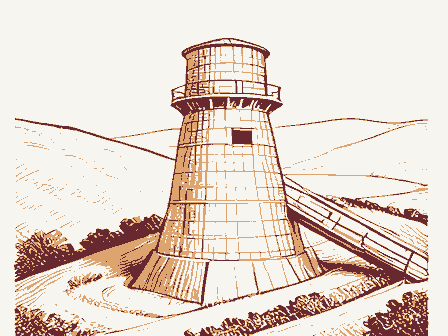
Mary Ann Township
The complete chapter on this township from History of Licking County, Ohio: Its Past and Present, published in 1881. 5,274 words, covering 3 settlements.
Contents
2 sectionsThe section headings the book prints inside this chapter. Each one jumps to where it begins.
The modern record here
3 settlementsWhat the federal record holds for each settlement inside this township: wildfires and storm reports since the 1950s, mineral workings, and museum specimens collected nearby. These are counted within a few miles of each settlement, so neighbours share them and the columns are deliberately not added up. Every row links to the settlement's own page, where each figure is broken out.
| Settlement | Fires | Storm reports | Mines and quarries | Specimens |
|---|---|---|---|---|
| Hickman | 15 | 4 | - | 1,387 |
| Rocky Fork | 18 | - | - | 734 |
| Wilkins Run | 13 | 2 | 7 | 1,593 |
Settlements in this township
3 placesEvery populated place the Geographic Names Information System records inside this township's Census boundary. 0 of the 3 are named in the chapter; the rest were founded later or were never more than a post office.
The chapter
5,274 wordsReproduced complete and unedited. The text is machine-read from a scan of the 1881 printing, so expect the errors a machine makes reading a century-old page: misspelled names, dropped words, stray characters. Nothing has been corrected, because correcting a proper name invents one. The headings below are the book's own.
Maryann Township
IF Mound Builders works ever existed to any great extent in this- township they have disappeared, with a few unimportant exceptions, though the ground has not been thoroughly examined with a view to the existence of mounds, or to locating such as may exist.
There is one on what is known as the Fisk farm, a farm formerly owned by Levi Miller. It has been plowed over for years, and is, of course, greatly reduced in height, but is yet about ten feet above the surface of the surrounding field; this field being a level one. It is not exactly circular in form.
In its primitive condition Mary Ann township presented a wild and rugged appearance, and was the home of every species of wild animal known to the woods of Ohio, as well as venomous reptiles and other creeping things. It was a paradise for the red and white hunter, and was roamed over by the Indians and white men on hunting expeditions, long after its first settlement, and after game had largely disappeared from other portions of the county. Its deep, dark ravines, vast thickets, rocky fastenesses and cavernous hills furnished secure hiding places for wild animals, and they sought shelter in these when driven from the more open country.
Mary Ann corners with Newark township on the northeast, and derived its name from a furnace erected within its limits, which will be noticed in its place.
No Indian history has been preserved, except the fact that this territory was extensively used by the Indians on the Bowling Green as a hunting ground.
watered by numerous springs, and by the Rocln fork and its tributaries. Its surface and soil do not differ greatly from Eden, elsewhere described The entire surface is interspersed with granite boulders, known in rustic vernacular as "nigger heads." The southeast quarter contained consid erable quantities of iron-ore, which was mined and smelted in the old Mary Ann furnace. The so i * of the valleys is rich, yielding heavy crops of coni and grass. The up land, which largely predominates, is of a thin clay soil, underlaid with eh\ shale. It yields a superior article of wheat, and is well adapted to all small grains.
Coal crops out along the Rocky fork in places, but is not in sufficient quantities to pay the expense of mining at present It is upon the ex treme edge of the great coal fields.
The Rocky fork enters the township near itsnortheastern corner, and ripining generally south, leaves the township near its southeast corner, in its passage, making a bend toward the center cf the township. Its principal tributary is Lost run. which rises in Eden township; its general course being south to Wilkins' corners, where it makes a bend eastward, which direction it keeps until ii enters the Rocky fork. These two streams contain clear, sparkling spring water, which tumbles down from among the rocks and hills, and flows switrir over rocky beds. Numberless smaller streams enter them from various directions.
The scenery along the Rocky fork, in this tow* ship, is grand, and during certain seasons of the year, very beautiful; the hills approaching young mountains in their ruggedness and altitude.
A Mr. Bush emigrated from Hardy county, Virginia, in 1809, and built a cabin on the land of Jacob Miller, since owned by Leonel Miller. Bush died in 1811, leaving a widow, two daughters and three sons. The oldest daughter married Lewis Farmer. This was probably the first marriage in the township.
After Bush died the widow removed from the township, and in the spring of 1812, Hugh Doran, originally from Ireland, but more recently from Frederick county, Virginia, moved into the Bush cabin. In 1814, Doran completed and moved into a cabin on his own land; and Charles Barnes, who had removed from Frederick county, Virginia, three years pevious, locating temporarily in Newark township, removed to the Bush cabin. By fall oi the same year Barnes had completed a cabin on his own purchase, adjoining the Miller tract; and in the spring of 1815, Stephen Giffin came into the Bush cabin; his son James, father of C. B. Giffin, locating one mile northeast of said cabin. Thus it will be observed that all the earliest settlers lived at one time or another in the Bush cabin, the first cabin in the township.
The same time that Doran occupied the Bush cabin, James Riley erected a cabin on what is known as the Scotland farm. He was succeeded the next year by Duncan Campbell, a Scotchman from whom the farm received its title.
1809, Bush; 1811, Doran and Benner; 1812, Riley and Campbell; 1814, Barnes, Thompson, Concley and Maxwell; 1815, Stephen Giffin, sr., Stephen Giffin, jr., James and John Giffin. Following closely upon the heels of this pioneer band came Jacob Miller, Henry Wilkins, Daniel Wilkins, William Mcllvain, Seth Carver, Nehemiah Harris and William Grey.
what was known as Jacob Miller's burying-ground. Charles Barnes died in 1815, and was buried on top of the ridge just west of Wilkins' corners. This spot of ground is now known as the Mary Ann cemetery, and is a beautiful one. It is incorporated under a State law, and receives much care and attention.
This township, originally a portion of Madison, was subsequently attached to Newton and then to Newark, and was finally organized as a township in 1817. The first trustees were William Grey, Joseph Moore and James Giffin. The first justices were Samuel Stewart and Samuel Davidson. The first clerk was Samuel Stewart, the. second, Stephen Giffin. The first constable was Duncan Campbell, of the Scotland farm.
One of the pioneers of this township, James Maxwell, was the first constable in Licking county, entering upon the discharge of his duties in 1802, when this county was a township in Fairfield county.
On one occasion he went on foot to Owl creek (Mt. Vernon) to serve a summons on some delinquent pioneer, who was sued in Esquire Stadden's court; and on his return became lost in the woods, and, night overtaking him, he went into bivouac, near W'ilkins' corners.
He must have survived the rigorous official duty, however, for as late as 1830 he retained sufficient mental and physical vigor (and it required an abundance of the latter in those days) to teach a county school and "board round."
The erection of the Mary Ann furnace was an era in the history of this region deserving of more than a passing notice, as it contributed largely to the developement and settlement of this portion of the county. Iron ore of a superior quality being discovered in the southeast quarter of the township, David Moore, a respected pioneer, and father of a large family, with an energy worthy of the times in which he lived, determined upon the erection of a smelting furnace, and as an initiatory step, erected a saw-mill in 1815. Soon after, he began the erection of a furnace, under the supervision of Stephen Cooper and Lilburn Wilson. Almost simultaneously with this enterprise, Mr. Moore erected a grist-mill. The millwright, in this case, was the somewhat eccentric, but well known pioneer, James King, an active participant in the Irish rebellion of 1798. He was captured by the British soldiery, tried, and condemned as a rebel, but escaped a short time before the day fixed for his execution, through some weakness of the sentinel at his prison, and sailed for America.
These extensive improvements progressed rapidly under the general supervision of Robert Patterson, and were completed early in the year 1817.
When completed, the proprietor assembled a few neighbors from the sparsely settled region to celebrate the occasion with appropriate dedicatory services.
The furnace must have a name, and they wisely concluded to bestow^ that honor upon that noble matron, Mary Ann, wife of David Moore. The impressive ceremony of this christening consisted in the hurling of a flask of whiskey against he huge stone stack, by Abraham C. Wilson.
The enterprise was a successful one, not only to the proprietor, but to an immense section of country, furnishing the pioneers with much iron-ware of which they stood sadly in need. Hundreds, today living, will remember the old May Ann sevenplate stove, that stood upon a square box of brick and mortar in the center of hundreds of log cabin school-houses, in this and the adjoining counties; and in every bar-room it was the center of steady streams of tobacco juice. The sides were elaborately embellished with two nude figures supporting a wreath of rudely carved flowers, on which sat a Cupid, showing conclusively that that little mischief-maker was as well known in those days as at present.
Two of the head men in the concern were William McKeever and his bachelor brother, James; both men of sterling integrity, yet full of Irish wit, fun and frolic. Prominent among the names of those on the old force were, also, those of Canly, Jamison and Jewett.
The traveler up the picturesque and beautiful Rocky Fork valley, at the present day, will find, soon after passing the southern line of Mary Ann township, a huge pile of rocks, reminding him of the pyramids of Egypt on a small scale. This is all there is left of the Mary Ann furnace. This pile of stone - mostly cut sand-stone - has withstood the ravages of fire and time, and stands as a monument of the early days of Mary Ann. It is probably twenty feet square at the base, and tapers toward the top; the sides are somewhat cracked, much of the top has fallen in and out, giving it the appearance of a venerable ruin. This was the furnace part, and in rear of it, clinging to the bluff was the large wooden building, destroyed by fire.
In the history of Ohio appears the following, which goes to show that the rugged hills of Mary Ann had been put to certain uses prior to the advent of the first settlers :
"After the organization of Muskingum county, and before the erection of any public buildings, two men were arrested for counterfeiting silver dollars. It was impracticable to send them to jail at Marietta, a distance of sixty miles through the woods, until the sitting of the next court, to which they were bound over. Under these circumstances, without any law except that which necessity creates, they were given in charge of Mr. Mclntireand Daniel Converse, 'to safely keep till court,4 This they voluntarily agreed to do, or suffer the penalty themselves
"A cabin was selected, the prisoners handcuffed together, and Mclntire thus addressed them: 'Now boys (pointing :o the blankets), there is your bed; with your guilt or innocence we have nothing to do; you shall have plenty to eat and driak. but if you attempt to escape, d - n you. I will kill you.' The firm, resolute manner of the address deterred them from making any attempt. Under the watchful surveilance of these men who alternately sat by the cabin door, axe in hand, they safely kept until court, when they were tried and convicted One confessed his crime, and told where the tools were secreted on the Rocky fork, where they were found and brought into court. The one who confessed, received a sentence of twentynine lashes, the other thirty-nine, well layed on by Sheriff Beymer; the culprits immediately afterward departing for parts unknown.
Robert Concley, one of the settlers on the school lands, lived the life of a hermit, and was unfortunately addicted to his cups. The exact circumstances of his death will, perhaps, never be known, as his partially charred remains were found about a rod from the ruins of his cabin.
Charles Barnes, one of the pioneers mentioned, had, in his early manhood, penetrated this wild region under Lord Dunmore as far as the Old Chillicothe Indian town on the Scioto, and was present at the celebrated treaty where Logan made the speech familiar to every schoolboy. This campaign was undertaken in the summer and fell of 1774?
Stephen Giffin was a soldier of the Revolution, participating in the sanguinary battles of Germantown and Brandywine. He lived to a ripe old age, and died in Martinsburg, Knox county, in 1838, at the age of eighty-seven.
Henry and Daniel Wilkins, before mentioned among the easiest settlers, became owners of a body of land around what is now known as Wilkins5 corners, at the bend of Lost run, in the western central part of the township. Some of this was very fine bottom land, and portions of the original tract are yet in possession of the descendants of these pioneers. Henry Wilkins erected a gristmill on the main fork of Lost run, in an early day, probably about 1830, which for many years did the grinding for the extensive settlement that gathered around it; but it has not been in operation for some years.
In an early day a road was established eastward from Chatham through here to the furnace, and another road from Newark, north and northeast, up the Rocky fork. Wilkins' corners is the point where these two roads cross, and in 1858 or 1859 Mr. James Randall established a store at this place. Two years later he sold out to William Dudgeon, who succeeded in getting a post office established, called Wilkins' Run post office. Mr. Dudgeon still keeps a store there. He was succeeded in the post office by Robert Stewart, but in turn - succeeded Stewart, and was in turn succeeded by L. J. Westbrook, the present incumbent. The Grangers started a store here in 1875, but sold out in the spring of 1880 to Messrs. Othe & Wilkins, the present proprietors. These two stores, a blacksmith shop and a few dwellings constitute Wilkins' corners.
There is another post office in the northern part of the township, on the Rocky fork, called the "Rocky Fork" post office. Some years ago Mr. Thomas Nichols started a store here, and Mr. Cornelius Hilleary erected a saw- mill and grist-mill. A few dwelling houses gathered around the store, and the place is called Nicholtown. The post office is now kept at Hilleary's mill. The road along the Rocky fork is narrow and winding, and often crowded between the immense rocky bluffs and the stream. Many mills were erected along fiis stream in an early day, the ruins of some of them yet remaining to mark their sites. The whole valley furnishes a prolific crop of immense boulders, and great sandstone rocks cropping out of the bluffs, and piled up everywhere in the wildest confusion. Some of the farmers, probably from not being able to find a level spot upon which to build, came down into the bottom and erected their houses in clusters on some level patch of ground ; hence, places like Nicholtown are frequent.
There are but two churches within the township limits - United Brethren and Disciple. The first of these is located in the southern part of the township, near the line of Madison, on the farm now owned by Benjamin Nichols, whose father, John Nichols, gave the ground upon which the building stands. The foundation of this society was laid at the old Union chapel in Madison township, as early, perhaps, as 1850, or before. A United Brethren congregation was organized at this chapel, or prior to its erection; and, in connection with the New Lights, erected the building. This chapel being free to all denominations, the United Brethren could only use it part of the time, and as they grew in numbers, determined to erect a church of their own, which they accordingly did on Mr. Nichols' land. The first building was a frame structure, erected about 1850, and answered all purposes until 1877, when the present neat frame building was erected at a cost of six hundred dollars. Among the earliest members of this society were Mr. Ralph Shaw and wife and John Nichols. Rev. David Shrader was instrumental in organizing this congregation, and active in the erection of the church; hence, it was called Shrader's chapel which name it still retains. The present membership is about sixty-five. The organization of the Sunday-school is coeval with that of the church, and has been maintained ever since. It is now in a flourishing condition, with a membership of sixty or more.
About 1850, or befdre, the Protestant Methodists, in the northern and central part of the township, organized a class, and about 1850 erected a church edifice on the Rocky fork, on the Keys estate. Mr. John Gutridge was the chief mover in this church, was largely instrumental in the organization, establishment and erection of the church hence, it went by the name of Gutridge's chapel.
This gentleman contributed largely of his means, both to the building and support of the church. For a number of years this organization was successfully continued, but in later years it languished; and finally, in 1872, the church building was sold to the Disciples.
This society was organized by Rev. Allen Hickey, a son of William Hickey, who was prominent in the establishment of the church, as was also Mr. Jacob Miller, who resides near it. This church is in a flourishing condition, with a membership of thirty or more. A Sunday-school has been generally maintained duiing the summer, and now numbers, perhaps, forty members. A blacksmith shop and store have been established near the church, a few dwellings erected and the place is the counterpart of Nicholtown.
The people of this township are many of them yet living in the primitive log cabin, and appear to be but little troubled about the affairs of the great moving world around.
Chapter Lxiii
Mound Builders - Indians - Survey - Topography - First Settlers and Settlements - First Election - Mills- First Schools - Villages - Early Justices of the Peace - Prominent Early Settlers - Churches and Re. ligious Matters.
THE Mound Builders left but few traces in Mc- Kean township. They were there, however, and built some works, one of which is a mound of small size, standing on the farm originally occupied by Thomas McKean Thompson, about four miles from the village of Granville. There is also a circular fort containing about an acre, with a shallow ditch around the inside of the embankment, on the land of James Barrick, in the northwest section of the township. It has been much plowed over, and now is barely traceable. It would command a view of the country around it, for miles, were it not for the trees. Half a mile south of it is a small mound, now nearly obliterated by the plow, on the land of the late Edwin Runnels. Mound Builders works abound in all the townships adjoining Mc- Kean. -
The Indian history of the township is somewhat meagre. They had an encampment on Cat run, about one mile above its entrance into the Brushy fork, as late as 1812, when they disappeared. A few Indians came to the vicinity of the old encampment, during or shortly before 1820; but all soon left except a squaw, who occupied one of the old huts which yet remained in a habitable condition. She also disappeared in a short time, and was the last of the Indian race that had any kind of residence in the township. As late as 1819, an unoccupied wigwam still stood on E. Runnels farm.
It is well watered by Clear fork and Brushy fork and their tributaries. A number of Springs are also found in various parts of the township.
The lands are, for the most part, gently nndulating, though there is some flat land and considerable that is level, while occasionally a hill of more or less altitude is found. It is a township of good and productive land. The timber is in considerable variety, such as the oak, walnut, beech, hickory and other varieties usually found in the early forests of Ohio.
who, in 1806, settled near the Granville township line, and cleared what, in some circles, has since been called the "Welsh Field," Mr. Price being a Welshman.
In 1807 or 1808, Mr. John McLane settled on the Brushy fork. He was an emigrant from Huntingdon county, Pennsylvania, and did not remain permanently, but returned to Pennsylvania. He was one of the largest men that ever settled here, and procured a livelihood by hunting. He is yet remembered by a very few pioneers as a skilful, persistent, and successful hunter. One, "Billy Evans," made the third settler in 1809, or perhaps late in 1808. Abraham Wright, the first justice of the peace in Newark, also settled in McKean in 1809. In 1810, a revolutionary soldier, named William Smith, settled at the junction of Cat run and Brushy fork. His son John became one of the first justices of the peace, in 1818, when the township was organized. Among the early settlers who came soon after Mr. Smith, were Daniel, Jacob and Joshua Gosnell, a Mr. Woods, Charles and Henry Bryant, John Armstrong, Fleetwood Clark, John Myers and his father, Hugh Kelly, Peter Snare, Owen Owens, John Parker, Major Pierson, Jabez Smith, Esquire Jaggers, Jacob Wright, Stephen Runnel Is, David Danforth, Samuel Shaw, Elijah Hunt, Thomas McKean Thompson, Amos Farmer, and others.
The first election in this township was held in 1818, on a white-oak log upon the site of the village of Fredonia. A hat was used for a ballot box, and thirteen votes were cast. Nearly or quite all the voters were elected to some office.
The first saw-mill was erected by Aquilla Belt, on the Clear fork, above Chatham, in 1817 or 1818. The second was built in 1821 or 1822, by Hugh Kelley, on the Brushy fork, where the road to Mt. Vernon crosses it. Captain Spelman built the third one, a year or two later, a mile above the other, on the same stream. This last was generally known as "Pratt's mill."
The first grist-mill in McKean was erected sometime after the War of 1812, on Clear fork, near the Newton township line, above Chatham, by Abraham Wright, and another sometime later, on the Brushy fork, also near the Newton township line.
The first school wras taught by Mr. Samuel Shaw in a house that stood near the present village of Fredonia. This was probably a little before the organization of the township in 1818.
There are two villages within the limits of the township. Fredonia was laid out in 1829 by Spencer Arnold, David Wood, jr., and S. Shaw, and surveyed by Mr. Edwin Runnels. Sylvania was laid out in 1838 by Jesse and Abraham Gosnell.
These villages are yet quite small, having seemingly attained their full growth many years ago. The census of 1880 gives the population of Fredonia at eighty-six, and that of Sylvania at fifty.
The early justices of the peace were John Smith, Samuel Shaw, Elias Howell, Moses Pierson, David Danforth, C. C. Jones, W. B. Harding, and B. C. McClain. Those of a later day were William Anderson, Warner C. Carr, Jacob Wright, T. B. Pease, J. L. Johnson^ S. C. Scales, William Bowers, Henry Loun, Henry Barrick, Joseph Barrick, S. S. Wilson, and Samuel* Barrick.
An office was once established at Cokesbury with W. Gleason as postmaster, but it was soon discontinued. An office was also established at Sylvania, with Peter Buzzard as postmaster, but it, too, was soon abolished.
Abraham Wright, who settled on the Clear fork in 1809, was a man of some prominence. He settled in Newark in 1802, and was, while there, an acting justice of the peace from 1803 to 1806, when he removed to Newton and afterward to this township. ,
Thomas McKean Thompson was an early settler and a gentleman of extensive information and wealth. He served the county as commissioner from 1822 to 1825. He came from Pennsylvania, where he had served a number of years in the capacity of private secretary to Governor Mc- Kean. He gave the name to the township.
mark in KcKean. He was a Virginia gentleman of the "old school" - affable and pleasant in his manners, of good conversational powers, and a man of sterling integrity.
Elias Howell was also a leading man. He was well informed, and acquired great popularity among the people. He was collector of taxes from 1824 to 1827; sheriff from 1826 to 1830; State senator from 1830 to 1832, and a member of Congress from 1835 to 1 ^37-
Major Jacob Anderson and Thomas B. Pease held county offices. The former was a commissioner three years and the latter tteasurer four years. '
This township contains five churches at present. Cokesbury chapel, a mile or two above the present village of Sylvania, was the first church organization in the township. It was an Episcopal Methodist, and was organized about 1820. It is not now occupied for religious purposes, but was thus used for a brief period by a society of the Christian Union church, a denomination of recent organization.
The Baptist church was organized about 1827. They have a good church edifice in Fredonia. Rev. Mr. Wileman was its earliest preacher. He was followed by Elder Berry.
A Congregational church once had an existence in the township. Preaching was sustained some years, first in Fredonia, and afterward in a neat church building in Sylvania, but the society, by reason of deaths and removals, was compelled to disband years ago. Revs. Rose and Whipple were its early ministers.
The Methodists have a chuich on the western borders of the township, erected several years ago in place of Cokesbury chapel ; also one in Fredonia. The first named is a neat edifice, called Liberty chapel.
Elders Hughes, Farmer, Gardner and Cotterell, and Revs. Smith and White were among the earlytime preachers in McKean. These clerical gentlemen were mostly of the "Old School" Baptists, and New Light or Christian denominations. Elder Amos Farmer, of the former denomination, preached many years to a small society of the type designated or nicknamed "Hard Shell Baptists,' at Root's school-house on Brushy fork. This society never reached a score in number, and finally ceased to exist.
"Unconditional election and reprobation and the final perseverance of the saints," constituted the gospel of the "Old School" Baptist preachers ; and it was proclaimed "without money and without price." They exercised their ministerial functions without fee or reward. They were mostly illiterate, and their style in the pulpit was of the home-spun order.
Very plain, unpretending teachers they might be called, but as they charged nothing for their labors, and the public were not bound to hear them, there could be no just cause of complaint. They preached just what they believed to be the pure, unadul terated gospel and nothing else; and did that fearlessly, freely and honestly, regardless of king or country. They laid a heavy hand upon Arminianism, tract, missionary, Sunday-school, educational. and temperance societies, and utterly condemned a paid ministry. They went forth to perform the Master's work, they said, like the evangelists and apostles of old, without script or purse, and sometimes more than intimated that salaried preachers were of the class of shepherds mentioned by Scripture writers, who would flee when the wolf approached. Freely they gave the best they had, honestly and in the fear of God, and though they might be mistaken, they could not be regarded otherwise than honest men.
One of the most noted of all the pioneer preachers, who at early times officiated in this township, was the Rev. Joseph Thomas, more generally known as " the pilgrim," who preached in the woods where Fredonia now stands, as well as at Mr. Daniel Griffith's and other places in the vicinity, about fiftv-fiye or sixty years ago. He was a man of rare eccentricity of character, and had considerable force as a camp-meeting orator. The "Pilgrim" was a leader of the sect commonlv called New Lights, and frequently traveled in company with Mr. Walters, who was also a preacher here fully fifty years ago. Few pulpit orators could enlist the feelings of a promiscuous assem- ; bly mor6 thoroughly, or move their symyathies more effectually, than Isaac N. Walters and Joseph j Thomas. The former was a natural orator. He , was slightly dogmatic, decidedly declamatory, giv- . en to efforts at eloquence in his exordiums, by the ; use of pretty words, and in his perorations, rather long sentences ; he was, however, a very interesting extemporaneous speaker. Few were more flu- . ent, more eloquent in the pioneer sense of that j word, or more popular. The following incident is I related as evidence of his popularity :
About fifty years ago, when the Presbyterian i church of Newark, and other societies except the Methodists, occupied the upper room of the old j court house for preaching purposes, an appoint- ; ment was made for Rev. James Culbertson, of i Zanesville, and also one for Rev. Isaac N. Walters at the same time and place; each, of course, knowiug nothing of the appointment of the other. When the hour arrived the house was full, and the | stairs and space around the door crowded. Many j belonged to the country, who came to hear Mr. J Walters, his fame having gone abroad through all the region roundabout. Rev. Mr. Culbertson stated that he had been invited to preach there at that hour, and rather mildly insisted on doing so; and being the oldest man, Mr. ^Walters readily yielded in a rerhark or two, and observed that all who desired to hear him preach might repair to the old market-house that stood on West Main street, fronting the square, between the Palisade building and Dr. Patton's store. The result was that Mr. Culbertson preached to a few dozen people, and Mr. Walters to a very large crowd, which he held for hours in the open market-house.
Shenandoah valley, Virginia, but remained at home very little. He was an extensive traveler, and published a diary or book of travels; a rather interesting work, in which this western country, then in a wilderness state, was described, and many adventures related. He also essayed poetry; his success in this line was not, however, pre-eminent. His uniform practice was to clothe himself in white, the outer garment being usually a long flowing robe. He was a sort of Lorenzo Dow preacher, and as an evangelist attracted a large share of attention. His theological views were Arian, sometimes called Socinian.
More than fifty years ago Lorenzo Dow took this township in his line of travel in the west, preaching but one sermon, however, within its limits. This was at the house of Mr. Driggs, who lived on the road from Granville to Mount Vernon, near the southern boundary of the township, in what was called the "Blanchard settlement. " It was a night sermon in a cabin to an audience of about twenty.
The next morning he went to Granville and preached a sermon in the street. He was one of the most eccentric preachers that ever appeared in the county. He was born in Coventry, Connecticut, October 16, 1777, and died at Georgetown, District of Columbia, February 2, 1834. He was an extensive traveler throughout this country, and made several voyages to Europe. He began his itinerant life in 1796 as a Methodist.
The pioneers of this township were principally Virginians, Marylanders, Pennsylvanians and Jerseymen, with a small sprinkling of Yankees. It is an interior township, having no great thoroughfare extensively traveled, no turnpike, canal, railroad or telegraph.
Provenance
Text from History of Licking County, Ohio: Its Past and Present, by N. N. Hill, Jr., published 1881 and in the public domain in the United States. Digitised by the Internet Archive. The settlements listed against this township are matched by point-in-polygon test of each Geographic Names Information System coordinate against the Census Bureau's county subdivision boundary, not by name.