 Block
Block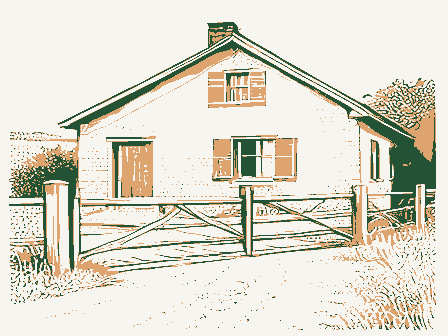
Paint Township (part 11 of 14)
Part 11 of 14 of the account of this township in History of Fayette County : Together with Historic Notes on the Northwest, and the State of Ohio, Gleaned from Early Authors, Old Maps and Manuscripts, Private and Official Correspondence, and All Other Authentic Sources, published 1881. 15,956 words, covering 3 settlements. Source changes inside the text are labelled at the exact paragraph where the next book begins.
Contents
18 sectionsThe section headings the book prints inside this chapter, on this part. Each one jumps to where it begins.
- The Pioneer House
- Council Proceedings
- Union Toavnsiiip
- Cash Receipts
- Methodist Episcopal Church
- Mount Olive Methodist Protestant Church
- Methodist Episcopal Church, Colored
- Catholic Church
- First Baptist Church
- Second Baptist Church, Colored
- The Presbyterian Church
- The Protestant Episcopal Church
- The Christian Church
- Schools Of Washington
- Secret. Organizations
- Union Toavnship
- Masonic
- The. Crusade
Parts
14 pagesThe source prints this as one continuous account. It is split here so no single page grows too heavy to load; the text runs straight on across the parts and nothing is omitted.
The chapter
15,956 wordsReproduced complete and unedited from History of Fayette County : Together with Historic Notes on the Northwest, and the State of Ohio, Gleaned from Early Authors, Old Maps and Manuscripts, Private and Official Correspondence, and All Other Authentic Sources, published 1881. The text is machine-read from scans, so expect recognition errors: misspelled names, dropped words, and stray characters. Nothing has been corrected, because correcting a proper name invents one. The headings below are the books' own; source changes are labelled in place.
The Pioneer House
The old house on the public square. Main Street front, known as the "Parvin property," now being dismantled and stripped of the weather-boarding, reveals to nearly three generations a two-story hewed log house that was erected in 1811, from logs that were cut from the ground upon which it stands. It is the last relic of the pioneer days of the early settlement of Washington, which will soon be numbered with the things of the past. Those who would look upon a picture in real life of seventy years ago, will have to do so soon, as Mr. P. S. Collins, who has bought it, will remove it shortly. It was the first hotel in the place.
Council Proceedings
February 25, 1831, an election was held at the court house, and the foltowing officers were elected: Mayor, Benjamin Hinton; recorder, Calvin B. Woodruff; trustees, Thomas McGarraugh, William Halt, Jesse Millikan, Eber Patrick, and James Shivers.
April 13, 1831, it was ordained that all grocers who wished to sell spirituous liquors in less quantities than one quart, must first obtain the privilege from the mayor by pa3'ing license of $3.75,
April 13, 1832. Resolved that stated meetings of council shall be held on the first Mondays of June, September, December, and March, of each year.
At same meeting an ordinance to prohibit shooting within the city limits was passed, and the penalty for violation of the same was fixed at one dollar.
March 15, 1833, the mayor and recorder were instructed to advertise for bids for the erection of a house on the west corner of the public square.
March 19, 1833, Henry Phelps, Norman F. Jones, "Wade Loofborrow, and Jesse Millikan were allowed $9.37J for their interest in the fire engine "Leo," which they purchased of W. H. 11. Pinney.
April 13, 1833, it was decided to build a fire-engine house fourteen feet long, eight feet wide, and eight feet high, and the contract was awarded to Thomas, at thirty-nine dollars.
January 6, 1834, a committee was appointed to examine fire engine, and order the same to be put in complete repair, and have ten ladders made for the use of the corporation.
Septeniber 30, 1839, John Saunders was appointed mayor,* to fill vacancy occasioned by the removal of Dr. James M. Beard from the corporation limits.
March 23, 1840, Joseph Bell was elected mayor, Orlando Loofborrow recorder, and Alfred S. Dickey, John Saunders, William A. TuUeys, Nicholas Hays, and L. D. Willard, trustees.
April 17, 1840, Wade Loof borrow was appointed mayor, to fill the vacancy occasioned by the resignation of Colonel Bell. [From this it would seem that Mr. Hall declined the appointment received the 14th. - Writer.]
March 22, 1841, the following officers were elected: Mayor, John McLain, jr.; recorder, William Halt; councilmen, Peter Windle, Samuel McLain, Richard Smith, Joseph Blackmore, and Jeptha Davis.
March 22, 1841, Orhindo Loof borrow was appointed to serve as marshal, and Jared Plumb to serve as treasurer, till others could be appointed.
August 19, 1842, it was ordained that all male citizens between the ages of twenty-one and sixty years of age, living within the corporation limits of the city, should perform two days' labor on the streets of the village each year.
March 21, 1845, ordinance adopted making it lawfid for three months for citizens to kill any dog running at large on the streets after 12 o'clock the following day. [That council ought to have had a monument erected to its memory. - Writer.]
feet of any building; also, it was ordered that the marshal inspect all fire-places, and see that they were put in proper repair if in an unsafe condition.
October 23, 1847, it was ordered that a walk be constructed across Market Street ; one from Hinds Street, at the Presbyterian Church; and from Fayette Street, adjacent to the property of N. Hay, to the property of Peter Windle; said road walks to be four feet wide, six inches deep in the middle of the street, and three inches at the side.
August 7, 1848, adopted rules and regulations for the government of Washington Fire Company, which was reorganized under act of General Assembly, passed March 13, 1843.
August 25, 1851, lioensie issued to J. M. June k Co., to exhibit their "American and Europeaij Amphitheater" on August 8th, on payment of ten dollars.
November 15, 1851, mayor and recorder were instructed to grant the right of Avay on the north side of East Street to the Cincinnati, Zanesville and Wilmington Railroad.
April 2, 1853, appropriated |150 for the building of a cistern, to hold not less than one hundred and fifty barrels, at the crossing of Main and Court streets.
March 3, 1855, an ordinance passed prohibiting the sale of intoxicating liquors in the village of Washington. (This ordinance was afterward declared to be in conflict with the state laws on this subject, and was decided ineftectual.)
On pages 240 and 241 of the minutes appear an ordinance creating permanently the office of street commissioner, but the date of its passage is not given.
July 16,1858, an ordinance was passed making the flying of kites within the city limits an offense, and fixing the penalty for the violation of the above ordinance at not less than fifty cents, nor more than five dollars.
December 10, 1858, an ordinance was passed allowing the mayor in certain cases that came before him for adjustment to appoint a jury to sit upon the same.
At the same meeting an ordinance was passed requiring persons oiiering goods at auction in the city of Washington, to pay into the treasury a license of not less than five, nor more than twenty dollars, at the discretion of the mayor, for said privilege.
December 17, 1858, an ordinance was passed allowing the mayor to COMMIT ofifenders (the ordinance don't say where) who refuse to pay the fines assessed against them.
December 6, 1859, an ordinance was passed making it an oft'ense to create any loud or boisterous noise within the corporation limits of the village of Washington, and imposing fines upon persons convicted of such misdemeanors of not less than two dollars, nor more than twenty dollars, with costs of prosecution.
July 4, 1864, ordinance passed making it an oflfense to leave, or cause to be left, any team, wagon, buggy, or other vehicle, or any horse, mule, or other animal, on any street in the village within thirty feet of any house or dwelling, or any fence in front of same, without the consent of the owner of said premises, or hitch or fasten any horse or other animal to any ornamental or shade tree, planted or growing along or upon any such street, any person shall, upon conviction thereof, be fined not more than five dollars, nor less than fifty cents, for each offense.
February 20, 1866, an ordinance was passed, submitting the question of the annexation of certain territory to the village of Washington to the qualified voters of Washington, bounded and described as follows: "Beginning at a stone in the line of John Vandemau and Curran Millikan, where an elm bears S. 30° E. 16 links and 72 poles west of the west corner of said incorporated village ; thence N. 46J°, E. 425 poles (crossing the Jamestown road at 34 poles and the Jeftersonville road at 208 poles) to a jack oak in the line of M. A. Melvin and Lenox Campbell; thence S. 43F E. 340 (crossing the Columbus road at 150 poles and the Circleville Turnpike at 303 poles) to a stone on the line of Daniel McLean; thence S. 46J° W. 425 poles (crossing the railroad at 88 poles and the lower Greenfield road at 244 poles) to a stone in Daniel McLean's pasture, where a burr oak bears N. 66° E. 36 links, and a jack oak bears S. 51° E. 48 links; thence I^. 43 J° W. 340 poles (crossing the Greenfield road at 60 poles, aaid the Leesburg road at 162 poles, and the turnpike at 186 poles) to the beginning thereof."
The above was submitted to the qualified voters of Washington at the regular annual election in April, 1866, for their approval or rejection.
February 11, 1867, ordinance passed making it unlawful to sell, or offer for sale, or give away, any obscene literature, picture, or statuary, bathe between sunrise in the morning and dark in the evening, harbor any strumpet or whore, or misuse any animal, within the corporate limits of Washington, and imposing fines not exceeding fifty dollars for said ofi:enses.
June 1, 1868, an ordinance was passed making it unlawful for persons to hold familiar conversation with any common prostitute on the streets, at fairs, or any public place or gathering, within the limits of Washington, or to keep any house of infamy within the corporate limits of said village, and imposing fines of not more than thirty dollars, or imprisonment not more than ten days, or both, at the discretion of the mayor.
February 2, 1869, ordinance passed to prohibit ale and porter shops, and other houses of resort for tippling and intemperance, within the corporation limits. (This has since been repealed.)
April 16, 1870, ordinance passed requiring certain municipal officers to execute the following bonds before entering upon the duties of their respective offices: Mayor, one thousand dollars; marshal, two thousand dollars ; and the clerk, one thousand dollars.
May 24, 1870, ordinance passed authorizing the destruction of gaming implements found within city limits ; also, ordinance passed closing business places on Sunday.
August 15, 1870, ordinance passed requiring persons running hack coaches, or omnibuses, first to obtain a license from the mayor for such privilege.
October 10, 1870, ordinance requiring owners of shade trees to keep the same trimmed to the height of not less than eight feet from the ground, and imposing fines of not less than one dollar, nor more than five, for the neglect of the above requirements.
October 10, 1870, ordinance passed to prohibit the running at large of vicious dogs on the streets of Washington, and fixing the penalty of the owners of such animals, in case of the violation of the above ordinance, at not less than two dollars, nor more than dollars, and costs of prosecution.
February 20, 187-, ordinance passed authorizing the removal of members of council, or any elective ofiicers of Washington, for any malfeasance in their ofiacial duties. Section 2 of the above ordinance provides that charges shall be preferred in writing, and may be made by council, or any three citizens of the village.
March 16, 1876, ordinance fixing the salaries and regulating the fees of mayor, marshal, and clerk, which are as follows : Mayor, two hundred dollars ($200) per year, with such fees as are allowed by law ivhe7i the fines are collected; marshal, three hundred dollars ($300), and such fees as may be allowed by law ; clerk, two hundred dollars ($200) per year.
Union Toavnsiiip
July 28, 1879, ordinance passed to regulate the use of vehicles about the railroad depots, and to prevent disturbance and disorder- 1}' conduct, and to protect travelers in and about said depots.
January 22, 1880, ordinance passed to regulate and license auctioneering, hawking, peddling, and huckstering in the incorporate village of Washington Court House.
The organization of this company took place at the court house, Friday evening, September 20, 1872. W. G. Gould was made temporary chairman of the meeting, and C. J. Bell, secretary. An election of officers was held, which resulted as follows :
President, E. B. Updegrove ; vice president, A. Black ; secretary, F. D. Bradley ; treasurer, A. Hamilton ; foreman of engine department, H. K. Lidy ; assistant foreman of engine department, James Calkins ; foreman of hose department, A. J. Jennings ; assistant foreman of hose department, Z. T. Johnson ; foreman of hook and ladder department, William Deson ; assistant foreman of hook and ladder company, William Hettesheimer. The roll book shows one hundred and ninety-two signers to the constitution.
Kovember 4, 1872, the city was divided into four fire wards; Court Street being the dividing line. The first ward composed of that portion of the city lying north of Court Street and east of Fayette ; the second ward consisted of the territory lying north of Court and west of Fayette ; the third occupied that part of the city lying south of Court and west of Fayette ; and the*fonrth comprised the remainder of the corporation lying south of Court and east of Fayette.
At the same meeting the president was authorized to order trumpets for the use of the foreman of each department. Compensation of steward was temporarily fixed at seventy-five dollars per annun*, and it was resolved that honorary memhers would be admitted to the company by the applicant paj'ing five dollars into the treasury.
jSTovember 18, 1872, the following uniform was adopted : Engine department, red shirts trimmed in blue ; hook and ladder department, blue shirt trimmed in red ; hose department, red shirt trimmed in buff,
January 6, 1873, A. J. Jennings was re-elected foreman of hose department. At the same meeting, it was resolved that the fire company give a ball at Fireman's Hall, February 21, 1873,
February 6, 1873, company met to make arrangements to attend in a body the funeral of brother firemen, James T. Gould. Also resolutions of respect to the deceased brother and condolence to the family were passed, and sent to the bereaved friends.
May 5, 1873, apparatus taken out and company drilled one-half hour. At the same meeting, J. W. Duffee was elected foreman of hose department by acclamation.
July 8, 1873, the Sabbath-schools of West Lancaster and Staunton, were awarded mottoes from the fire company for their attendance at the celebration of the fourth - the presentation being made by W, C. Gould. In return for this the Staunton school gave the fire company a picnic.
December 1, 1873, it was decided to hold a fair at the hall during the holidays. The following committee was appointed to solicit subscriptions to the enterprise in the city proper : A. Hamilton, George Ely, George Miles, G. W. Gossard, John Bentz, and W. C. Gould. J. P. Wyott was selected as a committee of one to solicit aid in that clelectable part of the town, known then by the euphonious title of " BuUtail."
June 1, 1874, it was resolved to celebrate the Fourth of July in an appropriate manner. At the same meeting, A. Hamilton resigned as treasurer and F. D.Bradley was elected by acclamation to fill the vacancy.
January 4, 1875, company requested council to provide steam fire engine in place of the Babcock engine in use till then by the department, which was granted by the council.
January 25, 1875, special meeting was called to make arrangements to attend the funeral of brother M. Blanch ard. A committee of three, consisting of C. A. Palmer, Samuel W. Stuckey, and A. W. Black, was appointed to draft resolutions appropriate to the memory of the deceased brother.
Cash Receipts
April 12, 1876, department adopted new constitution and by-laws, and one hundred copies of the same were ordered printed for use of the company.
Whereas, Et appears that it is distasteful, or obnoxious to many of the citizens of Washington, that card playing is permitted in the engine house; and believing as w^e do, that it is the dut}' of every good citizen to observe a due and proper respect for the opinions of others; therefore, be it
December 4, 1876, it was decided to give a free ball, to which a limited number of tickets were issued to the members of the company and the municipal officers of the city.
June 4, 1877, it was decided to purchase new uniforms, and committee appointed to select the same. At same meeting it was agreed to celebrate the Fourth in appropriate manner. Also, official seal was changed from " Reliance Fire Department" to Washington department.
June 18, 1877, Wittrock & Co., of Cincinnati, were awarded the contract of manufacturing five dozen pair of pants, at five dollars per pair, for the members of the department.
December 3, 1877, committee appointed to procure one copy daily of the Cinchmati Enquirer, and weekly copies of the Burlington Hcuokeye and Detroit Free Press, to be kept in the engine house for the use of the members of the department.
a beautiful clock preseuted to the company by that gentleman. At same meeting, a literary society was formed within the ranks of lire department.
May 11, 1879, E. B. Updegrove, who had served as chief of the company since its organization, tendered his resignation of that office, which was accepted, and J. B. Colier and Bowman Hess were appointed to till vacancy.
May 22, 1879, special meeting to make arrangements to attend the funeral of C. C. Larrimer. Resolutions of respect to deceased brother passed.
July 5, 1880, Captain E. B. Updegrove, after serving as a member of the department eight years, six years as its chief, tendered his resignation as a member of the company, which was not accepted.
March 7, 1881, Captain E. B. Updegrove, on account of impaired health resulting from wounds received in the services of his country in the late war, requested his name dropped from the company, whioh was finally agreed to.
April 13, 1881, at a special meeting, Mr. Fuller stated that he had raised from the citizens of Washington Court House, the sum of 1148.25, to which he added his individual check for $25.00, making in all $173.25, which he presented to the fire company for its excellent services during the recent series of fires. Donation accepted with tlianks.
By gleanings from the records of Union Township, this county, (1833 to 1843,) we are enabled to present the following memoranda, which will no doubt prove interesting to our readers. The perusal thereof will tend to refresh the memory of many of our older citizens in recalling to mind incidents of the days langsyne. And to "Young America" of to-day, how suggestive of the great change in civil and municipal affairs must the brief mention be!
April 27, 1833, Thomas Holland received |6, Henry Baughan $4.50, and Henry Blystone |5.25, for services as township trustees for the previous year. On settlement, same day, with J. S. Bereman, as township treasurer, there was shown to be due the township, in notes, |32.45|; and Mr. Bereman was allowed the munificent sum of two dollars for services as treasurer for the years 1831 and 1832 !
At a meeting of the trustees, held May 31st, C. B. Woodruff" and Z. W. Heagler were each allowed seventy-five cents for services as clerks at the April election ; and Daniel McLean was allowed $3.75 for services as township clerk in 1832. A levy of two mills on the dollar, on all taxable property, was ordered the same day, for township and poor purposes.
October 19, 1833, an order was issued to Elon Heukle for 12.12^, aud to Wade Loof borrow for $2, for services as overseers of the poor. The township trustees, in 1833, Avere Daniel Bush, Henry Blystone, and George Henkle.
January 25th, Membrance Blue was allowed seventy-five cents for services as clerk at the spring election in 1829 ; and Mathias VanDeman and Wade Loof borrow received an order for $1.50 each, for two days' services as overseers of the poor. Thomas McGarraugh was allowed $2.75, same day, for medical services in a jDauper case.
April 10th, a summons was issued to S. Hamilton, constable, to notify those elected to township offices for the year 1834, to qualify within ten days from the date of election. William Hill qualified as township clerk the same day, before 8. F. Yeoman, justice of the peace. April 12th, Daniel Bush and George Henkle took oath as trustees. On the 16th, James Vance qualified as trustee, and William Hawk as overseer of the poor.
On the 26th of the same month the trustees, at a meeting held at the court house in Washington, appointed John L. Perkins and Thomas Holland overseers of the poor, in place of Lawson P. Reid and William H. Boggs, who failed to qualify ; and Messrs. Reid and Boggs were fined $2 each for refusing to serve.
Jacob Snider, Z. W. Heagler, Robert Simpson, John Grubbs, Ezekiel Timmons, William Stittsworth, Samuel Jones, Jacob Jamison, Joseph Orr, Jacob Harper, and Joseph Bloomer, were chosen and appointed road supervisors in 1834.
April 26th, the trustees examined and approved the bond of N. F. Jones as justice of the peace; also bond of L. J. Wood as constable; and api^ointed Elon Henkle treasurer, William Clark not having qualified. The same day Jesse Millikan, William Hill, and F. M. Penland, were appointed fence viewers, in place of William Rush, Reuben Pursell, and Micajah Draper, who failed to qualify.
May 31st, on settlement with William Clark, as township treasurer, it was shown that the orders redeemed during 1833 amounted to $237.27, and that there was due the township, in notes, $26.72.
A tax levy of two mills on the dollar, for township and poor purposes, was ordered May 31st. S. Dempsey filed commission as justice of the peace the same day.
June 23d, the trustees apportioned funds for road purposes as follows: For improvement of Wilmington road, |50; Hillsborough, $35; Leeshurg, $30; Xenia, |12; and the 18th and 19th days' of July following were designated as days to award contracts.
March 2d, on settlement with the treasurer, it was shown that Union Township received from the county treasury |220.31. The balance in the township treasury the same day was $78.48 in cash, and $9.45 in notes; total, $87.93.
April 11, Robert Robinson received $12.50 for legal services. " There was a woman in the case," and a distant relative (as " all the world is kin") of Captain John Smith, of Pocahontas' time, was an interested party. James Vance, Daniel Bush, and James Shivers, took oath of oflice as trustees the same da}'. William Hawk qualified as fence viewer and overseer of the poor, Joseph Blackmore as treasurer, and F. M. Penland and Samuel Hamilton as constables.
April 18tli, Mathias Van Deman qualified as overseer of the poor, and Thomas Holland was appointed overseer in place of John Woodruti:". A tax levy of two mills on the dollar was ordered the same day.
August 1st, the trustees appointed John McLain township clerk pro tem., to fill vacancy occasioned by William Hill having been declared incapacitated to discharge the duties of the oflice. '
March 7, 1836, the trustees settled with the township treasurer, and found the cash in his hands to be $183.43 ; notes $75. 88^ ; total, $259. 3I5. Messrs. Bush, Shivers, and Vance were allowed $4.50 each the same day, for services as trustees, and John McLain received $3.50 for services as township clerk.
April 4tli, an appropriation of $50 was made for road-scrapers, for township use. Ten were fiiriiislied by Micajah Draper, at live dollars each. James Shivers was allowed seventy-five cents for services in procuring the scrapers.
Samuel Hamilton qualified as township clerk on the 5th of April, J. L. Van Deman took oath as fence viewer on the 9th, and Joseph Blackmore qualified as treasurer.
John Sanders, constable, made return on the ](3th, that he had notified the township ofiicers elect to qualify according to law, for which service he was allowed one dollar.
May 7th, James Heaton was allowed fifteen dollars for medical services rendered a famil}' which had become a township charge, and Benjamin Ilenton received four dollars for like services. The same day. Berry Stewart, "a man of color," was allowed one dollar for digging the grave of a township charge.
July 30th, the township trustees (James Shivers, Isaac Jenkins, and Benjamin Ilenton) ordered appropriations for road purposes, as follows: To improve Leesburg and Snow Hill road, |40 ; Wilmington, I43.46J ; Xenia, |15; Devalon,$15; Columbus, $25 ; Circleville, |50; Greenfield, |30; Hillsborough, |30. Benjamin Holland was appointed constable the same day, to fill vacancy occasioned by the removal of John Sanders.
March 6, 1837, the trustees settled with the township treasurer, when it was shown that after deducting his fees ($21.22) there was a cash balance in his hands of $189. 74|, and notes amounting to 8?92.84i; total, $282.59. Daniel Bush was allowed seventy-five cents the same day, for services as trustee in 1835.
April 4th, L. D. AVillard qualified as constable, and Orlando Loofborrow as township clerk. The same day Merrit Jamison Avas allowed $1.50 for services as judge, and A. S. Dickey a like sum, for services as clerk at annual election. A summons was issued to L. D. Willard, constable, the same day, commanding him to summon Arthur McArthur to take oath of office as constable ; also, Jared Sexton, Stephen Baxter, and Daniel McLean, to take oath as trustees; Joseph Blackmore, as treasurer; J. Scott, Jacob Jamison, E. Taylor, G. W. Richey, David Morrison, J. Vance, P. Fultz. W. Baker, J. Fisk, Aaron Melvin, and Joseph Gillespie, as road supervisors; S. A, Smyth and J. A. Millikan, as overseers of the poor; N. H. Heaton, James Vance, and John Rankin, as fence viewers;
April 12th, L. D. Willard was allowed five dollars for services as constable, in notifying those elected to office April 3d to qualify. A certification records S. F. Yeoman as mayor of Washington at that time.
Curran Millikan was appointed fence viewer, April 12th, in place of John Rankin, who refused to serve; for which refusal Mr. Rankin was fined two dollars.
On the 3d of May following, Mr. Millikan refusing to serve, he was fined two dollars, and Membrance Blue was appointed to fill vacancy. Mr. Blue qualified on the 12th of the same month. In choosing men to discharge the duties of the office of fence viewer, a good deal of humor was indulged in. At times the question of height would determine who should be elected - one being chosen to discharge the duties of the office because tall, another because short in stature; one to look over, the other under the fences. The office, too, was one not much sought, and hence men were frequently chosen through a spirit of vindictiveness.
The bonds of N. F. Jones and Joseph Bell, as justices of the peace, were examined and approved May 27th, and a tax levy of half a mill on the dollar, for township and poor purposes, was ordered the same day.
March 5, 1838, the trustees settled with Joseph Blackmore, treasurer, when it was shown that the total funds which had been received by him since the previous settlement, amounted to $368.80. Deducting disbursements made during the same period ($306.76), the cash balance remaining in his hands was $62.04. He also held notes amounting to 186. 59J.
April 14th, Joseph Bell, justice of the peace, certified that John C. Eastman took oath as overseer of the poor; also, that Edward Smith, Jacob Jamison, James Allen, and Edward Taylor, took oath as road supervisors.
During the same month Reuben Pursell, Jared Sexton, and Micajah Draper, took oath of office as township trustees, George Easterbrook qualified as township clerk, and John Sanders was commissioned justice of the peace.
October 13th, James Beatty was appointed supervisor of the Circleville and ChiUicothe roads, in place of George Rodgers, deceased; and Thomas Holhmd was appointed overseer of the poor, in place of Dr. Jennings, who had removed.
During April, 1839, William Hill qualified as township clerk; James Pursell and IN'athan Kimball, as fence viewers; Jacob Jamison, James M. Smith, John Jackson, James Greenlee, Thomas Sexton, Isaac Jenkins, David Webster, John Judy, John Coil, G. W. Richey, Peter Carder, and James Pursell, as road supervisors; Joseph Blackmore, as treasurer; O. Loof borrow and L. D. Willard, as constables ; Robert Wilson and James Grubbs, as overseers of the poor.
May 4th, L. D. Willard, constable, was allowed ll.37| for advertising spring election, and serving a notice for overseers of the poor. The same day G. W. Easterbrook was allowed $10.31i for services as tewnship clerk in 1838.
May 30, 1839, the township trustees (Daniel McLean, M. Draper, and Reuben Pursell) ordered a tax levy of four mills on the dollar, for township and poor purposes.
April 10, 1840, J. L. Van Deman was sworn in as township clerk, and on the 13th of the same month Daniel McLean, Reuben Pursell, and James Allen, took oath as trustees. During the same month Clarence Parvin qualified as overseer of the poor; James Pursell and J. B. Webster, as constables; John Irion, as justice of the peace; Joseph Blackmore, as treasurer.
July 20th. Clarence Parvin and Richard Evans, as overseers of the poor, through James Pursell, constable, caused notice to be served on various persons (in summons named) to depart the township, so that they might not become "charges" thereon.
In April, 1841, Reuben Pursell, Daniel Bush, and James N. Wilson, qualified- as trustees; clerk, James C. Bell; overseers of the poor, J. S. Bereman and Clarence Parvin.
September 11th, Daniel McLean and Joseph Bell were, on petition, " attached to the school district composed of corporation of the town of Washington."
March 7, 1842, Joel S. Bereman was allowed $5.50 for printing. The same day, Curran Millikan, Lydia Millikan, and Micajah Draper, were attached to the school district composed of the corporation of Washington.
By order of the trustees, through 0. Loofborrow, constable, notice was given to the electors of the township, March 11, 1842, that they proceed to elect township officers on the 4th day of April next ensuing, as follows : Three trustees, two constables, one treasurer, one clerk, two overseers of the poor, three fence viewers, and fifteen road supervisors..
On the 5tli of the same month, John L. Yan Deraan took oath of office as township clerk, and James Pursell, Peter Wendel, B. Martin, and N. Bush, were allowed two dollars each for services as judges and clerks at the annual spring election.
J. S. Bereman and William McElwain filed certificates on the 12th as overseers of the poor, and Joseph Blackmore qualified as treasurer the same day.
December 10th, it is recorded that the trustees, ',' after examining the books of Union Township, including the entire record of said township, they have authorized the clerk to procure a book for the township, and to examine all the records, and place all matters of business, of different kinds, in separate books." A good idea. The accounts ought to be so kept, in ledger form, as that, at any time, it could readily be seen what the amount paid the several township officers, for services rendered, may be ; and so, in like manner, should it be shown what the expenditures for specific purposes have been.
Union Township received from the county treasiii-y, during the year 1880, $12,738.83; from other sources, 1100; total receipts, $12,838.83. The expenditures for the year, we suppose, will be about the same.
A few years ago, owing, it is stated, to a weak point in, or construction put upon the law then in force, the raids on the township -treasury were frequent, and the township officers enjoyed "a feast of fat things." The township clerk, at the time alluded to, received about seven hundred dollars for a year's services (some place the figures considerably higher), and the fees of the trustees, in like manner, were on a pretty' liberal scale, while the physicians who then gave special attention to the poor, in the medical line, reaped a rich harvest. They all manifested a very tender regard for " the dear people." The fees of township trustees and clerks are now. limited. They are each allowed $1.50 per day for each day's service rendered; but their total fees during the year, out of the township funds, must not exceed $150 each. Under the law now existing, it is argued that injustice is done officers in townships wherein county seats are situated, as in such localities attention to the discharge of duty requires special and almost daily attendance on the part of the trustees. and clerk.
Methodist Episcopal Church
The Methodist Episcopal Church at Washington w^as organized at the solicitation of John Bohran, during the summer of 1817, by John Solomon and Thomas Carr, at the house of Robert Wilson. Through the courtesy of Mr. John Trimble, of Columbus, Ohio, we have been furnished with the following list of ministers that harve preached here since the organization of the society :
John Solomon and Thomas Carr, 1818; William P. Finley, 1819; Andrew McLain, 1820; D. D, Davidson, 1821; James Smith, 1822; John Summerville and James Smith, 1823; Benjamin Laurence
After the organization of the society, in 1817, services were held part of the time at the old court house, and a part of the time at the residence of some of the congregation till 1828. In that year the brick school on Market Street, now a part of the residence of Richard Millikan was completed, and was occupied by this congregation for church purposes till 1834, when the brick church on the north corner of Main and Market streets was built. This was an immense structure for a village like Washington in those days ; its dimensions, according- to the best authority on the suljject, being about the same as those of the present Methodist Church on the corner of Market and N"orth streets. As the walls of this building were considered unsafe, it was never completed on the inside, and on account of its unlinished condition - liaving nothing but a brick floor, and being without ceiling or plastering - it could be occupied during the summer months only, and in three years was abandoned entirely. From this time till 1845, the society occupied the court house and the Presbyterian Church, when a frame church on Market, between Fayette and Korth streets, now occupied as a residence by William Weller and E. Saul, was erected and occupied till 1866, when the present church was completed at a cost including interest, of about fourteen thousand dollars. In 1870, this building was repainted and frescoed at a considerable expense, and the house which is about 50x80, is perhaps the most valuable church property in Washington.
Mount Olive Methodist Protestant Church
The organization of this society was effected, in 1829, by the Rev. Father Dobbins of Jamestown, Greene County, Ohio, and at first consisted of the following members :
For fourteen years services were held in the winter season at the different dwellings of the members, and in summer, in barns and in the groves - "God's first Temples" - Father Dobbins removing from Jamestown at stated periods to minister to his small congregation. In 1831, he removed to the banks of Sugar Creek, four miles west of Washington, and settled in the midst of his small flock, in whose interest he labored assiduously till his death, which occurred January 13, 1860, at the advanced age of ninety-two years, eight months and twenty-three days. He was a man of superior talents, oratory and energy, and represented Greene and Fayette counties each two terms in the Ohio Legislature. His life has been written by the Rev. Charles Caddy.
In 1843, this little congregation, with the help of some outsiders, erected a large hewed log church, on the banks of Sugar Creek, on land owned by Daniel Bush, which was dedicated as a Methodist Protestant Church, but which was named " Union Church," as it was understood that when not occupied by the Methodist Protestant Church, it was to be free to any and all other denominations. Though the membership increased slowly, yet the pioneer Christian did not falter in his duty, and their hopes that the future would bring a glorious reward to their labors were fully realized in 1848, when a glorious revival occurred, which gathered into the church many of the young married people of the neighborhood, and also several of the older people. That revival is still remembered with gratitude by the few surviving members, as one of the most happy Christian experiences of their lives. Though at this time Father Dobbins was eighty years of age, yet his mind was as active and powerful as ever, and he labored day and night at this meeting.
About the year 1856, it was thought best for the convenience of some of the members to divide the class, which was accordingly done, and the branch organization held services in what was called the Coile school house, two miles north of the present church, till 1863, when the society erected an elegant frame church on the farm of Isaac Coile, near the Coile Cemetery on the Plymouth pike, and named it " Sugar Creek Chapel," from the name of the creek on whose banks it stands.
The members remaining in the class at Mount Olive, considering the old church too much dilapidated for further use, in 1863 selected a site on the farm of Samuel Coile, on the Wilmington pike, three miles west of Washington, on which, in 1864, they built a commodious frame church at a cost of seventeen hundred dollars, the plans and specifications, of which, were similar to those of the Sugar Creek Church. These two classes have made rapid growth, and are supporting good Sunday-schools.
Harmony Church on the Plymouth pike, six miles northwest of Washington, a full account of which appears in the history of Jasper Township, is an outgrowth of the Mount Olive Church. The seed sown by the Rev. Father Dobbins so many years ago fell on good ground, and the three above named churches are the fruit thereof. These churches are embraced in the Washington Circuit of the Methodist Protestant Church.
The following named gentlemen have served as snperinteudents of the Sabbath-school since its organization, in 1849: At Union Church, Noah Hinkle four years, Amizi Hyer five years, Enoch Bush two years, John Fultz two years, Jesse Hyre fourteen years, Moses Carl one year, Daniel B, Tupes one year, J. F. Henkle one year, and N. S. Henkle two years.
Methodist Episcopal Church, Colored
The African Methodist Episcopal Church was organized at Dennis Brown's house, in July, 1867, by Rev. Mr. Arnett, of Circleville, and services were held at the house of several members of the congregation for more than a year. Hamilton was rented and occupied for some time, after which the congregation rented the old Methodist Episcopal Church, where services were held about one year. In 1875, a committee, consisting of David Rodgers and Mills Gardner, were appointed to negotiate the purchase of the old Catholic church, on Main Street, for this congregation. This they accomplished, paying two thousand dollo-rs for the property. Mr. Rodgers donated one thousand dollars to the society, toward the purchase.
Mr. Arnett preached only four times. William Hogan was appointed, and remained with the charge until his death, which took place at Wilmington about a year afterward ; Perry Ross filled his unexpired time. Wadkins Lee was then appointed, and remained two years. He was succeeded by Father William Morgan, and since Morgan, the following ministers have served in the order of their appointment : Edward Wright two years, Mr. Toney two years, Elder Green two years. Rev. Charles Bundy was appointed in August, 1877, and still remains.
Catholic Church
Catholic worship in Washington Court House was begun, and for sometime maintained, under very trying circumstances. Rev. Father Blake first celebrateel mass in 1852, in a shanty occupied by Michael Flynn, while engaged in constructing the C. & M. V. R. R. The attendants were principally railroad men, most of wliom left when the road was completed. The following, how^ ever, remained, and became the pillars of the present flourishing society: John Coghland, and his brother Thomas, Michael O'Garrath, Martin Brannan, John Saunders, Patrick Burke and mother, Mr. Grady, and Michael Flynn. Of these all are living except Brannan, and all are citizens of this county, except O'Garrath and Brady, who moved to Lancaster in about 1859. Father Blake continued to preach occasionally, until the road was finished, after which Father Duli'ey, who was stationed at Circleville, came once a month, bringing with him a choir from that place. He first celebrated mass at Flynn's house, but shortly after, Ely's Hall, then just completed, was engaged, and Father Duft'ey continued to come till his death, which occurred at Circleville about one year after his first services at Washington.
After Father Duff'ey's death. Father Reagan, stationed at Lancaster, came occasionally during one summer, and ministered to the small flock. After him. Father Everett, of Lancaster, paid it one visit ; and he was followed by Father Fitzgerald, of Columbus, who celebrated mass once. Father Pindar, who was stationed at Circleville, then came once a month for about a year, and mass was celebrated at Ely's Hall, but confessional was held at John Sanders' house.
Near the close of Father Pindar's services, the Catholic church on Main Street, now owned and occupied by the colored Methodist Church, was completed, and was dedicated by the Rev. Archbishop Purcell, of Cincinnati, who in his remarks on the occasion explained the origin and mission of the Catholic Church.
Father Pindar and Father J. B. O'Donohue were present at the dedication. Pindar remained with this charge about one year, when he apostatized, married, and became an Episcopal minister. Archbishop Purcell appointed Father J. B. O'Donohue, stationed at Morrow, to take charge of the congregation.
About six months afterFatherO'Ponohue's appointment, he proposed to the congregation the erection of a more commodious, place of worship, in. a part of town more suitable for a cemetery. Accordingly, the church property on Main Street was sold to the colored Methodist Episcopal congregation, for the sum of two thousand dollars, and three acres of land were purchased of Judge D. McLain, at one hundred dollars per acre, east of town, near the C. & M. V. R. R., just outside of the present corporation limits, on which a substantial two story brick church, 40x62 feet, was erected. In the fall of 1879, Father Felton, by nativity a German, succeeded Father O'Donohue. During his pastorate a fair was held, which was attended largely by Protestants, and $1,700 were cleared to the congregation, which was to be appropriated toward purchasing a residence for the priest. In August, 1880, Father Felton was transferred, and Father Michael O'Donohue was sent from Hillsboro, Ohio, to supply his place, and still remains. At present the church is in a flourishing condition, with a membership of two hundred and upwards.
First Baptist Church
' The Baptist Church is often defined to be an evangelical denomination of Christians, which differs from others in certain principles connected with baptism as the initiatory ordinance of Christianity. This difference is commonly understood as limited^ to the proper age, and mode of its administration, and those who believe in adult baptism by immersion.
But this definition is inaccurate and incomplete. Inaccurate, for in the view of Baptists age is nothing, but spiritual qualification is everything; hence they baptize all who repent and believe the gospel, w^hether in childhood, youth, or manhood, and very frequently whole households at once, as did the apostles.
The definition is incomplete, for many who are not baptized believe that the immersion of adults was the primitive baptism of the New Testament. The fact is generally admitted in works of scientific authority, both historical and archaeological.
Baptists, then, properly defined, are those who hold that the baptism of Christian believers is of universal obligation, and practice -accordingly. And they hold this because they acknowledge no master but Christ; no rule of faith but his word; no baptism but that which is preceded and hallowed by personal piety; no church but that which is the body of Christ, pervaded, governed, and animated by his spirit. Whatever diversities of opinion and usage are found among them, these are their common and characteristic principles; by these they are known and distinguished in every country, and in every age.
body, which, they maintain, was originally practiced in the administration of baptism, and, except in cases of the sick, universally observed throughout Christendom for thirteen hundred years.
For the universal obligation of immersion as identical with baptism itself, and essential to its spcjilic spiritual purposes, they urge the admitted signification of the word bcq^tizo, the places where the rite was originally performed, and the phraseology employed in describing it, the undeniable example of Christ himself, and the met^ aphorical allusions of the sacred writers when explaining the spiritual import of the rite, all of which, they say, confirm the meaning to be immersion, and necessarily exclude every other.
On the subject of church communion, the Baptists generally agree with other denominations that it is not proper before baptism. As they find no exception to this rule in the N^ew Testament, they do not fqel authorized to invite those who are not, in their view, duly baptized, to unite with them at the Lord's table, however highly they esteem them. They profess, in this limitation of church communion, tliat they do not judge the consciences of others, but seek to preserve their own. Yet, while holding these views, they claim to feel a cordial sympathy with other evangelical denominations, and rejoice to co-operate with them, as far as possible, in the work of Christ.
The government of the Baptist Church is congregational. Each body being immediately dependent on Christ, is therefore independent of all others, and is complete in itself for the management of its internal aft'airs, .such as the choice of its officers, declaration of faith, acceptation, dismission, or discipline of members. As such church is a little spiritual republic, so every member is entitled to a vote, and is trained to all the duties of an active citizen. The voice of the majorit}^ governs.
They recognize no higher church ofiicers than pastor and dea-- cons. Elders as evangelists and missionaries are also ordained, after due trial, and sent out to preach the gospel.
Councils are usually called by the churches, to advise, and assist in the ordination of ministers, the formation of churches, and the settlement of serious difliculties, though they have neither judicial nor appellate powers. Whatever be their differences in other things. Baptists all agree in maintaining the congregational form of church government.
body of men who, in point of talent, learning, and eloquence, as well as devoted piety, have no superiors in the country." The Baptists have never made classical scholarship a prerequisite to the ministry of the gospel, lest thej^ should seem to be wiser than God ; but it is a mistake to suppose they have ever despised education or knowledge, except when substituted for holier gifts. As early as 1764, when numbering sixty churches and about five thousand members, the}' founded their, first college in Rhode Island. Long before they had fostered Harvard, and helped Franklin to lay the foundations of the University of Pennsylvania. They now have about forty colleges and universities of their own, over one hundred academies and female seminaries of a high grade, and about fifteen theological schools. The-y have publication societies at Philadelphia, Charleston, and Nashville, besides many fiourishing private publishing houses in our larger cities.
Their missions are planted in Canada, Oregon, California, New Mexico, Hayti ; in France, Germany, Denmark, Sweden, Norway; in western and central Africa; in southern India, Assam, Burmah, Siam, and China.
The Baptists claim their origin from the ministry of Christ and his apostles. They claim, also, that all the Christian churches of the first two centuries after Christ were founded and built up on the principles they profess; in proof of which they appeal to the high critical authorities in church history - Mosheim, Neander, Hagenback, Jacobi, and Bunson. They furthermore claim to be able to trace their history in a succession of churches essentially Baptist, though under various names, from the third century down to the Reformation. These churches, from the fifth century onward, were the subjects of systematic persecution from the state churches, t)oth in the east and in the west. Cyril, of Alexandria, and Innocent I, of Rome, according to the historian Socrates, began this persecution by depriving them of their houses of worship, and driving them into secret places, under the laws of Honorius - and Theodosius II, which forbid repaptism (so called) under penalty of death. Yet their principles reappear among the Culdus of the west, and the Panlians of the east; the Yallesii and the P'aterines, the Albigenses and Waldenses, and emerge on all sides at the first dawn of the Reformation. In the opinion of Sir Isaac Newton, as reported by Whiston, " the Baptists are the onl}' body of Christians that has not sj-mbolized with the Church of Rome."
"With greater consistency than Luther, they apphed the doctrine of the Reformation to the social positions of life, and threatened an end to priestcraft, spiritual domination, titles, and vassalage. They were trodden dowu with foul reproaches and most arrogant scorn, and their history is written in the blood of thousands of German peasantry. But their principles, secure in their immortality, escaped with Roger Williams to Providence, and his colony is witness that naturally the paths of the Baptists are paths of freedom, pleasantness, and peace."
In Eugland, from the time of Henry VIII to William III, a full century and a half, the Baptists straggled to gain their footing, and to secure not ouly toleration for themselves, but for all, on the broad basis of liberty of conscience.
From 1611 (as appears from the documents recently published by the Hanserd Kuolly's Societ}'), they issued appeal after appeal, addressed to the king, the parliament, and the people, in behalf of their soul liberty, written with a breadth of view and force of argument hardly since exceeded.
Mr. Locke has truly said : '' The Baptists were from the beginning the friends of liberty, just and true liberty, equal and impartial liberty." Yet, until the Quakers arose, in 1660, the Baptists stood alone in its defense amid universal opposition. In the time of Cromwell they first gained a fair hearing, and under the lead of Milton and Vane, would have changed the whole system of the church and the state but for the treason of Monk.
In the time of Charles II, the prisons were filled wnth their confessors and martyrs. Yet their principles gradually gained ground in the public mind, and hastened the revolution of 16^8. "The share which the Baptists took," says Dr. Williams, "in showing up the falling liberties of England, and infusing new vigor and liberality into the constitution of that country, is not generally known. Yet to this body English liberty owes a debt it can never acknowledge. Among the Baptists, Christian freedom found its earliest, its staunchest, its most consistent, and its most disinterested champions."
Nor less powerful has been the influence of the Baptists in the United States. Introduced into Rhode Island with Roger Williams and John Clark, in 1638, their history for more than a century, in most of the colonies, is that of proscribed and banished men. Yet, persecuted themselves, it was their glory to have never persecuted others. " In the code of laws established by them in Rhode Island," says Judge Story, " we read for the iirst time since Christianity ascended the throne of the C?esars, the declaration that conscience should be free, and should not be punished for worshiping God in the way they were persuaded he requires.'' From that declaration Rhode Island has never departed, and in it she was followed first by Pennsylvania and New Jersey, afterward by Virginia, and since by all the United States. The article on religious liberty in the amendments to the American constitution, was introduced into it by the united efforts of the Baptists, in 1789. (See Howell's Address before the American Baptist Historical Society, 1856.)
The First Baptist Church of Washington was formed by eleven persons, namely: John Franks, WilHam Harper, Z. W. Baughn, Samuel F. Yeoman, Asenath Yeoman, Bethiah L. Yeoman, N. K. Dickerson, Mary Franks, Rebecca Baughn, Rebecca Blue, and Mary Curry. These were the constituted members of the church.
For many years Asenath Yeoman was the only Baptist in Washington ; but in all these days she was thoroughly grounded in the belief that a brighter day would dawn upon her vision.
Revs. Azel Waters and Albert Wedge, ministers, consecrated to the cause of the Master, acted as moderator and clerk. The session was held in the Presb^'terian Church.
On the 24th day of December, of the same year, Rev. A. D. Freman, who was of a well known Baptist family for centuries back, was called to the pastorate.
On the 24th day of August, 1844, the church through her deligates. Pastor Thomas Goodwin, E. F. Yeoman, Dr. J. Davis and J.. W. Poff, with letters from the church, applied for admission into the Straight Creek Association, held at Winchester, Adams County, Ohio, and duly admitted a member of that body on date above named.
During this year, two or three members of the church were carried away by Mormonism. These are the first expulsions noted in the records of the church. After more calm deliberations they were convinced that it was a delusion. Some of them returned.
In 1847, Rev. W. D. Woodruff came to Washington to live, and was called to the pastorate in place of Elder Goodwin, resigned. Being without a house to worship in, the meetings were held in the court house.
In the year 1849, the church deeming the Caesar's Creek Association (now Clinton) more conveniently situated, took a transfer from Straight Creek Association and united with the former body.
In 1854, Deacon Claypool offered to sell a lot, on which to build, for the sum of three hundred dollars, donating fifty dollars of the amount ; S. F. Yeoman, Hugh Campbell, James Zumalt, A. M. Ogle and Dr. Allen, each gave fifty dollars and paid for "the lot.
On May 18, 1861, the church called a council of messengers from several churches of the association to ordain Brother J. B. Tuttil to the ministry. Elder James Sargeant was chosen moderator, O. A. Allen clerk. After a satisfactory examination, the council set him apart to the ministry.
On December, 1862, Rev. C. T. Emerson was called to the pastorate. His energy was directed principally towards raising means to build a church.
was installed on July 19, 1868, in our new house of worship erected at a cost of eight thousand dollars. Ministers present, Pastor Rev. B. Bedell, Chambers, and J. W. Heistand, a former pastor.
A committee had been previously appointed to revise the records, and ascertain the numerical strength of the church, which revision showed that there were seventy-seven members in good standing. The church having in thirty years increased from the original number, eleven, to seventy-seven.
In December, 1870, Rev. Winham Kidder was called to the pastorate of the church, and having served three years was called to the church above. His loss was a s^'ere aftiiction to the cause.
Thus we note that the church has been in existence almost fortytwo years, and that it has ordained one minister ; that it has admitted by baptism about one hundred and thirty persons ; that it began with eleven members, and has now ninety-one ; that it has had but twelve pftstors.
Church Covenant. - Having been led, as we believe, by the Spirit of God, to receive the Lord Jesus Christ as our Savior ; and on the profession of our faith, having been baptized in the name of the Father, and of the Son, and of the Holy Ghost, we do now in presence of God, Angels, and this assembly, most solemnly and joyfully enter into covenant with one another as one body in Christ.
We engage therefore, by the aid of the Holy Spirit to walk together in Christian love, to strive for the advancement of this church in knowledge, holiness and comfort ; to promote its prosperity and spirituality ; to sustain its worship, ordinahces, discipline and doctrines ; to contribute cheerfully and regularly to the support of the ministry; the expenses of the church ; the relief of the poor, and the spread of the gospel through all nations.
We also engage to maintain family and secret devotion; to religiously educate our children ; to seek the salvation of our kindred and acquaintances ; to walk circumspectly in the world; to be jjiist in our dealings, faithful in our engagements, and exemplary in our deportment ; to avoid all tattling and back-biting, and excessive anger ; to abstain from the sale and use of intoxicating drinks as a beverage, and to be zealous in our efforts to advance the Kingdom of our Savior.
We further engage to watch over one another in brotherly love ; to remember in prayer, to aid each other in sickness and distress ; to cultivate Christian sympathy in feeling and courtesy in speech ; to be slow to take offense, but always ready to reconciliation, and mindful of the rules of our Savior ; to rescue without delay.
We morever engage when we move from this place, we will as soon as possible unite with some other church, where Ave can carry out the spirit of this covenant and the principles of God's word.
Second Baptist Church, Colored
The Second Baptist Church of Washington C. H. was organized June 12, 1855, by Elder George W. Bryant, with three members: Jordan Kelly, James L. Thornton, and Boswell Kelly. Jacob Emmons, a licensed preacher, was called as a ^supply, and preached for them until the year 1858, when Elder A. Carter Avas called to the pastorate. In the latter part of 1858 he departed this life in lull triumph of the faith. He Avas succeeded by Elder R. Allen, who continued in charge of the church till 1860, Avhen he Avas succeeded by Elder A. Pratt, who continued pastor till 1866. He was succeeded by Elder H. Cox.
Up to the year 1867 there had been no special revival of religion, but the church had gradually grown from three members to thirty. In the winter of 1867, under the administration of Elder Cox, an interesting revival took place, and thirty persons Avere added to the church. Elder Cox remained pastor till 1872, Avhen he was succeeded by Elder John Powell, who remained pastor till some time in the year 1875. Elder Powell was succeeded by W. A. Meridith, a licensed preacher, who was ordained in 1875, and reinained pastor till about the year 1877. During his pastorate a very interesting revival was held, which resulted in the addition of twenty-seven members to the church. Elder Meridith was succeeded by Elder Benjamin Smith, who took charge of the church in 1878, and remained pastor till June, 1879, when he was succeeded by Elder E. M. Marion, in September, who is the present incumbent. On the first of January, 1880, a revival of religion was begun, and resulted in fifty additions to the church ; making in all about one hundred and sixty members who have been received into the fellowship of the church. The present membership is about one hundred and ten.
In the year 1857, the church purchased a lot on North Street, opposite the Central School building, and built a frame house, in w'hich they held services till about the year 1868, when the old house ^yi^s torn down, and a brick building erected, costing about two thousand five hundred dollars.
The Presbyterian Church
The Presbyterian Church of Washington Court House was organized October 10, 1813, three years after the county was organized. There were thirteen members, and James Clark, William Blair, Samuel Waddle, Anuences Allen, and Col. James Stewart, were chosen elders.
The Rev. Mr. Baldridge had charge of the church for a time. After him the pulpit was supplied by several dift'erent ministers, till Rev. William Dickey came to be pastor in 1817. The church had no house of worship, and meetings could not be held very regularly.
In 1817 part of the church was set oil' to form a separate congregation at Bloomingburg, and Thomas McGarraugh and Henry Snyder were chosen elders. Mr. Dickey supplied the church at Washington, and also the one at Bloomingburg, which was now the larger. Shortly after he seems to have given all his attention to Bloomingburg, and there are no records of the Presbyterian Church of Washington for fifteen years.
In 1834, the cliurcli took a new start. Nine of the old members were still on the ground, and seventeen were received. James Pollock, John Wilson, Isaac Templeton, and Joseph McLean, were chosen elders, and S. F. Kerr was made clerk of the session.
About 1835, Rev. John C. Eastman took charge of the church, and the church seemed to progress nicely. They undertook, for the lirst time, to build a house of worship, and soon it was constructed and dedicated.
In 1840 Mr. Eastman left the church, after six years of faithful and successful labor. The next eight years passed with very irregular ministrations. Eev. James Dunlap, and Rev. J. A. I. Lowes, preached for a time.
In the w^inter of 1847-8, the church was incorporated. About this time J. G. Hopkins came, as a licentiate, to supply its pulpit. James 'N. Wilson and Eliphas Taylor were chosen and ordained elders. Mr. Hopkins, some time after, was chosen pastor and ordained. A division in the church grew out of this. Robert Robinson and Joseph McLean, two of the elders, and others, left the church ; among them Col. S. F. Kerr. This was a great loss to the feeble church. Mr. Hopkins soon left, and in the spring of 1851 Rev. S. J, Miller, was called to the pastorate, after which church affairs ran along more smoothly. A new church edifice was built about 1856. Rev. Miller continued pastor for fifteen years, leaving the church in 1866 with seventy-five members.
The church has had some very precious seasons of revival, and has a membership of two hundred. The house of worship has lately been enlarged, improved, and greatly beautified, and has a competent corps of elders and deacons, and a good Sabbath-school. During the pastorate of Rev. Miller, James Allen, Henry D. Ritter, and Joseph Bryan, (perhaps others,) were made elders. During the last pastorate, in 1867, I. C. Van Deman, Williani Robinson, Joseph Parrett, and William II. Devalon, were made elders. In 1871 J. P. Robinson, and P. E. Moorehouse, and in 1879 Dr. S. S. Salisbury and W. A. Ustick, were made elders. Some have gone to their reward, and some have moved away. The present session are : Williani Robinson, I. C. Van Deman, J. P. Robinson, Dr. S. S. Salisbury, W. A. Ustick, and Rev. George Carpenter, pastor.
The Protestant Episcopal Church
The history of Trinity Episcopal Church is necessarily short, for the simple reason that at this date (August, 1881) it is, as a church, less than two years old.
On Thursday evening, December 4, 1879, a meeting, presided over by the Kev. J. H. Logic, rector of St. Philip's Church, Circleville, was held at the residence of Mr. J. M. Love. At that meeting all the persons in Washington Court House who were interested in the Episcopal Church were present. An organization was effected by the election of an executive committee, composed of the following gentlemen: J. M. Love, Edwin Bird, R. M. Campion, J. S. Gold, Clarence Snyder, Edwin Proctor, and Charles A. Palmer. These gentlemen were intested with authority to act in the capacity of a vestry; Messrs. Love and Bird to act as wardens.
Previous to this date (December 4, 1879), occasional services had been held by the Rev. Mr. Logic, of Circleville, and the Rev. Mr. Fischer, of Chillicothe, but at this meeting arrangements were made for regular services, and the first of such services was held on Thursday evening, December 11, 1879.
At this service further arrangements were made by which the Rev. Mr. Logic was to take pastoral oversight of the work, and, with the assistance of the neigliboring clergj', hold services on alternate Sundays in the Baptist Church.
The first Sunday service was held December 28, 1879. In the afternoon the Sunday-school was organized. At first the school met at the residence of Mr. Love; but its growth was so rapid that it became necessary, in the course of three weeks, to take it to the church.
For several mouths the services were held in the Baptist house of worship, but were removed to the city hall, and subsequently to the court house, where the members are still worshiping God in accordance with the faith and practice of the Apostolic Church.
On the 16tli of May, 1880, the mission was placed in the hands of the Rev. Korman H. Badger, who thus became the first rector of Trinity Church. His tenure of oflice was, however, very short, he being called to a parish in northern Ohio in January, 1881.
tion, of whom mention may be made of Miss JS'annie Love, Miss Julia Campbell, Mrs. J. C. Von Buhlow, Mrs. Campion, and Miss Tinnie Cleaveland.
In March, 1881, arrangements were made by which the Rev. George Rogers, a graduate of Bealey Hall Theological Seminary, Gambler, Ohio, and a presbyter of the Diocese of Kentucky, took charge of the mission, and is still pastor of the church.
The growth of the Episcopal Church in the county seat has been rapid and solid. The dignity and beauty of its service; its broad, catholic spirit; its adaptability to old and young, rich and poor; its freedom from partizanship - all commend it to the thinking men and women of the community.
So far from being a new church, it is the oldest of all the religious bodies. It was first organized in the United States in 1784, obtaining its orders from the»Mother Church, of England. The student of history will not need to be told that there was an English Episcopal Church long before the Reformation in the sixteenth century, and that what was done at the time of the Reformation was not the making up of a new church, but the cleansing of the old from Romish errors. There was an English Episcopal Church, with bishops, presbyters, and deacons, at the time of the Council of Aries, A. D. 314, and through this church the Protestant Episcopal Church of America traces her lineage back to the days of the apostles. She is the daughter of the Church of England in precisely the same sense in which America is the child of Great Britain. We as Americans are not ashamed to call England the mother country.
The government of the church is both lay and clerical, the secular part of the administration being confided to the care of the vestry, composed of the minister and several laymen, in the case of the parish; and in the case of the diocese, to an annual convention, composed of both clergy and laity, with the bishop as presiding ofiicer. The spiritual government is, of course, committed to the bishop and clergy.
The doctrines of the church are summed up in the Apostles' Creed. She believes in God, in Jesus Christ, in the Holy Ghost, the Holy Catholic (or universal) Church, the communion of saints, the forgiveness of sins, the resurrection of the body, and the life everlasting, and does not demand that her children shall believe any more. She does not lay upon men a " yoke which neither we nor our futliers were able to bear." but simply asks of them a profession of belief in this creed, and a sincere and honest desire to live a godly life. Being- baptized and confirmed in this faith, she helps men to live an earnest Christian life. The non-essentials of religion are left between every man and his Maker. With malice toward none, and charity toward all, she believes it to be especially her mission to preach primitive Christianity, to help the distressed, to comfort the sorrowfnl, and to lead erring men back into the path that leads to God.
The Christian Church
This church is the creature of the fifth missionary district of the Ohio Missionary Society. It is a mission of the district board. They instructed J. C. Irvin, who is still in charge of the njission, to go to Washington and make a reconnoisance. He visited all the members in the city, and established preaching temporarily in the Baptist Church. This was continued for five months.
In December, 1874, Rev. W. W. Sawyer and Mr Irvin, joined in a union service of Baptists and Disciples, which meeting lasted one week ; an intercommunion service was held and friendly relations cultivated. This year several sermons were preached in the city hall-
During the next winter, Elder Robert Moftett, state evangelist, of Cleveland, Ohio, held a meeting of three weeks, in the Baptist house of worship, which was well attended. The interest, good from the beginning, increased to the close. At this meeting, two young ladies were added to the church.
The board, encouraged by this meeting, determined to make the mission permanent. J. C. Irvin was continued in the management. His health failing however, he was not able to preach, and was compelled to abandon active work ; yet he never abandoned the idea of ultimate success. During the year 1878, he held Bible services and social meetings in the temperance hall. These meetings began as early as November, 1877, and have been held regularly ever since.
Organization. - The organization dates from April 6, 1879. There were but six members present, whose names were J. C. Irvin, Mrs. J. C. Irvin, Miss Jennie Davis, Mrs. Maggie C. Hess, Mrs. Julia Benjamin, and S. Eldan Irvin.
These solemnly covenanted with each other, and with the Great Head of the church, to live as becometh saints, and to keep the ordinances of the Lord's house. This little band has met regularly, and their members have gradually increased.
B.enjamin Eankin and family have permanently settled in the neighborhood, and others having moved into the city, so that the number has increased to about twenty.
In November, 1880, a Sunday-school was organized in the city hall, and the meetings removed to that place. The school has succeeded well and is in a flourishing condition at present. The attendance is about sixty-five.
The church since its organization has had a slow but steady growth. Since which Elder A. A. Knight of Wilmington, J. S. Hughes of Dayton, and Dr. Oliver Hixon of Iowa, have preached for the organization.
Since the election of General James A. Garfield to the presidency of the United States, public attention has been called to this denomination of Christians so prominently, that we feel justified in giving a somewhat extended view of their faith and practice. This will be the purpose of the brief sketch which follows :
It is proper to state that this denomination of Christians prefer the simple term Christian Church, but do not wish to assume a designation that might seem to deny the appellation to others. They are willing to be known as Disciples, or to be distinguished by any term that is applied to the Church of Christ in thel^ew Testament. Their aim is to bring Christianity back to what it was in the beginning. They reject all symbols of faith except the Bible, desiring to restore the primitive simplicity of the Gospel, as preached under the supervision of the heaven inspired apostles of Jesus Christ.
Previous to the inauguration of this movement, the condition of religion in this country was truly to be deplored. The religious parties of those times were extremely selfish, and were the bitter antagonists of each other. The spirit of rivalry and of sect had largely supplanted the Spirit of Christ. Ignorance and superstition were more prized than an intelligent knowledge of the word of God. Human creeds were the standards of faith and practice ; while the Divine creed was regarded as a dead letter. The result
The careful and impartial reader of the history of these times must see that a reformation was greatly needed. The success of Christianity in the world depended upon a movement that would break down this ecclesiasticism, and bring the people back again to the true knowledge of Christ. Early in the present century an attempt at this was made. But before entering upon a notice of this movement, it is proper to call attention to what had previously been accomplished.
Luther's was a noble work, but it was principally confined to one thing, namely : the restoration of the freedom of thought, freedom of speech, and the right of individual interpretation. This was his distinctive work. It broke the fetters of the papacy which bound the human soul, and gave hberty once more to the individual conscience.
Calvin restored to the church the idea of God's sovereignty. This had been partially obscured by the works of supererogation which Catholicism enjoined upon its subjects; and it was necessary to any satisfactory progress in the restoration of primitive Christianity, that the Great Father should be properly recognized as the author of " every good and perfect gift." Extremes beget extremes, is the universal testimony of history. Hence, under the infiuence of Calvin's teachings, it was not long before the religious consciousness swung round to the extreme of a cold, lifeless formalism, which entirely ignored the human side in the plan of salvation, and left every thing to the unalterable fate of what were called the Divine decrees.
Wesley restored to the church the idea of human responsibility. He taught that there was something for man himself to do in order to salvation. Hence his teaching infused new life into the religious convictions of the people, and give a new energ}' to the work of converting the world.
To sum up the work of these reformations, it is sufficient to say, that Luther restored conscience to its proper place ; Calvin restored the Divine sovereignty, and Wesley human responsibility, as part of the remedial system.
Two things yet remained to be done : the word of God must be restored to its proper authority, and such an adjustment made of the elements eliminated b}' the reformations just referred to as would secure a rapid and harmonious development of the religion of Christ in the world. This of course would involve a complete restoration of the primitive order of things, and this was the work proposed hy the reformation of the nineteenth century, A few words concerning the origin and character of this movement are necessary at this point.
In the year 1807, Thomas Camphell, a Presbyterian minister, of the north of Ireland, arrived in the United States. He soon conceived a plan of Christian union upon the basis of the Bible alone. In the advocacy of this jjlan, he published the celebrated " Declaration and address," and a " Prospectus of a religious reformation." The burden of these papers was the inefficiency of denominational organizations, and the necessity of a return to apostolic teaching and practice, before the world could be converted to Christ; discarding all human creeds and confessions of faith.
A society was formed in Washington, Pennsylvania, for the purpose of propagating these sentiments. Soon after two churches were organized, and these agreed in the purpose of absolute and rejection of human authority in matters of religion, and the determination to stand by each other upon the -proposition that the Holy Scriptures are all sufficient, and alone sufficient as the subject matter of faith and rule of conduct, and that therefore, they would require nothing as a matter of faith or rule of conduct, for which they could not give a " thus saith the Lord," either in express terms or by approved precedent. This was the beginning of the great reformatory movement known as the great reformation of the nineteenth century. Since this early beginning it has spread into all the states and territories of the federal union, where the number of communicants is now six hundred thousand. They are also numerous in Canada, Jamaica, the British Isles, Australia, and a few are to be found in France, Norway and Turkey.,
They also control a large number of fine colleges and schools. Among these may be named Bethany College, founded by Alexander Campbell, in West Virginia; Butler University, Indiana; Kentucky University; Hiram College, Ohio; Oskaloosa College, Iowa; Math others too tedious to mention.
They also have their share of men in public places in the government, both state and federal. The most prominent among these is James A. Garfield, president of the United States, and Judge Jeremiah Black, of the supreme bench.
Schools Of Washington
The first school in Washington was taught in 1813, by Samuel Loofborrow, in a double log house (one part of which he used for a dwelling), on the corner of Paint and Hind streets. The school, as was common in those days, was made up by subscription, and could not have continued more than one or two terms, for in 1814 the iirst building intended for school purposes in the village was built, and James Webster installed as teacher. This was a rough, round log structure, 16x18, with clapboard roof, fastened with weight-poles, and was minus a floor. The door was also made of clapboards, arranged horizontally, and secured by wooden pegs. One side of the frame extended above and below some inches, the lower end resting in a notch cut in the sill, or bottom log, and the iipper end was fastened by pins, driven obliquely into the log above on each side, and served as a hinge to the door. The sill mentioned above was more than two feet in diameter, and it was with difliculty that the smaller .children got over it into the school house. Of course it was supplied with the customary greased paper window lights, and was heated by the huge old-fashioned fire-place peculiar to those primitive days.
This building was located on the northeast side of Market, between Fayette and North streets, on in-lot No. 47, now in possession of Colonel H. B. Maynard, and occupied a part of the present situation of the old frame Methodist Episcopal Church.
Webster was followed as teacher in this building by James Clark, an Irishman, who taught here till the house was abandoned in 1816, when school was held in the old court house for some years.
About the close of Grovesnor's services, a log school house was erected on the corner of Market and Hind streets, and was occupied first by a man named Pearson. The house was built of round logs, which were "scutched" after the building was erected, and was located where the mill now stands, on the southeast corner.
Norman F. -Tones was Pearson's successor here, and continued till the house was abandoned. After this, school was held in the old court house, and in unoccupied buildings in different parts of the town, till 1828, when a small, one-story brick house was erected on Market Street, between Mnin and Fayette streets, which now forms a part of the dwelling of Richard Millikan ; but on account of some illegal technicality concerning the levy or appropriation made for the building of this house, it was thrown on the hands of the school trustees, but was afterward rented and occupied for school purposes principally till 1845, when a two-story frame school house was built on the site of the old log building, on the corner Market and Hind streets, and is now a part of the steam mill operated by Joseph Allen.
This house was used till the present union school building, on North Street, between Temple and Paint streets, was completed, in 1856, which originally was two stories high, sixty-five feet square, and contained eight rooms, four above and the same number below, with a ten-foot hallway leading through both the upper and lower stories of the building. The house, and site of three acres of ground, cost about fourteen thousand dollars. In 1872, another story and a steam heating apparatus were added, at a cost of eight thousand three hundred dollars.
The following is a list of some of the early teachers since Norman F. Jones, arranged as nearly in their proper order as possible, in the absence of records to guide us :
Secret. Organizations
Temple Lodge No. 227, was instituted in a hall in the attic story of the old brick building on Court Street, northeast of Fayette, over the printing office, March 13, 1854, hy the Most Worthy Grand Master of Ohio, William G. Neilson, who delivered the charter to
Union Toavnship
The lodge continued to meet in that old attic room for about two years, when they removed to the third story of J. F. Ely's frame building, on the corner of Main and East streets, where they also remained about two years. They then secured the third story of a new brick building on Court Street, built b}" Z. W. Ileagler, and which is now the central room in the Yeoman Block. This was unfinished, but the lodge finished and furnished it, and made them there a comfortable home for about sixteen years.
In the spring of 1873, they organized the Odd-Fellows Building Association, which bought a piece of ground on Court Street, southwest from the Vandeman corner, and proceeded to build thereon a tine business building; and in the spring of 1874 the lodge removed to their beautiful and commodious new hall in this " Odd- Fellows' Building," it being one of the largest and best lodge rooms in the state, and handsomely furnished.
In the following October, on the night of the 13th, the "fire fiend" claimed for his own this splendid temple, with all the furniture, pharaphernalia, regalia, records, and other property of tlie lodge, not a single thing being saved.
A meeting of the lodge was called, and held in the Masonic Hall, which was kindly tendered for the purpose, on the night after the fire, at which there was a very large attendance ; and it was then unanimously resolved to rebuild the building and hall. This was at once entered upon, and in the winter arjd spring of 1875, a new building arose, phffiuix-like, upon the ashes of the first, equal to it in size and beauty.
The lodge furnished the new room very well, though not quite so elegantly as the first one, and moved into it on the 6th day of November, A. D. 1875, where they have continued to meet to the time of this writing.
During the building of the second hall, the lodge met in tlie third story of the First National (now the Peoples and Drovers) Bank building.
for existence the first two years; whpn, on the anniversary of the order (April 26, 1856), Dr. Strickland, of Cincinnati, came here at their solicitation and delivered a public address upon Odd-Fellowship, in the old Methodist Church, which was followed by a number of very valuable accessions to the lodge, and from that time on it has had a steady and substantial growth, until at this writing it numbers one hundred and thirty active members, and has upon its rolls the names of many of our best and most prominent citizens.
Representatices to the Grand Lodge. - There have been only three from Temple Lodge, as follows : Colonel S. N. Yeoman, elected in 1856; Judge J. B. Priddy, elected in 1870; and the present representative from the district, J. N. Vandeman, Esq., elected in 1878, and re-elected in 1880.
District Deputy Grand Masters. - Captain John M. Bell was the first District Deputy Grand Master, appointed in 1856, and John L. McKee is the present one, appointed in June, 1881.
Officers. - The first elective ofiicers of the lodge were: Captain John M. Bell, Noble Grand; Colonel S. K Yeoman, Vice Grand; M.Livingston, liecording Secretary; William H. Lanum, Permanent Secretary; John Backenstoe, treasurer.
The present ones are: S. M. Stein, Noble Grand; P. Sheerman, Vice Grand; E. S. Stinson, Recording Secretary; John L. McKee, Permanent Secretary; A. L. Reid, Treasurer; S. W. Cissna, Dr. O. A. Allen, Bowman Hess, Dr. S. S. Salisbury, and S. L. Hooker, Trustees.
The Fathers. - Of the charter members, only two remain - Brothers Colonel Yeoman and William H. Lanum. The others have laid down their armor, and rest in the silent cities of the dead.
Of those who were initiated on the night of institution, only Brother John Millikan still has his connection with the lodge, two of the others having gone West years ago, and removed their membership there, and the other one is dead.
Patriarchal Branch. - Fayette Encampment No. 134, was instituted by Grand Patriarch C. G. Russell, May 17, A. D. 1871, in the Odd-Fellows' Hall, on Court Street. The charter was delivered to L. C. Karney, Colonel S. N. Yeoman, C. L. Getz, Dr. 0. H. Saxton, M. Blanchard, W. S. Stewart, J. C. King, William Wilts, and Charles Duflfee. There were eleven persons admitted on the night of institution.
The encampment grew very rapidly for about three years, when it suffered the loss of a good many of its members, by reason of the institution of encampments at Sabina and Greeniield, from which it has never fully recovered. It numbers at this writing forty active members. It, too, was "burnt out" and lost everything at the time the lodge building was destroyed, in October, 1874.
The present officers are : S. L. Hooker, District Deputy Grand Patriarch ; Mark Howell, Chief Patriarch ; John L. McKee, High Priest; Marshall Hyer, Senior Warden; Frank A. Murry, Junior Warden; J. ]^. Vandeman, Scribe; John B. Shum, Treasurer; John L. McKee, John B. Shum, and John I^. Vandeman, Trustees.
Masonic
Fayette Lodge iS'o. 107, Free and Accepted Masons, was instituted and commenced work in Washington C. IL, Ohio, December 7th, A. L. 5839, (A. D. 1839,) pursuant to a dispensation granted by the Deputy Grand Master of the Grand Lodge of Ohio, under date of November 29, 1839. It was dedicated December 26, 1840, by tlie M. W. Grand Master, Bro. W. J. Bees, under a charter granted by the Grand Lodge of Ohio, bearing date October 22, 1840.
The charter members of this lodge were Joel S. Bereman, Sam-- uel F. Yeoman, Samuel Millikan, Joseph Bell, Jacob Ott, Valentine Coil, and Daniel McLean.
Bro. McLean is the only charter member now living, and is the oldest affiliating Mason in Fayette County. He was initiated an Entered Apprentice, July 2, 1825 ; passed to the degree of Fellow Craft, and raised to the sublime degree of Master Mason, August 6, 1825, by Hillsboro Lodge No. 38. He has taken all the degrees up to and including Knights Templar, and is an active member of all the bodies.
The following are the officers who have filled the several stations in the lodge, from the date of its organization, in the year 1839, up to the present time, 1881 :
Royal Arch Masons. - Fayette Chapter, No. 103, was organized July 1, 1867, under a dispensation granted by Grand High Priest George Eex, and signed by the following companions : John Turk, 8. JS". Yeoman, J. W. Cleveland, Mills Gardner, E. L. Ford, Lewis Cook, Adison Bybee, Benjamin F. Mouser, and James F. ^\y. The officers under the dispensation were as follows : John M. Tuf-k, High Priest ; S. N. Yeoman, King ; J. W. Cleveland, Scribe ; J. F. Ely, Captain of the Host ; Mills Gardner, Principal Sojourner ; Lewis Cook, Koyal Arch Captain; E. L. Ford, M. of 3d V. ; Adison Bybee, M. of 2d V. ; Benjamin Mouser, M. of 1st V.
The first election was held j^ovember 6, 1867, and the following officers were chosen : J. M. Turk, High Priest ; S. N. Yeoman, King; J. F. Ely, Scribe ; J. W. Cleveland, Captain of the Host; Mills Gardner, Principal Sojourner; W. P. Cleveland, Royal Arch Captain ; A. M. Stimson, M. 3d V. ; Conrad Garris, M. 2d V. ; B. F. Mouser, M. 1st v.; B. H. Millikan, Secretary; John Miser, treasurer; L. C. Karney, Guard.
My Commandery No. 28, K. T. - A dispensation, dated August 30, 1876, was granted by the R. E, Grand Commander of Ohio, to the following Sir Knights, to form and open a commandery of Knights Templar, and the appendant orders, in Washington Court House, to be called Ely Commandery:
The first conclave of the new commandery was held in Masonic Hall, Washington Court House, on the 11th day of October, 1876, at which the following applications for the orders of knighthood were presented :
These applications were, by permission of the R. E. Grand Commander, balloted for at once, after which the commandery adjourned until the following evening, for the purpose of conferring the Orders of Knighthood on the above named applicants.
The first knight created was Daniel McLean, the oldest Mason in the county. He was made a Master Mason in Hillshoro, Ohio, in July, 1825, and was in his seventy-second year when created a knight.
A charter was granted by the Grand Comniandery, August 27, 1877. Since the organization eighty-three knights have been created, and four received on diniit. There have been ten withdrawals on diniit, seven suspensions, and death has also stricken from the roster the following worthy Sir Knights : George H. Smith, of Wilmington, Ohio, in 1878; M. S. Creamer, in 1879 ; and Henry E. Browne, in 1881.
The comniandery has participated in two National Triennial Conclaves - at Cleveland, Ohio, in 1877, and at Chicago, in 1880. It is now in a,tlioroughly prosperous and growing condition.
The. Crusade
Three movements for the suppression of intemperance, nearly allied to each other in mode of operation, and almost simultaneous in organization, were set on foot in three dift'erent localities. Washington Court House can not, strictly speaking, claim priority of organization, yet while the other movements never reached beyond the limits of the point of initiation, and proved in themselves local and ephemeral, the seed fell upon good ground in Washington, and sprang up, grew, and multiplied, forming a nucleus from which it has radiated in every direction all over the civilized world, wielding an influence that is felt by every nation, morally, socially, and
On the evening of December 24, 1873, the Lecture Association of Washington Court House had in its course a lecture on "Our Girls," by Dio Lewis. During the evening he dwelt somewhat largely upon the havoc being made by tobacco and ardent spirits, and ottered to suggest a new plan for fighting the liquor traffic, which, he asserted, if carefully adhered to, would close every saloon in the place in one week's time. The proposition was heartily accepted, and a meeting appointed for Christmas morning, at 10 a. m., in the Presbyterian Church.
At the appointed hour on Christmas morning a large congregation assembled in the Presbyterian Church, eager to see the plan of Dr. Lewis inaugurated with all earnestness and prayer. "Awake ! awake! put on thy strength, 0 Zion!" was sung by the choir; prayer by one of the pastors, and reading of a Bible selection by Dr. Lewis, who at once proceeded to his work. We will attempt no report of his words; suffice it to say that his arguments were unanswerable, and his expose of the fallacious subterfuges presented by temperate drinkers was complete. For one hour, argument, illustration, appeal, and demonstration, followed in rapid succession, until at the conclusion of the address the entire audience were ready to heartily indorse the plan presented, and there was organized one of the grandest reformator}^ movements of the age - the movement now so well and fitly known as the " Woman's Crusade."
On motion of Dr. Lewis, three secretaries were elected and instructed to report the names of all the women present, as a committee of visitation, whose business should be to go in a body to each of these places, and personally appeal to the proprietors of the same to stop the business at once, and seek other means of livelihood. This committee was to enlist for the war - that is, to keep up the work until accomplished.
On motion of Dr. Lewis, a secretary was appointed to take the names of a number of men, to be called a committee of responsibility, who should furnish pecuniary means needed in the prosecution of tliis work. William Millikan, sen., was elected to this office, and in a few moments the following persons volunteered for this committee :
The committee appointed to present the names of the ladies, offered the following names, all of whom were unanimously elected, and better still, nearly all served in daily work :
On motion of Dr. Lewis, a committee of these ladies was appointed to draw up an appeal to our citizens engaged in the liquor business. The chair appointed Mrs. George Carpenter, Mrs., A. C. Hirst, and Mrs. A. E. Pine, to serve on this committee. Mrs. B. Ogle was then added to this committee of appeal. Closing appeals of stirring power were made by Dr. Lewis and Rev. A. C. Hirst; and after a vote of thanks to Dr. Le\vis, for his work among us, the meeting adjourned to convene in the Methodist Church and hear the reports of the committees appointed.
Temperance was the all-absorbing theme on that day around every Christmas board, and upon all the street corners. In the evening a prayer-meeting was held in the Methodist Episcopal Church, at which time the chairman of the committee on appeal, Mrs. M. G. Carpenter, reported the following:
"Knowing, as you do, the fearful effects of intoxicating drinks, we, the women of Washington, after earnest prayer and deliberation, have decided to appeal to you to desist from this ruinous traffic, that our husbands, brothers, and especially our sons, be no longer exposed to this terrible temptation, and that we may no longer see them led into those paths which go down to sin, and bring both body and soul to destruction. We appeal to the better instincts of your own hearts in the name of desolated homes, blasted hopes, ruined lives, widowed hearts, for the honor of our communit}', for our happiness, for our good name as a town; in the name of the God who will judge you as well as ourselves; for the sake of your own souls, which are to be saved or lost, we beg, we implore you, to cleanse yourselves from this heinous sin, and place yourselves in the ranks of those who are striving to elevate and ennoble them-
This appeal was adopted, and has since been used very generally, not only in Ohio, but in several other sfates. Many prayers and earnest words were uttered, and the meeting adjourned to reassemble Friday morning in the Methodist Episcopal Church, at 9:30 a. m-
On Friday, December 26, 1873, the meeting convened, pursuant to adjournment, in the Methodist Episcopal Church. The services were opened with singing and prayer, and reading of the Scriptures. One hundred copies of the appeal, to be presented to dealers in intoxicating drinks, were ordered to be printed and circulated throughout the community. Mr. John S. Foster and Mr. Allen Heagler were appointed to attend to this business.
Provenance
Text from History of Fayette County : Together with Historic Notes on the Northwest, and the State of Ohio, Gleaned from Early Authors, Old Maps and Manuscripts, Private and Official Correspondence, and All Other Authentic Sources, published 1881, in the public domain in the United States and digitised by the Internet Archive. The settlements listed against this township are matched by point-in-polygon test of each Geographic Names Information System coordinate against the Census Bureau's county subdivision boundary, not by name.