 Block
Walshville, Illinois
12 topographic sheets cover this place, the earliest surveyed in 1915 and the latest in 1998. It stands in Walshville Township. It lies in ZIP code area 62091. It stands on East Branch Lake Fork. The Survey maps it on the Sorento North quadrangle. 61 people lived here at the 2020 count. It stands 615 feet above sea level.
Population over time
2 figuresWalshville fell from 64 to 61 between 2010 and 2020. These are the recorded population figures Wikidata holds for this place, reached through the Geographic Names Information System number this page is keyed on rather than by name, so they belong to this place and not to another of the same name. Most are census counts, but not all are: an early figure may be a founding or settlement estimate, and an estimate published within five years of a census is left out. The change column is computed, and is left blank where more than 20 years separate a figure from the one before it, because a gap that long is not a change between two counts.
| Year | People | Change |
|---|---|---|
| 2010 | 64 | |
| 2020 | 61 | -3 (-5%) |
Topographic sheets covering this place
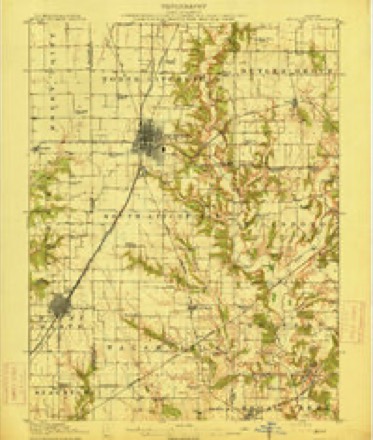
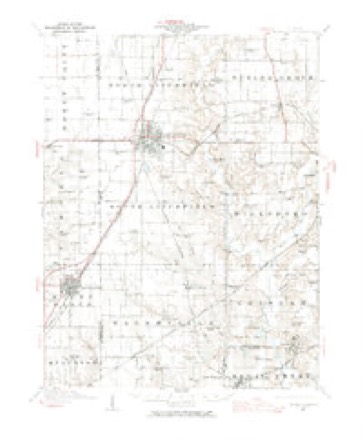
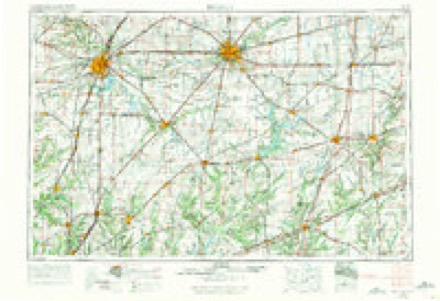
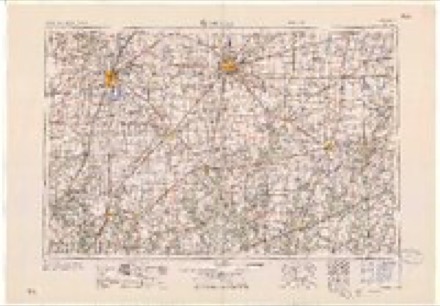
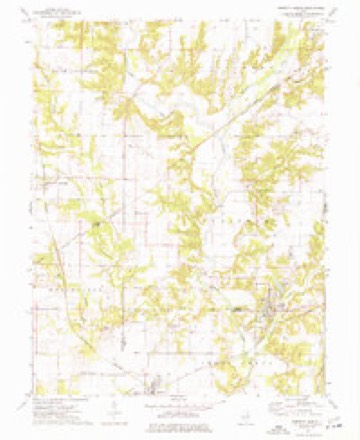
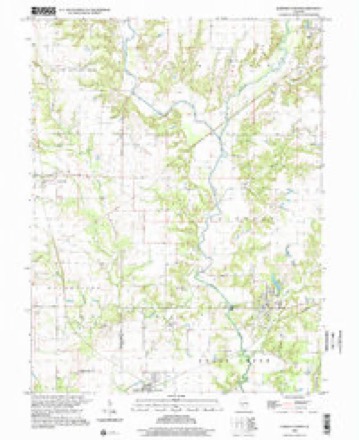
7 surveys from 12 printed sheetsMatched by testing this settlement's coordinate against the published boundary of every sheet in the United States Geological Survey's historical collection. Each opens the scanned sheet at the Survey.
- 1915 USGS Mount Olive quadrangle1:62500, 3 printings
- 1944 USGS Mount Olive quadrangle1:62500
- 1958 USGS Decatur quadrangle1:250000, 3 printings
- 1961 USGS Decatur quadrangle1:250000, 2 printings
- 1974 USGS Sorento North quadrangle1:24000
- 1982 USGS Litchfield quadrangle1:100000
- 1998 USGS Sorento North quadrangle1:24000
In the county-history sources
18,235 words on this townshipPast and Present of Montgomery County, Illinois, published 1904 names this settlement in its chapter on Walshville Township. These are the passages that mention it, exactly as the scans read.
About I Si; (here came to the neighborhood of Walshville Nicholas Voiles, Melcher Fogleman. William Stevens, Elias Baker and his son .lame-. Two or three years later James Jordan. Austin Grisham ami others settlei near. In l^ii J. W. Harrison. Thomas Evans. John Evans and Joseph Evans and in 182S Robert GZirkland made settlement in the same neighborhood. These men were in character and spirit similar to those I hat we have described in the history of other townships. The} were just as true just as brave as then' contemporaries and in the sections where the} located Ibeir influence has been as marked for good as the influence of pioneers who settled in other parts of the county. It has been claimed by some writers on the earlier history of Montgomery county that .lames Jordan who settled near Walshville, preached the lirst sermon ever delivered within the present boundaries of Montgomery county. We know, however, thai conflicting evidence exists to show honor and there is also tradition that one Henry Sears, of Hurricane settlement, deserves that credit. We leave the matter, however, to some more exact and precise historian. We are perfectly willing to leave these questions of minor importance to be ferreted out by someone more interested in minutia than the writer. Ahout the year 1840 John Simpson and John Ming made improvement of the lands upon which the present village of Walshville now stands. These two pioneers have lefl several descendants in this part of the county. The lirst marriage that ever took place in Walshville township was that of James Jordan to Elizabeth Grisham. This occurred in the year L825. h is related that Peter Cartwright organized a Methodist .lass at the residence of Elias Baker in the year 1824. Probably this was the first Methodist Episcopal class in Montgomery county. Rev. .Tames Jordan had organized a Baptist church at the residence of William Cline, which was later reorganized by the Rev. William Burge in 1836. No church edifice was erected until ten years later. This was a log structure and served the congregation until about 1862 when the organization decide,! to build a new place of worship and located it in the village of Walshville. This building was destroyed by fire in 1866 and in L869 they rebuilt their church, since which time the organization has passed through the varying experiences of prosperous conditions and depressions. In 1850 E. D. Smith opened a country store at what is now the village of Walshville. Some years later he sold his business to a Mr. Bowers. Bowers in turn sold to Chapman and Kennedy and they to Michael Walsh. In l<s:>-"' Mr. Walsh laid out the village and named it in honor of himself. The township, however, takes its name from the village. John King built his residence aboui this time and Seymour and Cline built a brick store room and put in a general stock in 1856.
Passage source: Past and Present of Montgomery County, Illinois, published 1904.
Shortly alter Cline sold his interest to Eli Deshane, who afterward became sole owner of the stock. Mr. Deshane did quite an extensive business at Walshville and accumulated a very creditable estate by attention to business and the practice of habits of economy. William Kingston tor many years conducted a general merchandise business in the village, and several oilier- whose names are familiar to the people of this section may hi- named. Sanders & Hodges, Blevins & Denny. Hodges & Boyd. Thomas Barlow, Boone Copeland and A. T. Strange, the last named more recently engaged in business. A. T. Strange for the last quarter of a century has been very closelj identified with the affairs of Walshville township. As an administrator of large estates and as trustee for panic- left in trust he has had as much and possibly more experience than any other citizen of the township. He was for many years engaged in the profession of teaching; later, however, he turned his attention to agricultural pursuits, lie has been identified with organizations that have had for their purpose a union of the agricultural classes. He was an active organizer of the Grange and the Farmers Mutual Benefit Association. No man residing in that section of the county enjoys the confidence and esteem of the public more than Alex T. Strange. Among the physicians that deserve mention in these pages are the following: Ambrose Barcroft, John T. Koeu and M. S. Davenport. This trio of very worthy professional characters, each of whom has left his influence for good upon the locality, has moved on to the silent halls of the dead, and while their voices are hushed and while they are no longer able to practice their skill that others may live, yet what they have done is not silent ami the example of their lives is ever living. T. T. Smith, who lives just south of the village, is another id' the deserving citizens of the township ami he has been identified with much that has been done in the moral and social uplift of the community. William Neiman. who lives near the west line of the township, is a German-American who at different time- has represented his township on the board of supervisors, and along with him may be nai I Harm Reiser, who for a longer period of years served th.it township on the board than any of which we have record. Following Mr. Eeiser comes II. II. Monke, also of German parentage. This township is largely settled along the western and southern pari by thrifty German population and we are glad tn note that no part of Montgomery count} has a tunic enterprising people than VValshville tnu nship.
Passage source: Past and Present of Montgomery County, Illinois, published 1904.
A long time ago, in the year 1820, William McDavid came from Tennessee and settled in East Fork township near the famous Fox Indian spring and here for forty-six years he made his home. Children grew up about him and in turn made homes of their own. Mr. McDavid was an eccentric character, a man possessed of far more native ability than the average. It is related that after he had made settlement that occasional visits were made by individual members of the Fox tribe to the vicinity of their former home near the Big spring down as late as the year 1835. T. W. McDavid. the youngest son of Uncle Billy, lives on the old homestead, where he was horn more than seventy years ago. When Mr. McDavid came from Tennessee he was accompanied by Jesse Johnson, his father-in-law, who settled in Grisham township, near where the village of Donnellson now stands. Alter Mr. McDavid, James Card made settlement in East Fork township in 1821 and located on the farm now owned by Daniel Cress. Mr. Card lived for one war at this place when his wife having died, he returned to Ids former home in Kentucky. He came back, however, in is-.':; and settled in the north part of Fast Fork township near the Irving line. He remained here for two years and then removed to Fillmore township. It is remarked of Mr. Card that he was a remarkable man in many respects, daring, intrepid and intensely religious. AD. Card made the first overland trip from this section of the county to St. Louis. He had no means to direct his course but a small pockel compass and of necessity he was compelled to cut his roads through the woodland and to make a fording place across the stream. It required many days' traveling with his slow ox team, but his return trip was fully as difficuH because of being heavih loaded with supplies, which he had purchased in St. Louis. Many of Mr. Card's descendants yet reside in this county. A settlement was formed in the south part of the township in the years between 182] and L826 and among those whose names appear we find as follows: .Joseph Williams, John Kirkpatrick, E. Quinn, Henry Rowe and David Bradford. Williams settled on the farm which was afterward know n as the Riley Hampton Mound. It is now the home of Rev. Alexander Hampton, a grandson of Joseph Williams. Kirkpatrick located over near where the village of Donnellson stands. The exact location of these other earl) settlers is not known. In 1826 Benjamin Rhodes came from Indiana and settled on section 8, in the north part of East Fork township. His was the only cabin in this part of tlie township for some years. William P. Linxwiler, a step-son. afterward owned the Rhodes property and later sold it to Joel K. McDavid. In 1824 Jordan Williford came from Tennessee and located on a piece of land near Uncle Billy McDavid's. He lived on this place about three years and then sold out to "Mr. McDavid and moved over on Shoal creek. where he remained until 1856, when he removed to Arkansas. Jordan Williford had a large family of children, among whom was Andrew .1. Williford, a minister of the primitive Baptist church and well known throughoul this section for a period of many years Oncle Jackie Williford, as he was called, preached at Bethel, just north of where Coffeen now stands, for a period of nearly half a century. Air. Williford has left several sons, who reside in Montgomery county. Grandsons of the elder Jordan Williford, the pioneer, ami tin' son- of A. J. Williford. the preacher, are James Williford, of Litchfield; Thomas Williford. who lives in Payette county; Hiram Williford, the SCl I teacher, also living in Payette county: and A. J. Williford. Jr.. the efficient cashier of the Nokomis National Bank. These men are well known and respected in the neighborhood in which thev were reared, as well presents an article in tins work under tin.' head of the banks and banking. It? perusal will be of interesl to all who have not studied the Win-kings of thi' national hanking system. Mr. Williford. the cashier, has an elegan! home and most interesting family in the city of Nokomis. Here ho has lived for several years and during this period he has established a reputation in connection with the hank that makes his services of great value to that institution. His success proves that a young man of energj ami industry, coupled with economy. may within a few years provide for himself the things necessary for the comfort and happiness of those dependent upon him. Mr. A. J. Williford. Jr.. was married to Mary Johnson, a daughter of the late Ben E. Johnson, of Hillsboro. Their union has been blessed with a family of several hoys and mil-. Hiram Williford. the teacher, has hut one son. who has received an appointment as a eadet jn the military academy at West Point. This young man. Forest Williford. has the making of character that some day will command the resped and esteem of his fellows. We base this assertion or assumption on the fact that the elements of the pioneer and the preacher have cume down through the generations to find expression in the efforts and achievements of this scion of one of the pioneer families. Two brothers by the name of Mann came to settle in the northern part of East Fork township about the year 1830. One of these was the father of Robert Mann, who for many years was a prominent citizen of Hillsboro. Samuel Ilaller made a settlement some two miles north of where Coffeen is now located. Mr. Ilaller raised a large family of children, man] of whom have been promineni in county and local affairs. Henr] Ealler for many years lived -,r Eillsboro and was engaged in different lines of business at that place, lie died some two or three years ago. Jacob Ilaller. of Nokomis, I, ne ef (he must successful farmers and stock men of the county, is a sun of Henry Haller. Dr. T. P>. Haller, recently deceased, was also a son of this pioneeT settler. Dr. Haller for many years was engaged in the practice of his profession at Vandalia and it was here that he built up a large and Lucrative business. Caleb Traylor built the first mill in the township at the place now known as New Boston. This was in the year 1836. lie ami his father. James Traylor. had come frmn Kentucky the year previous. The elder James Traylor was one of the first school teachers within the county and some few of the older citizens remember having attended his school. Caleb Traylor was most unfortunate in the operation of his mill. On one occasion his hand and arm were crushed in some of the machinery and later he fell from some part of the upper story upon some timbers below and broke his neck. This was unfortunate for the family of Mr. Traylor n more ways than simply the loss of his services as bread winner for his Eamily for having a large family of boys, the advice and council which a father alone can give was [osi lo them at a period when they needed it so much. The second mill built in Fast Fork township was operated l>\ D. M. Williams. It was in the neighborhood of Traylor's store hut built before .loci C. Traylor established his store in that part of the town-hip. This mill was operated for a period of twenty years or more ami was finally sold to Alfred Bliss, of Fillmore, by Joel C. Traylor, who had come into possession of it. The writer has faint remembrance of this "Id mill. For as a child he played with others about the yard at hide and seek among the logs. Fort] years have gone by since the removal of the old mill, yet a o » of the old logs are to he seen lying about in their decay, marking the place of one of the earlier enterprises of the township. The water still Hows from the old spring, vet little trace of the pond that collected it.- waters for the use of the mill is to he found. The burstones that ground the corn into meal were reserved when the mill was -old ami these -tones are to he seen in the yard at the old Traylor homestead. Thefirst store doing a general merchandise business was opened by duel t '. Traylor in the south part of the township in 1844. For many years Mr. Traylor gathered the produce from the surrounding country and hauled it overland to St. Louis, bringing back in return such merchandise as the people at that time re- quired. I'ntil the building of the 1. & St. L. Railroad it was the custom of Mr. Traylor to send down a wagonload of produce every week in the year. To do this it became necessary to have two wagons and while one was on the trip tn tin' city, the other was engaged in gathering its load for the succeeding week. Many of the old citizen- of the south pari of the county will remember these weekly visits of his produce wagon. In this way Joel C. Traylor, who having been a cripple from birth and requiring the assistance of crutches by which to walk, was possessed of that same spiril as the other pioneer settlers and the thought of asking assistance because of his condition would have stung his pride and he would have resented as an insult the charge that he was unable to make his way as other men in the world. Traylor's stove was a ureal meeting place for the country for miles around on election days, at conventions ami the annual horse show which took place here in the early spring of each year. Here were brought together some of the I. reeds of horses that would sound familiar by name to our readers of that generation. Jim Kirk usually would have at the show his Copper Bottom and Stump-a-deler and Tom Whitton with his Diomede (Old Tom Benton) and Uncle Clem Aydelott with Eed Lion, Uncle John Trice with Old Archie. These are a few who would congregate and take much pride in showing the good points of their stock. These were horses of endurance and I doubt that Montgomery county can show a grade of horses superior to those that were bred in the county just prior m the Civil war. While the introduction of our large, beefy Norman and Clydesdale horses have added a spirit of docility, they have at the same time so reduced the endurance that the horse found on the farm to-day is not the equal to those which our fathers bred forty years ago. Among those living in the Traylor settlement were the Roper-, the Wardens, the Neals, Laws. Thackers. Hawkins. Aliens. McCaslins, Harrisons, Jones and the Woods. The Ropers removed from this section to Missouri some thirty-five pears ago. Nathan Warden, a carpenter, settled near the old mill about the year 1845. He came from Kentucky and was regarded as a most quiet and inoffensive citizen. Together with his good wife. Aunt Polly, he lived in this vicinity until about twenty years ago, when he removed to the neighborhood of Walshville. He died here some ten of twelve years ago. Quite a family of boys and girls were raised by Mr. Warden and several of these reside in Montgomery county. His second son, Alfred M. Warden, studied law with Judge E. Lane, of Hillsboro. This young man left the ancestral h ami settled at Washhurn. Wisconsin. We understand thai "All"' has become quite a prominent citizen in his adopted home Having been elected to positions of honor and trust in his county, we are glad to note that a fellow schoolmate is succeeding so well in the world. He is at present judge of the city court of Washburn, Wisconsin. Hugh McCaslin and his brother Graj settled near the line between Bond and Montgomery counties early in the '30s. Hugh's home was over in Montgomery and Gray's just across the line in Bond. Hugh McCaslin lived to the good old age of ninety-three. He left several sons who have been prominently connected with the affairs of the neighborhood and county. Wiley F. Mc- Caslin, the wagonmaker, recently died at the age of eighty-three and Mark McCaslin. his brother, wbo lived in the vicinity of Nokomis, has been dead for several years. Wiley Mc- Caslin leaves a son. William S. McCaslin. who is a business man of Coffeen, and one maiden daughter, Miss Ella, a school teacher, who lives on the old homestead in the Traylor neighborhood. William Neal came to this county at the same time that his father-in-laf Uncle Douglas Young made a settlement on Bear creek. William Neal was regarded among his neighbors as a strictly religious and moral character. He was identified with the church work of the neighborhood I'm' many years and assisted in building the Methodist Episcopal church at Edwards Chapel and the Free Methodist church at Walnut Grove. X" man in the neighborhood enjoyed the confidence <>f ever} one more than did William Xcal. I I' lie ever had a difference with any of his neighbors, there i- no tradition that relates it and in the memory of the writer he stands out in hold relief as the exemplar}' Christian, father and neighbor. William Neal and his wife, Sarah, have passed on to that country from which no traveler returns. They Lefl several children and grandchildren, among whom are Allie. who lives in Eillsboro, and Burton, a minister, who resides in St. Paul. .Minnesota. Their oldesl daughter, Ellen, who married Cyrus Bost, died early in life leaving one daughter, Zella. who is our present stenographer. Dona and Frances live at Greenville, Illinois, the latter the wife of Albert Eayden. William Laws, who is ye1 Living at the advanced age of eighty years, made settlement near Walnut Grove some sixty years ago. Mr. Laws married a daughter of Gray McCaslin and by her has raised several children, among whom are Thomas G. Laws, the presenl postmaster at Coffeen; C. L. Law-, township treasurer: and Wilson Laws, a merchant of Donnellson; several other children whose whereabouts are unknown to the writer. Dr. B. Haynes also lived in this community for a number of years and was one of the leading characters in the community. The doetoT had the largesl family of any one in the neighborhood and it was a great pleasureto the boys and girlswhen thetimecame for a party down at the doctor's, for we well knew that it meant a good time, as the doctor never tailed to provide for the entertainment of i he young folks. George Wilson, who settled on the old Davenport place, was another to eontribute to the upbuilding of the schools and churches of the neighborhood. Uncle George and Aunt Jane never failed to attend Hie prayer meeting and the Sabbath-school unless by sickness or some unavoidable cause they were prevented. Uncle George is living at Donnellson, enjoying the evening of life as well as ,.ne of his advanced years could expect. Aunt Jane has gone to her reward and if ever it might he said "I know that my Redeemer liveth," none could have left behind an evidence of a trust more abiding and assuring than she. John S. Stevens, who had spent his earlier life upon the high sea> and who had visited almost everj quarter of the globe, by chance drifted into Montgomery county. It was here that he met a young widow by tin1 name of Betse] Brown, a daughter, however, of William Cannon, of whom we have before spoken at length. The hardy sailor succumbed to the charms of the young widow and in due time they were married and after a few years' residence on Hear creek they came to live in the settlement at Walnut Grove. Here they have raised a large family and here they have acquired quite an estate for themselves ami for their children. The elder son. Thomas, died hut a short while ago and left surviving him three sons, who are earnest and industrious young men. John Stevens. Jr.. live- on the farm and has acquired quite a reputation as public auctioneer. Mary is the wife of I. J. Brooks and Eliza is the wife of H. H. Brooks, while Permelia is the widow of Henry Root. Commodore is living on the old homestead and i- regarded as a shrewd business man. Robert Milner settled just west of the Hampton Mound about 1850. Quite a colony came from the eastern part of the state in Edgar county ami made settlement at the same time with Mr. Milner. Among these were the Hawkins, the Gordon, the Tennison and the De-art families. Robert Milner was a very excellent citizen. He had but two children: Isaac and Jennie. Isaac Milner was married to Emma Frame and together they commenced the building of an estate. Isaac was unusually fortunate in his investments and being a Earsighted business man, he promised to become a man of much means, but early in life he was seized with consumption and died almost at the beginning of the race in which so much had been expected. He left a son, Alva, who has since grown to manhood and occupies the homestead of his father. Alva is an energetic fanner and stock man and will accomplish good in the world. Thomas Wood came into this part of the township in the latter part oi the '20s and settled near Sugar Camp branch. He wa- the earliest settler in his immediate neighborh 1. Captain Peter C. Wood is a son of
Passage source: Past and Present of Montgomery County, Illinois, published 1904.
Machine-read from a century-old scan, so expect the errors a machine makes: misspelled names, dropped words, stray characters.
Fires near this place
3 since 2001Regional context, not property-specific evidence. The federal wildfire occurrence database lists 3 fires within 5 miles of Walshville between 2001 and 2004, burning about 6 acres in total. 1 started naturally. 1 was recorded as arson. Distance is straight-line from the map coordinates, so a fire counted here may appear on a neighbouring settlement's page as well.
| Reported cause | Fires |
|---|---|
| Natural | 1 |
| Debris and open burning | 1 |
| Arson/incendiarism | 1 |
The most recent of them, most recent first, with the day each was reported and the service that recorded it.
| Date | Cause | Size | Reported by | Name on the report |
|---|---|---|---|---|
| 20 September 2001 | Natural | under an acre | Illinois State Fire Marshal's Office | not named |
| 8 May 2004 | Debris and open burning | 1.0 acres | Illinois State Fire Marshal's Office | not named |
| 13 April 2003 | Arson/incendiarism | 5.0 acres | Illinois State Fire Marshal's Office | not named |
Settlements close enough to share some of these fires:
Storms near this place
12 since 1995Regional context, not property-specific evidence. The National Weather Service names Walshville in 12 storm reports between 1995 and 2026: 5 thunderstorm wind, 5 tornado, 1 hail, 1 flash flood. No death or injury is recorded in these reports. Each account below is quoted exactly as the forecast office filed it, from the NOAA Storm Events Database, and each date opens the federal record of that event.
| When | Event | Place named | Harm | What the report says |
|---|---|---|---|---|
| July 1995 | Thunderstorm Wind | Walshville | $3,300 | A cooperative observer reported large trees down, a damaged grain bin, and a damaged siloh near Walshville. Power lines and road signs were blown down near Coffeen. Large trees were also toppled, one of which fell and heavily damaged a mobile home and nearby house. |
| March 2026 | Tornado (EF0) | Walshville | - | The tornado moved into Montgomery County from Macoupin County, where it caused minor damage to a home on W County Line Road. The tornado then took on a near due northerly track as it occluded and caused minor tree damage before it dissipated completely just north of Saint Johns Ave. |
| March 2026 | Tornado (EF1) | Walshville | - | A tornado touched down near Niemanville Trail and trekked northeast, producing mostly tree damage in its path. At its strongest the tornado was able to produce minor damage to farm outbuildings and break wooden power poles. The tornado dissipated just east of East 8th Road. |
| July 2020 | Thunderstorm Wind | Walshville | - | Thunderstorm winds blew down a large tree in town. |
| July 2020 | Tornado (EF0) | Walshville | - | A combination of a ground survey and satellite data suggests a brief, weak tornado touched down northeast of Walshville, IL. The tornado first touched down in a corn field west of Durbin Road. The tornado then continued northeast, mainly causing tree damage, though some minor structural damage to a house west of Durbin Road also occurred. The tornado quickly lifted as it approached Durbin Road. The tornado was rated as EF0 with a path length of 0.57 miles and max path width of 50 yards. |
| July 2020 | Tornado (EF0) | Walshville | - | A combination of a ground survey and satellite data shows an intermittent tornado path. The tornado touched down just south of Prange Avenue. It snapped and uprooted some trees near a residence on Prange Avenue. Satellite data shows the tornado continued northeast through cornfields, damaging more trees near Sewing and Mt. Olive Trails. Satellite data shows the tornado continued northeast, before lifting just west of Niemanville Trail. The tornado was rated as EF0 with a path length of 3.2 miles and max path width of 75 yards. |
| August 2020 | Thunderstorm Wind | Walshville | - | Thunderstorm winds blew down several large tree limbs. |
| July 2018 | Flash Flood | Walshville | - | Up to two inches of rain fell in a short amount of time causing flash flooding. Numerous roads were flooded including Illinois Route 16 at the railroad viaduct in Hillsboro. Several cars were stranded at this location, but no injuries were reported. |
| August 2008 | Thunderstorm Wind | Walshville | - | The line of severe storms moved across Montgomery county. A microburst occurred in the vicinity of Walshville and Panama. Numerous trees, tree limbs and power lines were blown down in the area. A very large tree fell on top of a two story home east of Walshville causing extensive damage. Also, several power poles were snapped and corn flattened just northeast of Panama. |
| April 2006 | Tornado (F0) | Walshville | - | The same storm that produced a tornado in Madison and Macoupin County produced another short lived tornado near Walshville. The tornado downed a couple of trees, destroyed a shed, and caused minor roof damage to a home. |
| October 2004 | Hail | Walshville | - | A storm spotter reported 3/4 inch hail covering the ground. |
| April 1999 | Thunderstorm Wind | Walshville | - | no account filed |
Nearest settlements
The eight closest, with where each one stands in the county. Distances are straight-line, computed from the Geographic Names Information System coordinates.
| Map | Place | Distance | Sheets |
|---|---|---|---|
| Litchfield | 7.4 miles | 11 | |
| Taylor Springs | 7.9 miles | 10 | |
| Donnellson | 8.3 miles | 11 | |
| Fairmont Place | 8.7 miles | 10 | |
| Hillsboro | 9.1 miles | 10 | |
| Hillsboro Heights | 9.3 miles | 10 | |
| Island View | 9.6 miles | 12 | |
| Butler | 10.0 miles | 12 |
Elsewhere
Matched on this settlement's Geographic Names Information System number rather than its name, so it cannot be a different place of the same name in another state.
| Wikipedia article on Walshville | An encyclopaedic summary. Its text is share-alike, so it is linked here rather than copied. |
| Wikidata item Q2465687 | The structured record the population and elevation above come from. Public domain (CC0). |
Provenance
This settlement is recorded in the Geographic Names Information System as feature 420489. The sheet list is computed by point-in-boundary test against the United States Geological Survey's historical topographic inventory. Both are works of the United States government and carry no copyright under 17 U.S.C. 105.
Wildfire. Short, Karen C. 2022. Spatial wildfire occurrence data for the United States, 1992-2020 [FPA_FOD_20221014]. 6th Edition. Fort Collins, CO: Forest Service Research Data Archive. https://doi.org/10.2737/RDS-2013-0009.6 Collected with United States Government funding and usable without additional permissions or fees.
Storms. NOAA National Centers for Environmental Information, Storm Events Database https://www.ncei.noaa.gov/stormevents/ A work of the United States government, no copyright under 17 U.S.C. 105. Narratives are quoted verbatim from the National Weather Service report and are not edited or summarised.