 Block
Wheatland, Minnesota
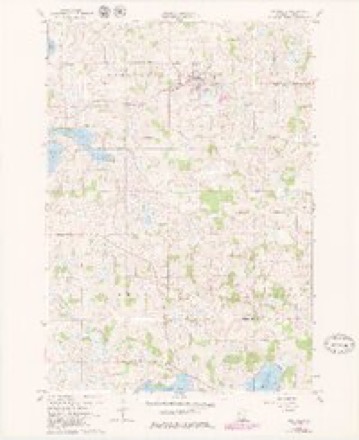
10 topographic sheets cover this place, the earliest surveyed in 1953 and the latest in 1985. It stands in Wheatland Township. It lies in ZIP code area 56069. The Survey maps it on the Lonsdale quadrangle.
Topographic sheets covering this place
6 surveys from 10 printed sheetsMatched by testing this settlement's coordinate against the published boundary of every sheet in the United States Geological Survey's historical collection. Each opens the scanned sheet at the Survey.
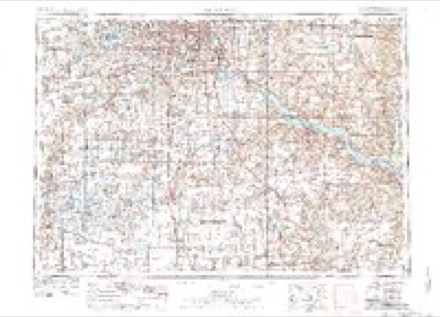
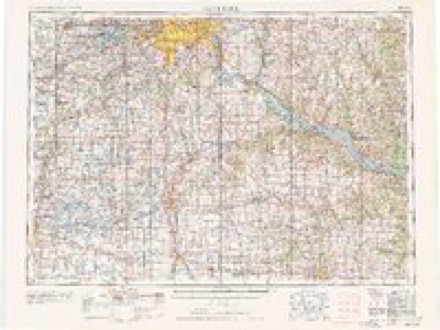
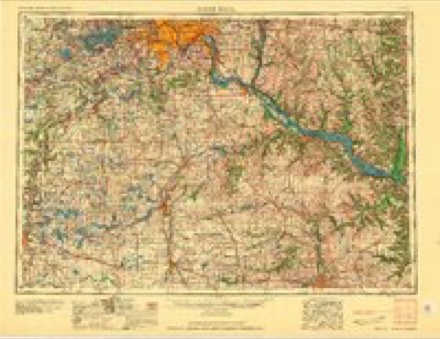
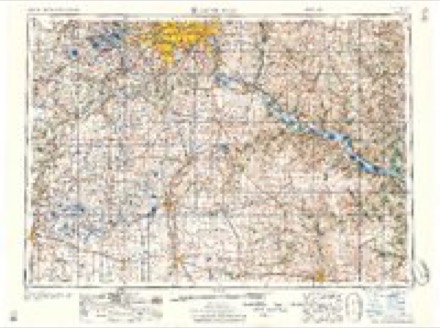
- 1953 USGS Saint Paul quadrangle1:250000, 3 printings
- 1953 USGS St. Paul quadrangle1:250000
- 1959 USGS Saint Paul quadrangle1:250000
- 1959 USGS St. Paul quadrangle1:250000
- 1960 USGS Lonsdale quadrangle1:24000, 2 printings
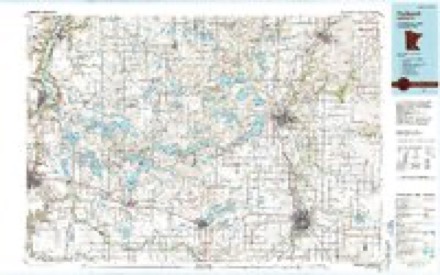
- 1985 USGS Faribault quadrangle1:100000, 2 printings
In the county-history sources
6,378 words on this townshipHistory of Rice County, published 1882 names this settlement in its chapter on Wheatland Township. These are the passages that mention it, exactly as the scans read.
This, the northwest corner townshi)) of Kice county, has Le Siieur county on the west, Scott county on the north, the town of Webster on the east, and Erin 9U the south. It has the regular thirty-six sections of a government township. As to the name, whethei' it is derived from the Wheatland which was the residence of President Buchanan, from some town further east, or from its intrinsic quality as regards the production of the leading cereal of the eounti'y, it perhaps matters little so long as it answers the two great purposes of a name, which are to characterize and also to distinguish it from all else with which it may be confounded.
Passage source: History of Rice County, published 1882.
Thomas Barrett, deceased, was born in Ireland in 1825, and in 1847, came to America, locating in Xeuia, Ohio, where he was employed on the railroad a few years, then removed to Wisconsin and engaged in farming. In 1855, he came to Eice county and took a claim on section twentythree iu this township, but did not settle here. He went to Muscatine, Iowa, and thence in a year to Iowa City, where, in 1858, he married Miss Honora Lacey. They went to Memphis, Tennessee, where Mr. Barrett worked on the railroad while his wife kept a boarding house, and from there to Madrid, in the same State, purchased a pair of mules and worked at grading, but finally returned to Memphis. He remained in that city until it was taken by the Union army during the late war, then removed to St. Louis, Missouri, where he engaged in taking rafts of lumber from the river. In 1805, he came to his farm here and began to improve it, building a log house in which he resided until 1871, when he erected the present edifice in which his family still live, having since built a granary. He died on the 20th of May, 1874, and left a family of sis children ; William, Thomas, John, Henry, Joseph, and Edward. Edmund died at three years of age and the only daughter when seven months old.
Passage source: History of Rice County, published 1882.
Petek O. Berg is a native of Norway, l)orn the 18th of September, 1842, and attended school in his native country. He was married in 1871, to Olivia Lar.sou and the same year came to America) landed at Quebec, and came directly to North field, Minnesota, thence moved to Dakota county, making his home there until 1874. On removilig to Wheatland, he jmrcliased wild land in section twenty-five and immediately began to improve it and built his ])resent house. Mr. and Mrs. Berg
Passage source: History of Rice County, published 1882.
Machine-read from a century-old scan, so expect the errors a machine makes: misspelled names, dropped words, stray characters.
Read the whole chapter on Wheatland Township - it names this place 16 more 16 times.
Nearest settlements
The eight closest, with where each one stands in the county. Distances are straight-line, computed from the Geographic Names Information System coordinates.
| Map | Place | Distance | Sheets |
|---|---|---|---|
| Lonsdale | 3.1 miles | 10 | |
| Veseli | 3.7 miles | 11 | |
| Trondjem | 4.9 miles | 10 | |
| Shieldsville | 7.9 miles | 12 | |
| Webster | 8.3 miles | 11 | |
| Millersburg | 8.4 miles | 10 | |
| Little Chicago | 8.6 miles | 10 | |
| Hazelwood | 11.2 miles | 11 |
Provenance
This settlement is recorded in the Geographic Names Information System as feature 655007. The sheet list is computed by point-in-boundary test against the United States Geological Survey's historical topographic inventory. Both are works of the United States government and carry no copyright under 17 U.S.C. 105.