Major Bibliographical References (Cite the books, articles, and other sources used in preparing this form on one or more continuation sheets.) - preliminary determination of individual listing (36 CFR Primary location of additional data 67) has been requested. XX State Historic Preservation Office - previously listed in the National Register - Other State agency - previously determined eligible by the National - Federal agency - Local government - designated a National Historic Landmark - University - recorded by Historic American Buildings Survey - Other -recorded by Historic American Engineering Record 1883 1846-1910 1846-1847 Register Bibliography ARCHITECTURE INDUSTRY Property is: Architect/Builder Criteria Considerations Applicable National Register Criteria Cultural Affiliation patterns of our history.
Name of repository: Previous documentation on file (NPS) (Complete if Criterion B is marked above) (Mark "x" in one or more boxes for the criteria qualifying NPS Form 10-900 OMB No. 1024-0018 (Rev. 10-90) United States Department of the Interior National Park Service NATIONAL REGISTER OF HISTORIC PLACES CONTINUATION SHEET Olive Furnace, Lawrence County, Ohio Olive Furnace is being nominated for its importance in the patterns of iron history in southern Ohio; Criterion B because of the importance of its original owner, John Campbell, better known as the "Father of Ironton," a mid- 19"century town founded on the Ohio River in Lawrence County, Ohio, to ship iron products; and Criterion C Campbell had Olive Furnace constructed at this site.
Olive Furnace was completed and first went into blast in Olive Furnace is historically significant under Criterion A for its role in the early development of southern Ohio top, therefore the town was called "Hanging Rock" Furnace development in the Hanging Rock Iron Region encompasses the years roughly between 1818 and 1916, Hanging Rock Iron Region, with 69 of these being in Ohio. The Hanging Rock region has an abundance of timber, and clay, which were also extremely abundant in the Hanging Rock area. time in 1846 and began operation in 1847. The iron from Olive was used by charcoal forges along the Ohio River for the production of blooms, to be used in the manufacture of boilerplates. However, in the early 1860s War gun known as the "Swamp Angel,.. which threw a 100 pound shell 5.5 miles." (Willard, The Hanging Rock (Siebert, The Mysteries of Ohio's Underground Railroads, 1951).
Local history states that Campbell kept a ports south to be used for making stoves, plows, and many other items. The first settlement in Lawrence County was the village of Burlington which was settled soon after the War of 1812. Named for the town in New Jersey from which most of the early settlers emigrated, Burlington became 1847. the Civil War, iron "pigs" were shipped up the Ohio River to Pittsburgh or down the Ohio to Cincinnati and in Hocking County, Ohio. It is roughly 100 miles long and 28 miles wide with Lawrence County, Ohio, being build the ironclad ship Monitor for the Union Navy.Hecla Furnace iron was used to build the famous Civil Business in the Hanging Rock Iron Region was at its peak in the 185os. Olive Furnace was built around this as part of the industrial Hanging Rock Iron Region.
Olive Furnace is one of the many furnaces in the Hanging the furnaces of the Hanging Rock Iron Region became active in the Civil War by producing iron for guns and limestone used in the iron making process, setting it apart from the rest of the Appalachian Plateau which Rock Iron Region of southern Ohio and northern Kentucky.The Hanging Rock Iron Region is named for a ammunition.Iron from at least one of the Lawrence County furnaces (believed to be Vesuvius) was used to small town in Lawrence County called"Hanging Rock."Located on the Ohio River four miles below Ironton, lived at Olive Furnace about five miles from Poke Patch was also an efficient worker."Siebert goes on to say: "All those runaways who followed the...road which stretched from the(Ohio) River to Olive Furnace..."were peaking in the 1850s.
The Hanging Rock region spans from Greenup County, Kentucky, to its northern point slaves. Wilbur Siebert mentions "....in railroading slaves through northward, Mr. John Mathews, colored, who large covered wagon that was used to transport slaves from furnace to furnace in their attempts to escape. After Iron Region of Ohio, Volume 1, 1916) Olive Furnace went a step further in war efforts by assisting runaway contains mostly clay and sandstone.
Limestone was a key element in the smelting of iron along with iron ore, the widest part of the region.Most sources state that there were a total of 83 furnaces in operation in the on their way to Poke Patch and other stations with the hope of eventually reaching Canada and freedom for the remaining stone portion of the iron furnace.The period of significance begins in 1846 when John the town isnestled between the river and a 4oo foot high cliff of sandstone which had a large rock resting on NPS Form 10-900 OMB No. 1024-0018 United States Department of the Interior NATIONAL REGISTER OF HISTORIC PLACES CONTINUATION SHEET Olive Furnace, Lawrence County, Ohio the first county seat when Lawrence County was organized on March 1, 1816. Lawrence County was named in also from Burlington, New Jersey. Burlington, Ohio, remained a rural community.
Ohio's two earliest furnaces were built in 1816-1818 in Adams County, Ohio, to the west of the Hanging Rock region, but these were abandoned because there was not enough iron ore nearby. The first furnace in the Hanging Rock Iron Region in Ohio was the Union Furnace in Elizabeth Township, Lawrence County, which include: Pine Grove, in blast 1828; Etna, 1832; Buckhorn, Hecla, Mount Vernon and Vesuvius, 1833; Ohio, Volume 1, 1916). Of these early furnaces, remnants remain in Lawrence County of Vesuvius (National superstructures of the furnaces have survived. Buckeye Furnace in Jackson County, Ohio, also listed in the National Register, is a reconstructed furnace (with original stack) and superstructure complete with outbuildings to demonstrate how the iron making process worked. The operation of a charcoal furnace involved many steps.
First the stone stack was filled from the top with charcoal, limestone, and iron ore. Fire was then applied to it and kept burning by forcing either hot or cold air into the stack. As the fire burned, additional layers of raw materials were dumped into the stack as the previous into various objects. Olive Furnace is notable in that it began in as a cold blast furnace but was converted into a hot blast furnace ten years later in 1856. During these changes the original stack was retained, and besides air, hence using less charcoal but still producing almost exactly the same product - cast iron. (See Figure 3 for illustration of charcoal furnace ironworks.) When land was purchased for a furnace, several sections of land around it had to become part of the package. John Peters, and the actual construction was done by Madison Cole, William Clements and J. L. Thompson.
John Peters was the owner of the Olive Foundry and Machine Shops, according to an article that appeared on the Lawrence Register web site(http://www.lawrencecountyohio.com/funcaces/index). National Park Service furnaces.Charcoal makers moved from one site to another, cutting and charring the wood which would be This was necessary so that charcoal could be made from the wood growing in these rural areas to fuel the in southern Ohio.
first built.The reason for the change to hot blast was that it was a faster process using hot air instead of cold Olive Furnace produced approximately 16 tons of iron daily.This furnace was built by John Campbell and taken by ox drawn carts for sale to the furnace.Furnaces in Lawrence County were spaced approximately five adding four feet to the top masonry and widening one tuyere arch, the main structure stayed the same as when using an iron bar to break a clay ball which stopped the iron from coming out prematurely(called"tapping the layers settled, until enough iron was melted to be cast.The molten iron was then released at the bottom by honor of Captain James Lawrence and his fame as a naval officer in the War of 1812.Captain Lawrence was Lawrence,1834;Lagrange and Centre,1836;and Olive in 1846(Willard,The Hanging Rock Iron Region of (Rev.
10-90) Section number_8 Page _4 shape of the channels resembled a row of piglets nursing a sow. The pig iron was then shipped off to be recast miles apart because each needed forested land. The finished product, pig iron, was in the early years hauled by ox carts to the Ohio River for shipping, as no railroads had yet taken on the challenge of the rugged hilly terrain went into blast in 1826 and ceased operation in 1857. Other early Lawrence County charcoal burning furnaces the ground and was cast into long blocks as it cooled. The end product was referred to as"pig iron"because the furnace"). The molten iron then flowed into a huge channel called the"sow"and then into shallow channels in NPS Form 10-900 OMB No.
1024-0016 National Park Service NATIONAL REGISTER OF HISTORIC PLACES CONTINUATION SHEET Olive Furnace, Lawrence County, Ohio Olive Furnace is being nominated under Criterion B because of its connection with John Campbell who stands out in the history of several iron furnaces in Lawrence County as well as in the founding of the City of Ironton National Register of Historic Places (contributing building in Fifth and Lawrence Streets Residential District, different methods of making iron, and instituted the use of the hot blast method at his Vesuvius Furnace as early and Greenup in Kentucky, Mt. Vernon, Gallia, Buckhorn, Madison, Howard, Keystone, Olive, Monroe, and courthouse and offices and for the public buildings of said town." (Willard, Volume 1, 1916) The county seat commercial center of the Hanging Rock region.
The terminus of the Iron Railroad, chartered in March of 1849, was easily determined with the founding of Ironton. The railroad would run from Ironton north, passing the iron furnaces in Lawrence County, to Jackson County immediately north of Lawrence County, where it would connect with the east-west Marietta and Cincinnati Railroad. The Iron Railroad was built by the charcoal furnace owners, including John Campbell, so in 1853 in the northernmost part of the county and on the railroad line. Washington Furnace produced 17 tons Township. Until that time the furnaces built and maintained their own roads. (Ironton Register, July 30, 1885) After Ironton was platted and the railroad in place, in 1851 the first bank, the Iron Bank, was opened. One of 1848 he was chosen as a delegate for the Free Soil convention held in Buffalo N.Y.
In 1851 Campbell served as a City Councilman for the new city of Ironton.In 1862 Campbell was appointed by President Lincoln to be United States Department of the Interior Washington in Ohio.Campbell also had interest in or purchased Hecla and Vesuvius Furnaces. as 1837.Campbell owned several of the iron furnaces in the Hanging Rock Iron Region in Ohio and Kentucky, manufacturing establishments and other purposes connected with the operation of the company;and said town they could ship their products more easily. After the railroad was in place, Campbell built Washington Furnace contributors to the funds for building the new courthouse was John Campbell.He is often referred to as Company organized in the 187Os that controlled his Buckhorn Furnace in Lawrence County and the Howard the first Internal Revenue Collector of the 11 Collection District of Ohio.(Willard, Volume 1, 1916).
John including Olive Furnace.Some of the other furnaces he owned or was a partner in owning were:Crane's Nest shall be called Ironton;that suitable grounds shall be appropriated in the laying off of said town for a market, John Campbell was one of the incorporating parties of the Ohio Iron and Coal Company formed in March and the founding of the Iron Railroad in southern Ohio.John Campbell's house in Ironton is listed in the daily.(Ibid)It wasn't until 1885 that the County Commissioners had a road built through Washington Furnace in Scioto County. (Rev. 10-90) One of the major "Founder of the City of Ironton." (Ibid) Ironton, being located on the Ohio River, soon became the Hanging Rock in 1834 where he became interested in the iron furnace industry. He experimented with the major stockholders was John Campbell.
Campbell was also the vice president of the Charcoal Iron Campbell had interests in politics as well.Campbell was against admitting slave states to the Union, and in lands of the company above the mouth of Storms Creek, for the purpose of encouraging the erection of 1849,and served as the first president of the organization.In the first order of business the directors of the listed 1978).Campbell was born January 14,1808,near Ripley, Ohio.He moved to the community of was thus moved to the new City of Ironton, the name being chosen by Campbell. Section number _8Page_5 NPS Form 10-900 OMB No. 1024-0018 (Rev. 10-90) United States Department of the Interior NATIONAL REGISTER OF HISTORIC PLACES CONTINUATION SHEET Olive Furnace, Lawrence County, Ohio Campbell remained in Ironton for the rest of his life.
The wealthy industrialist, however, lost a great deal of his born in 1817 in a log house in Wooster, Ohio, moved to southern Ohio with his brother Samuel to work at iron been demolished. After John Campbell's financial difficulties in the early 1880s, W.N. bought his share of Figure 3, photocopy of letter bearing name of company, 1902). McGugin kept the furnace in blast until his death in 1909 when his son, W. H., took over the operation for another year. In 1910, Olive Furnace went out of blast. The Morning Irontonian of November 19,1915, had While both W.N. and W.H. had "mansions" as iron masters of Olive Furnace, both of these houses have been front gable church across SR 93 from the furnace. The community of Olive Furnace had consisted of several worker log houses (see Figure 10 for historic photo of worker house) and a school, all demolished.
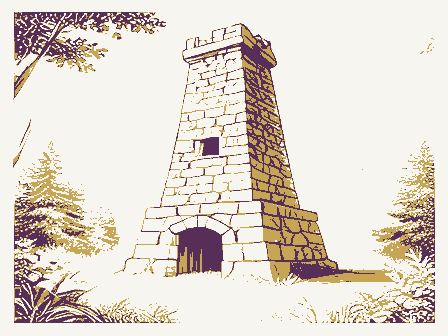
Additional historic photos (Figure 10) show a furnace crew and a cart and tunnel for digging ore. A small church still exists across SR 93 from the furnace stack, but is has numbered 1 through 9.) The remaining portion of the furnace consists of the stone stack with the lower third of its approximately 35 foot height carved out of the existing stone embankment behind it. The most unusual such an arch (Ramsey, Iron Furnace typescript, 1988) The firebrick lining of the furnace is damaged slightly at the base. However, the firebrick still lines the inside of the 35 foot high stack as seen in Photo 9looking up Photo 1 of Olive Furnace is taken from the west side of Olive Branch Creek that runs parallel to SR 93 a few visible in this photo. Along the creek and to the north were the worker houses, but they no longer exist.
The iron maker's house was across the road, a school was next to it, and the furnace had a store and post office, all of which are gone. The small church survives across SR 93, as does the Olive Furnace Cemetery located on the cemetery. contributing building.
National Park Service capitol in the stock market scares after the Civil War, and was forced to sell some of his holdings.In 1883, hilltop above the furnace.The cemetery is owned and cared for by the township and is still an operating Olive Furnace in 1883 and changed the name to The McGugin Iron and Coal Company at Olive Furnace(see became partners with Campbell in 1864 and at that time W.N.McGugin became the iron master of Olive Furnace and lived in the iron master's brick house (Figure 4) across the street from the furnace which has since overlooking the furnace.The only remnant of the community besides the furnace stack is a much altered small Olive Furnace is being nominated under Criterion C for its unique construction.(See black and white photos feet west of the photographer.The superstructure of the operating furnace would have covered most of the area Originally one of two such arches, the other is gone.Olive Furnace is the only furnace in the region that used demolished.A mobile home occupies the site of W.
N.McGugin's stately brick house across the road on a hill cabin (Figure 9),but since it is outside the period of significance and in a ruined state it is considered a non- been extensively altered.On the furnace property is the remains of a log cabin built in the 1930s as a tourist this headline:"Old Olive Furnace Sold.Will begin to be dismantled and sold for scrap iron furnaces in 1846. By 1851 the McGugins had moved to Olive Furnace to work for John Campbell. They feature of the structure is the graceful stone arch (photos 3, 6, 8) on the north side leading to the top of the stack. toward the top and the metal bar across the top placed there for safety purposes. Campbell sold Olive Furnace and its associated tracts of land to his iron master, W. N. McGugin.McGugin NPS Form 10-900 OMB No.
1024-0018 National Park Service Olive Furnace, Lawrence County, Ohio Cramer, Ann, 1989, Vesuvius Furnace Nomination Form National Register of Historic Places Sept. 13, 1989 Galbreath, Charles B., 1925, History of Ohio, Volume1, Chicago and New York; The American Historical Society, Inc.
Hardesty, 1882, Lake, 1887, Atlas of Lawrence County Ohio County Commissioners November 6, 1985 Hawkins, Amos, North Palm Beach, Florida, January 27, 2006 Telephone Interview Wayne National Forest Headquarters, Athens, Ohio Hawkins, Amos, North Palm Beach, Florida, to Mary Anne Reeves, Athens, OH, July 24, 2006 Kitchen, Judith, 1972, Buckeye Furnace Nomination Form National Register of Historic Places April 14, 1972 Knowles, Anne Kelly; 1997, Calvinists Incorporated (Welsh Immigration on Ohio's Industrial Frontier), Chicago, The University of Chicago Press Lawrence County Historical Society, 1998, A Pictorial History of Lawrence County Ohio Historical Society, Ironton Lawrence County Community Action Organization The Founder of Ironton: John Campbell, (no date pamphlet) Ramsey, Virgil and Marguerite, 1988, Iron Furnaces, Typescript Siebert, Wilbur; 1951, The Mysteries of Ohio's Underground Railroads, Columbus, Ohio, Long's College Book Co.
Stout, Wilbur; Photo Collection: Olive Furnace, Built 1847, Fuel: Charcoal, at Ohio Historical Society, Columbus, Ohio Wilhelm, H.G.H., 1982, The Origin and Distribution of Settlement Groups Ohio1850. Typescript, Dept. of Geography, Ohio University Willard, Eugene B., 1916, The Hanging Rock Iron Region of Ohio Vol. 1 Ironton, Ohio, Lewis Publishing Company Williams, D.W.
1900, A History of Jackson County Ohio The Scioto Salt Springs, Jackson County, Ohio USGS Topographical Maps, 7.5 min Quads and 15 min Quads www.oldindustry.org/OH_HTML/oh_Olive_Old.jpg http://wf2la4.webfeat.org/D765F113/orl//ohio.ohiolink.edu/mrsid/bin/viewmap.pl (Sanborn Fire insurance Maps 1867-1970 Ohio) www.ou.edu/class/arch443/185820 www.lawrencecountyohio.com/furnaces/index (Kouns, Sharon; contains transcribed newspaper articles from Ironton Register and Daily Irontonian) Bibliography Ironton, Ohio http://ironfurnace.freeservers.com/charcoal.htm/photos/pigiron www.tecsoc.org/pubs/history/2003/jun23b.htm CONTINUATION SHEET United States Department of the Interior South Webster, Ohio (not published) NATIONAL REGISTER OF HISTORIC PLACES (Rev. 10-90) Section number_9 Page_7_ NPS Form 10-900 OMB No. 1024-0016 (Rev.
10-90) NATIONAL REGISTER OF HISTORIC PLACES CONTINUATION SHEET Olive Furnace, Lawrence County, Ohio www.invent.org/hall_of_fame/183.html www.freepages.geneology.rootswe.com/~henryHowebooks/Lawrence www.tilthammer.com/bio/bess.html National Park Service United States Department of the Interior Olive Furnace, Lawrence County Ohio 10. Geographical Data Acreage of Property (Place additional UTM references on a continuation sheet) 1 17 4291433 N 358331 E (Describe the boundaries of the property on a continuation sheet.) 11.
Form Prepared By name/title organization_Reeves, Mary Anne (instructor); Buie, Lisa; Miller, Heather; Shick, Rachel; Battista, Aaron; University of Rio Grande class (taught at Hocking College, Nelsonville, OH); Ann Gramer, Wayne National Forest, Nelsonville, Ohio date April, 2006 street & number 6898 South Blackburn Road city or town _ state OH zip code - Submit the following items with the completed form: A USGS map (7.5 or 15 minute series) indicating the property's location. Representative black and white photographs of the property. (Check with the SHPO or FPO for any additional items) (Complete this item at the request of the SHPOor FPO.) Amos Hawkins 441 Westwind Drive North Palm Beach state FL _zip code 33408 properties for listing or determine eligibility for listing, to list properties, and to amend existing listings.
Response to this request is required to obtain a instructions, gathering and maintaining data, and completing and reviewing the form. Direct comments regarding this burden estimate or any aspect of 45701 740-592-1423 name Photographs Athens Maps Additional items telephone Zone Easting Northing Boundary Justification See Attached Property Owner Additional Documentation Continuation Sheets Verbal Boundary Description UTM References See continuation sheet. 6.26 acres (Explain why the boundaries were selected on a continuation A Sketch map for historic districts and properties having large acreage or numerous resources.
Paperwork Reduction Act Statement: This information is being collected for applications to the National Register of Historic Places to nominate Estimated Burden Statement: Public reporting burden for this form is estimated to average 18.1 hours per response including the time for reviewing this form to the Chief, Administrative Services Division, National Park Service, P.0. Box 37127, Washington, DC 20013-7127; and the Office of NPS Form 10-900 OMB No. 1024-0018 United States Department of the Interior National Park Service NATIONAL REGISTER OF HISTORIC PLACES CONTINUATION SHEET Olive Furnace, Lawrence County, Ohio 10.
Boundary, continued Located in the Southwest Quarter of the Southeast Quarter of Section 34, T-4N, R-18W, in Washington Township, Lawrence County, Ohio: Olive Branch Road (T-239) S 68 32'18" west, a distance of 409.44 feet into the east line of the USA (Wayne National Forest) tract, thence with the east line of the USA tract M 16 38'25" west a distance of 344.12 feet to 0630, page 823, Parcel #31-019-1200.000, Lawrence County Ohio). The boundary includes the 6.2573 acre tract associated with the Olive Furnace during most of the 20 century. Boundary Justification: distance of 432.26 feet to the Point of Beginning;said described tract containing 6.2573 Acres (Ref:Vol.
a5/8"x30"rebarw/cap;thence North1853'27East,at distanceof309.87 feet toa36"Poplar at the line of Beginning at a point on the west side of SR 93 at the southeast corner of the Collins property, the property line goes along the west line of SR 93 S 02 51'16"west for a distance of 611.60 feet, thence along the north line of the Collins tract; thence North 70 25'00"east passing through at 5/8"x 30"rebar w/cap at 417.91 feet, a total (Rev. 10-90) Section number_10 Page_9_ NPS Form 10-900 OMB No. 1024-0018 Black and White Photographs Page_10_ Olive Furnace, Lawrence County, Ohio 6. Olive Furnace L. Buie Form Preparer (M. A.
Reeves Full View of front of furnace, including side arch facing west Front Arch, Stack, and side arch facing North West Front Arch, Stack, Side Arch Facing West Stack, Front Arch, Side arch facing North West Crucible (lower portion of the furnace), front arch, underneath side arch facing west. 1/06 4/06 CONTINUATION SHEET Lawrence Co. OH National Park Service United States Department of the Interior NATIONAL REGISTER OF HISTORIC PLACES (Rev. 10-90) NPS Form 10-900 OMB No. 1024-0018 (Rev. 10-90) National Park Service NATIONAL REGISTER OF HISTORIC PLACES Black and White Photographs Page _11_ Olive Furnace, Lawrence County, Ohio L. Buie Form Preparer (M. A.
Reeves) Side Arch facing west Inside furnace looking up stack 1/06 4/06 CONTINUATION SHEET 8.Olive Furnace Crucible cut from surrounding sandstone and front arch facing northwest United States Department of the Interior Lawrence Co., OH NPS Form 10-900 OMBNo. 1024-0018 NATIONAL REGISTER OF HISTORIC PLACES CONTINUATION SHEET Additional photos and mapping Page_12 Olive Furnace, Lawrence County, Ohio Olive Furnace, Lawrence County, Ohio, Additional Photos and Mapping 1. Olive Furnace Site Plan, drawn by Heather Miller, April, 2006 Olive Furnace business envelope with illustration, dated 1902, Lawrence County Historical Society, Ironton, Ohio 4. Olive Furnace iron master's house, photo by Fred O. Leete, Ironton, Ohio between 1865 and 1887, W. Stout Collection, Ohio Historical Society, Columbus, Ohio. 6. Sanborn Fire Insurance Map, Olive Furnace, 1904 8.
Map of Charcoal Iron Furnaces in Lawrence County, Ohio, by Amos Hawkins, 2000 9. Photo of log tourist cabin remains, behind Olive Furnace, 2006, taken by form preparers 10. Historic photos of Olive Furnace, from Stout Collection, Ohio Historical Society, Columbus, Ohio, located on plaques at Buckeye Furnace, Jackson County, Ohio Worker house 11. Breaking pigs, Olive Furnace, photo by Frank C. Morrison, Wellston, Ohio, in Stout Collection, Ohio 12. John Campbell, from brochure (no date), Lawrence County Historical Society, Ironton, Ohio Historical Society, Columbus, Ohio 14.
Olive Furnace, photo taken January, 2006, by form preparers digging ore NOMINATION) Furnace workers Charcoal Iron Furnace illustration, Lawrence County Historical Society, Ironton, Ohio (REMOVED FROM National Park Service United States Department of the Interior 2.Olive Furnace and area, Site Plan, drawn by Heather Miller, April, 2006 (Rev. 10-90) Historical Society, Columbus, Ohio (photo copied from Knowles: Calvinists Incorporated, 1997 13.Olive Furnace showing both stone arches, c. late 19 c., James Lord, Columbus, in Stout Collection, Ohio NPS Form 10-900 (Rev. 10-90) United States Department of the Interior NATIONAL REGISTER OF HISTORIC PLACES Additional photos and mapping Page _13 Olive Furnace, Lawrence County, Ohio 1.
Present Day Site Plan, Olive Furnace, Lawrence County, Ohio Drawn by Heather Miller, student, University of Rio Grande, April, 2006 CONTINUATION SHEET National Park Service OMB No. 1024-0018 WAYNE NATIONAL FOREST BOUNDRY FALLING DOWN ---- NO LONGER PRESEAT FURNACE LEDGEND STADING NPS Form 10-900 OMB No. 1024-0016 (Rev. 10-90) United States Department of the Interior National Park Service CONTINUATION SHEET Additional photos and mapping Page_14_ Olive Furnace, Lawrence County, Ohio 2 Site Plan Present and Former Structures, Olive Furnace, Lawrence County, Ohio Drawn by Heather Miller, student, University of Rio Grande, April, 2006 LEDGEND IRON MASTER NATIONAL REGISTER OF HISTORIC PLACES Standing WAYNE NATIONAL FOREST BOUNDARY CAST , HOUSE ST. RT. 93 BAPTIST FURNACE NPS Form 10-900 OMB No. 1024-0018 (Rev.
10-90) United States Department of the Interior National Park Service NATIONAL REGISTER OF HISTORIC PLACES CONTINUATION SHEET Additional photos and mapping Page _15_ Olive Furnace, Lawrence County, Ohio 3. Business Envelope with Illustration Dated 1902, Olive Furnace, Lawrence County, OH From collection at Lawrence County Historical Society, Ironton, Ohio -TON. GALLIPOLIS 0 1902 OLIVE FOR NACE, Lawrence NPSForm 10-900 OMB No. 1024-0018 (Rev. 10-90) United States Department of the Interior National Park Service NATIONAL REGISTER OF HISTORIC PLACES Olive Furnace, Lawrence County, Ohio Photo by Fred O. Leete, Ironton, Ohio, taken between 1865 and 1887; Wilbur Stout Collection, Ohio Historical Society, Columbus, Ohio CONTINUATION SHEET 4. Iron master's House, Olive Furnace, Lawrence County, Ohio Additional photos and mapping Page _16 NPS Form 10-900 OMB No.
1024-0018 United States Department of the Interior National Park Service NATIONAL REGISTER OF HISTORIC PLACES CONTINUATION SHEET Additional photos and mapping Page _17 - Olive Furnace, Lawrence County, Ohio 6. Sanborn Fire Insurance Map, August, 1904. Olive Furnace, Lawrence County, Ohio. 20 Miles N.oFirenton Court Ho MS GUGIN & CO. - OLIVE FURNACE. (Rev. 10-90) NPS Form 10-900 OMB No. 1024-0018 (Rev. 10-90) NATIONAL REGISTER OF HISTORIC PLACES CONTINUATION SHEET Olive Furnace, Lawrence County, Ohio 7. Sanborn Fire Insurance Map, July 1909. Olive Furnace, Lawrence County, Ohio. National Park Service United States Department of the Interior Additional photos and mapping Page _18 AS OUVE STATION NPS Form 10-900 (Rev. 10-90) National Park Service NATIONAL REGISTER OF HISTORIC PLACES Additional photos and mapping Page_19_ Olive Furnace, Lawrence County, Ohio 8.
Map of Charcoal Iron Furnaces, by Amos Hawkins. Olive Furnace, Lawrence County, Ohio. 0 L.L 4 miles Washington Furnace Pioheer Furnace Bloom Furnace Mt. Veron Furnace Center Furnace * Waterloo Empire Furnace Oak Ridge Furhace Pine Grove Furnace &Wilgus Vesuvius Furnace Hecla Furnace, Iron Furnaces Southern Lawrence Coal Fueled Extinct Ohio Scale Standing Aid Jackson County Scioto County Gallia County CONTINUATION SHEET OMB No.1024-0018 Scioto Furnace County, Ohio Etna Furnace United States Department of the Interior Gallipolis Olive Furnace Copyright 2000 by Amos Hawkins Grant Furnace ,Jronton - Buckhorn Furnace Lawrence Furnace 650 Road Monitor Furnace LaGrange Road Map of Charcoal Coar Grove NPS Form10-900 OMB No. 1024-0018 (Rev.
10-90) United States Department of the Interior National Park Service NATIONAL REGISTER OF HISTORIC PLACES CONTINUATION SHEET Additional photos and mapping Page _20_ Olive Furnace, Lawrence County, Ohio 9. Photo of log tourist cabin remains, taken by form preparers, January, 2006, behind Olive Furnace, Lawrence County, Ohio. NPS Form 10-900 OMB No. 1024-0018 (Rev. 10-90) United States Department of the Interior National Park Service NATIONAL REGISTER OF HISTORIC PLACES Additional photos and mapping Page_21_ Olive Furnace, Lawrence County, Ohio From the Wilbur Stout Collection, Ohio Historical Society, Columbus, THE HOME OF AN OLIVE WORKMAN Home of Olive Furnace workman, copied by Wilbur Stout, 1935 Photo by Frank c. Morrow, Wellston, no date, in Stout collection 10. Three historic photos (a, b, c) of Olive Furnace, Lawrence County Ohio.
CONTINUATION SHEET Ohio, located on plaques at Buckeye Furnace, Jackson County, Ohio. NPS Form 10-900 OMB No. 1024-0018 (Rev. 10-90) United States Department of the Interior National Park Service NATIONAL REGISTER OF HISTORIC PLACES Additional photos and mapping Page _22_ Olive Furnace, Lawrence County, Ohio A TYPICAL PERNÄCE CREW Furnace workers, Stout Collection, Columbus CONTINUATION SHEET NP$ Form 10-900 OMB No. 1024-0018 (Rev. 10-90) United States Department of the Interior National Park Service NATIONAL REGISTER OF HISTORIC PLACES Olive Furnace, Lawrence County, Ohio CONTINUATION SHEET 11. Breaking pigs, Olive Furnace, photo by Frank C.
Morrison, Wellston, Ohio, in Stout Collection, Columbus, Ohio, photo appears in: Knowles, Anne Kelly,1997, Calvinists Incorporated, Chicago,University of Chicago Press Additional photos and mapping Page _23 NPS Form 10-900 United States Department of the Interior National Park Service NATIONAL REGISTER OF HISTORIC PLACES CONTINUATION SHEET Additional photos and mapping Page _24_ Olive Furnace, Lawrence County, Ohio Ironton's Foremost Citizen 1808-1891 Ohio. OMB No. 1024-0018 John Campbell 12. Photograph of John Campbell from brochure (no date) at Lawrence County Historical Society, Ironton, (Rev. 10-90) NPS Form 10-900 OMB No. 1024-0018 (Rev. 10-90) United States Department of the Interior National Park Service NATIONAL REGISTER OF HISTORIC PLACES CONTINUATION SHEET Additional photos and mapping Page _25 - Olive Furnace, Lawrence County, Ohio 13.
Photograph of Olive Furnace, by James Lord, Columbus, probably late 19th century, Olive Furnace Built in 1847 W. Stout Collection, Ohio Historical Society, Columbus, Ohio. (OHS 11259) Fuel-charcoal 200 NPS Form 10-900 OMB No. 1024-0018 (Rev. 10-90) United States Department of the Interior National Park Service NATIONAL REGISTER OF HISTORIC PLACES Olive Furnace, Lawrence County, Ohio 14. Photograph of Olive Furnace, Lawrence County, Ohio, taken January, 2006.
CONTINUATION SHEET Additional photos and mapping Page _26_ NATIONAL PARK SERVICE EVALUATION/RETURN SHEET NAME : DATE OF 16TH DAY: DATE OF 45TH DAY: REQUEST: N SLR DRAFT: N ABSTRACT/SUMMARY COMMENTS : If a nomination is returned to the nominating authority, the DATE RETURN 3/19/07 4/03/07 2/28/07 MULTIPLE TELEPHONE DISCIPLINE 4/13/07 PDIL: REJECT REVIEWER RECOM./CRITERIA NATIONAL: OTHER: PERIOD: SAMPLE: PROGRAM UNAPPROVED: DATE OF PENDING LIST: DATE RECEIVED: NATIONAL REGISTER OF HISTORIC PLACES DATE OF WEEKLY LIST: UNITED STATES DEPARTMENT OF THE INTERIOR REASONS FOR REVIEW: DOCUMENTATION see attached comments Y/N see attached SLR Y/N LESS THAN 5O YEARS: /ACCEPT APPEAL: N LANDSCAPE: N COMMENT WAIVER: N STATE & COUNTY: OHIO, Lawrence DATA PROBLEM:N 4.12.07DATE PROPERTY OLUNER OUIVE PURNACE OLIVE FURNACE LARWENGE CO, OHI L.
BUIE PROPERTY OWNER FRONT ARCH, STACK, SIDE ARCH FACING NORTH WEST OLIVE FURNACE LAWRENCE. CO., OH L. BUIE 1/ 106 FRONT ARCH, STACK, SIDEARCH FACING WEST PROPERTY OWNER OLIVE FURNACE FRONT ARCH, STACK, SIDE ARCH, NCCTH WEST LAWRENCE COLOH PROPERTY OWNER OLIVE FURNACE STACK, FRONT ARCH, SIDE ARCH, FACINO NOZTH WEST OLIVE FURNACE L. BUIE PROPERTY OWNER SIDE ARCH FACING WEST OLIVE FURNACE LARWENCE CO., OH PROPERTY, QUNER PROPERTY OLUNER: SIDE ARCH FACING WEST OLIVE FURNACE LAWRENCE co.,OH 1/ 106 PROPERTY OWNER 7.S MINUTE SERIES (TOPOGRAPHIC) SR.93 at UNITED STATES SOUTH WEBSTER QUADRANGLE DEPARTMENT OF THE INTERIOR SOUTH WEBSTER, OHIO Furnace N3845W8237.5/7.5 Olive 4291433 N MODIFIED FOR USDA FOREST SERVICE 358331E
 Block
Block