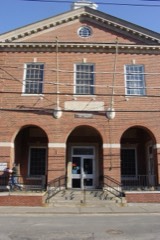
Built in 1847 in the Greek Revival architecture. Listed on the National Register of Historic Places in
1972. A historic map-sheet match is not published yet. The record needs a coordinate-quality review before it can be joined to a sheet boundary.
From the record
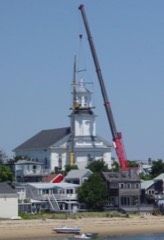
“The Unitarian Universalist Meeting House of Provincetown is an historic church at 236 Commercial Street in Provincetown, Massachusetts. The Greek Revival building was built in 1847 based on a design by Benjamin Hallett, for a congregation that had been established in 1829.”
Wikipedia article First Universalist Church (Provincetown, Massachusetts), CC BY-SA 4.0.
one of 145 National Register listings in Barnstable County · listed in 1972 · category: Building · built in 1847, Greek Revival architecture.
National Register reference number.72000122- the number the National Park Service assigned this property when it was listed, and the key its nomination file is catalogued under at the National Archives.
Regional context, not property-specific
evidence. The
federal wildfire occurrence database
lists 23 fires within 5 miles of First Universalist Chruch between
1992 and 2020, burning about 12 acres in total. None started naturally. 1 was recorded as arson.
Distance is straight-line from the map coordinates, so a fire counted
here may appear on a neighbouring settlement's page as well.
Reported cause
Fires
Missing data/not specified/undetermined
11
Recreation and ceremony
4
Smoking
4
Arson/incendiarism
1
Debris and open burning
1
Misuse of fire by a minor
1
Fireworks
1
The most recent of
them, most recent first, with the day each was reported and the service
that recorded it.
Regional context, not property-specific
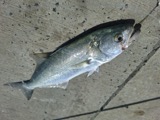
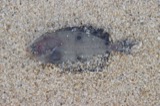
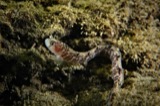
evidence. Museums hold 3,830 specimens
collected within 10 miles of First Universalist Chruch between 1827 and
1975: 3,517 Animalia, 128 Plantae, 99 Unrecorded, 59 Chromista, 27 Fungi. 12 distinct Species records are shown.
Collected by A. K. Harrison, A. K. Harrison, G.C.H., A. M. Ottley and others. Each is a
physical object with a catalogue
number, and each entry opens the museum's record. This is what was
collected and kept, not a survey of what lives here - nothing can be
concluded from a species being absent.
Regional context, not property-specific
evidence. The National Weather Service names
Provincetown, the town this property stands in, in 8 storm reports between 1996 and 2020: 4 thunderstorm wind, 3 flood, 1 lightning.
No death or injury is recorded in these reports. Each account below is quoted exactly as the forecast office
filed it, from the NOAA Storm Events Database, and each date
opens the federal record of that event.
At 4:05 PM EST, the basement flooded at the Provincetown Fire Department. Water rose almost to the electrical panel. The flooding was aggravated by a failed water pump.
At 4:50 PM EST, Bradford Street in Provincetown was flooded near the old High School. Flooding was able to remove a crosswalk sign and have it float down the road.
No historic map-sheet match is published
for this property yet. That does not mean no map exists. This record needs
a coordinate-quality review before it can be joined to a sheet boundary.
Browse the county's mapped places while that work is
pending.
From the nomination file
2,254 words on record
When this property was proposed for the
National Register, someone wrote the case for it: what the building is,
and why it matters. That document is a federal record in the public domain.
It is quoted below word for word, never summarised. The text was read off the scanned case file by machine, so the
occasional stray character is the recogniser's and the 1970s
typewriter's.
Description of the property
In the spring of 1847, the First Universalist Church of Provincetown decided to build a new church in order to provide space for its growing congre- gation. The church, set slightly back from Commercial Street, is now crowded on all sides by late nineteenth and twentieth century buildings. The exterior of the structure is walled with white clapboards and decorated with classical elements. The gable façade is divided into three bays by means of four giant pilasters decorated with recessed panels. These pilasters support a simple banded entablature and blank pediment. The entablature continues along the side elevations where it is supported by corner pilasters. The central bay of the gable end contains a doorway flanked by smaller pilasters and headed by a shelf entablature.
The fenestration in each flanking bay is composed of four sash windows placed 2 over 2. These are incorporated into a single large unit by a common lintel and sill. The unit is divided vertically by a mullion and horizontally by 2 panels with a meander motif. Three similar window units break each side elevation. The three stage steeple, which rises from the roof of the auditorium, has been for many years incorrectly identified with the style of Sir Christopher Wren. However, the proportions, massing and handling of classical detail are pure Greek Revival, of which style the steeple is an excellent example. The most significant feature of the church is the trompe f'oeil treatment of the auditorium. The wallpainting in egg tempera is the work of Carl Wendte, a young German artist.
Wendte had traveled and studied in Italy which accounts for the Italianate flavor of the murals. The focal point of the auditorium is the illusionary apse behind the pulpit.
The First Universalist Church is the second home of the Unitarian parish founded in Provincetown in 1829. The church was begun in 1847 and, according to local sources, is the oldest building on the Lower Cape still in its original state and being used for its original purpose. The most significant features of thed che ehhrie its eraborene three-stand toe ero oite ( oeil pa intiogsectich called the "Christopher Wren Tower, decorate its ceilings and walls. The Universalist Church was built by ship's carpenters under the supervision of Benjamin Hallet of Barnstable. The immediate model for the building, with the exception of the tower, was a small church constructed in Fall River, Massachusetts, in 1845.
Only the entrance and auditorium of the Provincetown Church were finished in 1847; the remaining sections of the building were not completed until the 1860s. The trompe d'oeil paintings of the auditorium are the work of a young German artist, Carl Wendte. Born in Verden, Hannover, in 1820, Wendte studied art in Siena, Italy, and became expert in the use of fresco and tempera. In 1841, Wendte and his wife came to America and settled in Boston. The painter's reputation gradually grew and his murals appeared in a number of New England churches. Wendte's work in the Universalist Church was done in egg tempera and shows the influence of his study of Italian churches.
Atter leaving Provincetown, Wendte accepted a commission for a church in Boston; while working there he was stricken with pneumonia and died in 1848, at the age of 28. The tracher organ, which was installed in the First Universalist Church in 1850, is the oldest on Cape Cod. Its carved wooden pilasters framing the organ pipes are copies of the pilasters which appear in Wendte's murals.
Quoted from the National Register nomination
for reference 72000122, 13 pages, held by the National Archives in Record
Group 79. See the
catalogue record.
Listed places nearby
6 within 8 miles
Other National Register properties close
enough to walk or drive between, ordered by distance from this one. Both
positions come from the same geocoding pass that matched these properties
to their map sheets.
Listing record. National Park Service National Register of Historic Places, listed-properties dataset, current to 2026-05-22.
Map join. Address geocoded through the United States Census geocoder, then tested against the published boundary of every sheet in the USGS Historical Topographic Map Collection.
How this page is made. Listing fields come from federal records; map-sheet coverage is a labelled coordinate-to-boundary calculation, not a source-field claim.
Wildfire. Short, Karen C. 2022. Spatial wildfire occurrence data for the United States, 1992-2020 [FPA_FOD_20221014]. 6th Edition. Fort Collins, CO: Forest Service Research Data Archive. https://doi.org/10.2737/RDS-2013-0009.6 Collected with United States Government funding and usable without additional permissions or fees.
Specimens. Global Biodiversity Information Facility (GBIF), https://www.gbif.org/. Only records licensed CC0 or CC BY are used. Records licensed CC BY-NC are excluded because this site carries advertising. Images are checked individually and any whose licence is non-commercial, no-derivatives or unreadable is refused.
Storms. NOAA National Centers for Environmental Information, Storm Events Database https://www.ncei.noaa.gov/stormevents/ A work of the United States government, no copyright under 17 U.S.C. 105. Narratives are quoted verbatim from the National Weather Service report and are not edited or summarised.
 Block
Block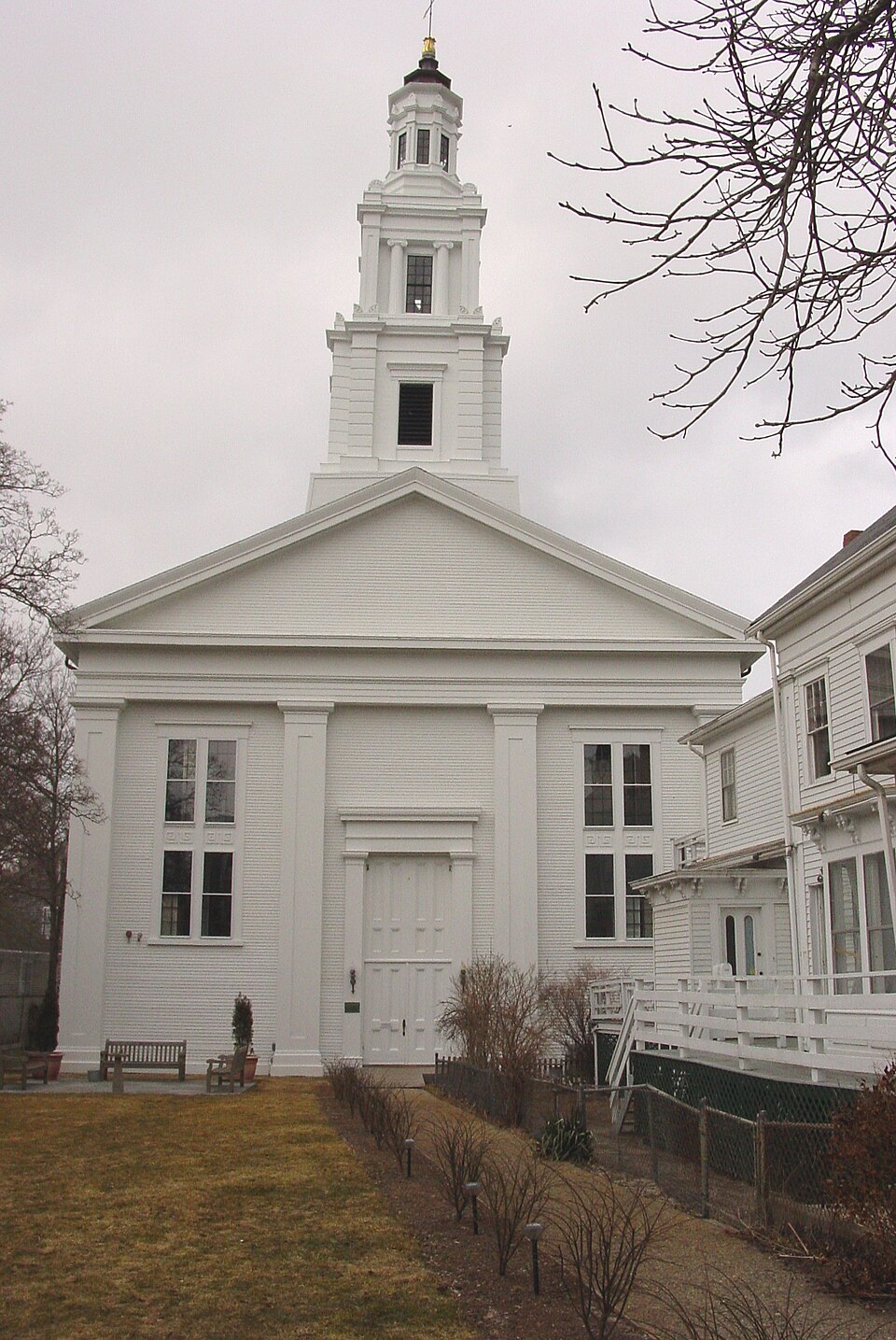


_native_range.jpg)