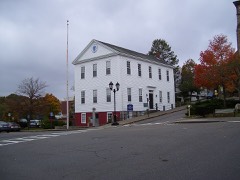
Built in 1824 in the Greek Revival architecture. Listed on the National Register of Historic Places in
1972. A historic map-sheet match is not published yet. The record needs a coordinate-quality review before it can be joined to a sheet boundary.
From the record
“The Pilgrim Hall Museum at 75 Court Street in Plymouth, Massachusetts is the oldest public museum in the United States in continuous operation, having opened in 1824.”
Wikipedia article Pilgrim Hall Museum, CC BY-SA 4.0.
one of 93 National Register listings in Plymouth County · listed in 1972 · category: Building · built in 1824, Greek Revival architecture, by Alexander Parris · one of 1 National Historic Landmarks in Plymouth County.
National Register reference number.72001298- the number the National Park Service assigned this property when it was listed, and the key its nomination file is catalogued under at the National Archives.
In preparing the work the records of the town of Bridgewater, and of its several parishes and churches, have been the first and principal sources, whence the materials have been derived. The old Colony and Plymouth county records have furnished also valuable information. Judge Davis' improved edition of Morton's, New England Memorial, Farmer's Register, the Collections of the Mass. Hist. Society, and various local histories have also been advantageously consulted. But so many and so various have been the sources, both public and private, from which information and facts have been obtained, that it would be difficult, if recollected, to enumerate them. The loss of all the early records of Duxbury previous to 1G54, which are said to have been burnt, is greatly to be regretted, as it was the parent town of Bridgewater, the first home and residence in this country of most of our fathers and original settlers in this then Plantation. It may well be supposed those records would have furnished us with much valuable information. The Colony records of births and deaths previous to 1CI7 are also lost, some of the first leaves by time or accident having been destroyed, which to the antiquarian is a deprivation much to be deplored.
Bridgewater was originally a plantation granted to Duxbury. When the township of Marshfield became a separate and distinct corporation, Duxbury, from which Marshfield had been principally taken, applied to the Old Colony court, at Plymouth, for a grant of common land, or, as they expressed it, " an extension to the westward," as a compensation for the great loss of territory they had thus sustained. We find in the records the following order of court relating to it : -
Regional context, not property-specific
evidence. The
federal wildfire occurrence database
lists 319 fires within 5 miles of Pilgrim Hall between
2006 and 2020, burning about 99 acres in total. 3 started naturally. 4 were recorded as arson.
Distance is straight-line from the map coordinates, so a fire counted
here may appear on a neighbouring settlement's page as well.
Reported cause
Fires
Debris and open burning
212
Missing data/not specified/undetermined
59
Misuse of fire by a minor
29
Recreation and ceremony
5
Arson/incendiarism
4
Natural
3
Smoking
3
Equipment and vehicle use
2
Fireworks
1
Power generation/transmission/distribution
1
The most recent of
them, most recent first, with the day each was reported and the service
that recorded it.
Regional context, not property-specific
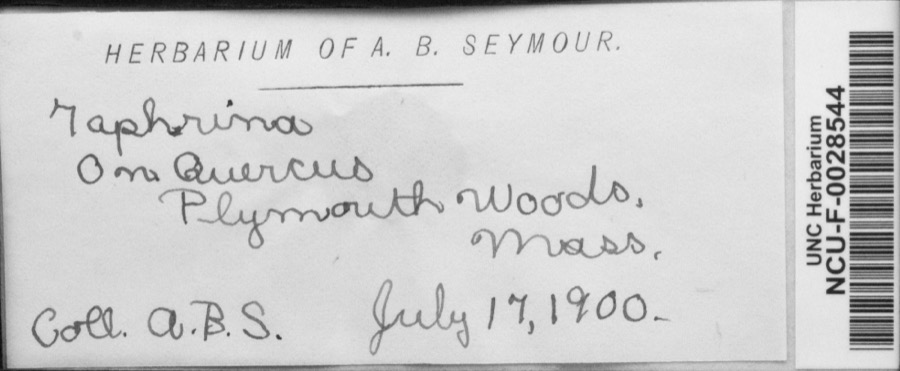
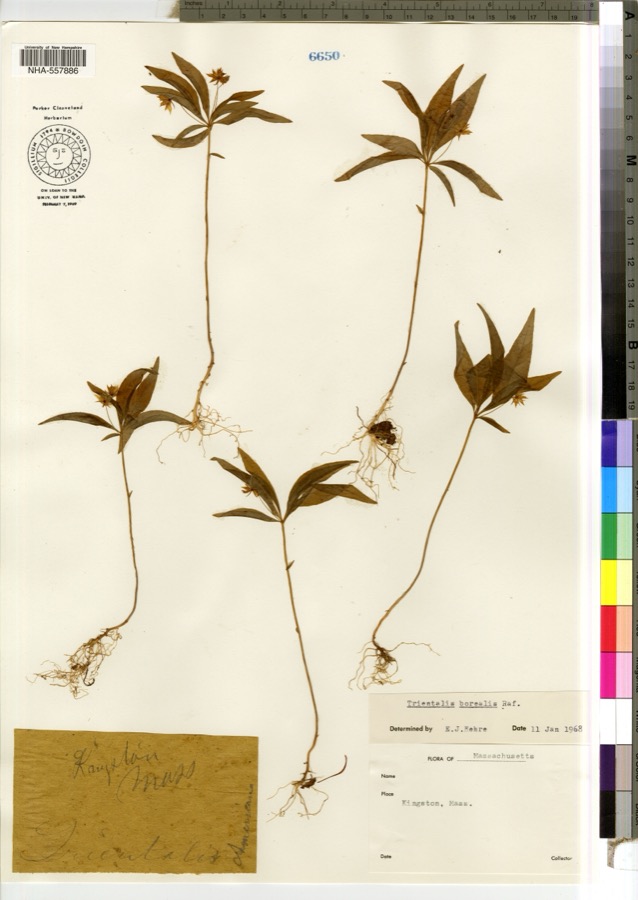
evidence. Museums hold 2,430 specimens
collected within 10 miles of Pilgrim Hall between 1816 and
1975: 1,767 Animalia, 404 Plantae, 180 Fungi, 59 Chromista, 14 Protozoa, 6 Unrecorded. 12 distinct Species records are shown.
Collected by -- Russell, A., A. C. Mathieson and others. Each is a
physical object with a catalogue
number, and each entry opens the museum's record. This is what was
collected and kept, not a survey of what lives here - nothing can be
concluded from a species being absent.
Regional context, not property-specific
evidence. The federal mineral resources record lists
4 workings within 5 miles of Pilgrim Hall: 2 past producers, 2 producers.
2 still produce. What was taken out: Sand and Gravel, Construction. Distance is straight-line from the
map coordinates, so a quarry counted here may appear on a neighbouring
settlement's page as well.
Regional context, not property-specific
evidence. The National Weather Service names
Plymouth, the town this property stands in, in 43 storm reports between 1997 and 2023: 13 hail, 10 thunderstorm wind, 7 heavy rain, 4 flood.
The reports record 1 death. Each account below is quoted exactly as the forecast office
filed it, from the NOAA Storm Events Database, and each date
opens the federal record of that event.
Police reported a road flooded, with water half-way up the doors of a car. Street unspecified. Report relayed by amateur radio. The public reported 2.07 of rain with this localized storm.
No historic map-sheet match is published
for this property yet. That does not mean no map exists. This record needs
a coordinate-quality review before it can be joined to a sheet boundary.
Browse the county's mapped places while that work is
pending.
From the nomination file
1,913 words on record
When this property was proposed for the
National Register, someone wrote the case for it: what the building is,
and why it matters. That document is a federal record in the public domain.
It is quoted below word for word, never summarised. The text was read off the scanned case file by machine, so the
occasional stray character is the recogniser's and the 1970s
typewriter's.
Description of the property
Moved - Unexposed (Check One) X Origiral Site Pilgrim Hall was built in 1824-5 from the designs of Alexander Parris. This two-story rectangular structure is built in the form of a Greek temple. The original wooden portico with Doric columns has been replaced by a modified Tuscan hexastyle portico of dressed granite. The smooth surface provided by this material, which is also used to face the main facade, contrasts with the rough granite ashlar of the side and rear facades. The only ornamental features found on the building interrupt these smooth wall surfaces. Giant Tuscan pilasters decorate each end of the main facade. Above the entrance, which is centered on the wall, is set a square two-stage, recessed panel. A fanlight decorates the pediment.
In 1904, a flat-roofed library wing, the same height as the eave line of the main building, was added to the northwest side of the Hall. Although the basic construction material is rough granite ashlar, a facing of dressed granite blocks, set in from the corners and roof line, forms a panel covering most of the main wall, which is broken by three large windows. Above these openings a succession of slightly projecting courses topped by a band of three recessed panels suggests an entablature, cornice and parapet. 12 / RECENED JAN 5 1972 NATIONAL REGISTER 91g114 INST CONTINUATION SHEET: Pilgrim Hall, Plymouth, Massachusetts 6. Representation in Existing Surveys 2. Statewide Preservation Plan, First Edition, 1970.
Massachusetts Historical Commission Office of the Secretary, State House Boston, Massachusetts 025 110 61T18 RECÊIVED TIi2I13 1972 JAN 5 NATIONAL REGISTER 19119 SNOILOALSNE
Statement of significance
Pilgrim Hall Museum, whose cornerstone was laid on September 1, 1824, is recognized by the American Association of Museums as the first public museum in this country. Under the direction of the Pilgrim Society of Plymouth, it has been the major institution for the interpretation and preservation of Pilgrim history and artifacts. The Museum features distinguished collections of the fine and decorative arts, anthropological collections and an outstanding research hibrary. The architect of Pilgrim Hall was Alexander Parris of Boston, who also drew the plans for Boston's St. Paul's Church and the Quincy Market. Following the Greek Revival style then popular, Parris designed Pilgrim Hall as a Greek Temple.
Although Parris' wooden portico with Doric columns has now been replaced by a Tuscan portico in granite, the major portion of the original building remains intact. Since its construction, Pilgrim Hall has been the site of Plymouth's celebration each December of Forefather's Day. Begun shortly before the Revo- lutionary War, the annual observance commemorates the original landing of the Pilgrims at Plymouth in 1620. Forefather's Day orations, extolling the virtues of the Pilgrim settlers, have been delivered by many famous Americans, among them Edward Everett, Lyman Beecher, Mark Hopkins, Senator Charles Sumner and Senator Henry Cabot Lodge. TOTIULILE RECÊIVED JAN 5 972 NATIONA REGISI sTe.
Quoted from the National Register nomination
for reference 72001298, 11 pages, held by the National Archives in Record
Group 79. See the
catalogue record.
Listed places nearby
6 within 8 miles
Other National Register properties close
enough to walk or drive between, ordered by distance from this one. Both
positions come from the same geocoding pass that matched these properties
to their map sheets.
Listing record. National Park Service National Register of Historic Places, listed-properties dataset, current to 2026-05-22.
Map join. Address geocoded through the United States Census geocoder, then tested against the published boundary of every sheet in the USGS Historical Topographic Map Collection.
How this page is made. Listing fields come from federal records; map-sheet coverage is a labelled coordinate-to-boundary calculation, not a source-field claim.
Wildfire. Short, Karen C. 2022. Spatial wildfire occurrence data for the United States, 1992-2020 [FPA_FOD_20221014]. 6th Edition. Fort Collins, CO: Forest Service Research Data Archive. https://doi.org/10.2737/RDS-2013-0009.6 Collected with United States Government funding and usable without additional permissions or fees.
Specimens. Global Biodiversity Information Facility (GBIF), https://www.gbif.org/. Only records licensed CC0 or CC BY are used. Records licensed CC BY-NC are excluded because this site carries advertising. Images are checked individually and any whose licence is non-commercial, no-derivatives or unreadable is refused.
Mines and quarries. USGS Mineral Resources Data System (MRDS) https://mrdata.usgs.gov/mrds/ A work of the United States government, no copyright under 17 U.S.C. 105.
Storms. NOAA National Centers for Environmental Information, Storm Events Database https://www.ncei.noaa.gov/stormevents/ A work of the United States government, no copyright under 17 U.S.C. 105. Narratives are quoted verbatim from the National Weather Service report and are not edited or summarised.
 Block
Block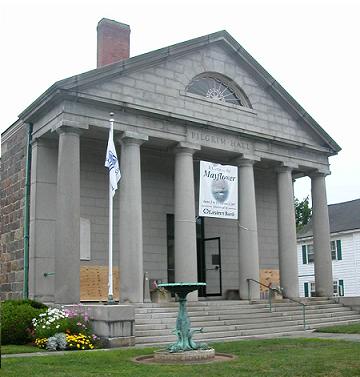




,_quintonil.jpg)