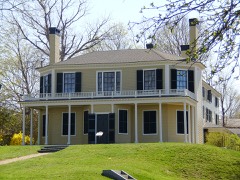
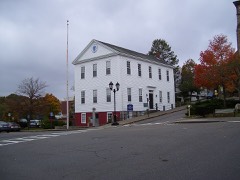
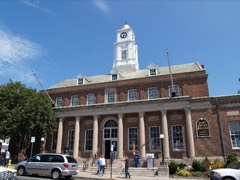
Photograph by Historical Perspective, Public domain. Via
Wikimedia Commons.
Bartlett-Russell-Hedge House
Built in 1803 in the Federal architecture. Listed on the National Register of Historic Places in
1976. A historic map-sheet match is not published yet. The record needs a coordinate-quality review before it can be joined to a sheet boundary.
From the record
“The Bartlett-Russell-Hedge House is a historic house in Plymouth, Massachusetts. Built in 1803, it is a fine local example of Federal architecture.”
Wikipedia article Bartlett-Russell-Hedge House, CC BY-SA 4.0.
one of 93 National Register listings in Plymouth County · listed in 1976 · category: Building · built in 1803, Federal architecture · one of 1 National Historic Landmarks in Plymouth County.
National Register reference number.76001614- the number the National Park Service assigned this property when it was listed, and the key its nomination file is catalogued under at the National Archives.
In preparing the work the records of the town of Bridgewater, and of its several parishes and churches, have been the first and principal sources, whence the materials have been derived. The old Colony and Plymouth county records have furnished also valuable information. Judge Davis' improved edition of Morton's, New England Memorial, Farmer's Register, the Collections of the Mass. Hist. Society, and various local histories have also been advantageously consulted. But so many and so various have been the sources, both public and private, from which information and facts have been obtained, that it would be difficult, if recollected, to enumerate them. The loss of all the early records of Duxbury previous to 1G54, which are said to have been burnt, is greatly to be regretted, as it was the parent town of Bridgewater, the first home and residence in this country of most of our fathers and original settlers in this then Plantation. It may well be supposed those records would have furnished us with much valuable information. The Colony records of births and deaths previous to 1CI7 are also lost, some of the first leaves by time or accident having been destroyed, which to the antiquarian is a deprivation much to be deplored.
Bridgewater was originally a plantation granted to Duxbury. When the township of Marshfield became a separate and distinct corporation, Duxbury, from which Marshfield had been principally taken, applied to the Old Colony court, at Plymouth, for a grant of common land, or, as they expressed it, " an extension to the westward," as a compensation for the great loss of territory they had thus sustained. We find in the records the following order of court relating to it : -
Regional context, not property-specific
evidence. The
federal wildfire occurrence database
lists 313 fires within 5 miles of Bartlett-Russell-Hedge House between
2006 and 2020, burning about 96 acres in total. 3 started naturally. 4 were recorded as arson.
Distance is straight-line from the map coordinates, so a fire counted
here may appear on a neighbouring settlement's page as well.
Reported cause
Fires
Debris and open burning
209
Missing data/not specified/undetermined
58
Misuse of fire by a minor
28
Recreation and ceremony
5
Arson/incendiarism
4
Natural
3
Smoking
3
Fireworks
1
Power generation/transmission/distribution
1
Equipment and vehicle use
1
The most recent of
them, most recent first, with the day each was reported and the service
that recorded it.
Regional context, not property-specific
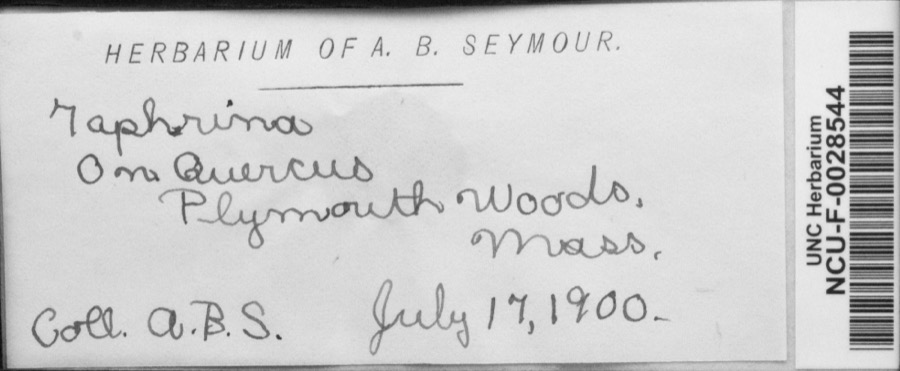
evidence. Museums hold 2,433 specimens
collected within 10 miles of Bartlett-Russell-Hedge House between 1816 and
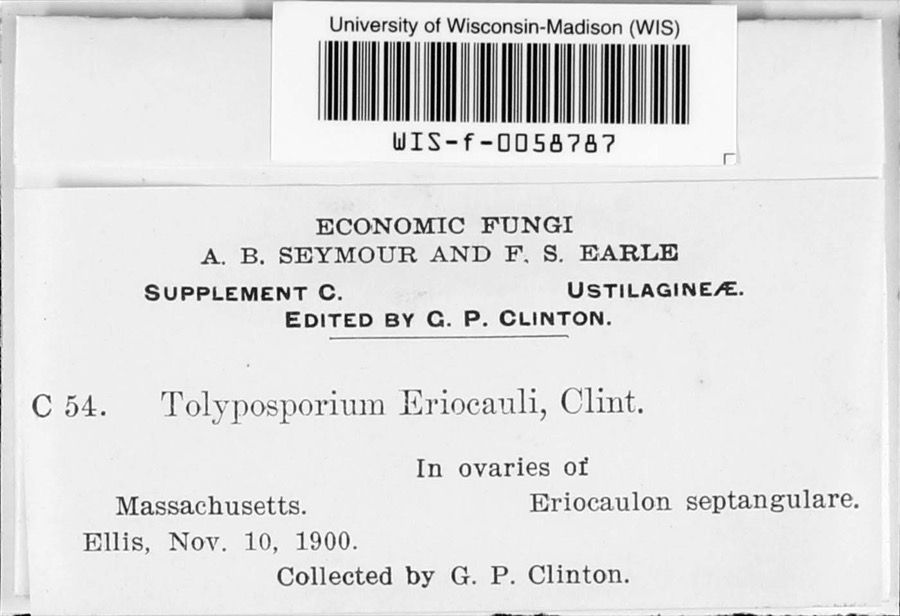
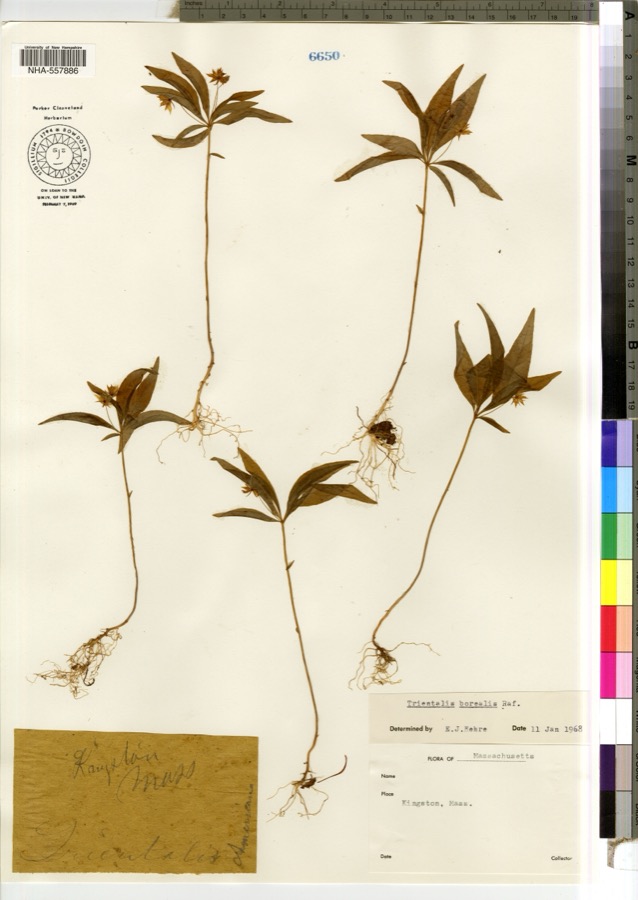
1975: 1,767 Animalia, 402 Plantae, 186 Fungi, 59 Chromista, 14 Protozoa, 5 Unrecorded. 12 distinct Species records are shown.
Collected by -- Russell, A., A. C. Mathieson and others. Each is a
physical object with a catalogue
number, and each entry opens the museum's record. This is what was
collected and kept, not a survey of what lives here - nothing can be
concluded from a species being absent.
Regional context, not property-specific
evidence. The federal mineral resources record lists
4 workings within 5 miles of Bartlett-Russell-Hedge House: 2 past producers, 2 producers.
2 still produce. What was taken out: Sand and Gravel, Construction. Distance is straight-line from the
map coordinates, so a quarry counted here may appear on a neighbouring
settlement's page as well.
Regional context, not property-specific
evidence. The National Weather Service names
Plymouth, the town this property stands in, in 43 storm reports between 1997 and 2023: 13 hail, 10 thunderstorm wind, 7 heavy rain, 4 flood.
The reports record 1 death. Each account below is quoted exactly as the forecast office
filed it, from the NOAA Storm Events Database, and each date
opens the federal record of that event.
Police reported a road flooded, with water half-way up the doors of a car. Street unspecified. Report relayed by amateur radio. The public reported 2.07 of rain with this localized storm.
No historic map-sheet match is published
for this property yet. That does not mean no map exists. This record needs
a coordinate-quality review before it can be joined to a sheet boundary.
Browse the county's mapped places while that work is
pending.
From the nomination file
2,743 words on record
When this property was proposed for the
National Register, someone wrote the case for it: what the building is,
and why it matters. That document is a federal record in the public domain.
It is quoted below word for word, never summarised. The text was read off the scanned case file by machine, so the
occasional stray character is the recogniser's and the 1970s
typewriter's.
Description of the property
The Bartlett-Russell-Hedge House was built c. 1803 on what was then the north corner of Court Square, now the corner of Court Street and North Russell. Court Street is one of Plymouth's major commercial areas, and the Bartlett-Russel1-Hedge House is surrounded by low commercial buildings from the later nineteenth and twentieth centuries. The Ply- mouth County buildings, including the Court House and the Registry of Deeds are located south of the house, on North Russel1 Street. The main block of the three-story hip roofed Federal house looks today essentially as it did when it was built; however, the kitchen ell to the southwest was altered and a low one-story structure added to the northwest when the house was bought by the Plymouth Federal Savings and Ioan Association in 1951.
At the same time, the front portico, which had been altered in the 1840's to a tetrastyle Doric porch with granite steps leading straight to the street, was reconstructed to its original appearance. The evidence for the reconstruction came from William T. Davis' account, "Memories of an Octogenarian", written in 1906, and from the discovery of a portion of the original cloverleaf column found in the back yard. Davis, in his account, noted that "The beautiful old porch of the house in question, rounded in shape and supported by clover leaf columns, harmonizing with the windows beneath and above it was replaced by the present one about 1840." The painted brick house is five bays wide and three deep.
The shuttered windows on the first and second floors have 6/6 sash and splayed lintels; the windows on the third floor also have splayed lintels, but in keeping with Federal period proportions, have 6/3 sash.
/ARCHITECT c. 1803 STATEMENT OF SIGNIFICANCE The occupants of the Bartlett-Russe11-Hedge House have played a significant role in the development of Plymouth, both economically and socially, and the building, a classic example of the Federal style, has great architectural merit. It is also significant as an excellent example of thoughtful and practical reuse of an originally residential structure to commercial use. Captain Joseph Bartlett, a Plymouth shipowner and merchant, bought a lot on the north cor- ner of Court Square in 1803, and built the present structure shortly thereafter. He lived in the house until 1820, when, because of financial reversals caused by the War of 1812 and the embargoes, he moved back to his former home on the south corner of Court Square.
His son William, who had been living in the "old" house since his marriage in 1814, changed places with his father and moved into the brick house. William turned the house into an Inn, called the Old Colony Hotel, and managed it for a couple of years. His son John was born in 1820, and spent the first few years of his life in the Bartlett- Russe11-Hedge House. .John, Later moved to Cambridge where he worked and then owned the University Book Store. He became very well known for his ability to identify and locate books and quotations, and eventually published Bartlett's Familiar Quotations. William Spooner and then Ezra Cushing succeeded William Bartlett in running the house as an inn, but in 1827 the house was bought by Nathaniel Russell, who again used the house as a residence.
Russel1 was extensively engaged in the iron manufacturing business in collaboration with William T. Davis and Barnabas Hedge, and after 1837, headed his own business.
Quoted from the National Register nomination
for reference 76001614, 13 pages, held by the National Archives in Record
Group 79. See the
catalogue record.
Listed places nearby
6 within 8 miles
Other National Register properties close
enough to walk or drive between, ordered by distance from this one. Both
positions come from the same geocoding pass that matched these properties
to their map sheets.
Listing record. National Park Service National Register of Historic Places, listed-properties dataset, current to 2026-05-22.
Map join. Address geocoded through the United States Census geocoder, then tested against the published boundary of every sheet in the USGS Historical Topographic Map Collection.
How this page is made. Listing fields come from federal records; map-sheet coverage is a labelled coordinate-to-boundary calculation, not a source-field claim.
Wildfire. Short, Karen C. 2022. Spatial wildfire occurrence data for the United States, 1992-2020 [FPA_FOD_20221014]. 6th Edition. Fort Collins, CO: Forest Service Research Data Archive. https://doi.org/10.2737/RDS-2013-0009.6 Collected with United States Government funding and usable without additional permissions or fees.
Specimens. Global Biodiversity Information Facility (GBIF), https://www.gbif.org/. Only records licensed CC0 or CC BY are used. Records licensed CC BY-NC are excluded because this site carries advertising. Images are checked individually and any whose licence is non-commercial, no-derivatives or unreadable is refused.
Mines and quarries. USGS Mineral Resources Data System (MRDS) https://mrdata.usgs.gov/mrds/ A work of the United States government, no copyright under 17 U.S.C. 105.
Storms. NOAA National Centers for Environmental Information, Storm Events Database https://www.ncei.noaa.gov/stormevents/ A work of the United States government, no copyright under 17 U.S.C. 105. Narratives are quoted verbatim from the National Weather Service report and are not edited or summarised.
 Block
Block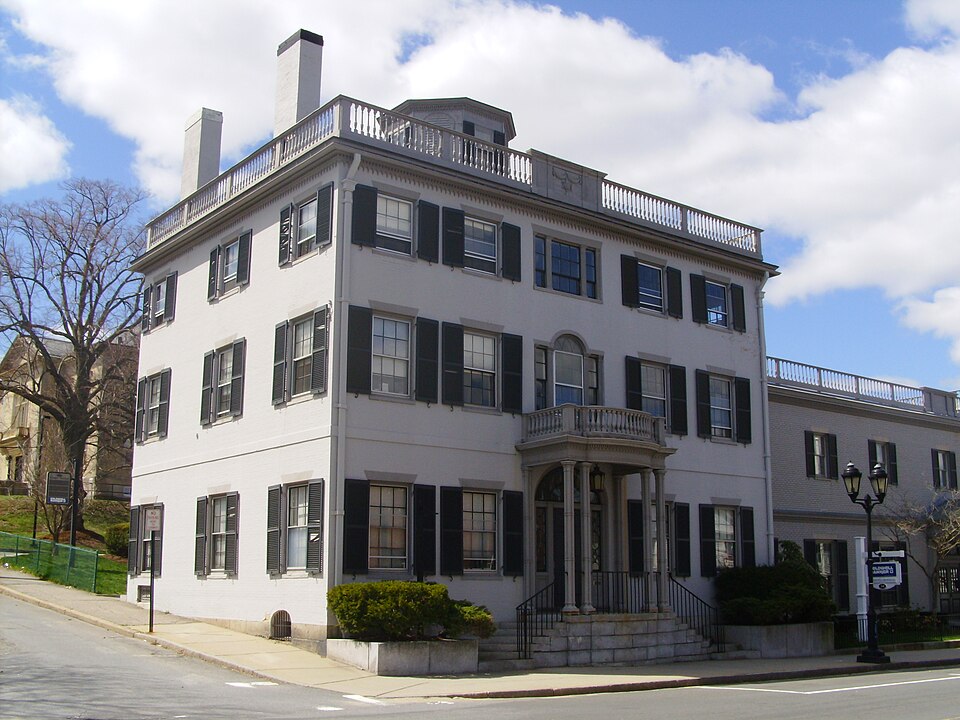


,_quintonil.jpg)