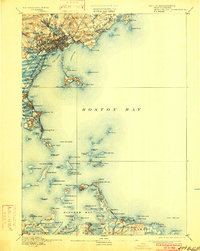
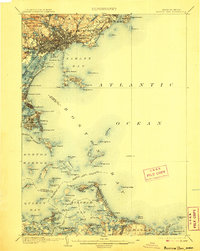
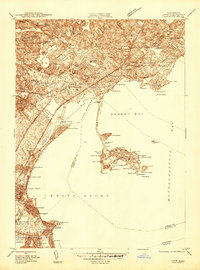
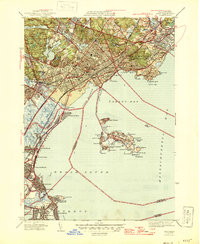
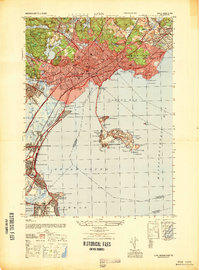
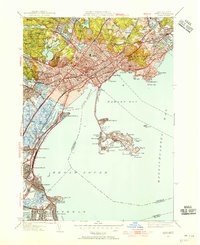
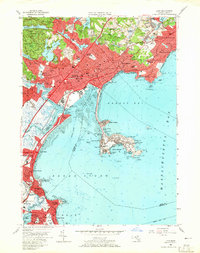
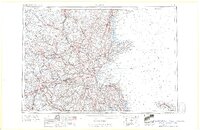
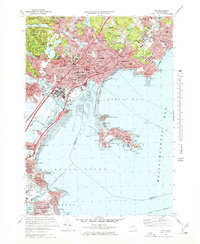
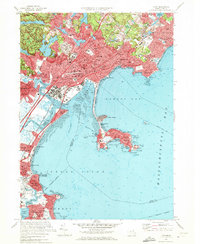
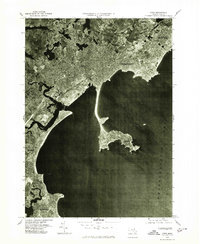
Listed on the National Register of Historic Places in 1978. 17 historic topographic surveys show this location, the earliest from 1892.
From the record
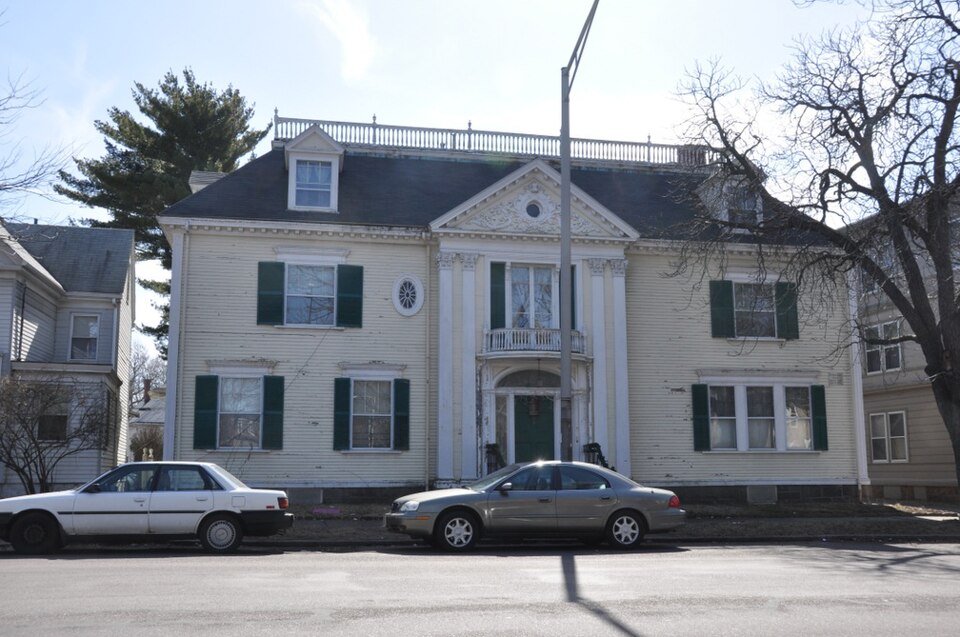
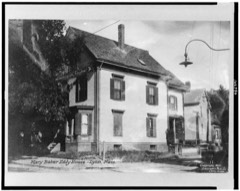
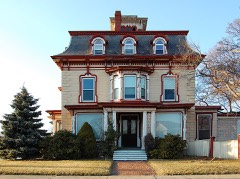
“The Charles Lovejoy House is a historic house at 64 Broad Street in Lynn, Massachusetts. The Colonial Revival mansion was built in 1893 for Doctor Charles Lovejoy, one of the founders of Lynn Hospital.”
Wikipedia article Charles Lovejoy House, CC BY-SA 4.0.
One of 480 National Register listings published here for Essex County · listed in 1978 · category: Building.
National Register reference number.78000454- the number the National Park Service assigned this property when it was listed, and the key its nomination file is catalogued under at the National Archives.
Then and now
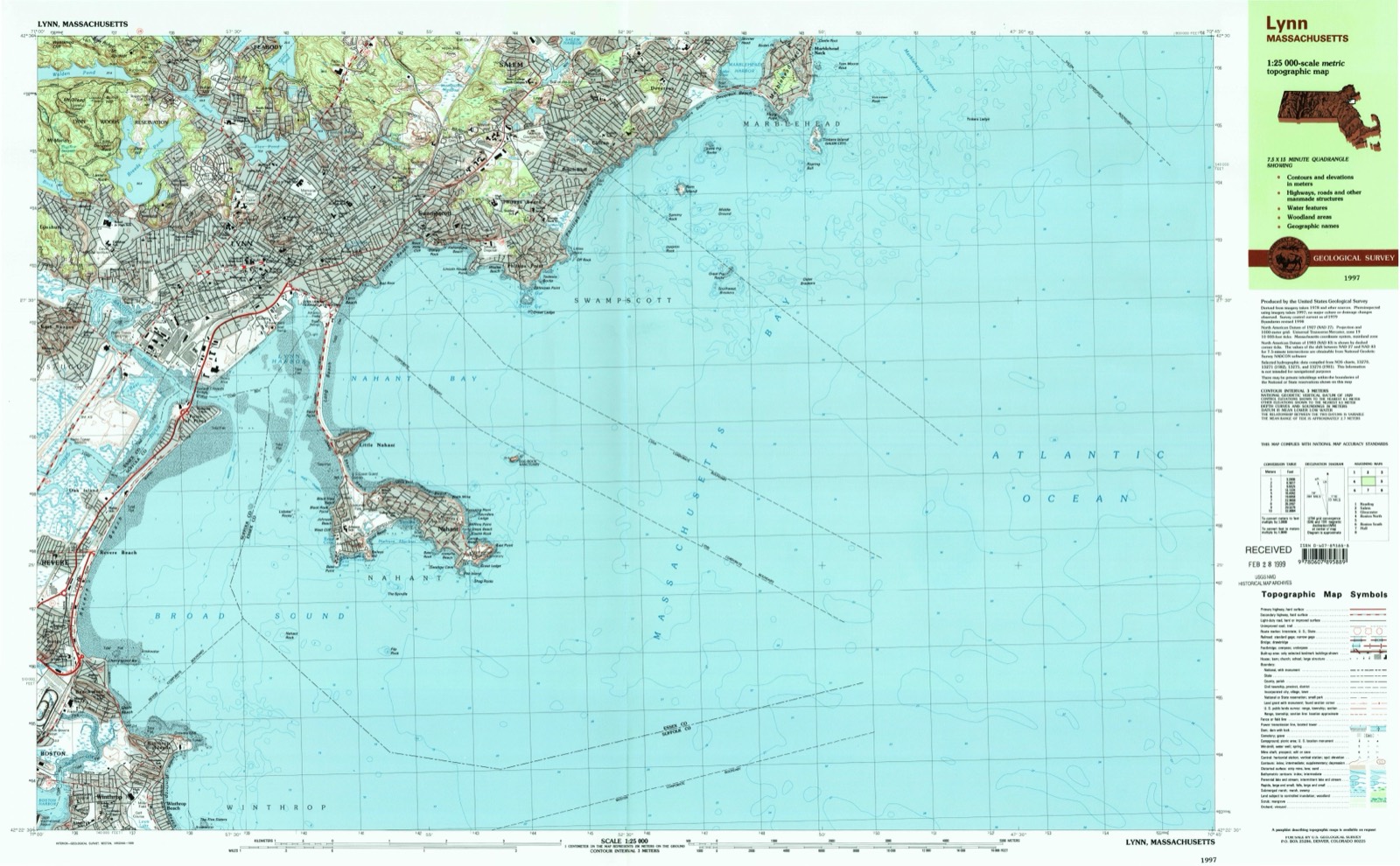
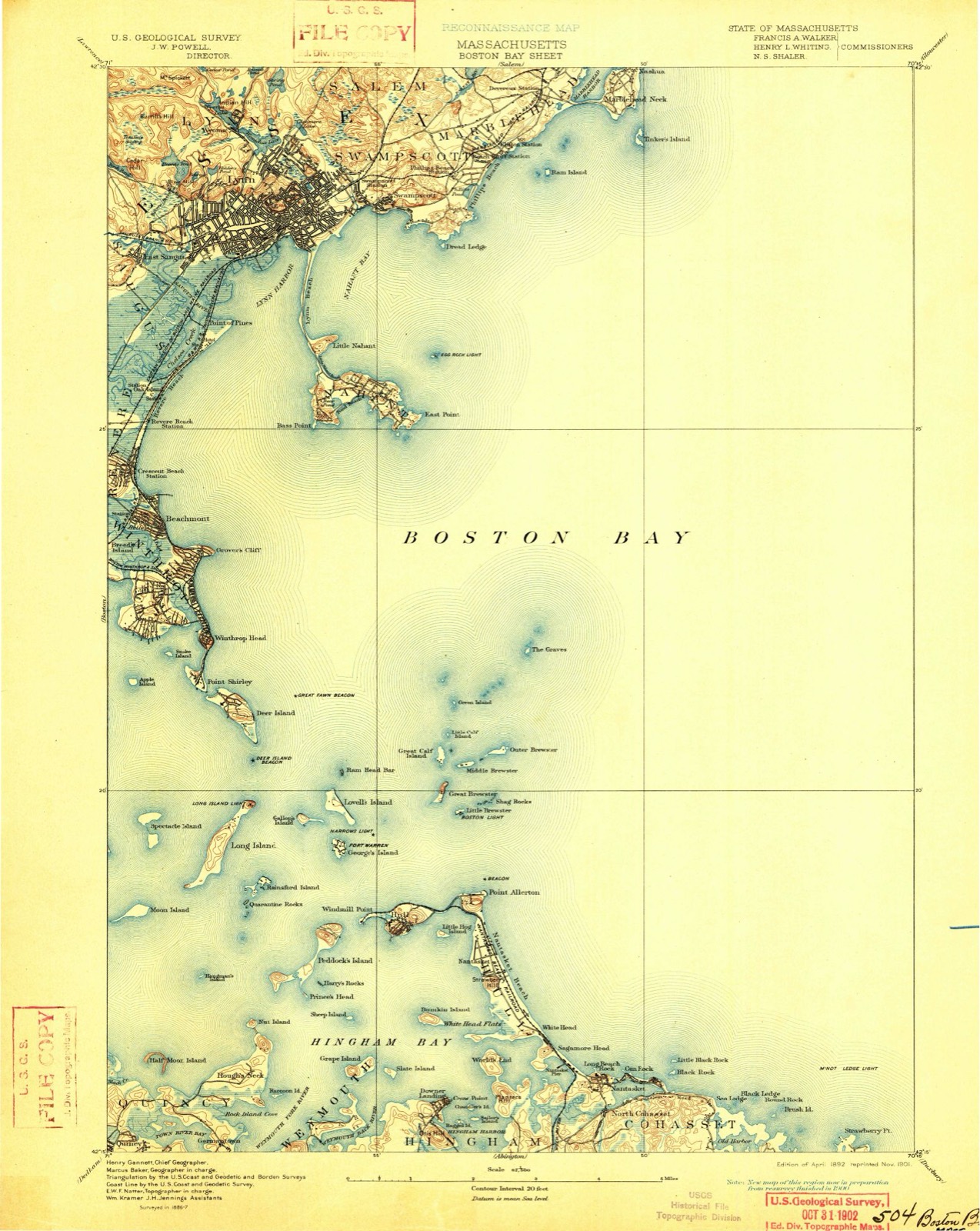
1892 to 1997
The ground this property stands on, surveyed
105 years apart. Drag the handle to wipe between them. Both sheets are
United States Geological Survey originals; neither has been altered.
This is Lynn. And probably no place upon the New England coast can present more attractive features and such varied scenery. It is one of the oldest settlements of Massachusetts, as distinguished from Plymouth, and has always maintained a steady, though not rapid, growth, till, at the present time, it has reached a population of very near 50,000. It is on the northern shore of the great bay which is entered from the Atlantic through the gateway formed by Cape Ann, so named by Prince Charles in filial respect for his mother, and Cape Cod, so named by the notable English navigator, Bartholomew Gosnold, from the circumstance of finding multitudes of codfish sporting about there. It was the central one of the three important settlements commenced at nearly the same time, - namely, Salem, Lynn and Boston ; is five miles southwest of the former, and ten miles northeast of the latter. It is not now very extensive, territorially, but as regards population is the largest city in the United States, east of Boston.
With the Ingalls brothers appear to have come three others, namely, William Dixey, John Wood and William Wood, the two latter supposed to be father and son. The father, John, seems to have been a good, common-sense, plodding settler, industrious, but with little ambition. William, the son,was evidently an active, aspiring young man, something of a rover, a keen observer and one desirous of making a mark. And he did make a mark, which remains conspicuous at this day. He may well be called the first historian of Lynn, or indeed of New England. He was the author of " New England's Prospect," which was printed in London in 1634. It was a work evidently inspired by a love for his new home, and gives graphic accounts of the different settlements, their condition, advantages and prospects, with shrewd suggestions and honest deductions, but withal tinged by crude conceptions, more or less attributable to the peculiar views and circumstances of the settlers, and the conceits of the time. His quaint descriptions will continue to be quoted so long as our early history continues to interest. He also, in 1635, published a map of New England, engraved on wood.
Regional context, not property-specific
evidence. The
federal wildfire occurrence database
lists 75 fires within 5 miles of Charles Lovejoy House
between 2003 and 2020, burning about 252 acres in total. 1 started naturally. 7 were recorded as arson.
Distance is straight-line from the map coordinates, so a fire counted
here may appear on a neighbouring settlement's page as well.
Reported cause
Fires
Recreation and ceremony
26
Smoking
17
Debris and open burning
7
Arson/incendiarism
7
Missing data/not specified/undetermined
6
Equipment and vehicle use
4
Misuse of fire by a minor
3
Fireworks
3
Natural
1
Railroad operations and maintenance
1
The most recent of
them, most recent first, with the day each was reported and the service
that recorded it.
Regional context, not property-specific
evidence. Museums hold 10,553 specimens
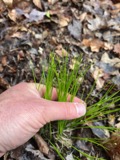
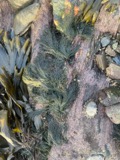
collected within 10 miles of Charles Lovejoy House between 1800 and 1975: 4,969 Plantae, 3,064 Animalia, 1,006 Chromista, 798 Fungi, 415 Unrecorded, 286 Bacteria, 15 Protozoa.
12 distinct Species records are shown.
Collected by A B. Proper, A. A. Eaton, A. B. Hervey and others. Each is a
physical object with a catalogue
number, and each entry opens the museum's record. This is what was
collected and kept, not a survey of what lives here - nothing can be
concluded from a species being absent.
Regional context, not property-specific
evidence. The federal mineral resources record lists
11 workings within 5 miles of Charles Lovejoy House: 3 past producers, 3 producers, 2 unknowns, 2 plants.
5 still produce. What was taken out: Stone, Crushed/Broken, Sand and Gravel, Construction, Iron, Gold. Distance is straight-line from the
map coordinates, so a quarry counted here may appear on a neighbouring
settlement's page as well.
Regional context, not property-specific
evidence. The National Weather Service names
Lynn, the town this property stands in, in 37 storm reports between 2006 and 2023: 16 thunderstorm wind, 9 hail, 5 flood, 5 flash flood.
No death or injury is recorded in these reports. Each account below is quoted exactly as the forecast office
filed it, from the NOAA Storm Events Database, and each date
opens the federal record of that event.
Numerous trees and wires were downed throughout Lynn, closing thirty to forty streets. An amateur radio operator recorded a wind gust of 60 mph on their home weather station on Centre Street.
At 9:16 AM EST, cars on Monroe Street in Lynn were floating in the street. At 9:18 AM EST, water was rising in a building on Monroe Street, causing people to stand on chairs. At 9:31 AM cars were trapped in flood waters on Chatham Street under a bridge; the road was impassable. At 10:03 AM the basement door to a building on Union Street had collapsed due to the flooding, and water was pouring in. At 10:18 AM, large sections of Boston Street in Lynn were flooded and impassable, and several cars were trapped in the floodwaters. At 10:32 AM state route 107 on the Lynn/Salem border was closed due to flooding. At 10:59 AM EST, manhole covers were reported coming off the road on Seymour Avenue. A car was trapped in three feet of water on Wilfred Street; the road was impassable. At 11:42 AM EST, street flooding on Erie Street reached several feet.
Lightning struck a three family home on Washington Street, setting fire to the house. Damage was to the front roof in the third floor unit. Residents in the third floor unit were unable to return to their unit due to water damage. Other units were not damaged.
In Swampscott, a car was stuck in flood waters at the Santander Bank parking lot. Crowinshield Street was flooded in Peabody. A car was stuck in flood waters on Endicott Street. Leather City Common was flooded with six to twelve inches of water.
In Peabody, a car was stuck in two feet of water on America Drive. A car was stuck in flood waters on the ramp for the Northshore Mall from Route 114 to Route 128. In Lynn, four to six inches covered all three eastbound lanes of the Lynnway. Other streets in Lynn were flooded with three feet of water and the fire department responded to two calls of people stuck in their cars. In Beverly, Federal Street between MacPherson Drive and Rantoul and Lothrop Street at Route 127 were closed due to flooding. The fire department reported several streets flooded with at least 3 feet of water. They responded to about a half dozen calls of people stuck in their cars. In Salem, Highland Avenue was flooded out.
In Lynn, large branches and wires were downed by thunderstorm winds. In Marblehead, trees and wires on Green Street and Kenneth Road were downed by thunderstorm winds. One of the trees on Kenneth Road landed on a house.
A tree and wires were downed onto a fence on Warwick Street in Lynn. Also, an eight inch diameter tree branch was downed and blew into a house, the house sustained minor damage. Several other tree limbs were downed on Lynnfield Street and Savory Street.
In Swampscott, several cars were stuck in street flooding on Paradise Road (Route 1A). |Also, a car was stuck at the intersection of Stetson Avenue and Norfolk Avenue.
United States Geological Survey topographic
sheets whose coverage includes this point. Matched by taking the coordinate the National Park Service records for this property, then
testing that coordinate against the published boundary of every sheet.
When this property was proposed for the
National Register, someone wrote the case for it: what the building is,
and why it matters. That document is a federal record in the public domain.
It is quoted below word for word, never summarised. The text was read off the scanned case file by machine, so the
occasional stray character is the recogniser's and the 1970s
typewriter's.
Description of the property
The Charles Lovejoy House is a free-standing Colonial Revival style house of rectangular plan, sited on a narrow lot of approximately eight-three feet frontage. It is located near Lynn's downtown area and is closely surrounded by other residential buildings of lesser quality and some commercial structures. The structure stands on a foundation of rock-faced granite blocks. have matched boarding. the visible portions of which are covered with asphalt shingles. (A lower sloped central section is not visible from ground level.) Entrances to the house are located slightly north of center on the street facade (west), centered on the north end-wal1 and at the house's southeast corner through a recessed two-story porch.
The Lovejoy House has no wings or ells; to its rear (east) is a one-story metal garage (built 1923). Thefacade ofthe Lovejoy Housefaces west on Broad Street and is asymmetrical. The main focus is a two-story, projecting entry pavilion set slightly north of center. Approached by a wooden staircase (five steps) with iron railings (perhpas original), the pavilion is framed by two pairs of unfluted Corinthian pilasters which support an undecorated entablature and a modillioned cornice. Above the cornice is a pediment con- taining an oculus surrounded by an ornate, neo-Baroque frame and fobiate carving, apparently made of wood. Set between the pairs of pilasters at the first story is an elliptically arched entry.
The entry is framed by panelled pilasters and contains intricately leaded, clear glass fan and side lights (southern side light has been replaced). The door consists of six slightly raised panels and is set between stiles which are decorated by channeling in a herring-bone pattern. Separating the door from the fan light is a wooden band decorated with evenly spaced groups of four channels.
/ARCHITECT James Kelley STATEMENT OF SIGNIFICANCE One of the most distinguished and well-preserved examples of Colonial Revival style architecture in Lynn, the Charles Lovejoy House was built in 1893-1894 from designs by James Kelley, a Boston architect. Kelley's original plans are currently in the possession of the Greater Lynn Arts Association. Charles Lovejoy (1847-1932), a prominent local physician, was a native of Nashua, New Hampshire who graduated from Harvard College in 1868 and from Harvard Medical Schoo1 in 1872. By 1873, Lovejoy had moved to Lynn and established a private medical practice. In 1874, and again in 1880, Lovejoy made trips to Europe to study medicine in Dublin, London, Leipzig, Vienna and Wurtzburg.
In the mid-1880s, Lovejoy was instrumental in founding the Lynn Hospital and served for four years as its first superintendent.. The site of the present house was purchased by Lovejoy around 1887-1888 at which time it contained two smaller buildings, one of which served as Lovejoy's homé and office until 1893, when both buildings were moved to the rear of the lot (Both have since been demolished). Designed to contain a separate office suite at its northwest corner, the Lovejoy House was' occupied by Charles Lovejoy from its completion in 1894 or 1895 until his death in 1932, after which the house passed into the possession of his daughter, Mrs. Mary Kirkpatrick whose estate presently owns the property.
As a result of its continuous occupation by the same family, the Lovejoy House has been maintained in nearly original condition.
Quoted from the National Register nomination
for reference 78000454, 14 pages, held by the National Archives in Record
Group 79. See the
catalogue record.
Listed places nearby
6 within 8 miles
Other National Register properties close
enough to walk or drive between, ordered by distance from this one. Both
positions come from the same geocoding pass that matched these properties
to their map sheets.
Listing record. National Park Service National Register of Historic Places, listed-properties dataset, current to 2026-05-22.
Map join. Address geocoded through the United States Census geocoder, then tested against the published boundary of every sheet in the USGS Historical Topographic Map Collection.
How this page is made. Listing fields come from federal records; map-sheet coverage is a labelled coordinate-to-boundary calculation, not a source-field claim.
Wildfire. Short, Karen C. 2022. Spatial wildfire occurrence data for the United States, 1992-2020 [FPA_FOD_20221014]. 6th Edition. Fort Collins, CO: Forest Service Research Data Archive. https://doi.org/10.2737/RDS-2013-0009.6 Collected with United States Government funding and usable without additional permissions or fees.
Specimens. Global Biodiversity Information Facility (GBIF), https://www.gbif.org/. Only records licensed CC0 or CC BY are used. Records licensed CC BY-NC are excluded because this site carries advertising. Images are checked individually and any whose licence is non-commercial, no-derivatives or unreadable is refused.
Mines and quarries. USGS Mineral Resources Data System (MRDS) https://mrdata.usgs.gov/mrds/ A work of the United States government, no copyright under 17 U.S.C. 105.
Storms. NOAA National Centers for Environmental Information, Storm Events Database https://www.ncei.noaa.gov/stormevents/ A work of the United States government, no copyright under 17 U.S.C. 105. Narratives are quoted verbatim from the National Weather Service report and are not edited or summarised.
 Block