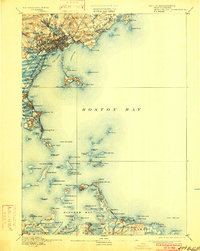
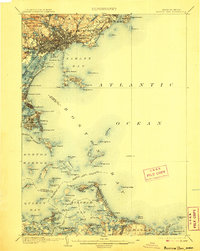
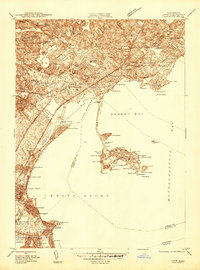
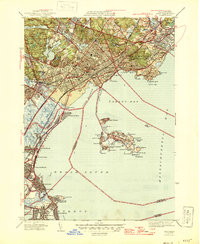
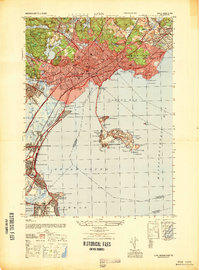
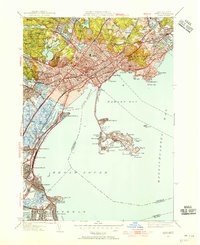
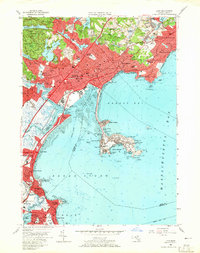
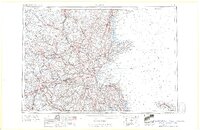
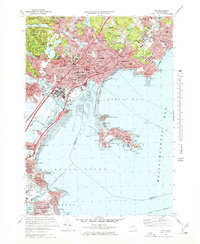
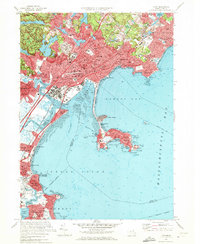
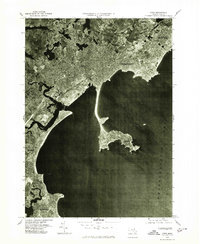
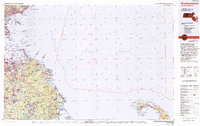
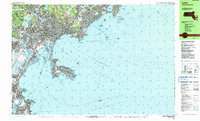
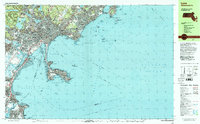
Listed on the National Register of Historic Places in 1985. 17 historic topographic surveys show this location, the earliest from 1892.
From the record
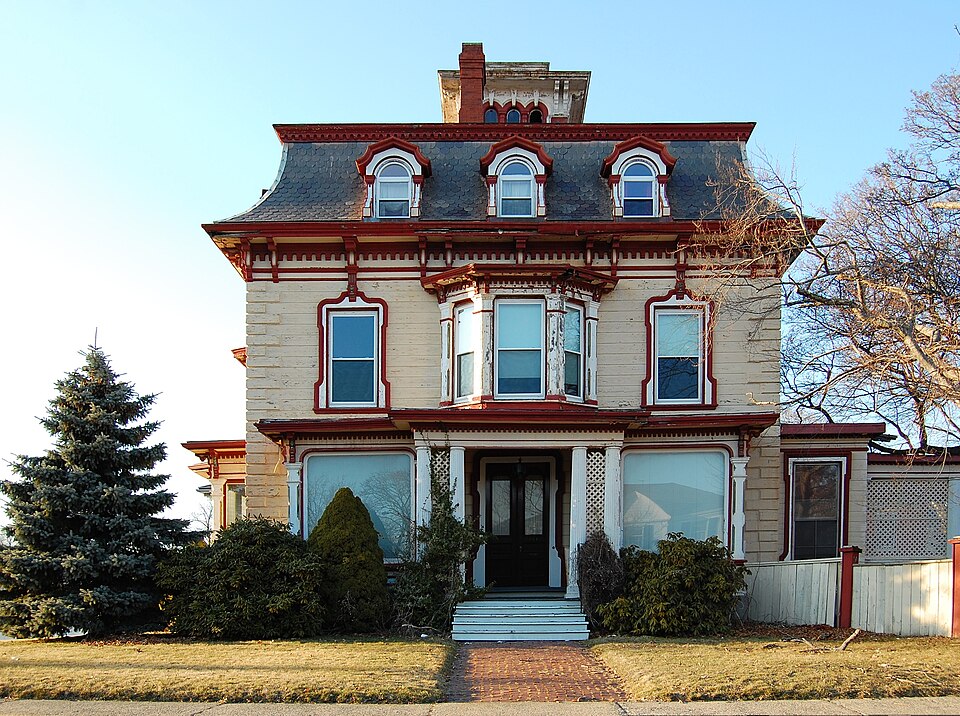
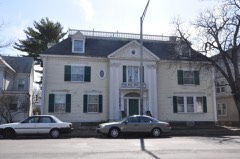
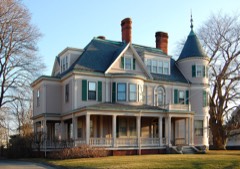
“The Lucian Newhall House is a historic house in Lynn, Massachusetts. Built in 1866 for a prominent local businessman, it is a high-quality example of Second Empire architecture.”
Wikipedia article Lucian Newhall House (Lynn, Massachusetts), CC BY-SA 4.0.
One of 480 National Register listings published here for Essex County · listed in 1985 · category: Building.
Architectural style. Second Empire architecture in the United States and Canada
National Register reference number.85001576- the number the National Park Service assigned this property when it was listed, and the key its nomination file is catalogued under at the National Archives.
Then and now
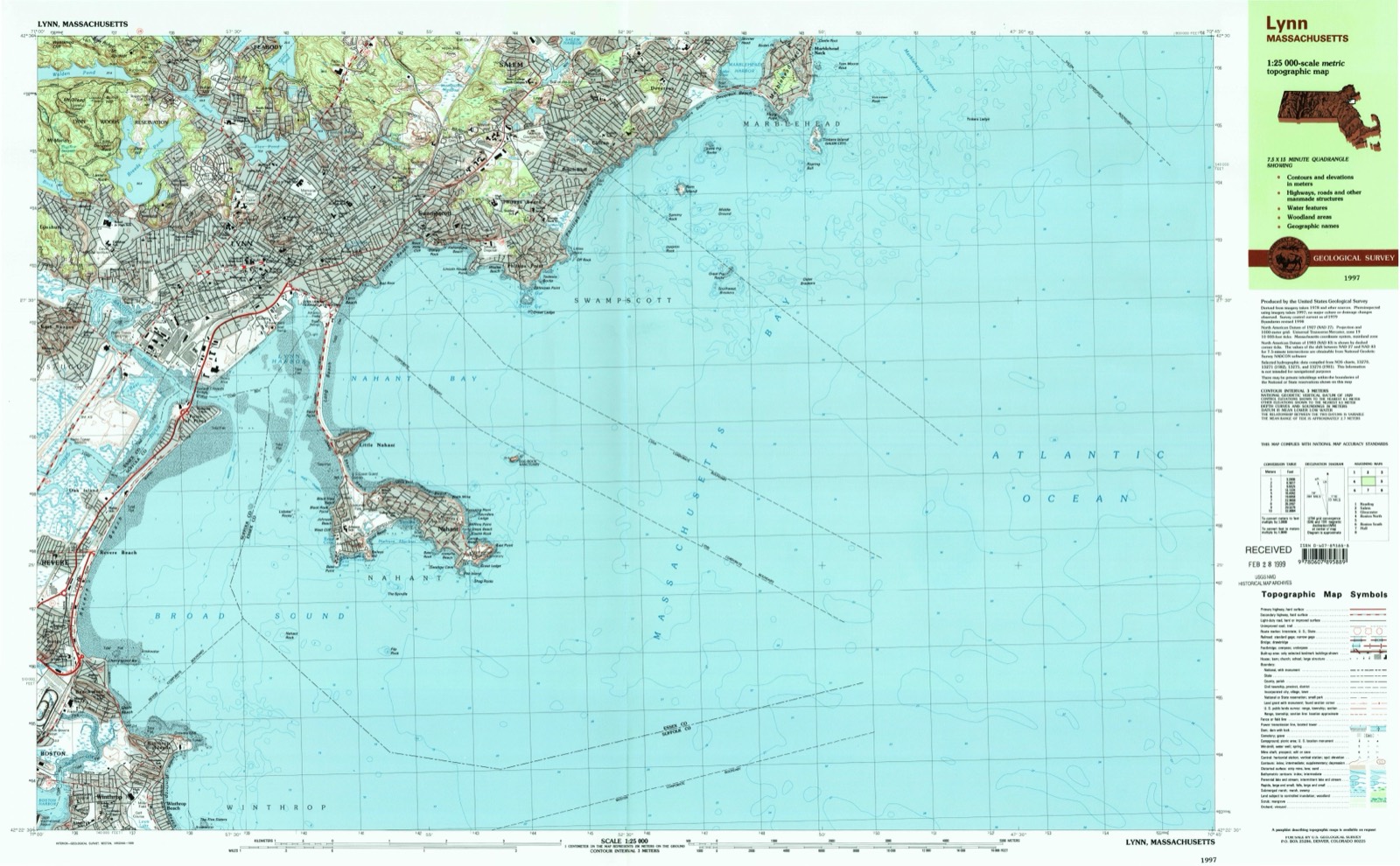
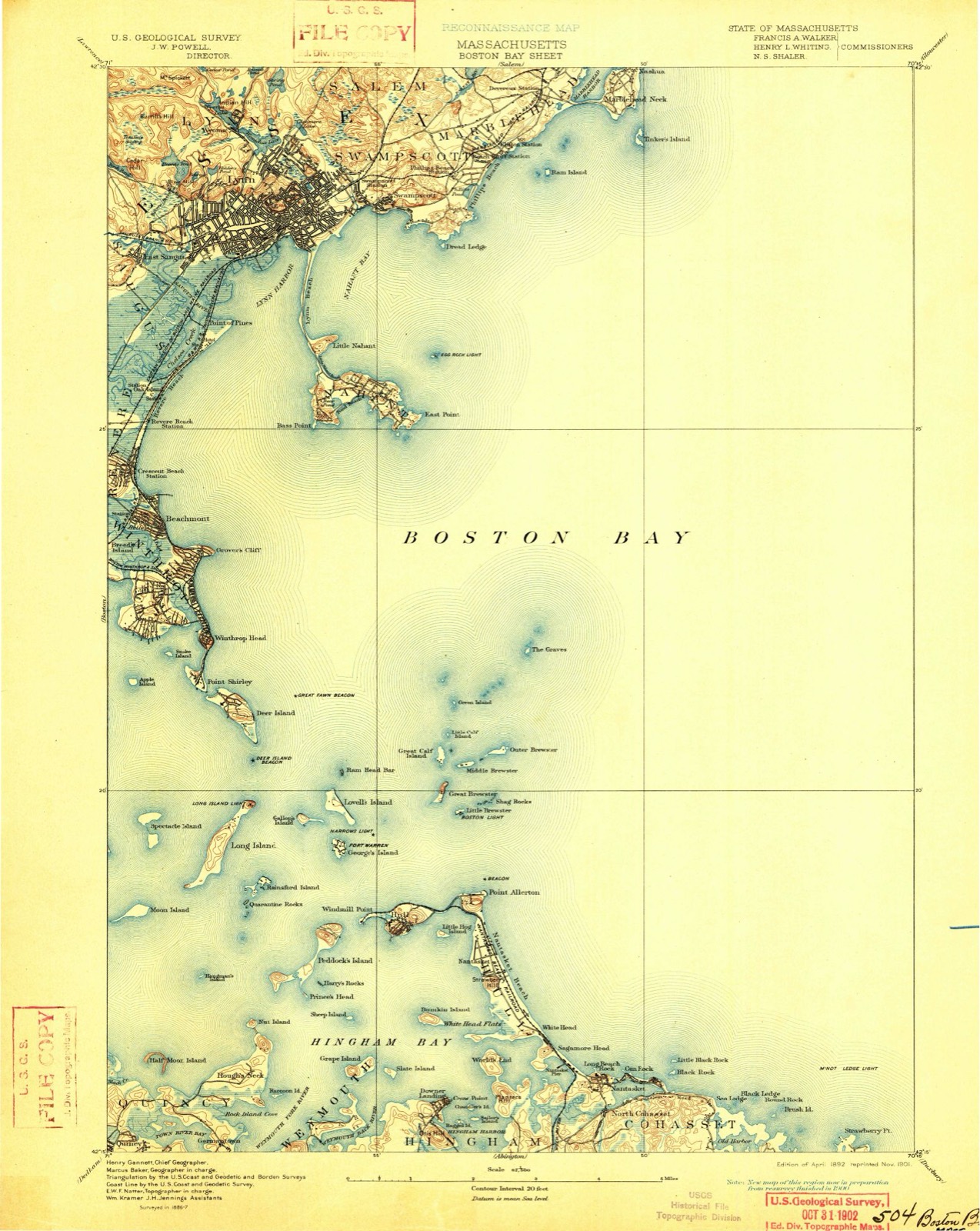
1892 to 1997
The ground this property stands on, surveyed
105 years apart. Drag the handle to wipe between them. Both sheets are
United States Geological Survey originals; neither has been altered.
This is Lynn. And probably no place upon the New England coast can present more attractive features and such varied scenery. It is one of the oldest settlements of Massachusetts, as distinguished from Plymouth, and has always maintained a steady, though not rapid, growth, till, at the present time, it has reached a population of very near 50,000. It is on the northern shore of the great bay which is entered from the Atlantic through the gateway formed by Cape Ann, so named by Prince Charles in filial respect for his mother, and Cape Cod, so named by the notable English navigator, Bartholomew Gosnold, from the circumstance of finding multitudes of codfish sporting about there. It was the central one of the three important settlements commenced at nearly the same time, - namely, Salem, Lynn and Boston ; is five miles southwest of the former, and ten miles northeast of the latter. It is not now very extensive, territorially, but as regards population is the largest city in the United States, east of Boston.
With the Ingalls brothers appear to have come three others, namely, William Dixey, John Wood and William Wood, the two latter supposed to be father and son. The father, John, seems to have been a good, common-sense, plodding settler, industrious, but with little ambition. William, the son,was evidently an active, aspiring young man, something of a rover, a keen observer and one desirous of making a mark. And he did make a mark, which remains conspicuous at this day. He may well be called the first historian of Lynn, or indeed of New England. He was the author of " New England's Prospect," which was printed in London in 1634. It was a work evidently inspired by a love for his new home, and gives graphic accounts of the different settlements, their condition, advantages and prospects, with shrewd suggestions and honest deductions, but withal tinged by crude conceptions, more or less attributable to the peculiar views and circumstances of the settlers, and the conceits of the time. His quaint descriptions will continue to be quoted so long as our early history continues to interest. He also, in 1635, published a map of New England, engraved on wood.
Regional context, not property-specific
evidence. The
federal wildfire occurrence database
lists 69 fires within 5 miles of Lucian Newhall House
between 2003 and 2020, burning about 251 acres in total. 1 started naturally. 7 were recorded as arson.
Distance is straight-line from the map coordinates, so a fire counted
here may appear on a neighbouring settlement's page as well.
Reported cause
Fires
Recreation and ceremony
23
Smoking
14
Debris and open burning
7
Arson/incendiarism
7
Missing data/not specified/undetermined
6
Equipment and vehicle use
4
Misuse of fire by a minor
3
Fireworks
3
Natural
1
Railroad operations and maintenance
1
The most recent of
them, most recent first, with the day each was reported and the service
that recorded it.
Regional context, not property-specific
evidence. Museums hold 10,453 specimens
collected within 10 miles of Lucian Newhall House between 1800 and 1975: 4,908 Plantae, 3,031 Animalia, 1,006 Chromista, 797 Fungi, 415 Unrecorded, 283 Bacteria, 13 Protozoa.
12 distinct Species records are shown.
Collected by A B. Proper, A. A. Eaton, A. B. Hervey and others. Each is a
physical object with a catalogue
number, and each entry opens the museum's record. This is what was
collected and kept, not a survey of what lives here - nothing can be
concluded from a species being absent.
Regional context, not property-specific
evidence. The federal mineral resources record lists
11 workings within 5 miles of Lucian Newhall House: 3 past producers, 3 producers, 2 unknowns, 2 plants.
5 still produce. What was taken out: Stone, Crushed/Broken, Sand and Gravel, Construction, Iron, Gold. Distance is straight-line from the
map coordinates, so a quarry counted here may appear on a neighbouring
settlement's page as well.
Regional context, not property-specific
evidence. The National Weather Service names
Lynn, the town this property stands in, in 37 storm reports between 2006 and 2023: 16 thunderstorm wind, 9 hail, 5 flood, 5 flash flood.
No death or injury is recorded in these reports. Each account below is quoted exactly as the forecast office
filed it, from the NOAA Storm Events Database, and each date
opens the federal record of that event.
Numerous trees and wires were downed throughout Lynn, closing thirty to forty streets. An amateur radio operator recorded a wind gust of 60 mph on their home weather station on Centre Street.
At 9:16 AM EST, cars on Monroe Street in Lynn were floating in the street. At 9:18 AM EST, water was rising in a building on Monroe Street, causing people to stand on chairs. At 9:31 AM cars were trapped in flood waters on Chatham Street under a bridge; the road was impassable. At 10:03 AM the basement door to a building on Union Street had collapsed due to the flooding, and water was pouring in. At 10:18 AM, large sections of Boston Street in Lynn were flooded and impassable, and several cars were trapped in the floodwaters. At 10:32 AM state route 107 on the Lynn/Salem border was closed due to flooding. At 10:59 AM EST, manhole covers were reported coming off the road on Seymour Avenue. A car was trapped in three feet of water on Wilfred Street; the road was impassable. At 11:42 AM EST, street flooding on Erie Street reached several feet.
Lightning struck a three family home on Washington Street, setting fire to the house. Damage was to the front roof in the third floor unit. Residents in the third floor unit were unable to return to their unit due to water damage. Other units were not damaged.
In Swampscott, a car was stuck in flood waters at the Santander Bank parking lot. Crowinshield Street was flooded in Peabody. A car was stuck in flood waters on Endicott Street. Leather City Common was flooded with six to twelve inches of water.
In Peabody, a car was stuck in two feet of water on America Drive. A car was stuck in flood waters on the ramp for the Northshore Mall from Route 114 to Route 128. In Lynn, four to six inches covered all three eastbound lanes of the Lynnway. Other streets in Lynn were flooded with three feet of water and the fire department responded to two calls of people stuck in their cars. In Beverly, Federal Street between MacPherson Drive and Rantoul and Lothrop Street at Route 127 were closed due to flooding. The fire department reported several streets flooded with at least 3 feet of water. They responded to about a half dozen calls of people stuck in their cars. In Salem, Highland Avenue was flooded out.
In Lynn, large branches and wires were downed by thunderstorm winds. In Marblehead, trees and wires on Green Street and Kenneth Road were downed by thunderstorm winds. One of the trees on Kenneth Road landed on a house.
A tree and wires were downed onto a fence on Warwick Street in Lynn. Also, an eight inch diameter tree branch was downed and blew into a house, the house sustained minor damage. Several other tree limbs were downed on Lynnfield Street and Savory Street.
In Swampscott, several cars were stuck in street flooding on Paradise Road (Route 1A). |Also, a car was stuck at the intersection of Stetson Avenue and Norfolk Avenue.
United States Geological Survey topographic
sheets whose coverage includes this point. Matched by taking the coordinate the National Park Service records for this property, then
testing that coordinate against the published boundary of every sheet.
When this property was proposed for the
National Register, someone wrote the case for it: what the building is,
and why it matters. That document is a federal record in the public domain.
It is quoted below word for word, never summarised. The text was read off the scanned case file by machine, so the
occasional stray character is the recogniser's and the 1970s
typewriter's.
Description of the property
Description The Lucian Newhall House stands at the northeast corner of Nahant and Ocean Streets, set back from both streets; the house occupies the western part of the lot, with a carriage house occupying the northeast corner of the property. The area contains primarily substantial wood-frame houses in a mixture of nineteenth and early twentieth century architectural styles, as well as smaller twentieth century houses and a few large apartment buildings. The building rises two full stories from a granite ashlar basement; a third storey is contained beneath a bellcast mansard covered with fish-scale slates, from which a mansard-roofed cupola rises.
The house is of wood-frame construction, sheathed with rusticated siding ornamented with wooden trimmings including rusticated quoins, dentil cornices, brackets and moulded window cases & hoods. All sash is wood-frame 2/2, with dormer windows and oriel windows (west elevation) possessing arched heads. At the mansard, three dormer windows with gambrel roofs exist at each elevation; the cupola possesses three arch-headed windows at each elevation. The house possesses two facades; the west facade (Nahant Street) is three bays wide, rising from a granite ashlar basement, and is symmetrical about a central entry. The entry consists of glazed, panelled double doors sheltered by a porch with a dentil cornice supported by paired, fluted columns.
of bay windows having sunken panelling below and bracketed cornices above paired windows which are separated by chamfered piers. At the second storey, two windows with moulded cases flank a central, flat-roofed oriel containing four arch-headed windows in moulded cases. At the attic there are three dormers. The south facade (Ocean Street) is identical to the west facade with the exception that paired windows in first-storey bays contain single fixed lights, and windows at the oriel are rectangular.
(in one paragraph) Builder/Architect unknown Significance The Lucian Newhall House possesses integrity of design, materials and setting as well as historical associations with a leader in Lynn's shoe manufacturing industry, and is an outstanding example of the Second Empire Style. The Newhall House is of local significance and meets Criteria A, B and C of the National Register of Historic Places. Noteworthy as a fine and well-preserved example of the Second Empire style, the Lucian Newhall House is representative of the large, richly ornamented houses of Lynn's nineteenth century shoe manufacturers.
The house was constructed circa 1865-1867; with facades on its south and west walls (Ocean and Nahant Street elevations), the house is the focal point of its immediate surroundings and one of the major houses of the "Diamond District". With the exception of its two entry porches which have had fluted columns added (ca. 1920), the addition of six bay windows (ca. 1900), and the replacement of sash in two bay windows, the house is in original conditionwith an abundance of decorative details. Especially fine are the house's mansard cupola, porte-cochere and ornate window frames. Its fish-scale slate, belcast mansard roof with gambrel dormers containing arch-headed windows are representative of the Second Empire style.
The architect of the Lucian Newhall House is unknown, however the house stands in an area which contained the work of several prominent Boston architects, including Gridley J.F. Bryant; the high quality of its design and level of detail, as well as its similarity in plan and detail to other nearby Bryant-designed houses, raises the possibility that the house was designed or influenced by Bryant. Bryant, (1816-1899) , best-known for such major Boston designs as Boston City Hall (1865), the Charles Street Jail, and Horticulture Hall, was also active in Lynn.
Quoted from the National Register nomination
for reference 85001576, 14 pages, held by the National Archives in Record
Group 79. See the
catalogue record.
Listed places nearby
6 within 8 miles
Other National Register properties close
enough to walk or drive between, ordered by distance from this one. Both
positions come from the same geocoding pass that matched these properties
to their map sheets.
Listing record. National Park Service National Register of Historic Places, listed-properties dataset, current to 2026-05-22.
Map join. Address geocoded through the United States Census geocoder, then tested against the published boundary of every sheet in the USGS Historical Topographic Map Collection.
How this page is made. Listing fields come from federal records; map-sheet coverage is a labelled coordinate-to-boundary calculation, not a source-field claim.
Wildfire. Short, Karen C. 2022. Spatial wildfire occurrence data for the United States, 1992-2020 [FPA_FOD_20221014]. 6th Edition. Fort Collins, CO: Forest Service Research Data Archive. https://doi.org/10.2737/RDS-2013-0009.6 Collected with United States Government funding and usable without additional permissions or fees.
Specimens. Global Biodiversity Information Facility (GBIF), https://www.gbif.org/. Only records licensed CC0 or CC BY are used. Records licensed CC BY-NC are excluded because this site carries advertising. Images are checked individually and any whose licence is non-commercial, no-derivatives or unreadable is refused.
Mines and quarries. USGS Mineral Resources Data System (MRDS) https://mrdata.usgs.gov/mrds/ A work of the United States government, no copyright under 17 U.S.C. 105.
Storms. NOAA National Centers for Environmental Information, Storm Events Database https://www.ncei.noaa.gov/stormevents/ A work of the United States government, no copyright under 17 U.S.C. 105. Narratives are quoted verbatim from the National Weather Service report and are not edited or summarised.
 Block