Listed on the National Register of Historic Places in
1979. A historic map-sheet match is not published yet. The record needs a coordinate-quality review before it can be joined to a sheet boundary.
From the record
“Oliver Bigelow, from New York State, who owned the southwest quarter of the township, laid out the town of Johnstown, which, however, until 1815, made little or no progress. William Sellers and, probably, others made improvements in the town.”
History of Licking County, Ohio: Its Past and Present (1881). Machine-read text.
one of 52 National Register listings in Licking County · listed in 1979 · category: Building.
National Register reference number.79001878- the number the National Park Service assigned this property when it was listed, and the key its nomination file is catalogued under at the National Archives.
In 1813 I)r. Oliver Bigelow, from New York State, who owned the southwest quarter of the township, laid out the town of Johnstown, which, however, until 1815, made little or no progress. In the latter year N. Alden, Henry Hoover. William Sellers and, probably, others made improvements in the town. From that time until 1830, the town and township increased rapidly in population. The town never grew, however, up to the expectation of its founders, and probably there are few if any more people there at the present time than in 1830. Although the houses are mostly strung along on either side of the main highway, the town was laid out in the form of a square with a large public square in the center, as were the towns generally in the county. This square, at present, looks like a vacant field. Trees have, however, been set out around it, which, if cared for, will one day beautify it The census, just completed, makes the population two hundred and seventy-eight. There are five stores of different kinds, three wagon shops, two harness shops and three blacksmith shops.
There are six churches in this township. Among the first of these was the Monroe Baptist church, one mile north of Johnstown, organized in 1819, by Rev. George Evans. The original members of this organization were Jacob Baker, Richard Orpret, Washington Evans and wife, M. Hoover, John Clark and Abram Barlow. For ten years services were held in the private dwellings of the members and in the neighboring schoolhouses.
Regional context, not property-specific
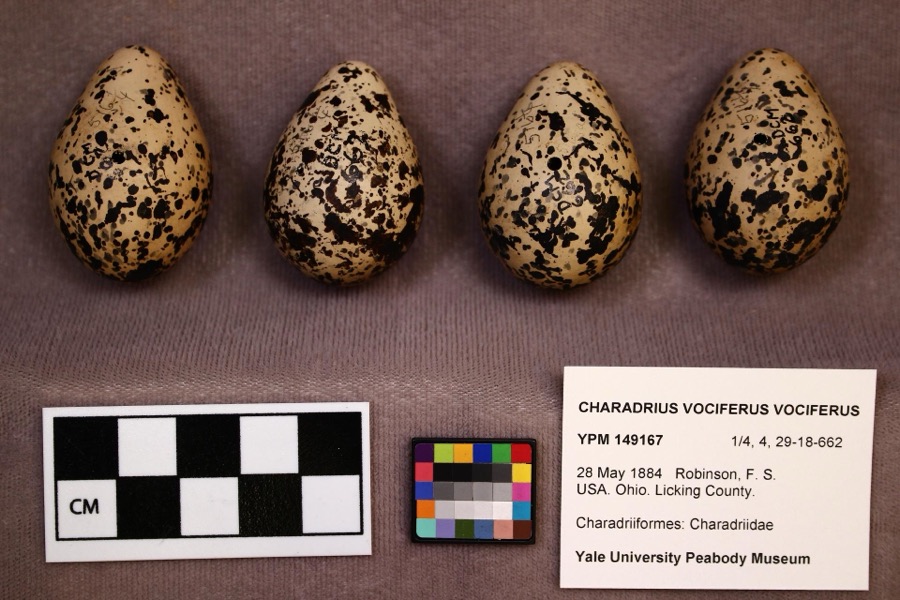
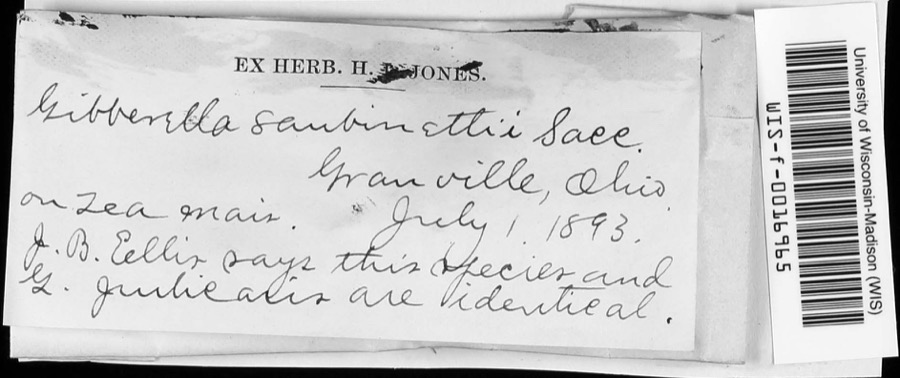
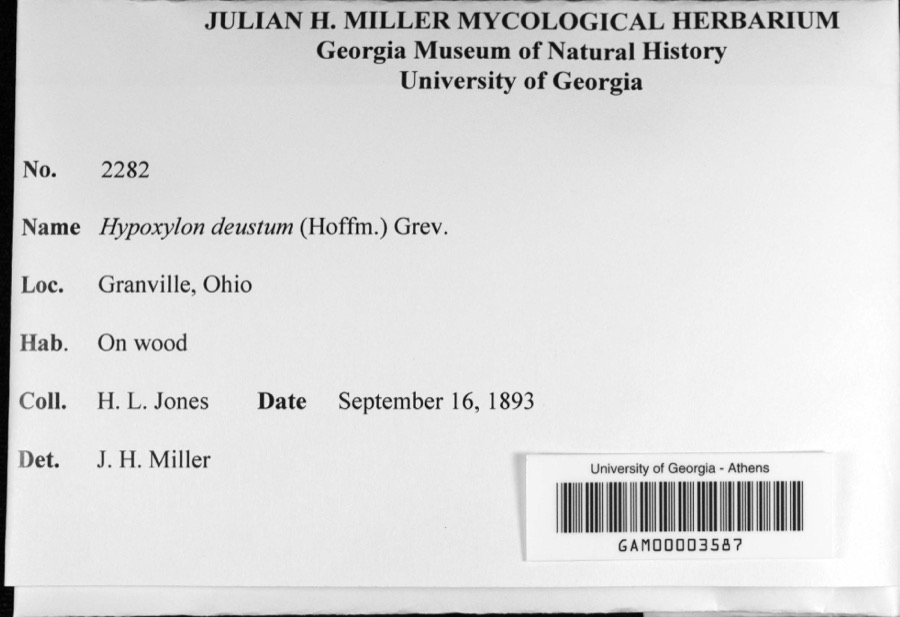
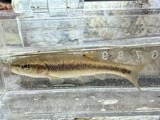
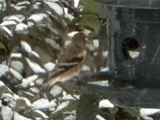
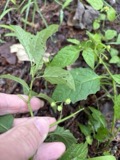
evidence. Museums hold 1,569 specimens
collected within 10 miles of Lynnwood Farm between 1881 and
1975: 1,365 Animalia, 164 Fungi, 26 Protozoa, 13 Plantae, 1 Chromista. 12 distinct Species records are shown.
Collected by A. P. M., A. P. Morgan, A. P. Morgan; Ellis and others. Each is a
physical object with a catalogue
number, and each entry opens the museum's record. This is what was
collected and kept, not a survey of what lives here - nothing can be
concluded from a species being absent.
Regional context, not property-specific
evidence. The federal mineral resources record lists
2 workings within 5 miles of Lynnwood Farm: 1 past producer, 1 producer.
1 still produces. What was taken out: Sand and Gravel, Construction. Distance is straight-line from the
map coordinates, so a quarry counted here may appear on a neighbouring
settlement's page as well.
Regional context, not property-specific
evidence. The National Weather Service names
Johnstown, the town this property stands in, in 30 storm reports between 2000 and 2024: 17 thunderstorm wind, 9 hail, 1 tornado, 1 heavy rain.
The reports record 2 deaths and 4 injuries. Each account below is quoted exactly as the forecast office
filed it, from the NOAA Storm Events Database, and each date
opens the federal record of that event.
A microburst hit an egg facility causing the collapse of three large barns and damaging another. This resulted in the fatalities of two men working in one of the collapsed structures. A large rooftop air conditioning unit was also pushed off the roof of an adjacent administrative building. Around the area there were several trees down and numerous broken limbs. In addition to the fatalities, four injuries were also reported.
A tornado tracked out of Delaware county across the northwestern part of the county and then continued into Knox county. The storm lifted briefly in spots but maintained a 25 mile track across the three counties, mainly in rural areas. Eleven homes received major damage and 4 received minor damage. Several barns and outbuildings were also destroyed. Twelve buildings at the Buckeye Egg Company were destroyed, trapping one million chickens inside.
No historic map-sheet match is published
for this property yet. That does not mean no map exists. This record needs
a coordinate-quality review before it can be joined to a sheet boundary.
Browse the county's mapped places while that work is
pending.
From the nomination file
1,159 words on record
When this property was proposed for the
National Register, someone wrote the case for it: what the building is,
and why it matters. That document is a federal record in the public domain.
It is quoted below word for word, never summarised. The text was read off the scanned case file by machine, so the
occasional stray character is the recogniser's and the 1970s
typewriter's.
Description of the property
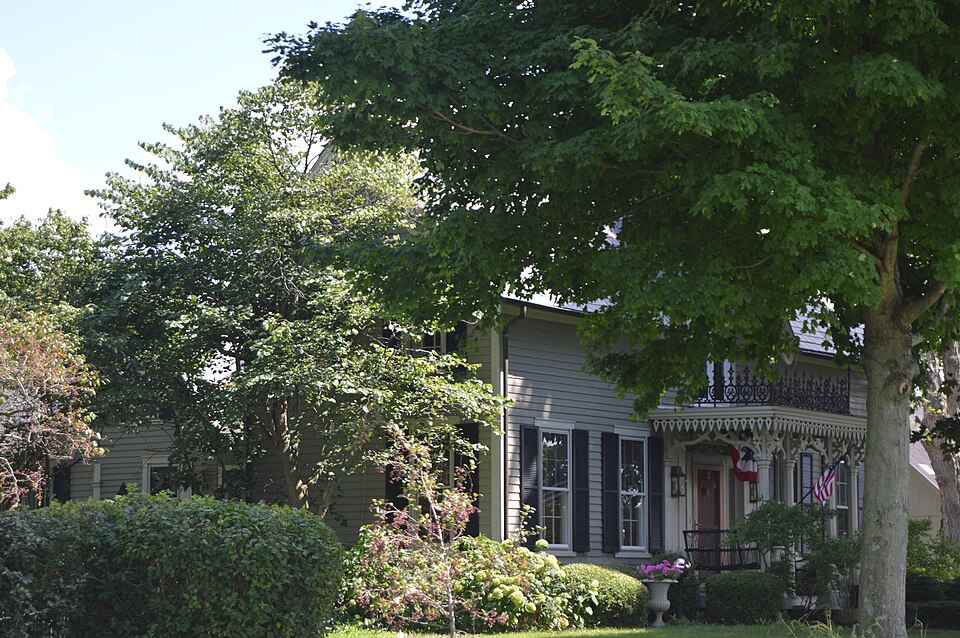
CONDITION UNEXPOSED DETERIORATED DESCRIPTION UNALTERED FAIR flooring is intact. The Gothic Revival house is constructed of wood frame with horizontal siding on a stone GOOD are covered with a single shutter.Two smaller wood structures face the corn crib. with horizontal siding and gable roofs are located to the rear of the house.Half log light with a wooden pointed arch above.The small entrance porch is heavily decorated braced frame with vertical siding and metal gable roof.Each of the small openings Lynnwood Farm is a well preserved example of a nineteenth century Ohio farm.The stories in height and is irregular in plan.The entrance is located in the center of roof is covered with metal.The barn is located directly behind the house.
are identical with 6 over 6 windows and decorative bargeboards.One story wings The 2 story portion of the house measures 2 bays wide. The north and the south elevations CHECK ONE The large bank barn is probably contemporary with the house.It is constructed ofa is also lined with decorative woodwork. plank floors were found in one of the rear rooms.Most of the interior woodwork and The windows are double hung 6 over 6.The window in the central gable is a 12 over 6 the 5 bay facade. It features a transom A 1 by 3 bay corn crib dates from approximately 1870. It is also constructed of a DATE RUINS and sidelights and is flanked by pilasters. Lynnwood Farm is located in Monroe Township approximately 2 miles south of Johnstown.
with woodwork and ornamental iron cresting.The bargeboard of the central gable The farm is comprised of a house, large bank barn, corn crib,2 sheds and over lo0 acres AREAS OF
Statement of significance
with transom, sidelights and pilasters are typical of the Greek Revival period. relatively unaltered today. Lynnwood Farm was constructed by Joel Philbrick, a prominent Monroe Township farmer.
Philbrick, a native of Grafton, New Hampshire settled County in i817: 1500-1599 1600-1699 1400-1499 1700-1799 PHILOSOPHY SIGNIFICANCE POLITICS/GOVERNMENT SCIENCE BUILDER/ARCHITECT PERIOD AGRICULTURE X1800-1899 MILITARY RELIGION THEATER INDUSTRY _EXPLORATION/SETTLEMENT ART LITERATURE XARCHITECTURE bargeboards and decorative woodwork on the porch.It is interesting that the entrance Lynnwood Farm is architecturally significant for two reasons.It is an example of _PREHISTORIC _ENGINEERING _COMMUNICATIONS _EDUCATION By mid-century he accummulated guite a bit of land and.constructed the house and barn. mid-Nineteenth Century Ohio farm.
_SCULPTURE _COMMERCE The house was constructed C.1850-l855..It features characteristics of the Gothic -1900- _CONSERVATION This combination of styles may be due to the date of the Gothic -ECONOMICS Revival was relatively new in Ohio in the l850's. - LAW _COMMUNITY PLANNING Revival style such as the pointed arch motif, intersecting gables, decorative ARCHEOLOGY-PREHISTORIC The present owners are very interested in the continued preservation of Lynnwood Farm. Gothic Revival domestic architecture in Licking County and it is a well preserved - INVENTION 9
Quoted from the National Register nomination
for reference 79001878, 11 pages, held by the National Archives in Record
Group 79. See the
catalogue record.
Listed places nearby
4 within 8 miles
Other National Register properties close
enough to walk or drive between, ordered by distance from this one. Both
positions come from the same geocoding pass that matched these properties
to their map sheets.
Listing record. National Park Service National Register of Historic Places, listed-properties dataset, current to 2026-05-22.
Map join. Address geocoded through the United States Census geocoder, then tested against the published boundary of every sheet in the USGS Historical Topographic Map Collection.
How this page is made. Listing fields come from federal records; map-sheet coverage is a labelled coordinate-to-boundary calculation, not a source-field claim.
Specimens. Global Biodiversity Information Facility (GBIF), https://www.gbif.org/. Only records licensed CC0 or CC BY are used. Records licensed CC BY-NC are excluded because this site carries advertising. Images are checked individually and any whose licence is non-commercial, no-derivatives or unreadable is refused.
Mines and quarries. USGS Mineral Resources Data System (MRDS) https://mrdata.usgs.gov/mrds/ A work of the United States government, no copyright under 17 U.S.C. 105.
Storms. NOAA National Centers for Environmental Information, Storm Events Database https://www.ncei.noaa.gov/stormevents/ A work of the United States government, no copyright under 17 U.S.C. 105. Narratives are quoted verbatim from the National Weather Service report and are not edited or summarised.
 Block
Block