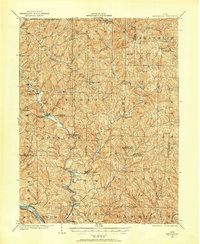
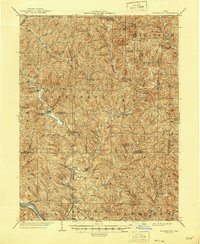
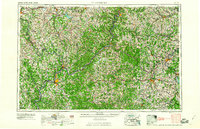
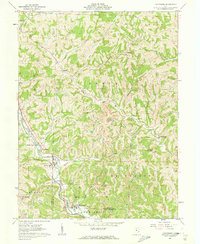
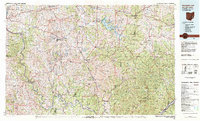
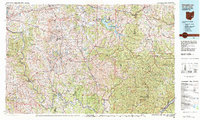
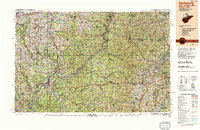
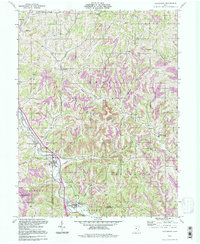
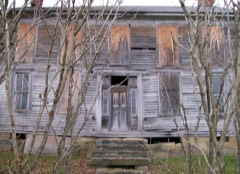
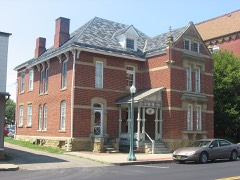
Listed on the National Register of Historic Places in 1980. 10 historic topographic surveys show this location, the earliest from 1903.
From the record
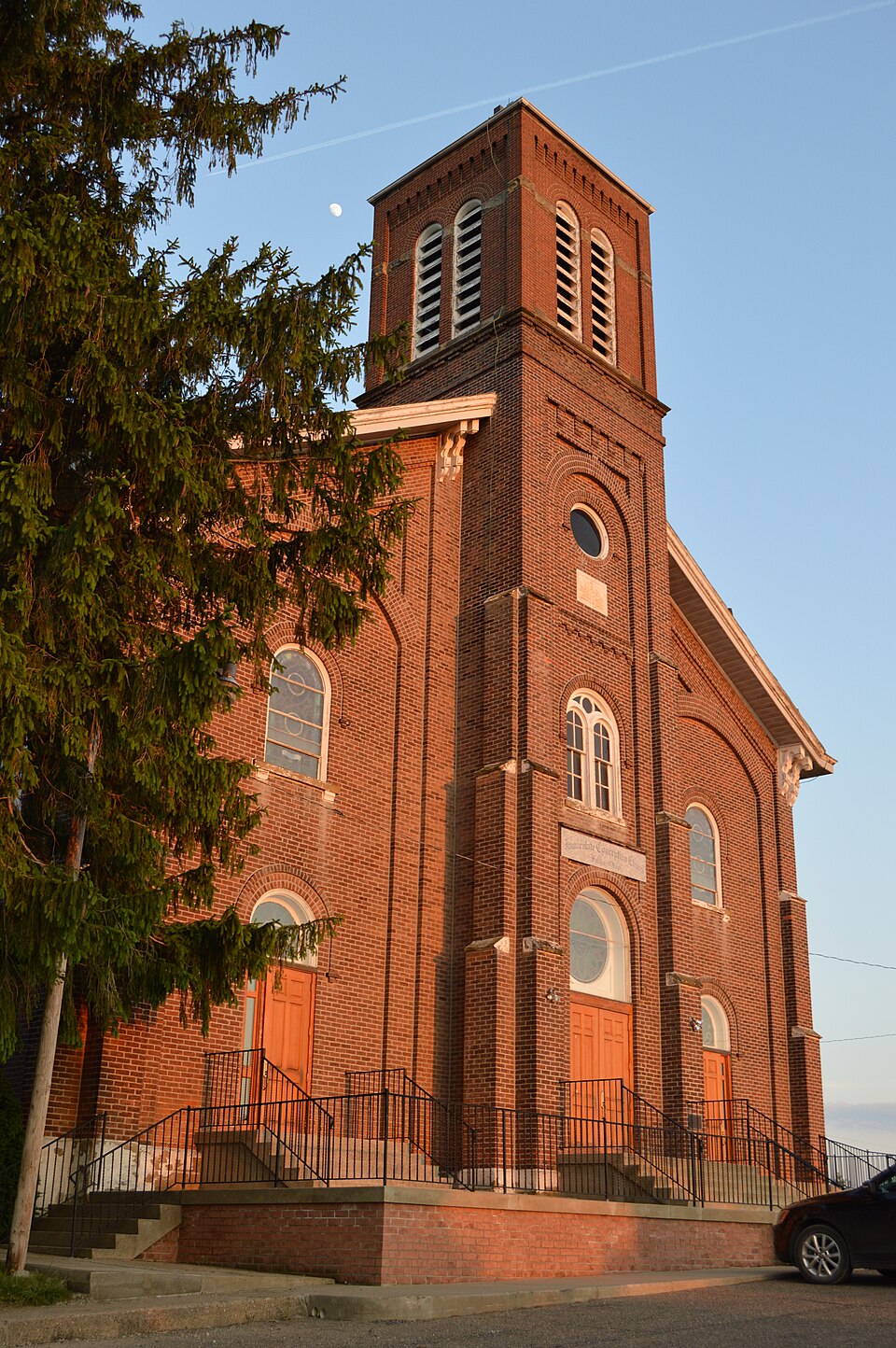
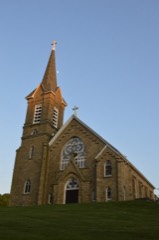
“Immaculate Conception Catholic Church is a historic Catholic parish at Fulda in rural Noble County, Ohio, United States. Established in the 1840s among a group of German immigrants, it worships in a landmark building that dominates the surrounding community.”
Wikipedia article Immaculate Conception Catholic Church (Fulda, Ohio), CC BY-SA 4.0.
One of 10 National Register listings published here for Noble County · listed in 1980 · category: Building.
National Register reference number.80003202- the number the National Park Service assigned this property when it was listed, and the key its nomination file is catalogued under at the National Archives.
Then and now
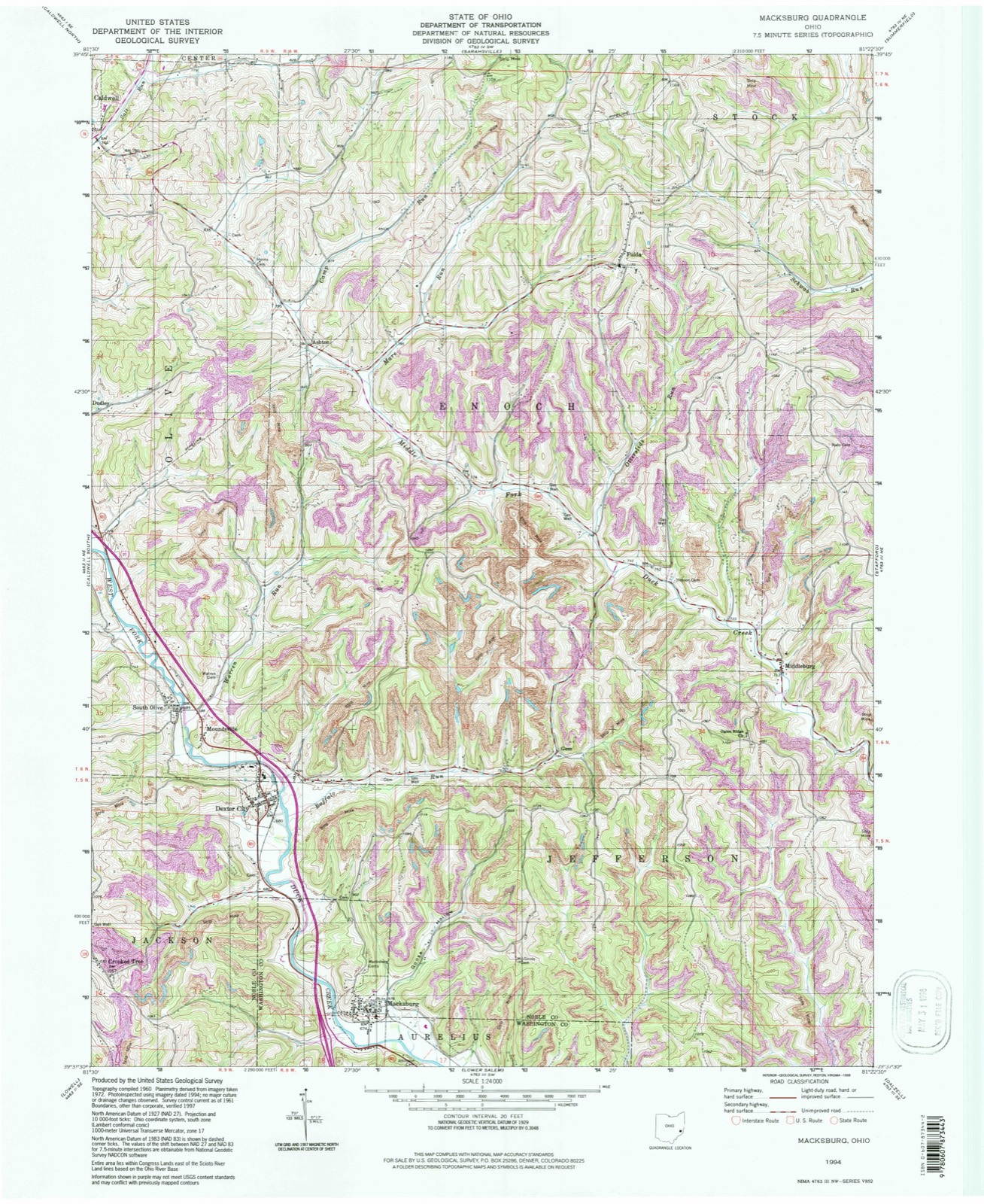
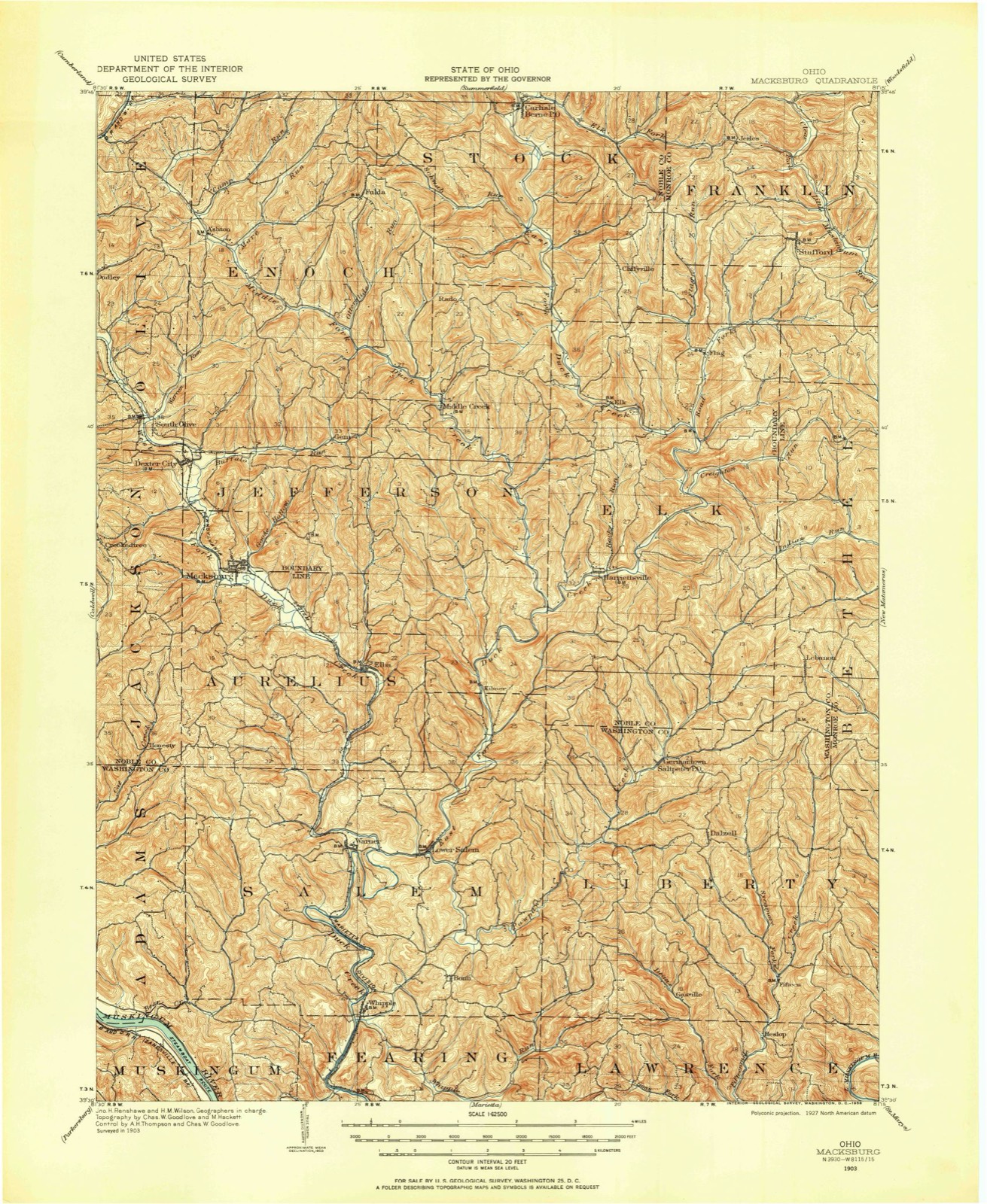
1903 to 1994
The ground this property stands on, surveyed
91 years apart. Drag the handle to wipe between them. Both sheets are
United States Geological Survey originals; neither has been altered.
The German settlement began in 1837, and has steadily progressed ever since, until now the native-born Americans, descendants of the early settlers, are comparatively few in the township. The German settlement began in the vicinity of Fulda. It has since spread over nearly all of Enoch Township, and over portions of the neighboring townships of Stock, Elk and Jefferson.
Adam Brahler was born in Germany in 1810, and came to this country in 1837, and settled near Wheeling, W. Ya. In 1845 became to Fulda, where he followed farming and his trade, that of a carpenter. He owned eighty acres of land, a part of which now belongs to his son, John. He was a devout Catholic. He died in 1873, his wife in 1871. John, son of Adam, was born in 1837, in Wheeling, W. Va. He married, in 1859, Miss Elizabeth, daughter of Joseph and Mary Shaub. They have had twelve children. He has filled all the offices in the gift of his fellow townsmen. For twelve yesLvs he has been a magistrate, «and for twelve years he has been postmaster. He is a worthy member of the Catholic church.
Regional context, not property-specific
evidence. The
federal wildfire occurrence database
lists 4 fires within 5 miles of St. Mary's Church of the Immaculate Conception
between 2012 and 2020, burning about 68 acres in total. None started naturally. None was recorded as arson.
Distance is straight-line from the map coordinates, so a fire counted
here may appear on a neighbouring settlement's page as well.
Reported cause
Fires
Debris and open burning
2
Missing data/not specified/undetermined
1
Power generation/transmission/distribution
1
The most recent of
them, most recent first, with the day each was reported and the service
that recorded it.
Regional context, not property-specific
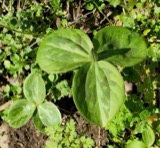
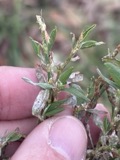
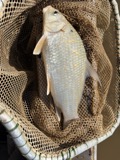
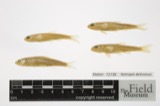
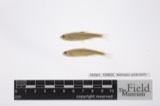
evidence. Museums hold 96 specimens
collected within 10 miles of St. Mary's Church of the Immaculate Conception between 1860 and 1974: 76 Animalia, 14 Plantae, 5 Fungi, 1 Unrecorded.
12 distinct Species records are shown.
Collected by Adams, W., Adler, K. K., Adler, K. K. & Dennis, D. M. and others. Each is a
physical object with a catalogue
number, and each entry opens the museum's record. This is what was
collected and kept, not a survey of what lives here - nothing can be
concluded from a species being absent.
United States Geological Survey topographic
sheets whose coverage includes this point. Matched by taking the coordinate the National Park Service records for this property, then
testing that coordinate against the published boundary of every sheet.
When this property was proposed for the
National Register, someone wrote the case for it: what the building is,
and why it matters. That document is a federal record in the public domain.
It is quoted below word for word, never summarised. The text was read off the scanned case file by machine, so the
occasional stray character is the recogniser's and the 1970s
typewriter's.
Description of the property
St. Mary's Church of the Immaculate Conception is a Romanesque Revival edifice, executed in Paired brackets, reminiscent of the Italianate modes of the late nineteenth century, ar- The interior of this building is clearly its finest-quality. Basilican in plan, it was apparently rather plain at the time of its original construction. However, various ornamental Columbus. In 1900, the greatest redecoration project began, under the pastorate of John supported by a series of clustered columns with lavish capitals, clearly defining the interior space of the church. New stained glass windows, imported from Europe, were also installed Cleveland decorator, Cook Brothers, and Caldwell contractor, L.
Mills and Sons, executing the Hackert Studios of Chicago and New York, in conjunction with Joseph Dickmann. (It is said Condition unexposed fair izing the Kingship of Jesus Check one ticulate the eaves. condition.All voids are round-arched, many set in blind arches which are sligltly recessed. the side altars in 1889,both purchased from the Josephinum Church Furniture Co.in work itself. A second redecoration was undertaken in 1944 under the direction of the Karl featuring a central tower which projects only slightly from the plane of the facade. When removed sometime after 1948,thus leaving the exterior of the church in an almost original brick, measuring 60'x120'.
The building is oriented toward the west, with its 3-bay facade the church was new, no steeple rose from this tower; in 1900, during a major renovation of alterations have taken place over the years: The main altar was installed in 1886' and fold for a time, but who was being welcomed back at this time) The precise decoration scheme the general color scheme is light blue and old rose, with lavish application of gold, symbol- The sides of the church feature 7-bay configurations capped with an arcaded corbel table.
(in one paragraph) significance, as clearly the finest architectural specimen in the village of Fulda.
It and, perched as it is atop an 1000 foot rise, it is obviously the architectural, as with its high altar, yaulted ceiling, and, polychrome decoration,,is, one of,the finest populated by German Catholics; indeed, the village itself was named for the Westphalian 1500-1599 1400-1499 1600-1699 commerce 1700-1799 economics communications transportation Builder/Architect education engineering invention industry Period theater literature exploration/settlement humanitarian music agriculture Specific dates prehistoric law is characteristic of the Romanesque Revival parish church of the late 19th century, town from whence came many of the original settlers.The present church was erected The church was constructed in 1874,replacing an earlier building built in 1853,six under the pastorate of D.J.Klueber who served the parish from 1860 to 1883.This other (specify) parish has supplied 8young men to the priesthood as well as more than 30 women to the military social/ _art _architecture wel1, as the spiritual anchor of the village.
Also, the interior described in #7, this is among the finest in, the state. years after the founding of the parish in 1847. This parish then, as now, was primarily sisterhood. Although the population of the parish has decreased recently, the church gem. 1900- St. Mary's Church of the Immaculate Conception is nominated for its architectural As_far as.rural ecclesiastical architectural.interior ornament in southeastern,Ohio..
Quoted from the National Register nomination
for reference 80003202, 13 pages, held by the National Archives in Record
Group 79. See the
catalogue record.
Listed places nearby
6 within 8 miles
Other National Register properties close
enough to walk or drive between, ordered by distance from this one. Both
positions come from the same geocoding pass that matched these properties
to their map sheets.
Listing record. National Park Service National Register of Historic Places, listed-properties dataset, current to 2026-05-22.
Map join. Address geocoded through the United States Census geocoder, then tested against the published boundary of every sheet in the USGS Historical Topographic Map Collection.
How this page is made. Listing fields come from federal records; map-sheet coverage is a labelled coordinate-to-boundary calculation, not a source-field claim.
Wildfire. Short, Karen C. 2022. Spatial wildfire occurrence data for the United States, 1992-2020 [FPA_FOD_20221014]. 6th Edition. Fort Collins, CO: Forest Service Research Data Archive. https://doi.org/10.2737/RDS-2013-0009.6 Collected with United States Government funding and usable without additional permissions or fees.
Specimens. Global Biodiversity Information Facility (GBIF), https://www.gbif.org/. Only records licensed CC0 or CC BY are used. Records licensed CC BY-NC are excluded because this site carries advertising. Images are checked individually and any whose licence is non-commercial, no-derivatives or unreadable is refused.
 Block