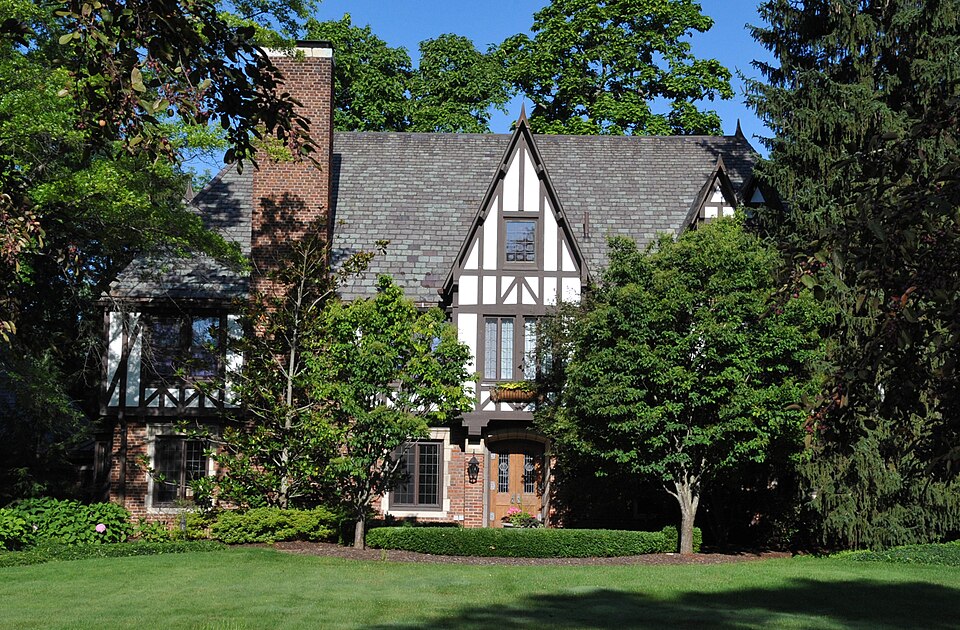
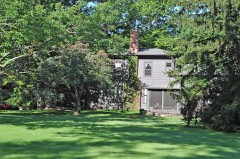
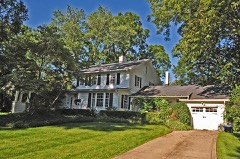
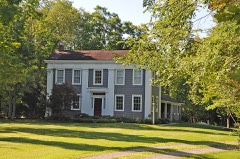
Built in 1917 in the Tudor Revival architecture. Listed on the National Register of Historic Places in
1989. A historic map-sheet match is not published yet. The record needs a coordinate-quality review before it can be joined to a sheet boundary.
From the record
“The little settlement thus dropped in the woods, like a pebble in the ocean, seemed lost in the vast expanse of wilderness that stretched, with interminable proportions, from the frontiers of Western New York along the lakes to the great West. By the treaty 1785 with the savages, the Cuyahoga River was made a pai-t of the dividing line between the territories of the contracting parties.”
History of Summit County, with an Outline Sketch of Ohio (1881). Machine-read text.
one of 137 National Register listings in Summit County · listed in 1989 · category: Building · built in 1917, Tudor Revival architecture, by John William Creswell Corbusier · one of 1 National Historic Landmarks in Summit County.
National Register reference number.89001451- the number the National Park Service assigned this property when it was listed, and the key its nomination file is catalogued under at the National Archives.
The early settlement of the Reserve was an effort to reproduce in this Western wild the honored institutions of the motherland. This was the beginning of the golden period of the Connecticut churches, a period marked by revivals of religion throughout the State, distinguished for their power, purity and permanent influence, gi'eatly enlarging the chm-ches, improving the moi-als of society, and bringing the people of the State, to a great extent, under the control of religion." It was just at this time also that the Connecticut method of " missions to the new settlements " was completed, which was destined to play so important a part in the New Connecticut; and these civilizing influences combined to leave an impress upon the plastic civilization of the new land that has been ciystallized in the cultm'e of to-day. These influences were early marked, and perhaps nowhere more distinctly than in the region which is now embraced in Summit County. A letter from the Western Reserve to Eastern friends dated 1812, reads as follows: "I like Tallmadge better on several accounts than any other place I have seen. The settlers in this toA\Ta are much the most respectable of any on the Reserve. There is provision made for the pennanent support of preaching, which is not the case in any other town." Another letter dated from Tallmadge in the same year, speaks in the same strain: "I am persuaded that if any of om' fi'iends tliiulv of going to a new country, they will find none that they will be so well pleased with, either on account of the quality of the land or of the society. I do not think there is in the State of Connecticut a society where there is that attention paid to the Sabbath, and to religion generally, that there is here. There are very few who do not attend meeting regularly, and very few prayerless families." There is no question but that the early histoiy of Tallmadge was exceptional in some respects, but of Hudson it was scai'cely less true. Its founder, the son of a tailor who taught his children as he plied his trade, grew up to advanced manhood embracing skeptical notions. Caught by the sweeping power of the chiur.h movement of this period he was converted, and with the characteristic practicability of the Pm-itan mind, he sought an opportunity to prove his faith in work. The missionary spirit that had begun to pervade the religious communities of his native State, and the recent organization of the gi'eat Land Company, prepared the way which he adopted without hesitation. Zealous in his new found faith, " he wished to do something to repair the injury he had done, and to advance, to the extent of his ability, the interests of that cause which he had early labored to destroy. These were the views that led him to emigrate. * * * * The early efforts and sacrifices of the men who came to Hudson, show that they were actuated by the motives I have ascribed to them. They never suffered the Sabbath to pass by after the settlement was commenced, without religious worship; and by great effort and great pecuniary expenditure, they provided for the enjoyment of religious ordinances among themselves, and sought to promote the progi-ess of religion in this part of our country. It was the first desire of ^Ir. Hudson's heart to see the day when a chm'ch shou^ld be organized within the township, and he rejoiced in that day. The next object of desire was that this chiu-ch might enjoy the labors of a settled Pastor, and he lived to see that day and was glad. Then it was in his heart to see a house erected for the worship of Grod, and that he saw completed to his great satisfaction. 'But,' said he, 'the college - the college; that was a child of my old age. I never expected to live to see that.' Yet the college was in coincidence with his plans and with his missionary spirit. He spent most of his time in visiting Clmstian families in all parts of the Reserve, and securing the organization of churches and it was with him a matter of painful solicitude, how the infant chm*ches rising up on the Reserve were to be supplied with able, faithful ministers, in sufficient numbers to meet their wants. The college came in as the appropriate instrument to supply the deficiency."*
The original purchasers of this township with its annexes, were Nathaniel Norton, of Bloomfield, N. Y.,Birdseye Norton and David Hudson, of Goshen. Conn. There are no means now of ascertaining the arrangement between these partners in relation to this purchase. Nathaniel Norton was a well-to-do farmer in Bloomfield, N. Y., where he had come as an early settler ; Birdseye Norton was a wealthy merchant of Goshen, and David Hudson a farmer in comfortable circumstances, but of little cash capital. From such evidence as the old account books of Mr. Hudson afford, it is probable that Birdseye Norton furnished one-half of the capital and each of the others contributing a fourth, Mr. Hudson probably turning in his Connecticut farm to Mr. Birdseye Norton. The land was purchased at 52 cents per acre, but with the equalizing annexes the average cost per acre was reduced to 34 cents. Nathaniel Norton, some time in 1S()1, disposed of his share, probably to Stephen Baldwin, Benjamin Oviatt and Theodore Parmele. The first di-aft of the Reserve was made in 1798. and earlv in the following: yeai'. Mr. Hudson started out to explore and survey the land for the company in which he was a partner. His preparations for his new adventui'e were carefully made, as the following exhibit taken from an old account-book shows : far West was forced to depend upon the uncertain guidance of Indian trails and the surveyor's marks. The thoroughfare of Western travel was by the lakes, and IVIr. Hudson has left a carefully prepared " traveler's guide " over that route as follows: From Black Rock to Buffalo Creek, tlu-ee miles; Buffalo Creek to Five Mile Creek, live miles; Five Mile Creek to Eighteen Mile Creek, thirteen miles; Eighteen Mile Creek to Cattaraugus, twelve miles; Cattaraugus to Four Mile Creek, four miles; Four Mile Creek to Fifteen Mile Creek, eleven miles; Fifteen Mile Creek to Chataqua, twenty-live miles; Chataqua to Lowiy's, sixteen miles; Lowry's to Presque Isle, sixteen miles; Presq^^e Isle to Walnut Creek, twelve miles ; Walnut Creek to Elk Creek, eight miles ; Elk Creek to Conneaut, ten miles; Conneaut to Ashtabula, fourteen miles; Ashtabula to Grand River, twenty-six miles; Grand River to Chagrin, ten miles; Chagrin to Cuyahoga, twenty miles; a total of 205 miles. The only public source of information in regard to this country was " Morse's Geography," which represented the latter river as navigable for sloops for forty miles from its moiith.
Regional context, not property-specific
evidence. The
federal wildfire occurrence database
lists 5 fires within 5 miles of Corbusier, John William Creswell, House between
1993 and 2005, burning about 3 acres in total. 1 started naturally. None was recorded as arson.
Distance is straight-line from the map coordinates, so a fire counted
here may appear on a neighbouring settlement's page as well.
Reported cause
Fires
Debris and open burning
2
Natural
1
Recreation and ceremony
1
Missing data/not specified/undetermined
1
The most recent of
them, most recent first, with the day each was reported and the service
that recorded it.
Regional context, not property-specific
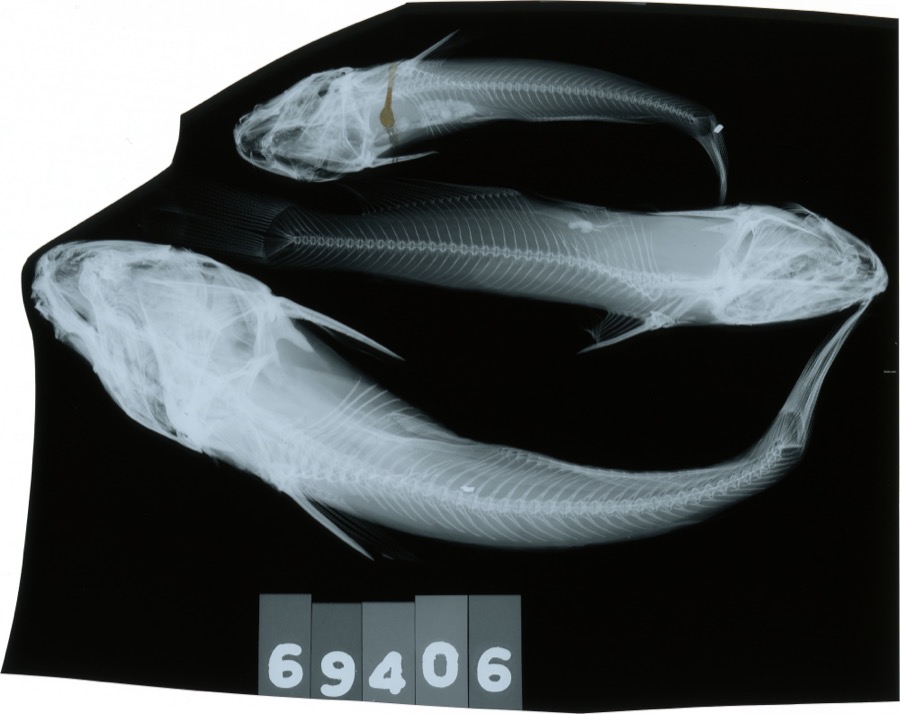
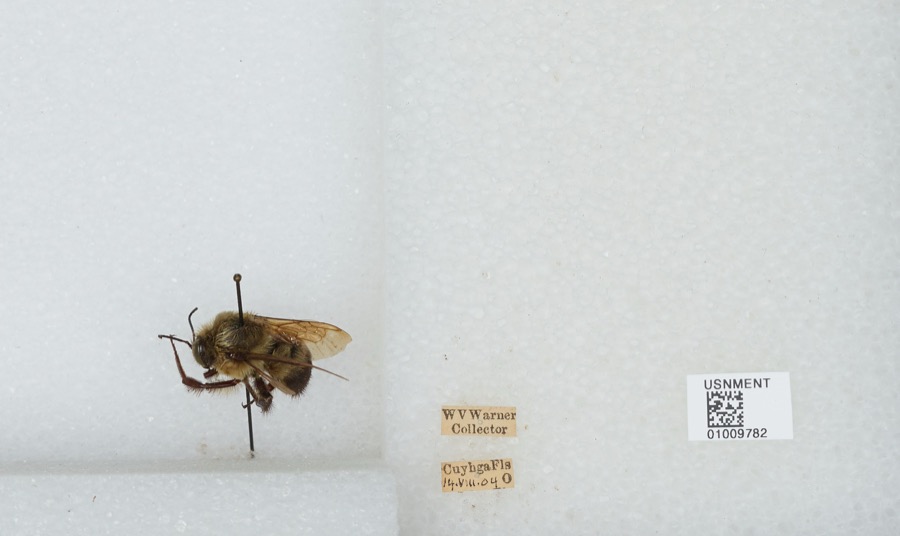
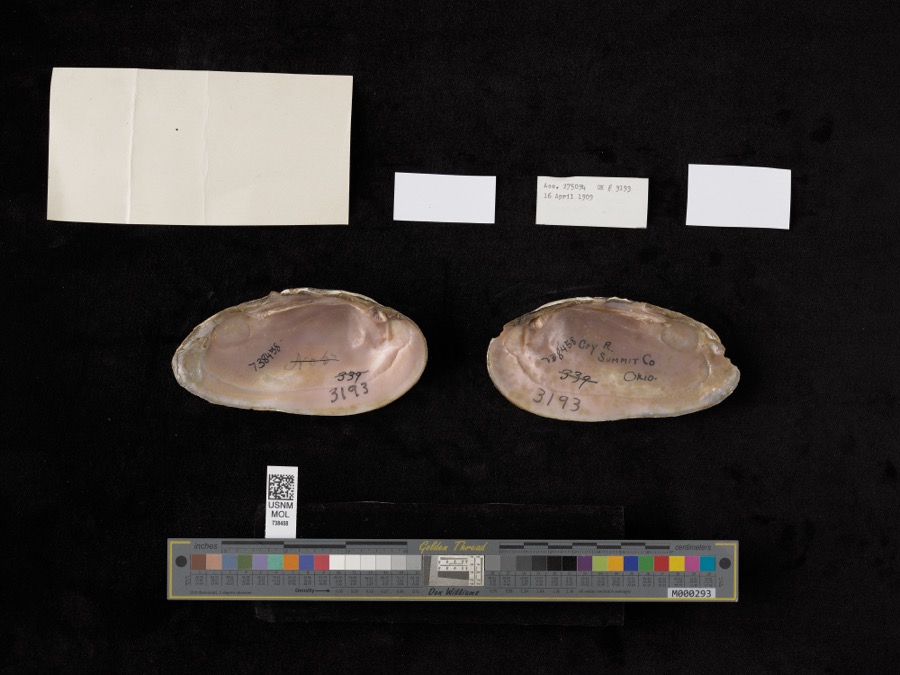
evidence. Museums hold 794 specimens
collected within 10 miles of Corbusier, John William Creswell, House between 1877 and
1973: 744 Animalia, 39 Plantae, 11 Fungi. 12 distinct Species records are shown.
Collected by A. Hall, A. Woolman, Adams J. M. R. and others. Each is a
physical object with a catalogue
number, and each entry opens the museum's record. This is what was
collected and kept, not a survey of what lives here - nothing can be
concluded from a species being absent.
Regional context, not property-specific
evidence. The federal mineral resources record lists
7 workings within 5 miles of Corbusier, John William Creswell, House: 5 past producers, 2 producers.
2 still produce. What was taken out: Stone, Crushed/Broken, Sand and Gravel, Construction. Distance is straight-line from the
map coordinates, so a quarry counted here may appear on a neighbouring
settlement's page as well.
Regional context, not property-specific
evidence. The National Weather Service names
Hudson, the town this property stands in, in 25 storm reports between 1996 and 2024: 11 thunderstorm wind, 8 hail, 4 flash flood, 2 lightning.
No death or injury is recorded in these reports. Each account below is quoted exactly as the forecast office
filed it, from the NOAA Storm Events Database, and each date
opens the federal record of that event.
Reports of flooded and impassable roadways in northeast Hudson, including Pine Trails, Alexandra Drive, Huntington Road, Mayapple Drive, Herrick Park Drive, and Deerpath Trails. Ponds overflowing on Stow Road. Vehicles stuck in water in front of Hudson High School and on Woodspring Lane and Stow Road. 34 homes reported flooding, mainly basement flooding. One partial basement collapse was reported, with 11 rescues from cars stuck in water.
No historic map-sheet match is published
for this property yet. That does not mean no map exists. This record needs
a coordinate-quality review before it can be joined to a sheet boundary.
Browse the county's mapped places while that work is
pending.
From the nomination file
1,983 words on record
When this property was proposed for the
National Register, someone wrote the case for it: what the building is,
and why it matters. That document is a federal record in the public domain.
It is quoted below word for word, never summarised. The text was read off the scanned case file by machine, so the
occasional stray character is the recogniser's and the 1970s
typewriter's.
Statement of significance
Applicable National Register Criteria Areas of Significance (enter categories from instructions) Period of Signiticance Significant Dates Significant Person John William Creswell Corbusier The house at 226 College Street is significant under Criterion C in that it was designed workmanship, feeling and association. Corbusier was born in Rochester, New York in 1878. He studied architecture in New York Covenant, 11205 Euclid Avenue, Cleveland, Ohio (1911) (in association with the national firm of Cram, Goodhue and Ferguson), the Church of the Saviour, 2537 Lee Road, Cleveland thirty churches throughout the United States before his death in 1928. He came to Hudson in 1913. He had done previous work in Hudson for James W.
E11sworth in the building of the house at 53 Aurora Street, a brick Neo-Classical residence, which the renovation of the Straight and Son Cheese Storehouse, adapted for use as a club house. His move to Hudson coincided with the date of one of his major projects for Ellsworth, the 226 College Street in 1917, and lived in it until his death in 1928. By 1917 Tudor Revival was an extremely popular building style in the suburbs, but was was the first Tudor Revival building in Hudson and is still one of the very few in town designed, Corbusier designed it in the same spirit as found in all his revival style architecture.
The Chateauesque Salmon Halle building, the Georgian Revival Seymour Hal1 X See continuation sheet 1917-1928 Architecture Architect/Builder State significance of property, and justify criteria, criteria considerations, and areas and periods of significance noted above. the first Tudor Revival house in Hudson.The house was the personal residence of today.Although the Corbusier House is unlike the other more classical buildings he Lx locally Criteria Considerations (Exceptions) Corbusier.
Quoted from the National Register nomination
for reference 89001451, 21 pages, held by the National Archives in Record
Group 79. See the
catalogue record.
Listed places nearby
6 within 8 miles
Other National Register properties close
enough to walk or drive between, ordered by distance from this one. Both
positions come from the same geocoding pass that matched these properties
to their map sheets.
Listing record. National Park Service National Register of Historic Places, listed-properties dataset, current to 2026-05-22.
Map join. Address geocoded through the United States Census geocoder, then tested against the published boundary of every sheet in the USGS Historical Topographic Map Collection.
How this page is made. Listing fields come from federal records; map-sheet coverage is a labelled coordinate-to-boundary calculation, not a source-field claim.
Wildfire. Short, Karen C. 2022. Spatial wildfire occurrence data for the United States, 1992-2020 [FPA_FOD_20221014]. 6th Edition. Fort Collins, CO: Forest Service Research Data Archive. https://doi.org/10.2737/RDS-2013-0009.6 Collected with United States Government funding and usable without additional permissions or fees.
Specimens. Global Biodiversity Information Facility (GBIF), https://www.gbif.org/. Only records licensed CC0 or CC BY are used. Records licensed CC BY-NC are excluded because this site carries advertising. Images are checked individually and any whose licence is non-commercial, no-derivatives or unreadable is refused.
Mines and quarries. USGS Mineral Resources Data System (MRDS) https://mrdata.usgs.gov/mrds/ A work of the United States government, no copyright under 17 U.S.C. 105.
Storms. NOAA National Centers for Environmental Information, Storm Events Database https://www.ncei.noaa.gov/stormevents/ A work of the United States government, no copyright under 17 U.S.C. 105. Narratives are quoted verbatim from the National Weather Service report and are not edited or summarised.
 Block
Block