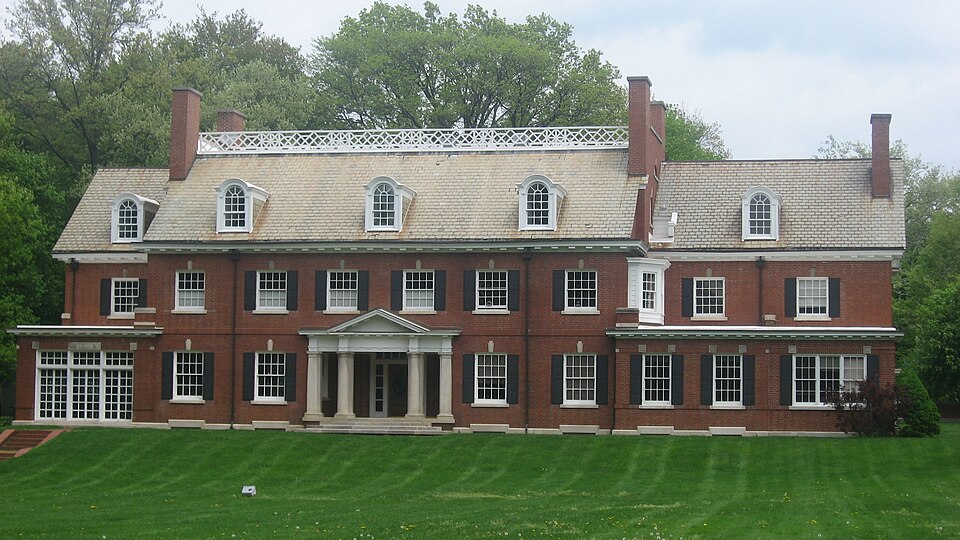
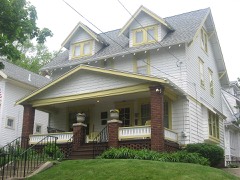
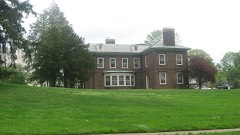
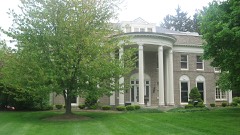
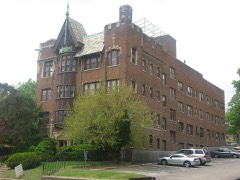
Built in 1913 in the Colonial Revival architecture. Listed on the National Register of Historic Places in
1993. A historic map-sheet match is not published yet. The record needs a coordinate-quality review before it can be joined to a sheet boundary.
From the record
“So Akron grew until August 10th, 1833, on which day the territorial extent of the city was doubled by the filing of a new plat by which all the lands lying north of the town as far as the Little Cuyahoga River, and between what is now th^ railroads on the east and Walnut and Oak Streets on the west, were allotted. As in the former plat, streets, parks, and alleys were provided for, and a little city was carefully laid out on paper.”
Centennial History of Summit County, Ohio and Representative Citizens (1908). Machine-read text.
one of 137 National Register listings in Summit County · listed in 1993 · category: Building · built in 1913, Colonial Revival architecture · one of 1 National Historic Landmarks in Summit County.
National Register reference number.93000405- the number the National Park Service assigned this property when it was listed, and the key its nomination file is catalogued under at the National Archives.
It is inaccurate to say that the Ohio Canal made Akron. The city as it stands today is the resultant of many causes. Many and different influences, and various men and measures, have co-operated toward the end now attained. The start was made long before the Ohio Canal was built. - Within the present limits of the city, settlements at two different points had been made, which antedate the canal by nearly two decades. In 1807 the first settlement had been made in Middlebury. In 1811 Miner Spicer had started "Spicertown." In the same year Paul Williams settled upon the lands immediately west of the Spicer settlement and adjoining the land of General Simon Perkins on the east. When the canal was opened in 1827 Middlebury was an important village. It had attracted many settlers from the East, principally from Connecticut, and boasted of half a dozen mills and factories, a dozen stores, three inns and about five hundred inhabitants. It certainly deserved a place on the maps of the time.
Let us search that we may find, if we can, the economic reasons for the existence of Akron. The sentence that begins this chapter contains the idea that is ordinarily advanced as the sole reason for the Akron of today. The unthinking man repeats: "The canal made Akron." The wTiter on Akron history records: "Dr. Eliakim G. Crosby made Akron."
Regional context, not property-specific
evidence. The
federal wildfire occurrence database
lists 1 fire within 5 miles of Seiberling, Charles Willard, House between
2014 and 2014, burning about 0 acres in total. None started naturally. None was recorded as arson.
Distance is straight-line from the map coordinates, so a fire counted
here may appear on a neighbouring settlement's page as well.
Reported cause
Fires
Missing data/not specified/undetermined
1
The most recent of
them, most recent first, with the day each was reported and the service
that recorded it.
Regional context, not property-specific
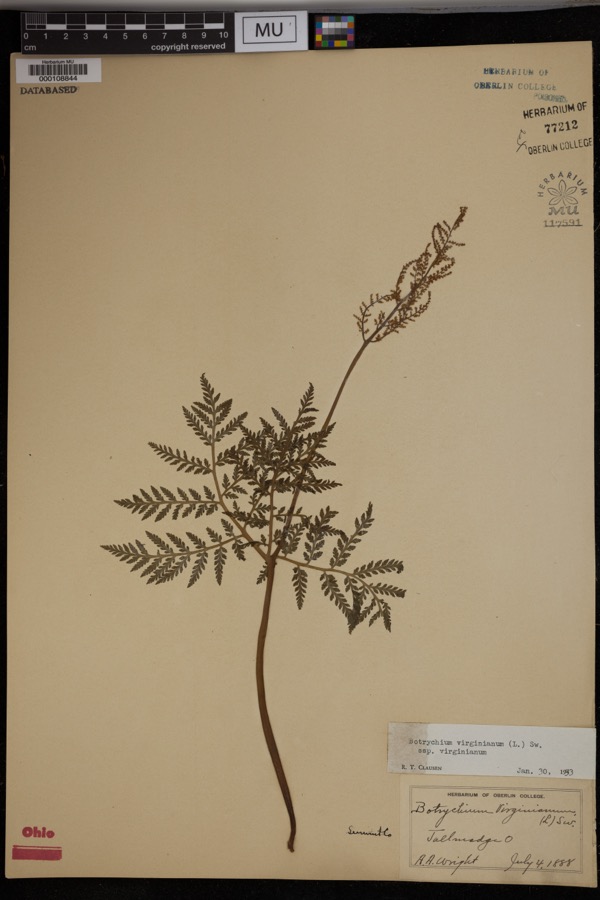
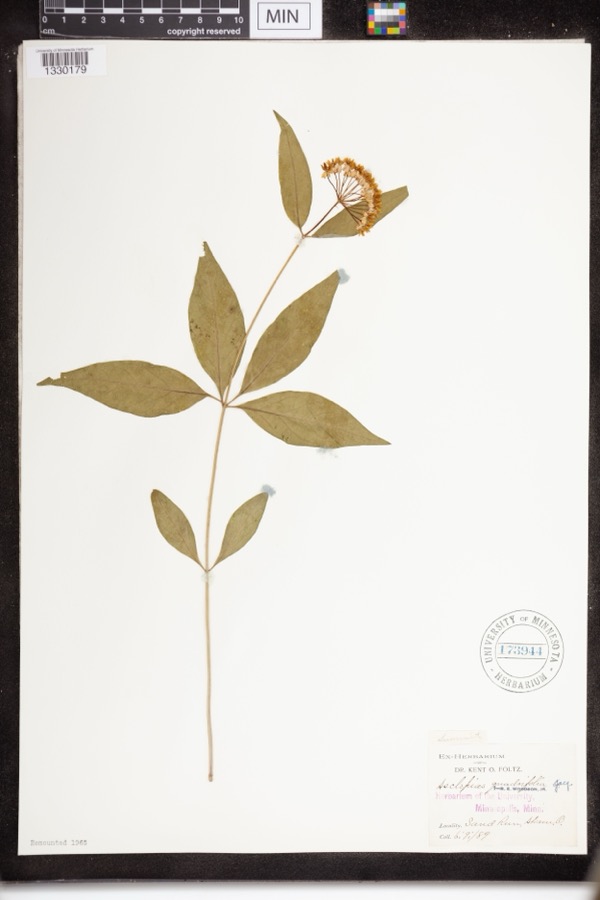
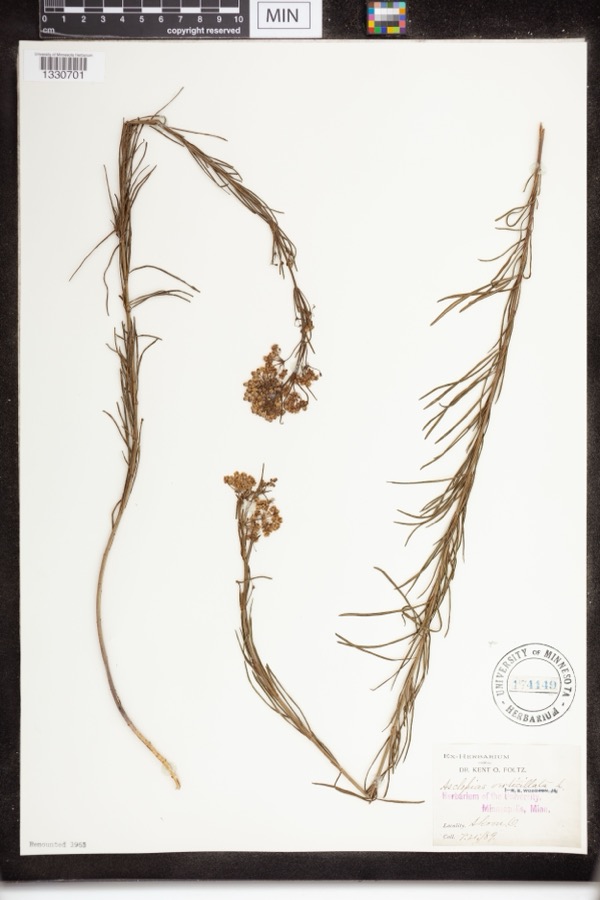
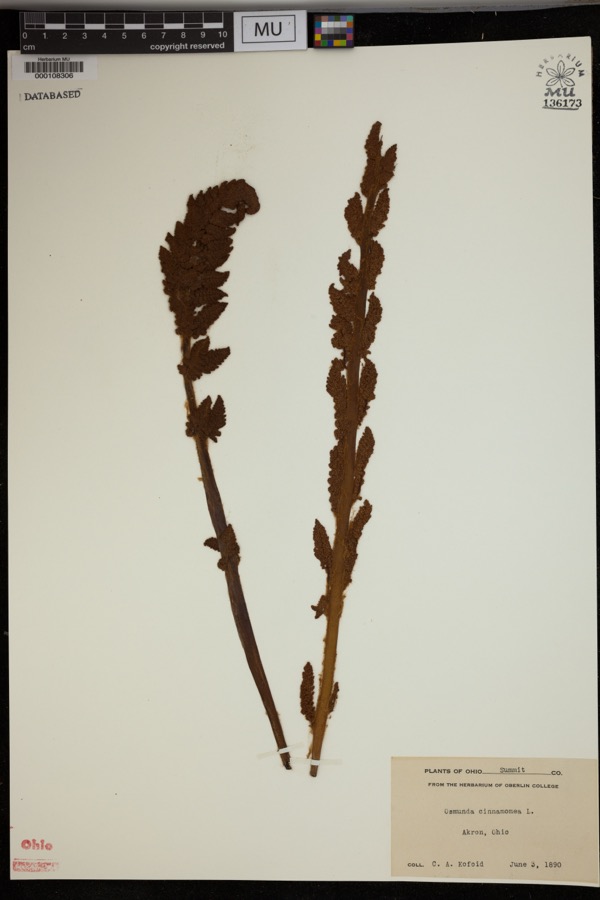
evidence. Museums hold 900 specimens
collected within 10 miles of Seiberling, Charles Willard, House between 1867 and
1975: 782 Animalia, 71 Plantae, 45 Fungi, 1 Unrecorded, 1 Bacteria. 12 distinct Species records are shown.
Collected by (no collector listed), A. Black, A. Woolman and others. Each is a
physical object with a catalogue
number, and each entry opens the museum's record. This is what was
collected and kept, not a survey of what lives here - nothing can be
concluded from a species being absent.
Regional context, not property-specific
evidence. The federal mineral resources record lists
11 workings within 5 miles of Seiberling, Charles Willard, House: 9 past producers, 2 producers.
2 still produce. What was taken out: Sand and Gravel, Construction. Distance is straight-line from the
map coordinates, so a quarry counted here may appear on a neighbouring
settlement's page as well.
Regional context, not property-specific
evidence. The National Weather Service names
Akron, the town this property stands in, in 75 storm reports between 1996 and 2025: 38 hail, 31 thunderstorm wind, 5 flash flood, 1 lightning.
The reports record 2 deaths. Each account below is quoted exactly as the forecast office
filed it, from the NOAA Storm Events Database, and each date
opens the federal record of that event.
On Wednesday afternoon, July 10, the City of Akron experienced 3 to 4 inches of rain in an hour and a half. Flooding occurred causing the closings of roadways and expressways. Along with the roadway flooding, the City received reports of nearly 200 flooded basements. Widespread flooding was reported throughout the city and numerous homes, businesses, and vehicles were inundated by the rain.
Weakened tree fell onto home in Akron and killed occupant. Thunderstorm was likely sub-severe per radar data. The nearby Akron-Fulton International Airport ASOS recorded a peak convective wind gust of 44 mph at 9:26 AM EST. No other reports of thunderstorm-related damage or severe convective weather were received as the cluster of storms moved through the Akron area.
A severe thunderstorm moved across Summit County and caused unprecedented damage. Hail as large as softballs fell across much of the county. Extensive damage was done to homes and vehicles in Akron and surrounding areas. Nearly 51,100 insurance claims were filed for damage in the county. The south side of Akron was the hardest hit.
Thunderstorm winds downed trees and limbs in the Akron and Stow areas resulting in scattered power outages. At the peak of the storm a few thousand customers were without power.
Route 8 northbound was closed from Perkins St to E. Tallmadge Avenue. Akron police reported traffic accidents and delays due to the high water conditions. Route 8 southbound closed at Seasons Rd in Hudson/Stow to flooding. Storm total rainfall from Hudson 4.75.
2 papers published in this town,
digitised by the Library of Congress and free to read: 0 issues,
0 pages. Every page is searchable, so a name or a street can be
looked for directly in what the town printed about itself at the time.
No historic map-sheet match is published
for this property yet. That does not mean no map exists. This record needs
a coordinate-quality review before it can be joined to a sheet boundary.
Browse the county's mapped places while that work is
pending.
From the nomination file
1,918 words on record
When this property was proposed for the
National Register, someone wrote the case for it: what the building is,
and why it matters. That document is a federal record in the public domain.
It is quoted below word for word, never summarised. The text was read off the scanned case file by machine, so the
occasional stray character is the recogniser's and the 1970s
typewriter's.
Statement of significance
Seiberling, Charles Willard Child, Edward S. Charles Seiberling, one of Akron's foremost industrialists and civic leaders; and under life in several of his father's companies, becoming superintendant of the J.F. Seiberling and treasurer, Charles was instrumental in that company's success as well, and served until Throughout his professional life, Charles was noted for his strong belief in progressive During Goodyear's financial turmoil after World War 1, Charles posted 22,000 shares of his own stock to protect employee stock investments, and he founded and capitalized the (Kenfield, p. 78).
He was founder of the Akron Community Chest (reportedly the third in the U.S.), and at various times was president of the Chamber of Commerce, University Club, Akron Rotary Club, Akron University Endowment Association, and the Akron Chapter of the Barberton Citizen's Hospital, YWCA, Akron Colored Community Service League, Better Akron Federation, and Springfield Lake TB Sanitorium; a vice-president and director of the Akron X See continuation sheet Industry 1913-1922 Architecture Architect/Builder Cultural Affiliation Areas of Significance (enter categories from instructions) Significant Person Applicable National Register Criteria Period of Significance until 1921 and forming a highly successful business partnership of lifetime duration with Significant Dates Citizens Savings & Loan Co.and the Macedonia-Northfield Banking Company.
worker relations, and he contributed significantly to humanizing the industrial workplace. Following college at 0berlin,Charles W.Seiberling (born Jan.26,1861) entered working The Charles W.Seiberling House is significant under Criterion B for its association with Criterion C as an outstanding example of the Georgian Revival style of architecture. Co.in 1883 and continuing in that position until 1895.In 1898,with his brother Frank, Xlocally Criteria Considerations (Exceptions) State significance of property, and justify criteria, criteria considerations, and areas and periods of significance noted above. City Club; and a 1928 delegate to the Republican National Convention.
Quoted from the National Register nomination
for reference 93000405, 17 pages, held by the National Archives in Record
Group 79. See the
catalogue record.
Listed places nearby
6 within 8 miles
Other National Register properties close
enough to walk or drive between, ordered by distance from this one. Both
positions come from the same geocoding pass that matched these properties
to their map sheets.
Listing record. National Park Service National Register of Historic Places, listed-properties dataset, current to 2026-05-22.
Map join. Address geocoded through the United States Census geocoder, then tested against the published boundary of every sheet in the USGS Historical Topographic Map Collection.
How this page is made. Listing fields come from federal records; map-sheet coverage is a labelled coordinate-to-boundary calculation, not a source-field claim.
Wildfire. Short, Karen C. 2022. Spatial wildfire occurrence data for the United States, 1992-2020 [FPA_FOD_20221014]. 6th Edition. Fort Collins, CO: Forest Service Research Data Archive. https://doi.org/10.2737/RDS-2013-0009.6 Collected with United States Government funding and usable without additional permissions or fees.
Specimens. Global Biodiversity Information Facility (GBIF), https://www.gbif.org/. Only records licensed CC0 or CC BY are used. Records licensed CC BY-NC are excluded because this site carries advertising. Images are checked individually and any whose licence is non-commercial, no-derivatives or unreadable is refused.
Mines and quarries. USGS Mineral Resources Data System (MRDS) https://mrdata.usgs.gov/mrds/ A work of the United States government, no copyright under 17 U.S.C. 105.
Storms. NOAA National Centers for Environmental Information, Storm Events Database https://www.ncei.noaa.gov/stormevents/ A work of the United States government, no copyright under 17 U.S.C. 105. Narratives are quoted verbatim from the National Weather Service report and are not edited or summarised.
 Block
Block