Cape Cod Cold Storage, 125-129 Commercial Street, Provincetown, Barnstable County, MA. Surveyed as HAER MASS,1-PTOWN,3-, with a 2,413-word written history.
From the record
“The Cape Cod Cold Storage was a major trap fishing and cold storage facility which functioned as a principal local industry and employer in Provincetown during the period of significance.”
Written record, HAER MASS,1-PTOWN,3- survey. Machine-read text.
surveyed by the federal HAER program as HAER MASS,1-PTOWN,3- · the record runs 2413 words · one of 148 surveyed structures published for this county.
Source document
Quoted word for word from HAER MASS,1-PTOWN,3-.
Not written, edited or summarised by this site.
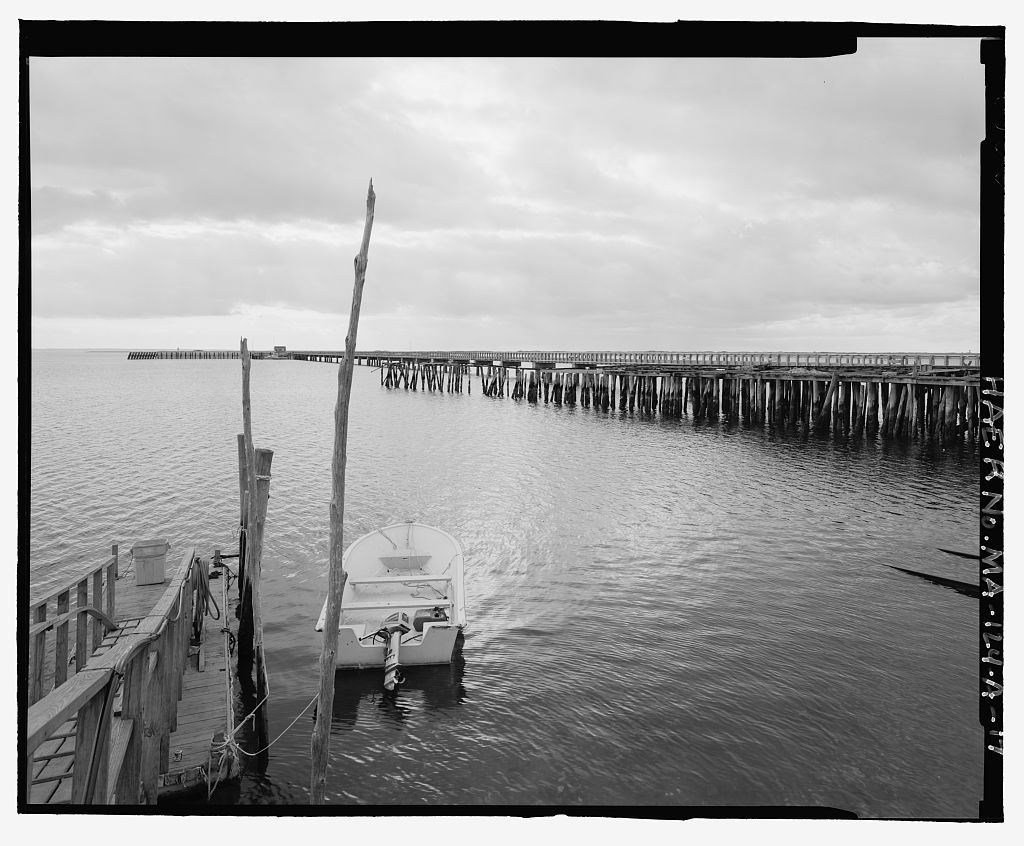
The Cape Cod Cold Storage was a major trap fishing and cold storage facility which functioned as a principal local industry and employer in Provincetown during the period of significance. As such it represents contemporary technology for the off-loading and processing of fish from a typical Provincetown trap fishing and cold storage operation during the mid-late and early 2 0th centuries. Proj ect Information; All but two structures related to the Cape Cod Cold Storage operation have been demolished and replaced or substantially rehabilitated for use by the United States Coast Guard in with the last fifteen years. The off-loading wharf associated with the Cape Cod Cold Storage, known as Freeman!s Wharf has deteriorated beyond rehabilitation and is scheduled for demolition.
To mitigate the adverse effect, the State Historic Preservation Office stipulated appropriate documentation. Richard C. Youngken The Newport Collaborative, Inc. 14 Pelham Street Newport, RI CAPE COD COLD STORAGE (U.S. Coast Guard Station Provincetown) HAER No. MA-124 (Page 2) At the peak of its development, during the the Cape Cod Cold Storage was one of five cold storage fish processing operations in Provincetown owned and operated by the Atlantic Coast Fisheries Company. Contained within the approx.
square foot block now occupied by the United States Coast Guard Provincetown Station were the following structures functioning as the Cape Cod Cold Storage plant: o 1: Power House, wood-framed, 1.5 stories x o 2: Machine Shop, wood-framed, 1.5 stories x o 3: Pump House, wood-framed, 1 story x o 4: Freezer/Cold Storage, wood-framed, 4 stories x o 5: Cannery, brick, 1 story x o 6: Blacksmith Shop, brick/metal, 1 story x o 7: Fillet Plant/Cannery, wood-framed, 2 story o 8: Trap Shed, wood-framed, 2 story x o 9: Wharf, wood-framed (Freeman's Wharf) The origins of the Cape Cod Cold Storage relate to the development of fisheries and support facilities for fishermen and fishing vessels along the entire stretch of Provincetown's harbor.
The area, bounded by Commercial Street and its southerly turn to Provincetown Harbor, provided the base for several small scale fishing and vessel support businesses in the mid-to-late century, including Freeman's Wharf, Lancey's Wharf and nearby fish flaking yards. These operations supported primarily the off-shore salt cod and in-shore mackerel fisheries. The need for bait fish precipitated by Canadian enforcement of the Treaty of in the mid-1880s, which precluded American use of Canadian bait fish supplies encouraged investment in the local trap fishery and cold storage facilities. In the late century, a growing taste for fresh fish also encouraged the development of a method to quickly freeze fish.
The first Provincetown cold storage designed to utilize the anhydrous ammonia absorption freezing process was built in (the Provincetown Cold Storage). Within two decades (by Joshua Paine had acquired Freeman's Wharf and the adjacent property and had developed the Cape Cod Cold Storage facility. By the cold storage and wharf were purchased by the Atlantic Coast Fisheries Company, a major regional fish processing and marketing business. A typical cold storage of the period operated as a fish processing plant , sharp freezer, and frozen fish fillet warehouse. Among Atlantic Coast Fisheries cold storage operations, the Cape Cod Storage was typical, employing trap fishing as the principal source of fresh product. CAPE COD COLD STORAGE (U.S. Coast Guard Station Provincetown) HAER No.
MA-124 (Page 3) Trap fishing consists of the entrapment of migratory coastal fish in V-shaped, box-shaped or cello-shaped weirs or traps consisting of tarred nets (called "twine") hung with block and tackle on hickory stakes driven into the sandy bottom about a mile from shore. These traps were located within the protected areas off the Provincetown waterfront and along the shelving bottom of the western shore of the Cape facing Cape Cod Bay. The nets stayed in place for the eight month fishing season (spring, summer, fall). Small motorized trap fishing boats tended the nets and brought fresh dressed and clean-washed fish from the traps to cold storage wharfs and piers where fish were off-loaded via hoppers and hoists onto motorized carts for transport into shore on the wharf.
The tidal range in Provincetown dictated extended piers of feet in length to ensure appropriate depth at the pier end. The Cape Cod Cold Storage wharf (known as Freeman's Wharf) provided a gasoline-powered cart for the transport of fish. Transport from the wharf to cold storage building entailed the off-loading of fish from the cart into a hopper hung from an aerial tramway for lifting of the fish to the upper floors of the cold storage. The design of operations within the cold storages dictated delivery of fresh fish to the upper portions of the building for processing in a vertical operation.
At the Cape Cod Cold Storage, fish were delivered via tramway to the 4th floor where they were mechanically headed, skinned, filleted and packaged, then transferred vertically to the sharp freezer (on the third floor) . This area consisted of 1.5 inch piping in coils running the length of the space on which were wooden flakes or shelves. Prepared fish fillets were placed on metal trays on these shelves to be frozen. Frozen product was then transferred to freezer/cold storage rooms on the second and first levels of the plant. Frozen whiting fillets were particularly popular in the marketplace. In the Cape Cod Cold Storage operation utilized three trap boats with a crew of five men in each and between workers in the cold storage itself.
In spite of the capacity, there apparently were days when the freezer could not hold any more fish. In Provincetown landed 30 million lbs of fish, of which 20 million lbs were from fish traps. In the later days of operation (circa the plant had undergone additions to the cold storage building extending the space to the east and adding 50% to capacity. By the operation had a storage capacity of two (2) million lbs of frozen products as well as the freezing capacity for approximately lbs of fish per day. The Cape Cod Cold Storage relied upon steam power (supplemented later with electric generators) for operation. The power house was a large wood-framed, Greek Revival-styled building CAPE COD COLD STORAGE (U.S. Coast Guard Station Provincetown) HAER No.
MA-124 (Page 4) fronting on Commercial Street with an interior space of approximately square feet and 20 ft in vertical dimension. This space housed two Corliss cross-compound double expansion steam engines which generated 100 horsepower. There were no larger steam engines on Cape Cod. Chilled brine pumped by compressors through the piping system was used to freeze and cold-store the fish product. The brine was chilled by the ammonia process. Two vertical ammonia compressors connected to the Corliss stream engines by crank arms were located in the machinery end of the Power House. Steam powered virtually every piece of moving equipment in the Cape Cod Cold Storage including the aerial tramway winch.
The steam engine boilers were coal burning, hand-fired, low pressure, horizontal return type in configuration and vented through a 90' stack. The Atlantic Coast Fisheries Company (est. developed in the early century as a vertical fish food business. It was well integrated to catch fish, process fish, pack fish and market fish for the inland consumer. The company produced the well-known "Nordic" label for its frozen fish products. Atlantic Coast Fisheries is credited with the utilization of the first steam trawlers employed in the fish industry in and with developing and patenting innovative fish filleting machinery. These were major innovations in the fish supply business during the early century.
There were seven (7) major cold storage operations in Provincetown during the first half of the century.
In addition to the Cape Cod Cold Storage facility, Atlantic Coast Fisheries gained control of four of the remaining cold storages including: o Fisherman's Cold Storage, Commercial Street o Puritan Cold Storage, 131 Commercial Street o Colonial Cold Storage, 229 Commercial Street o Consolidated Cold Storage, Commercial Street The company held eleven local trap fishing licenses off Provincetown and Wellfleet during the With the decline of the trap fishery in the mid-20th century, Atlantic Coast Fisheries reformed as Atlantic Coast Industries in This entity consisted of non-fishery related companies including the Bridgeport Rolling Mills Company (producers of strip and roll brass in Bridgeport, Connecticut), Industrial Chemical Specialties Corporation of Hoboken, New Jersey, and the Brickseal Refractory Company, Saverite Engineering Company, Industrial Metals Company, Exit Chemical Company and the Fish Machinery Company.
The corporate move away from frozen fish production CAPE COD COLD STORAGE (U.S. Coast Guard Station Provincetown) HAER No. MA-124 (Page 5) reflects the demise of trap fishing and the cold storages in Provincetown. United States Coast Guard Provincetown facility Eventual abandonment of the facilities, conversion or demolition, essentially ended the trap fishing era in Provincetown by the The Cape Cod Cold Storage property was purchased by the United States Coast Guard in following demolition of the trap shed building on Freeman's Wharf and the cold storage structures by the owner of the property, Bernard Benkovitz. The only surviving elements of the Cape Cod Cold Storage facility are the altered and rehabilitated brick cannery building (circa and the remnants of Freeman's Wharf.
Primary Sources DRAWINGS, SPECIFICATIONS AND RELATED CORRESPONDENCE AND RECORDS Correspondence, records, drawings of the Atlantic Coast Fisheries Company, in The Grand Banks Archives, Provincetown, Massachusetts. Atlantic Coast Fisheries Company, Provincetown cold storages building inventory, circa "Cod Filleting Machine Assb. Discharge and Ribbing Conveyor 108-E-24-B," mechanical drawing of machine part, Atlantic Coast Fisheries Co., New York, NY, and as revised Dyer, John K.,CE, "Plan of Property belonging to Atlantic Coast Fisheries Corp. of NY, Cape Cod Division, Provincetown, Mass.," November, - Hastings, Jr, "Atlantic Coast Fisheries Co.
Cape Cod Plant, Provincetown, Mass," plan of facilities, F.B.Hall & Co., United States Coast Guard Civil Engineering Unit Plans and Drawings, correspondence in the files of the U.S. Coast Guard Civil Engineering Unit Providence, Warwick, RI.
McNulty, Nancy, Chair Provincetown Bicentennial Commission, correspondence to Rear Admiral Stewart, Commander, First Coast Guard District, re; history of Cape Cod Cold Storage/Freeman's Wharf, Provincetown, MA, August 1, Symmes Maini & McKee, Inc., Architects and Engineers, "Site Utilities Plan, United States Coast Guard Station, Provincetown, Massachusetts," Coast Guard DWG L-4 Sheet 56 of 74, Cambridge, - Symmes Maini & McKee, Inc., Architects and Engineers, "United States Coast Guard Provincetown, Massachusetts, with Schofield Brothers Inc, Land Surveyors (of Orleans, MA), Site Demolition Plan," Coast Guard DWG L-2 Sheet 3 of 74, Cambridge, CAPE COD COLD STORAGE (U.S. Coast Guard Station Provincetown) HAER No.
MA-124 (Page 7) U.S Coast Guard Providence, RI, Civil Engineering Unit, "Freeman's Wharf Demolition, Station Providence Site Plan," Drawing No. Sheet 1 of 2, 9- PHOTOGRAPHS Photographs and post cards of the Cape Cod Cold Storage and Freeman s Wharf in The Grand Banks Archive, Provincetown, Massachusetts. Secondary Sources MAPS "Bird's Eye View of the Town of Provincetown, Barnstable County, Mass," perspective drawing, A.F.Peele, Del., "Provincetown, Mass," perspective drawing, Walker Lithograph and Publishing Co., Boston, MA, Sparrow, Arthur L. , "Fish Weirs in Provincetown, Mass.," Orleans, Mass., July, "Village of Provincetown, Mass," reproduction of map, MANUSCRIPTS , "Continuous Fish Filleter Wins F.I. (Food Industries) Achievement Award," in Food Industies.
Mcgraw Hill, New York, NY, June Bryant, George D., "The Port Of Provincetown The Grand Banks Archive, PUBLICATIONS , "Science and Engineering Build a Big Fish Business," in Fishing Gazette,Review Number, Ackerman, Edward A., New England's Fishing Industry, University of Chicago Press, Chicago, CAPE COD COLD STORAGE (U.S. Coast Guard Station Provincetown) HAER No. MA-124 (Page 8) Bryant, George, "Industrial Archeology of the Cold Storage Era," in Provincetown. 250 Years. Provincetown Historical Association, Inc. , Provincetown, Mass., Goode, George Brown, The Fisheries and Fishery Industries of the United States. Government Printing Office, Washington, DC, Sainsbury, John C. , Commercial Fishing Methods, 2nd Edition, Farnham, Surrey, UK, 198 6. Stansby, Maurice E.
, Industrial Fish Technology, Reingold Publishing Corporation, New York, NY, Stevenson, Charles H. , "The Preservation of Fishery Products for Food," in U.S. Fish Commission (reports), Volume XVIII, Washington, DC, CAPE COD COLD STORAGE (U.S. Coast Guard Station Provincetown) HAER No. MA-124 (Page 9) LOCATION HAP, CAPE COD COLD STORAGE, PROVINCETOWN TrfTljif p 9 po* ? t \. . . " .E_ t_ * u *0 / PROvincgr arniiit. -, j uju IV n- V * \ R o v i N c F; r " w .v H A R H O R V V- , -^ - ^ < CAPE COD B [ A Y NOT TO SCALE; Source: U.S. Department of the Interior, Geological Survey. Provincetown Quadrangle. Hassachusetts-Barnstable County, 7.5 Minute Series (reduced), CAPE COD COLD STORAGE (U.S. Coast Guard Station Provincetown) HAER No.
MA-124 (Page 10) SKETCH FLAK OF CAPE COD COLD STORAGE FACILITIES, circa LU o -z. Q_ % 1 \ t* m :.i > NO laailS Source: Hastings, Jr, "Atlantic Coast Fisheries Co. Cape Cod Plant, Provincetown, Mass," plan of facilities, F.B.HaU & Co., CAPE COD COLD STORAGE (U.S. Coast Guard Station Provincetown) HAER No. MA-124 (Page 11) DETAIL OF SITE CONDITIONS, CAPE COD COLD STORAGE, 3rV a > 3' wii Source: Symmes Haini & McKee, Inc., Architects and Engineers,"United States Coast Guard Provincetown, Massachusetts, with Schofield Brothers Inc, Land Surveyors (of Orleans, HA), Site Demolition Plan," Coast Guard DWG L-2 Sheet 3 of 74, Cambridge, CAPE COD COLD STORAGE (U.S. Coast Guard Station Provincetown) HAER No.
MA-124 (Page 12) DETAIL OF COAST GUARD FACILITIES PLAN, FORMER CAPE COD COLD STORAGE tvifirtf ir$&tin "i Source: Synmes Maini & McKee, Inc., Architects and Engineers, "Site Utilities Plan, United States Coast Guard Station, Provincetown, Massachusetts," Coast Guard DUG L-4 Sheet 56 of 74, Cambridge, ADDENDUM TO: HAER MA-124 CAPE COD COLD STORAGE HAER MASS,1-PTOWN,3- (U.S. Coast Guard Station Provincetown) Commercial Street Provincetown Barnstable County Massachusetts FIELD RECORDS HISTORIC AMERICAN ENGINEERING RECORD National Park Service U.S. Department of the Interior C Street NW Washington, DC
The federal surveyors worked through Provincetown building by building. These are the other structures
they measured and filed a report on, longest report first.
 Block
Block