 Block
Block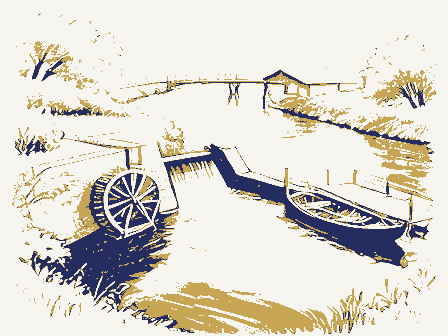
Maynard Town
The complete chapter on this town from History of Middlesex County, Massachusetts : Containing Carefully Prepared Histories of Every City and Town in the County, published 1880; History of Middlesex County, Massachusetts, published 1880. 5,258 words, covering 1 settlement. Source changes inside the text are labelled at the exact paragraph where the next book begins.
Contents
4 sectionsThe section headings the book prints inside this chapter. Each one jumps to where it begins.
The modern record here
1 settlementWhat the federal record holds for each settlement inside this town: wildfires and storm reports since the 1950s, mineral workings, and museum specimens collected nearby. These are counted within a few miles of each settlement, so neighbours share them and the columns are deliberately not added up. Every row links to the settlement's own page, where each figure is broken out.
| Settlement | Fires | Storm reports | Mines and quarries | Specimens |
|---|---|---|---|---|
| Maynard | 58 | 5 | 15 | 754 |
Settlements in this township
1 placeEvery populated place the Geographic Names Information System records inside this township's Census boundary. All 1 are named in the chapter.
The chapter
5,258 wordsReproduced complete and unedited from History of Middlesex County, Massachusetts : Containing Carefully Prepared Histories of Every City and Town in the County, published 1880; History of Middlesex County, Massachusetts, published 1880. The text is machine-read from scans, so expect recognition errors: misspelled names, dropped words, and stray characters. Nothing has been corrected, because correcting a proper name invents one. The headings below are the books' own; source changes are labelled in place.
Maynard Town
^V1N\,ED is bounded on the I IK itli b\ \fton, on the east and itl 1 \ s idbury, and on the ] \\ t 1 \ St « The population mls7)\Ms 1,96.5. The Marlborough Bnnch Railroad, in connection \nth the Fitchburg Riilroid furnishes the travelling and fiLislit facilities, and there is a ])iospect of further nilroad accommodation by the extension of the Middlesex Central Railroad, from Concord Junction to Maynard. Tlie distance from
Boston by the county road is twenty-one miles ; by railroad, twenty-seven miles. There are two hotels in the village, four dry-goods and grocery stores (one of them a co-operative store), three dry -goods stores, several millinery and dress-making stores, two butchering establishments, a Masonic Lodge, a Good Templars' Lodge, and a post of the Grand Army of the Republic.
Maynard is a small, new town, having been incorporated April 19, 1871, and named in honor of Amory Maynard, Esq., formerly of Marlborough, through whose untiring energy and sagacity the industries of the town have been developed. Of the territory, some 1,300 acres were taken from'tlie town of Stow, and included Pompsiticut Hill, and other good farming lands, devoted to orchards, tillage, and pasturage. Some 1,900 acres were taken from the northwesterly part of Sudbury, and included some good farming lands, but were to a great extent woodland, baving some of the largest growth of wood and timber to be found in Massachusetts. By an arrangement the town of Maynard agreed to pay to the town of Stow the sum of 36,500 as a compensation, and to the town of Sudbury the sum of $2ii,.500; the town of Sudbury to assign to the town of Maynard one hundred and four shares of their Framingham and Lowell railroad stock ; the town of Maynard was also to pay to the town of Sudbury the sum of three hundred dollars per year, for ten years, towards the support of their paupers, and one third part of all costs and expenses for the support of military pau])ers.
The lands called the New Grams, in Siidhury, were purchased of the Indians, and ronsistcd of two strips, each one mile wide, with a " thirty rod highway" to each lot, and parallel with them, joining upon the westerly side of the town, and were called squadrons of land. The following extract may explain the matter : -
" At a town Meeting .lanuary f 1657, voted in y' Town Meeting that whereas there is a pond lying in y'' third and second squadron that soe our middel Highway from South to North cannot pas streight, our will and vote is that y' said way shall goe round the pond at y" nearest end and alowance be given by y" Surveyor to any person that shall be damaged by y" highway going at y" ponds end and, Alsoe let it be remembered that y" long Highway from South to North goethe at y" west end of y*' pond through y* land of John Toll and Solomon Johnson and is twelve rods wide at y° narrowest for which may y° said John Toll and Johnson, have sufficient alowance.
That portion of the town taken from Siull)ury was a part of the New Grants to the town, and according to the Old Proprietors' Book was purchased of the Indians by deed, dated 1684. Some extracts from their records may be interesting.
"We the Subscribers and |)icsrii1 owners ,if thr New Grant lots in Sudbury and as wi' think, and imagine Proprietors of the two miles of land late granted to Sudbury by the General Court, called the New Grants, we humbly ])eliiion your boiuiiir
" To do or act what may be lawful and needful when met in order to defend said grant of two miles, and every other legal act as Proprietors. "John Clap, Jamks Hayses, Epiiraim Pratt, John Balcom, Thomas Smith, Jonathan Rice, . Amos Smith, Joseph Balcom, and sixteen otliers." A warrant was granted by Joseph Buckininster, Esq., of Framhigham, to meet December 1, 17:J9. "Sudbury, December 1, 1729. At a meeting of the present owners of the New Grant lots and, as appears by the Indian purchase the Proprietors of the Two Miles of land last granted to the town of Sudbury .... Chose Jonathan Eice, Moderator to carry on the work of said day .... Cliose Impowered and Imployed Mr. John Parinenter of Framingham and ]\Ir. Daniel Wood\Vard of said Sudbury, to act and do any legal act or acts or whatsoever may be needful and lawful to defend in the law their riglit and title and interest in and unto the said two miles, ^:c likewise adjourned their meeting."
After thirteen meetings witliont doing any business, September 6, 1731, they "Chose Josiah Eichardson to go to the Country and County Eecords to take copies, and Oct. 18, 1731, chose John Balcom, clerk."
At a meet ill- held March 3, 1731, " Voted that they will discdiitinui' of the thirty Rod Highway or land, so called, twenty six rods wide throughout the said highway." It was also " Voted to give and grant to every Proprietor owner one and one half acre of meadow and swamp land in the lands called the New Grants, thirty rod highway, also two acres of vpland, January 23"" 1732, let "out to Jonathan Eice all the highway meadow from the Long Pond to Concord Road and to Marlborough Road, for live shillings."
Very little is known of tlie first settlers of Maynard. Some of the lands now held by Jonathan E. Vose were conveyed by Benjamin Crane of Stow to Joseph Eice of Marlborough in 1685, and arc described as follows : " Six Stone and five acres of land that he purchased of John Woods, sen'', and .lohn Eutter, sen', and is bounded northward and westward with the land of Thomas Wedge, southward with the land of Solomon Johnson, Jun^ eastward with a highway thirty rods wide running between the squadron of lots, in the New Grants, of Sudbury, aforesaid. To have and to hold, the said tract of land six stone and five acres (be the same more or less) with the house thereon erected, and all the fences, belonging to the said tract of land and all timber and firewood and the orchard thereon, with all the conveniency of water thereon, wjiether of Pond or Brook and all profit and advantage." The family of Rices were long lived, and it is found that Jonathan Rice and Jonathan Rice, Jr., kept an inn at this place for about one hundred years.
The land above described was conveyed by Jonathan Rice to William Rice, his son, and described as bounded by land now in possession of Ephraim Pratt, etc., in a. d. 1733. The Wedge-Pratt farm was sold to Jabez Puffer of Braintree in 1743, and the house now standing was supposed to have been erected prior to tiiat date. Ephraim Pratt removed to Shutesbury, where he died in lSO-1, at the great age of one hundred and sixteen years and some months. The following account of Mr. Pratt is from Dr. Dwight's Travels.
" He was born at Sudbury, Massachusetts, in 1687, and in one month from the date of our arrival (Wednesday, November 13, 1803), would complete his one hundred and sixteenth year. He was of middle stature; firmly built; plump but not encumbered with flesh ; less withered tlian multitudes at seventy ; possessed of considerable strength, as was evident from the grasp of his hand and the sound of his voice, and without any marks of extreme age. About two months before his sight became so impaired that he was unable to distinguish persons. His hearing, also, for a short time had been so imperfect, that he could not distinctly hear common conversation. His memory was still vigorous; his understanding sound, and his mind sprightly and vigorous.
"The principal part of the time which I was m the house he held me by the hand ; cheerfully answered all my questions; readily gave me an account of himself in such particulars as I wished to know, observed to me that my voice indicated that I was not less than forty-five years of age, and that he must appear very old to me ; adding, however, that some men who had not passed their seventieth year, probably looked almost or quite as old as himself. The remark was certainly just; but it was the first time that I had heard persons who had reached the age of seventy considered as being young. We were informed, partly by hinrself and partly by his host, that he had been a laborious man all his life ; and, particularly, that he had mown grass one hundred and one years successively. The preceding summer he had been unable to perform this labor. During this season, his utmost effort was a walk of half a mile. In this walk he stumbled over a log and fell. Immediately afterwards he began evidently to decline, and lost in a considerable degree both his sight and hearing. In the summer of 1802 he walked without inconvenience two miles, and mowed a small quantity of grass. Throughout his life he had been uniformly temperate. Ardent spirits he rarely tasted. Cider he drank at times, but sparingly. In the vigorous periods of life he had accustomed himself to eat flesh, but more abstemiously tiian most other people in this country. Milk, which had always been a great part, was now the whole of his diet. He is naturally cheerful and humorous, and not much inclined to serious thinking. According to an account which he gave his host, lie made a public profession of religion near seventy years before our visit to him; but was not supposed by him, nor by others acquainted with him, to be a religious man. He conversed easily, and was jjlainly gratified with the visits and conversations of strangers. When he was ninety-' three years old, he made a bargain with his host (who told us the story), that he should support him during the remainder of his life for £20.
" He was never sick but once, and then with fever and ague. It is scarcely necessary to observe that a man one hundred and sixteen years old, without religion, was a melancholy sight to me."
The Rev. Reuben Puffer, D. D., was a son of Jabez Puft'er, a noted divine, graduated at Harvard College in 1778, settled and ordained as pastor at Berlin, Mass., in 1781, and died in 1829, aged seventy-three.
Other of the earlier settlers of Maynard were Hezekiah Taylor, John Taylor, Thomas Smith, Amos Smith, William Skinner, William Carly, Zachariah Maynard, and John Brigham, and some of the settlers on the Stow side, of the river may be found in the proceedings of the proprietors at their meeting held May 19, 1719, when, as appears from Stow Old Proprietors' Book, a selection of lands was made, as follows : -
Histoby Of Middlesex Couxty
Brook and Willard's Pond. Israel Heald, sen', on Pompsiticut Hill joining to Joseph Jewell's land. John Butterick, on Pompsiticnt Hill, and on the north side of his ten acres of meadow. Jacob Stevens at the Oak swamp at his ten acres on Assabeth Brook and at elbow meadow. Thomas Whitney, sen' joining to his half moon meadow and Mr. Googen's land. Elizabeth Fairbank, on Pompsiticut Hill, and at great meadow. John Whitaker, on Pompsiticut Hill and at green Meadow. John Eveleth, on Pompsiticut Hill. Joseph Daby, right across the Hill from his house lot to Sudbury line and to Wetherby's line. Stephen Randall four acres by his home lot and at his own meadow on Assabeth Brook."
"Stow Oct f ;30, 1738. Voted, on said day that Ephraim Gates, have one acre and three quarters of upland in the common land in Stow lying on the westerly side of said Gates' House lot, for consideration of ten Shillings, and one quart of Hume."
The tract of land called the Brown farm, consisting of some one hundred and fifty acres, situate in the northerly part of Maynard, was conveyed by Edmund Brown of Sudbury to Josiah Brown in 1735 for £1,500, hiuful moiuy.
From a perusal of the Old Proprietors' Books of Stow, I am led to believe that the stream now called Assabet Eiver was known one hundred and fifty years ago as the Elzibeth River, and the Assabeth Brook was a tributary brook running into the Elzibeth River just above where the river now runs into the town of Maynard. Mr. William H. Wood, on his map of Sudbury, published in 1830, uses the name Elzibeth. It is sometimes spelled Elzabeth.
Other inhabitants of the town previous to 1800 were Jabez Pufler, Jr., Phineas Pratt, AVilliam Rice, Phineas Rice, Matthias Rice, Jonas Balcom, Amos
There is a tradition that some time early in the settlement of the town, during a severe storm in the spring of the year, several jjcrsons CMine to and were quietly quart en 'd in (he biirn of one n\ the Smiths, perhaps Thomas, near uheiv Mr. A. S. Thompson now resides. Tlic unknown visitors were afterwards supposed to have been jjirates, from the fact that llicy were very fn'c with their munev, paving libmillv for wlial tlicv ,,bt,unr,l from 'the 'family. ll was said llial lli,y ihivw " pieces of eight " at the swallows for aniuseniciil, and before leaving procured from the house some clothing fitted for bags and tools for digging. The bags, being filled with something apparently heavy, were carried by them to the woods, northerly of the house, and probably buried. The suspected parties soon after left, no one knowing whither they went. Subsequently Mr. Smith received a letter from some pirates that had been cajitured, convicted, and were about to be executed, requesting him to come and see them, and they would give him information that would be of value to him; but Mr. Smith, with the feeling of distrust for criminals common to those days, ])aid no regard to the request, and for aught known the secret died with the writers, and may never be revealed, unless some fortunate person should discover the hiding-place.
The area of the town of Maynard is composed of hills and dales traversed by numerous brooks ; and the Elzibeth River, now called the Assabet, runs through the town, furnishing a water-power that, being assisted by steam, is made to do the most prominent work of the town, being aided by the helpers loeatiil there. On this stream, above where the iiiills aic iiiiw Imill, were formerly grain-mills, known as Jewell's nulls, and later as Smith's mills; and about the year 1S21 or 1822 a part of the water-power was reiilcd to James and William Rice, two youiit;- and skilful mecluuiics, for the manufacture lit s|iin(ll(s and other factory machinery for Sinith"s mills at Peterborough, New Hampshire, and also for the mills then being built at Waltham, ALissachusetts. But finding that there was not sullieient power to carry on so mucli business, the manufacture of mill machinery was discontinued here, and removed elsewhere. At a later day maehinrry for wool-carding was introduced, thus rclii'\iiig I he «i\xs and daughters from the carding by hand, having the spiiming and weaving for the occupation of their leisure hours. But the march of imin-ovement was still onward ; and in 1815 the water-rights that in 1821 or 1822 were deemed insvifficient to run a grain-mill with two or three run of stones, and a small trip-hammer for the forging of spindles and the manufacture of other machineiy employing two men, were jmrclmsed by Mr. Amory Maynard, William 11. Knight, Es(|., of Saxonville, a car])et manufacturer, being nssociated with him. Mr. Knight liad sold his water-rights lo llic city of liosion lor a valuable consideration, llii'i-('l)\ securing the water of Long Pond, or Lake Cochiluate, for the eilizeiis of J^oston.
The works now constituting the Assabet Mills were commenced in July, 184-6, all the waterrights supposed to be necessary having been secured the preceding season. The dam was built, and a canal dug, turning the water from its regular channel into its present reservoir. The dam and superstructure where the mills now stand were completed, so that buildings were erected and work commenced in the mills in the spring of 1847, carpets and carpet yarns to the value of $110,000 being manufactured the first year.
The water privileges of the Assabet Mills, include, besides some two hundred acres on the river, four hundred acres at Fort ]\Ieadow Reservoir in Marlborough, and tliree hundred acres at Boon's Pond and Ram's-horn Meadow, in Stow and Hudson ; and the works have in use and hold in reserve steam-power estimated at 4,350 horses.
Additions and improvements have been made continually to the present time. In 1852 Mr. Knight, being quite advanced iti years, retired from the firm, and Mr. Maynard carried on operations alone, gradually changing the machinery to the manufacture of blankets and flannels, until in 1862, steam-power having been added, a stock company was formed, with a capital of $200,000, that has been increased as occasion recpiired. At present no carpets or blankets are made, and the productions are flannels, cassimeres, and cloths, to the value of $1,800,000 per year. The mills have now sixty sets of woollen machinery, consuming 3,500,000 pounds of wool per year.
The number of employees is about five hundred and forty males and three hundred and thirty females, with a pay-roll of §275,000 per year. The mills rank the third in size and capacity in the state, and are said to equal any in A^ew England in the quality of their productions. The present capital stock "is $600,000.
Other industries of the town are the paper-mills, first built by William May, for the manufacture of paper by hand, about the year 1820. Afterwards they passed into the hands of John Sawyer, who introduced some new machinery ; but he was not very successful, and the mills soon passed into the hands of William Parker, Esq., of Boston, and at his decease his son, William T. Parker, succeeded him. The mills have been burned some three or more times, and, owing to the depression of that branch of industry, have lain idle a large proportion of the time for several years. They are now manufacturing wall-paper, employing some ten persons, and making about one ton per day, of the value of $40,000 per year.
The staple production of the farmers of the town is milk, a large proportion being sold in the village, and some forty thousand cans sent to the Boston market yearly.
The first church in the town was organized with ten members, September 23, 1852, and called The Evangelical Union Church. Mr. George W. Frost, a licentiate of the Methodist Episcopal Church, was acting pastor untd May, 1854, when Rev. J. K. Deering succeeded him. In May, 1856, Rev. A. Morton was installed. He was dismissed in May, 1859, and was, in turn, succeeded by Rev. E. P. Tenney, Rev. F. Wallace, Rev. A. H. Fletcher, Rev. Thomas AUender, and Rev. 0. Hall as acting pastors untd October, 1867, when the Rev. T. D. P. Stone was installed, and dismissed in June, 1870. Since then Rev. Webster Hazlewood, Rev. E. S. Huntress, Rev. B. P. Sheire, and Rev. S. S. Mathews have been acting pastors. At present Rev. C. E. Milliken, lately from Littleton, New Hampshire, fills the place. The Methodists have a convenient chapel, with the Rev. A. C. Godfrey as pastor. The Catholic society have a neat church, St. Bridget's, with Rev. M. J. McCall as pastor.
Glenwood Cemetery was laid out in 1871, and by the united efforts of the ladies of the town it has been beautified by the planting of a variety of trees and flowering shrubs, a good well of water, and a neat artistic covering for the same. The Catholics also have a pretty cemetery of their own.
Source changes here: from History of Middlesex County, Massachusetts, by Drake, Samuel Adams, published 1880; 1,913 words in this source stream.
Maynard Town
my the rate of mortnlity, certainlv among the native bom, is uow as.low na at any former time, and that there are as manr instances of longevity.
Witliin tliirtv yean the tvo viUages, the east and west, fonnerly nearly a mile apart, have grown together, so that tliey present the aspect of a town of considenble site.
I'he general appearance of the tovn is suburban nther tlian rural ; and tlie slioe-»hops being located in ail parts, the inhabitants are brgely relieved from tlie undesirable features of a manufaclaring place. The population lias a considerable . projwrtion of Irish and Canadian French, who, as individuals, harmonize as a- rule with the naliri; citizens to a far greater extent ttian would be inferred from their combined actioii during ]Kriods of economical agitation. They have two churches, St. Mary's in the west village, and the Church,of the ImmacuUte Conception in the centre of the town.
The first bari-ing-gronnd lies nortlieast of the Union Church. The oldest legible tombstone » dated 1675 ; its inscription is as follows : - CuTAi!) Edwabd Hvtcuissov
Here also is the tomb of Ttlr. Brimsmead, wholly effaced; and that of Mr. Brcck, which is iu a good state of preservation. The second bun'ing-place is immediately in the rear of tlie high school ; besides these there are The Brighnm, Tlie Easterly, tlie Morse (sometimes called The Parra), Tlie Week), lie Chipman, The Robin Hill, and Tlie Pleasant Street cemeteries.
Bt Abahbl Balcok
is bounded on the north by Acton, on the east and south hy Sudbury, and oh the west by Stow. The popuLition in 1875 was l,n65. The Marlborough Branch Bnilrond, in connection with the Firchburg Railroad, furnishes the travelling and freight £icilities, and there ia a prospect of further railroad accommodation by the extension of the Middlesex Central Railroad, from Cuucord JuiietioD to Usynard. The distance from
Boston by the county road is twenty-one miles; hy railroad, twenty-seven miles. There are two hotels in the village, four dry -goods and grocery stores (one of them a co-operative sion;), three dry-goods stores, 6e\'enl millinery and dress-making stores/ two butcliering establisliments, a Masonic Loilgc, a Good Templars' Lodge, and a post of the Grand Army of the Republic.
Maynard is a small, new town, having beeii incorporated April 111, 1871, and named in honor of Amory Maynard, Es<|., formerly of Marlborough, through whose untiring energy and sagacity Hut industries of the town liave been developed. Of
Biook and Willatd's Ponil Israel Heald, 8en% on Fbmpsiticat Hill joining to Josq)h Jewell's land. John Butterick, on Pompsitictit Hill^ and on the north side of his ten acres of meadoiv. Jacob Stevens at'the Oak swamp at his ten acres on Assabeth Brook and at elbow meadow. Thomas Whitney, -en' joining to his lialf moon meadow and Mr. Groog«n*s Imd. Elizabeth Fairbanks on Pompsiticut Hill, and at great meadow. John Whitaker, on Pompftiticut Hill and at green Meadow. John Eveleth, on Pompsiticut Hill. Joseph Daby, right across the Hill from his house lot to Sudbury line and to Wetherby's line. Stephen Bandall four acres by his home lot and at his own meadow on Assabeth Brook.''
/''Stow Oct y* 30, 1738. VoUd, on said day that Ephraim Gates, liave one acre and three quarters of tipland in the common land in Stow lying on tlie- westerly side of said Gates' House lot, for consideration of ten Shillings, and one quart of Bume.'*
The tract of land called the Brown farm, consisting of some one hundred and fifty acres, situate in the northerly part of Maynard, was conveyed by Bdmund Brown of Sudbury to Josiah Brown in 178S for £1^500, lawful money.
Erom a perusal of the Old Proprietors' Books of Stow, I am led to believe that the stream now called Assabet Eiver was known one hundred and fifty years ago as the Elzibcth Biver, and the Assabeth Brook was a tributary brook running'into the Elzibeth Biver just above where the river now* runs into the town of Haynard. Mr. "William H. Wood, on his map of Sudbury, published in 1830, uses the name Elzibeth. It is sometimes spelled Elzabeth.
- Other inhabitants of the- town previous to 1800 were Jabe2 Pufier, Jr., Phineas Pratt, William Bice, Phineas Bice, ]^Iatthias Bice, Jonas Balcom, Amos
There is a tradition that some time early in the settlement of the town, during a severe storm in the spring of the year, several persons came to and were quietly quartered in the bam of one of the Smiths, perhaps Tliomas, near where Mr. A. S. Thompson now resides. Ilie unknown visitors were afterwards supposed to have been pirates, from the fact tliat they were very free with their money, paying liberally for what they obtained from the family. It was said that they threw ** pieces of eight " at the swallows for amusement.
and before leaving procured from the honse some clothing fitted for bags and tools for digging^ Tlie bags, being filled witli something apparently heavy, were carried by them to the woods, northerly of the house, and probably buried. Tlie suspected parties soon after left, no one knowing whither they went. Subsequently Mr. Smith received a letter from some pirates that had been captured, convicted, and were about to be exe« cuted, requesting him to come and see them, and they would give Inm information that w^ould be of value to him; but Mr. Smith, with the feeling of distrust for criminals common to those days, iiaid' no regard to the request, and for anght known the secret died with the writers, and may never be revealed, imless some fortunate person should discover the hiding-place.
The area of the town of Maynard is composed of hills and dales traversed by numerous brooks ; and the Ehtibeth Biver, now called the Assabet, runs through the town, furnishing a water-power tliat, being assisted by steam, is made to do the most prominent work of the town, being aided by the helpers located there. On this stream, above where the mills are now built, were formerly grain-mills> known as Jewell's mills, and later as Smith's mills; and about the year 1821 or 1822 a ptrt of the water-power was rented to James and William Bi6e, two young and skilful roeclianics, for the mahUfac^ ture of spindles and other factory machinery for Smith's mills at Peterborough, New Hampshire, and also for the mills then being btiilt at Waltham, Hklassachusetts. But finding that there was not sufficient power to carry on so much business, the manufacture of mill machinery was discontinued here, and removed elsewhere. At a later day mk^ chiner}' for wool-carding was introduced, thus relieving the wives and daughters from the carding by hand, leaving the spinning and weaving for the occupation of tlieir leisure hours. But the march of improvement was still onward ; and in 1845 the water-rights that in 1821 or 1822 were deemed insuQicient to run a grain-mill with two or thrde run of stones, and a small trip-hammer for the forging of spindles and the manufacture of other machinery employing two men, were purchased by Mr. Amory Maynard, William H. Knight, Esq., of Saxonville, a carpet manufacturer, being associated with him. Mr. Knight had sold his water-rights to the city of Boston for a valuable consideration, thereby securing the water of Long Pond, or Lake Cochituate, for the citizens of Boston.
The works, now constituting the Assabet Mills were commenced in July, 1846, all the waterrights supposed to be necessary having been secured the preceding season. The dam was built, and a canal dug, turning the water from its regular channel into its present resen^oir. The dam and superstructure where the mills now stand were completed, so that buildings were erected and work commenced in the mills in the spring of 1847, carpets and carpet yams to the value of §110,00U being manufactured the first year.
. The water privileges of the Assabet Mills, include, besides some two hundred acres on the river, four hundred acres at Fort Meadow Reservoir in Marlborough, and tiiree hundred acres at Boon's Pond and BamVhorn Tileadow, in Stow and Hudson ; and the works have in use and hold in reserve steam*power estimated at 4,350 horses.
Additions and improvements have been made continually to the present time. In J.852 Mr. Knight, being quite advanced in years, retired from the firm, and Mr. Maynard carried on operations alone, gradually changing the machinery to the manufacture of blankets and tlaimcls, until in 1862, steam-power having been added, a stock company was formed, with a capital of $200,000, that has been increased as occasion required. At present no carpets or blankets are made, and the. productions are flannels, cassimeres, and cloths, to the value of 31,800,000 per year. The mills have now sixty sets of woollen machinery, consuming S,500j000 pounds of wool per year.
The number of employees. is about five hundred and forty male^ and three hundred and thirty females, with a pay-roll of 8275,000 per year^ .The mills rank the third in size and capacity in the state, and are said to equal any in Xew England in the quality of their productions. The present capital stock is §600,000.
Other industries of the town are the paper-mills, first built by William May, for the manufacture of paper by hand, about the year 1820. Afterwards tliey passed into the hands of John Sawyer, who introduced some new machinery ; but he was not very successful, and the mills soon passed into the hands of William Parker, Esq., of Boston, and at his decease his son, William T. Parker, succeeded him. The mills have been burned some three or more times, and, owing to the depressioii of tliat. branch . of industry, liave lain idle a large proportion of the time for several- years. They are now manufacturing M'all-pai)er, employing some ten persons, and making about one ton per day, of the value of 840,000 per year.
The staple production of the farmers of the town is milk, a large proportion being sold in the vii* lage, and some forty thousand cans sent to the Boston market yearly.
The first church in the town was organized with ten members, September 23, 1852, and called Th6* Evangelical Union Church. Mr. George W. Frosty a licentiate of the Methodist Episcopal Church, was acting pastor until May, 1854, when JEtfev. Ji K. Dcering succeeded him. In May, 1856, Bev* A. Morton was installed. He was dismissed itk l^Iay, 1859, and was, in turn, succeeded by Bisv. E. P. Tenney, Rev, F. Wallace, Rev. A. H. Fletcl^pr, Bev. Thomas Allender, and £ev. 0. Hall as acting pastors until October, 1867, when tlie Rev. T. D. P. Stone was installed, and dismissed in June, 1870. Since tlien Rev. Webster Hazlewood, Bev. E. S. Huntress, Rev. B. P. Sheire, and Rev, S. S. Mathews have been acting pastors. At present Rev. C. E. Milliken, lately from Littleton, New Hampshire, fills the place. The Methodists have a convenient chapel, with the Rev. A. C. Godfrey as pastor. The Catholic society have -a neat church, St. Bridget's, with Rev. M. J. McCall as pastor«
Glenwood Cemetery was laid out in 1871, and bv the united efforts of the ladies of the town Jt has been beautified by the ])lanting of a variety of trees and flowering shrubs, a good well of water, and a neat artistic covering for the same. 'The Catholics also have a pretty cemetery of their own.
Provenance
Text from History of Middlesex County, Massachusetts : Containing Carefully Prepared Histories of Every City and Town in the County, published 1880; History of Middlesex County, Massachusetts, published 1880, in the public domain in the United States and digitised by the Internet Archive. The settlements listed against this township are matched by point-in-polygon test of each Geographic Names Information System coordinate against the Census Bureau's county subdivision boundary, not by name.