 Block
Block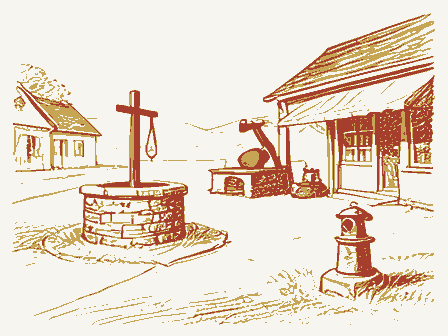
Medford City (part 10 of 14)
Part 10 of 14 of the account of this town in History of the Town of Medford, Middlesex County, Massachusetts : from Its First Settlement, in 1630, to the Present Time, 1855, published 1855. 16,000 words, covering 5 settlements. Source changes inside the text are labelled at the exact paragraph where the next book begins.
Contents
13 sectionsThe section headings the book prints inside this chapter, on this part. Each one jumps to where it begins.
Parts
14 pagesThe source prints this as one continuous account. It is split here so no single page grows too heavy to load; the text runs straight on across the parts and nothing is omitted.
The chapter
16,000 wordsReproduced complete and unedited from History of the Town of Medford, Middlesex County, Massachusetts : from Its First Settlement, in 1630, to the Present Time, 1855, published 1855. The text is machine-read from scans, so expect recognition errors: misspelled names, dropped words, and stray characters. Nothing has been corrected, because correcting a proper name invents one. The headings below are the books' own; source changes are labelled in place.
The " Fountain House," next in order of time, was built as early as 1725 ; and yet stands, a comfortable residence. Being well placed on the great thoroughfare between Salem and Boston, it had extensive patronage. It aimed to be a little superior to other houses. Its sign represented two men shaking hands, who were called -palaverers ; and hence the house first wore the name of Palaver Tavern. The two large trees in front had each a platform in its branches ; and these platforms were connected with each other and with the house by wooden bridges, and were used much in summer as places of resort for drinking punch and cordials. Tea-parties were sometimes gathered there. It was called Fountain House from having a new sign representing a fountain pouring punch into a large bowl.
The third tavern built in Medford stood on the west side of Main Street, about eight rods south of the bridge, and was the largest in town. It was built by Mr. Benjamin Parker, town-treasurer, as early as 1745, and was sold by him to Hezekiah Blanchard, who added a large dancing-hall to it, and called it " Union Hall." He left it to his son Hezekiah, who continued it a tavern till his death.
The fourth tavern was at the foot of Rock Hill, at the "West End, and sometimes called the Rock Hill Tavern, Among its keepers were Messrs. " Usher, Wesson, Frost, and Putnam." It was a favorite resort for teamsters, and gained great popularity.
the town, was built by Mr. Andrew Blanchard in 1804, and attained great popularity under its first keeper, Mr. Jaquith. It was furnished with four bowling-alleys, which proved too great a temptation to some. At a later period, the house came into the possession of a company of gentlemen, who were resolved to have it kept on temperance principles. This plan proved more moral than profitable ; and it passed from the hands of the company to its present Italian owner.
The taverns of olden time were the places of resort for gentlemen ; and one consequence was, good suppers and deep drinking. They also performed the office of newspapers. In 1760, Medford passed the following vote : - - " That their names, posted on the several tavern-doors, shall be a sufficient notice for jurors." Saturday afternoon was the time when men came from all quarters of the town to see and hear all they could at the tavern. For many years, the favorite arena was at Mr. Blanchard's, where politics and theology, trade, barter, and taxes, were all mixed up together over hot flip and strong toddy.
The taverns served also as places for marketing. During most of the winter, they were filled every night with farmers from Vermont and New Hampshire, who had brought their pork, butter, grain, seeds, and poultry to market. Most families supplied themselves through these opportunities, and purchased the best articles at moderate prices.
Landlords could not grow rich very fast on country custom. The travelling farmer brought all his food for himself in a box, and that for his horse in a bag. He therefore paid only twelve cents for his bed, and as much for horse-keeping. It was not uncommon to have six days' expenses amount only to two dollars !
Taverns seemed to subserve all purposes. Auctions, theatricals, legerdemain, caucuses, military drills, balls, and dancing-schools, all came in place at the tavern. Especially sleigh-riding parties found them convenient. Medford was just about far enough from Boston to tempt a party to a ride on a pleasant moonlight evening. Scarcely one such evening passed without witnessing a gathering of young people, who brought with them their " fiddler," or procured our " Greenough ; " and who danced from seven to ten, then took a hearty supper, and reached Boston at twelve. New forms of trade and amusement have almost wholly displaced these former customs.
Burying -Grounds
Medford was favored in good tavern-keepers. Journeying in former days, one found queer specimens of humanity among this unique class. Generally, they were only variations of Yankee Doodle. Some landlords were so full of sunshine that it was June all the year round ; others had minds so frost-bitten that there was no hope for you, except in the January thaw. Here was one so anxious to oblige that he would spring to throw a lasso round the moon, if you wished it ; and there another so cross, that putting a question to him was like squeezing a lemon.
Burying-Grounds
The places used by the first settlers of Medford for the burial of the dead are not positively known. Whether from unwillingness to follow England's example, in providing expensive and well-secured graveyards, or from their inability to do so, we cannot say ; but the fact is clear, that such provisions for the dead were not made. The oldest gravestones in the present graveyard, near Gravelly Bridge, were brought from England, and are remarkable for their width, thickness, and weight. The oldest bears the date of 1691. It may be that some of our gardens are cemeteries, and that from human soil we gather our daily bread, while the spade and ploughshare lacerate the relics of our ancestors.
March 20, 1705 : " Put to vote, whether the selectmen shall discourse Mr. Dudley Wade, referring to the proposals made this meeting by Stephen Willis, jun., in said Wade's behalf, respecting the burying-place in Medford, and make return thereof to the town at the next town's meeting. Voted in the affirmative."
It does not appear what this proposition was, nor what action the town had upon it. Probably it was a proposal to sell the town some land for a place of burial; and we presume it was accepted, because, May 15, 1717, we find the following record : -
" Put to vote, whether the town will choose a committee, to join with the selectmen, to view some land offered by Mr. Aaron Cleavland and John Willis, for the enlargement of the burying-place near Mistick Bridge ; and bring in a report to the town of the same, at the next town-meeting, both of the price of said land, and the convenience of the same for the use aforesaid."
This passed in the affirmative ; and the selectmen, Captain Tufts, Deacon Willis, Deacon Whitmore, Ensign Francis, Captain Brooks, and Ensign Hall, were appointed the committee to plan the enlargement proposed. The committee reported June 10th of the next month, when the town passed the following vote * -
" That the town will give Mr. Aaron Cleavland and John Willis, for a small parcel of land, for an addition to the burying-place, lying betwixt Mistick River and Gravelly Bridge, alter the rate of thirtytwo pounds per acre."
May 12, 1718: " Put to vote, whether the burying-place, some time past bought of Mr. Aaron Cleavland, be continued in said Cleavland's hands, as to the herbage, until the town give further order ; and, when the town see cause to fence it, it shall be fenced at the town's proper cost ; and whether that, forthwith, a board fence be erected at the front of the land, with a gate and lock. Voted in the affirmative."
This vote would lead us to infer that the enclosure was ill cared for ; and the need of new fences is learned from the vote of Nov. 26, 1733, which was as follows: "Voted to have the front of the burying-place fenced in." At the same meeting, they directed " that the fence should be made of good cedar posts, white-pine boards, with handsome double gates, colored red." We apprehend that extraordinary care was not fashionable. One might infer that the " front " only was secured by a fence. From that day to the beginning of the present century, it was not unusual to let these precious, and we may add sacred, spots be exposed to the visits of vagrant animals.
The " Old Burying Ground," as it was called, being near the most populous part of Medford, was better defended by walls than was common in many towns ; yet we remember the wall on its east -side, as low, broken, and insufficient.
March 5, 1739 : It is, for the first time, proposed to build tombs ; and the north side of the graveyard is designated as the most proper place. None were built until many years later.
burying-ground." This custom of burying the dead in tombs grew so fast and strong that almost every family had a tomb, or part of one. This prevented the erection of gravestones, and thereby deprived posterity of all the knowledge derived from these authentic records. It was the custom, in the earlier times, for a family to choose the spot in the buryingground where they would gather their dead ; and for others to invade this spot was considered an outrage on social rights and Christian feelings. In the old burying-ground, there are many remains of this arrangement ; and we trust that no sacrilegious hand will now be laid on these sacred relics. In the south-west corner of that ground, the slaves were buried ; but no monumental stones were raised! Are there as many gravestones now standing within the old burying-ground as were there fifty years ago ? "We think not. Where are they ? Can the mouths of the tombs answer ?
There were six tombs built in 1767 by private gentlemen. Benjamin Floyd was the builder. They are those nearest the front gate, on its western side, and are under the sidewalk of the street. The bricks of which they are built were made in the yard west of Rock Hill. The common price of a tomb has been one hundred and two dollars.
Though many new tombs had been built, and some little additional space secured in the old burying-ground, still there was need of further accommodations for burial ; and the town therefore voted, May 11, 1812, to request the selectmen to consider what further provisions could be made. This led to the appointment of a committee in May, 1813. A new burying-place seemed to be necessary ; and the committee so reported. No definite action was had until May, 1816, when another committee reported, that the land which the town had purchased in Cross Street, near Mr. Turner's ship-yard, for the position of an alms-house, had better be used as a buryingground. The town acceded ; and then ordered that the land be laid out in lots, that a proper fence be built around it, and that trees be planted in such number and order as to make the enclosure appear as such a place should.
March 7, 1853 : Voted to remove the pound on Cross Street, and extend the burial-ground to the line of said street, and build thereon a suitable iron fence, with stone basement.
that the article relative to purchasing land for a burial-ground, in the easterly part of the town, be indefinitely postponed." For many years, the eastern wall of the old buryingground was broken and insufficient. The writer of this directed the attention of the Hon. Peter C. Brooks to the subject in 1846 : the consequence was an offer of five hundred dollars from that gentleman to the town, for the purpose of building a granite wall, reaching from the Baptist meeting-house through the whole eastern front of the ground. The town accepted the offer, and voted thanks, Nov. 8, 1847. There was a strip of land, twenty feet or more, added here to the old limits ; and the new granite wall encloses it. This strip was laid out in lots, and sold at auction Aug. 3, 1848. Mr. Brooks had a lot reserved for him ; and he chose the central one, and urged a relative to purchase the one contiguous on the north, that we might be near our early ancestors, who are buried a few feet west of these enclosures. We trust that future generations will cherish so much reverence for antiquity as will secure the ashes of their ancestors from removal or neglect.
The establishment of the cemetery of Mount Auburn has created in this neighborhood a strong preference for such burial-places ; and Medford resolved to have one. The following was passed, Nov. 13, 1848 : "Voted that the subjectmatter of the fifth article in the warrant, relative to procuring additional land for burial purposes, be referred to a committee of five, to examine locations, obtain prices, &c, and to report at the next March meeting."
Nov. 12, 1849 : The committee reported it expedient to buy ten and a half acres of land, at fifty dollars per acre, of Leonard Bucknam. The town concurred, and empowered the committee to make the purchase.
March 4, 1850 : "Voted to choose a committee to lay out and otherwise improve said new burying-ground." Also voted to expend five hundred dollars accordingly.
After further examination of this land, the committee recommended an abandonment of the above plan ; and, March 10, 1851, the town voted to build an alms-house on said land.
July 19, 1852 : The subject came before the town ; and Messrs. George "W. Porter, Robert L. Ells, Paul Curtis, John B. Hatch, and Sanford B. Perry, were chosen a committee " to purchase land for a cemetery." These gentlemen examined several spots, and finally recommended one owned by Mr. Edward Brooks, situated nearly opposite the head of Purchase Street, in W.est Medford, and containing twelve acres. It has a varied surface of hill, valley, and plain ; is well covered with young oaks and beautiful forest-trees ; its soil is dry, and not liable to injury from rain ; the absence of ledges will make digging easy ; and its retired and accessible position renders it peculiarly fit for such a sacred appropriation. The committee had obtained the consent of the owner to sell; and the price was five thousand dollars. They recommended the purchase ; and the town accepted and adopted their report, Aug. 16, 1852. Thus an extensive and beautiful cemetery is secured to future generations.
The committee declined further service ; and Messrs. Sanford B. Perry, Paul Curtis, Edmund T. Hastings, George T. Goodwin, and James R. Turner, were chosen to attend to all further business connected with the subject. March 7, 1853, the town instructed the committee to build a receiving-tomb, to lay out roads and paths, to erect fences, and make such improvements as they see fit.
Oct. 13, 1853 : The committee made their first report. They recommended that it be called Oak Grove Cemetery. Among the rules and regulations are the following : -
" The cemetery shall be under the care of the selectmen, who shall appoint a superintendent. 0 Any citizen, who may become the owner of a lot, must submit to the conditions : Fences appropriate to the place may be built to enclose lots. No lot can be used for any purpose, except the burial of the dead. No tree shall be cut down without the consent of the Cemetery Committee. Any funeral monument or structure may be erected, except a tomb. Trees, shrubs, and flowers may be planted and cultivated. Any improper structure or offensive inscription shall be removed by the committee. No tomb shall be built within the cemetery, except by special vote of the town. No burials for hire. No disinterment, except by permission.
" The town-clerk shall be clerk of the Cemetery Committee. All deeds shall be executed in behalf of the town. The lots shall be apprized, numbered, and recorded, and the right of choice sold at public auction. Lots may afterwards be sold by the selectmen. Duplicate keys of the gates and receiving-tomb shall be kept by the officers. No dead body shall remain in the receiving-tomb, during warm weather, more than twenty days. No grave for any person, over twelve years of age, shall be less than five feet deep. All burials in the free public lot shall be in the order directed by the committee. No body shall be disinterred without permission of the committee. No carriage shall be admitted within the grounds, unless by permission, or when accompanied by the owner of a lot. No refreshments, smoking, unseemly noise, discharge of fire-arms, or disorderly conduct, allowed. Vehicles admitted must be driven no faster than a walk. All writing upon or defacing of structures, all breaking of trees or gathering of flowers, forbidden. No individual shall be the proprietor of more than two lots. The town of Medford will for ever keep in good repair the fence, gates, carriageways, and footpaths of the cemetery, and make a secure place of burial for the dead, and an attractive resort for the living."
This brief abstract of the report of the committee shows the town anxious to make the most generous appropriations for this sacred and cherished object.
March 6, 1854 : The town accepted and adopted the report of the committee appointed to direct the preparation of the cemetery for use. The items of their bill of costs will sufficiently explain the very beginning of the noble work. They are as follows : -
The place was solemnly consecrated by religious services, performed within the enclosure, Oct. 31, 1853 ; and then the lots were offered for sale at public auction. Thirty-one lots were sold on the first occasion for $634.50 ; and the highest price given for choice was $15; and the lowest, $1. The highest price fixed upon the best lots was $20 ; and the lowest price for a lot, $5.
Several who bought commenced immediately the preparation of their grounds, and erected fences, and planted flowershrubs and evergreens. Though just opened, there are already indications of good taste and costly expenditure. "We trust that the inhabitants will be disposed to build a chapel, of Christian architecture, within twenty years ; and surround the land, not with an iron fence, but a granite wall, eight feet high. Medford has faithfully performed a sacred duty in procuring this rural cemetery. The place must ere long become populous ; and, as one after another goes there to claim his tenantry in the dust below, may each surviving mourner be comforted in the assurance, that mortality is swallowed up of life !
Chapter Xii Crimes And Punishments
We trust, that, for the honor of Medford, records under this head will not be found numerous. We must tell the whole truth, let honor or infamy be the consequence ; and we regret to learn that our plantation was so soon the scene of a mortal strife. In the Colony records, we thus read, Sept. 28, 1630 : " A jury of fifteen were impanelled, concerning the death of Austen Bratcher" (Bradshaw). "Austen Bratcher, dying lately at Mr. Cradock's plantation, was viewed before his burial by divers persons. The jury's verdict : We find that the strokes given by Walter Palmer were occasionally the means of the death of Austen Bratcher ; and so to be manslaughter." Palmer was bound over to be tried at Boston for this death ; and, on the 9th of November, the jury bring in a verdict of " Not guilty."
At a court held at Watertown, March 8, 1631, "Ordered that Thomas Fox, servant of Mr. Cradock, shall be whipped for uttering malicious and scandalous speeches, whereby he sought to traduce the court, as if they had taken some bribe in the business concerning Walter Palmer." This Thomas Fox was fined four times* and seems to have been possessed by the very demon of mischief. He left the plantation without his benediction.
June 14, 1631 : " At this court, one Philip Radcliff, a servant of Mr. Cradock, being convict, ore tenus, of most foul, scandalous invectives against our churches and government, was censured to be whipped, lose his ears, and be banished the plantation, - which was presently executed." This sentence, so worthy of Draco, convinces us that some of the early judges in the colony were men who had baptized their passions with the name of holiness, and then felt that they had a right to murder humanity in the name of God.
May 26, 1647 : Roman Catholic priests and Jesuits are forbidden to enter this jurisdiction. They shall be banished on their first visit ; and, on their second, they shall be put to death.
There was a singular persecution of the Baptists in the early times among us. They were not sufficiently numerous to be formed into an organized society ; and yet they were so skilful in defending their creed, and so blameless in their daily walk, that they became very irritating to the covenant Puritans ; and some wished they should be cropped ! In April, 1667, a great dispute was held at Boston between them and the Calvinists. Who were the champions in this gladiatorial encounter we do not know, nor where victory perched ; but we have proof of blind, unchristian persecution, which stands a blot on the page of history. At the " Ten Hills," in Mistick, lived a servant of John Winthrop, jun., who professed the Baptist faith. Mary Gould, his wife, who was with him in his creed, writes to John Winthrop, jun., March 23, 1669, concerning her husband's imprisonment in Boston on account of his peculiar faith. Whether what was done at " Ten Hills " was approved at Medford we do not know ; but these facts tell volumes concerning the ideas, principles, and practices of some of the Puritan Pilgrims of New England.
Crimes And Punishments
June 14, 1642 : " If parents or masters neglect training up their children in learning, and labor, and other employments which may be profitable to the Commonwealth, they shall be sufficiently punished by fines for the neglect thereof."
" If a man have a rebellious son, of sufficient age and understanding, - viz., sixteen, - which will not obey the voice of his father or the voice of his mother, and that, when they have chastened him, will not hearken unto them, then shall his father and mother, being his natural parents, lay hold on him, and bring him to the magistrates assembled in court, and testify unto them, by sufficient evidence, that this their son is stubborn and rebellious, and will not obey their voice and chastisement, but lives in sundry notorious crimes. Such a son shall be put to death."
" Down in the deep the stool descends : But here, at first, we miss our ends. She mounts ajjain, and iages more Than ever vixen did before. So throwing water on the fire Will make it but burn up the higher. If so, my friend, pray let her take A second turn into the lake ; And, rather than your patience lose, Thrice and again repeat the dose."
The stocks stood in the centre of a village. The offender had both hands and both feet entrapped between two boards ; sometimes only one foot and one hand.
Conspicuous in the meeting-house was the stool of repentance, on which moral culprits sat during divine service and on lecture-days. Sometimes they wore a paper cap, on which was written their sin. Wearing a halter round the neck was another form of punishment. The pillory was often used ; and the offender was saluted by the boys with rotten eggs.
Military offenders were obliged to ride the wooden horse, or sit in the bilboes. Branding on the forehead, the cage, and the gallows, were each resorted to, according to the degrees of crime.
The Christian sentiments of the heart are outraged by the shameless exhibitions and cruelties sometimes witnessed on " lecture-day." What a transition, - from the altar of God to the public whipping-post, to see women whipped upon the bare back ! This was teaching Puritan individualism with a vengeance.
Slavery
Our fathers held slaves in Medford. There are persons now living among us who remember slaves in their family. They were treated, generally, much after the manner of children. Africans were brought to this colony and sold among us, for the first time, Feb. 26, 1638. In 1637, Captain William Pierce was employed to carry Pequot captives and sell them in the "West Indies ! On his return from Tortugas, "he brought home a cargo of cotton, tobacco, salt, and negroes " ! Slavery was thus introduced as« early as 1638 ; but, in 1645, the General Court passed this noble, this truly Christian, order : -
" The General Court, conceiving themselves bound by the first opportunity to bear witness against the heinous and crying sin of man-stealing, as also to prescribe such timely redress for what is past, and such a law for the future, as may sufficiently deter all others belonging to us to have to do in such vile and most odious courses, justly abhorred of all good and just men, do order, that the negro interpreter, with others unlawfully taken, be, by the first opportunity (at the charge of the country for the present), sent to his native country of Guinea, and a letter with him of the indignation of the court thereabouts, and justice thereof, desiring our honored governor would please put this order into execution."
Respecting taxes on black servants, we have the subsequent items : Each of them, in 1694, was assessed twelvepence ; from 1700 to 1719, as personal estate; 1727, each male fifteen pounds, and each female ten pounds ; from 1731 to 1775, as personal property. In 1701, the inhabitants of Boston gave the following magnanimous direction : "The representatives are desired to promote the encouraging the bringing of white servants, and to put a period to negroes being slaves."
Colonel Royal (Dec. 7, 1737) petitions the General Court, that, having lately arrived from Antigua, he has with him several slaves for his own use, and not to sell, and therefore prays that the duty on them be remitted. The duty was four pounds a head. This petition was laid on the table, and rests there yet. In 1781, a final blow was given to slavery in Massachusetts ; and in this the inhabitants of Medford unanimously rejoiced. To show how anxious our fathers were to prevent all abuse of an existing custom, the town passed the following vote, Aug. 4, 1718 : "Voted that every inhabitant of this town (Medford) shall, when they buy any servant, male or female, be obliged to acquaint and inform the selectmen of said town, for their approbation." It was a settled law with our fathers, that " no man shall hire any
Men sold their labor for a certain number of years, or to pay the expenses of immigration ; and, in such cases, were sometimes called slaves. Referring to such cases, we find the following : " Ordered that no servant shall be set free, or have any lot, until he has served out the time covenanted."
April 1, 1634, the General Court passed an order, "that if any boy (that hath been whipped for running away from his master) be taken in any other plantation, not having a note from his master to testify his business there, it shall be lawful for the constable of said plantation to whip him, and send him home." One hundred years after this time, our Medford ancestors found themselves willing to pass the following : -
Sept. 17, 1734 : " Voted that all negro, Indian, and mulatto servants that are found abroad without leave, and not in their masters' business, shall be taken up and whipped, ten stripes on their naked body, by any freeholder of the town, and be carried to their respective masters ; and said master shall be obliged to pay the sum of 2s. 6d. in money to said person that shall so do."
1680 : "There are as many (one hundred and twenty) Scots brought hither and sold for servants in time of the war with England, and most now married and living here, and about half so many Irish brought hither at several times as servants."
Judge Sewall, of Massachusetts, June 22, 1716, says, " I essayed to prevent negroes and Indians being rated with horses and cattle, but could not succeed."
No cargoes of slaves were brought into Medford ; but how many cargoes of Medford rum went to Africa and the West Indies, and were returned in slaves to Carolina or Rhode Island, we cannot say. The gentlemen of Medford have always disclaimed any participation in the slave-trade.
" Captain William Ellery. Sir, - The 'Snow Caesar' is fully loaded and equipped for sea. My orders are to you, that you embrace the first favorable opportunity of wind and weather, and proceed to the coast of Africa ; touching first, if you think proper, at Senegal, where, if you find encouragement, you may part with such part of your cargo as you can sell to your liking, and then proceed down the coast to such ports or places as you judge best to dispose of your cargo to advantage, so as to purchase a cargo of two hundred slaves, with which you are to proceed to South Carolina, unless a peace should happen, or a good opportunity of coming off with a man-of-war, or some vessel of force, for the West Indies. In that case, I would recommend the Island of St. Christopher's, being handy to St. Eustatia's, for the sale of your slaves. Buy no girls, and few women ; but buy prime boys and young men. As you have had often the care of slaves, so I think it needless to say much upon that head in regard to keeping them well secured and a constant watch over them.
" Your cargo is good, and well assorted. Your rum, I make no doubt, will hold out more than it was taken in for ; having proved some to hold out more than the gauge. As you have guns and men, I doubt not you'll make a good use of them if required. Bring some of the slaves this way, if not too late.
One article of the outward cargo stands on the account thus : " Eighty-two barrels, six hogsheads, and six tierces of New England rum ; thirty -three barrels best Jamaica spirits ; thirty -three barrels of Barbadoes rum ; twenty-five pair pistols ; two casks musket-ball ; one chest of hand-arms ; twentyfive cutlasses."
The return cargo is recorded thus : " In the hole, on board of the ' Snow Caesar,' one hundred and fifty-three adult slaves, and two children."
The following is a fair specimen of the captain's runningaccount, in his purchase of slaves, while on the coast of Africa, copied by us from the original manuscript : -
In 1754, there were in Medford twenty-seven male and seven female slaves, and fifteen free blacks ; total, forty-nine. In 1764, there were forty-nine free blacks. When the law freed all the slaves, many in Medford chose to remain with their masters ; and they were faithful unto death.
We are indebted to a friend for the following : " It may be interesting here to mention a circumstance illustrative of the general feeling of the town in those days with regard to slavery. In the spring of 1798 or '99, a foreigner named Andriesse, originally from Holland, who had served many years at the Cape of Good Hope and in Batavia as a commodore in the Dutch navy, moved into the town from Boston, where he had lost, it was said, by unlucky speculations and the tricks of swindlers, a large part of the property which he had brought to this country from the East Indies. His family consisted of a wife and four children, with from fifteen to twenty Malay slaves. He lived only a month or two after his arrival in the town ; and his widow, immediately after his decease, sent back to their own country the greater part of the Malays, retaining only three or four of them for domestic service. Among these was a youth named Caesar, who was master of the tailor's trade, and made all the clothes of the family, three of the children being boys. He worked not only for his mistress, but was permitted by her to do jobs in other families ; and, being quick and docile, he became a general favorite. But, in the summer of 1805, Mrs. Andriesse was induced to return to Batavia, having received the offer of a free passage for herself and family in one of Mr. David Sears's vessels, and having ascertained, that, if she returned, her boys might be educated there at the expense of the Dutch government, and she herself would be entitled to a pension. All her servants returned with her, except Caesar. He was sold to a son of old Captain Ingraham, who resided at the South, and owned a plantation there. Whether his mistress thus disposed of him for her own advantage, or because he was unwilling to return to his own country, cannot now be ascertained. In process of time, four or five years afterwards, Mr. Ingraham came on from the South to visit his aged father, bringing with him his e boy ' Caesar, who left behind a wife and two children. Caesar renewed acquaintance with his former friends, and expressed a decided preference for the freedom of the North over all the blessings which he had enjoyed at the South. They were not slow to inform him that he might be a free man if he chose ; and he accordingly attempted to escape from his master. But, not having laid his plan with sufficient skill, he was overtaken in the upper part of the town, on his way to Woburn, and closely buckled into a chaise by Mr. Ingraham, who intended to drive into Boston with him, and lodge him on board the vessel which was to convey both of them home. Caesar, however, had a trusty friend in Mr. Nathan Wait, the blacksmith, who had promised in no extremity to desert him ; and as the chaise reached Meclford Bridge, upon the edge of which stood Mr. Wait's smithy, he roared so lustily that Mr. Wait sprang out of his shop, hot from the anvil, and, standing before the horse, sternly forbade the driver from carrying a free man into slavery. Being ordered to mind his own business, he indignantly shook his fist at Mr. Ingraham, and retorted, that he would hear from him again in a manner less acceptable. A general commotion then ensued among Caesar's friends, and they included many of the most respecta- ble citizens in the whole town. Apprehensions were entertained that he would be secreted, and that his pursuers might be subjected to a long, and perhaps fruitless, search. In those days, one daily coach maintained the chief intercourse between Boston and Medford. Accordingly, on the evening of this memorable day, Mr. Ingraham was one of the passengers who happened to be returning to Medford. His unguarded whisper to his next neighbor, * I have him safe now on shipboard,' chanced to be overheard by some ladies, who speeded the intelligence to Caesar's friends. Their course then became clear. Mr. Wait instantly obtained from the Governor of the State the requisite authority and officers, proceeded to the vessel, and brought off Caesar in triumph. Great pains were taken by Mr. Ingraham to ascertain the names of the eavesdropping ladies who had betrayed his counsel ; but Mr. Wyman, the long-approved Medford stagedriver, was visited on the occasion by a convenient shortness of memory, which wKolly disqualified him from recollecting who were his female passengers that evening ; ' women,' as he afterwards added when telling the story, ' never liking to be dragged into court.' Redress by law was vainly attempted by the master. The case was tried, first at Cambridge, in the Court of Common Pleas, and then by appeal, at Concord; large numbers of witnesses being summoned from Medford. Caesar worked at his trade in Medford several years with great approbation, and afterwards removed to Woburn, where he married again, and was called Mr. Anderson. He died in middle-age."
Medford was the first town in the United States that rescued a fugitive slave. The antislavery movement of our day is one of the most prominent and effectual agencies ever witnessed. It has waked up the nation to the injustice and moral evil of involuntary bondage ; and Medford has its full share of intelligent, persevering, and Christian opposers of the slave-system. Advocates of the system we have none. The Rev. John Pierpont and the Rev. Caleb Stetson early became devoted and able lecturers in the field ; and, if a fugitive slave should now reach Medford, there would be fifty- Nathan Waits to shelter and comfort him.
Pauperism
To this class of unfortunates every Christian heart should turn with sympathy, and desire to become a Howard to them. Sad, sad indeed it is to be left to the bleak mercy of the world. That provisions for the poor increase the poor, there can be no doubt ; yet, after all due allowances are made, the fact is that there are the imbecile, the unfortunate, the widow, and the fatherless, who come to extreme want without much fault on their part. The virtuous poor should always be separated from the vicious. To force them into familiar intercourse is cruelty and wickedness. Indigent persons, supported by public charge, were known but in the smallest numbers to our early ancestors. When a case of extreme want occurred, it was provided for by private charity. There seemed to be a settled resolve of the Pilgrims that they would not have here the poverty and the alms-houses they had left behind them. In Medford was illustrated these remarks as early as June 6, 1637, when we find the following vote concerning a resident here : " Whereas John Binfield died, leaving two children undisposed of, the charge of the one is ordered to be defrayed by Mr. Cradock, he having the goods of the deceased, the other child being disposed of by the country." We see from this that the poor belonged to the whole colony, and " the country disposed of them."
" March 4, 1685 : The selectmen shall be empowered to prevent any person from coming into the town that may be suspicious of burden or damage to said town."
" Whereas William Burges, of Cambridge, haih lately intruded himself, with his family, into the town of Meadford, contrary to law, without the approbation of the town or townsmen, and he having been warned to be gone, and yet continues in said town without liberty, we, as selectmen, do hereby, in behalf of said town, protest against him, said William Burges, and his family, as being any legal inhabitants of the town of Meadford."
Whether any thing of this sort happened to John Man, we do not know ; but we do know that Cambridge and Medford did ft contend " stoutly that the " living " man did not belong to them. When the question of habitancy arose, the justice of the King's Court would cite the towns interested in the case, and require from them the fullest proofs in every particular ; and, when a town got rid of a pauper, it seemed to call forth a general thanksgiving. The final decision gave the pauper in this case to Medford ; and, in 1709, the town passed a vote " to put him to board at Samuel Polly's, at three shillings a week." But their beneficiary must have something more than board ; therefore Ave soon find the town furnishing " one coat for John Man, £1. 13s.; one pair of stockings, 4s." That his clothes wore out, we have record-proof in the following item : " Oct. 27, 1713 : Voted a pair of leather breeches, a pair of shoes and stockings, to John Man." 1718 : Voted to defend the town against vagrants, and to prevent their coming to rest in it. Paupers coming upon the town were thought to be like angels' visits only in one respect, - they were " few and far between." Another is introduced to our notice in the following record : April 25, 1728 : Voted to support the widow Willis as we have done, " she being more than ordinarily troublesome." Ten pounds were voted.
Dec. 3, 1737 : " Voted that the town will not choose overseers of the poor." For many succeeding years, Medford took the same care of its poor as did other towns. It was a common custom to board them in private families, at the lowest rates, allowing such families to get what work out of them they could. Accordingly, at the March meeting each year, the " poor were set up at auction," and went to the lowest bidder. In 1799, the town voted to pay for the schooling of all the poor children at a woman's school. They had always enjoyed the privileges of the public school like other children.
Thomas Seccomb, Esq., who died April 15, 1773, gave by his will some money to the town of Medford. The amount was increased by a donation from his widow, till it reached the sum of £133. 6s. Sd. (lawful money), which was just
It was common to imprison the poor debtor. JuLy lo 1770, the town voted to give security to the high-sheriti, and thus release Nathaniel Francis from jail.
When the town bought their first alms-house, the number of paupers lessened, because there were some who would not submit to being connected with such a house and some who would not associate with such a mixture, lhe paupertax, therefore, was smaller. When, in 1813 the new brick house was built, and afterwards so admirably managed, the earnings of the inmates were enough to less en the ^poor- ax nearly one-half. The cost that year was $1,010.25 ; which is fifty per cent less, proportionally, than the expenses before an alms-house was used. This may help to explain a statement in the report of a committee on town-expenses in 1815, when they say, « The revenue of the town has fortunately been more than sufficient to meet its expenditures. lhe males in the alms-house were put to mending our lnghways. The keeper of the house and the surveyor directed their labors ; and it took them most of their time to accomplish the whole work. In 1830, they did three hundred and ninetyone days' labor on the public roads ; and the cost of each pauper's support then was seventy-eight and one-half cents
PeinT8375 a proposition was made to purchase some land attached to that then owned by the town near the alms-house. After mature deliberation, the committee to whom it was referred reported against the measure. , , Since the erection of the new house in 1852, the town s poor have not increased, though every good care is taken of them which their circumstances require. The town of Medford has always selected some of its best citizens to oversee and regulate the management of the poor; and they have performed their duties with commendable sympathy and dis-
"The1' nearness of the alms-house to the places of public worship has rendered special religious services at the house bL imperative. Whenever there has been a call for extra serviced has been immediately performed by -me clergyman of the town. A series of sermons was preached at the house, each settled minister taking his turn. Similar services should be had during each winter.
Tornado
Medford bears its suffering testimony to the effects of the terrible tornado of Aug. 22, 1851. Such extensive destruction of property from such a cause has never before been witnessed in this State. At a meeting of citizens, Aug. 28,' the following votes were passed : -
" Voted that the committee be instructed to consider the circumstances of the sufferers, and report cases (if any) where charity is deemed necessary.
" Voted that the committee be authorized to communicate with similar committees from other towns, in relation to the publication of the results of their investigations.
Report Of Committee Of Appraisement
Charles Rollins - Two dwelling-houses, unfinished, which Mr. Rollins was building by contract, both entirely demolished, including, in one case, the cellar wall. One of these buildings was on the property belonging to T. P. Smith and others, $4,320 ; the other was for the Rev. Mr. Haskins, $1,450 5,770
The other report of facts, in their relation to science, fills forty pages of the little pamphlet which was published Oct. 30, 1851. It will not be republished here, but may be found among the papers of the Smithsonian Institute.
The tornado commenced about five o'clock, p.m., in Wayland, passed through Waltham and West Cambridge, and entered Medford a few rods south of " Wear Bridge." From that point it moved west by south to east by north, and kept this line till it ceased in Chelsea. The report describes the following facts: Direction; centre; form; width; speed; power ; directions in which trees and vegetables were thrown ; directions in which buildings were thrown ; absence of whirl ; miscellaneous items ; personal injuries and death. The report closes thus : -
" I must pay a tribute of respect to the people of Medford who were sufferers by this visitation. One and all have sustained their losses, met their disappointments, and borne their sorrows, with a true Christian heroism, worthy of all honor. They see in the event an extraordinary exhibition of a great law of nature, and they bow submissive to nature's God."
Storms And Freshets
Medford is protected from storms which come from the north and west by the range of hills called "Rocks." It lies exposed to the easterly, and especially to the south-easterly, winds ; and, from these quarters, it sufFers more than some of its neighbors. Snow-storms, coming from the sea, are apt to end in rain ; and our nearness to the ocean prevents the snow descending in that quiet way which is so common in the interior. [See remarks on Climate.]
Against freshets, Medford is particularly well guarded. The hilly portions have brooks sufficient to carry off into the river any extra quantity of water that may come from long rains or melting snows. The parts most exposed are those on a level with the banks of the river ; and, when violent south-east winds occur during spring-tides, the river rises to a dangerous height. A few times within a- century, damages have come from this cause.
For the first two hundred years of our settlement, there were very few fires, and those few were mostly in the woods. The Indians had been used to clearing their planting-fields by the summary process of burning ; and they occasionally lighted a fire without regard to bounds or proprietorship. Not more than two buildings have been burned at the same time till quite recently ; but, within the last ten years, it has seemed as if former exemptions were to be cancelled by rapidly increasing alarms and widely extended conflagrations. The deepest shade of sorrow is added to this calamity by the fact that the fires were sometimes the work of incendiaries. Several peaceable and excellent citizens have thus lost their barns at seasons when those barns were most full and most needed. The incendiary is truly a child of hell.
The greatest and most distressing conflagration that ever occurred in Medford was on the night of the 21st of November, 1850. It destroyed every building, on Main Street and its neighborhood, which stood between the bridge and South Street. The number, including dwelling-houses, workshops, and barns, was thirty-six. It commenced in the old tavern barn, at the north-west corner of the settlement, when the wind was blowing a gale from that quarter ; and it spread with such speed as to prevent all passage over the bridge from the north, where ten or fifteen engines were collected, waiting for the first opportunity for duty. There was but one engine north of the bridge. If, instead of a large barn, the first building burned had been a dwellinghouse, or if the wind had been at any other point, the terrible destruction might have been stayed ; but, as every circumstance favored the spread of the flames, their progress seemed like lightning ; and they appeared to leap with frantic fury from one building to another, as a starving man rushes to devour the first food within his reach. Before two o'clock, -the whole district was in ashes. It must have gone farther, had not engines from towns south of us arrived, and a few engines from the north been ferried across the river in scows. Nineteen engines were present ; and every fireman and citi- zen did his utmost. Next to the sufferings of those personally interested in the losses of the conflagration, were those of the neighbors and firemen who were stopped on the north side of the bridge, and who saw no way of going to the relief of their friends but by rushing through sheets of fire. If there be acute agony on earth, it is in witnessing calamities and pains which we have the wish, but not the power, to relieve.
The deprivations and exposures consequent upon such a catastrophe can better be imagined than described. Every heart and hand in Medford were ready to administer relief; and all was done for the sufferers that an active sympathy could suggest. Before the first barn was consumed, couriers were sent to the neighboring towns ; and the firemen in each one answered with promptitude, and arrived in season to arrest the devastation. The amount of insurance on the buildings was in many cases small ; and losses fell on those who could very ill afford them. $1,335 were immediately raised by subscription in Medford, and distributed by a committee to the greatest sufferers among the poor. To the honor of the sufferers be it said, they met the waste of their property, the derangement of their business, and the suspension of their comforts, with firmness and patience. Before the ruins had ceased to smoulder, the sounds of shovel, hammer, and trowel announced the work of reconstruction ; and, before two years had passed, a new village, Phoenix-like, had risen out of the ashes of the old.
The Committee of Investigation chosen to estimate the losses examined each case ; and their report was $36,000, after all insurances were deducted. About half of the property was insured.
This conflagration convinced the town that another bridge across the river is a necessity ; and we wish it had secured the straightening of Main Street, on the east, from the bridge to Short Street.
At the moment (March 6, 1855) that we chronicle the sad events above, we hear that the school-house in Park Street is in ruins. It took fire this morning, while the children were in it ; and, being of wood and exposed to a high wind, it was soon consumed. The children were kept from dangerous alarm, and therefore left the house in safety. The building was insured for one thousand dollars.
Pound. Diseases
In Medford, there were fewer " lands common " than in other towns. The making of fences was difficult at first ; and the " pound " came early into use. It was placed so near a stream of water as to allow the cattle in it to drink. "Where the first one in Medford was placed, we know not. The first record is as follows : -
"Feb. 25, 1684: At a general meeting of the inhabitants, John Whitmore granted a piece of land for the use of the town, for the setting up of a pound ; which land lies qn the south-east of John Whitmore's land, lying near John Bradshaw's house, and is bounded south on John Bradshaw, and east upon the country road. ' At the same meeting, the inhabitants agreed to set up a pound on the land aforesaid."
April 28, 1684 : " Thomas "Willis was chosen to keep the town's pound ; and said pound-keeper shall have, for pounding, twopence per head for horses and also neat cattle ; one penny for each hog ; and, for sheep, after the rate of sixpence per score."
This answered all purposes until May 15, 1758, when the town voted "to build a new pound with stone." This was built accordingly, and placed on the west side of the " ~Woburn Road," six or eight rods north of Jonathan Brooks's house, in "West Medford. Mr. Samuel Reeves, whose house stood on the spot now occupied by Mr. James Gibson's house, was the pound-keeper. The walls of this pound were very high and strong ; and bad boys thought they had a right to throw stones at the cattle there confined.
March 6, 1809 : Mr. Isaac Brooks and others petitioned the town to have the pound removed. This petition was granted thus: "Voted to have the pound removed to the town's land near Gravelly Bridge, so called ; and said pound to be built of wood or stone, at the discretion of the committee." There the pound remained only for a short time ; when it was removed to Cross Street, near the old brick primary schoolhouse.
diseases in modified forms, is most probable. An early historian says of this region, " Men and women keep their complexions, but lose their teeth. The falling off of their hair is occasioned by the coldness of the climate." He enumerates the diseases prevalent here in 1638 : " Colds, fever and ague, pleurisies, dropsy, palsy, sciatica, cancers, worms." Consumption is not mentioned ! We apprehend that the health of our fathers was unusually good. There is scarcely mention of any epidemic. A new climate, poor food, scanty clothing, necessary exposure, hard work, unskilful physicians, may, in some cases, have caused desolating disease to do its rapid work of death ; but, as a general fact, health prevailed through the first fifty years.
1764 : With reference to the prevalence of smallpox in Medford, we find the following vote : " That a fence and gate be erected across the main country road, and a smokehouse also erected near Medford great bridge, and another smokehouse at the West End, and guards be kept." In 1775, a smokehouse was opened for the purification of those persons who had been exposed to the contagion of smallpox. It stood on the west side of Main Street, about forty rods south of Colonel Royal's house. Visitors from Charlestown were unceremoniously stopped and smoked.
1775 : During this and some following years, there was fatal sickness in Medford from dysentery. Out of fifty-six deaths in 1775, twenty-three were children. In 1776, there were thirty-three deaths ; in 1777, nineteen ; in 1778, thirtyseven ; and in 1779, thirteen. No reason is given for these differences in numbers. Out of the thirty-seven deaths of 1778, eighteen were by dysentery, and twenty were children. Whooping-cough has, at certain times, been peculiarly destructive. Throat-distemper, so called, is often named among prevalent causes of death. In 1795, ten children and three adults died of it between the 20th of August and the 1st of November. Apoplexy seems to have destroyed very few lives. During the first fifteen years of Dr. Osgood's ministry, only one case occurred !
Oct. 15, 1778 : The town voted to procure a house for those patients who had the smallpox. No disease appeared to excite so quick and sharp an alarm as this. The early modes of treatment gave ample warrant for any fears. In 1792, the town voted that Mr. Josiah Symmes's house is the only one authorized as a hospital for inoculation. At this house, many, both male and female, whom we have known, have told us that the patients there were numerous, young, and not very sick ; and that the hilarity and frolic of the convalescents exceeded all bounds.
There was one disorder not uncommon among our early settlers and their descendants : it was dropsy ; and we opine that over-doses of cider may have been the cause. Cider did not produce intoxication ; but it filled the stomach to satiety, and produced a kind ofwater-loggedness and distention, which were apt to make the men cross, and the women sleepy. There is another more active demon, not chronicled in ancient mythology, whose history has recently been written in fire. He gets a letter of introduction, and comes in the guise of a friend to a house, but finally murders the whole family. The temperance reformers have tried to cast this demon out ; but he will not depart until he has thrown down his victim, and "rent him sore." Luxurious living has produced diseases in the digestive organs, and boundless ambition has produced them in the nervous system. Humors have been created in our day, and are becoming transmissible to a degree which threatens whole families. The marriage of firstcousins together has done something to produce imbecility and early death.
Chapter Xiii Population
It is supposed that Medford, during the first ten years of its settlement, was quite populous ; but the withdrawal of Mr. Cradock's men left it small. Another circumstance which operated unfavorably for the settlement of the town was the few large landholders. Mr. Cradock's heirs sold lots of a thousand acres to individuals, who kept possession of them ; and thus excluded those enterprising and laborious farmers who were the best settlers in those days. Medford could fill up only so fast as these few rich owners consented to sell. This fact explains much of the early history of the settlement.
"While it secured the best kind of settlers, when they did come, it prevented that general rush which took place in other districts, where land could be had almost for the asking. In this, Medford was peculiar ; and these facts explain why the town went so long without public schools and churches. Surely, in some respects, Medford had a small beginning ; but Governor Dudley, speaking on the subject, says, " Small things, in the beginning of natural and political bodies, are as remarkable as greater in bodies full grown."
In 1763, it had 104 houses; 147 families; 161 males under sixteen ; 150 females under sixteen ; 207 males above sixteen ; 223 females above sixteen. Total, 741 inhabitants.
Manners And Customs
The law-maxim, Consuetudo pro lege servatur, expresses what we all feel, - that custom is law ; and is it not stronger than any statute ? ,v A free people project themselves into their customs and manners as a part of their freedom. So was it with our Medford ancestors. The children of our first settlers, removed from the sight and dread of European aristocracy and social oppression, grew up as the iron circumstances of a pioneer life moulded them. Individualism seemed forced upon them ; and, if a state organization existed, they felt that it existed by them, and not they by it. An intellectual and moral manliness grew out of this fact.
Some of the customs of our ancestors were inconceivably puerile, some were needlessly severe, and some gloriously noble. The Puritan idea of religion was woven, like a golden thread, through the entire web of human life ; and nothing but their religion would have enabled them to accomplish what they did.
It was the custom in Medford for the selectmen to appoint a thanksgiving day on hearing of any victory gained by British arms in any quarter of the world. They ordered a town-fast if a case of smallpox was reported among them, or if the weather was unfavorable, or if sickness prevailed, or if Quakers threatened to come to their plantation. But there were some physical and social evils which they did not go to God either to prevent or remedy : they took the administration into their own hands. A Commissioner's Court, composed in part of the selectmen of Medford, had jurisdiction within the town, and could issue warrants and enforce judgments. This easy terror proved effective in restraining lawless conduct. The agency of this judicial and executive power may be seen in our account of crimes and punishments. We turn to more agreeable customs.
Marriages. - Whether it was from jealousy of ministerial rights, or hatred of Episcopal forms, or from considering the nuptial tie as a mere civil bond, or from any other cause, we know not ; but the General Court early deprived clergymen of the power of solemnizing marriages, and bestowed it on magistrates. This legislation was in direct hostility to English usage. May 29, 1686, the General Court made proclamation, authorizing clergymen to solemnize marriages ; but it was a long time before it became common to apply to them.
If a man made " a motion of marriage " to his chosen one, without first gaining the permission of her parents, he was fined severely. Before they could be legally married, they must be " cried " three times in some public place, each announcement being seven days apart.
Weddings were occasions of exuberant jollity. Pent-up nature leaped forth with an hilarious spring, proportioned to the social duress in which it had been held. To show how much was thought of these red-letter days in Medford, there were instances where provisions for them were made in wills. The entire day was devoted to one ; and every form of youthful frolic and maturer joy came in turn. The house of the bride was open for all the invited guests of both parties ; and rural games were all the fashion. The cake and wine, though abundant, did not prevent the offer of more substantial viands. A custom like this would be apt to run into extremes ; and this became so apparent as to call forth from the ministers of Boston a " testimony against evil customs " in 1719. They called them "riotous irregularities."
Funerals. - As the Established Church of the mother country made a formal service over the remains of its members, it was deemed expedient and Christian, by the Puritans, not to imitate such examples ; and, accordingly, they buried their dead without funeral prayers. Neither did they read the Scriptures ! What they could have substituted for these simple, rational, and impressive rites, we do not know, but presume it must have been a sermon and a hymn. The first prayer made by a clergyman at a funeral, which we have heard of, was made by Rev. Mr. Wilson, of Medfield, at the funeral of Rev. Mr. Adams, of Roxbury, Aug. 19, 1685. The first one made at a funeral in Boston was at the interment of Dr. Mayhew, 1766. The pomp and circumstance of grief were certainly not forgotten on this side of the Atlantic. At the burial of a rich man, a magistrate, or a minister, there was great parade and much expense. Mourning-scarfs, black crapes, pendulous hatbands, common gloves, and gold rings, were gratuities to the chief mourners. The officers accompanying the funeral procession bore staffs or halberts, robed in mourning. The dead body was carried, not by hired men, but by the near friends of the deceased ; and the funeral train was often stopped to allow fresh bearers to take their turn. When a female was buried, females walked first; when a male, the men. At the grave, the coffin was opened, to allow the last look. On the return to the house, a repast was served ; and there were eating and drinking on the largest scale. In a town near Medford, the funeral of a clergyman took place in 1774 ; and the record of charges runs thus : " For twelve gold rings, £8 ; Lisbon wine, Malaga wine, West India rum, £5. 16s. 8d. ; lemons, sugar, pipes, and tobacco, £B. 8s. 6d. ; gloves, £40. Is. 6d. ; death's-head and cross-bones, 15s." The funeral of Captain Sprague (1703) cost £147. 16$.
" The Grand American Continental Congress," assembled at Philadelphia, 1774, agreed with regard to funerals thus : " On the death of any relation or friend, none of us, or any of our families, will go into any further mourning-dress than a black crape or ribbon on the arm or hat, for gentlemen ; and black ribbon and necklace, for ladies ; and we will discountenance the giving of gloves and scarfs at funerals." This resolve suddenly changed the New-England customs ; and the new customs then introduced continue to hold their place.
Festival Days. - These were too fashionable in the mother country to be popular here. There were some holidays, of American origin, which were celebrated with enthusiasm. Election-day was hailed with drums, guns, and drinking. Commencement-day at Cambridge College was a great festival, uniting the church and the state ; and each one of the whole community seemed personally interested in it. Small detachments of boys from Medford went under the care of trusty slaves. Neal says, " The people were as cheerful among their friends as the English are at Christmas." Ordination-days came not very often ; but, when they did, the occasion demanded great outlays in food and drinks ; and, in the evening, there were what the ministers called " unbecoming actions," - probably blindman's-buff, and such other tolerable frolic as took place at huskings. Pope-day, though of English origin, was noticed by our ancestors ; and the 5th of November brought the gunpowder-plot, sermons, and carousing, into the same twenty-four hours. It was the season for bonfires, and for replenishing the mind with hatred of the Catholics.
Of the European holidays which our fathers rejected, there was Christmas. If any one observed it, he was fined five shillings! Increase Mather (1687), in his "Testimony against several Profane and Superstitious Customs now practised by some in New England," says Candlemas-day had " superstition written on its forehead." " Shrove Tuesday was the heathen's shrove-tide, when the pagan Romans made little cakes as a sacrifice to their gods, and the heathen Greeks made pancakes to their idols." Drinking healths, and making New-Year's gifts, were discouraged, as paganish customs. The drama was thus forbidden: "Baptized persons are under obligation to renounce all the pomps of Satan, and therefore to abhor and abandon stage-plays, which have a principal part in the pomps of the Devil." For equally valid reasons, May-day was anathematized ; and when, in Charlestown, they thought of erecting a May-pole, Mr. Mather, in 1686, said, " It is an abominable shame, that any persons, in a land of such light and purity as New England has been, should have the face to speak or think of practising so vile a piece of heathenism." Dancing was dangerous because "the daughter of Herodias danced John the Baptist's head off." But Mr. Mather says, in 1685, that, within " the last year, promiscuous dancing was openly practised, and too much countenanced, in this town." He further says, "I can remember the time, when, for many years, not so much as one of these superstitious customs was known to be practised in this land. Ask such of the old standers if it were not so. Alas ! that so many of the present generation have so early corrupted their doings ! Methinks I hear the Lord speaking to New England as once to Israel : * I planted thee a noble vine, wholly a right seed. How art thou turned into the degenerate plant of a strange vine unto me ! ' "
We would now descend to particulars and personalities, and speak minutely of some of the domestic customs of our ancestors. We will begin with -
Dress. - The costume of our early settlers had the peculiarities of their day. There was then, as now, a rage for something new ; but the range in variety was very small. Nevertheless, female extravagance had gone so far, that an interdict of legislation was called for to arrest the destructive expenditures ; and, Sept. 3, 1634, the General Court said, -
" The court hath ordered, that no person, either man or woman, shall hereafter make or buy any apparel, either woollen, silk, or linen, with any lace on it, silver, gold, silk, or thread, under the penalty of forfeiture of said clothes. Also all gold or silver girdles, hatbands, belts, ruffs, beaver-hats, are prohibited. Also immoderate great sleeves, slashed apparel, immoderate great rayles, long wings, &c."
It took only five years for the modistes of this centre of transatlantic fashion to change the forms so as to make another legislative interference necessary. Accordingly, on the 9th of September, 1639, the General Court forbade lace to be sold or used ; and they say, -
" Hereafter, no garment shall be made with short sleeves, whereby the nakedness of the arm may be discovered in the wearing thereof; and, hereafter, no person whatsoever shall make any garment for women, or any of their sex, with sleeves more than half an ell wide in the widest place thereof; and so proportionable for bigger or smaller persons."
In this forbidding of bare necks and naked arms (the very opposite of the dress a la sauvage), there was neither studied humility nor conspicuous poverty, but the recom- mendation of clothes typical of true Puritan ideas, - clothes that would not patronize coughs, consumptions, pride, or taxes. As the royal family and the nobility led the English nation in habits of dress, they would not be so implicitly followed on this side of the water. As faithful disciples turn their faces to Jerusalem or Mecca, so modern fashionists turn their eyes to Paris ; for France is subjugating the world to millinery. Thus it was not with our Pilgrim ancestors. They dared to think for themselves ; and they dared to make laws asrainst the customs and costumes of their native land. The single fact that our Colonial Legislature took up the subject of dress, - female dress, too, - is a proof of their clear ideas and consistent characters. What body of men had ever before dared thus to legislate on such a subject ? It is very evident to us, therefore, what kind of dress the Medford ladies had not ; and we can conceive the dumb wonder and inexpressible blushing which the appearance of one of our expose celebrities would cause among them at an evening party. It is wonderful how the highest civilization brings us back to Eden!
The common every-day dress of our ancestors was very plain, strong, and comfortable ; but their Sunday suits were expensive, elaborate, and ornamental. The men, in their Sunday attire, wore broad-brimmed hats, turned up into three corners, with loops at the side, showing full bush-wigs beneath them ; long coats, the very opposite of the swallowtails, having large pocket-folds and cuffs, and without collars, the buttons either plated or of pure silver, and of the size of half a dollar ; vests, also without collars, but very long, having graceful pendulous lappet-pockets ; shirts, with bosom and wrist ruffles, and with gold and silver buckles at the wrist, united by a link; the neckcloths or scarfs of fine linen, or figured stuff, or embroidered, the ends hanging loosely. Small-clothes were in fashion, and only reached a little below the knees, where they were ornamented with silver buckles of liberal size ; the legs were covered with gray stockings, and the feet with shoes, ornamented with straps and silver buckles ; boots were sometimes worn, having broad white tops ; gloves, on great occasions ; and mittens, in the winter. A gentleman, with his cocked-up hat and white bush-wig ; his chocolate-colored coat, buff vest, and smallclothes ; his brown stockings and black shoes ; his ruffles, buckles, and buttons, - presented an imposing figure, and
The best dress of the rich was very costly : The scarlet coat, wadded skirts, full sleeves, cuffs reaching to the elbows, wristbands fringed with lace ; embroidered bands, tassels, gold buttons ; vests fringed with lace ; and small-clothes with puffs, points, buckles, &c. ; a sword hanging by the side.
The visiting-dress of the ladies was more costly, complicated, and ornamental than their husbands or brothers wore. But with them we have little to do in this brief notice, and therefore leave to others the description of their coiffures, which were so high as to bring their faces almost into the middle of their bodies ; their black silk and satin bonnets ; their gowns, so extremely long-waisted ; their tight sleeves, which were sometimes very short, with an immense frill at the elbow ; their spreading hoops and long trails ; their highheeled shoes ; and their rich brocades, flounces, spangles, embroidered aprons, &c. Their dress on the sabbath was simple, secure, and modest : A cheap straw bonnet, with only one bow without, and no ornament but the face within ; a calico dress, of sober colors, high up in the neck, with a simple white muslin collar just peeping round the top ; a neat little shawl, and a stout pair of shoes, - these presented to the eye the Puritan costume of our ancestral and pious mothers. They were happy, some may think, in being free from the more than royal tyranny of those modern mistresses of shears and needles, who distort and crucify nature to furnish that variety which caprice must have, and whose new fashions finally penetrate the abodes of our northern subterranean Esquimaux, and the huts of the South-Sea islanders. It is certainly to be hoped that these kaleidoscope changes of our day may do something for artistic beauty, and something for feeding the poor artisans ; and thus be some compensation for converting females into manikins to show off satins and embroideries. We look with anxiety for the time when old things shall become new ; when hoops and pattens, silk cloaks and top-knots, tunics and scarlet belts, sacks and ruffle cuffs, small-clothes and silver buckles, embroidered vests and neck-ties, powdered hair and long cues, shall drive out the tiptoe modes of modern days, and reign again supreme.
There was one strong chimney in the centre of the building ; and the windows were glazed with diamond-glass. It was deemed of primary importance that the dwelling should face the south. A very few specimens of this style of architecture remain unaltered among us.
The first houses of the farmers in this plantation were loghuts of one story, with thatched roof, having lofts inside, like our barns. The fireplaces were made of rough stones, and the upper half of the chimneys with short sticks, crossing each other, and plastered inside with clay. The houses always fronted the south, like sun-dials, so that the mid-day sun might " shine square."
Let us look at a family thus conditioned. They have chosen a spot near the Mystic River, where the highest tides cannot annoy them ; and their house seems thrust into the thickest wood. No yard in front, no wall behind, no path, no gate, - all open as an unfenced forest : there seems not even an outlet into the civilized world. The young undergrowth of wood is springing up beneath the windows ; the wild sumachs and blackberry vines are breaking into the cellar ; the sturdy pitch-pines are rubbing and crackling against the thatch-poles ; the golden-rod is intertwining itself among the white birch and dark hazel ; while a centenarian oak and a towering walnut stand near enough to promise shade and take the lightning. Here each member of the family in the log-hut can run up a pleasant acquaintance with a blooming beech-tree or a tapering cedar, with a graceful " dressed elm " or a glossy-leaved chestnut.
" He who loves to hold communion with Nature's beautiful forms " will not need other society here. The wind labors and roars in the forest; the susurum murmurs its jEolian music through the pines ; the tide goes and comes like a faithful messenger ; and the sun, moon, and stars seem to belong to that little world.
Add to all these the frolic and movements of animals. How social were they with the early comers ! European eyes, for the first time, could watch the racing of the American weazel, that agile hunter of the woods ; the dodging of the gray squirrel in the nut-tree; the undisturbed meal of the woodchuck in the clover ; the patient labor of the beaver in building his house ; and the craft of the fox, as he barks in the moonlight to start his game.
waters. They had a morning, noon, and evening song ; for the little frogs would send forth their gentle peep through hours of darkness ; while great ones, at mid-day, would grumble out their hoarse password, and throw back their sentinel echoes round the shores of their Stygian pools.
There is a vast and unaccountable friendliness in birds. They would take to men as companions, if men would only let them. Our ancestors in Medford were in a district which naturally collected birds from ocean and forest, from upland and meadow. At their doors, they had the useful cock and hen, the brilliant mallard-duck, and the sentinel white goose. At early dawn, those notes of chanticleer - calling upon every sleeper to rise, and take a draught of undiluted morning air from the fountain of the day - those notes are so clear and powerful and strange that we should go a hundred miles to hear them, if the bird had never been domesticated. The inmates of the log-hut listen to this noble creature, speaking to them with the authority of a major-general on parade. They love this faithful bird, this once wild Indian pheasant ; and they cherish him with the affection of a friend. And is he not truly a wonderful bird ? "Wherever he is, he has ' good health, strong lungs, and spirits like a young lover. All climates agree with him ; and the poets of all times have sung his praises. Our fathers wisely guarded him and his family as a secret treasure.
And was there ennui in the log-hut on the banks of the Mystic ? If so, the birds alone could have dissipated it. The oriole, the robin, and the thrush, the swallow, the humming-bird, and the wren, were enough to put all despondency to flight. How could they be sad, who saw the sandpipers coming in flocks, and heard the plovers whistling on the hill ? How could they be sad, who could hear the blue-jay screaming in the thicket, or the kingfisher rattling by the river's side ? What human heart could despond, when it witnessed the lark soaring towards heaven in his spiral flight, as if to carry his prayer of faith to the very throne of mercy ?
In every bird, there is something to please and to instruct man. In those unbroken solitudes of Nature, our forefathers had the privilege of witnessing the marvellous contrasts exhibited by the feathered tribes. With what wonder must they have watched the wild-goose, of which it may almost be said, that he breaks his fast at Baffin's Bay, takes his lunch in Medford Pond, and plumes himself at nightfall in a southern bayou ! How different from him the laughing-loon, catching minnows in the shallows of a creek ! Mark the majestic sailing of the eagle through the deep of air ; and contrast this with the bittern, driving his post in the meadow. Then there is the owl, Nature's watchman, waiting for the dawning of his day, which is sundown. Listen to his midnight love-note, which seems discord and sighs hooted at the moon ; and see him shoot through a tangled forest in the dark, as if every tree and twig made way for him ! And, last of all, give an ear to the whippoorwill, as he sings with clear and healthy note his matins and vespers.
Group together all these joys and teachings of animated nature, each so friendly to man, and all so abundant and so lofty, and how could the witnesses of them be weary or sorrowful ? We believe they were not ; but, on the contrary, they joined the general chorus with loving and devoted hearts, making the whole earth an altar of thanksgiving, and the whole heavens the witness of their joy.
Daily And Domestic Habits
We may get the truest ideas of these by watching, through two days, all the plans and movements of that family in the log-hut on the banks of the Mystic. We will take Saturday and Sunday. Let us look closely. The father is a strong man of forty -six, with a true Puritan heart ; and his wife is seven years his junior, with good health and without anxiety. Their first child is a son, eighteen years old ; the next is a daughter of sixteen ; then come three boys, their ages fourteen, eleven, and eight ; and the youngest child is a daughter, aged six. Of hired men or women, they had none. Extra help came from what they called "change work."
Let us first mark the cares and labors of the farmer and his boys. Saturday was a busy day with them ; although one day's or one year's experience was almost exactly like another's.
To rise early was not considered worthy of any remark ; while not rising early would have been deemed a crime. To be up before daylight was a matter of course with every family. The father was expected to move first ; to strike a light with flint and steel ; to kindle a fire under the kettle in which the water for the porridge was to be boiled. This done, he calls the boys, who soon appear, and after them the mother and daughter. One wooden wash-basin, in the sink, served each in turn for morning ablutions ; and one roller sufficed for wiping all faces. Their dress is suited to their work. The father wears an old cocked-up hat, or a thick cotton cap ; no cravat, but a low shirt-collar ; a short frock of strongest warp ; a pair of old leather breeches ; and leggins, which were confined above the knee, and tied over the shoe with a string round the middle of the foot. The boys had cotton caps on their heads, or the remnants of old felt-hats ; short jackets, of the coarsest fabric ; leather breeches, and leggins. By earliest dawn, the father and his three eldest sons are in the cow-yard, milking. This over, the youngest son drives the cows to pasture, and hastens back to the next duties. The hogs have received their allowance of buttermilk. The morning's milk has been strained and set for cream, or heated to begin a cheese. Then come the reading of the Sacred Scriptures and the family prayers. Immediately afterwards follows the breakfast, which in winter is by candle-light, and in summer by dawn-light. The breakfast, commenced by " asking a blessing " and closed by (t returning thanks," consists of pea-porridge, dealt out, before sitting down, in small wooden bowls. A small central dish has in it some salted shad and smoked alewives ; or peradventure some fresh eels, which the boys caught from the river the evening before. With these, brown bread and beer are served ; and here ended the usual variety. Sometimes the children were regaled with samp and milk, and the father with boiled salt pork. From the breakfast-table, the father and sons repair to the field, and are at work by six o'clock. With their tools, they have taken the family-gun, not so much from fear of Indians, as the hope of securing some valuable game. Sometimes a fine deer crosses their field, on his way to the river ; and, if they are so fortunate as to take him, it makes a feast-week at home ; for every part is eaten. Salted and smoked, it was deemed a very savory dish. By half-past eight o'clock, our laborers in the field are ready for the usual lunch, which consists of smoked shad, bread and cheese, and cider. Thus sustained till a quarter before twelve, they hear the dinnerhorn announcing - what the boys had been expecting with impatience - dinner. All hands break off and start for home, and are ready to sit down at the table just as the sun is square on the window-ledge, and the sand in the hour-glass is out. A blessing craved, they begin with the Indian pudding, and relish it with a little molasses. Next come a piece of broiled salt pork, or black broth, fried eggs, brown bread, cabbage, and cider. They denominated their dinner " boiled victuals ;" and their plates, "wooden trenchers." Potatoes did not come into use till 1733 ; tea and coffee, till 1700. Turnips, carrots, and parsnips were cultivated. Dinner despatched in fifteen minutes, the time till one o'clock was called "nooning," when each laborer was free to sleep or play. Nooning over, they repair to the fields, and find that a fox or wolf has killed a sheep, and eaten his dinner. The father takes his gun and hastens in search, telling the boys " to keep at their work, and, if they see the fox, to whistle with all their might." The fox, that took great pains to be there when the owner was away, now takes great pains to be away when the owner is there. A drink of good beer all round, at three o'clock, is the only relief in the afternoon's toil, which ends at five ; at which hour the youngest son drives home the cows, and the milking is finished at six. The hogs and sheep are now called to their enclosures near the barn, where the faithful dog will guard them from their nightprowling enemies. All things being safe, supper is ready. The father takes a slice of cold broiled pork, the usual brown bread, and a mug of beer, while the boys are regaled with milk porridge or hasty-pudding. In their season, they had water-melons and musk-melons ; and, for extra occasions, a little cherry wine. Sometimes they had boiled Indian corn, mixed with kidney-beans. - Into bean and pea porridge they put a slice of salted venison. They had also succatash, which is corn and beans boiled together. The meat of the shag-bark was dried and pounded, and then put into their porridge to thicken it. The barley fire-cake was served at breakfast. They parched corn, and pounded it, and made it into a nokake. Baked pumpkins were common. The extra dish, for company, was a cake made of strawberries and parched corn. The same religious exercises as were offered at dinner are now repeated. At seven o'clock a neighbor calls, not to ask the news, for there is none, but to propose a change of work for next Tuesday. This is agreed to ; and, as our ancestors made up in hearty welcome what they wanted in luxuries, a mug of cider is drunk, by way of entertainment ; and half-past seven finds the neighbor gone, and the household ready for family prayers. The Scriptures are read in turn, - the Old Testament in the morning, and the New at night. Eight o'clock records the entire family in bed, except one of the boys, who has an inquisitive mind, and has borrowed a book on witchcraft ; and he is allowed to sit up till nine, and read by the light of a pitch-pine knot, stuck into a hole in the chimney-corner.
This simple round of needful duties must be daily repeated through the six months of warm weather, and a yet more simple routine for the remainder of the year.
Now let us see how the mother and daughters get through that Saturday in the log-hut on the banks of the Mystic. Their house - which had two covered rooms below, a kitchen that went up to the roof, and two lofts as attic chambers - required very little care ; and the beds could be made in an incredibly short time. The first duty of the morning was cooking the breakfast ; and, after the water was boiling, it needed but thirty minutes to complete the process. The daughter sat the table, whose furniture consisted of wooden plates, pewter spoons, two knives and forks, the father's dish of smoked shad, the boys' bowls of pea-porridge, a plate of brown bread, and a mug of cider. To wash up and clear off the whole, after breakfast, needed but fifteen minutes of brisk application by the two daughters. The lunch prepared for the men has gone with them to the field ; and now the cheese must be made, and it must be made with care. This takes till eight o'clock ; and hard work it is, - the " turning " of the cheeses harder still. Saturday is baking-day ; and the three females are busy in preparing for the event. The oven had its opening on the outside of the house, behind the chimney, and was double the size of modern ones. One brings wood to heat the oven ; another gets the Indian meal and rye ; a third brings a pail of water. Here are beans to be picked over, pork to be cut, and dough to be kneaded. The kitchen is busy ; all hands are at work ; and the baking for seven days cannot be prepared in less than three hours. Eleven o'clock has unexpectedly come, and it demands that dinner should be thought of; and all other business is supended to provide for that. At the fixed moment, the elder daughter blows the horn ; and the laborers from the field are anon at their dinner. No washing up of dinner-things to-day till after the batch is set in. The oven is soon cleared of fire, swept, and dusted ; and then go into the hottest part the large oval lumps of brownbread dough, because they require the strongest heat. Next comes the huge stone pot of beans, with its top covered by a thick slice of pork ; and beside it the Indian pudding, in a broad, deep, earthen bowl. The oven's mouth is stopped with a piece of plank, and the crevices are plastered up with clay. Two o'clock witnesses all things in trim order ; and the mother is ready to do a little weaving, the elder daughter a little mending, and the child steals out for a little play with her pet lamb. A female neighbor has just come through the woods to invite her friends to a "quilting," which is to begin at one o'clock next Wednesday. The joy of such an event makes the bright eyes of the daughter laugh at every corner. The whole heavens, to her, are now spangled with rainbows. To refuse such an invitation is unheard of. The visitor has left ; and the girl of sixteen is plying her mother with questions about who will be at the quilting, not daring to ask about one whom she most hopes may drop in during the evening. So engrossed have become the minds of the mother and daughter, that they have half forgotten that supper must be had. They now hasten to their work, and have all things ready in due season. As soon as the brothers enter the house, the sister announces the great quilting-party ; and the fond father smiles at the exuberant joy of that darling creature, who is just budding into womanhood. Earlier than usual is all labor and worldly care to cease ; for it is Saturday night. The sabbath is at hand ; and therefore they would shake off the dust of earth from their sandals, and prepare their hearts for that day which God has prepared for them. Every thing is ready. The sun goes down ; and their sabbath has begun. The family soon gather about their domestic altar ; and the pious father reads the Sacred Scriptures, and then offers his Saturday-evening prayer. It is not long before the weary inmates of that house begin to think of rest. The weekly ablutions, required on this evening, are gone through by all the younger members of the circle; after which they all retire, - the father to count up the gains of the week, the mother to plan for the good of her children, the boys to travel in the land of nod, and the daughter to guess whom she will meet at the quilting.
Here let us say a word about the mother's duties, which were as important, and oftentimes more onerous, than the father's. Sick or well, the cooking and washing must be done ; and " hired help " could not be had. Moreover, the butter and cheese must be made, the cloth must be woven, the stockings must be knit, and the weekly mending must be done. To clothe and feed the several laborers, and then to receive and take care of many products of the farm, belonged to the mother and daughter. The toil of the females was as unremitted as the alternation of morning and evening ; and no day in the year could bring them a vacation. How much may be said of the part that woman played, or rather worked, in the grand drama of our first settlements ! What would our Pilgrim Fathers have been without our Pilgrim Mothers ? Shaggy barbarians of the woods. Woman dared to follow where man dared to lead ; and she brought with her the humanizing amenities of social life, and the sanctifying power of true religion. She came to this wilderness with a brave heart and a Christian faith, that she might share the perils and brighten the hopes of her husband ; and, when here, " she looked well to the ways of her household, and ate not the bread of idleness." Man may be said to have the calloused hand, the sinewy arm, and the lion soul ; but did it not require some courage in the mother to stay at home all day alone in the log-hut, when the bears and wolves and Indians might be nearer to her than her protector? The patient moral force of Christian woman cannot be over-stated ; and our Pilgrim Mothers have never been over-praised. Their coming here emancipated them. Escaping from the duress of semi-feudal caste in Europe, they sprang upward to their natural place, - the equal and companion of man. Nowhere had the like of this been seen in the world before ; and nowhere else is now to be seen this new type of woman. These missionaries of Heaven's love shaped the character and the happy and holy homes of New England ; and these homes were the primal causes of our country's intelligence and virtue, which, in their turn, became the causes of our present prosperity and ultimate independence. A man honors himself when he honors his mother, - a mother who lived on earth as if she were living in heaven, - that mother
Provenance
Text from History of the Town of Medford, Middlesex County, Massachusetts : from Its First Settlement, in 1630, to the Present Time, 1855, published 1855, in the public domain in the United States and digitised by the Internet Archive. The settlements listed against this township are matched by point-in-polygon test of each Geographic Names Information System coordinate against the Census Bureau's county subdivision boundary, not by name.