 Block
Block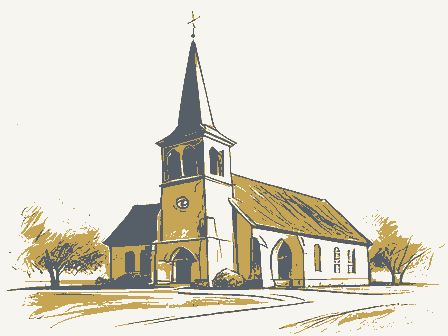
Bennington Township
The complete chapter on this township from History of Licking County, Ohio: Its Past and Present, published in 1881. 2,710 words, covering 1 settlement.
Contents
1 sectionThe section headings the book prints inside this chapter. Each one jumps to where it begins.
The modern record here
1 settlementWhat the federal record holds for each settlement inside this township: wildfires and storm reports since the 1950s, mineral workings, and museum specimens collected nearby. These are counted within a few miles of each settlement, so neighbours share them and the columns are deliberately not added up. Every row links to the settlement's own page, where each figure is broken out.
| Settlement | Fires | Storm reports | Mines and quarries | Specimens |
|---|---|---|---|---|
| Appleton | - | 6 | - | 1,373 |
Settlements in this township
1 placeEvery populated place the Geographic Names Information System records inside this township's Census boundary. 0 of the 1 are named in the chapter; the rest were founded later or were never more than a post office.
The chapter
2,710 wordsReproduced complete and unedited. The text is machine-read from a scan of the 1881 printing, so expect the errors a machine makes reading a century-old page: misspelled names, dropped words, stray characters. Nothing has been corrected, because correcting a proper name invents one. The headings below are the book's own.
Bennington Township
Organization and Location - Topography - Timber - Soil - Indians - White Settlers - Appleton and the "Cook Settlement" - General Rosecranz as a Clerk - Lock - Mills - School-Houses - Churches.
T^ENNINGTON township was organized in 1815. J-) It is situated on the northern borders of Licking county, bounded on the east by Burlington township, on the west by Hartford, on the south by Liberty, and on the north J>y Knox county.
The general face of the township is level or gently undulating, and it is well watered by North fork of Licking and its tributaries. The North fork rises partly in the northwest corner of this township, and passing a short distance through the northern part, enters Khox county about the center of the northern line of this township, re-entering the township again and passing across the northeast comer. The largest stream in the township - which, however, is not large - is the Otter fork, a tributary of the North fork It passes across the township from west to east, near its center, pass ing across part of Burlington township, and entering the North fork near the village of Homer. The Lake fork, another tributary of the North fork, rises in the southern and western parts of this township, and running eastwardly, passes across the southern portion of this and Burlington townships, entering the North fork in Washingtontownship about half way between Utica and St. Louisville. Upon a tributary of Lake fork, Indian run, is situated the village of Appleton. The tributaries of this stream water all the southern part of the township. Many beautiful springs are located in this township, but it is not so prolific in
This is essentially a township of farmers, there being no railroad, telegraph, turnpike, or canal within its limits, and but one small town.
When the first settlers entered the township, they found it heavily timbered with many varieties of hard wood, such as usually grow on the uplands. The different families of oak were largely predominant, though beech, sugar, and other hard woods were plenty. The undergrowth was hazel, paw-paw, hackberry, and, in minor proportions, spice wood, sassafras and other varieties. The settlers in nearly every part of it found it necessary to clear away this timber in order to make room for their cabins. This fine timber has been largely cleared away, and beautiful, well-fenced farms occupy its place. The soil is fertile, well tilled and as productive as any in the county.
Bennington presents few traces of the Mound Builders, and those not remarkable. The Indians seem to have left few traces or reminiscences of their occupation. Few, or perhaps, no people now living in the township remember seeing them, and they probably had no permanent camp within its limits, at least in historic times. A very small camp, not however permanent, once had an existence on Indian run, near its junction with the Lake fork. . It disappeared shortly after the first settlement, but probably gave name to that stream.
Henry lies, who settled there in the spring of 1809. He was from Rockingham county, Virginia. John Dripps and Isaac Vanausdel followed him in 1810, locating near the North fork. John Trout, in the same or next year, located on Otter fork, where also Peter Staymates settled soon after. Settlers continued to come in year after year, generally from Pennsylvania and Virginia, until the principal part of the territory of the township was settled. It was divided into ordinary sized farms, and nearly all the township occupied, by 1835.
The "Cook settlement" was established in the vicinity of the present village of Appleton, sometime after the close of the war of 1812, by Titus Knox and Captain Cook, and served as a nucleus for immigrants to the southern portion of the township. The Van Fossens, Jesse Smith, Jacob Clem, the Wrights, Sangers, Carvers, McClintocks, Fishburns, and Trouts were among the names of those familiarly known as early settlers.
In August, 1832, Titus Knox and Carey Mead laid out the village of Appleton, and named it in honor of Appleton Downer, a lawyer of Zanesville, who had been a large land owner in the township. It is handsomely situated in a beautiful country, near the southern borders of the township, but it never attained to the proportions of a town of one hundred inhabitants, and has been on the decline in later years.
Carey Meade built the first house in Appleton, and there is something of a romantic history connected with it. Mr. Meade had a pretty daughter who married a man named Delong, from the east, and Mr. Meade erected this house for a storeroom, with the expectation that his son-in-law would bring on a stock of goods and become the first merchant of the future city. For reasons very well understood this expectation wfas not realized, and thus the storeroom - a frame structure, one and a half stories in height - stood empty for a time, and was the only building on the towm plat when Mr. Gideon Long and family came to the place, April 3, 1833. Mr. Long moved into this empty store room and occupied it some years. While he was yet living in it Mr. David Messenger, yet living, a resident of Utica, and now a very aged man, came to Appleton, or the site of it, rented the front part of this building, and opened the first store in the place. Mr. Long, in order to encourage enterprise and assist in building up the town squeezed his family into the single back room of this storehouse. He had, since his advent in the place, been using the upper room of this building for a cabinet shop. A pair of stairs went up on the outside of the building, and here he made tables, coffins, and other necessaries of life and death, and for himself a precarious living. Mr. Messenger must have expected to transact a large business, as he brought on a large stock of goods, for those days, and two clerks. Had the wolves and bears been his customers he would, no doubt, have done a large business, but as the pur* chasing settlers were few and far between, the two clerks seemed superfluous.
These two clerks took boarding and lodging in the family of Mr. Long in that single back room of the store building. One of these clerks was Mr. Franklin Bryant, who, after clerking sometime for Mr. Messenger, bought the store himself and conducted it several years. He built the second frame house in town, which is yet standing, and is occupied as a dwelling by Dr. Austin. Not being able to fill up that little back room entirely, with his family and two clerks, Mr. Long took in an other entire family - Mr. William Van Fossen, wife and one child. Mr. Van F'ossen had made up his mind to settle here, and to accommodate him while his cabin was in course of construction Mr. Long admitted the family as boarders.
The other young gentleman clerk, who was a boarder in this large family with limited quarters, was usually called "Billy," and as he had very little clerking to do, spent most of the time in the woods hunting. Mrs. Long says "he was a good boy - a jolly, whole-soliled fellow as ever lived." His last name was Rosecranz, and he afterward became Major General William S. Rosecranz, the hero of Stone River, and the gallant but unfortunate commander of the Union forces at the great and bloody battle of Chickamauga. "Billy" Rosecranz remained here as a clerk six months, and many times declared his intention of becom ing a soldier, and was sent to West Point soon after leaving this place. His father was at that time a resident of Homer, in the adjoining township, and a merchant and farmer.
The first school-house in this neighborhood, a log building, was erected some years before Appleton was laid out, and was located where Mr. Bigler now lives. Joseph Kerr taught school here fiftyfive years ago, and was probably the first teacher in this part of the township. The second schoolhouse was a frame building and stood above Mr. Barrick's house on Harry Ashley's farm. The third and present house - a good frame building - was erected about 1870. All the children of school age in town attend school here; they number fifty or sixty.
The first blacksmith shop in Appleton was erected by Mr. Snyder, who soon moved away, and Mr. John Copper occupied the shop and became the permanent blacksmith. The old store building has always been occupied for that purpose, having changed hands many times, and been added to. In addition to Mr. Hoover's store, Mr. W. T. Moorehead keeps a small stock of goods at present, and Franklin Myers a small grocery. Besides this mercantile business, there are two wagon shops, two blacksmith shops, two shoe shops, two hotels, and Gideon Long (Mr. Long and wife are both yet living) still carries on cabinet making. The village is a pleasant one, the society good, the people being much interested in both religious and secular education.
The village of Lock is located on the northern line of this township, but the larger part of it is in Knox county, the post office and store being in that county. It is probable that Gideon Long was the first post master in Appleton and retained the office many years; it is now kept by Thomas Morehead.
The first water-mill in this township - or mill of any kind - was erected by Jesse Van Fossen, about a half mile above Appleton, on Indian run. It was a saw-mill only. John Denty, yet living a mile above Appleton, erected the second mill, at the junction of Indian run and Lake fork. This mill was both a grist and saw-mill in an early day, though at present only a saw-mill, driven by steam
In the old log school-house, before mentioned as standing on the place where Mr. Bigler now lives, was organized in- 1828, what was probably the first religious society in the township. They call themselves Christians, but are generally'Lbetter known as New Lights.
The well known pioneer preacher, Rev. Isaac N. Walters, was instrumental in establishing this church, and was assisted in the organization by Rev. Daniel Long and Rev. Matthew Gardner. A number of the old settlers accepted the new doctrine, among whom were Jesse Van Fossen and wife, Catharine; John Helphrey; Jesse Lake and wife, Elizabeth; Daniel Helphrey and wife, Mr. McNett and wife, and others. The old schoolhouse answered the purposes of this society several years; but in 1834, their numbers having increased somewhat by new additions to the "Cook settlement," they were enabled to erect a frame church building; this was dedicated August 16, 1835, Rev. I. N. Walters preaching the dedicatory sermon. This church building is yet standing, and is used by the organization of Grangers as a place of meeting.
The second and present church was erected in 1875, being dedicated February n, 1876; the sermon on this occasion being preached by Elder Enos Peters, the present pastor.
The, present condition of this church is a healthy one, the membership being about seventyfive. The Sunday-school was organized about 1840, and has been kept up since during the summer months of each year. Its present membership is probably fifty or more.
The Methodists early organized a society in the township, though no regular class was formed, so far as can be ascertained, prior to 1840. Methodist preachers were among the first religious teachers to enter the township, preaching in the cabins of the settlers and in the school-houses. In January, 1840, a class was organized by Rev. Wesley Clark, at the house of John Denty, who is still a resident of the township. The members of this class were George lies, John Denty, David Weyant, A. C. Barber, Frederick lies, Jonathan Clayton, Noah Southard, Edward Conner, and some others. The .above
The site for this building was selected near the center of the township, on the Hartford and Homer road, and near the Otter Fork of Licking. The road from Appleton to Lock also crosses the above road at this church.
The first building erected, known as " Bennington Chapel," was a small, though substantial frame, and, as the work was largely voluntary, and the material, in part, contributed, it only cost about three hundred dollars. During the last year (1880) this building has been enlarged, repaired and finished in good style. Mr. George lies died a few years ago, leaving a sum of money, the interest of which was to be used in keeping up the church building, and in beautifying the cemetery grounds adjoining.
No regular preaching is now held in this church. A Sunday-school had an existence here at one time, but it is no longer kept up. Both members of the church and pupils in the school, have generally transferred their allegiance to other churches, mostly, perhaps, to the other Methodist churches, of which there are two in the township.
These two churches were organized and the buildings efected about the same time - in the year 1850. One of these, "Lamberts Chapel," is located in the eastern part of the township, a little north of Lake fork, on the farm of Calvin Stout.
Among the originators of this organization were Jacob Lambert, Elias Kettle, John Denty and wife, William and Elizabeth Denty, Josiah Shipley and wife, Richard Wells and some others. Prior to the erection of the church, meetings were generally held at the house of Jacob Lambert. The present membership is forty or fifty, and a large and active Sunday-school is kept up. The third Methodist Episcopal church in the township is located in Appleton.
Rev. Lemuel Yamell was influential in this organization, and thhe first members were Louis Evans, Aaron Shaffer, John Denty, A. C. Barber, Nathan Bigley, David Miller, Martin Light, Richard Wells, and some others. These gentlemen were chosen as a committee to select a site and erect a church building. Rev. Yarnell carried around a subscription paper and obtained money enough to erect a small frame building on the site of the present church. It was erected and dedicated in 1851. Rev. G. G. West, the pastor in charge, preaching the dedicatory sermon. After several years the old building becoming too small to accommodate the people who gathered there, it was taken away and the present frame building erected. The membership of this church is at present about forty.
The organization of the Sabbath-school is probably coeval with that of the church, and has been kept up in the summer time since; the membership being now about forty or fifty.
Just prior to the late war a church was organized in the northeastern part of the township, mainly through the influence and"personal exertions of the Halls - Gideon Hall and his son John. A small number of Christians were living in this neighborhood, and felt themselves able to sustain a church. Among the members of the first organization were Gideon Hall and wife, John Hall and wife, John Hilburn and wife, Jacob Rowe and wife, and some others. The church languished during the war, and very nearly went out of existence; but m later years it has revived, and now services are held with considerable regularity, though it is not yet a strong church.
A Sunday-school was organized ten or twelve years ago, and has been kept up with considerable regularity, numbering, at present, twenty-five or thirty members.
This township also contains a Congregational church, located in the village of Lock. The date of its organization has not been ascertained, but the church is, at present, in a flourishing condition.
Messrs. John Dripps, James Sanger, Jesse Smith and Judge John Van Fossen, are remembered as among the most active and best known of the early politicians of this township, the latter serving some years as an associate judge of the common pleas court.
Bennington occupies an interior and somewhat isolated position, which may have been instrumental in reducing its population, which for many years was on the decline.
Provenance
Text from History of Licking County, Ohio: Its Past and Present, by N. N. Hill, Jr., published 1881 and in the public domain in the United States. Digitised by the Internet Archive. The settlements listed against this township are matched by point-in-polygon test of each Geographic Names Information System coordinate against the Census Bureau's county subdivision boundary, not by name.